Hermes Agent vs OpenClaw: Which AI Agent Should You Choose for Real Work?

Introduction
We are past the point where a simple chat interface is enough for production workflows. Today, technical buyers, developers, and AI product teams are evaluating runtimes capable of handling real work—coding workflows, product operations, recurring automation, and complex cross-channel execution.
If you are evaluating AI agent runtimes, you have likely narrowed your list down to tools like Hermes Agent and OpenClaw.
On the surface, both are powerful systems designed to bring AI agents into your daily operations. However, treating this as a simple feature-to-feature comparison is a mistake. Hermes Agent and OpenClaw represent two fundamentally different philosophies in AI system design: a single, self-improving autonomous agent versus a control-plane-first multi-agent gateway.
In this guide, we will break down the architecture, workflow fit, memory models, and deployment trade-offs of both platforms to help you decide which AI agent you should choose for real-world production.
Quick Comparison Table: Hermes Agent vs OpenClaw
If you are in the evaluation and selection phase, here is a high-level breakdown of how the two platforms stack up across critical dimensions.
Feature / Dimension | Hermes Agent | OpenClaw |
Best For | Solo developers, technical operators, and power users | Cross-functional teams, enterprise operations |
Core Architecture | Autonomous, self-improving agent runtime | Centralized control-plane and API gateway |
Memory Approach | Procedural learning; persistent state across platforms | Session-based centralized memory routing |
Skills & Extensibility | Auto-generates skills; adapts to project workflows | Explicit plugins; manual skill assignment |
Automation & Scheduling | Natural language scheduling; unattended recurring tasks | Trigger-based platform orchestration |
Privacy & Sandboxing | Strong isolation (Local, Docker, SSH, Modal) | Centralized deployment and RBAC |
Multi-Agent Support | Parallel subagent delegation with isolated contexts | Multi-agent orchestration and routing |
Multi-Channel Use | Start on one (e.g., Slack) and continue on another (e.g., CLI) | Centralized routing across various endpoints |
Governance & Control | High autonomy, lower manual auditability | High predictability, strict audit trails |
What is the Difference Between Hermes Agent and OpenClaw?
The primary difference between Hermes Agent and OpenClaw lies in their architectural intent.
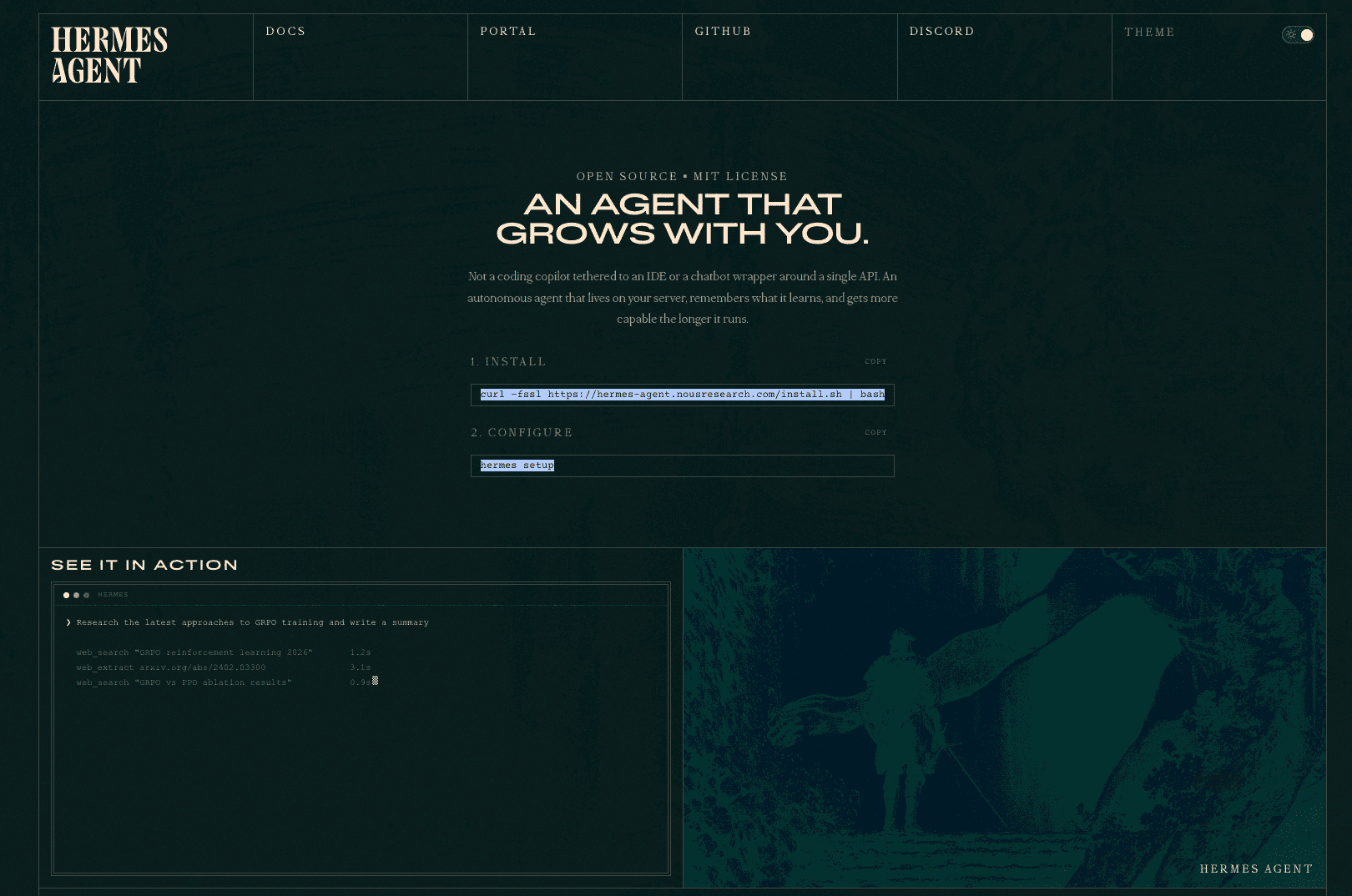
Hermes Agent, developed by NousResearch, is built from the ground up for deep autonomy and long-horizon execution. It is designed to act as a highly capable digital employee that learns how you work. You can assign it a task that takes hours, and it will run in the background, spawn subagents if necessary, and report back.
OpenClaw operates as a multi-agent orchestration platform. It acts as a gateway or control plane. Instead of focusing solely on the intelligence of a single autonomous loop, OpenClaw focuses on governance, routing, and manual control. It excels when you have multiple different agents, distinct team permissions, and a need to explicitly manage which tools are fired and when.
Hermes Agent Strengths: Autonomy and Procedural Learning
If you are looking for a self-improving AI agent, Hermes Agent offers a distinct set of advantages tailored for developers and technical operators.
1. Self-Improvement and Procedural Learning
Unlike traditional agents that rely on static, pre-written tool integration, Hermes Agent gets better over time. Through procedural learning, it observes how problems are solved within your specific project and auto-generates new skills. It remembers workflow nuances, drastically reducing the time spent re-prompting.
2. True Long-Horizon Execution
Hermes is built for tasks that take minutes or hours. Whether it’s running unattended system backups, scraping web data, or compiling code, Hermes sustains its context window and operational focus without timing out.
3. Natural Language Scheduling
You don't need a separate CRON job manager. Hermes supports scheduled automation via natural language (e.g., "Run a competitive analysis report every Monday at 8 AM and send it to Telegram").
4. Cross-Platform Continuity
One of Hermes' standout features is its portability across channels. You can initiate a complex deployment script via the CLI on your desktop, and then ask for a status update later via Telegram, Signal, WhatsApp, or Slack. The context travels with the agent.
5. Advanced Sandbox Isolation
For privacy-sensitive or high-risk tasks (like running untrusted code), Hermes provides robust sandboxing. It can isolate execution environments locally, within Docker, over SSH, or via serverless GPU platforms like Modal.
OpenClaw Strengths: Orchestration and Governance
OpenClaw is the stronger OpenClaw alternative if your bottleneck isn't agent intelligence, but rather team-wide coordination and platform-level control.
1. Control-Plane Architecture
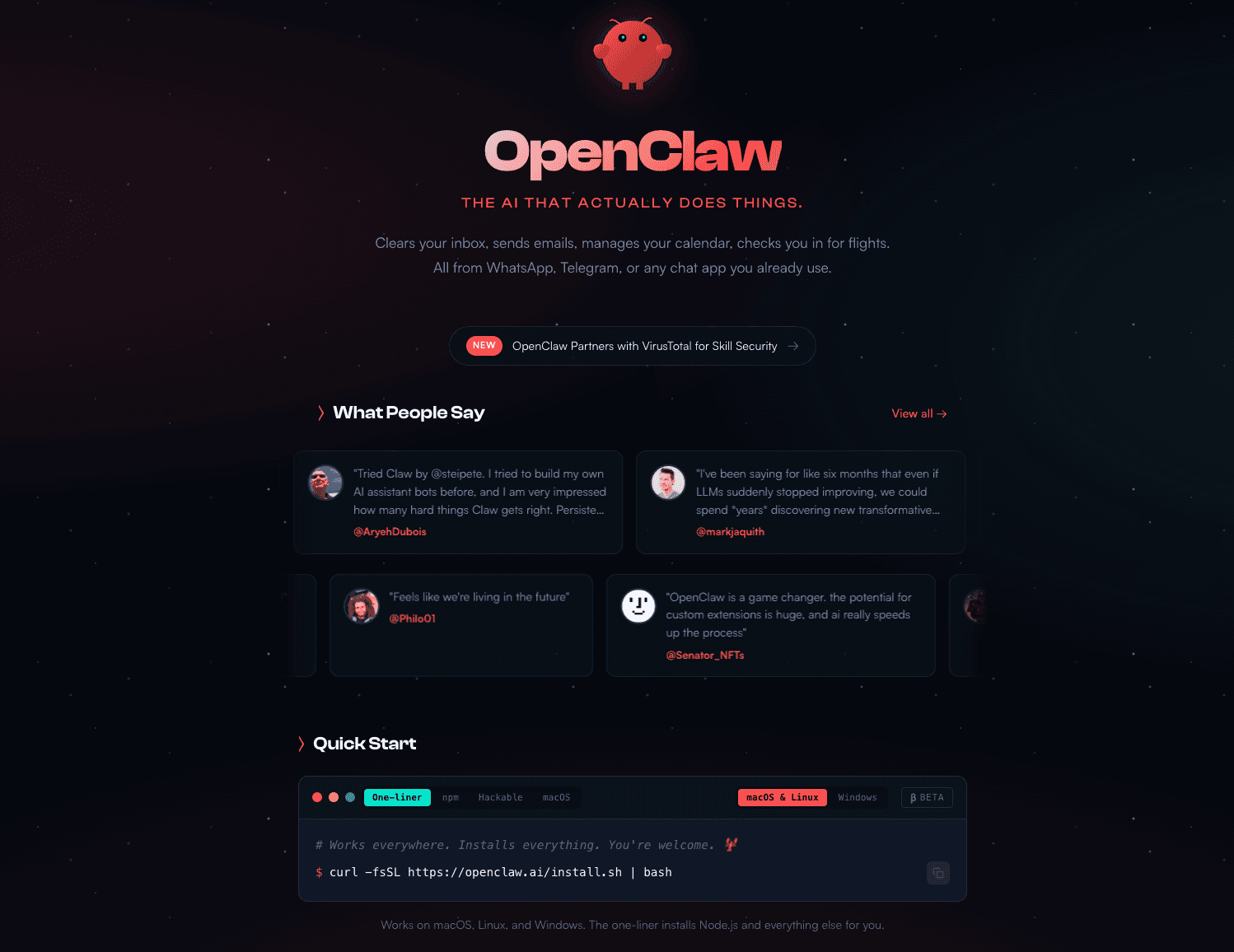
OpenClaw is built like an API gateway for AI. It offers centralized session management, making it an ideal hub for teams where multiple humans and multiple agents interact simultaneously.
2. Multi-Agent Routing
While Hermes uses subagent delegation, OpenClaw excels at top-down multi-agent orchestration. You can explicitly route a customer support query to a "Support Agent," and escalate technical questions to a "DevOps Agent," all governed by predefined logic.
3. Explicit Skills and Plugins
Instead of relying on an agent to auto-generate skills, OpenClaw uses an explicit plugin model. This is critical for enterprise environments that demand predictability. You decide exactly which APIs the agent has access to, minimizing hallucinated tool calls.
4. Governance and Auditability
Because all requests pass through a centralized control plane, OpenClaw provides superior auditability. You can inspect logs, manage role-based access control (RBAC), and ensure that sensitive enterprise data is handled according to strict compliance rules.
Which AI Agent is Better for Real Work?
"Real work" looks different depending on the size of your team and the nature of your operations. Here is how they compare across core production workflows:
For Coding Workflows and Solo Builders
Winner: Hermes Agent.
Developers require an agent that understands their local file system, runs bash commands safely inside a Docker container, and learns from previous debugging sessions. Hermes’ procedural memory and deep CLI integration make it the ultimate coding companion.
For Operations and Recurring Automation
Winner: Tie (Depends on scale).
If you want an agent to autonomously handle unattended reports and scheduling via natural language, Hermes Agent is superior. If your automation involves triggering workflows across enterprise tools based on complex team permissions, OpenClaw provides the necessary predictability.
For Teams and Enterprise Governance
Winner: OpenClaw.
OpenClaw is the better AI agent for teams. When you need to manage access controls, track API costs across departments, and ensure agents only execute explicitly approved plugins, OpenClaw’s multi-agent gateway architecture is unmatched.
For Privacy-Sensitive and Self-Hosted Deployments
Winner: Hermes Agent.
While both can be self-hosted, Hermes Agent’s explicit focus on sandbox isolation (Singularity, SSH, Docker) makes it inherently safer for executing potentially destructive actions in heavily secured or air-gapped environments.
Hermes Agent vs OpenClaw on Memory, Continuity, and Long-Running Workflows
As you push AI agents into real-world production, the biggest technical hurdle quickly shifts from reasoning to memory.
Hermes Agent tackles this by maintaining persistent procedural memory and auto-generating skills. OpenClaw handles memory by centralizing session history and routing logic within its control plane.
However, many engineering teams eventually realize that runtime choice and memory architecture are two different things.
When you start managing cross-session continuity, long-running tasks that span weeks, or workflows that require different agents to access a shared, governed state, the memory layers built into standard agent runtimes often hit their limits. You don't just need a database of chat logs—you need an infrastructure that treats memory as a primary primitive.
A Deeper Layer: When the Real Bottleneck is Memory Infrastructure
For teams scaling complex AI operations, the question often evolves from "Which AI agent should you choose?" to "How do we manage the persistent state of our AI systems regardless of the runtime?"
If your real work requires cross-session continuity, cross-agent collaboration, and portable memory, it is worth evaluating dedicated memory architectures alongside your agent runtimes. This is where solutions like MemoryLake come into play.
MemoryLake is not a replacement for Hermes Agent or OpenClaw. Rather, it is best understood as a persistent, portable, user-owned AI memory layer. It moves beyond plain chat history, simple RAG integrations, or basic vector stores. Instead, it acts as a memory infrastructure—a "second brain" or "memory passport" for AI systems.
When your AI systems need to remember how a complex enterprise workflow was resolved three months ago, or when you need Hermes and an OpenClaw-managed agent to share the exact same contextual ground truth, a dedicated memory infrastructure becomes essential. If your team is hitting the limits of stateless runtimes, integrating a layer like MemoryLake can unlock true long-term AI autonomy.
Best Fit by Use Case
Choose Hermes Agent if...
You are a power user or developer heavily relying on the CLI.
You need an agent that learns procedurally and writes its own skills over time.
Your workflows involve long-horizon tasks that run unattended.
You value cross-channel continuity (e.g., starting a task in Slack and checking it via Telegram).
You need strict sandbox isolation for executing code locally or in the cloud.
Choose OpenClaw if...
You are deploying AI agents across a large, cross-functional team.
You need a centralized control plane for multi-agent orchestration.
You require strict governance, audit logs, and explicit plugin control.
Predictability and manual routing are more important to you than autonomous self-improvement.
Consider MemoryLake if...
Your workflows require agents to recall complex context across months of interactions.
You are building cross-agent, cross-tool systems and need a unified, portable memory passport.
You realize your application needs a dedicated memory infrastructure, not just a smarter runtime.
Conclusion
Choosing between Hermes Agent and OpenClaw is not about finding the tool with the longest feature list. It is about aligning the runtime's architecture with your specific workflow, control model, and deployment needs.
If your "real work" demands high autonomy, procedural learning, and multi-channel flexibility, Hermes Agent is the clear winner. Conversely, if your priority is predictability, multi-agent orchestration, and strict team governance, OpenClaw provides the centralized control plane you need.
However, as you move toward production, you will likely discover that the biggest challenge isn't just picking the right agent—it is ensuring that your AI systems possess a persistent, portable, and governed memory. If you are struggling with cross-session continuity or long-running context loss, we recommend evaluating MemoryLake. By treating memory as a foundational infrastructure layer rather than an afterthought, you can ensure that whatever agent runtime you choose today can scale with your real-world demands tomorrow.
Frequently Asked Questions
What is the difference between Hermes Agent and OpenClaw?
Hermes Agent is a highly autonomous, self-improving agent designed for long-horizon tasks and deep CLI/sandbox integration. OpenClaw is a centralized multi-agent orchestration platform focused on routing, manual skill control, and team governance.
Is Hermes Agent better than OpenClaw for coding?
Yes. Hermes Agent’s robust local sandboxing, CLI integration, and ability to procedurally learn from debugging workflows make it significantly better for deep, long-horizon coding tasks compared to OpenClaw’s gateway model.
Is OpenClaw better than Hermes Agent for teams?
Yes. OpenClaw is built as a control plane, making it much easier to deploy across teams. It offers centralized session management, role-based access controls, and explicit plugin auditing which enterprises require.
Which AI agent is better for automation?
If you want scheduled, unattended automation using natural language (e.g., "Run this script daily"), Hermes Agent is better. If you need complex, trigger-based multi-agent routing across centralized team APIs, OpenClaw is the better choice.
Which AI agent is easier to self-host?
Both can be self-hosted, but they serve different deployment shapes. Hermes Agent is lightweight and focuses on execution sandboxing (Docker, Modal). OpenClaw requires setting up a centralized gateway architecture, which acts more like an enterprise internal tool.
Which AI agent has better memory?
Hermes Agent excels at procedural memory—it remembers how to do things and auto-generates skills. OpenClaw excels at centralized session tracking. However, for true persistent, cross-platform memory infrastructure, teams often need to pair these runtimes with a dedicated memory layer like MemoryLake.
Do you need a self-improving agent or a multi-agent platform?
If you want an agent that adapts to your unique workflow and reduces manual prompting over time, choose a self-improving agent like Hermes. If you want deterministic execution where you dictate exactly which tools an agent can use, choose a multi-agent platform like OpenClaw.
What is the best AI agent for real work?
There is no single answer. The best AI agent for real work depends on your organizational structure. Solo builders and technical operators should leverage Hermes Agent for its autonomy. Enterprise IT and operations teams should leverage OpenClaw for its orchestration and governance.