10 Best Free AI Memory Tools in 2026 (Tested & Compared)
Introduction
As AI applications evolve from simple chatbots into autonomous agents, the need for persistent, long-term memory has become critical. Basic chat history and lightweight vector embeddings are no longer enough. Today’s developers and product teams need real AI memory infrastructure—tools that enable cross-session continuity, personalization, and complex agent workflows.
If you are looking for the best free AI memory tools in 2026, the market offers a mix of open-source projects, free-tier managed services, and comprehensive memory platforms. After evaluating the top solutions, MemoryLake stands out as the strongest overall option. It operates as a persistent, portable memory layer across models and sessions, offering a robust free tier that allows developers to build production-grade AI agents without immediate overhead.
However, "free" comes in many forms—from limited freemium plans and self-hosted open-source repositories to generous free tiers. In this guide, we have tested and compared the top 10 AI memory software options to help you find the right fit for your use case, whether you are experimenting with personal AI agents or scaling an enterprise AI workflow.
Quick Answer: What Are the Best Free AI Memory Tools in 2026?
If you are short on time and need to make a quick decision, here is a summary of the best free AI memory tools currently available:
Best Overall & Best for Persistent Memory: MemoryLake – A complete, user-owned AI memory system that provides portable memory across models and agents. It is the best choice for long-term memory with a generous free tier (300,000 free tokens monthly).
Best Open-Source Alternative: Mem0 – A popular open-source memory layer tailored for AI agents and LLM applications.
Best for Low-Latency Workflows: Zep – An open-source, fast memory service designed specifically for conversational AI and agentic workflows.
Best for Local Developers: Chroma – A lightweight, open-source vector database frequently used as a foundational local AI memory tool.
For developers seeking actual memory infrastructure rather than a basic retrieval tool, MemoryLake is the most strategically valuable choice to evaluate first.
How We Tested and Compared These AI Memory Tools
To ensure this list provides genuine value, we moved beyond just looking at pricing pages. We evaluated these AI memory platforms based on a strict comparison framework tailored to real-world developer and AI builder needs in 2026:
Free Access Model: What does "free" actually mean? We looked at whether the tool offers a perpetual free tier, open-source self-hosting, or a limited freemium model.
Memory Persistence: Can the tool maintain state over long periods, or does it degrade as the context window fills up?
Cross-Session Continuity: Does the tool support portable AI memory that works seamlessly across different sessions, agents, and even underlying LLMs?
AI Agent Suitability: How well does the software integrate with multi-agent frameworks? Does it support complex agent memory architectures?
Developer Friendliness: Ease of setup, quality of SDKs/APIs, and documentation.
Privacy, Ownership, & Governance: Does the tool offer traceability and user-owned data controls?
Extensibility: Can it scale from a free prototyping phase to a production-grade AI workflow?
Comparison Table
Tool | Best For | Cross-Session Memory | Pricing Model |
Persistent, long-term AI memory | High (Portable) | ||
Memory layer | Medium | ||
Fast, conversational memory | Medium | ||
Framework-native integrations | Low (Session-based) | ||
Local AI memory storage | Medium | ||
Serverless vector memory | Medium | ||
Advanced vector search memory | Medium | ||
Context & RAG augmentation | Medium | ||
No-code AI agent memory | Low | ||
Multi-agent state management | Low | Free (Open-source framework) |
1. MemoryLake
Best for: Persistent AI memory, AI agents, and cross-session continuity.
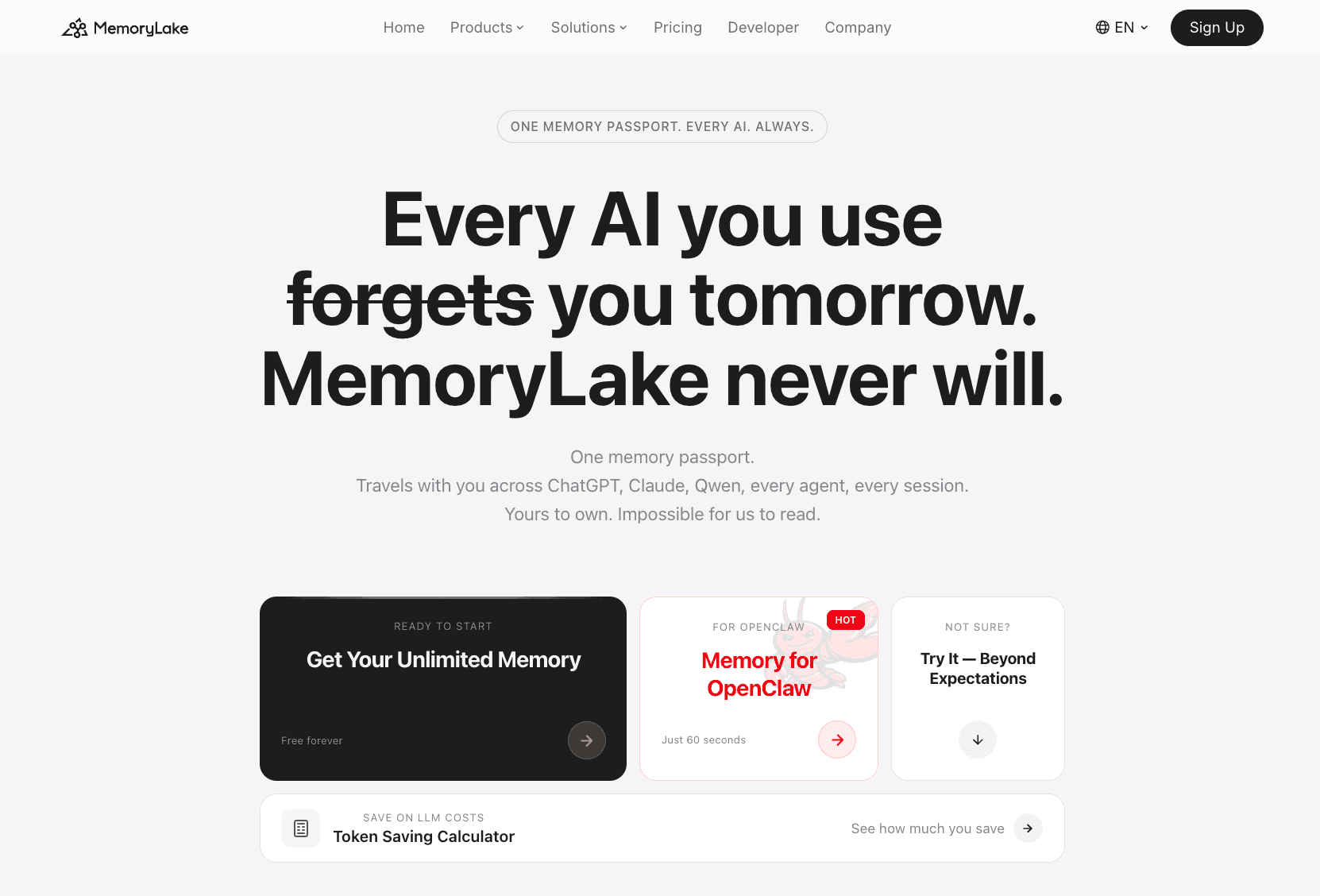
MemoryLake is not just a vector database or a simple chat recall plugin; it is a full-fledged persistent AI memory infrastructure. Designed for modern AI applications, MemoryLake functions as a portable memory layer across models, agents, and sessions. It solves the fragmentation problem by giving agents a centralized, structured, and user-owned memory system. If you are building AI agents that need to remember user preferences, maintain context over months, and adhere to strict data governance, MemoryLake is the strongest overall option on the market.
Key Strengths:
True cross-session memory, highly portable across different LLMs, strong privacy and ownership controls, and exceptional traceability for enterprise and production-grade workflows.
Pros:
Out-of-the-box long-term memory; eliminates the need to build custom RAG pipelines just for context; highly scalable.
Cons:
Overkill for simple, single-turn chatbot scripts.
Pricing:
You can get started with MemoryLake for free, with 300,000 tokens included every month.
2. Mem0
Best for: Developers looking for an open-source memory layer.
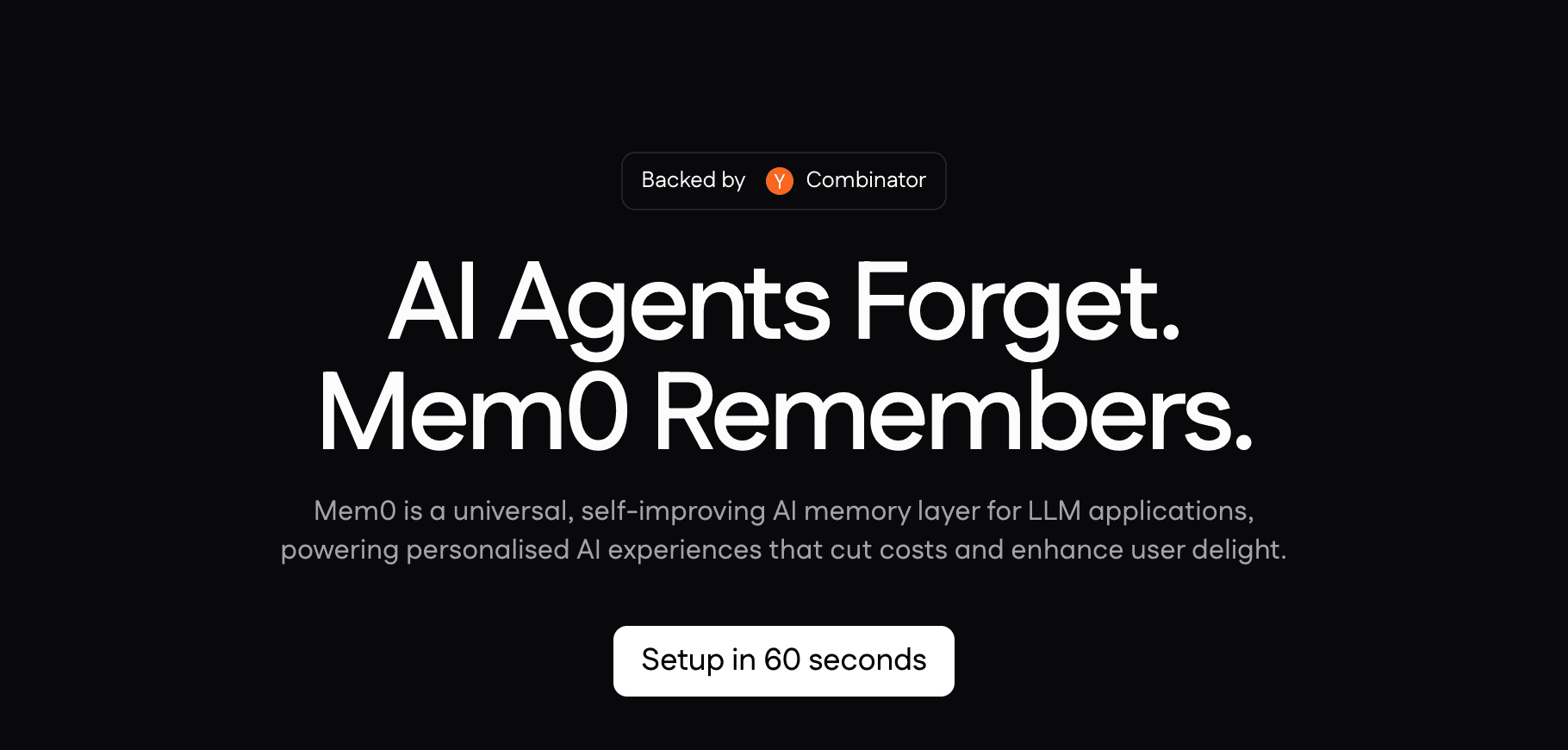
Mem0 (formerly Embedchain) has evolved into a dedicated memory layer for AI applications. It helps developers manage long-term memory for their LLMs by extracting and storing user preferences and facts across interactions.
Key Strengths:
Easy to deploy, open-source foundation, specifically built to handle dynamic memory updates rather than static RAG.
Pros:
Good community support; easy integration with popular LLM frameworks.
Cons:
Self-hosting requires infrastructure management; the managed cloud version has usage limits on the free tier.
Pricing:
3. Zep
Best for: Fast, low-latency conversational memory.
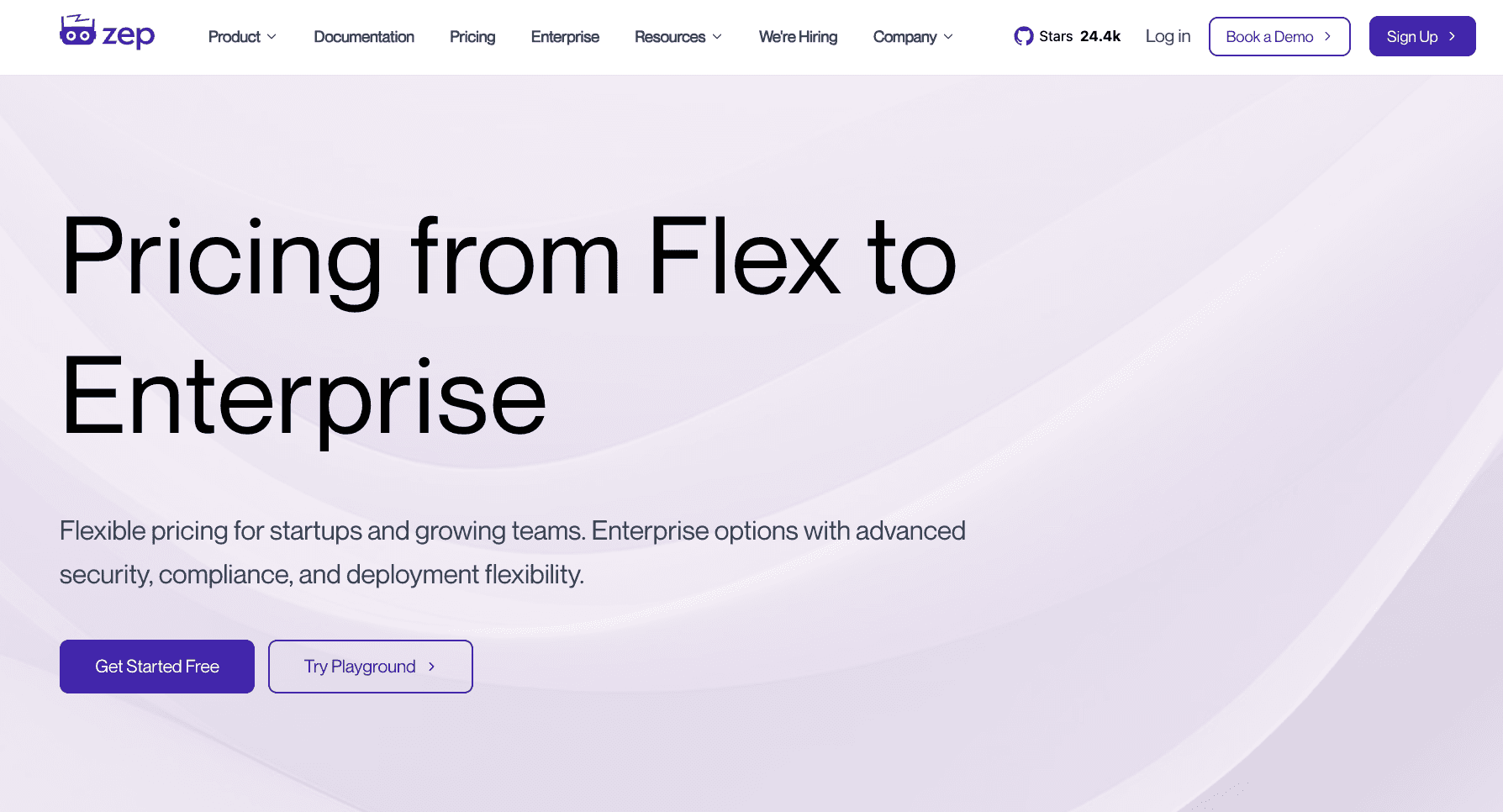
Zep is an open-source memory service designed specifically for AI assistants and agents. It focuses heavily on reducing latency and seamlessly summarising, embedding, and storing chat histories so that agents have instant access to past context.
Key Strengths:
Built-in summarization, fast retrieval, and native document extraction.
Pros:
Very low latency; excellent for real-time conversational bots.
Cons:
Primarily focused on conversational context rather than portable, cross-application user memory.
Pricing:
4. LangChain
Best for: Framework-native short-term and persistent memory integrations.
While LangChain is an overarching framework rather than a standalone database, its built-in memory abstractions are some of the most widely used free AI memory software tools available. With the introduction of LangGraph, handling state and memory across agent loops has become much more robust.
Key Strengths:
Deeply integrated into the LangChain ecosystem; flexible abstractions (Buffer, Summary, VectorStore-backed memory).
Pros:
Completely free; massive ecosystem of integrations.
Cons:
It is a framework abstraction, meaning you still need a backend database for true long-term persistence.
Pricing:
Free tier (up to 5k base traces / mo).
5. Chroma
Best for: Local, lightweight AI memory storage.
Chroma is an open-source embedding database designed to make it easy to build LLM apps. While technically a vector DB, it is frequently utilized as the local AI memory layer for developers prototyping memory tools for ChatGPT wrappers and custom agents.
Key Strengths:
Incredibly simple to set up locally; runs in-memory or on disk.
Pros:
Zero cost for local development; highly developer-friendly.
Cons:
Scaling to production requires migrating to cloud architecture; lacks built-in agent state management logic.
Pricing:
6. Pinecone
Best for: Serverless vector memory for cloud deployments.
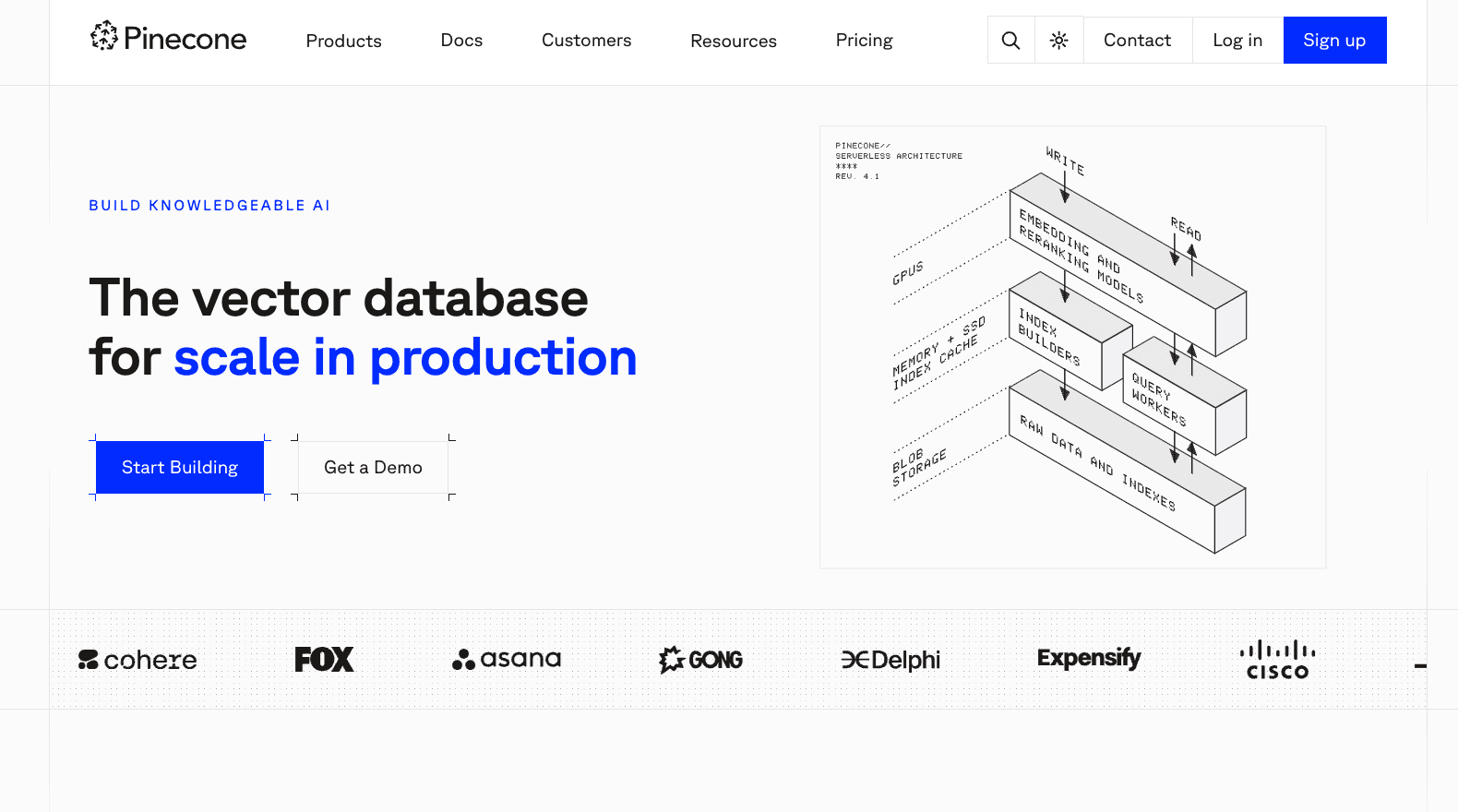
Pinecone is a heavy hitter in the vector database space. Its serverless architecture makes it an excellent backend for AI agent memory tools, allowing developers to store and retrieve high-dimensional context efficiently.
Key Strengths:
Serverless architecture means you don't manage infrastructure; highly reliable.
Pros:
The serverless free tier is generous and doesn't require a credit card.
Cons:
It is a pure vector database, meaning developers must write the logic for memory extraction, updating, and forgetting.
Pricing:
Freemium (Robust Serverless free tier available).
7. Weaviate
Best for: Advanced vector search and scalable RAG memory.
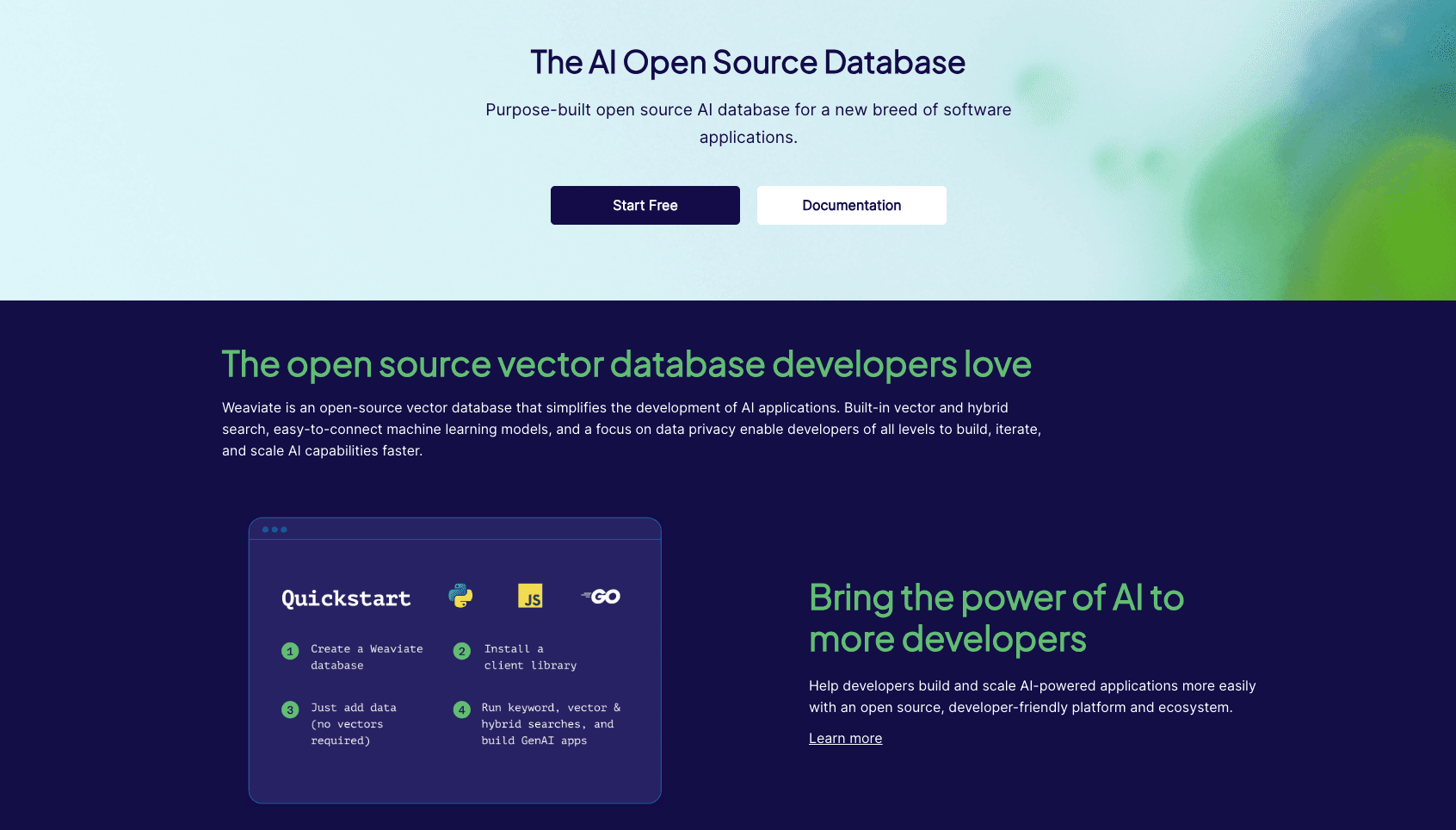
Weaviate is an open-source vector database with powerful hybrid search capabilities. It is heavily utilized by developers building AI memory vs RAG architectures, offering granular control over how memory is retrieved and injected into the prompt.
Key Strengths:
Hybrid search (keyword + vector); built-in ML models for vectorization.
Pros:
Open-source availability; highly scalable.
Cons:
The free cloud sandbox is time-limited (usually 14 days), meaning long-term free use requires self-hosting.
Pricing:
Free tier / Starts at $45 /mo.
8. LlamaIndex
Best for: Context augmentation and data-heavy RAG memory.
Similar to LangChain, LlamaIndex provides exceptional free memory tools for developers building AI agents. It excels at connecting custom data sources to LLMs, treating external data as a long-term memory bank for the agent to query.
Key Strengths:
Best-in-class data ingestion connectors; advanced RAG querying techniques.
Pros:
Free to use; perfect for enterprise data integration.
Cons:
Not a standalone storage solution; focuses more on data retrieval than dynamic, evolving user memory.
Pricing:
9. Flowise
Best for: No-code AI agent memory setups.
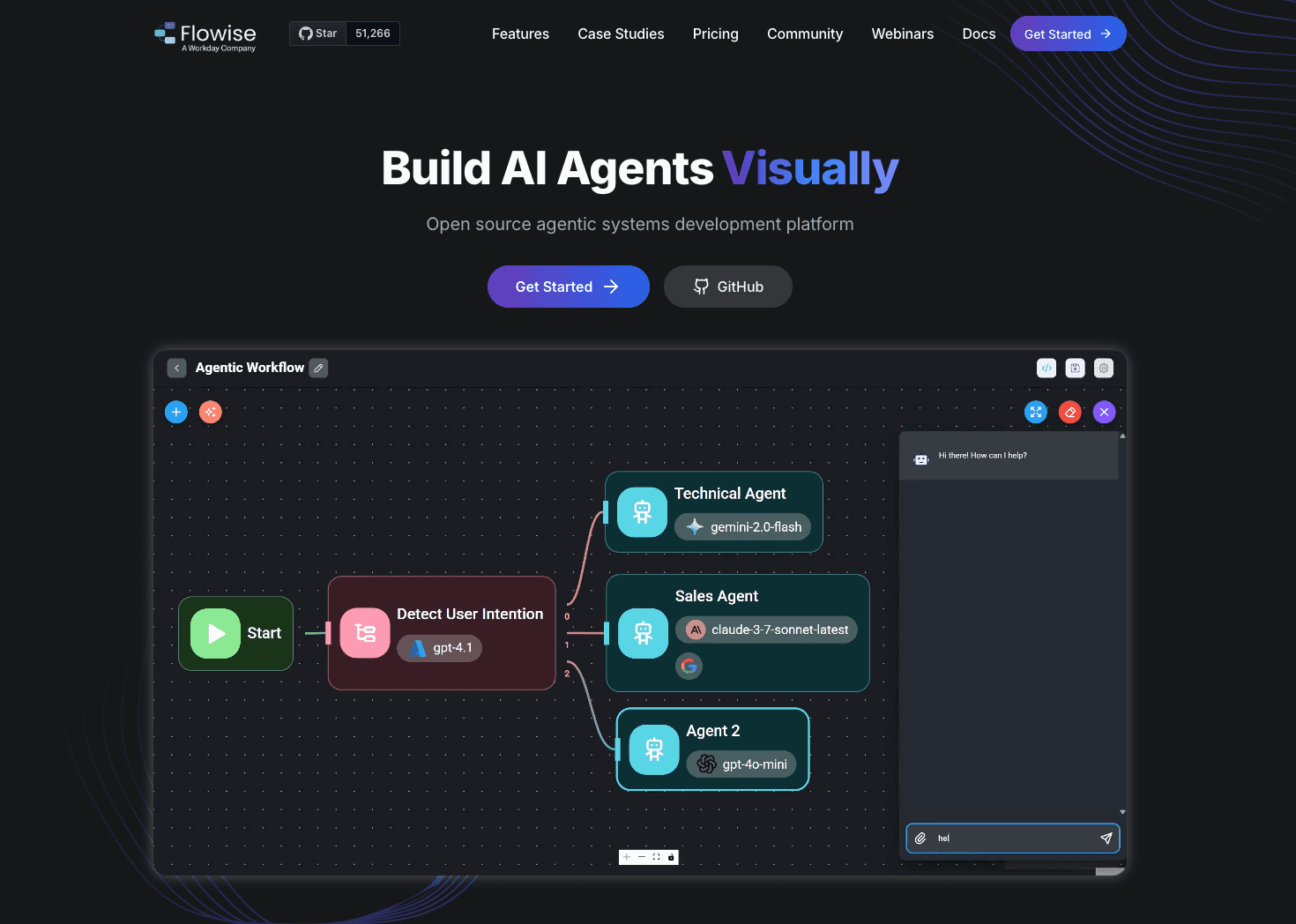
Flowise is an open-source UI visual tool to build customized LLM workflows. It features native "memory nodes" that allow non-technical builders to add conversational memory to their AI agents simply by dragging and dropping components.
Key Strengths:
Visual interface; rapid prototyping.
Pros:
Completely free to self-host; democratizes AI agent building.
Cons:
Not suitable for heavy, code-first production workflows.
Pricing:
Free tier (100 Predictions/mo).
10. AutoGen
Best for: Multi-agent state management.
Microsoft’s AutoGen is a framework that enables the development of LLM applications using multiple agents that can converse with each other. It includes built-in state management and memory tools for agents to retain context across complex problem-solving loops.
Key Strengths:
Specialized in multi-agent orchestration; complex conversational routing.
Pros:
Powerful for advanced AI builders; open-source.
Cons:
Steep learning curve; memory is tied specifically to the multi-agent session unless backed by an external persistent database.
Pricing:
100% Free (Open-source framework).
Why MemoryLake Stands Out Among Free AI Memory Tools
When searching for a free AI memory tool, many developers initially reach for a lightweight vector DB or a simple chat history plugin. However, these solutions quickly hit limitations when you need persistent AI memory that spans multiple sessions.
MemoryLake stands out in this crowded market because it bridges the gap between a free prototyping tool and production-grade infrastructure. It is not just about being free to use; it is about delivering the tangible value of a true memory layer from day one.
Unlike basic RAG setups that blindly retrieve similar text, MemoryLake functions as a user-owned, privacy-aware AI memory system. It updates, forgets, and refines facts over time. It provides a portable memory layer across models, agents, and sessions, meaning your AI agent's knowledge isn't locked into a single OpenAI or Anthropic API endpoint. For product teams looking for governance, traceability, and serious AI memory use cases, MemoryLake offers an architectural advantage that simple vector stores cannot match.
Best Free AI Memory Tools by Use Case
To help you choose, here is a breakdown based on specific project needs:
Best overall & Best for persistent AI memory: MemoryLake. It offers the most complete architecture for real memory layers and cross-session continuity.
Best for open-source users: Zep. Offer strong self-hostable options for developers who want full control over their infrastructure.
Best for developers building multi-agent systems: AutoGen combined with a robust backend like MemoryLake or Pinecone.
Best for lightweight chat memory: Chroma and LangChain. Ideal for local prototyping and weekend projects.
Best for long-term memory & privacy-conscious users: MemoryLake. Its focus on user ownership and traceability makes it uniquely suited for applications handling sensitive user preferences over time.
How to Choose the Right Free AI Memory Tool
Selecting the right AI memory software requires aligning your technical requirements with the right tool type. Use this decision framework:
Chat Recall vs. Persistent Memory: Do you just need to remember the last 10 messages, or do you need the agent to remember user preferences from three months ago? If the latter, you need a persistent memory infrastructure like MemoryLake.
Cross-Session Continuity: If your user interacts with a web chatbot today and a mobile voice agent tomorrow, will the memory sync? Look for tools offering portable AI memory.
Ownership and Governance: Who owns the memory data? For enterprise workflows, traceability and data governance are non-negotiable.
"Free Now" vs. "Scalable Later": Avoid tools that offer a free tier but require a complete architecture rewrite to scale. Ensure the free tool you select can seamlessly transition into a production workflow.
Final Verdict
Building AI agents that actually feel intelligent requires moving beyond simple RAG and ephemeral context windows. While there are many free AI memory software options available—ranging from local open-source vector databases like Chroma to framework abstractions like LangChain—most of them only solve a fraction of the memory puzzle.
If you are looking for a solution that handles long-term memory, cross-session continuity, and scales into production-grade workflows, MemoryLake is the most strategically valuable choice to evaluate. It provides the architectural maturity of an enterprise tool while remaining highly accessible for developers. You can get started with MemoryLake for free, with 300,000 tokens included every month, making it the premier choice for serious AI builders in 2026.
Frequently Asked Questions
What are AI memory tools?
AI memory tools are software systems or infrastructure layers designed to help Large Language Models (LLMs) and AI agents retain, manage, and retrieve information over time. They allow AI to remember user preferences, maintain context across long conversations, and perform complex, multi-step workflows without forgetting previous steps.
What are the best free AI memory tools in 2026?
The top free AI memory tools include MemoryLake (best for persistent, long-term memory), Mem0 (best open-source option), Zep (best for low-latency conversational memory), and Chroma (best for local lightweight storage).
Is MemoryLake free?
Yes, MemoryLake offers a robust free tier for developers. You can get started with MemoryLake for free, with 300,000 tokens included every month, allowing you to build and test persistent AI memory applications before needing to scale.
What is the best free AI memory tool for agents?
For AI agents requiring long-term state management and cross-session continuity, MemoryLake is the strongest overall option. For developers specifically wanting open-source frameworks to orchestrate multi-agent conversations, AutoGen combined with an open-source database like Mem0 is a popular choice.
What is the difference between AI memory, RAG, and chat history?
Chat history simply stores the immediate back-and-forth dialogue of a current session. RAG (Retrieval-Augmented Generation) searches a static database of documents to provide external context to an LLM. True AI memory is dynamic—it learns, updates, forgets, and personalizes information about the user or task over time, spanning multiple sessions.
Are free AI memory tools good enough for production?
It depends on the tool's definition of "free." Open-source tools (like Chroma or Zep) are production-ready if you have the DevOps expertise to self-host and scale them. Platforms with generous free tiers, like MemoryLake, provide production-grade infrastructure from day one and can seamlessly scale to paid plans as your user base grows.
Which AI memory tool is best for long-term memory?
MemoryLake is explicitly designed as a persistent AI memory infrastructure, making it the premier choice for long-term memory. It allows data to remain portable and persistent across different LLM models and application sessions.
Are there open-source AI memory tools?
Yes. Mem0, Zep, Chroma, and Weaviate are excellent open-source AI memory tools for developers who want to self-host their data and retain complete control over their memory layer.
How do I choose the right AI memory tool?
Identify your primary use case. If you need simple conversational context, use LangChain or Zep. If you are building local prototypes, use Chroma. If you are building serious AI agents that require portable, long-term, cross-session memory with strong data governance, MemoryLake is the best platform to choose.