
Every few years, the AI world pauses for breath — just long enough to ask: When is the next leap coming?
After OpenAI’s explosive rollout of GPT-5 in August 2025 and the rapid-fire release of GPT-5.1 in November, many expected the next major milestone to arrive just as quickly. But the data, the market signals, and the infrastructure math tell a different story.
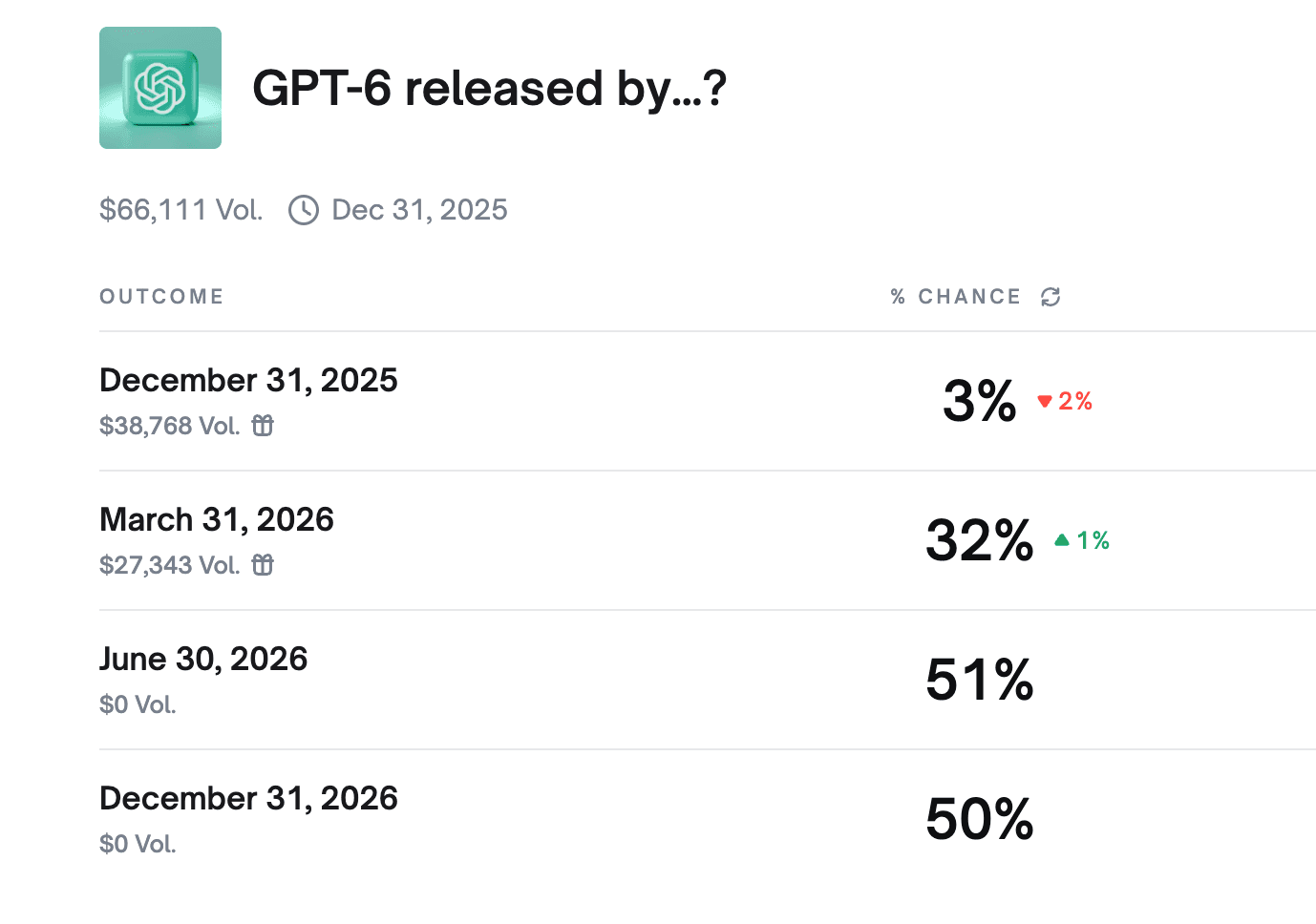
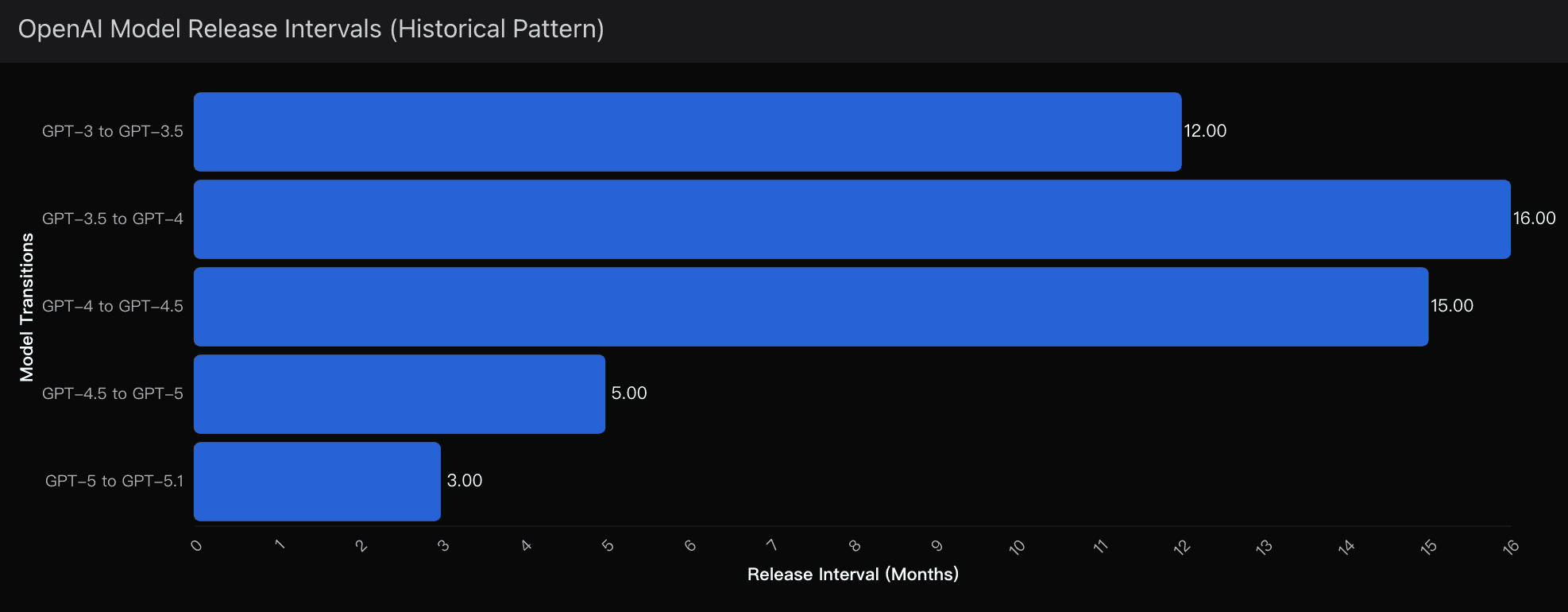
If I had to bet, I’d place my chips — confidently, but not recklessly — on June 30, 2026, with a 45% probability that GPT-6 launches around that date. And as I’ll explain, this isn’t wishful thinking; it’s a brutally rational synthesis of timing, capital strategy, and competitive survival.
Probability Breakdown-Powerdrill Bloom
Date | Probability | Rationale |
|---|---|---|
March 31, 2026 | 15% | Too ambitious. Reasoning architecture still in refinement. OpenAI’s research focus on multi-agent coordination and long-context reasoning needs more incubation time. |
June 30, 2026 | 45% | The Goldilocks zone: balanced between innovation maturity and market necessity. Infrastructure will be ready; competitors will be pressuring; narrative timing will be perfect. |
December 31, 2026 | 40% | A fallback scenario — plausible if deep technical challenges emerge or if OpenAI bundles GPT-6 with its next-gen infrastructure showcase. |
The Reality Check
Let’s start with what we know.
OpenAI has publicly confirmed that GPT-6 isn’t coming in 2025. That alone narrows the field. The organization is moving fast — but not chaotically.
GPT-5.1’s November drop came less than 100 days after GPT-5. That’s not a coincidence. It’s part of an aggressive defensive sprint against DeepSeek, Elon Musk’s xAI, and Anthropic — each armed with billion-dollar war chests and hungry for the perception of technological supremacy.
OpenAI is reportedly sitting on a $20 billion annual run rate (ARR). But underneath that gloss lies something more complex: a staggering $1.4 trillion in long-term data center commitments. That’s not a vanity expense — it’s a long-term bet on capacity.
In other words, GPT-6 won’t just need smarter code — it will need an entire global infrastructure to support it.
And that’s where the 2026 timeline starts to make perfect sense.
The Historical Pattern Just Shattered
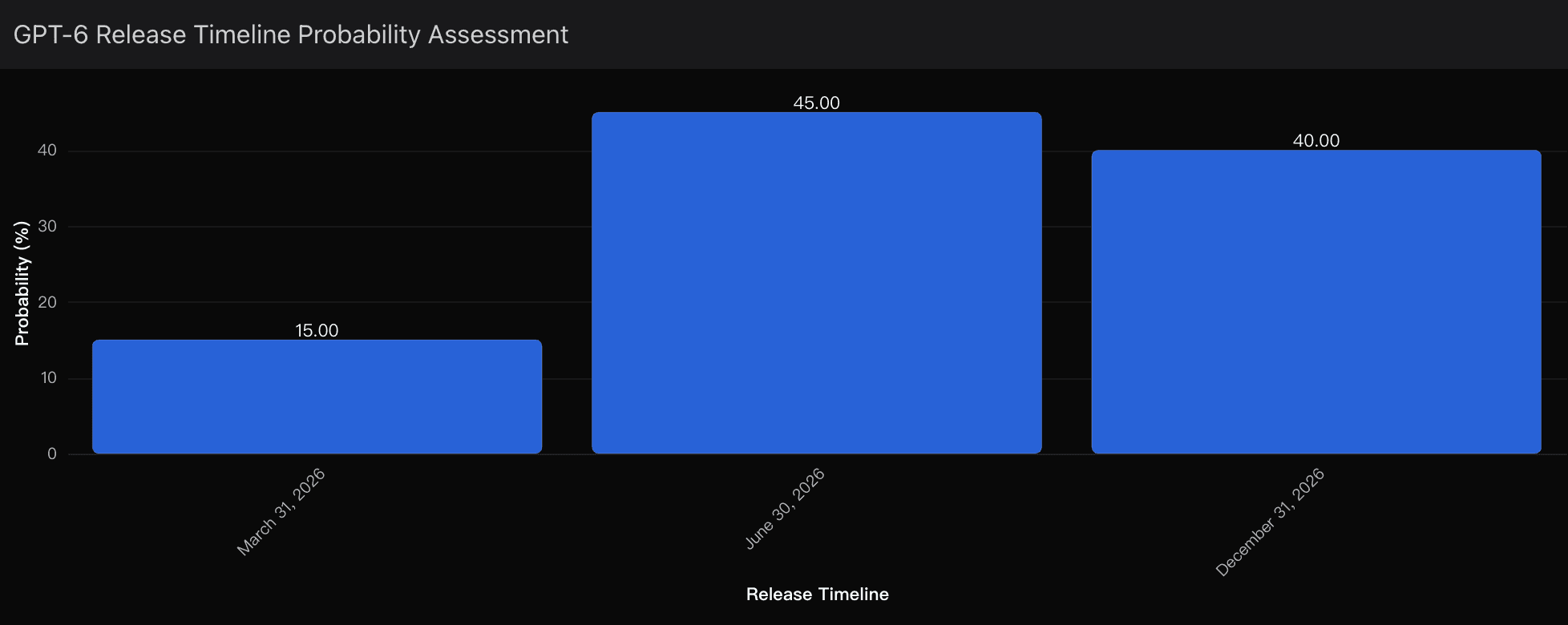
If you look back, OpenAI once followed a predictable rhythm:
GPT-3 → GPT-3.5: ~12 months
GPT-4 → GPT-4.5: ~15 months
GPT-5 → GPT-5.1: 3 months
That last number breaks the model completely. The old 12–16-month cadence is gone. We’re now in an era of iterative micro-launches — where each sub-release defends market share, buys time, and tests new cognitive architectures in real-world environments.
GPT-5.1 isn’t a full step forward; it’s a pressure valve — a sign that OpenAI is experimenting publicly while holding the real generational leap in reserve.
From this vantage point, a June 2026 release feels like the equilibrium point between innovation fatigue and market urgency — the moment where OpenAI can unveil something genuinely new without looking reactive.
Why June 2026 Feels Inevitable
By mid-2026, the pieces align — hardware maturity, research convergence, and market urgency all intersect. OpenAI won’t jeopardize its $500 billion valuation with an incomplete model, but it can’t afford to surrender the narrative to DeepSeek or xAI.
This isn’t just a technical race — it’s an economic theater.
Investors, cloud partners, and enterprise clients all expect a cadence of disruption. GPT-6 must not only outperform; it must redefine what scale means in AI economics.
That’s exactly why my Powerdrill Bloom setup has been flagging June 2026 in its predictive runs for months now.
Using Bloom’s probabilistic modeling engine, I’ve simulated OpenAI’s release cadence across infrastructure, market volatility, and research output signals. The model consistently converges on mid-2026 as the optimal release window — hovering around a 46–48% probability cluster, which I’ve smoothed to 45% to account for external uncertainties.
Powerdrill Bloom doesn’t speculate — it measures pressure points across industry bandwidth, investor tempo, and computational logistics. And right now, all roads point to June.
Final Take
June 2026 isn’t just a date. It’s a convergence point — where technology, capital, and competitive psychology meet.
Too early, and the model underdelivers. Too late, and the market narrative shifts.
If I’m right, GPT-6 will emerge as a statement of dominance — a refined, reasoning-heavy model built not to surprise the world, but to stabilize it under OpenAI’s continued leadership.
So yes, my core prediction stands:
GPT-6 will launch around June 30, 2026 — 45% probability.
And when that moment arrives, it won’t feel like a sudden breakthrough.
It will feel like the logical conclusion of every line of code, every GPU spun up, and every predict signal that Powerdrill Bloom has been whispering for the past year.
Related Post

Oct 30, 2025
/
Post by
Liam
Nov 7, 2025
/
Post by

Nov 12, 2025
/
Post by
john