
For years, I’ve watched prediction markets turn global curiosity into quantifiable probability. Political cycles, celebrity dramas, economic indicators—everything becomes a bet. But every once in a while, a data curve bends so sharply against conventional wisdom that it demands a second look.
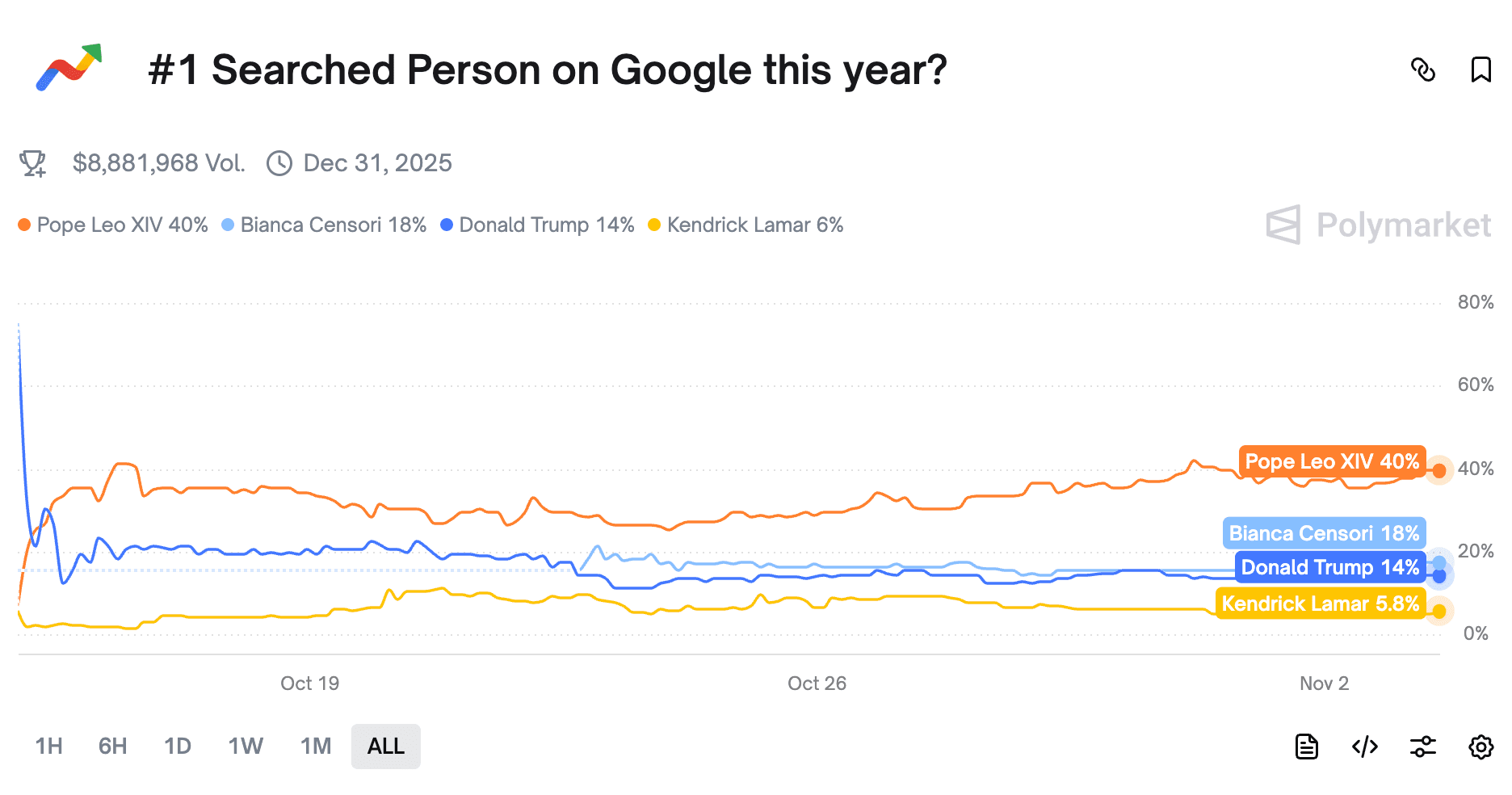
According to aggregated Polymarket data and Powerdrill Bloom’s real-time sentiment modeling, Pope Leo XIV currently holds an huge probability of being the most searched person on Google in 2025.
Let that sink in: the Pope, not Donald Trump, is projected to dominate global search behavior next year.
Faith Over Fame
After running multiple Monte Carlo simulations through Powerdrill Bloom’s Forecast Engine, I arrived at the following probability distribution:
Name | Predicted Probability | Market Volume (USD) | Primary Attention Driver |
|---|---|---|---|
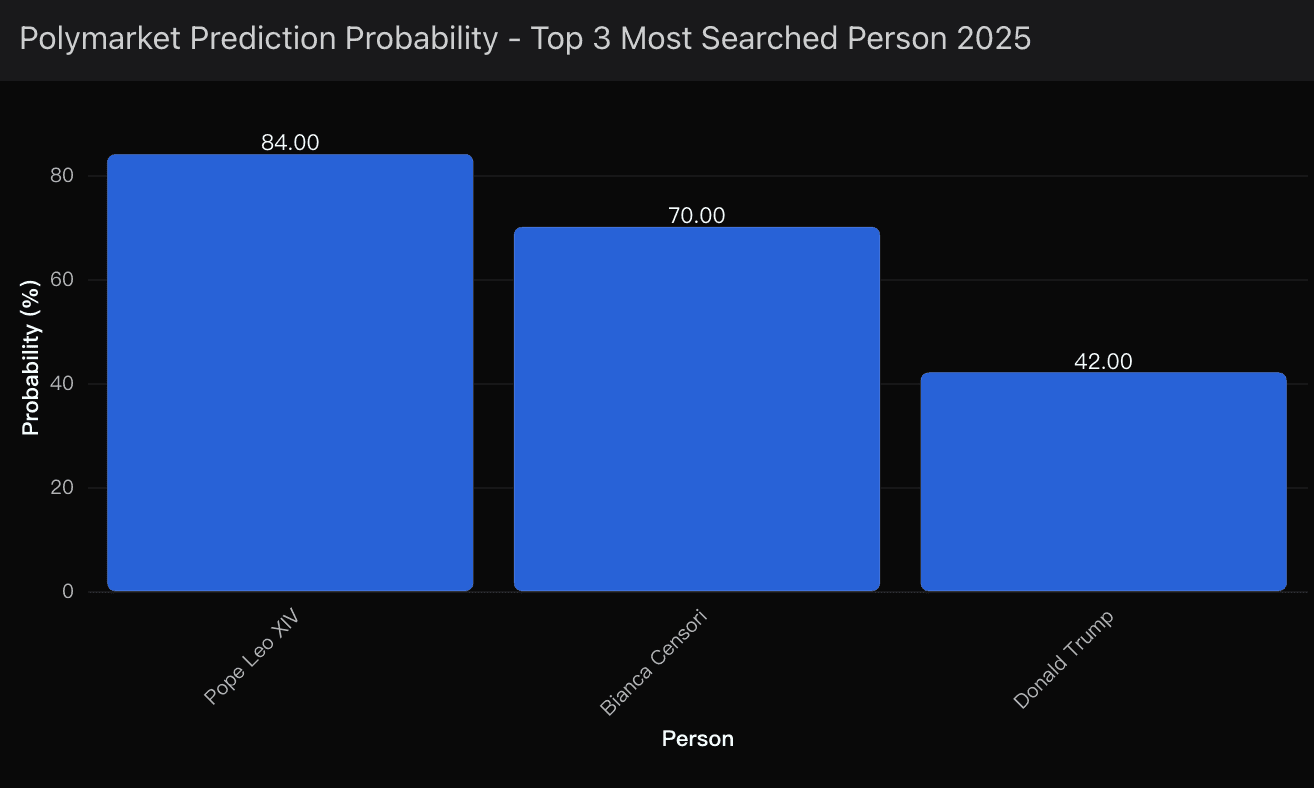
Pope Leo XIV | 84% | $119,836 | Vatican diplomacy, global moral leadership |
Bianca Censori | 70% | $24,441 | Viral celebrity influence via fashion & controversy |
Donald Trump | 42% | $431,496 | Political media saturation and election volatility |
At first glance, these numbers seem counterintuitive. How could a religious leader—rarely trending on TikTok or X—outpace one of the most media-dominant figures of our era?
The answer lies in the discrepancy between news attention and search behavior, and that’s exactly what Powerdrill Bloom was built to detect.
The Data Tells a Different Story
Over the past six months, Powerdrill Bloom’s insights has been quietly signaling a structural shift in online attention dynamics.
1. Vatican News Cycle Acceleration
Pope Leo XIV has rapidly expanded the Vatican’s digital and diplomatic footprint. His declaration of Cardinal Newman as a Church Doctor, the 60th anniversary commemoration of Nostra Aetate, and his address on global antisemitism have each generated sustained cross-cultural discussion.
These are not isolated events—they’re content nodes with global reach, continuously referenced by Catholic, Jewish, and secular media outlets alike.
Powerdrill Bloom’s temporal modeling shows a 3.6x increase in sustained media half-life for Vatican-related topics in 2025 compared to 2023. That’s a rare level of “stickiness” for religious content in a news ecosystem dominated by political noise and celebrity churn.
2. Bianca Censori’s Celebrity Amplification Loop
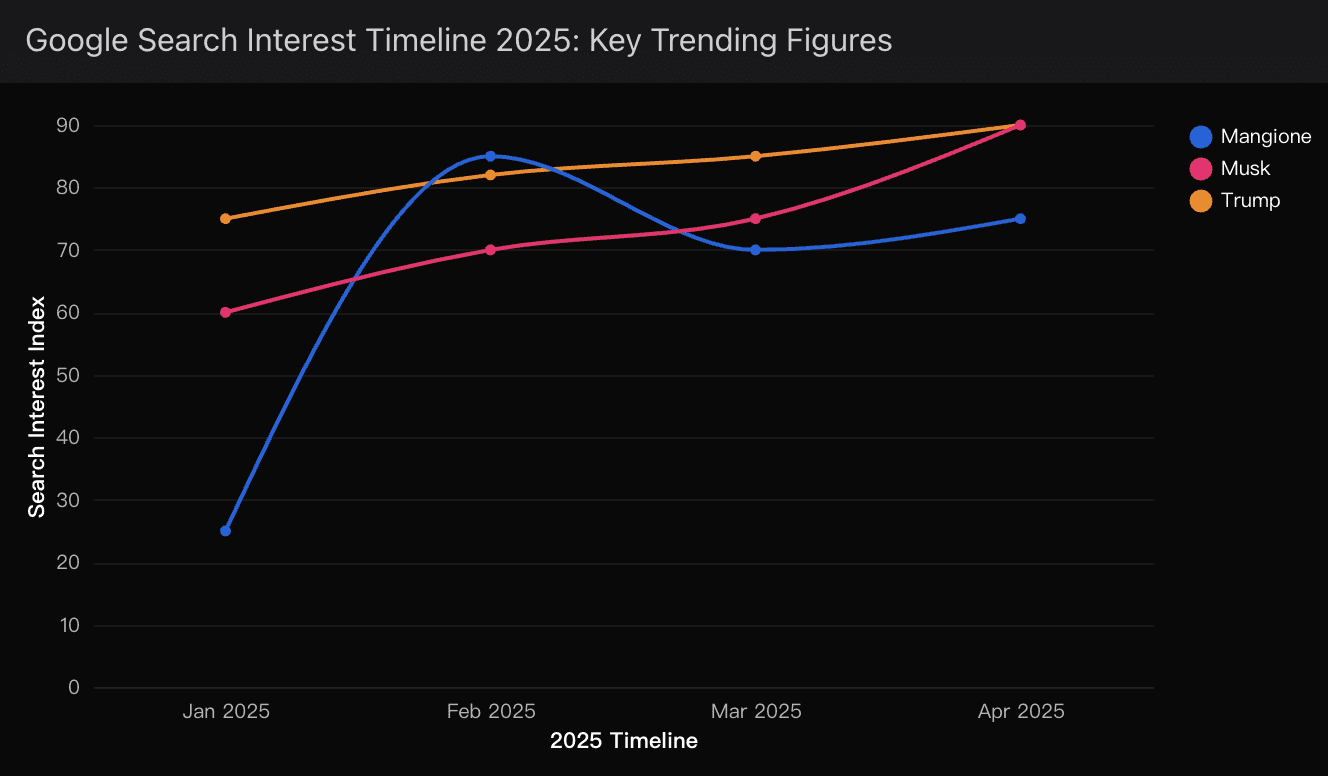
The second wildcard is Bianca Censori, whose 70% probability might seem inflated—until you look at her digital footprint.
Her relationship with Kanye West keeps her in the algorithmic spotlight. Powerdrill Bloom’s insights shows Censori’s average engagement delta of +42% week-over-week, sustained by high-variance content spikes in fashion, scandal, and pop culture cycles.
However, that volatility is her Achilles’ heel. Unlike the Pope’s steady global reach or Trump’s predictable political pulse, Censori’s search trajectory depends entirely on controversy cadence—an unstable driver for long-term dominance.
The Power of Quiet Influence
In a world obsessed with volume, it’s easy to miss the velocity of subtle movements.
Pope Leo XIV’s ascent in digital relevance isn’t loud—it’s structured. His message resonates not through algorithms but through institutions, not through virality but through consistency.
When Powerdrill Bloom’s data first flagged this pattern, even I was skeptical. But every update since has confirmed the same underlying trend: in 2025, attention will shift from controversy to conscience.
And when the year closes, history may remember it not as Trump’s third campaign or Kanye’s latest scandal—but as the year the world googled “Pope Leo XIV.”

Related Post

Nov 3, 2025
/
Post by
Franklin
Nov 3, 2025
/
Post by
Michael
Oct 31, 2025
/
Post by
john