How to Read a 10-K Report: Complete Guide
To read a 10-K report, start with Item 1 (Business) to learn what the company does. Then read Item 1A (Risk Factors) and Item 7, the MD&A, where management explains the year. Finish with Item 8, the audited financial statements, their notes, and the auditor's report.
A 10-K is long, and you do not need to read it front to back. This guide explains how the report is organized, the order that saves the most time, and the red flags the SEC itself points to. It also shows how to read a 10-K with AI when you need answers fast.
What a 10-K report is
A 10-K is the annual report a U.S. public company files with the Securities and Exchange Commission. The SEC's Investor.gov site says "Filed annually, the 10-K offers a detailed picture of what the company does, and the risks it faces." It adds: "It also includes the company's financial report."
The SEC's investor bulletin gives the basic rules:
- "Most U.S. public companies are required to file a 10-K each year with the U.S. Securities and Exchange Commission (SEC)."
- Non-U.S. public companies usually file their annual reports on different forms.
- "SEC rules require that 10-Ks follow a set order of topics."
That set order is what makes a 10-K easy to navigate once you know it. Every company puts its risk factors in the same item and its financial statements in the same item.
Who stands behind the numbers. The company prepares the 10-K, and the CEO and CFO must certify its accuracy. The SEC sets the rules and reviews filings. Still, the bulletin is direct: "The SEC does not vouch for the accuracy of a 10-K or 10-Q." An independent accountant audits the financial statements.
Where to find a 10-K
Every 10-K is free to read. The bulletin says "All 10-Ks and 10-Qs filed with the SEC are available to the public on the SEC's EDGAR website." It adds that most companies also post them on their own websites.
To search EDGAR, Investor.gov says to "type the company's name or ticker symbol in the search bar at the top of the home page." Results appear in date order, with the form type in the first column.
Two form types matter here:
- 10-K is the annual report filed by domestic public companies.
- 10-K/A is an amendment. Investor.gov says "/A" appended to a form type indicates an amendment.
If a company filed a 10-K/A, read it alongside the original. It may correct numbers or add missing items.
How a 10-K is organized
A 10-K has four parts and a fixed list of items. Here is the map, based on the SEC's bulletin.
| Part | Item | What it covers |
|---|---|---|
| I | 1. Business | Products, services, markets, subsidiaries, and competition |
| I | 1A. Risk Factors | The most significant risks, generally in order of importance |
| I | 1B. Unresolved Staff Comments | SEC staff comments that remain unresolved |
| I | 2–4 | Properties, legal proceedings, and mine safety |
| II | 5. Market for Common Equity | Share data, holders, dividends, and buybacks |
| II | 6. [Reserved] | No required information since February 2021 |
| II | 7. MD&A | Management's view of results, liquidity, and trends |
| II | 7A. Market Risk | Exposure to interest rate, currency, and commodity risk |
| II | 8. Financial Statements | Audited statements, notes, and the auditor's report |
| II | 9, 9A, 9B | Accountant changes, controls, and other information |
| III | 10–14 | Directors, pay, ownership, related deals, and audit fees |
| IV | 15. Exhibits | Bylaws, material contracts, subsidiaries, and more |
Item 6 trips up many first-time readers. The bulletin says it is now "reserved by the SEC for future rulemaking." Before February 2021, it held five years of selected financial data. Older guides still describe that version.
How to read a 10-K: a practical order
Reading in this order gives you the story first, then the proof.
1. Item 1, Business. The bulletin calls this "a good place to start to understand how the company operates." Note the main products, the markets, and who the competitors are.
2. Item 1A, Risk Factors. "Companies generally list the risk factors in order of their importance." Read the first ten closely. The bulletin also warns that "this section focuses on the risks themselves, not how the company addresses those risks."
3. Item 7, MD&A. This section "allows company management to tell its story in its own words." Look for what changed from last year, and why. Pay attention to liquidity, known trends, and critical accounting judgments.
4. Item 8, Financial Statements. Read the income statement, balance sheet, and cash flow statement. Then read the notes, which explain the numbers.
5. The auditor's report. The bulletin says "The auditor's report is a key part of the 10-K." Check the type of opinion before you trust the figures.
6. Item 9A, Controls and Procedures. This covers internal control over financial reporting. Look for any material weakness.
7. Item 1B and Item 3. Check for unresolved SEC comments and significant lawsuits.
Keep a short page of notes as you go. Write one line per item: what the company does, its top three risks, what management says changed, and any warning sign. That page is often more useful than the full document when you come back later.
If you only have twenty minutes, read Items 1, 1A, and 7. If you are investing real money, read all seven.
What to look for in the financial statements
Item 8 holds the numbers. The bulletin lists the core statements: the income statement, balance sheets, statement of cash flows, and statement of stockholders' equity. It notes that the income statement is sometimes called "the statement of earnings or the statement of operations."
Read them as a set:
- Income statement. Did revenue grow, and did margins hold? See our guide to analyzing an income statement.
- Balance sheet. Is debt rising faster than assets? See our guide to analyzing a balance sheet.
- Cash flow statement. Does profit turn into cash? See our guide to analyzing a cash flow statement.
- Notes. They explain revenue rules, debt terms, leases, and segments.
Compare at least two years side by side. The bulletin says U.S. companies present their statements under GAAP, a set of accounting standards. That makes year-to-year comparison easier.
How to read the notes to the financial statements
The notes are where the real detail sits. The bulletin says the statements "are accompanied by notes that explain the information presented in the financial statements." Many readers skip them, and that is where surprises hide.
Start with the notes that change how you read the main numbers:
- Accounting policies. An early note often explains how the company books revenue and values inventory. A change here can move profit without any change in the business.
- Revenue. Look for a split by product, region, or customer type. It shows which part of the business is growing.
- Debt. Check interest rates, maturity dates, and covenants. A large repayment next year matters even if the balance sheet looks fine.
- Leases and commitments. These show money the company has promised to pay in the future.
- Segments. Segment results show which units earn money and which lose it.
- Contingencies. Pending lawsuits and guarantees appear here, often with an estimate of the cost.
Read the note for any line that moved sharply from last year. A one-line jump in the statements often has a full page of explanation behind it.
Red flags in a 10-K
The SEC's bulletin points to several items that deserve extra attention.
A qualified or disclaimed audit opinion. Most audits give an "unqualified opinion." Some give a "qualified opinion" or a "disclaimer of opinion." Then, the bulletin says, investors "should look carefully at what kept the auditor from expressing an unqualified opinion."
Material weaknesses in internal controls. The bulletin says investors "should carefully evaluate material weaknesses disclosed on internal controls over financial reporting."
A change of accountants. Item 9 covers disagreements with a former auditor. "Many investors view this disclosure as a red flag."
Unresolved SEC comments. Item 1B lists SEC staff questions that have stayed open for a long time.
Heavy use of non-GAAP numbers. Companies can show adjusted figures, but must reconcile them to GAAP. The bulletin says "it is up to you to decide how much weight to give to non-GAAP measures."
Missing certifications. CEO and CFO certifications usually appear in Exhibits 31 and 32. Check that they are there.
How to compare filings across years
One annual report tells you where a company stands. Three in a row tell you where it is heading.
Line up the same items. Put this year's and last year's risk factors side by side. New risks near the top deserve attention, and so do risks that quietly disappear.
Track a few key numbers. Pick five or six figures, such as revenue, gross margin, operating cash flow, debt, and share count. Put them in one table across three years.
Reread the MD&A promises. Last year's MD&A often says what management expected. This year's shows whether it happened.
Watch the wording. Small changes in language can matter. "Expect" becoming "hope," or a new mention of a supplier, can signal a shift.
Check the auditor and controls each year. A new auditor or a first material weakness is easier to spot when you compare years.
Store each year's table in one file, so next year's update takes minutes. This habit turns a long document into a short list of changes. That list is what most readers actually need.
How to read a 10-K with AI
Reading a full 10-K takes hours. Comparing several companies takes days. An AI tool can pull the filing, answer specific questions, and turn the numbers into tables and charts.
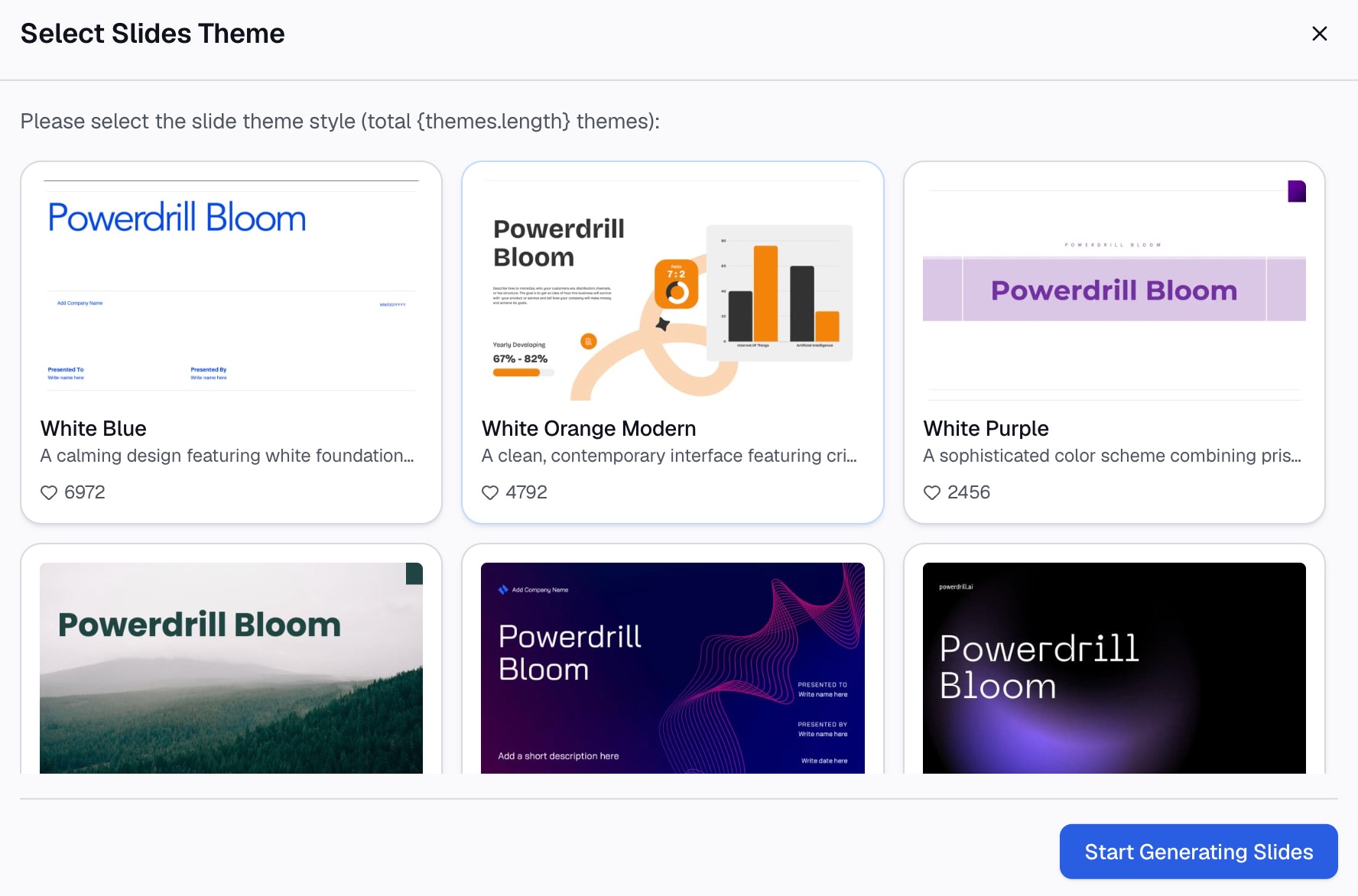
Here is the method in three steps, using Powerdrill Bloom.
Step 1: Pull the filing or upload it
Start with the company you want to read. Powerdrill Bloom's SEC Filing Search covers "3M+ SEC filings — 10-Ks, earnings, financial statements, dividends, and insider transactions." You can also upload a 10-K stored as a PDF.
The page is part of its open data sources, so you can start without downloading anything.

Step 2: Ask targeted questions in natural language
Ask about the parts you would read first. The SEC Filing Search page suggests prompts such as "Summarize Tesla's latest 10-K risk factors." You can also ask for revenue and net income over five years, or what changed in the MD&A.
For deeper work, the AI Financial Analysis Tool runs "ratios, trends, anomalies and narrative" on a P&L, balance sheet, and cash flow.
Step 3: Check the sources and export the results
Check each figure against the filing before you rely on it. The SEC Filing Search page says "Every answer is backed by SEC, with links to the original records — not guesses."
Then export. The page says you can "Turn raw records into visualizations, tables, and slides in a couple of clicks." That turns a 10-K review into a one-page summary or a short deck for your team.
A 10-K reading example
Here is a short example for an invented company, Harbor Kitchen Supply. All figures below are invented.
| Item | What the 10-K says |
|---|---|
| Business | Kitchen equipment sold through 120 stores and online |
| Top risk factor | Reliance on two overseas suppliers for 60% of products |
| MD&A | Revenue up 8%; margin down 2 points on freight costs |
| Cash flow | Operating cash flow fell while inventory rose 25% |
| Auditor's report | Unqualified opinion |
| Item 9A | No material weakness reported |
Now apply the reading order.
Business and risks. The supplier risk sits at the top of Item 1A. That matches the margin story in the MD&A.
Numbers. Revenue grew, but cash flow fell. The rise in inventory explains the gap. That is worth a question to management.
Checks. The auditor gave an unqualified opinion, and there is no material weakness. The numbers are audited and controls look sound.
Summary. Growth is real, but supplier risk and rising inventory deserve a close watch next quarter.
10-K vs. 10-Q vs. annual report
The three documents overlap but are not the same.
| Document | When it is filed | What it contains |
|---|---|---|
| Form 10-K | Once a year | Full business review, risks, MD&A, and audited statements |
| Form 10-Q | After each of the first three fiscal quarters | Shorter review with fewer items |
| Annual report to shareholders | Before annual meetings | Overlaps the 10-K, sometimes as a glossy publication |
The bulletin says "The 10-K typically includes more detailed information than the annual report to shareholders." Some companies simply send their 10-K as the annual report. For the most detail, read the 10-K.
Part III of the 10-K often points to the proxy statement for pay and board details. The bulletin notes "the proxy statement is typically filed a month or two after the 10-K."
To try this on a real filing, try Powerdrill Bloom with the latest 10-K of a company you follow.
Frequently asked questions
What is the most important part of a 10-K?
Most readers start with Item 1A, Risk Factors, and Item 7, the MD&A. The audited financial statements in Item 8 are the core of the numbers. The auditor's report tells you how much to trust them.
How long does it take to read a 10-K?
A full read can take several hours, because the report covers every part of the business. Reading Items 1, 1A, and 7 first is a much shorter task and gives you the main story.
Where can I find a company's 10-K for free?
Search the SEC's EDGAR database by company name or ticker symbol. Most companies also post their 10-K on their own website. Every 10-K filed with the SEC is free to read.
What is the difference between a 10-K and a 10-Q?
A 10-K is the annual report with audited financial statements. A 10-Q is filed after each of the first three fiscal quarters. The 10-Q is shorter and has fewer items.
What happened to Item 6 in the 10-K?
Item 6 used to hold five years of selected financial data. Since February 2021, it has no required information. The SEC reserves it for future rulemaking, so most 10-Ks now show it as reserved.
Sources: SEC Investor Bulletin, How to Read a 10-K/10-Q · Investor.gov, How to Read a 10-K · Investor.gov, Using EDGAR to Research Investments. Details read on November 2, 2026.