Data Fact: Vijf grafieken die het WK-verhaal van Duitsland in 2026 vertellen
TL;DR — Het WK 2026 van Duitsland in 5 cijfers
Duitsland arriveerde in Noord-Amerika met hoge verwachtingen, maar vertrok verbijsterd. Hier is de boog van hun achtbaantoernooi in vijf cijfers:
- 11 wedstrijden op rij gewonnen vóór het toernooi—hun langste reeks sinds 1980.
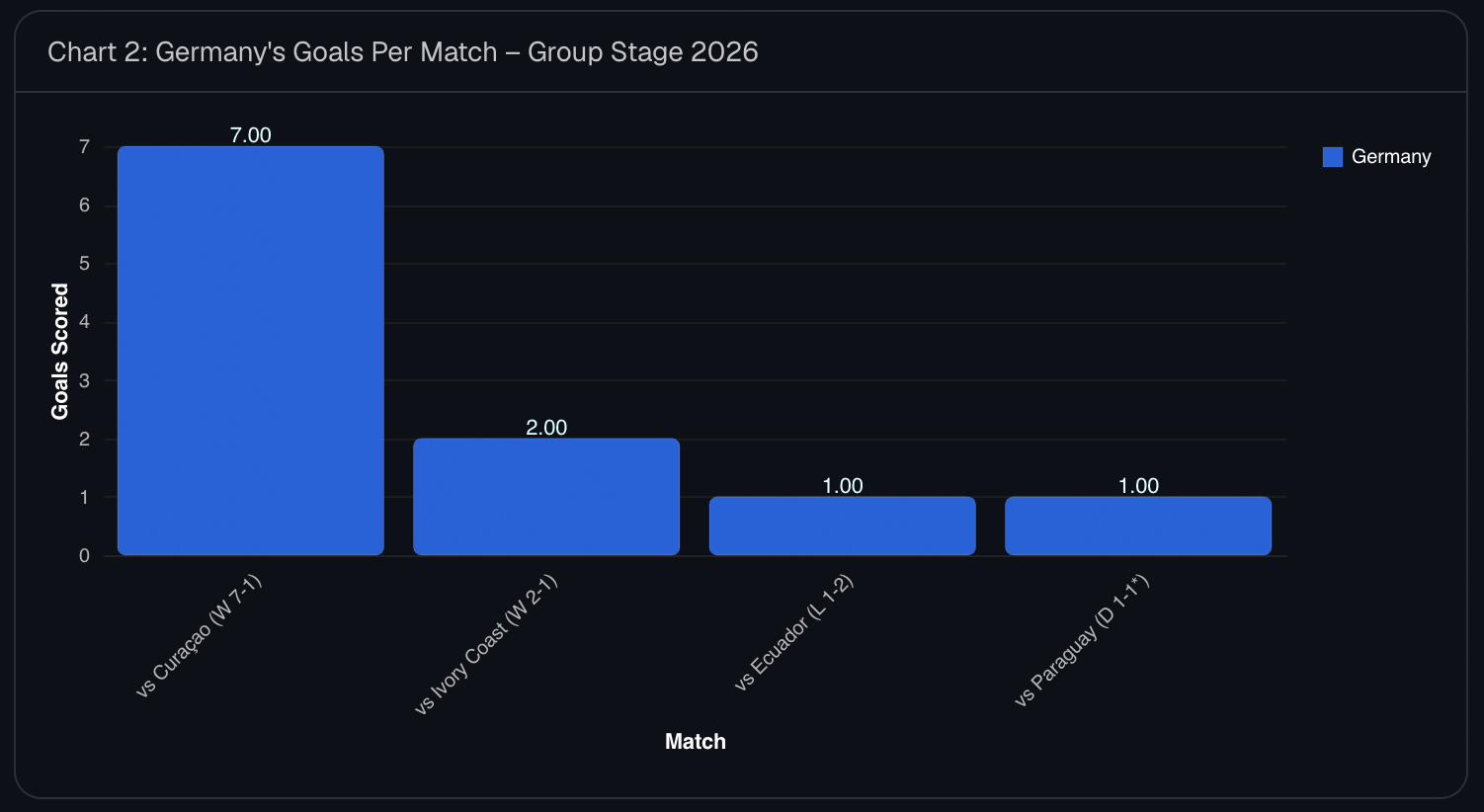
- 7 doelpunten in hun openingsvernedering van Curacao, vóór een scherpe aanvallende terugval.
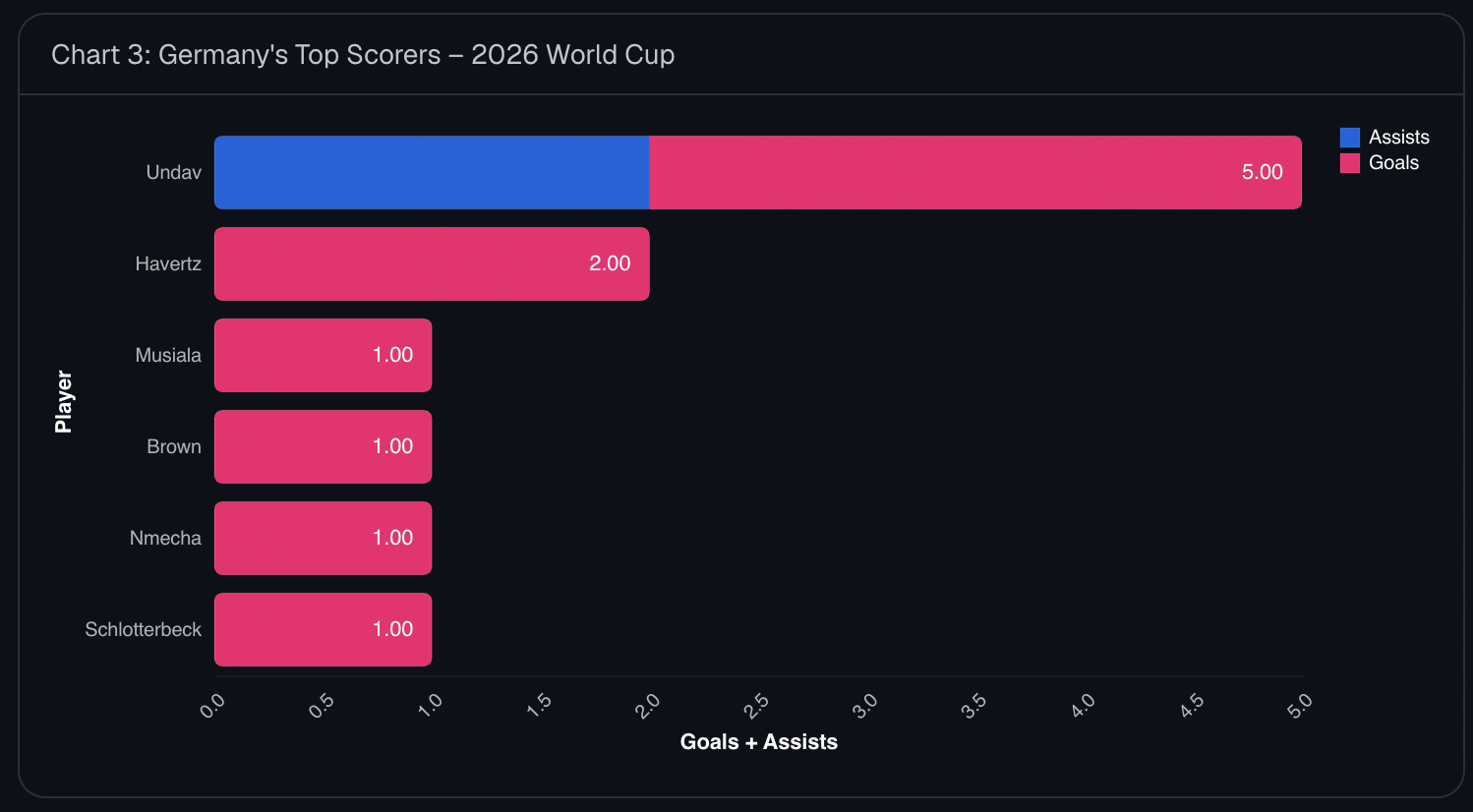
- 5 doelpuntbijdragen (3G, 2A) van Deniz Undav—allemaal vanaf de bank, waarmee een record uit 1990 werd geëvenaard.
- 76% balbezit tegen Paraguay in de laatste 32, wat een schamele 0,72 xG opleverde.
- 3 opeenvolgende WK's zonder de kwartfinale te bereiken (2018, 2022, 2026)—een ongekende droogte voor de viervoudig kampioen.
Kort samengevat: Het WK 2026 van Duitsland was een verhaal van valse hoop. Het probleem was niet hun technische vermogen of balcontrole; het was hun gebrek aan meedogenloosheid op de momenten die er het meest toe deden.
Een beetje achtergrond
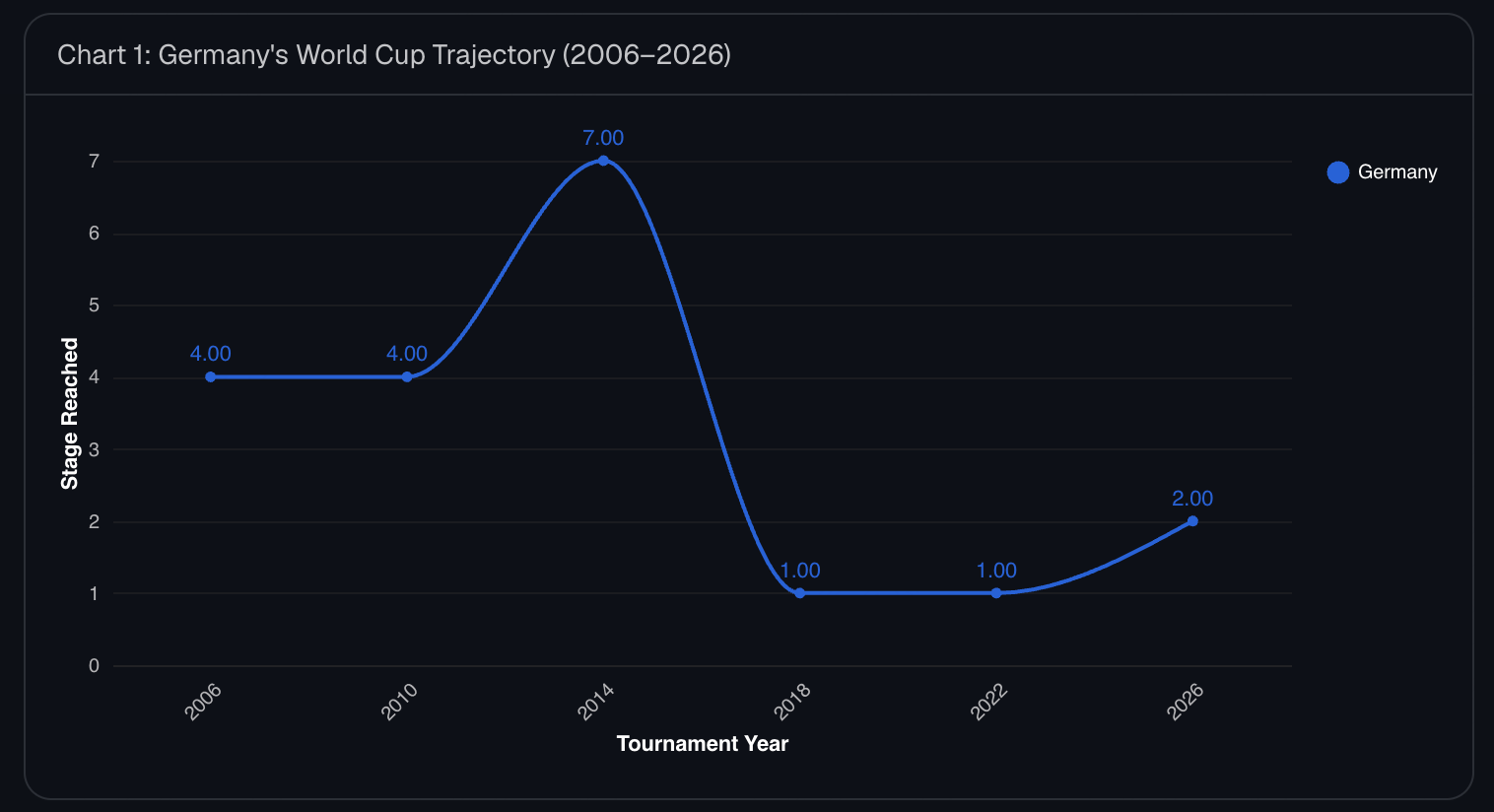
Tien jaar geleden was Duitsland de onbetwiste koning van het wereldvoetbal, gekroond tot kampioen in 2014 na een historische zegetocht. Bij aanvang van het FIFA WK 2026 in Canada, Mexico en de VS ging het gesprek over eerherstel. Met een reeks van 11 gewonnen wedstrijden leken ze klaar om de spoken van de opeenvolgende uitschakelingen in de groepsfase in 2018 en 2022 uit te wissen. Dat eerherstel kwam er nooit.
Ondanks dat ze dit keer wel de groepsfase overleefden, telt uitschakeling in de laatste 32 na strafschoppen tegen Paraguay nauwelijks als een succes. Om te zien hoe een historisch hoogtepunt veranderde in een strafschopdrama, hebben we de cijfers op een rij gezet en de data het verhaal laten vertellen.
Over de dataset
Dit rapport is gebaseerd op openbaar gerapporteerde WK 2026-cijfers over wedstrijduitslagen, doelpuntenmakers, balbezitstatistieken en expected goals (xG). Bronnen zijn onder meer ESPN, FIFA, xGscore.io en de wedstrijddata van The Athletic. Cijfers zijn geverifieerd en afgerond voor de leesbaarheid.
Over de tool
Elke grafiek in dit rapport is gegenereerd met Powerdrill Bloom, een AI-first agent voor data-analyse. We uploadden de ruwe wedstrijd- en spelerstatistieken, en Bloom maakte ze schoon, stelde verkenningspaden voor en produceerde de onderstaande grafieken automatisch—geen SQL, geen Python, geen handmatige opmaak. Wil je dezelfde data zelf verkennen, bekijk dan onze AI-tool voor datavisualisatie.
Belangrijkste conclusies
- Een decennium van verval. Hoewel Duitsland technisch gezien beter presteerde dan in hun campagnes van 2018 en 2022 door de knock-outfase te halen, bevestigt hun uitschakeling in de laatste 32 een steile daling ten opzichte van hun gouden tijdperk van 2006–2014.
- De scoringsval was steil. Het team leek onstuitbaar in een 7-1 openingszege tegen debutant Curacao. Maar hun aanvallende productie stortte meteen in tot 2 doelpunten, daarna 1 en nogmaals 1 in de daaropvolgende wedstrijden.
- Undav was de ultieme supersub. Deniz Undav van Stuttgart evenaarde het WK-record van Roger Milla voor doelpuntbijdragen vanaf de bank (5), maar toch liet Julian Nagelsmann hem nooit starten.
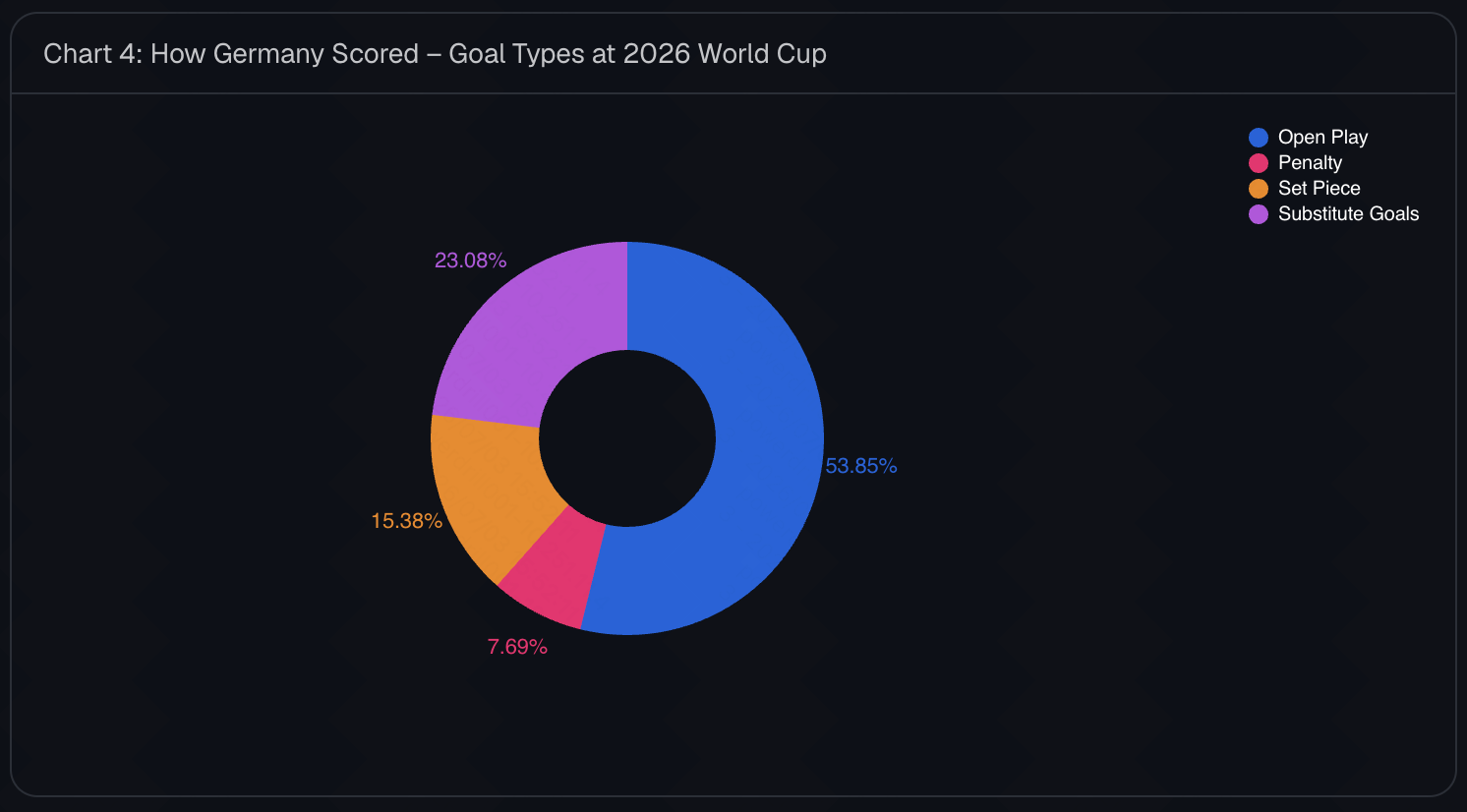
- De afhankelijkheid van de bank was ongewoon hoog. Bijna een kwart (23%) van de doelpunten van Duitsland kwam van invallers.
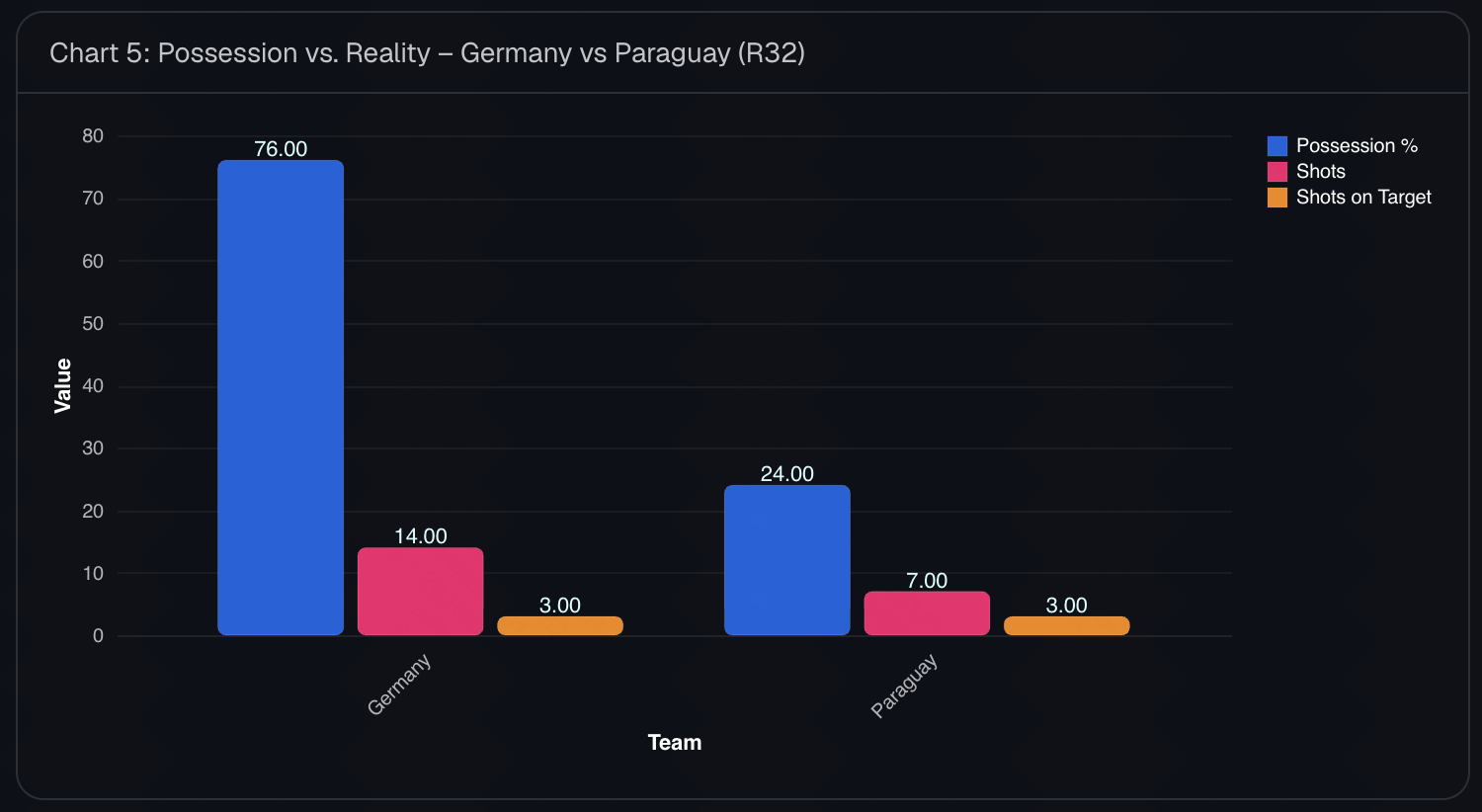
- Balbezit zonder doel. De uitschakelingswedstrijd legde hun systematische gebreken bloot: absolute balcontrole (76%) maar een onvermogen om hoogwaardige kansen te creëren.
De Duitse WK-ineenstorting: de volledige data-analyse
V1: Wie waren de belangrijkste aanvallende dreigingen voor Duitsland?
De grafiek met doelpuntenmakers onthult een opvallende tactische vraag. Kai Havertz (2 doelpunten) en Jamal Musiala (1 doelpunt) waren vaste basisspelers, maar de onmiskenbare uitblinker was Deniz Undav. Met 3 doelpunten en 2 assists in beperkte speeltijd genereerde Undav meer aanvallende output dan de rest van de startende voorhoede bij elkaar. Hij werd zelfs pas de vierde speler in de geschiedenis die in dezelfde wedstrijd als invaller zowel een gelijkmaker als een winnende goal in de 90'+2 maakte (tegen Ivoorkust).
V2: Hoe genereerde Duitsland zijn doelpunten?
Het opsplitsen van de doelpunttypes benadrukt een sterke afhankelijkheid van impactvolle invallers. Terwijl open spel goed was voor 54% van hun doelpunten, kwam een verbluffende 23% (3 van de 11) van spelers die vanaf de bank werden ingebracht. Standaardsituaties en strafschoppen vormden het resterende aandeel. Dit hoge aandeel van invallers roept de ultieme "wat als"-vraag op over Nagelsmanns keuzes voor de basiself gedurende het toernooi.
V3: Wat ging er eigenlijk mis bij de uitschakeling in de knock-outfase?
De wedstrijd tegen Paraguay is een schoolvoorbeeld van het verschil tussen een wedstrijd beheersen en hem winnen. Duitsland domineerde het balbezit volledig (76% tegen 24%) en bestookte het zestienmetergebied van de tegenstander (33 balcontacten tegen 10). Toch genereerden ze uit 14 schoten een teleurstellende 0,72 Expected Goals (xG) en kwamen ze tot slechts 3 schoten op doel. Paraguay ving de druk comfortabel op, sleepte de wedstrijd naar een 1-1 gelijkspel en won met 4-3 na strafschoppen toen Jonathan Tah miste en Havertz werd gekeerd.
Wat we leren uit de cijfers
De campagne van Duitsland in 2026 is een schoolvoorbeeld van de gevaren van oppervlakkige dominantie. De data bewijzen dat balbezit zonder penetratie een valstrik is—een groot volume aan passes en balcontacten in het zestienmetergebied betekent niets als de onderliggende kanskwaliteit (xG) laag blijft. Bovendien is het scherpe contrast tussen Undavs recordbrekende impact vanaf de bank en de worstelingen van de basiself een klassiek voorbeeld van waarom actuele data en vorm zwaarder moeten wegen dan een historische reputatie. In toernooivoetbal, net als in elke omgeving met hoge inzet, wint efficiëntie het elke keer van de schone schijn.
Hoe we deze grafieken maakten (in één klik)
Je hebt geen datateam nodig om een naberoordeling als deze te produceren. Hier is de exacte workflow:
- Kies je startpunt. Powerdrill Bloom biedt drie manieren om je analyse te beginnen: Start vanuit skills, Start vanuit een onderwerp, of Start met je data. Voor dit rapport kozen we Start vanuit skills om automatisch de WK-wedstrijdstatistieken van Duitsland te verzamelen, verwerken en analyseren.
- Laat de AI inzichten genereren. Zodra de skill was geactiveerd, structureerde Bloom direct de data, identificeerde de belangrijkste verhaallijnen (zoals Undavs invallersrecord en de xG-terugval) en produceerde alle grafieken automatisch.
- Exporteer naar slides. Zet het hele canvas om in een verzorgde, presentatieklare tactische deck en exporteer met één klik naar PowerPoint.
FAQ
Waar komen deze WK-data vandaan?
De cijfers zijn ontleend aan openbaar gerapporteerde WK 2026-statistieken, waaronder officiële FIFA-wedstrijdrapporten, ESPN en geavanceerde statistieken van xGscore.io.
Wie was de topscorer van Duitsland in 2026?
Deniz Undav leidde het team met 3 doelpunten en 2 assists, waarbij hij alle 5 zijn doelpuntbijdragen als invaller leverde.
Verbrak Duitsland records voordat het werd uitgeschakeld?
Ja. Manuel Neuer vestigde het aller tijden WK-record voor het aantal optredens als doelman (21 wedstrijden), en Duitsland verbrak het aller tijden WK-doelpuntenrecord van Brazilië (239 teamdoelpunten in totaal).
Waarom verloor Duitsland van Paraguay?
Ondanks 76% balbezit en 14 schoten genereerde Duitsland slechts 0,72 xG en verloor het de daaropvolgende strafschoppenreeks met 4-3.
Kan ik de data van mijn eigen sportteam op deze manier analyseren?
Ja. Upload een CSV- of Excel-bestand naar Powerdrill Bloom en het maakt de data schoon, bouwt de grafieken en laat je een slide deck exporteren—zonder dat er geprogrammeerd hoeft te worden.
Tot slot
De cijfers achter het WK 2026 van Duitsland vertellen het verhaal van een team dat gevangen zit tussen historische grootsheid en moderne stagnatie. Het verbreken van Braziliës aller tijden doelpuntenrecord en het domineren van het balbezit bieden weinig troost wanneer het uiteindelijke resultaat een derde opeenvolgend WK zonder kwartfinale is. Het draaiboek voor 2030 is duidelijk: balbezit moet een doel hebben.
Benieuwd wat de tactische data van jouw team verbergen? Upload ze naar Powerdrill Bloom en laat de grafieken het verhaal vertellen.