Fait de données : GLM-5.2 se classe 4e au classement mondial des modèles d'IA 2026

L'essentiel — L'essor de GLM-5.2 en 5 chiffres
Le paysage mondial de l'intelligence artificielle en 2026 a connu des mutations massives, passant des écosystèmes fermés d'API propriétaires à un marché florissant de modèles open-weights. Voici l'impact sur le marché du tout nouveau GLM-5.2 à travers cinq chiffres clés :
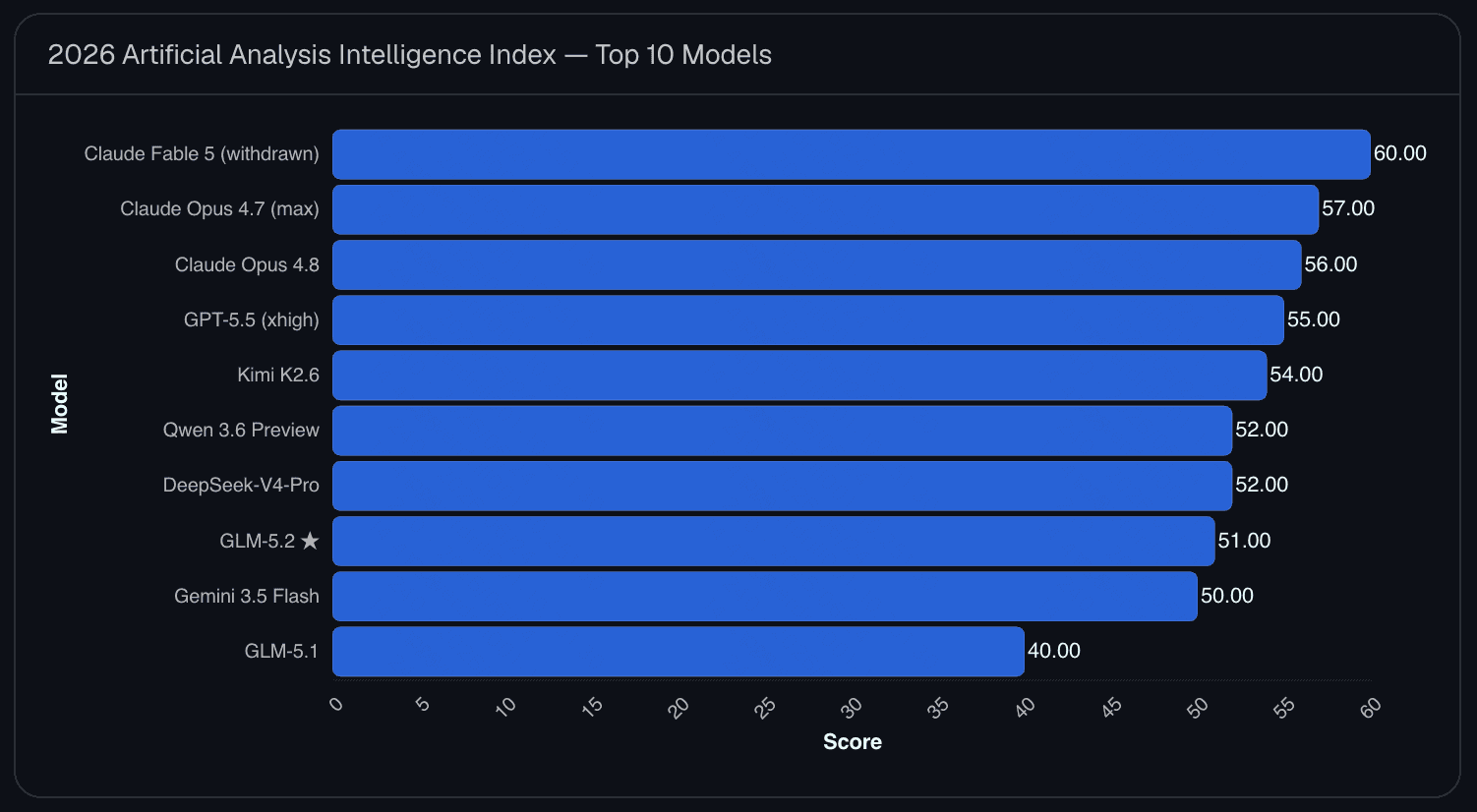
- 51 : Le score global de GLM-5.2 sur le rigoureux Artificial Analysis Intelligence Index.
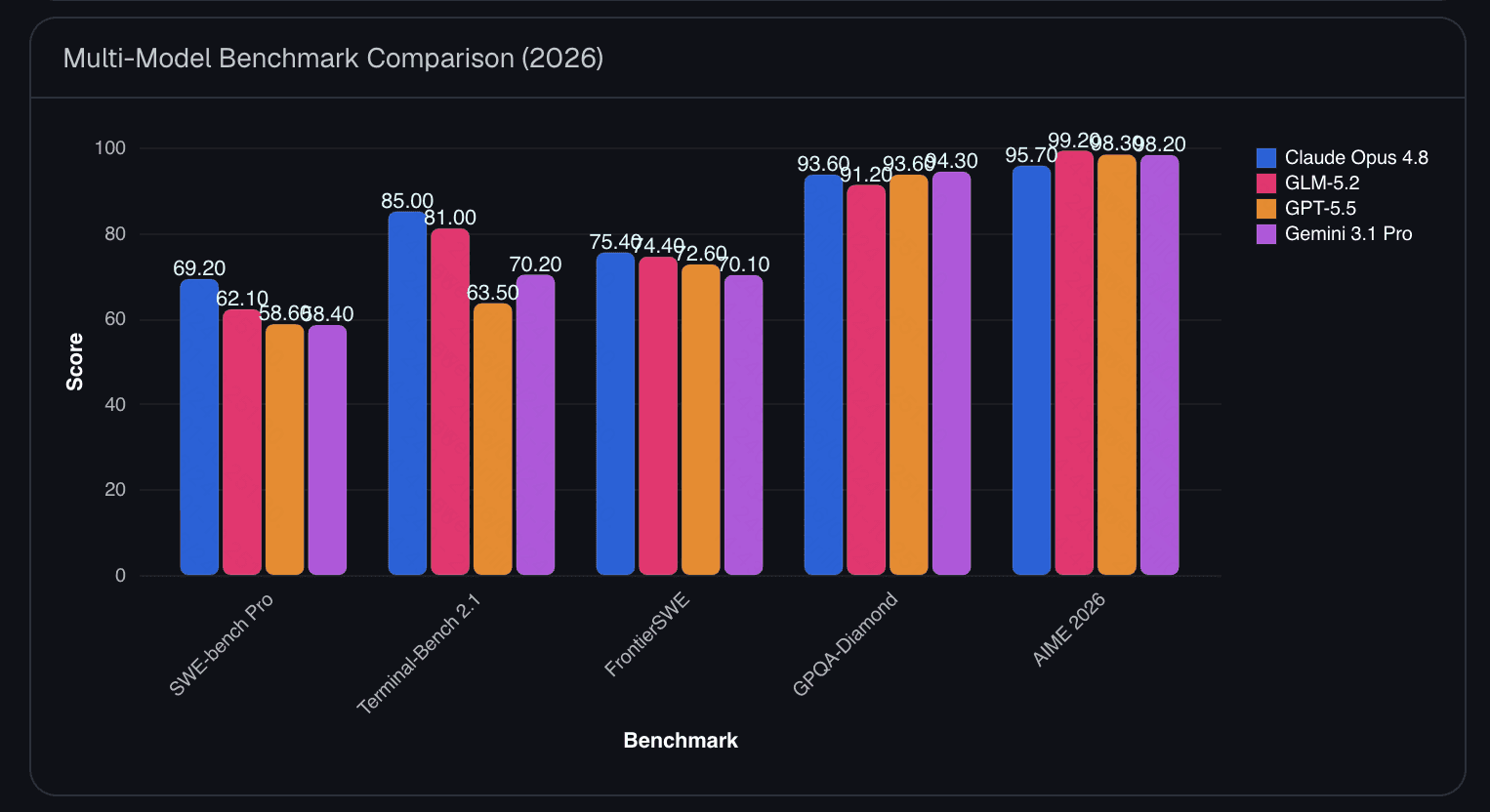
- 99.2% : Son score de premier plan sur le benchmark AIME 2026, surpassant tous ses concurrents à l'échelle mondiale.
- 753 milliards : Le nombre total de paramètres de cette architecture massive de type Mixture-of-Experts (MoE).
- $1.40 : Le coût d'entrée pour 1 million de tokens, ce qui perturbe fondamentalement la tarification actuelle du marché.
- 1 million : La fenêtre de contexte de tokens hautement stable, spécialement conçue pour le codage à long terme et les tâches d'agents autonomes.
En résumé : Les modèles open-weights ne se contentent plus de « rattraper » les géants propriétaires. Sur de multiples évaluations fondamentales en mathématiques et en codage, ce sont eux qui dictent désormais le rythme mondial.
Un peu de contexte
Il y a tout juste quelques mois, la communauté internationale des développeurs a été profondément déstabilisée par les restrictions soudaines d'accès aux API imposées par les principaux créateurs d'IA propriétaires basés aux États-Unis, notamment le retrait brutal de Claude Fable 5 d'Anthropic pour les utilisateurs internationaux. Ce goulot d'étranglement géopolitique a considérablement accéléré la demande d'alternatives performantes, non censurées et entièrement open-weights.
C'est dans ce contexte qu'intervient GLM-5.2, officiellement lancé le 13 juin 2026 par le laboratoire d'IA pékinois Z.ai. Fait crucial, ce modèle prouve que l'évolution de l'IA de pointe ne dépend plus strictement d'un seul fournisseur de matériel. Il a été entièrement entraîné sur un vaste cluster de 100 000 puces Huawei Ascend 910B à l'aide du framework MindSpore. Publié sous licence MIT, GLM-5.2 garantit un accès sans précédent à une intelligence artificielle de niveau frontière.
À propos du jeu de données
Ce rapport scientifique s'appuie sur des données de benchmarks d'IA de 2026 publiées et rigoureusement vérifiées, couvrant les scores d'intelligence globale, le raisonnement mathématique complexe, l'ingénierie logicielle avancée et les tarifs des API. Les sources de données incluent l'Artificial Analysis Intelligence Index, BenchLM.ai, llm-stats.com et l'AI Index 2026 de Stanford.
À propos de l'outil
Chaque graphique de ce rapport scientifique rigoureux a été généré avec Powerdrill Bloom, un agent d'analyse de données conçu pour l'IA. Pour garantir une précision absolue et éliminer toute erreur humaine de visualisation, nous avons importé les feuilles de calcul brutes des benchmarks. Bloom a automatiquement nettoyé les jeux de données, suggéré des pistes d'exploration et produit les graphiques exacts ci-dessous — sans SQL, sans Python, ni mise en forme manuelle.
Points clés à retenir
- Une puissance open-weights sans précédent : Avec un score de 51 sur l'Artificial Analysis Intelligence Index, GLM-5.2 s'impose comme une force incontournable, se positionnant au 4e rang mondial des familles d'IA fondatrices les plus déployées au monde.
- Excellence en mathématiques et en codage : Il a obtenu un score impressionnant de 99.2% sur AIME 2026, devançant Claude Opus 4.8 et GPT-5.5. C'est également le premier modèle ouvert à franchir la barre des 80% sur Terminal-Bench 2.1 (81.0%).
- Indépendance matérielle : L'architecture MoE de 753B paramètres valide des voies alternatives pour l'évolution des puces.
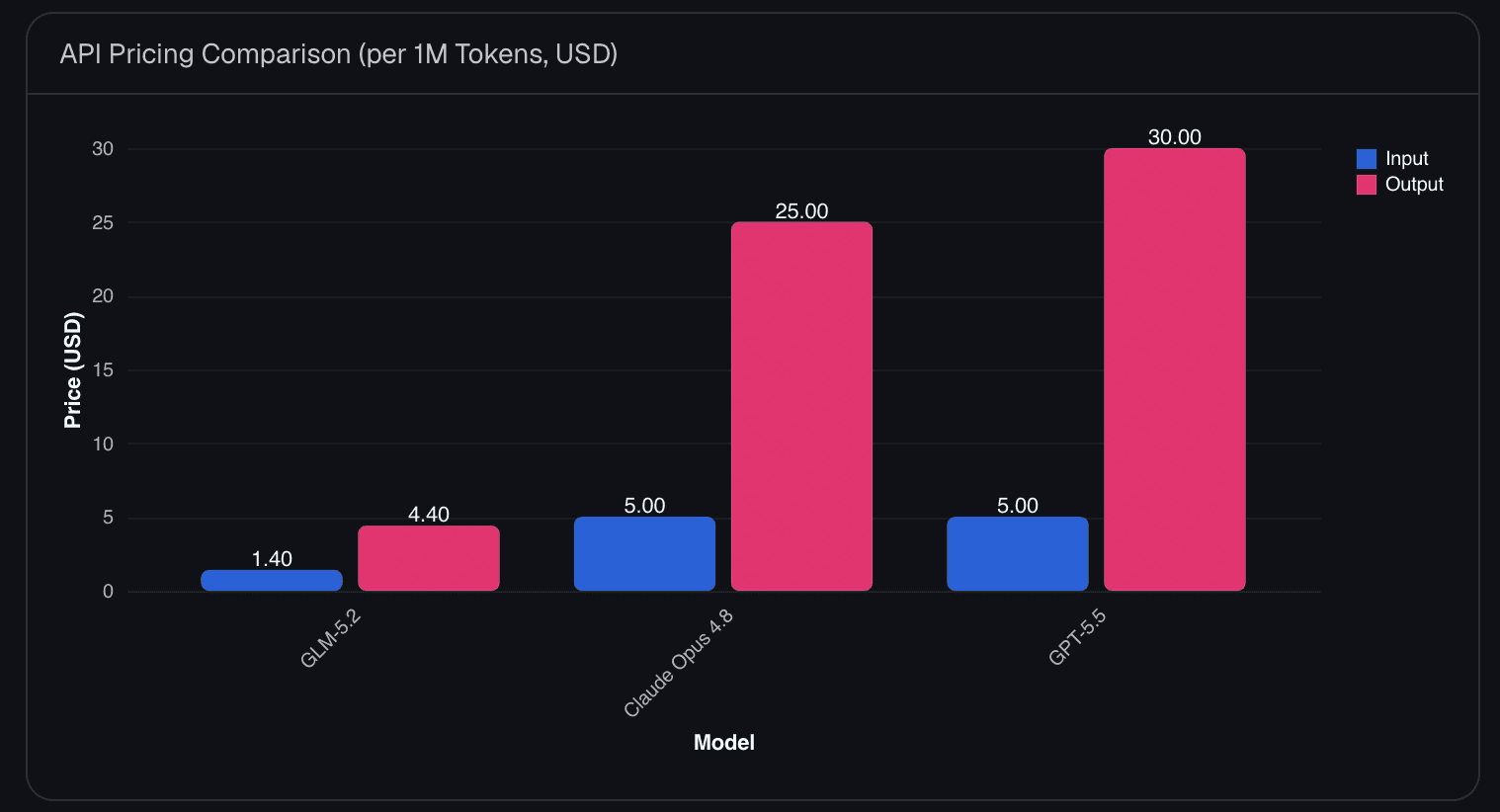
- Rapport coût-efficacité : À $1.40 pour 1M de tokens d'entrée, il est environ 3,6 fois moins cher que Claude Opus 4.8.
L'essor mondial des modèles : analyse complète des données
Q1 : Comment GLM-5.2 bouscule-t-il les modèles tarifaires de l'IA de pointe ?
La structure tarifaire de l'IA de pointe a historiquement constitué un frein majeur pour les flux de travail à l'échelle de l'entreprise. GLM-5.2 change la donne. Alors que Claude Opus 4.8 et GPT-5.5 facturent un tarif premium de $5.00 pour 1M de tokens d'entrée, GLM-5.2 ne coûte que $1.40. De plus, il propose un niveau d'entrée en cache à un tarif ultra-bas de $0.26. Pour les tokens de sortie, GLM-5.2 ne coûte que $4.40 par million de tokens, ce qui le rend 5,7 fois moins cher que Claude Opus 4.8 et 6,8 fois moins cher que GPT-5.5.
Q2 : À quelle vitesse la série GLM a-t-elle évolué en 2026 ?
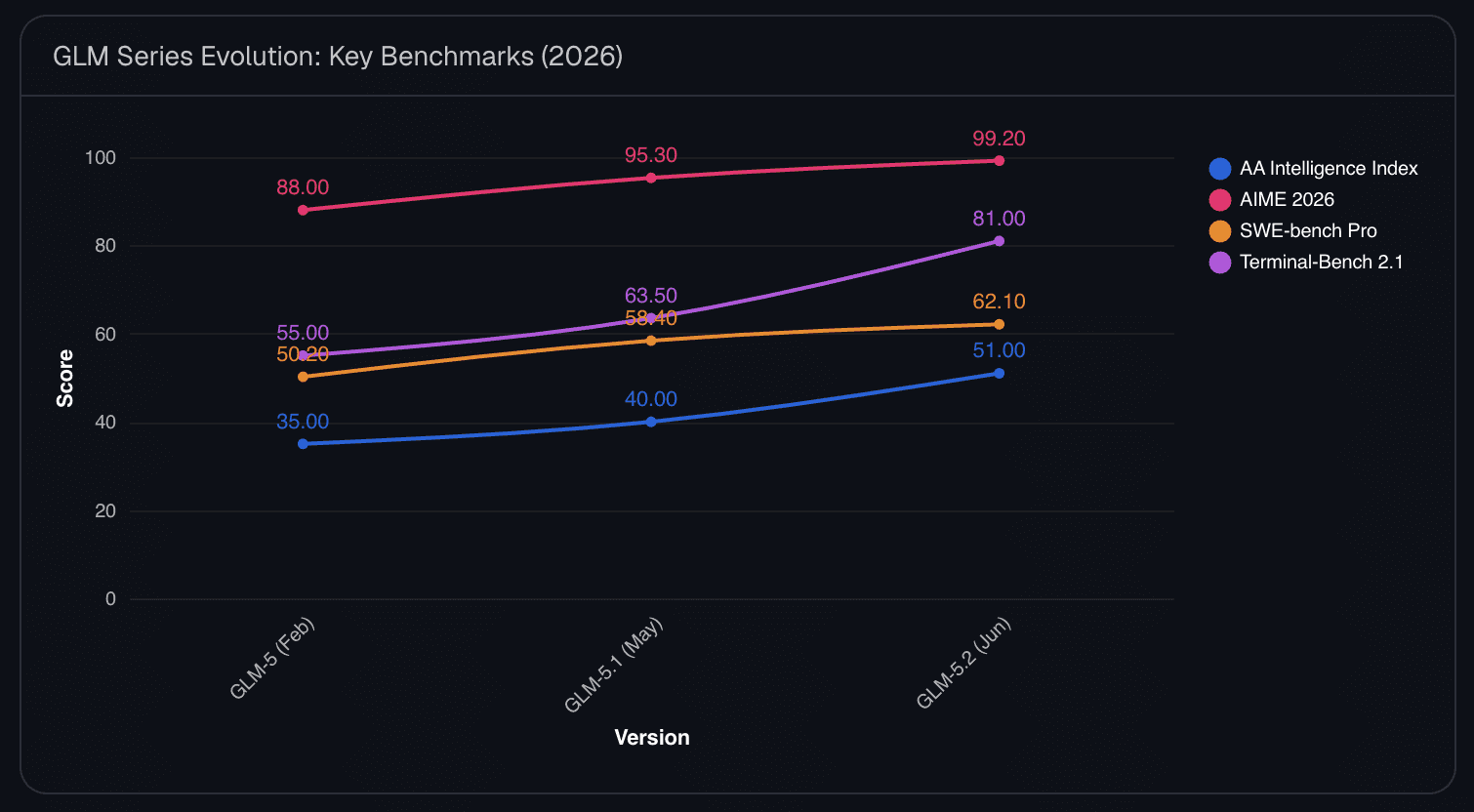
La vitesse de développement est stupéfiante. En l'espace de quatre mois, Z.ai a publié trois versions majeures. Du modèle GLM-5 en février au GLM-5.2 en juin, les performances sur le SWE-bench Pro ont bondi de 23.7% (passant de 50.2 à 62.1). Terminal-Bench 2.1 a connu une hausse massive de 47.3% (de 55.0 à 81.0). Parallèlement, le score d'Artificial Analysis Intelligence a grimpé de 35 à 51 (+45.7%).
Q3 : Quels écarts subsistent entre les modèles open-weights et les modèles fermés ?
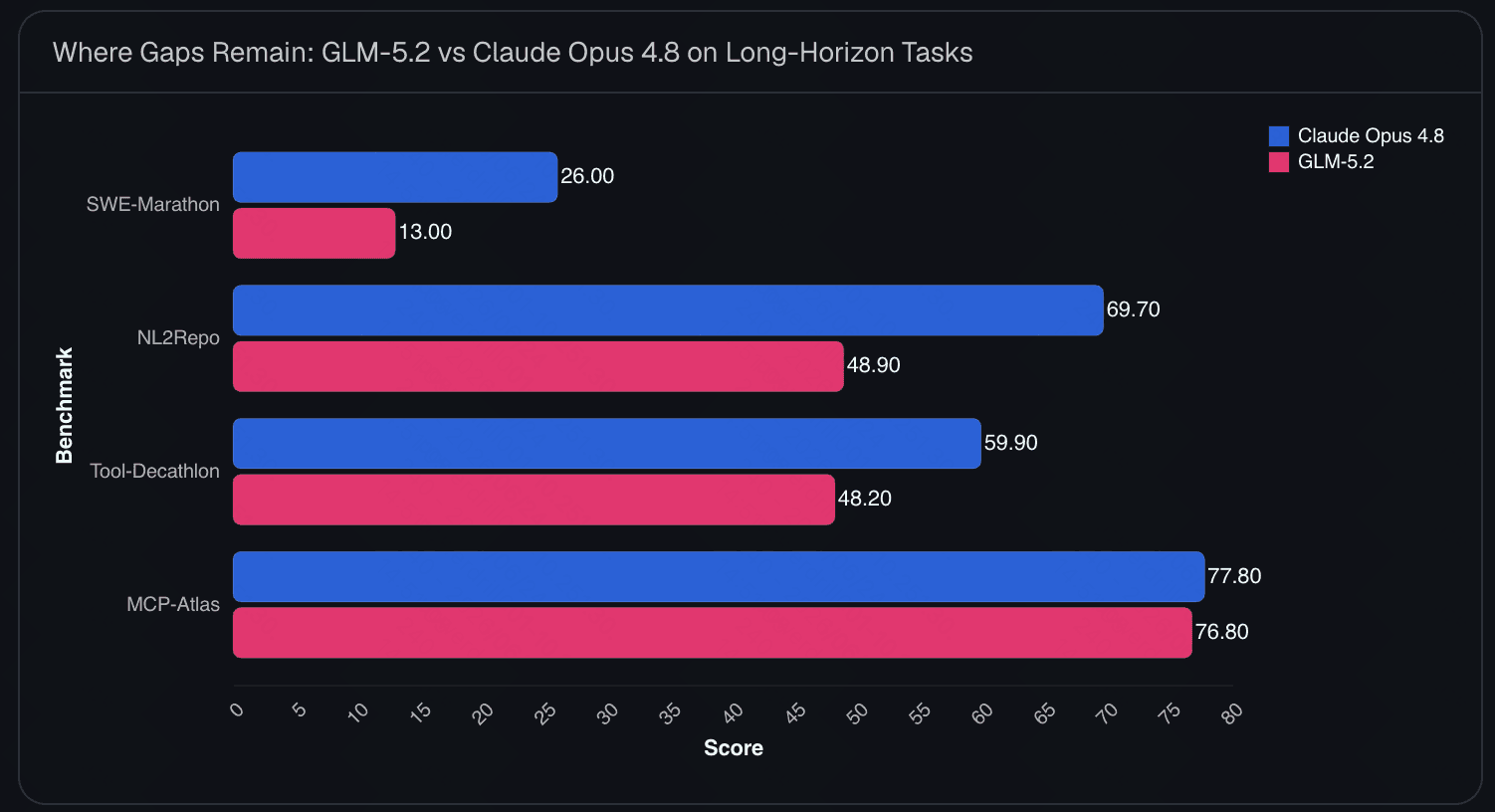
Bien qu'il ait comblé l'écart en matière de raisonnement à court terme, GLM-5.2 reste en retrait par rapport à Claude Opus 4.8 pour les tâches d'agents autonomes à long terme extrêmement exigeantes. Sur SWE-Marathon, Opus 4.8 obtient un score de 26.0 contre 13.0 pour GLM-5.2.
Sur NL2Repo, Opus 4.8 conserve une avance de 20,8 points (69.7 contre 48.9). Selon l'AI Index 2026 de Stanford, alors que l'écart global en matière d'IA entre les États-Unis et la Chine s'est réduit à 2.7%, ces environnements autonomes multi-étapes restent le dernier bastion où les modèles propriétaires conservent l'avantage.
Ce que cela signifie pour les entreprises et les analystes
Pour les directeurs techniques et les directeurs de l'ingénierie logicielle, le risque de transition s'est inversé. Vous n'avez plus besoin de dépendre exclusivement d'API coûteuses et géographiquement restreintes pour 90% de vos tâches de développement. Cependant, pour les migrations d'entreprises autonomes massives s'étalant sur une semaine (domaine NL2Repo), une stratégie hybride reste scientifiquement pertinente.
Comment nous avons créé ces graphiques (en un clic)
Nul besoin d'une équipe de science des données pour produire un rapport d'évaluation aussi rigoureux. Voici le flux de travail exact utilisé avec Powerdrill Bloom :
- Partez d'une compétence, d'un sujet ou importez vos propres données. Au lieu d'intégrer une feuille de calcul brute, nous avons exploité la compétence de recherche intégrée de Powerdrill Bloom pour collecter et traiter automatiquement les classements mondiaux des modèles d'IA de 2026 et les données de benchmark de GLM-5.2.
- Laissez l'espace de travail explorer les données. Bloom nettoie automatiquement les données et suggère des pistes d'exploration intelligentes — tendances de performance, répartition des coûts, écarts de compétences — puis génère les graphiques complexes pour vous.
- Exportez vers des diapositives. Transformez l'ensemble de l'espace de travail en une présentation soignée et prête à l'emploi, puis exportez-la vers PowerPoint en un seul clic.
Pas de SQL. Pas de Python. Pas de copier-coller de graphiques dans des diapositives. Vous souhaitez tester cela sur vos propres données d'entreprise ? Essayez gratuitement Powerdrill Bloom. Vous pouvez également explorer notre créateur de graphiques IA ou découvrir comment transformer une feuille de calcul en diapositives.
FAQ
GLM-5.2 est-il réellement open-weights ?
Oui. GLM-5.2 est publié sous licence MIT en tant que modèle entièrement open-weights, ce qui permet une utilisation commerciale sans restriction.
Quel matériel a été utilisé pour entraîner GLM-5.2 ?
La famille GLM-5 a été entraînée sur un cluster unifié de 100 000 puces Huawei Ascend 910B, prouvant que l'IA fondatrice peut être développée efficacement en dehors de l'écosystème Nvidia.
Puis-je analyser mes propres benchmarks d'IA ou mes données de marché de cette manière ?
Absolument. Importez un fichier CSV ou Excel dans Powerdrill Bloom et l'agent d'analyse de données IA se chargera de nettoyer les données, de concevoir des graphiques scientifiques précis et de vous permettre d'exporter une présentation — le tout sans coder. C'est l'outil idéal pour une narration de données rapide et fiable.
En conclusion
Les données quantitatives derrière l'écosystème de l'IA en 2026 racontent une histoire de démocratisation rapide. Les scores de benchmark remarquables de GLM-5.2, combinés à son entraînement indépendant du matériel et à ses tarifs d'API disruptifs, prouvent que la communauté open-weights est en pleine expansion.
Curieux de savoir ce que cachent vos propres données de benchmark ? Importez-les dans Powerdrill Bloom et laissez les graphiques raconter une histoire précise et rigoureuse.