Powerdrill Bloom vs. Elicit: Features, Pricing, and Best Use Cases (2026)
These two tools hand you almost the same thing at the end. That is what makes the comparison worth doing carefully.
Both produce cited reports, tables, figures, and slides. Both run an agent rather than a chat. Both promise you will not write code.
The difference is upstream. One builds its answer from the published literature, the other builds it from the file on your desk.
This guide covers what each is for, the current published pricing on both sides, and how to pick without starting a trial.
At a glance
| Powerdrill Bloom | Elicit | |
|---|---|---|
| Core job | Turn your file into a finished deliverable | Turn a research question into cited evidence |
| Typical input | An Excel, CSV, PDF, or doc you already have | A research question, plus papers you upload |
| Evidence base | Your own rows, plus built-in open data sources | 138 million papers and 545,000 clinical trials |
| Typical output | Charts, reports, slides, Office documents | Reports, tables, figures, calculations, slides |
| Who it is for | Anyone with a deadline and a spreadsheet | Researchers and evidence-driven teams |
| Entry price | $0, with 1,000 daily refreshed credits | $0, with limited agent usage |
| First paid tier | $13.27 per month, billed annually | $49 per month on the Industry list |
What Elicit is built for
Elicit's homepage states the goal in one line: "Elicit helps researchers be 10x more evidence-based."
The scope of the evidence base is the headline number. Search covers "over 138 million academic papers and 545,000 clinical trials, with more data sources coming soon."
The agent sits on top of that corpus. Elicit describes a Research agent that "gathers evidence across scientific databases, academic journals, public data sources, and internally uploaded documents."
Its output list is unusually specific. The agent "creates fully cited artifacts like reports, tables, figures, bioinformatics analyses, calculations, and slides."
Systematic review is the flagship workflow. Elicit says it "can automate screening and data extraction of systematic reviews, while partially supporting search and report generation."
Two design choices stand out and both are strengths. Scale is stated as up to 1,000 relevant papers found and up to 20,000 data points analysed at once.
Citation depth is the other. Elicit "supports all AI-generated claims with sentence-level citations from the underlying sources."
Read the whole shape and the buyer is clear. This is a research platform, and a serious one.
What Powerdrill Bloom is built for
The starting point here is a file someone already sent you.
You upload the export, describe the deliverable in natural language, and take the finished artifact away. The connectors page lists Excel, CSV, and TSV uploads plus SQL database access through a text-to-SQL layer.
What comes out is the part that closes a task. The plan pages list charts, insights, summaries, slides, Office documents, and Excel analysis.
The free tier is genuinely usable, which matters when comparing entry costs. It carries 1,000 daily refreshed credits, file uploads, built-in agent skills, and one scheduled task.
Paid tiers add depth rather than a different product. Pro lists 20 scheduled tasks, custom agent skills, Office document creation, and Claude Skills workflows.
Our explainer on vibe data analysis describes the working style behind that.
Pricing, side by side
Elicit publishes two separate lists, selected by a filter on the pricing page. The page defaults to the Industry list, and Academic prices are lower.
Figures are as displayed on August 25, 2026.
| Tier | Elicit (Academic) | Elicit (Industry) |
|---|---|---|
| Free | Basic $0 | Basic $0 |
| Entry paid | Plus $11 per user per month, billed as $132 annually | Pro $49 per user per month, billed as $588 annually |
| Mid | Pro $39 per month, billed as $468 annually | Scale $169 per month, billed as $2,028 annually |
| High | Scale $89 per month, billed as $1,068 annually | Enterprise, custom |
| Top | Enterprise, custom | — |
Powerdrill Bloom runs a single list, in dollars.
| Tier | Powerdrill Bloom |
|---|---|
| Free | $0, 1,000 daily refreshed credits, 1 scheduled task |
| Entry paid | Pro $13.27 per month, billed annually |
| Mid | Plus $26.60 per month |
| High | Premium $132.67 per month |
| Team | Team Pro $13.27 per seat per month |
One point in Elicit's favour deserves flagging immediately. The Academic list sits materially lower than the Industry one, with an entry tier of $11 per month.
That matters for the people who use it most. A graduate student and a pharmaceutical analyst do not face the same bill for the same product.
The free tier has a defined shape on both sides. Elicit's Basic plan carries unlimited search across the corpus, unlimited paper summaries, and Zotero import, with "limited usage" on the Research Agent and Reports.
Export is the free-tier boundary at Elicit. Export to RIS, CSV, BIB, PDF and DOCX begins on the paid tiers.
The feature that decides most choices
Column capacity is the quiet gating factor in Elicit's plans, and it is published clearly.
Tables are how Elicit turns papers into data. Each tier sets how many columns you can add at once: 5 on Plus, 20 on Pro, 30 on Scale, and 40 on Enterprise.
Screening capacity scales the same way. The Pro tier lists a systematic review workflow that "can screen 5,000 papers," and Enterprise raises that to 40,000.
So the plan choice is really a scope choice. A narrow question with six variables sits comfortably low in the list, and a full systematic review does not.
Powerdrill Bloom meters differently, with a single credit pool plus one-time top-up packages that stack on any plan and stay valid for twelve months. That is simpler to forecast and it buys a narrower capability.
Neither model is better in the abstract. Column tiers map cleanly onto research scope, and a single pool is easier for one person to reason about.
Where Elicit is the better fit
Four situations point clearly at Elicit, and we would say so to a prospect.
Your question is about what is already known. The answer lives in published papers rather than in your own systems, and that is the entire premise of the platform.
A claim has to be traceable to a sentence. Elicit attaches sentence-level citations to AI-generated claims, which is the standard an academic or regulatory reader expects.
You are running a systematic review. Screening thousands of papers with a documented workflow is a first-class feature there, not an improvisation.
You need clinical trial coverage. The published corpus includes 545,000 clinical trials alongside the paper index.
Against that list, Powerdrill Bloom has real gaps worth naming. Its pages describe no academic database search, no paper screening workflow, and no sentence-level citation of published literature.
The connectors page names file uploads and SQL databases. Journal indexes and reference managers are not described there, and neither is a Zotero import.
If your bottleneck is finding and screening published evidence, this is the wrong tool and a trial will tell you so slowly.
Where Powerdrill Bloom is the better fit
There is one thing to weigh before the list. Elicit's value is proportional to how much of your answer lives in the literature.
If the number you need exists only in last quarter's export, a corpus of 138 million papers cannot supply it. That is not a criticism of the product. It is a statement about where the evidence sits.
With that said, four situations point the other way.
The data is already yours. An export, a workbook, a PDF statement, or a survey file is the front door rather than a workaround.
The deliverable is a business document. Slides, Office files, and written reports come out of the same run that did the analysis.
Nobody on the team writes SQL. You describe the question in natural language and get tables and charts back.
The budget is one seat. A single seat at $13.27 per month is a different conversation from $49 per month on the Industry list.
Elicit has honest constraints on this path, and they follow from its design. Its pages are organised around papers, trials, screening, and citation.
Spreadsheet formula analysis, SQL database connections, and chart-first deliverables are not described there. The free tier also holds exports back to the paid plans.
None of that makes Elicit weaker. It makes it a tool pointed at a different half of the problem.
How to choose in one pass
Answer three questions in order and stop at the first clear signal.
| Question | If yes | If no |
|---|---|---|
| Does the answer live in published research? | Elicit | Continue |
| Must every claim carry a citation to a source sentence? | Elicit | Continue |
| Do you need a chart, report, or deck from your own file this week? | Powerdrill Bloom | Either works |
There is a legitimate case for running both. Elicit establishes what the field already knows, and your own exports show what happened in your business.
That split is cheaper than it sounds. One Elicit seat for the researcher plus a handful of Powerdrill Bloom seats costs less than putting every analyst on a literature platform.
Watch the seam if you run both. A benchmark quoted from a paper and a number computed from your export are not the same kind of fact. A reader will treat them as if they were.
Label which is which in the document. Retrofitting that distinction after someone quotes the wrong one is far more work.
For the wider category, see our guides on making charts for a research paper and reporting statistics in APA format.
Getting started with Powerdrill Bloom
Step 1: Upload the file you already have
Drop in the export you were sent. Powerdrill Bloom profiles the columns on arrival, so blank fields, mixed types, and duplicate keys surface before any chart is drawn.
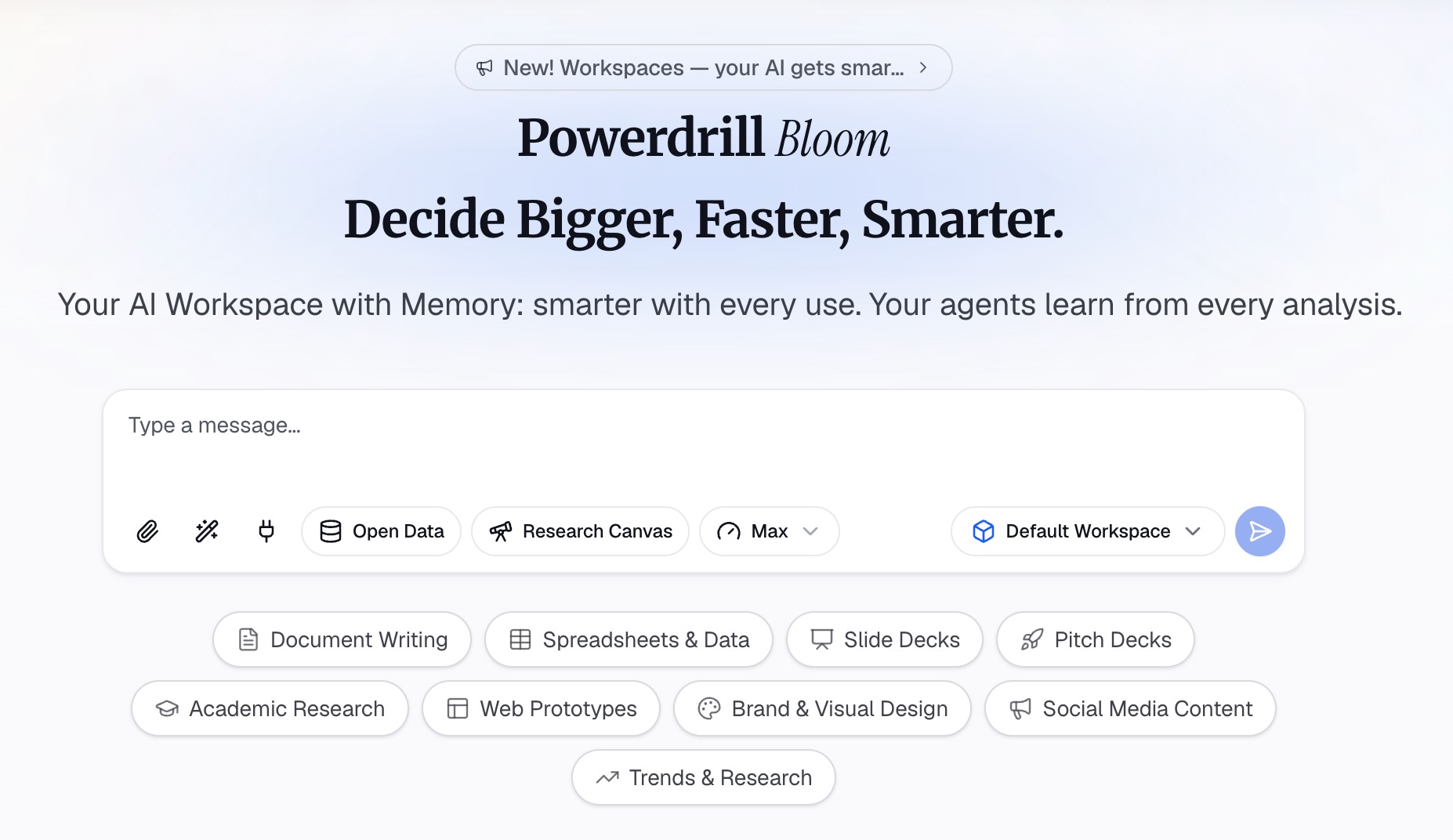
Step 2: Describe the output in natural language
State the deliverable rather than the query. Name the metric, the period, the grouping, and what should be excluded.
Then push on the result. Ask which rows were dropped, ask what the totals reconcile to, and ask for the breakdown you will be asked for in the meeting.
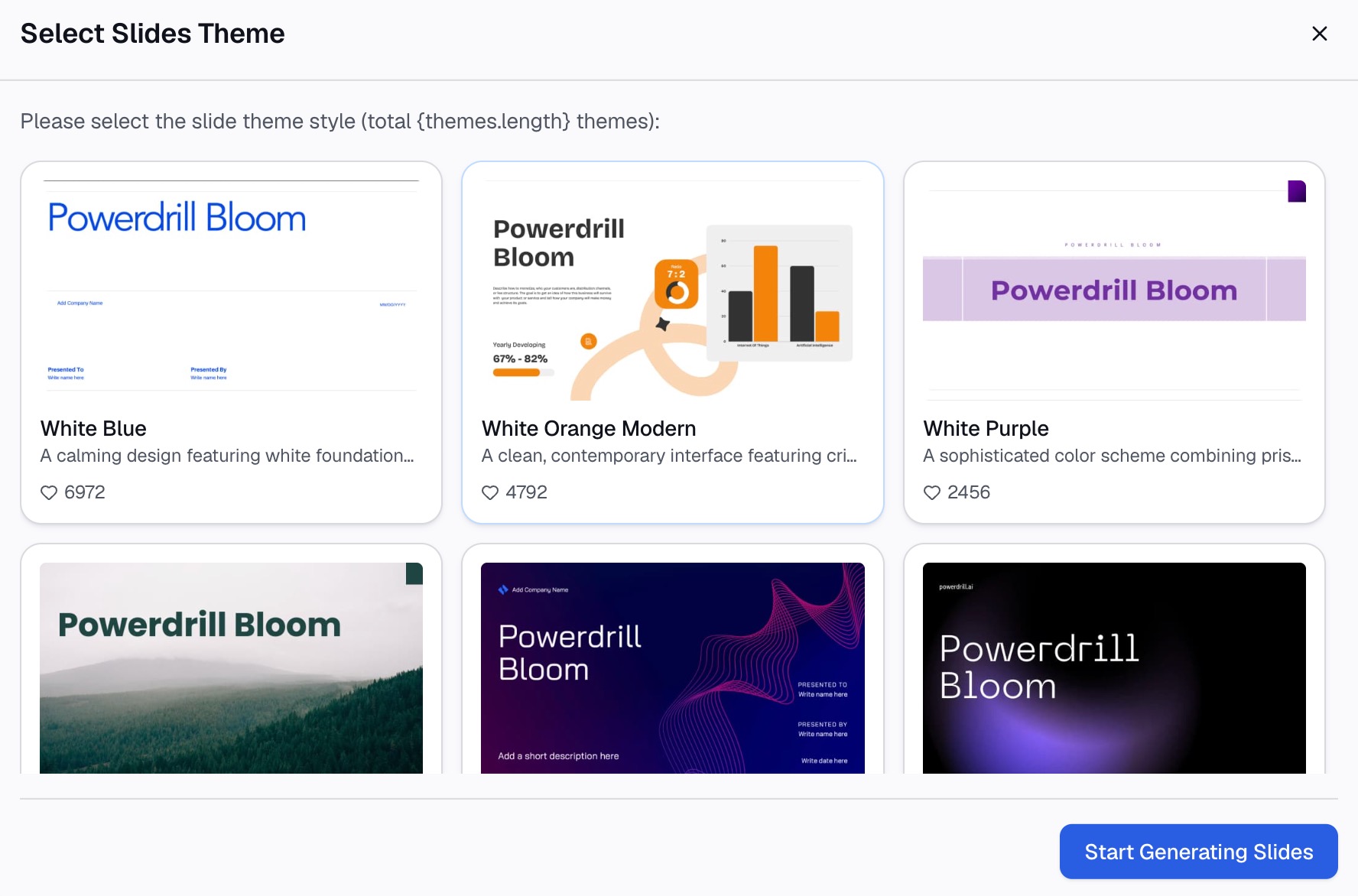
Step 3: Export the chart, report, or deck
Take out a chart, a written report, or slides built from the same run. Our guide to checking your data before submitting a paper walks through a careful pass.
Start on the free tier before comparing plans on the pricing page. If it fits, try Powerdrill Bloom on a real export rather than a sample.
Conclusion
Elicit is a research platform for people whose bottleneck is published evidence. Its corpus, its screening workflow, and its citation model all point the same way.
Powerdrill Bloom is for the opposite bottleneck. The file is in your inbox, the meeting is on Thursday, and the numbers have to be yours.
The two produce similar artifacts, so feature lists will not separate them. Decide where your evidence lives, and the choice makes itself. See also the AI report generator and CSV AI assistant pages.
Frequently asked questions
Which one is cheaper?
The entry tiers differ by list. Powerdrill Bloom's first paid plan is $13.27 per month billed annually. Elicit's Industry list starts at $49 per month, and its Academic list starts at $11.
Can Elicit analyse a spreadsheet I already have?
Its pages describe gathering evidence from databases, journals, public data sources, and uploaded documents, with extraction into tables. Spreadsheet formula analysis and SQL connections are not described there.
Does Powerdrill Bloom search academic papers?
No. Its pages describe file uploads, SQL databases, and built-in open data sources. Academic database search, paper screening, and sentence-level literature citations are not described.
What is the column limit in Elicit?
Elicit publishes it per tier: 5 columns at a time on Plus, 20 on Pro, 30 on Scale, and 40 on Enterprise. That limit shapes how wide a single extraction table can be.
Could a team use both?
Yes, and that is a reasonable split. Elicit establishes what the literature says, while your own exports get analysed and turned into documents elsewhere.