How to Write an Annual Report: A Full Guide
To write an annual report, start with the year's numbers and the story they tell. Open with a short letter from leadership, then cover what you did, what it achieved, and what the money looked like. Close with the people responsible and your plans for next year. Keep it accurate, short, and easy to scan.
This guide covers the different kinds of annual reports, what to include, and how to write each section. It also includes a worked example, design tips, and a faster way to build the report from your data. Section lists come from the SEC's Investor.gov and Maryland Nonprofits, read on November 10, 2026.
What an annual report is
An annual report is a yearly summary of what an organization did and how it performed. Who it is for depends on the organization.
There are three common kinds:
- Public company reports. Listed companies in the US file a Form 10-K each year. Investor.gov says the 10-K "offers a detailed picture of what the company does, and the risks it faces."
- Nonprofit reports. Charities publish a report for donors, members, and the public. Maryland Nonprofits calls it "a valuable tool for communication with past, current and future donors."
- Company and team reports. Private companies, departments, and small businesses write one for owners, boards, or staff.
One search term causes confusion. Many US states require an "annual report" filing to keep an LLC or corporation in good standing. That is a short state form, not the document this guide covers. Check your state's business filing office for that one.
Small businesses often write the third kind without calling it an annual report. It might be a year-end letter to investors, a summary for a bank, or a review for the owners. The same structure works for all of them: what happened, what it meant, what the money looked like, and what comes next.
This guide focuses on the second and third kinds. Public companies follow SEC rules and usually work with lawyers and auditors.
What to include in an annual report
The exact sections vary, but most reports cover the same ground. Here is a combined list based on Maryland Nonprofits and the SEC's guide to the 10-K.
| Section | What it covers |
|---|---|
| Letter from leadership | A personal note on the year's highlights and challenges |
| Mission or business overview | Who you are and what you do |
| Highlights | Three to five key numbers from the year |
| Programs or operations | What you did and what it achieved |
| Financial summary | Revenue, expenses, and financial position |
| Risks or challenges | What went wrong and what could affect next year |
| People | Board members, leadership, and staff |
| Thanks and next steps | Donors, partners, and plans for the year ahead |
Maryland Nonprofits lists four core parts for a nonprofit: mission statement, program activities, financial statement, and names of board members and management staff. It adds optional parts, such as "A personal letter from the organization's leaders" and "Recognition of donors."
For companies, the 10-K gives a useful model even if you are not public. Its key sections include "Business," "Risk Factors," and "Management's Discussion and Analysis," known as the MD&A. Investor.gov says the MD&A "allows company management to tell its story in its own words."
How to plan the report
Good reports start with planning, not writing. These steps keep the work on track.
- Pick your readers. Donors, board members, and staff want different levels of detail.
- Set the length. Decide on a page count before anyone writes.
- Gather the data early. Pull financials, program numbers, and key metrics for the full year.
- Choose three to five highlights. These become the opening page and the headline numbers.
- Assign owners. Each section needs one person responsible for facts and wording.
- Set a review date. Finance should check every number before design starts.
Length matters less than people think. Maryland Nonprofits says "an annual report does not need to be long or printed on flashy paper." It adds that reports "take many forms (online, pdfs, or print)."
Start with the numbers. When the financials are final, the story is easier to write. When they change late, every section that quotes them must change too.
How to write each section
Each section has its own job. Here is how to write them well.
The leadership letter. Keep it to one page. Name the biggest win, the biggest challenge, and one thing that changes next year. Write in the first person, and sign it.
The overview. Say what the organization does in two or three sentences. Maryland Nonprofits describes the mission statement as one that "summarizes what an organizations does and what it aspires to be."
The highlights. Lead with numbers that matter to readers. People served, revenue growth, projects finished, or customers added. Give each number one line of context.
Programs or operations. Describe what you did and what changed because of it. Maryland Nonprofits says this section "should be clear as to what the organization has accomplished." Use one short story per program to show the impact.
The financial summary. Show where money came from and where it went. Keep the detail for an appendix or a linked audit.
Risks and challenges. Be honest about what did not work. Readers trust a report more when it names problems and the plan to fix them.
Public companies list these formally. Investor.gov says the 10-K's "Risk Factors" section includes "significant risks that the company faces, generally listed in order of importance." A smaller organization can borrow that habit. List the two or three risks that matter most for next year, in order, with one line on how you will manage each.
People and thanks. List board members and leaders by name. Maryland Nonprofits says this shows "who is responsible for the organizational programs and activities."
Next year. Share two or three goals. Keep plans clearly separate from results.
How to present the financials
The financial section is where many readers start. Make it easy to read in one minute.
Maryland Nonprofits says financial data "usually consists of a statement of financial position or balance sheet of assets and liabilities." It also includes "an income and expense breakdown for the fiscal year." Some organizations include the full audited statements, but the guide says "this is not required."
For companies, the 10-K's financial section contains audited statements, including "the income statement, balance sheets, and statement of cash flows." A private company report can use the same three statements in a shorter form.
Charts help most readers. Maryland Nonprofits notes that "Many organizations present financial data in charts or graphs so they are more easily understood." Two charts cover most needs: one for revenue sources and one for spending by category.
Tie the money to the mission. The same guide says "It is very important to make a connection between mission/program activities and expenses." If programs are your biggest cost, say what that spending achieved.
An annual report example
Here is a short example for a made-up nonprofit, Greenway Literacy Project. It runs reading programs for children in three cities.
Highlights page. The report opens with three numbers. Greenway served 1,240 students in 2026, up from 980 the year before. That is an increase of 26.5%. Volunteers gave 8,600 hours of tutoring, and two new school partners joined.
Financial summary.
| Revenue source | Amount | Share |
|---|---|---|
| Grants | $310,000 | 62.0% |
| Individual gifts | $142,000 | 28.4% |
| Events | $48,000 | 9.6% |
| Total revenue | $500,000 | 100.0% |
| Expense category | Amount | Share |
|---|---|---|
| Programs | $395,000 | 80.6% |
| Administration | $60,000 | 12.2% |
| Fundraising | $35,000 | 7.1% |
| Total expenses | $490,000 | 100.0% |
Revenue of $500,000 minus expenses of $490,000 leaves a surplus of $10,000. The report notes that programs took 80.6% of spending.
Programs section. One page per city. Each page has the number of students, one reading result, and a short quote from a teacher.
Challenges. One city lost a school partner midyear, so 60 students moved to a waitlist. The report says how Greenway plans to fix that in 2027.
Next year. Three goals: serve 1,500 students, add one city, and raise individual gifts to $175,000.
Thanks. A final page lists the board, the leadership team, and major donors by giving level. Donors who asked to stay anonymous are counted but not named.
The draft went through two reviews. The finance lead checked every number against the audit. The program director checked each story with the teacher quoted.
The whole report runs eight pages. Every number traces back to the audited statements or the program database.
Write an annual report with AI
The writing is often faster than the data work. Pulling numbers, building charts, and drafting summaries take the most time. An AI tool can do the first pass from your files.
Here is the method in three steps, using Powerdrill Bloom.
Step 1: Upload the year's data
Gather your financial exports and program data. The AI Annual Report page says to "Easily upload your company's data in various formats."
Include last year's report if you have one. It gives the AI your structure and tone to follow.

Step 2: Ask for the report sections in natural language
Describe the report you need. For example: "Draft an annual report with a highlights page, revenue and expense charts, and a programs summary for donors."
The page says it can "Analyze data, summarize points, and present professionally." If a section misses the mark, you can rewrite the questions behind it and run them again.
Step 3: Review the draft and export it
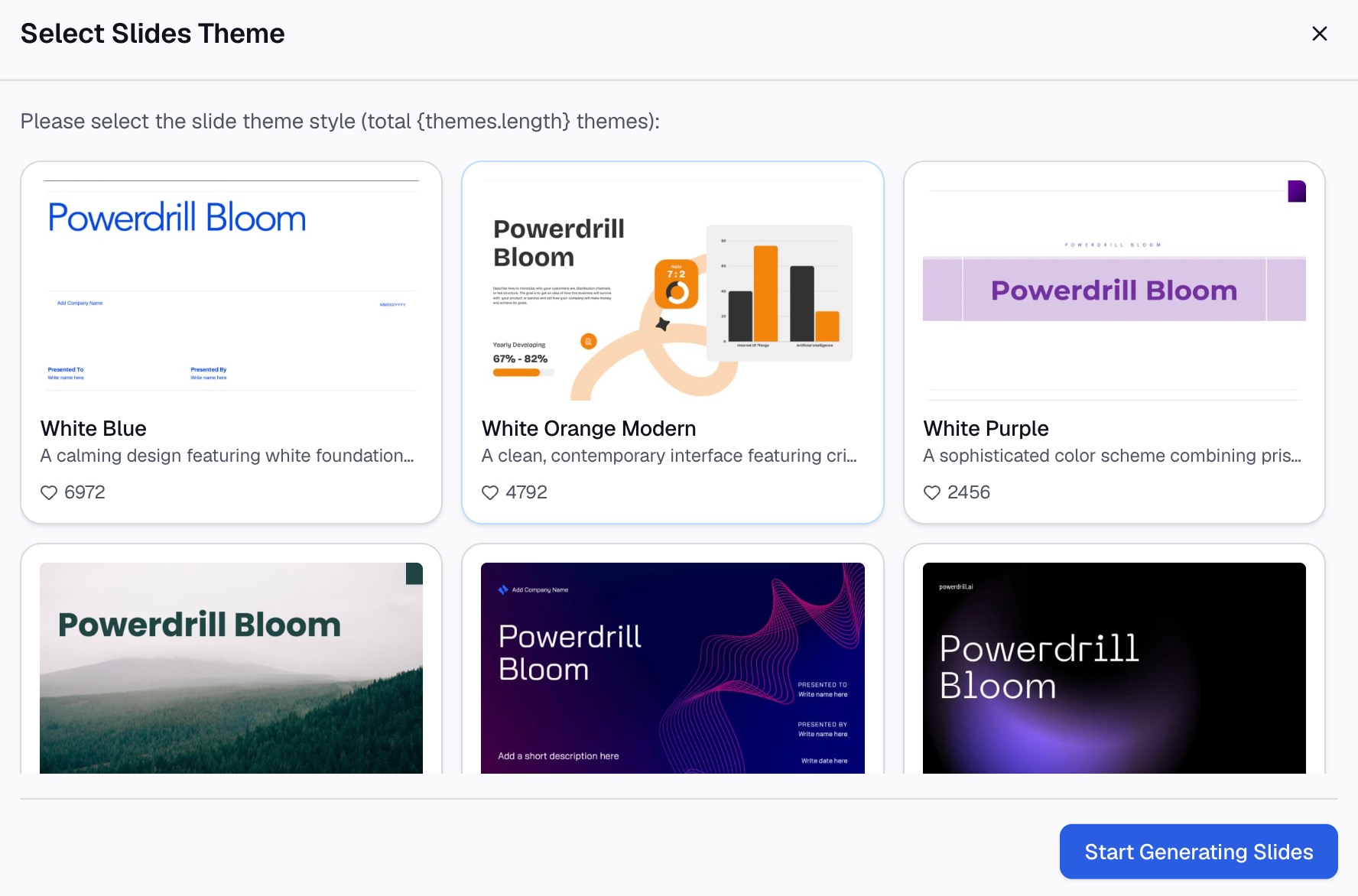
Check every number against your final financials. Then export the report or a deck. The AI Annual Report page says it can "Convert lengthy reports into polished, professional presentations with one click."
The AI Report Generator also supports "annual, impact, and investor reports." For board meetings, the Board Report Generator builds a "board-ready monthly or quarterly report."
A timeline for this year's report
Most organizations close their books a few weeks after year-end. A simple timeline keeps the report from slipping. Here is one that works for a calendar-year organization. Adjust the dates to your own fiscal year.
| When | What to do |
|---|---|
| Early December | Agree on readers, length, and section owners |
| Mid-December | Collect program results and photos for the year so far |
| January | Close the books and draft the story sections |
| February | Final financials arrive; update every number |
| March | Review, design, and publish |
Two habits save the most time. First, keep a running list of wins and stories during the year. A shared document with one line per month is enough. Second, agree on the highlight numbers before anyone writes. Those numbers appear on the cover, in the letter, and in the financials, so they must match everywhere.
If you report to a board, plan a short deck as well. Board members often want the highlights and the money on five or six slides, with the full document as a pre-read.
Reuse what worked. Keep last year's file as a template, with the same sections and chart styles. Readers find it easier to compare years when the layout stays the same. Your team also spends its time on the new results instead of the format.
Design tips for a report people read
Most readers skim. Maryland Nonprofits notes that many readers "just flip through them and gather impressions quickly." Design for that habit.
- Put the best numbers first. A highlights page does more than a long introduction.
- Use one chart per point. A chart should answer one question.
- Add photos with care. Real people and places work better than stock images.
- Keep text short. Short paragraphs and clear headings help skimmers.
- Offer a PDF and a web page. Many organizations now post the report on their website.
- Check accessibility. Use readable fonts, strong contrast, and alt text for charts.
If you present the report at a meeting, turn the highlights into slides. Our guide on how to read a 10-K report shows how investors read the company version.
When you are ready to draft this year's report, try Powerdrill Bloom with your year-end financials and program data.
Common mistakes to avoid
A few problems show up again and again.
- Mixing plans with results. Maryland Nonprofits warns that "the difference between current activity and future plans/intentions must be clear."
- Using numbers that do not match the audit. Final figures should come from final statements.
- Writing for insiders. Spell out terms a donor or new board member may not know.
- Hiding bad news. A missed goal explained well builds more trust than silence.
- Starting design too early. Late number changes break layouts and delay the report.
- Making it too long. A focused report gets read. A long one gets filed.
Frequently asked questions
What should be included in an annual report?
Most annual reports open with a leadership letter, an overview, and highlights. They then cover programs or operations, a financial summary, and challenges. They close with the people responsible and plans for next year.
How long should an annual report be?
There is no fixed length. Maryland Nonprofits says it does not need to be long. Set the length by your readers, and link to full financial statements instead of printing them.
Is an annual report the same as a 10-K?
Not exactly. A 10-K is the annual filing public companies make with the SEC. Some companies also publish a separate, shorter report for shareholders.
How do I write an annual report for a small business?
Cover the year's revenue and profit, key customers or projects, problems you faced, and goals for next year. Keep it short and use charts for the numbers. A one-page letter plus two charts is often enough for owners or a bank.
Do nonprofits have to publish an annual report?
Maryland Nonprofits notes that including full audited statements in it is not required. Publishing a report is a common way to show transparency to donors. Separate tax filings, such as federal returns, are a different requirement.
Sources: Investor.gov, How to Read a 10-K · Maryland Nonprofits, What Should Be Included in Our Nonprofit's Annual Report?.