Free AI Crypto Analyst for Beginners: Step-by-Step Guide

Understanding the Role of AI in Crypto Analysis
Artificial Intelligence (AI) is becoming an essential companion for anyone exploring the world of cryptocurrency. For beginners, the crypto market can feel overwhelming—filled with complex charts, unpredictable price swings, and technical jargon. This is where AI steps in. Instead of trying to decode every piece of data yourself, AI tools can process massive amounts of information and present insights in a way that is easy to understand.
What AI Can Do for Crypto Beginners
Trend Detection: AI can quickly analyze historical and real-time market data to highlight patterns and potential price movements.
Sentiment Analysis: By scanning news articles, social media posts, and forums, AI can provide a snapshot of market sentiment—whether traders are generally optimistic or fearful.
Simplified Data Visualization: Instead of raw numbers, AI can transform data into charts, graphs, and summaries that are beginner-friendly.
What AI Cannot Do
It's important to set realistic expectations. AI is not a crystal ball—it cannot guarantee profits or predict the market with 100% accuracy. Crypto remains volatile, and even the smartest AI models can only provide probabilities, not certainties.
The Key Benefits
For beginners, the greatest advantage of using AI is time-saving and accessibility. You don't need to be an expert in technical analysis or have years of trading experience. With the right AI assistant, you can focus on making informed decisions without drowning in data overload.
Getting Started with the Basics
Before you dive into using AI as your crypto analyst, it's important to set up the right foundation. Having the proper tools, basic knowledge, and security mindset will make your journey smoother and safer.
Step 1: Choose Your Free AI Tool
There are several beginner-friendly AI platforms you can start with, many of which are free or offer free plans. Some general-purpose tools like ChatGPT can help analyze market news or trends, while crypto-focused platforms like Powerdrill Bloom may provide real-time charts, trading signals, or portfolio insights.
Look for tools that have clear interfaces and tutorials.
Start with free versions before upgrading to paid plans.
Step 2: Learn Key Crypto Concepts
Even with AI assistance, understanding basic crypto terms will help you interpret the insights better.
Bitcoin & Altcoins: Bitcoin is the original cryptocurrency, while altcoins (like Ethereum, Solana, or Cardano) are alternatives with different use cases.
Exchanges & Wallets: Exchanges are platforms where you buy and sell crypto. Wallets (hot or cold) are where you store your assets securely.
Charts & Indicators: You don't need to master them, but knowing what a price chart or "candlestick" is will help you understand AI-generated visuals.
Step 3: Keep Security in Mind
The crypto space is exciting but also full of risks. New investors often fall victim to scams or lose funds due to poor security practices.
Never share your private keys or wallet recovery phrases.
Avoid clicking on suspicious links or trusting "guaranteed profit" schemes.
Use two-factor authentication (2FA) on exchanges and tools whenever possible.
By completing these three steps, you'll be well-prepared to let AI guide you through crypto analysis without feeling lost or overwhelmed.
Step-by-Step Guide to Using AI for Crypto Analysis
Now that you have the basics in place, it’s time to see how AI can actively help you analyze the crypto market. Follow these steps to get started with confidence:
Step 1: Pick the Right AI Tool
Choose an AI platform that matches your needs. For simple Q&A and market summaries, general AI tools like ChatGPT work well. For more trading-focused insights, explore crypto-specific AI platforms that offer charts, alerts, and technical indicators.
Step 2: Ask the Right Questions
AI tools work best when you give them clear instructions. Instead of typing “Bitcoin analysis,” try prompts like:
“Analyze Bitcoin’s price trend over the past 7 days and explain it in simple terms.”
“Summarize the current market sentiment for Ethereum based on recent news.”
“What are the potential risks for new crypto investors this week?”
This way, the AI gives you practical and beginner-friendly answers.
Step 3: Interpret the AI's Output
AI will provide patterns, predictions, or simplified explanations. Remember:
Treat forecasts as probabilities, not guarantees.
Use AI visuals like charts and graphs to make sense of data.
Compare insights with your own observations for better understanding.
Step 4: Cross-Check with Real Market Data
Don’t rely on AI alone. Use free resources like CoinMarketCap, CoinGecko, or TradingView to confirm trends and numbers. This habit helps you avoid over-relying on a single tool.
Step 5: Apply the Insights to Simple Strategies
Once you have the AI’s analysis and verified it with real data, you can build simple starter strategies:
Hold Long-Term (HODL): Buy major coins like Bitcoin or Ethereum and hold.
Set Stop-Losses: Use AI to spot volatility and decide where to set exit points.
Diversify: Spread investments across different coins instead of betting on one.
With these steps, AI becomes more than just a helper—it becomes a practical guide that helps you learn while keeping your risks lower.
Case Study – Using Powerdrill Bloom as Your AI Crypto Analyst
To make the steps more concrete, let’s walk through a real example using Powerdrill Bloom, an AI-driven platform designed for beginners who want to explore data and get instant insights without needing technical skills.
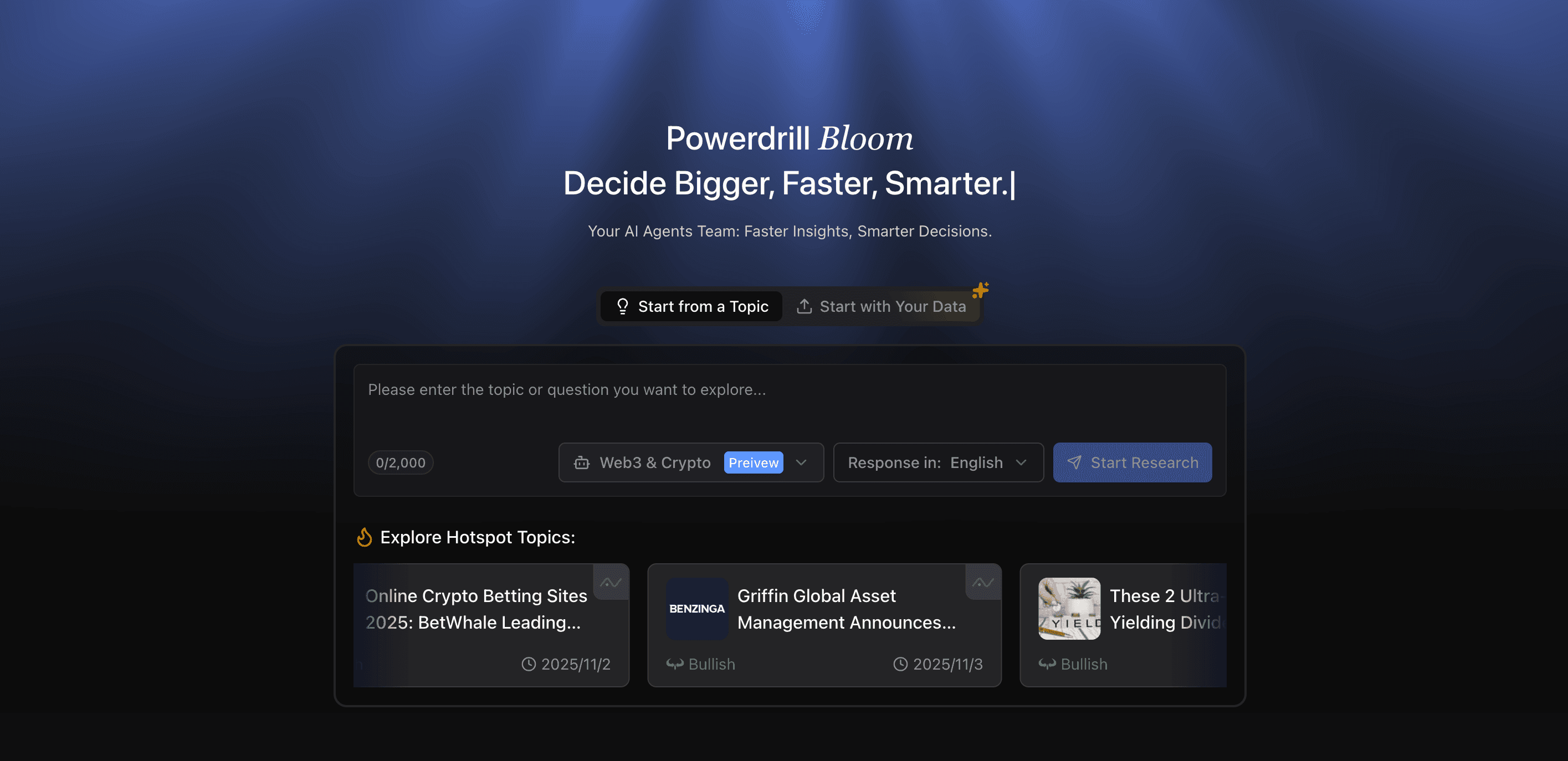
Step 1: Upload or Connect Data
With Powerdrill Bloom, you can upload a CSV or connect directly to a crypto dataset (such as Bitcoin daily prices or Ethereum transaction data). The tool automatically prepares the data for you, so you don’t need to worry about formatting or coding.
Step 2: Ask Natural Language Questions
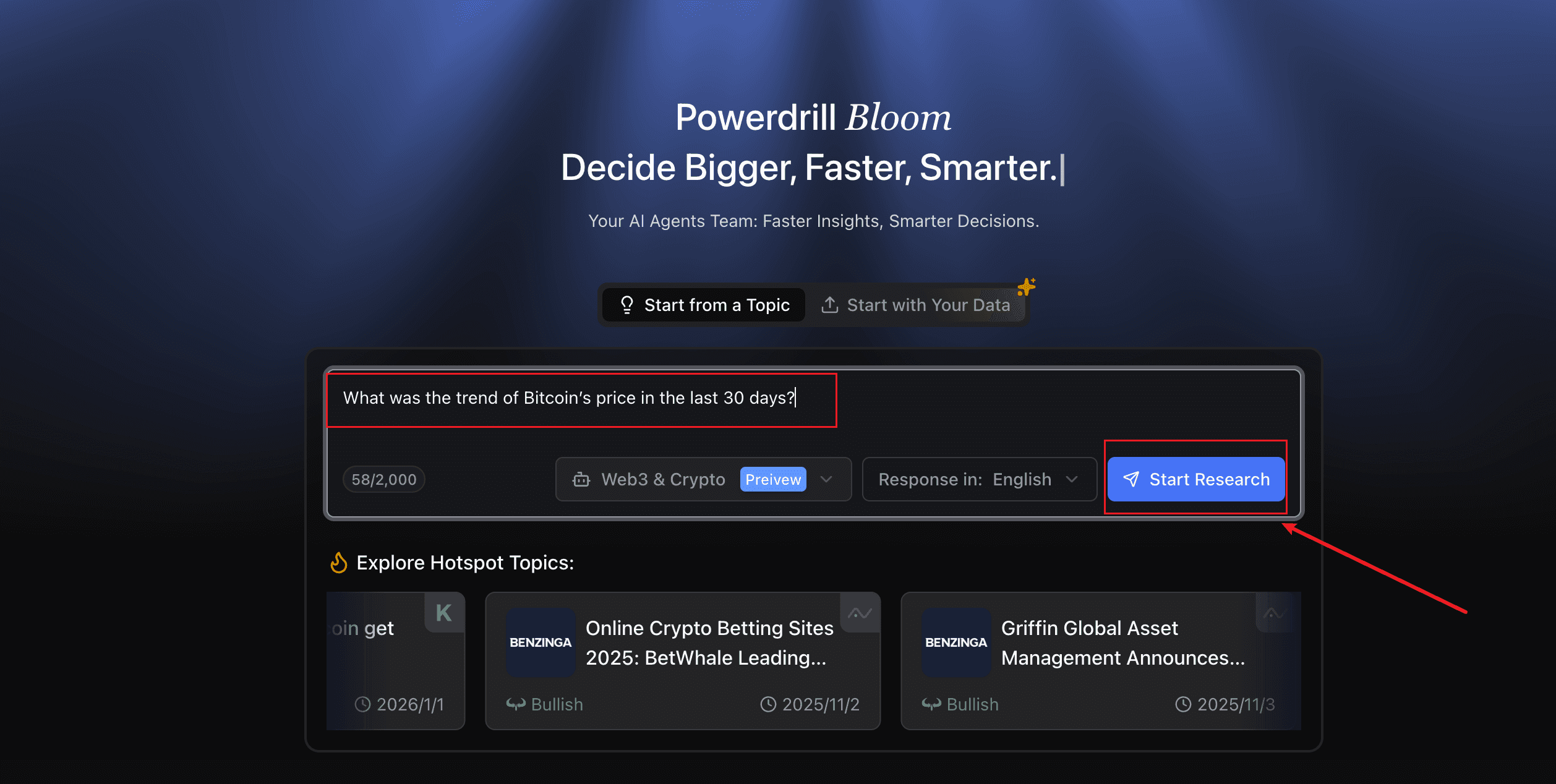
Instead of digging into complex charts, you simply type your question in plain English. For example:
“What was the trend of Bitcoin’s price in the last 30 days?”
“Compare Ethereum’s performance with Bitcoin this week.”
“Summarize the market sentiment for the top 5 cryptocurrencies.”
Powerdrill Bloom instantly generates an answer along with easy-to-read visuals.
Step 3: Review AI-Generated Insights
The platform provides both text explanations and charts. For beginners, this dual format makes it easier to understand whether a coin is trending upward, facing volatility, or staying stable.
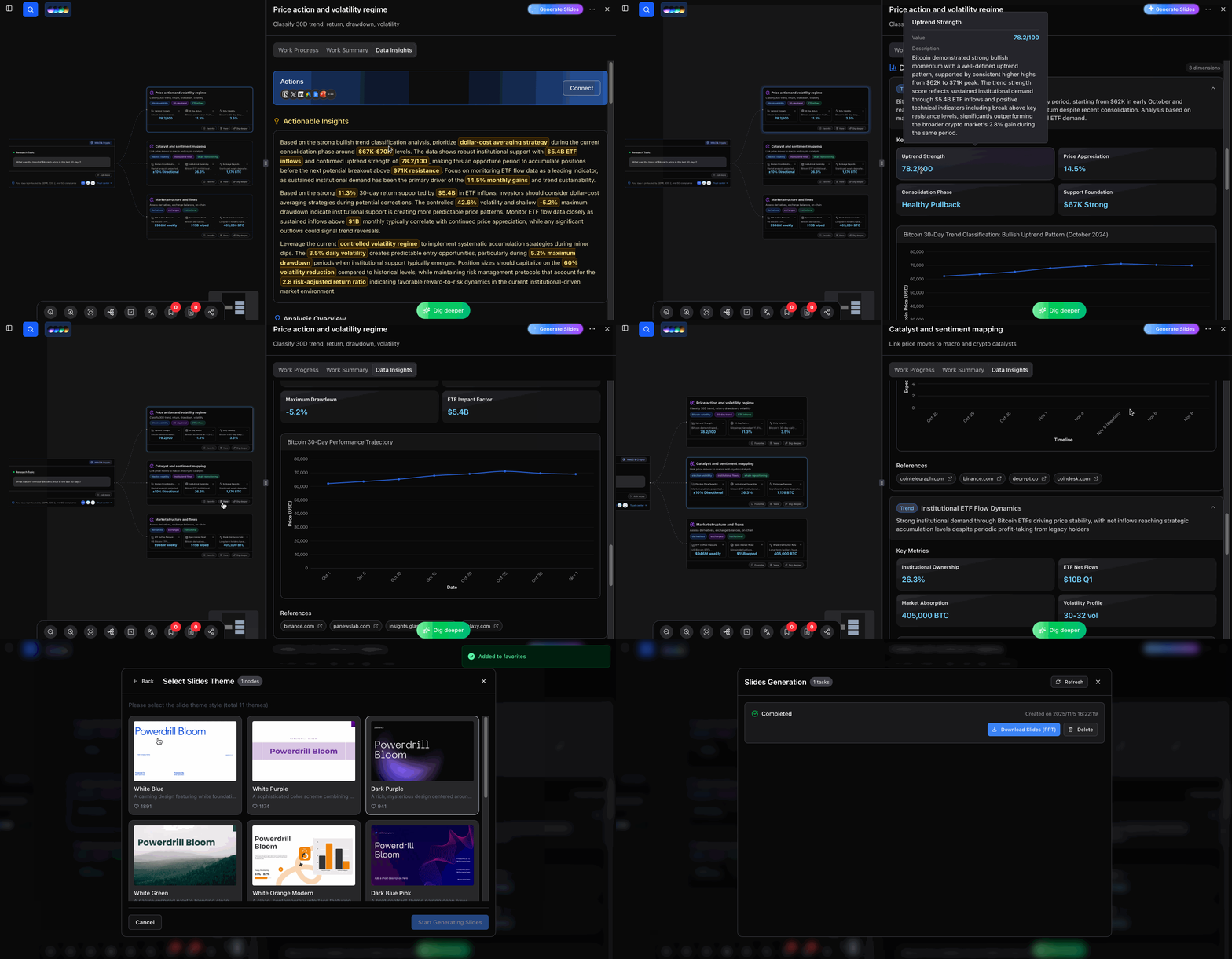
You can view the original insights report by accessing https://powerdrill.ai/share/zOCrc1qY.
Step 4: Apply the Insights to Beginner Strategies
Let’s say Powerdrill Bloom shows that Bitcoin has had a steady upward trend with moderate volatility, while Ethereum has been more unpredictable. As a beginner, you might decide:
To hold Bitcoin for the long term (HODL) because of its relative stability.
To limit exposure to Ethereum until you are more comfortable with managing risk.
Step 5: Learn Through Iteration
Because Powerdrill Bloom makes it easy to ask new questions, you can repeat the process daily or weekly:
“Show me the 7-day volatility of Bitcoin.”
“What are the three riskiest altcoins right now?”
“Summarize all coins with positive growth this month.”
Over time, this habit helps you build both confidence and a personal investment style—without needing years of trading experience.
Moving Forward and Growing Your Skills
Using AI as your crypto analyst is just the beginning. Once you’ve learned how to ask questions, interpret results, and apply basic strategies, the next step is to expand your skills and explore more advanced features.
Explore Advanced AI Use Cases
As you grow more comfortable, try experimenting with AI tools beyond basic price analysis:
On-Chain Data Analysis: Ask AI to explain blockchain transaction flows, wallet activity, or liquidity movements.
Social Sentiment Tracking: Use AI to summarize how traders on Twitter, Reddit, or crypto forums are reacting to market news.
Portfolio Optimization: Let AI suggest diversification strategies or risk-adjusted allocations based on your investment goals.
Build Independent Thinking
AI can simplify data, but your own judgment matters most. Start questioning AI’s outputs:
Do the predictions align with actual market behavior?
Are there outside factors (like regulation or global events) that AI might not fully capture?
How can you combine AI insights with your own research for a stronger perspective?
Join Communities and Keep Learning
Crypto is a fast-moving space, and staying informed is key.
Follow reliable crypto news outlets.
Join beginner-friendly communities and discussion groups.
Learn continuously—whether it’s about technical analysis, blockchain fundamentals, or risk management.
Golden Rules for Beginners
As you continue using AI for crypto analysis, keep these rules in mind:
AI is a guide, not a guarantee. Use it to inform, not to blindly decide.
Diversify your portfolio. Don’t put all your funds into one coin.
Manage risk responsibly. Only invest what you can afford to lose.
Conclusion: AI as Your Gateway to Smarter Crypto Investing
For beginners stepping into the world of cryptocurrency, the sheer amount of data, jargon, and volatility can feel overwhelming. But with the rise of AI-powered tools, you no longer need to spend years mastering technical charts or memorizing trading strategies before making sense of the market.
By following this step-by-step guide, you’ve seen how AI can:
Simplify complex crypto data into beginner-friendly insights.
Provide market sentiment and trend analysis in seconds.
Help you apply risk-aware strategies without advanced expertise.
Act as a personal coach that grows with you as your skills develop.
The key is to treat AI as an assistant, not a crystal ball. It won’t guarantee profits, but it will make your learning curve faster, your decisions more informed, and your overall journey less intimidating.
Whether you start with general AI platforms or dive into specialized tools like Powerdrill Bloom, the opportunity is the same: leverage AI to build confidence, avoid common beginner mistakes, and step into the crypto market with a smarter, safer approach.
Your journey as a crypto investor is just beginning—and with AI by your side, you’re already ahead of the curve.