12 Melhores Ferramentas de IA para Análise de Coorte em 2026 (Análise Honesta)
Introdução
Lidar com a retenção de usuários às vezes pode parecer tentar desembaraçar um processo estocástico—imprevisível, complexo e profundamente frustrante. A análise tradicional de dados costuma depender de regras heurísticas rígidas que não conseguem captar as nuances do comportamento humano. No entanto, o cenário da análise de dados passou por uma enorme mudança de paradigma.
Hoje, a inteligência artificial transformou fundamentalmente a forma como agrupamos e analisamos usuários ao longo do tempo. Se você quer entender o ciclo de vida dos seus clientes sem se afogar em planilhas ou escrever consultas SQL complexas, encontrar a plataforma certa é fundamental.
Nesta análise completa, mergulhamos nas melhores ferramentas de IA para análise de coorte disponíveis hoje, feitas para elevar a sua estratégia de dados.
Por que a Análise de Coorte Importa Mais do que Nunca em 2026
- Identifique o Churn Oculto: Ela ajuda a identificar exatamente quando e por que os usuários abandonam, em vez de apenas olhar para as taxas superficiais de churn.
- Otimize o Investimento em Marketing: Ao entender quais canais de aquisição geram a maior retenção de longo prazo, você pode alocar orçamentos de forma inteligente.
- Meça o Impacto do Produto: Você pode acompanhar facilmente como uma atualização específica de funcionalidade afeta a retenção dos usuários que se cadastraram durante aquele ciclo de lançamento.
- Personalize as Jornadas do Usuário: Os insights de coorte permitem segmentar usuários com base em comportamentos compartilhados, viabilizando campanhas de reengajamento hiperpersonalizadas.
Como a IA Está Transformando a Análise de Coorte em 2026
- Consultas em Linguagem Natural: A IA permite fazer perguntas em português comum (por exemplo, "Mostre-me a retenção dos usuários de maio") em vez de escrever SQL.
- Descoberta Automática de Segmentos: Os algoritmos de IA destacam automaticamente coortes de alto desempenho ou em risco que você poderia ter deixado passar.
- Modelagem Preditiva de Retenção: Modelos de machine learning preveem comportamentos futuros com base em indicadores iniciais de coorte, transformando a análise de reativa em proativa.
- Detecção Instantânea de Anomalias: A IA sinaliza imediatamente quedas irregulares na retenção, garantindo resposta rápida a bugs de produto ou mudanças de mercado.
Tabela Comparativa Rápida das 12 Ferramentas
| Ferramenta | Melhor Para | Capacidade de IA | Preço Inicial |
|---|---|---|---|
| Powerdrill Bloom | Todos (Insights de IA sem SQL) | Consultas em Linguagem Natural, Análise Preditiva | US$ 13,27/mês |
| Amplitude Analytics | Equipes de Produto Corporativas | Insights Comportamentais Assistidos por IA | US$ 61/mês |
| Pendo AI | Adoção de Produto e Onboarding | Resumos por IA, Sincronização Qualitativa | Preço personalizado |
| PostHog | Engenheiros e Equipes de Desenvolvimento | Lógica Orientada por IA, Session Replay | Pague conforme o uso |
| Tableau AI | Visualizações de BI Aprofundadas | Preparação de Dados com Einstein AI | US$ 15/usuário/mês |
| Hotjar | Feedback Qualitativo de UX | Criação de Pesquisas e Análise de Sentimento por IA | US$ 39/mês |
| CleverTap | Engajamento Omnichannel | Churn Preditivo por IA, RFM | US$ 75/mês |
| Power BI Copilot | Ecossistemas Microsoft | Geração de DAX, Resumos | US$ 14/usuário/mês |
| ChartMogul | Métricas de Assinatura SaaS | Previsão de Receita por IA | US$ 59/mês |
| Smartlook | Análise de Aplicativos Móveis | Rastreamento de Eventos por IA, Funis | Preço personalizado |
| LogRocket | Rastreamento de Problemas no Frontend | Galileo AI, Coortes Técnicas | US$ 69/mês |
| Contentsquare | Otimização de UX Corporativa | Alertas de Fricção por IA | US$ 39/mês |
1. Powerdrill Bloom
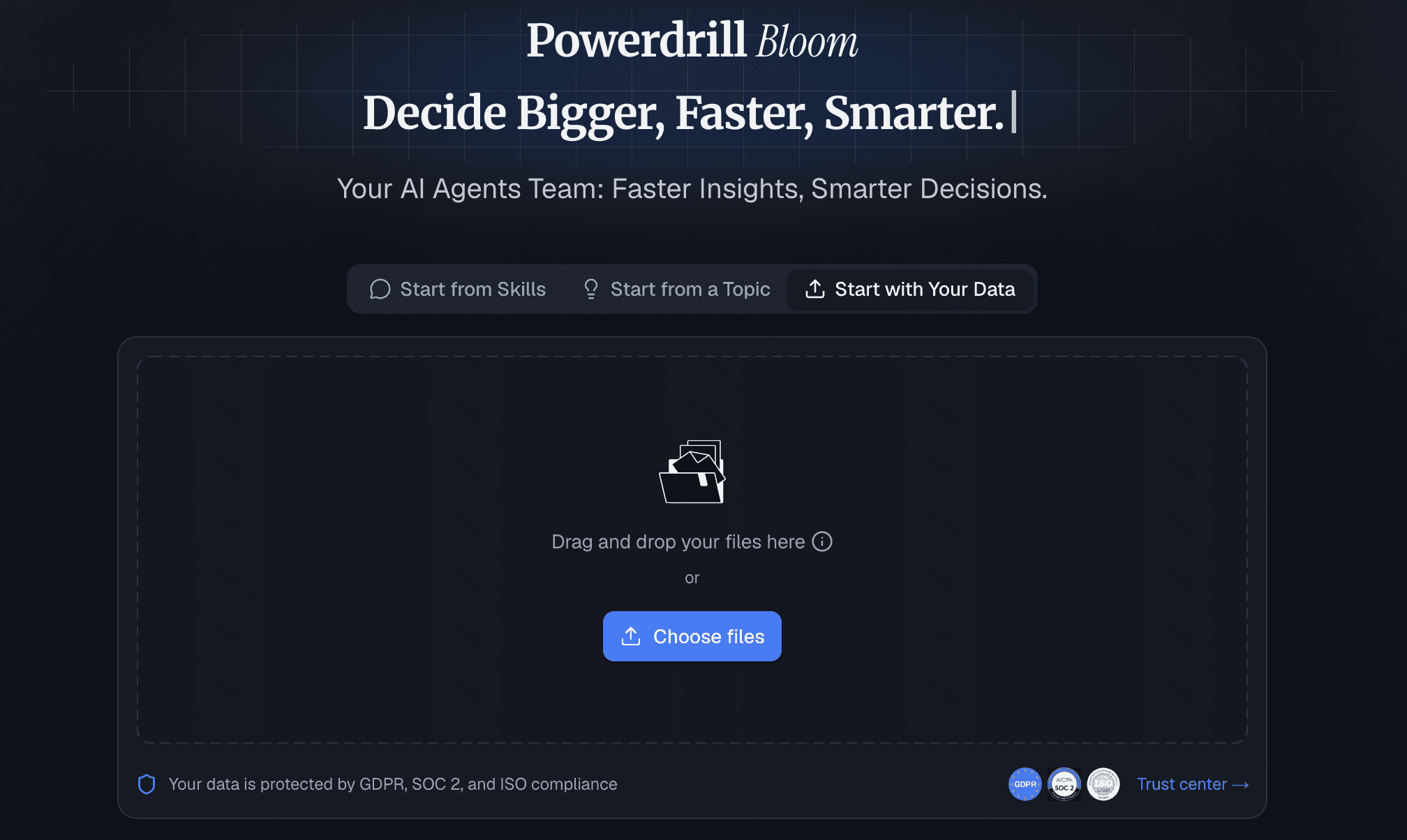
O Powerdrill Bloom é uma plataforma de dados revolucionária e nativa de IA que preenche a lacuna entre dados brutos e insights acionáveis. Ele elimina a necessidade de SQL, permitindo que as equipes conversem diretamente com seus dados para uma análise de coorte instantânea.
Principais Recursos
- Interface de chat em linguagem natural para geração imediata de coortes.
- Visualização automática de dados e previsão preditiva de retenção.
- Integração perfeita com data warehouses e arquivos CSV existentes.
Prós
- Curva de aprendizado zero; não exige absolutamente nenhuma habilidade de programação ou SQL.
- Tempo até o insight incrivelmente rápido graças a um poderoso motor de IA.
- Altamente econômico em comparação com os gigantes corporativos.
Contras
- Pode ser especializado demais se você só precisa de rastreamento muito básico de visualizações de página.
- Atualmente está expandindo sua biblioteca de integrações com aplicativos de terceiros.
Preços
Modelo freemium generoso; os planos pagos começam em US$ 13,27/mês.
2. Amplitude Analytics
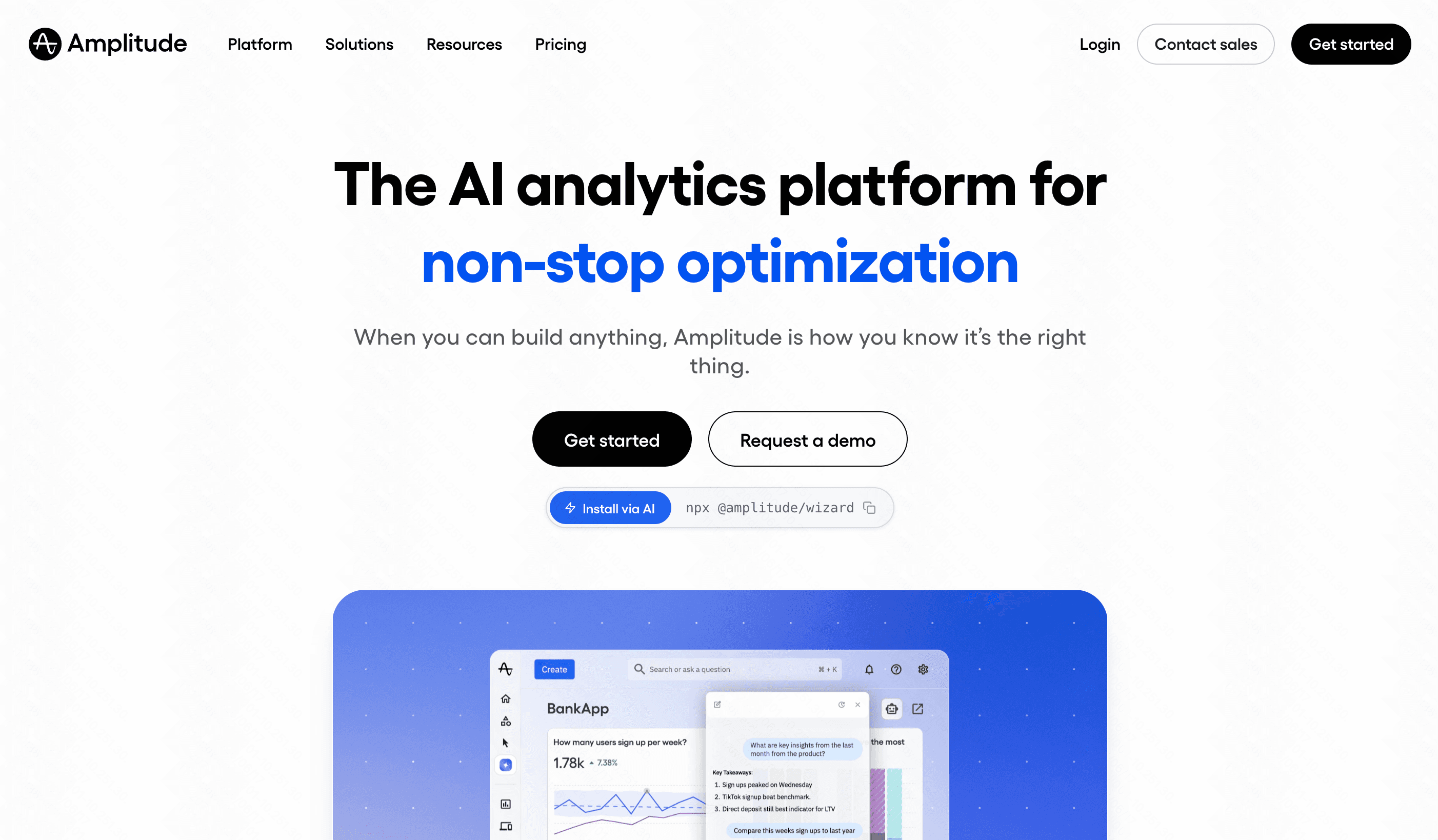
Uma potência em análise de produto, o Amplitude ajuda grandes organizações a entender o comportamento do usuário e o crescimento liderado pelo produto por meio de dados comportamentais aprofundados.
Principais Recursos
- Coortes comportamentais avançadas e previsões comportamentais.
- Ask Amplitude (consultas assistidas por IA).
Prós
- Recursos de análise profundos e altamente personalizáveis.
- Excelente escalabilidade para grandes empresas.
Contras
- Curva de aprendizado acentuada para usuários não técnicos.
- Os planos premium podem ficar muito caros rapidamente.
Preços
Nível inicial gratuito; os planos pagos começam em US$ 61/mês.
3. Pendo AI
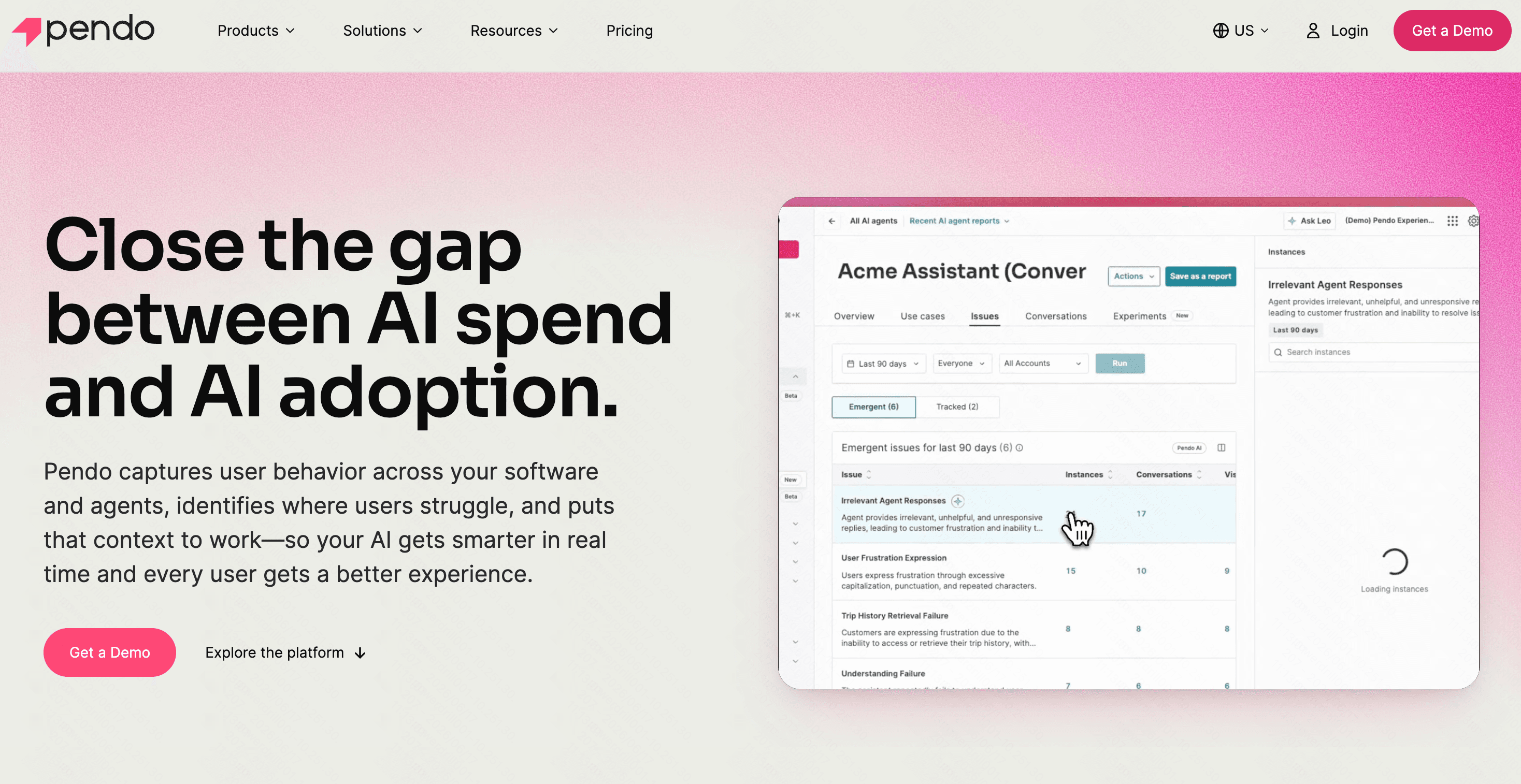
O Pendo combina análise de produto com orientação dentro do aplicativo, permitindo que as equipes não apenas analisem os abandonos de coorte, mas também implementem dicas e guias para corrigi-los.
Principais Recursos
- Resumos gerados por IA do feedback dos usuários.
- Análise retroativa sem marcação manual de eventos.
Prós
- Ótimo para mesclar dados qualitativos com coortes quantitativas.
- Mensagens acionáveis dentro do aplicativo integradas.
Contras
- A implementação e a validação de tags podem consumir bastante tempo.
- Não possui recursos de BI aprofundados de forma independente.
Preços
Preço corporativo personalizado.
4. PostHog
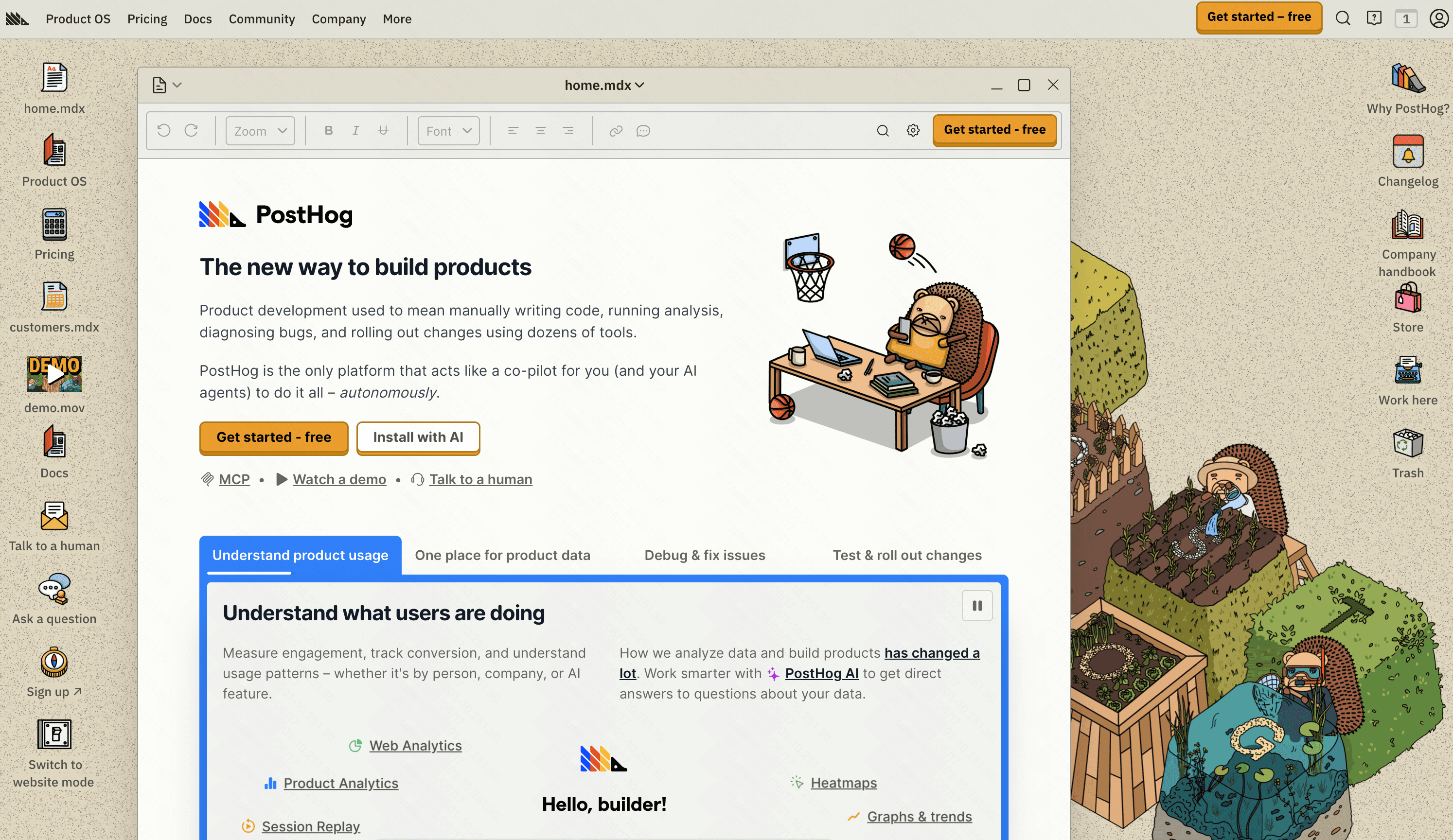
Um sistema operacional de produto de código aberto e tudo em um, projetado especificamente para engenheiros e gerentes de produto técnicos.
Principais Recursos
- Session replays combinados com tabelas de retenção por coorte.
- Feature flags e testes A/B com lógica baseada em IA.
Prós
- Altamente flexível, com opções de auto-hospedagem.
- Tudo o que uma equipe técnica precisa em uma única plataforma.
Contras
- A interface pode parecer sobrecarregada para equipes puramente de marketing.
- Exige recursos de desenvolvimento para manutenção.
Preços
Gratuito até 1 milhão de eventos, depois pague conforme o uso.
5. Tableau AI
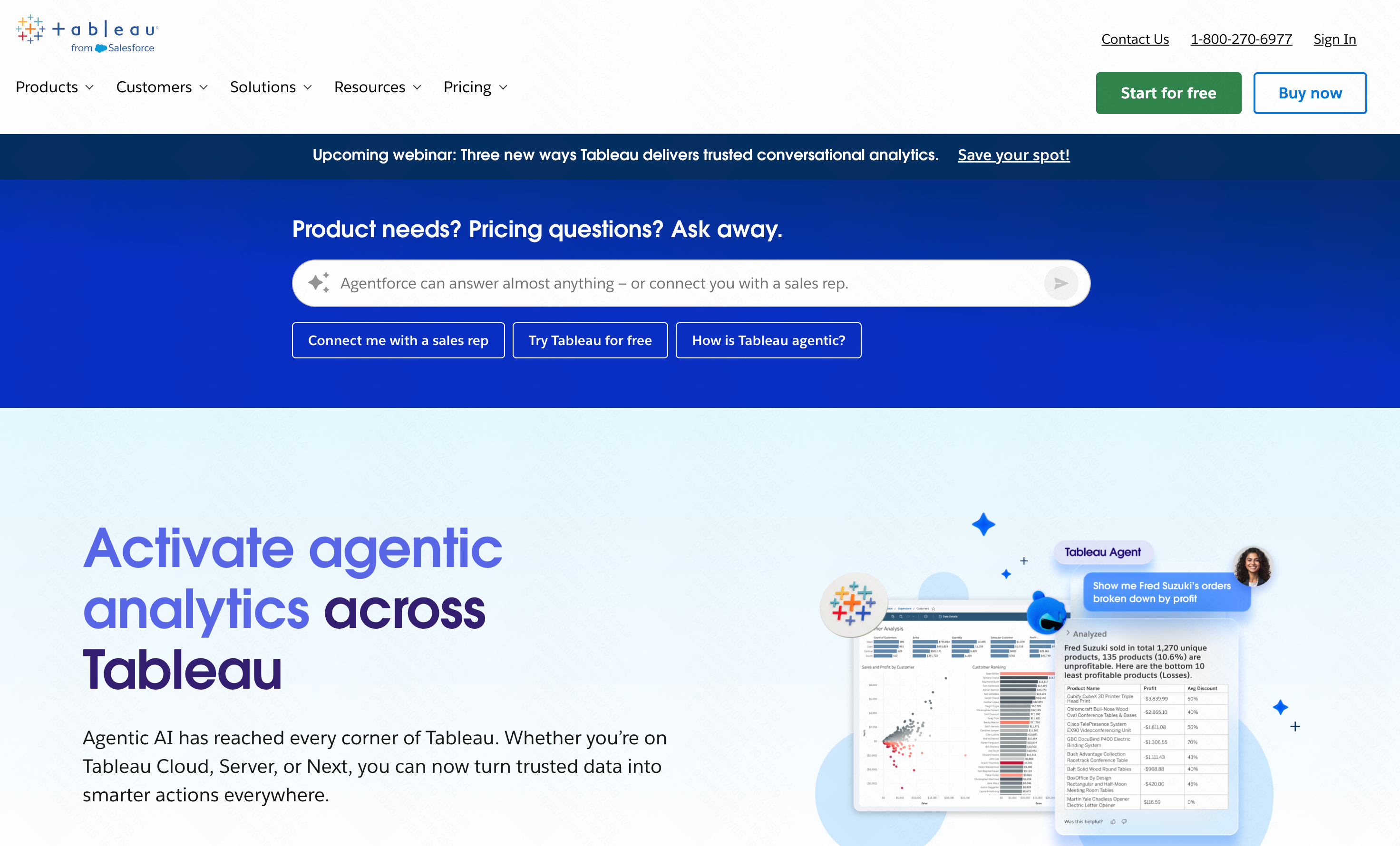
O gigante consagrado de business intelligence, agora turbinado com o Einstein AI da Salesforce para ajudar analistas a preparar e visualizar dados mais rapidamente.
Principais Recursos
- Tableau Pulse para resumos de métricas orientados por IA.
- Visualizações de coorte altamente complexas e em múltiplas camadas.
Prós
- Personalização incomparável para gráficos e dashboards.
- Poder de processamento incrível para grandes conjuntos de dados.
Contras
- Forte dependência de engenharia de dados e pipelines limpos.
- Alto custo total de propriedade.
Preços
Começa em US$ 15/usuário/mês.
6. Hotjar
Conhecido pelos mapas de calor e gravações, o Hotjar integrou IA para ajudar profissionais de marketing a analisar coortes comportamentais qualitativas e sentimento.
Principais Recursos
- Criação de pesquisas e análise de sentimento orientadas por IA.
- Coortes visuais por meio de gravações de sessão.
Prós
- Extremamente intuitivo e fácil de instalar.
- Imbatível para entender o "porquê" por trás das ações dos usuários.
Contras
- Não possui tabelas de retenção por coorte quantitativas e baseadas em tempo aprofundadas.
- Não é um banco de dados analítico independente.
Preços
O básico é gratuito; o Plus começa em US$ 39/mês.
7. CleverTap
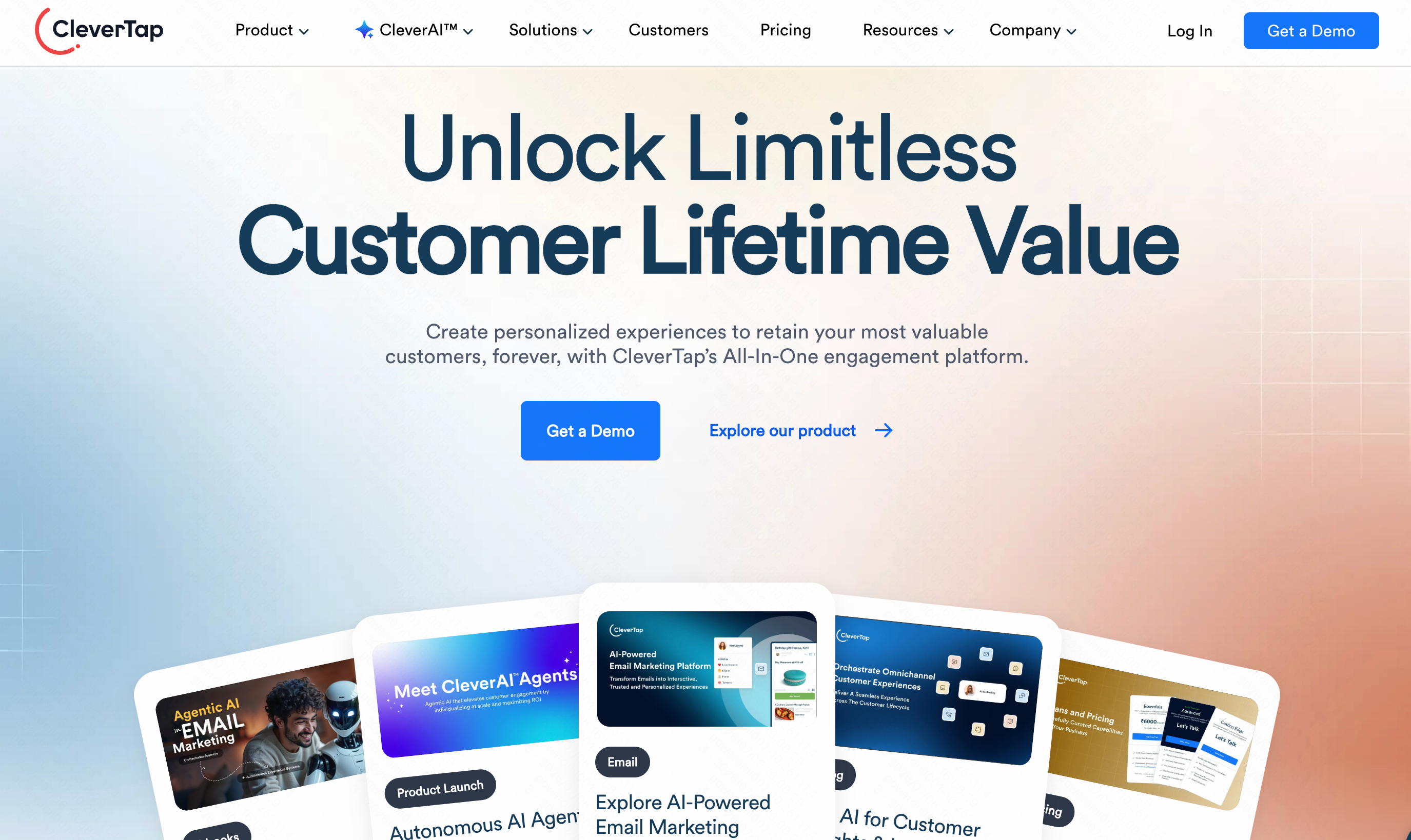
Uma plataforma de engajamento e retenção de clientes que usa IA para prever o churn de usuários e disparar campanhas de marketing omnichannel.
Principais Recursos
- Modelos preditivos de churn com tecnologia de IA.
- Agrupamento automático de coortes RFM (Recência, Frequência, Valor Monetário).
Prós
- Preenche a lacuna entre análise e execução ativa de campanhas.
- Excelente para aplicativos de consumo mobile-first.
Contras
- Pode exigir muitos recursos para uma implementação completa.
- A interface parece sobrecarregada devido à densidade de recursos.
Preços
Começa em US$ 75/mês.
8. Power BI Copilot
A ferramenta de BI carro-chefe da Microsoft aprimorada com IA generativa para ajudar analistas de dados a criar relatórios e escrever fórmulas complexas.
Principais Recursos
- Geração automática de código DAX.
- Resumos narrativos por IA de dashboards de coorte.
Prós
- Integração impecável com o ecossistema Microsoft.
- Altamente seguro para governança de dados corporativos.
Contras
- Não é explicitamente projetado para análise de produto pronta para uso.
- Pode ficar lento com conjuntos de dados não otimizados.
Preços
Incluído no Power BI Premium (começa em US$ 14/usuário/mês).
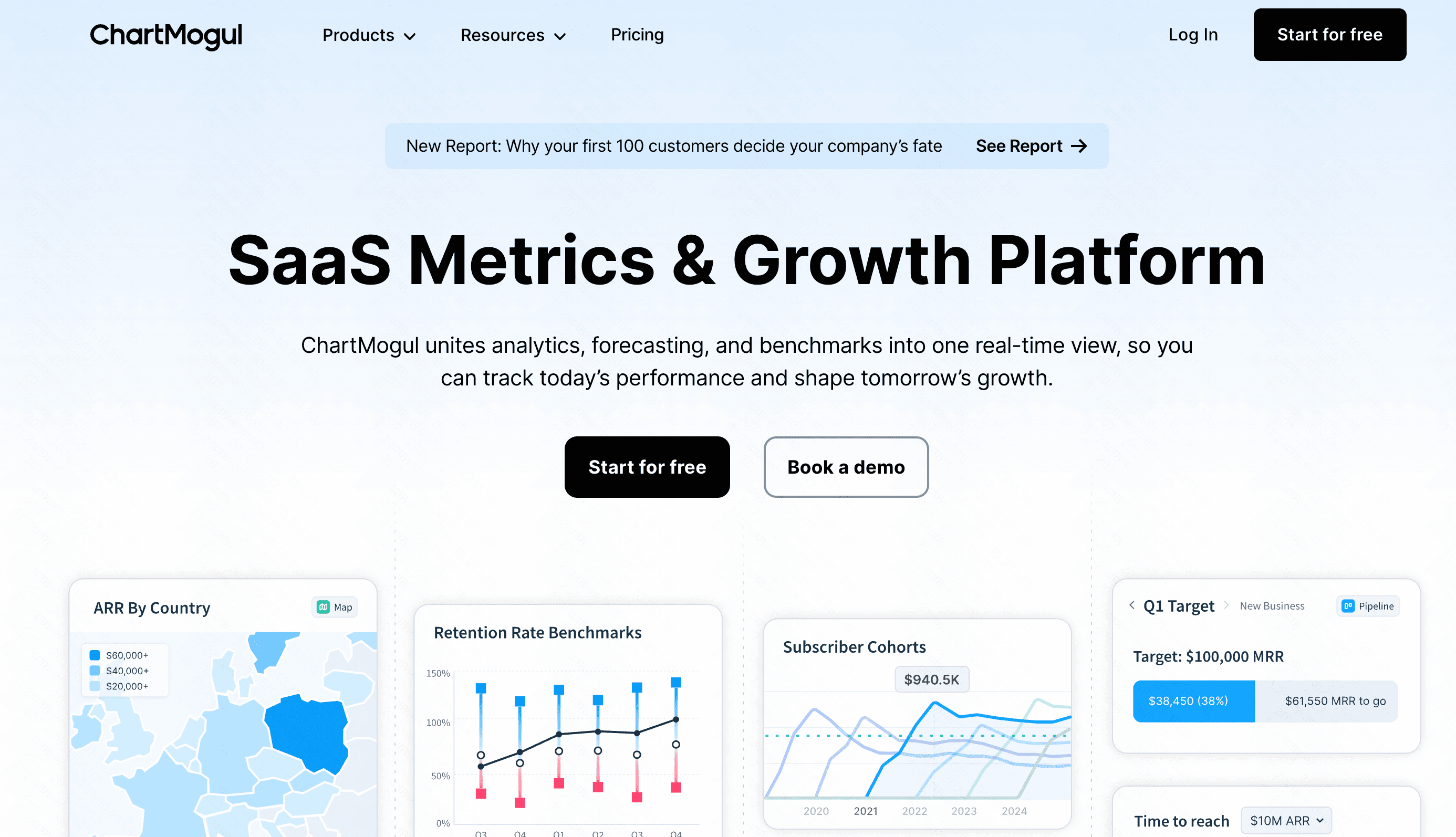
9. ChartMogul
A plataforma de análise ideal para empresas B2B SaaS, com forte foco em métricas de assinatura e coortes de receita.
Principais Recursos
- Acompanhamento de coortes de MRR e ARR.
- Previsão de receita assistida por IA.
Prós
- Perfeitamente ajustado para análise de faturamento SaaS.
- Integra-se perfeitamente com o Stripe e outros gateways de pagamento.
Contras
- Focado estritamente em receita; ruim para coortes comportamentais de produto.
- Funcionalidade limitada fora do modelo de negócio por assinatura.
Preços
O plano pago começa em US$ 59/mês.
10. Smartlook
Uma ferramenta de análise multiplataforma que combina análise quantitativa de coorte com gravações de sessão qualitativas, especialmente forte para dispositivos móveis.

Principais Recursos
- Funis retroativos e detecção de anomalias.
- Rastreamento de eventos móveis assistido por IA.
Prós
- Excelente visibilidade sobre travamentos de aplicativos móveis e problemas de UI.
- Fácil de configurar funis sem programação prévia.
Contras
- Depende bastante de amostragem de dados em ambientes de alto tráfego.
- A interface pode ficar um pouco lenta com muito armazenamento de vídeo.
Preços
Preço corporativo personalizado.
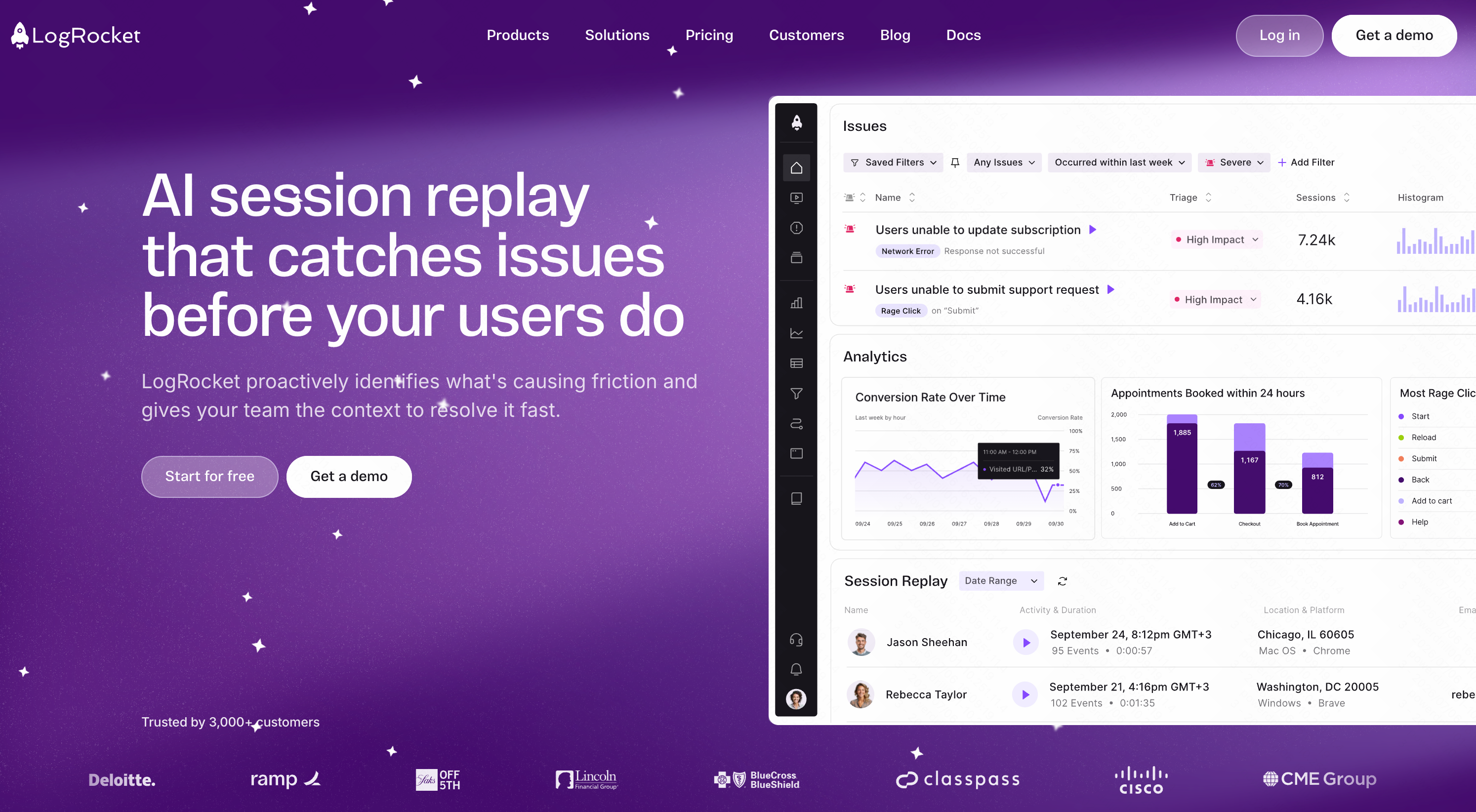
11. LogRocket
Uma plataforma de monitoramento de aplicações frontend que usa IA para categorizar problemas técnicos que afetam coortes específicas de usuários.
Principais Recursos
- Galileo AI para categorização automática de problemas.
- Rastreamento de coortes técnicas (por exemplo, usuários que enfrentam alta latência).
Prós
- Inestimável para depuração e engenharia de frontend.
- Quantifica o impacto de negócio dos erros técnicos.
Contras
- Não é adequado para análise de coorte de marketing ou vendas.
- Caro para capturas de sessão em larga escala.
Preços
Nível básico gratuito; o pago começa em US$ 69/mês.
12. Contentsquare
Uma plataforma de análise de experiência digital de nível corporativo que mapeia toda a jornada do cliente para revelar pontos de fricção.
Principais Recursos
- Mapas de calor por zonas e alertas de fricção por IA.
- Análise aprofundada da jornada do cliente e de coortes por intenção.
Prós
- Fornece insights de UX altamente detalhados e acionáveis.
- Ótimo para grandes marcas de e-commerce que otimizam conversões.
Contras
- Caro demais para pequenas e médias empresas.
- Exige um longo processo de implementação e treinamento.
Preços
Os planos pagos começam em US$ 39/mês.
Erros Comuns na Análise de Coorte
- Ignorar a Qualidade dos Dados: Analisar coortes com eventos duplicados ou não rastreados leva a conclusões falsas.
- Escolher os Períodos Errados: Usar coortes mensais para um aplicativo que espera uso ativo diário vai mascarar abandonos críticos.
- Complicar Demais os Segmentos: Criar coortes granulares demais resulta em amostras pequenas demais para serem estatisticamente significativas.
- Não Agir: Insight sem ação é inútil; você precisa conectar suas descobertas de coorte a atualizações reais do produto ou campanhas de marketing.
Casos de Uso: Quem Deve Usar Ferramentas de IA para Análise de Coorte?
- Fundadores de SaaS: Para monitorar o sucesso do onboarding de usuários e reduzir proativamente as taxas mensais de churn.
- Gerentes de E-commerce: Para analisar o valor de vida útil (LTV) dos clientes adquiridos durante campanhas de datas comemorativas específicas.
- Gerentes de Produto: Para acompanhar a adoção de funcionalidades e verificar se uma nova atualização de UI realmente melhora a retenção de longo prazo.
- Equipes de Marketing: Para segmentar públicos com base no comportamento e entregar fluxos de reengajamento por e-mail altamente direcionados.
Conclusão
Embora o mercado esteja repleto de plataformas de análise poderosas, escolher a certa depende muito da expertise técnica e do orçamento da sua equipe. Gigantes corporativos como Amplitude e Tableau oferecem profundidade incrível, enquanto o PostHog é o sonho de qualquer desenvolvedor.
No entanto, se você quer o melhor equilíbrio absoluto entre poder, acessibilidade e inovação em IA, o Powerdrill Bloom se destaca como o grande vencedor. Ao eliminar completamente a barreira do SQL e permitir que você converse diretamente com seus dados, o Powerdrill Bloom capacita todos, de profissionais de marketing a fundadores, a descobrir insights de coorte instantaneamente. É a forma mais inteligente e eficiente de transformar dados complexos em estratégias que impulsionam a retenção hoje.
Perguntas Frequentes
O que é análise de coorte com IA?
Ela usa plataformas de IA como o Powerdrill Bloom para agrupar automaticamente usuários e descobrir tendências comportamentais de retenção de forma instantânea e precisa.
Preciso saber SQL para fazer análise de coorte?
Não mais. Ferramentas como o Powerdrill Bloom usam IA de linguagem natural, tornando a codificação complexa em SQL completamente desnecessária para análises aprofundadas.
Qual ferramenta é a melhor para iniciantes em análise?
O Powerdrill Bloom é altamente recomendado para iniciantes por causa de sua interface de IA intuitiva, baseada em chat, e curva de aprendizado zero.
A IA consegue prever o churn de clientes?
Sim, plataformas de IA como o Powerdrill Bloom analisam comportamentos históricos de coorte para prever com precisão e ajudar a evitar o churn futuro de clientes.
As ferramentas de coorte com IA são caras?
Enquanto ferramentas corporativas custam milhares, o Powerdrill Bloom oferece planos altamente econômicos e acessíveis, perfeitos para startups e equipes em crescimento.