데이터 팩트: iPhone에서 AI로 — Foxconn의 대규모 매출 전환의 이면
핵심 요약 — 숫자 5개로 보는 Foxconn의 전환
10년 넘게 Foxconn(Hon Hai Precision)은 단 하나의 제품, 즉 Apple의 iPhone과 동의어였습니다. 오늘날 세계 최대의 전자제품 제조업체는 지각변동에 가까운 구조적 전환을 겪으며, 소비자 가전에서 인공지능 인프라로 빠르게 방향을 틀었습니다. 다음은 Foxconn의 재무 실적에 반영된 전 세계 AI 하드웨어 붐을, 이를 규정하는 다섯 가지 수치로 정리한 것입니다.
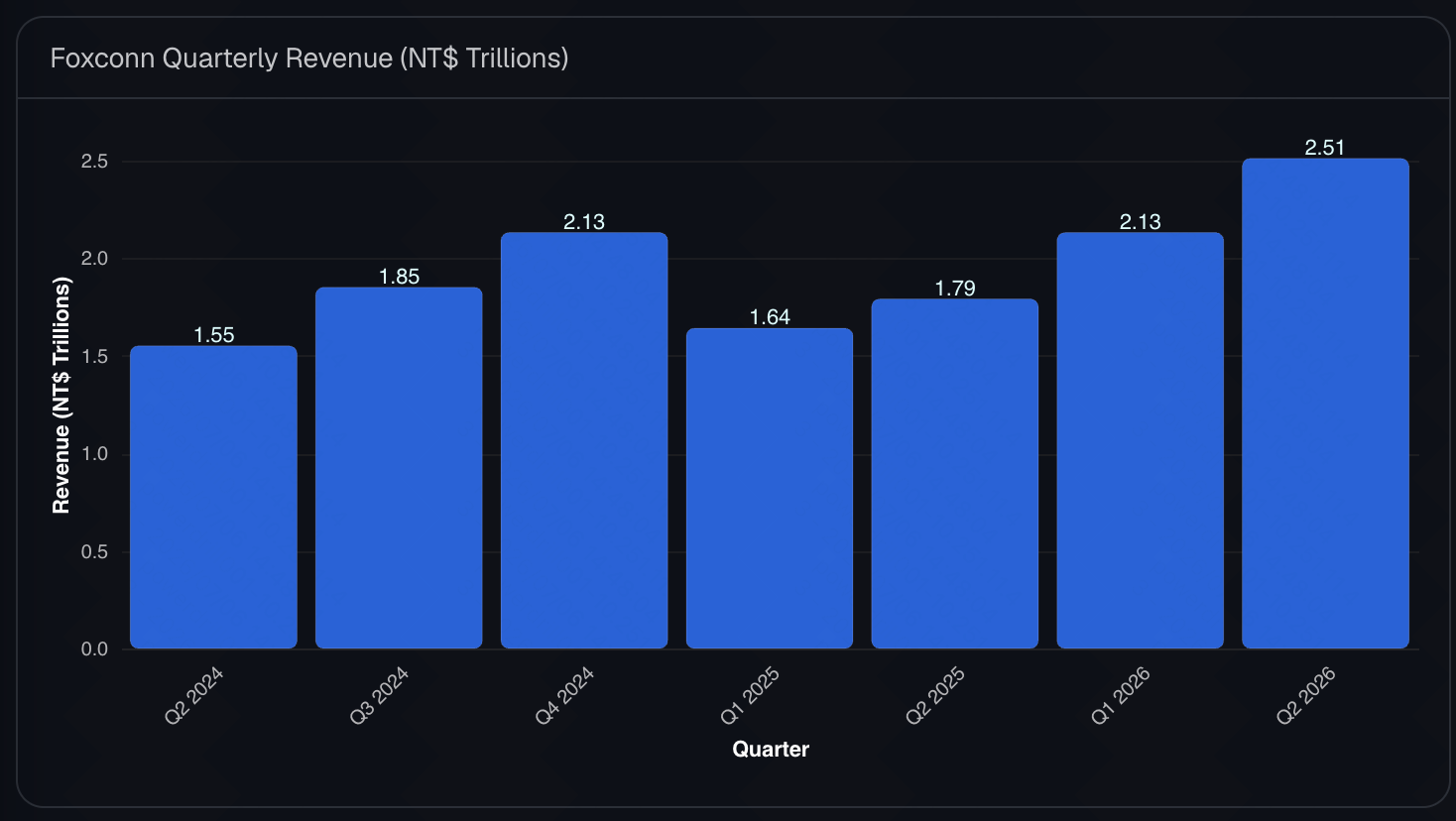
- NT$2.51조 (US$790억): 2026년 2분기 Foxconn의 사상 최대 총매출로, 창사 이래 가장 높은 분기 매출을 기록했습니다.
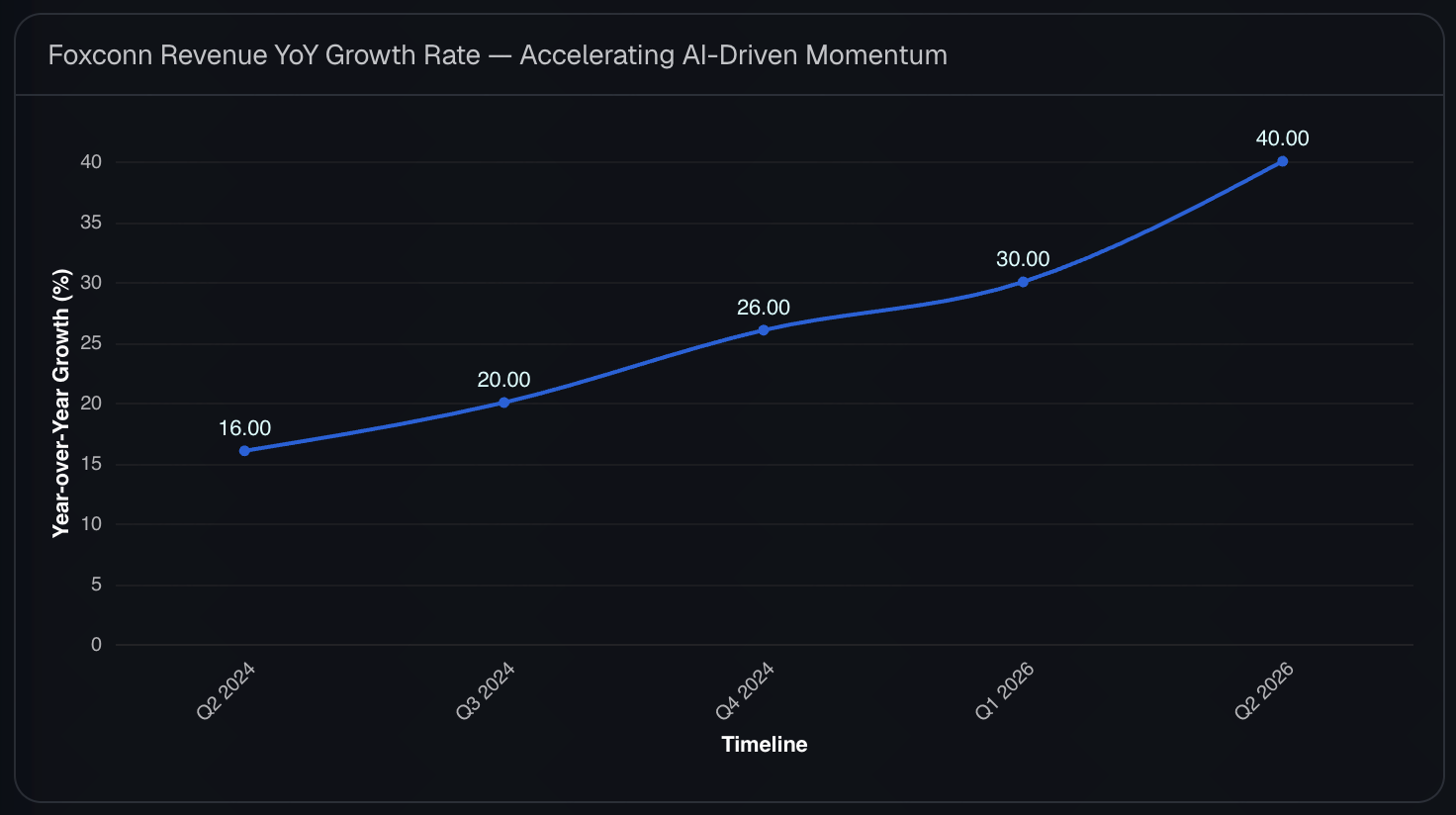
- 40%: 2026년 2분기에 달성한 놀라운 전년 대비 매출 성장률로, 거의 전적으로 AI 서버가 견인했습니다.
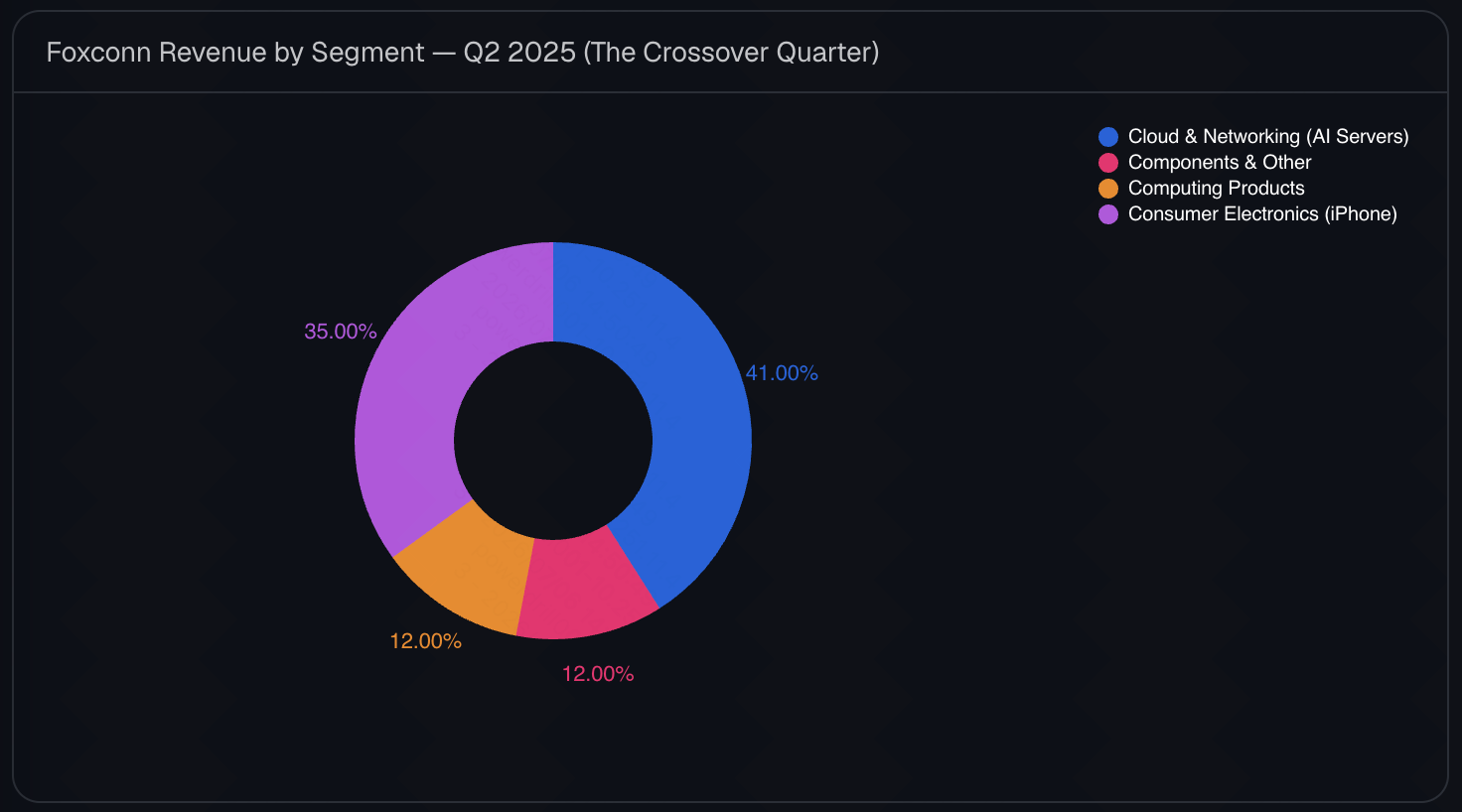
- 41% 대 35%: 2025년 2분기의 정확한 교차 지표로, 클라우드 및 네트워킹(AI 서버) 매출(41%)이 회사의 현대사에서 처음으로 소비자 가전(35%)을 공식적으로 앞질렀습니다.
- NT$8,218억: 2026년 6월 한 달만의 매출로, 해당 월 기준 사상 최고치이며 전년 대비 52% 급증한 수치입니다.
- 수천억 달러: 하이퍼스케일러(Alphabet, Amazon, Meta, Microsoft)의 2026년 총 자본 지출로, Foxconn과 같은 공급망으로 곧장 흘러 들어가고 있습니다.
짧게 정리하면: Foxconn의 전환은 더 이상 기업 전략 전망에 그치지 않습니다. 이미 대차대조표 위에 물리적으로 실현되어, 스마트폰 지배 시대의 종말과 AI 인프라 슈퍼사이클의 여명을 알리고 있습니다.
배경 이야기: 기술 산업을 비추는 돋보기
AI 발전과 산업 진화라는 깊은 렌즈를 통해 바라보면, Foxconn의 기념비적인 재무 보고서는 단일 제조 대기업 하나의 성공을 훨씬 뛰어넘는 의미를 지닙니다. 오히려 Foxconn은 기술 산업 전체의 미래를 관찰할 수 있는 거대하고 고화질의 "돋보기" 역할을 합니다.
10년 전만 해도 AI 서버는 학술 연구와 실험용 데이터센터에나 쓰이던 틈새의 특수 하드웨어였습니다. 전 세계의 대화는 전적으로 모바일 컴퓨팅과 스마트폰 교체 주기가 지배했습니다. 오늘날 그 서사는 완전히 뒤집혔습니다. 2022년 말 ChatGPT의 폭발적인 출시와 그 뒤를 이은 생성형 AI 군비 경쟁에 힘입어, 전 세계 컴퓨팅의 근본적인 아키텍처가 바뀌었습니다.
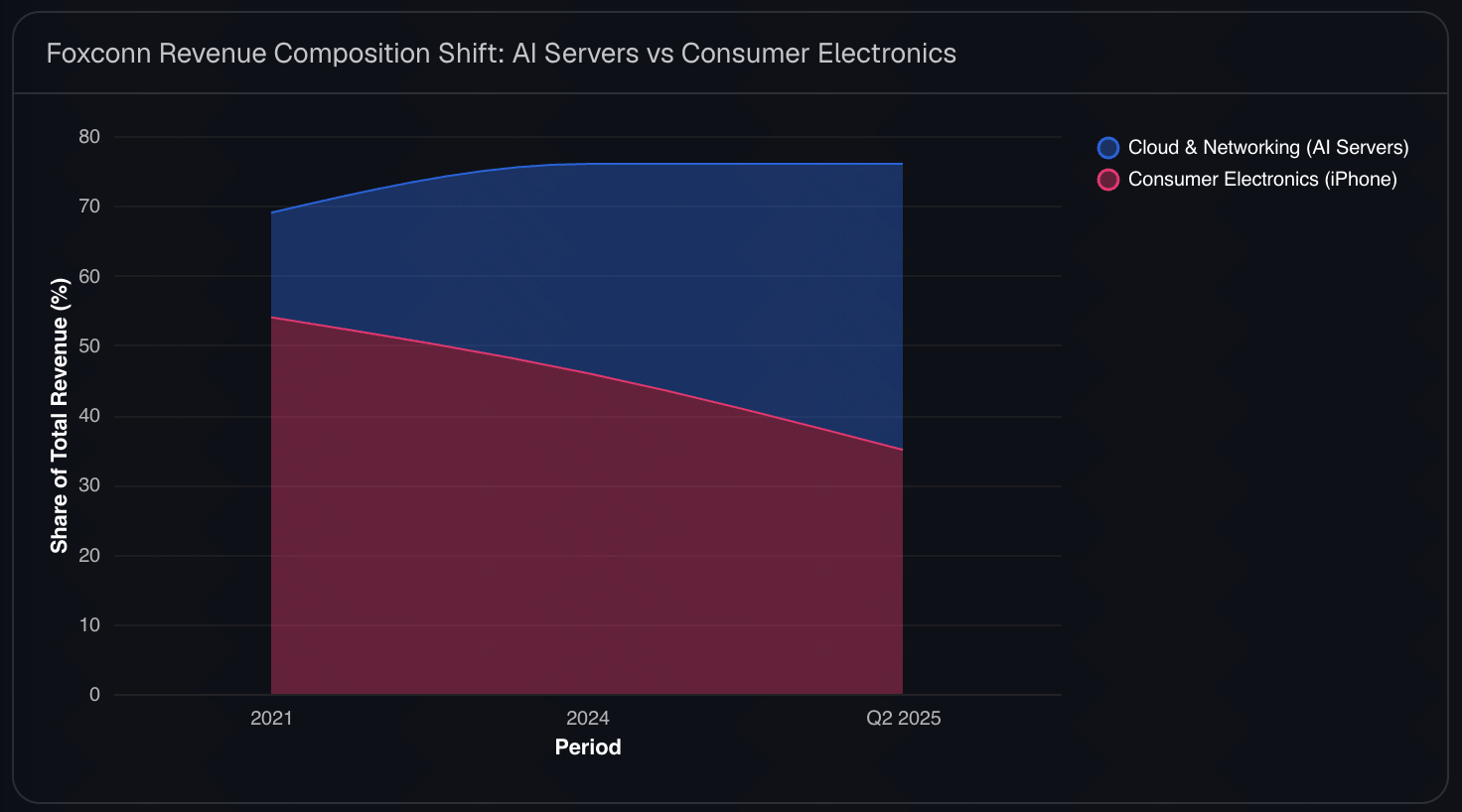
2021년만 해도 iPhone 같은 소비자 가전에서 매출의 54% 이상을 얻던 회사에서, AI 서버가 지배하는 강자로 변모한 Foxconn의 매출 역전은 전 세계 기술 경제의 거시적 전환을 완벽하게 반영합니다. 우리는 인공지능의 산업화를 목격하고 있습니다. Foxconn의 생산 라인, 자본 투자, 부문별 매출을 추적함으로써 우리는 단순히 분기 실적을 보는 것이 아니라, 실시간으로 건설되고 있는 AI 혁명의 물리적 청사진을 보고 있는 것입니다.
데이터셋 소개
이 보고서는 2021~2026년 기간을 다루는 공개 재무 데이터, 산업 분석, 공급망 통계를 바탕으로 작성되었습니다. 주요 지표로는 총 분기 매출, 부문 구성(소비자 가전 대 클라우드 및 네트워킹), 전년 대비 성장률, 지역별 제조 거점 등이 포함됩니다. 출처로는 Yahoo Finance, Reuters, Jon Peddie Research, CRN Asia, Benzinga, AI Consulting Network, 그리고 Foxconn(Hon Hai Precision)의 공식 발표 자료가 있습니다. 수치는 가독성을 위해 환산·반올림되었습니다.
도구 소개
이 보고서의 모든 차트는 AI 우선 데이터 분석 에이전트인 Powerdrill Bloom으로 생성되었습니다. 우리가 원본 재무 스프레드시트를 업로드하자, Bloom은 데이터를 정제하고 매출 부문 역전 및 전년 대비 성장에 관한 탐색 경로를 제안했으며, 아래 차트들을 자동으로 만들어 냈습니다. SQL도, Python도, 수작업 서식 지정도 필요 없었습니다. 같은 공급망 또는 재무 데이터를 직접 탐색해 보고 싶다면 저희 AI 데이터 시각화 도구를 확인해 보세요.
핵심 시사점
- 교차는 실제이며 가속화되고 있습니다. 이 구조적 역전은 영구적입니다. 2025년 2분기에 AI 서버가 매출 비중에서 iPhone을 앞질렀습니다. 2026년 2분기에 이르러 그 격차는 더욱 벌어졌으며, 소비자 가전의 정체 내지 완만한 성장과 대비되는 40%의 전년 대비 전체 성장률이 이를 뒷받침합니다.
- 이는 갑작스러운 전환이 아니라 20년에 걸친 축적입니다. 갑작스러워 보이지만, Foxconn의 Nvidia 파트너십은 2002년(그래픽 카드 레퍼런스 디자인 제작)까지 거슬러 올라가며, 서버 사업은 2009년에 시작되었습니다. 최근의 AI 붐이 Foxconn의 역량을 만들어 낸 것이 아니라, 20년에 걸친 선견지명을 수익으로 전환시킨 것입니다.
- 자본은 AI 베팅을 따라가고 있습니다. Foxconn은 수십억 달러를 전용 초대형 공장에 투입하며 AI 인프라를 중심으로 물리적으로 자신을 재편하고 있습니다. Guadalajara(Mexico), Ohio, Houston(Texas)의 신규 시설은 전적으로 AI 서버에 전념하며, 전통적인 스마트폰 조립을 완전히 건너뜁니다.
- 매출 성장 ≠ 이익 성장. 엄청난 성장 규모가 자동으로 선형적인 수익성으로 이어지지는 않았습니다. 최고 수준의 매출에도 불구하고 Foxconn의 마진은 압박을 받고 있는데, 이는 주로 AI 부품의 높은 비용과 Nvidia에 대한 심각한 집중 리스크 때문입니다.
- Apple이 사라지는 것이 아니라, 그저 더 작은 사업이 되는 것입니다. Foxconn은 여전히 Apple의 최우선 파트너로서 매년 수억 대의 iPhone을 조립합니다. 그러나 전략적 무게 중심, 그리고 두 자릿수 성장의 주된 동력은 AI 인프라로 영구히 이동했습니다.
전 세계 AI 하드웨어 붐: 데이터 전체 분석
Q1: Foxconn의 매출 구조 변화는 얼마나 극적이었나요?
그 변화는 Foxconn 규모의 회사로서는 빠르고도 전례 없는 것이었습니다. 2021년을 돌아보면, 소비자 가전(iPhone이 큰 축을 담당)이 Foxconn 매출의 54%를 차지한 반면, 클라우드 및 네트워킹(서버)은 15% 안팎을 맴돌았습니다. 기술 하드웨어 역사에 길이 남을 분기인 2025년 2분기에 이르러 두 선이 교차했습니다. 소비자 가전은 35%로 떨어졌고, 클라우드 및 네트워킹은 41%로 급등했습니다.
이 교차가 전환점이었습니다. 생성형 AI 모델에 대한 수요는 고성능 GPU로 가득 찬 방대한 데이터센터를 필요로 했고, 이로 인해 하이퍼스케일러들이 전례 없는 속도로 서버를 주문하게 되었습니다. AI 서버 부문에서 전 세계 시장 점유율의 약 40%를 보유한 Foxconn은 이 물리적 인프라 구축의 가장 큰 몫을 차지했습니다.
Q2: 2026년 2분기에 나타난 폭발적 성장을 견인하는 것은 무엇인가요?
그 기세는 2026년 들어 오히려 격렬하게 가속화되었을 뿐입니다. 2026년 2분기에 Foxconn은 NT$2.51조(US$790억)라는 놀라운 총매출을 보고했으며, 이는 전년 대비 40% 성장한 수치입니다. 2026년 6월 한 달만으로도 NT$8,218억을 기록해 전년 대비 52% 증가했습니다.
그 주된 촉매는 Nvidia의 차세대 Blackwell 기반 GB200 AI 서버의 유일한 조립업체라는 Foxconn의 지위입니다. GB200 서버는 기존 AI 서버 대비 약 40%의 가격 프리미엄이 붙어 대당 매출을 크게 끌어올립니다. Young Liu 회장이 2026년을 회사 사상 최고의 내부 성장 지표인 "강력한 성장"의 해로 지정한 만큼, GB200 생산 통합이 막대한 매출 확대를 낳고 있음이 분명합니다.
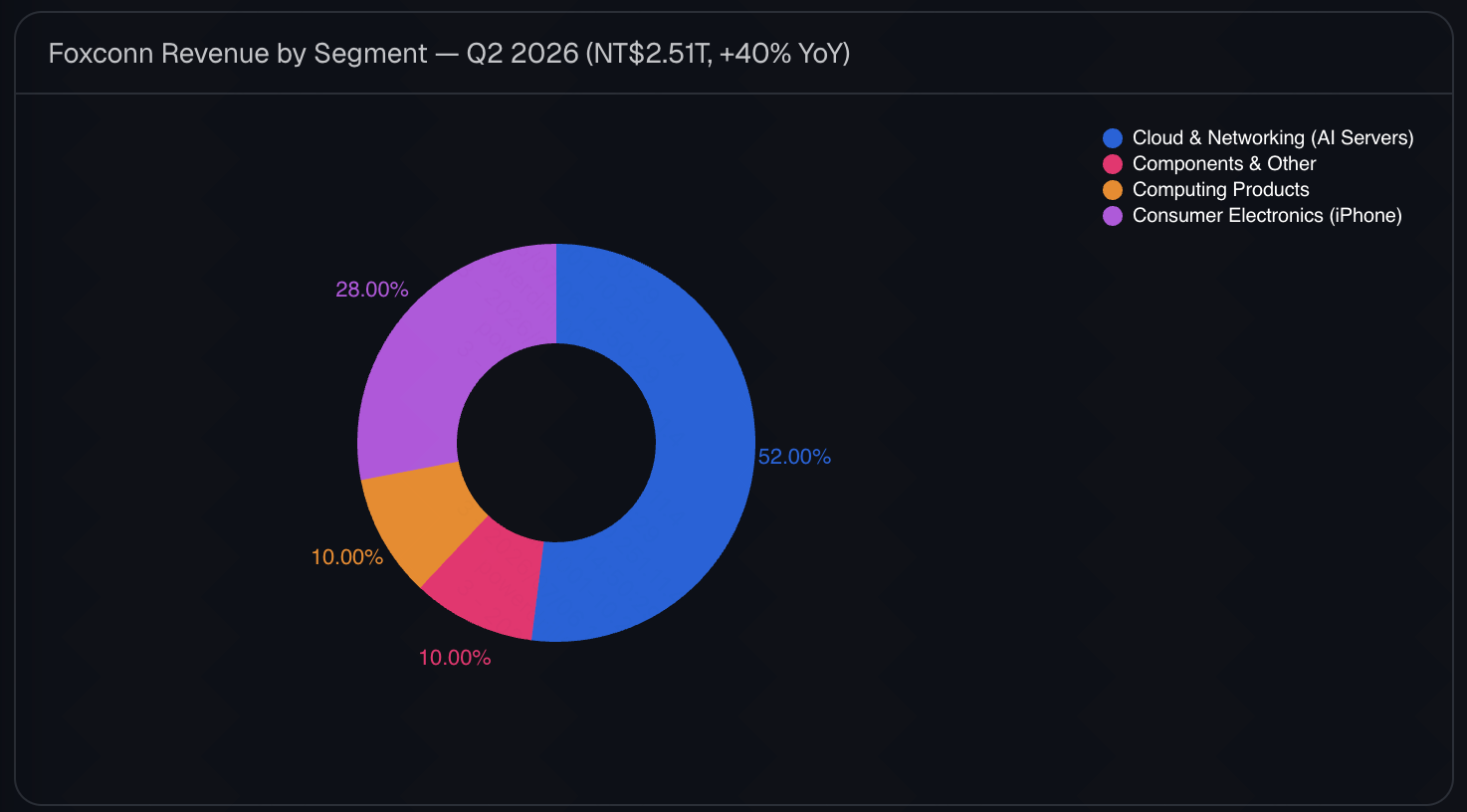
차트 5에 관한 참고 사항: 2026년 2분기의 사업 부문별 상세 매출 내역은 아직 공식적으로 발표되지 않았습니다. 7월 5일 기준으로 Foxconn은 2분기 총매출 NT$2.51조만 발표했습니다. 따라서 이 차트에 표시된 부문 배분은 공식 보고 데이터가 아니라 근거에 기반한 추정치입니다.
이 추정은 두 가지 핵심 요인에 근거합니다: (1) 클라우드 및 네트워킹 부문이 총매출의 거의 50%를 차지했다는 Foxconn의 공식 2026년 1분기 공시, 그리고 (2) 2분기에 이 부문의 강력한 전분기 대비 및 전년 대비 성장을 시사한 회사의 가이던스입니다. 2분기 매출의 전년 대비 40% 증가가 주로 AI 서버에 대한 급증하는 수요로 견인되었다는 점을 고려하면, 클라우드 및 네트워킹이 50% 선을 넘어 Foxconn의 최대 매출 기여 부문이 되었을 가능성이 매우 높습니다.
Q3: Foxconn은 왜 북미에 "초대형 공장"을 짓고 있나요?
AI 하드웨어의 지정학과 물류는 소비자 가전과 크게 다릅니다. iPhone은 중국 본토의 거대한 허브에서 손쉽게 조립되어 전 세계로 배송되지만, 거대한 AI 서버 랙(무게가 수천 파운드에 이르고 수백만 달러에 달할 수 있음)은 최종 사용자 데이터센터에 더 가까운 곳에서 제조해야 합니다.
Foxconn은 니어쇼어링에 자본을 쏟아붓고 있습니다. Mexico의 Guadalajara에서는 연간 약 20,000대의 AI 서버를 생산할 수 있는 세계 최대의 GB200 슈퍼칩 시설을 건설하고 있습니다. 미국 Ohio에서는 SoftBank의 5,000억 달러 규모 "Stargate" 프로젝트를 위한 AI 서버를 전용으로 생산하며, 2026년 말까지 주당 약 2,000개 랙의 생산 속도를 목표로 하고 있습니다. Texas의 Houston에 있는 2차 시설도 확장 중입니다. 이처럼 현지화되고 고도로 자동화된 초대형 공장들은 AI를 위한 물리적 공급망이 북미 하이퍼스케일러에 더 가까이 이동하고 있음을 입증합니다.
Q4: 매출이 40% 성장했다면, Foxconn의 이익도 똑같이 폭발적일까요?
바로 여기에 AI 하드웨어 붐의 역설이 자리합니다. 물량 성장이 자동으로 그에 상응하는 수익성으로 이어지지는 않았습니다. 2025년 4분기에 Foxconn은 NT$452.1억의 순이익을 보고했는데, 이는 애널리스트 컨센서스인 NT$608.8억을 크게 밑도는 수치로, AI 주도 매출 반등 이전의 실적 압박을 부각합니다. 앞선 분기들에서 영업이익과 순이익이 사상 최고치를 기록하기는 했지만, 마진은 여전히 극심한 압박을 받고 있습니다.
Nvidia는 자사 GPU에 대해 막대한 가격 결정력을 행사하며, 이는 Foxconn 같은 조립업체의 마진이 압박받는다는 것을 의미합니다. 게다가 신규 초대형 공장을 위한 Foxconn의 막대한 자본 지출은 대차대조표에 큰 부담이 됩니다. 그 결과, Taiwan 전체 주식 시장이 AI 낙관론에 힘입어 2026년 중반까지 61.5% 급등하는 동안, Foxconn의 주가는 같은 기간 연초 대비 4.3% 상승하는 데 그쳤습니다. 투자자들이 Nvidia에 대한 회사의 의존도와 빠듯한 조립 마진을 면밀히 따졌기 때문입니다.
이것이 기업과 애널리스트에게 의미하는 바
Foxconn의 "돋보기"를 통해 들여다보면 더 넓은 기술 생태계에 대한 결정적인 통찰을 얻을 수 있습니다. 기업 리더와 공급망 애널리스트에게 이 데이터는 AI 전환이 소프트웨어 단독 단계를 벗어났으며, 이제 전적으로 물리적 하드웨어 가용성과 데이터센터 전력망 용량에 의해 좌우된다는 점을 명확히 보여줍니다.
Taiwan은 이 새로운 시대의 명실상부한 진원지로 부상했으며, 현재 전 세계 서버 출하량의 약 80%, AI 서버의 90% 이상을 차지하고 있습니다. Wistron, Quanta Computer 같은 Foxconn의 동종 ODM(주문자 설계 제조사)들도 똑같은 물결에 올라타 저마다 막대한 매출 급증을 경험하고 있습니다.
투자자와 마케터에게 이는 기술 하드웨어의 가치가 평가되는 방식의 영구적인 변화를 의미합니다. 2010년대의 소비자 교체 슈퍼사이클(4G, 5G, 새로운 스마트폰 폼팩터가 견인)은 기업 인프라 슈퍼사이클로 대체되었습니다. 네 개 기업(Alphabet, Amazon, Meta, Microsoft)이 단 한 해(2026년)에 AI 관련 투자로 총 7,250억 달러를 할당할 때, B2B 하드웨어 제조는 전 세계 경제에서 가장 중요한 병목이자 가장 수익성 높은 기회가 됩니다.
이렇게 봅시다: 이것이 당신의 삶과 무슨 상관이 있을까요
Foxconn의 극적인 매출 반전은 멀게 느껴지는 B2B 공급망 이야기처럼 보일 수 있지만, 그 영향은 기업 이사회를 훨씬 넘어 일상생활에까지 곧장 미칩니다. 고용 측면에서, 회사의 대규모 AI 중심 제조 확장은 북미에서 액체 냉각 엔지니어, 고밀도 랙 통합 기술자 같은 고숙련 직무에 대한 강한 수요를 창출하고 있습니다. 이러한 직무는 전통적인 조립 라인 일자리보다 훨씬 높은 급여를 제공하여, AI 하드웨어 엔지니어링을 향후 10년간 가장 유망한 커리어 경로 중 하나로 만들고 있습니다.
소비자에게 있어, iPhone에서 AI 서버로의 Foxconn의 전략적 생산 능력 이동은 R&D 자원의 더 광범위한 재배분을 시사합니다. 투자가 점점 더 AI 인프라로 흐르면서, 향후 스마트폰 출시는 획기적인 혁신보다는 점진적인 업그레이드에 그칠 가능성이 높아지고, 이는 소비자의 교체 주기를 늘릴 수 있습니다.
한편, 수백만 명의 사람들이 ChatGPT나 Midjourney 같은 AI 도구의 편리함을 누리는 동안, 그들은 간접적으로 AI 인프라 붐에 자금을 대는 데도 일조하고 있습니다. 하이퍼스케일 클라우드 사업자들은 데이터센터에 약 US$7,250억을 투자하고 있으며, 그 막대한 자본 지출은 결국 더 높은 구독료, API 요금, 클라우드 서비스 비용을 통해 전가됩니다. AI 인프라 슈퍼사이클은 커리어 기회와 소비자 기술에서부터 디지털 서비스의 반복 비용에 이르기까지, 일상적인 경제생활을 조용히 재편하고 있습니다.
이 분석과 차트를 만든 방법
이와 같은 재무 분석 보고서를 만드는 데 데이터 팀이 필요하지는 않습니다. 정확한 워크플로는 다음과 같습니다.
- 스킬, 주제 또는 데이터셋에서 시작하세요. 내장 AI 스킬을 고르거나, 데이터 분석 주제를 탐색하거나, 직접 스프레드시트를 업로드하여 몇 분 만에 인사이트를 생성하세요.
- 캔버스가 탐색하도록 두세요. Bloom은 데이터를 자동으로 정제하고 매출 교차, 전년 대비 모멘텀, 부문 분포 같은 스마트한 탐색 경로를 제안한 뒤, 여러분을 위해 차트를 생성합니다.
- 슬라이드로 내보내세요. 캔버스 전체를 발표에 바로 쓸 수 있는 세련된 덱으로 바꾸고, 클릭 한 번으로 PowerPoint로 내보내세요.
SQL도, Python도, 차트를 슬라이드에 복사·붙여넣기 할 필요도 없습니다. 여러분의 기업 데이터셋으로 직접 시도해 보고 싶으신가요? Powerdrill Bloom을 무료로 사용해 보세요. 저희 AI 그래프 메이커를 살펴보거나 스프레드시트를 슬라이드로 바꾸는 방법을 배워볼 수도 있습니다.
FAQ
이 재무 데이터는 어디에서 왔나요?
수치는 2021년부터 2026년 중반까지를 다루는 Foxconn(Hon Hai Precision)의 공개 재무 공시에서 가져왔으며, Yahoo Finance, Reuters의 시장 데이터와 Jon Peddie Research, AI Consulting Network 같은 산업 추적기관의 자료도 함께 활용했습니다.
그렇다면 Apple과 iPhone이 실패하고 있다는 뜻인가요?
전혀 그렇지 않습니다. Foxconn은 여전히 수억 대의 iPhone을 제조하고 있으며, Apple은 여전히 핵심 고객입니다. 다만 소비자 가전은 자연스럽게 시장 포화 상태에 도달해 성장이 정체되거나 한 자릿수에 머물고 있습니다. 반대로 AI 서버는 전년 대비 40%에서 170%에 이르는 성장을 보이며, Foxconn 총매출의 수학적 구성을 본질적으로 바꿔 놓고 있습니다.
GB200이란 무엇이며, 왜 Foxconn에게 그토록 중요한가요?
GB200은 Nvidia의 차세대 Blackwell AI 슈퍼칩 아키텍처입니다. 대단히 복잡한 액체 냉각과 고밀도 랙 통합을 요구하기 때문에 조립이 고도로 전문화되어 있습니다. Foxconn은 이 프리미엄 랙의 유일한 조립업체 자리를 확보하여, 2026년 AI 하드웨어 시장에서 전례 없는 해자를 갖게 되었습니다.
우리 회사의 공급망이나 매출 데이터도 이렇게 분석할 수 있나요?
가능합니다. CSV 또는 Excel 파일을 Powerdrill Bloom에 업로드하면 데이터를 정제하고 차트를 만들며, 슬라이드 덱으로 내보낼 수 있게 해 줍니다. 코딩은 필요 없습니다.
마무리
Foxconn의 역사적 매출 전환 뒤에 놓인 숫자들은 2020년대 기술 지형을 규정하는 이야기를 들려줍니다. 단 4년 만에 세계에서 가장 유명한 스마트폰 제조업체는 세계에서 가장 핵심적인 AI 인프라 건설자로 진화했습니다. Nvidia의 하드웨어에 힘입어 2026년 2분기 매출이 40% 급증하면서, Foxconn은 더 이상 AI 물결에 올라탄 존재에 그치지 않고, 그 물결이 부딪히는 물리적 기반암 그 자체가 되었습니다. 이제 흥미로운 질문은 AI가 확장될 것인지 여부가 아니라, 전 세계 공급망과 전력망, 그리고 이익률이 이 새로운 컴퓨팅 시대의 엄청난 무게를 어떻게 감당할 것인가입니다.
여러분의 재무 또는 운영 데이터가 무엇을 숨기고 있는지 궁금하신가요? Powerdrill Bloom에 업로드하고, 차트가 그 이야기를 들려주게 하세요.