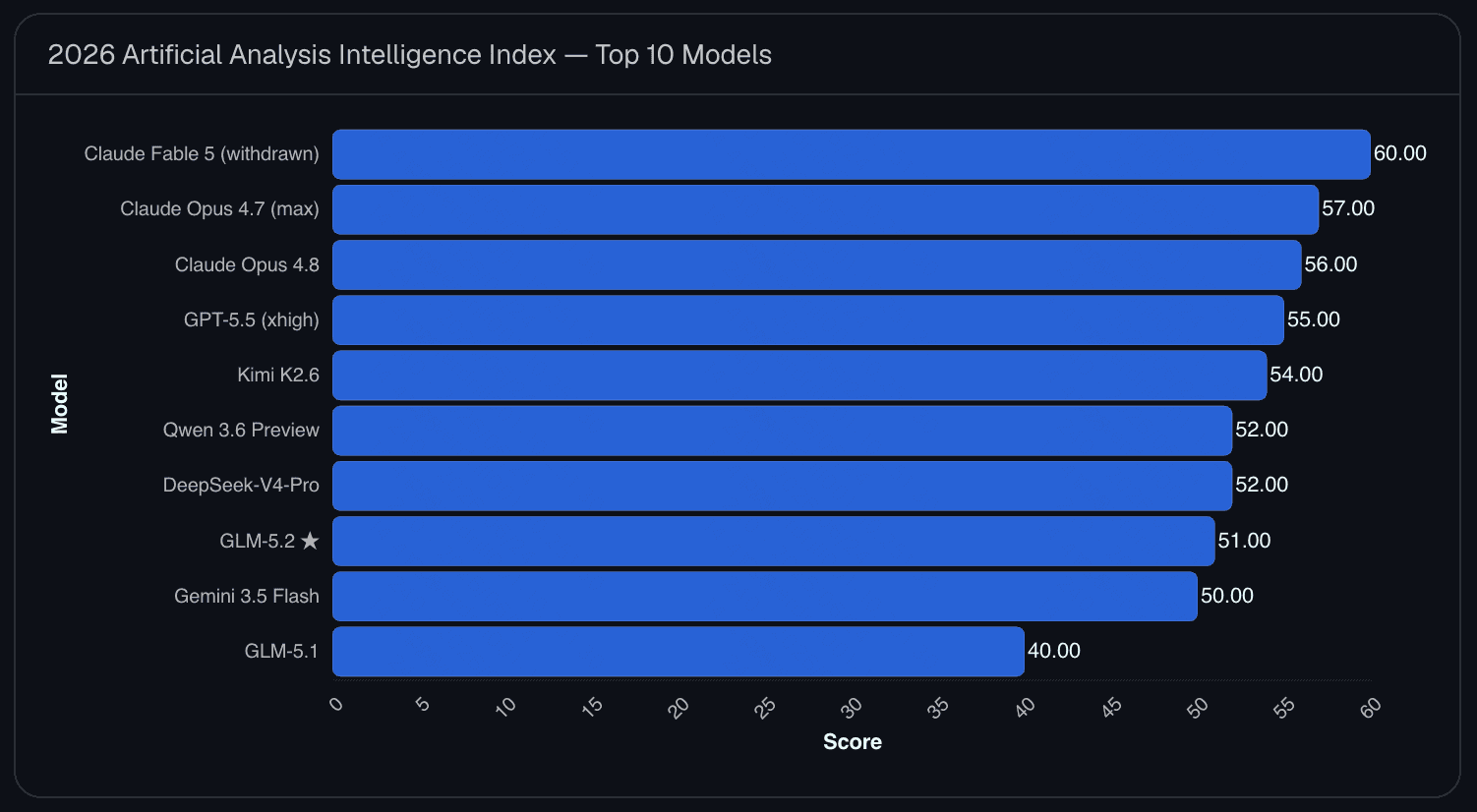
Dato di fatto: GLM-5.2 si classifica al 4° posto nella classifica globale dei modelli IA del 2026

In breve: l'ascesa di GLM-5.2 in 5 numeri
Nel 2026, il panorama globale dell'intelligenza artificiale ha subito enormi cambiamenti, passando dai sistemi chiusi delle API proprietarie a un florido ecosistema open-weights. Ecco l'impatto sul mercato del neonato GLM-5.2 in cinque cifre chiave:
- 51: il punteggio complessivo di GLM-5.2 sul rigoroso Artificial Analysis Intelligence Index.
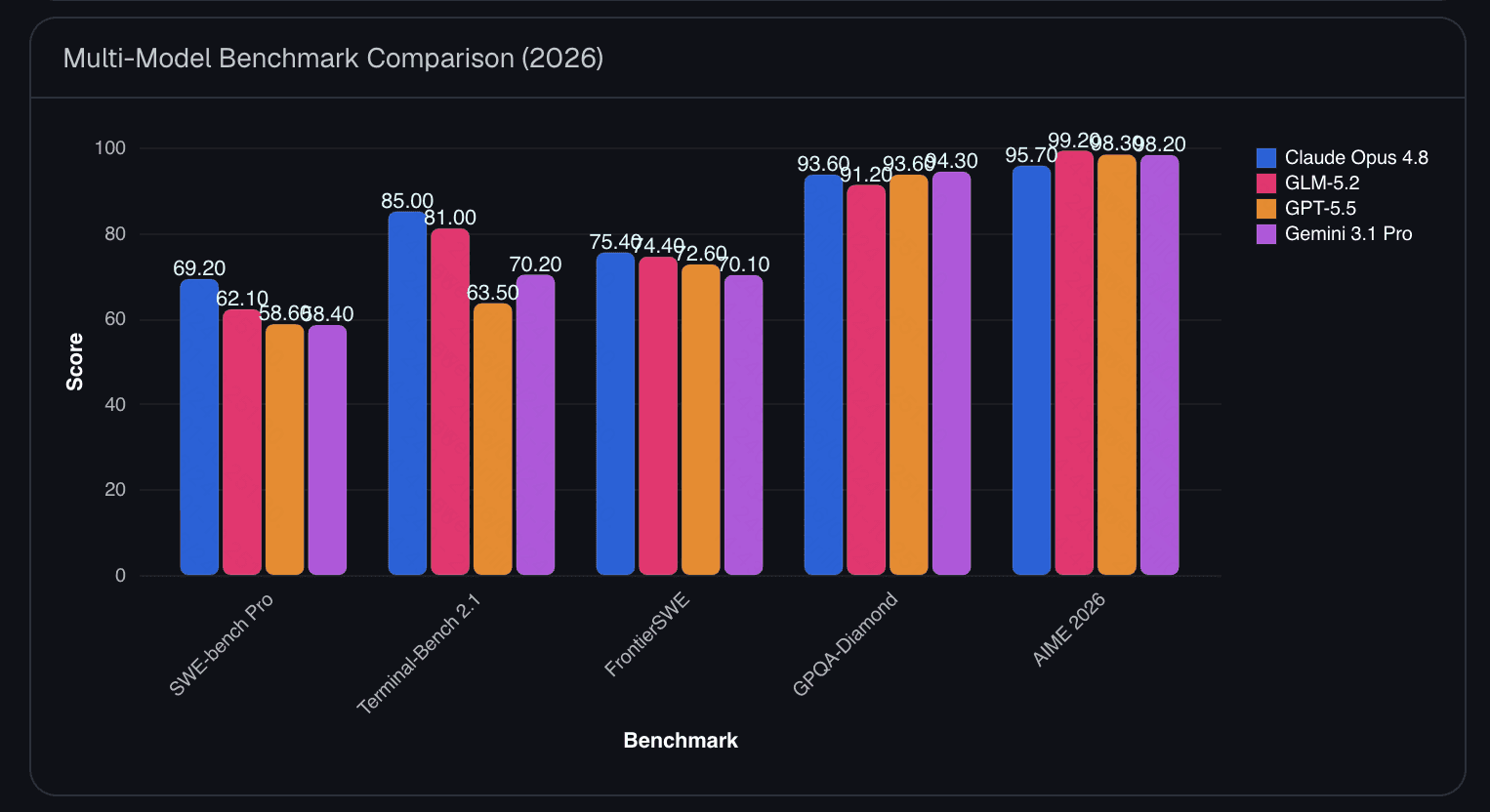
- 99.2%: il suo punteggio di assoluto primato nel benchmark AIME 2026, che supera tutti i concorrenti a livello globale.
- 753 miliardi: il numero totale di parametri di questa imponente architettura Mixture-of-Experts (MoE).
- $1.40: il costo di input per 1 milione di token, un valore che scardina radicalmente i prezzi di mercato attuali.
- 1 milione: la finestra di contesto dei token, estremamente stabile e progettata specificamente per attività di programmazione a lungo termine e compiti agentici.
In sintesi: i modelli open-weights non si limitano più a "rincorrere" i colossi proprietari. In diverse valutazioni fondamentali di matematica e programmazione, sono ormai loro a dettare il passo a livello globale.
Un po' di contesto
Solo pochi mesi fa, la comunità internazionale degli sviluppatori è stata profondamente scossa dalle improvvise restrizioni all'accesso alle API imposte dai principali sviluppatori di AI closed-source con sede negli Stati Uniti, in particolare l'improvviso ritiro di Claude Fable 5 di Anthropic per gli utenti internazionali. Questo ostacolo geopolitico ha accelerato drasticamente la domanda di alternative ad alte prestazioni, non censurate e completamente open-weights.
È qui che entra in gioco GLM-5.2, rilasciato ufficialmente il 13 giugno 2026 dal laboratorio di AI di Pechino Z.ai. Aspetto fondamentale, il modello dimostra che lo scaling dell'AI all'avanguardia non dipende più strettamente da un unico fornitore di hardware. È stato addestrato interamente su un vasto cluster di 100.000 chip Huawei Ascend 910B utilizzando il framework MindSpore. Rilasciato sotto licenza MIT, GLM-5.2 garantisce un accesso senza precedenti a un'intelligenza artificiale di frontiera.
Informazioni sul dataset
Questo report scientifico si basa sui dati dei benchmark AI del 2026 dichiarati pubblicamente e rigorosamente verificati, che coprono punteggi di intelligenza composita, ragionamento matematico complesso, ingegneria del software avanzata e prezzi delle API. Le fonti dei dati includono l'Artificial Analysis Intelligence Index, BenchLM.ai, llm-stats.com e l'AI Index 2026 di Stanford.
Informazioni sullo strumento
Ogni grafico contenuto in questo rigoroso report scientifico è stato generato con Powerdrill Bloom, un agente di analisi dei dati basato sull'intelligenza artificiale. Per garantire un'accuratezza assoluta ed eliminare l'errore umano nella visualizzazione, abbiamo caricato i fogli di calcolo grezzi dei benchmark e Bloom ha pulito automaticamente i dataset, suggerito percorsi di esplorazione e prodotto esattamente i grafici sottostanti, senza bisogno di SQL, Python o formattazione manuale.
Punti chiave
- Potenza open-weights senza precedenti: con un punteggio di 51 sull'Artificial Analysis Intelligence Index, GLM-5.2 si afferma come una forza formidabile, posizionandosi al 4° posto a livello globale tra le famiglie di AI fondazionali più diffuse al mondo.
- Eccellenza in matematica e programmazione: ha ottenuto uno straordinario 99.2% su AIME 2026, superando Claude Opus 4.8 e GPT-5.5. È anche il primo modello aperto a superare l'80% su Terminal-Bench 2.1 (81.0%).
- Indipendenza dall'hardware: l'architettura MoE da 753B parametri convalida percorsi alternativi di scaling del silicio.
- Efficienza dei costi: a $1.40 per 1 milione di token di input, è circa 3.6 volte più economico rispetto a Claude Opus 4.8.
Il boom globale dei modelli: l'analisi completa dei dati
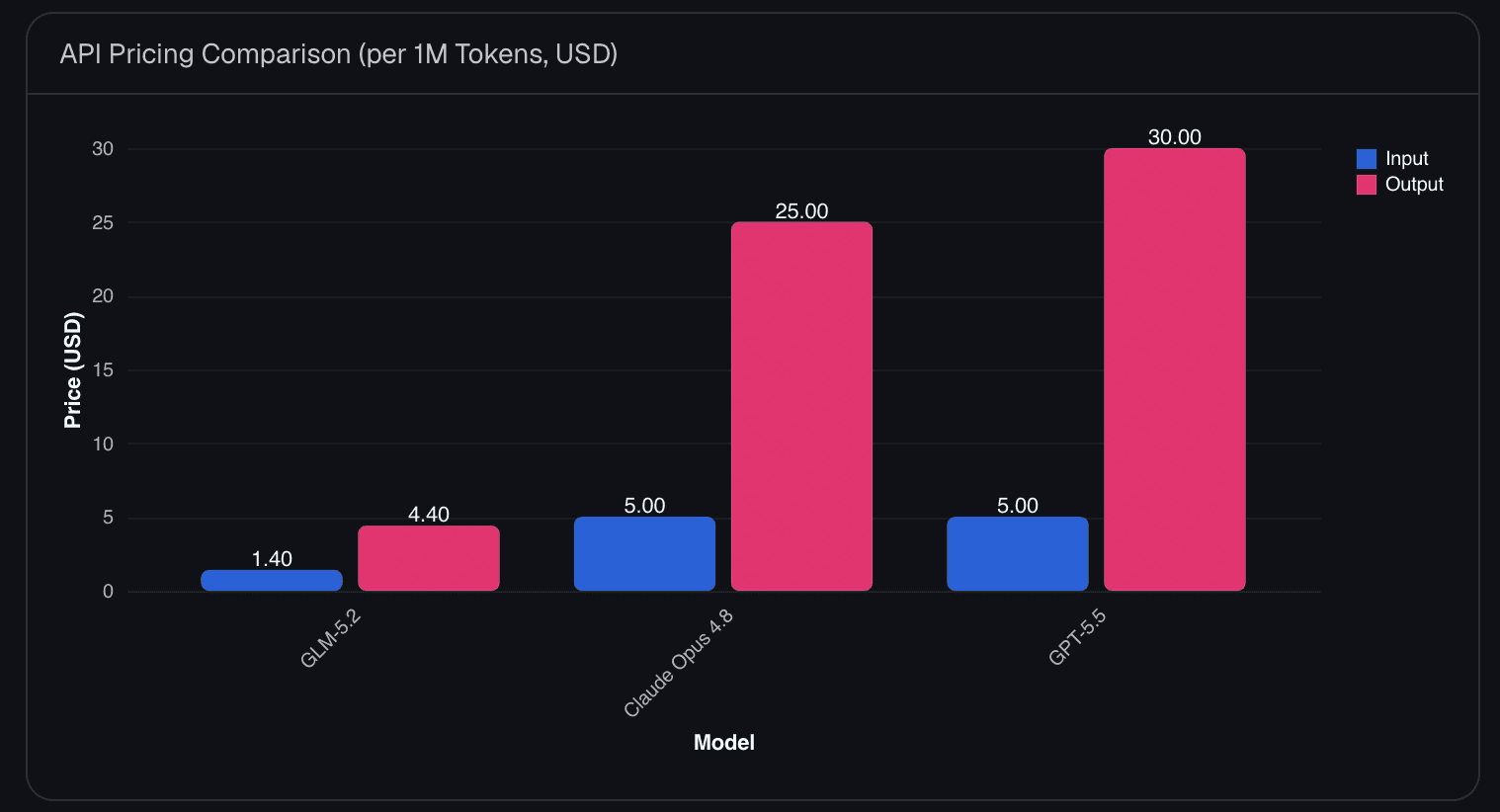
D1: In che modo GLM-5.2 scardina i modelli di prezzo dell'AI di frontiera?
La struttura dei prezzi dell'AI all'avanguardia ha storicamente rappresentato un grave ostacolo per i flussi di lavoro su scala aziendale. GLM-5.2 cambia questo paradigma. Mentre Claude Opus 4.8 e GPT-5.5 richiedono una tariffa premium di $5.00 per 1 milione di token di input, GLM-5.2 costa solo $1.40. Inoltre, supporta un livello di input memorizzato nella cache alla tariffa ultra-bassa di $0.26. Per i token di output, GLM-5.2 costa appena $4.40 per milione di token, risultando 5.7 volte più economico di Claude Opus 4.8 e 6.8 volte più economico di GPT-5.5.
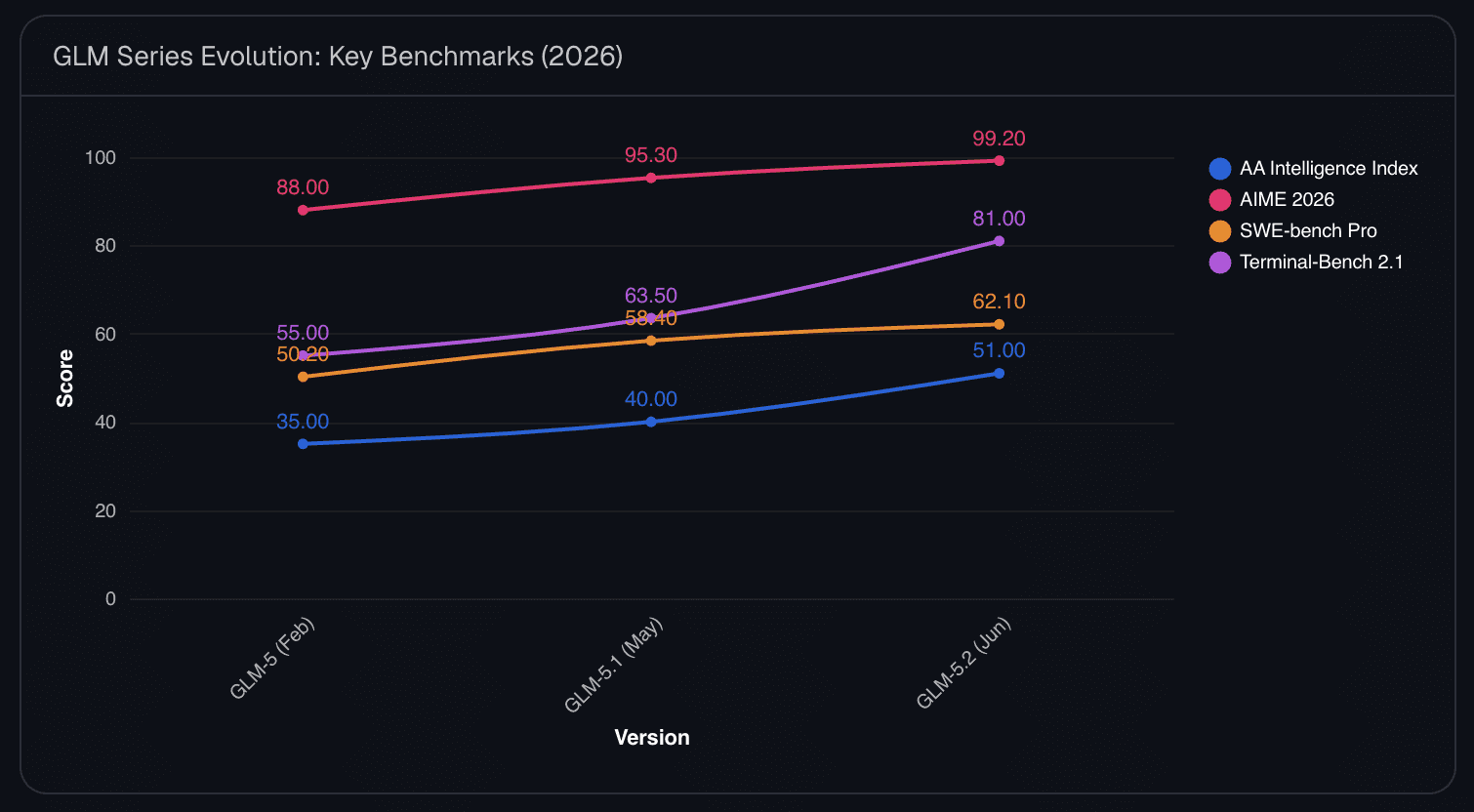
D2: Quanto velocemente si è evoluta la serie GLM nel 2026?
La velocità di sviluppo è sbalorditiva. In un arco di tempo di quattro mesi, Z.ai ha rilasciato tre importanti iterazioni. Da GLM-5 di febbraio a GLM-5.2 di giugno, le prestazioni su SWE-bench Pro sono balzate del 23.7% (da 50.2 a 62.1). Terminal-Bench 2.1 ha registrato un massiccio incremento del 47.3% (da 55.0 a 81.0). Contemporaneamente, il punteggio di Artificial Analysis Intelligence è balzato da 35 a 51 (+45.7%).
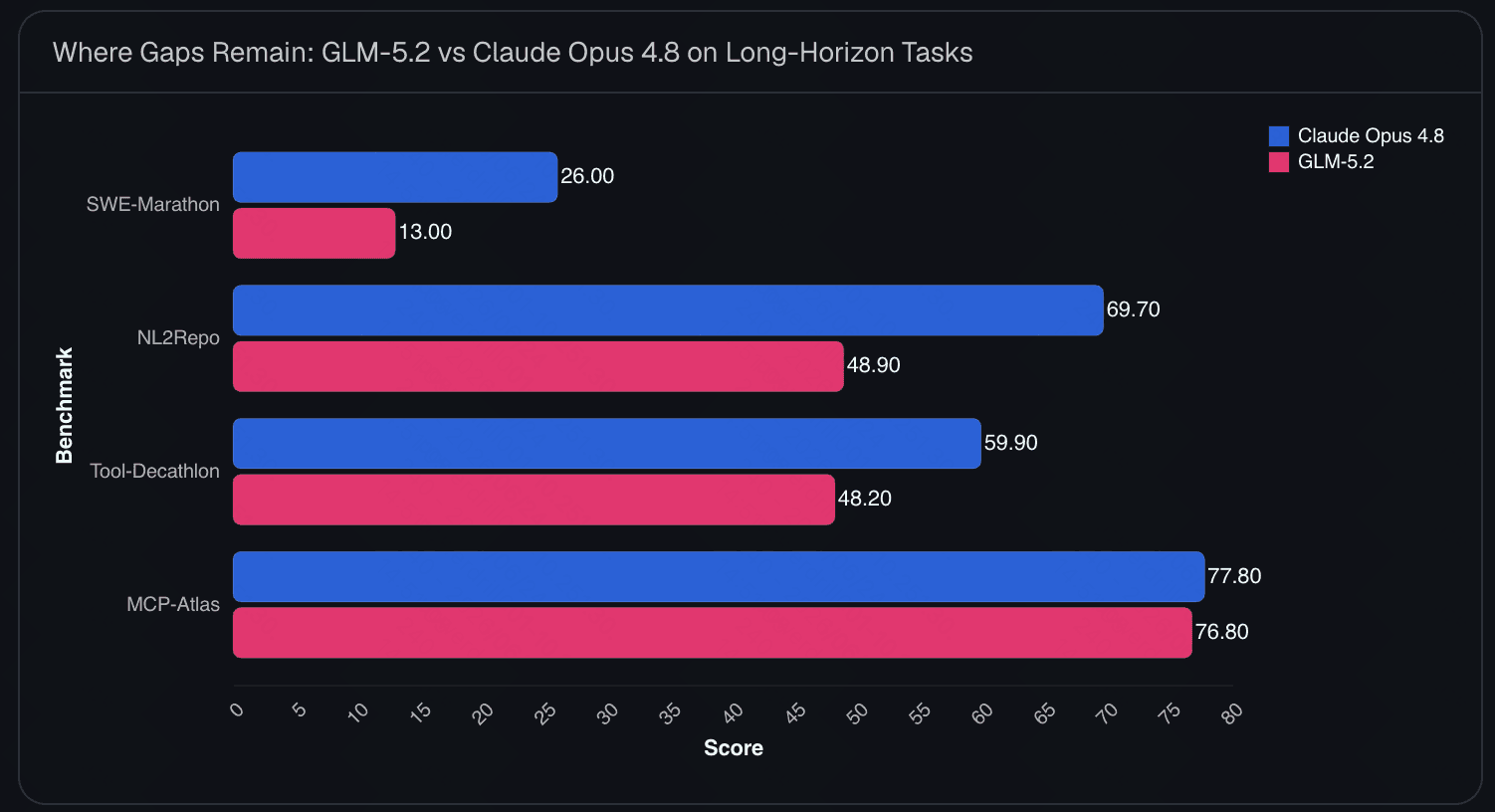
D3: Quali divari rimangono tra i modelli open-weights e quelli chiusi?
Nonostante abbia colmato il divario nel ragionamento a breve termine, GLM-5.2 è ancora indietro rispetto a Claude Opus 4.8 nelle attività agentiche a lungo termine estremamente impegnative. Su SWE-Marathon, Opus 4.8 ottiene un punteggio di 26.0 rispetto al 13.0 di GLM-5.2.
In NL2Repo, Opus 4.8 mantiene un vantaggio di 20.8 punti (69.7 contro 48.9). Secondo l'AI Index 2026 di Stanford, sebbene il divario complessivo dell'AI tra Stati Uniti e Cina sia sceso al 2.7%, questi ambienti autonomi multi-fase rimangono l'ultima frontiera in cui i modelli proprietari mantengono il primato.
Cosa significa questo per le aziende e gli analisti
Per i CTO e i direttori dell'ingegneria del software, il rischio di transizione si è invertito. Non è più necessario affidarsi esclusivamente a endpoint API costosi e soggetti a restrizioni geografiche per il 90% delle attività di sviluppo. Tuttavia, per migrazioni aziendali autonome e massicce della durata di una settimana (ambito NL2Repo), una strategia ibrida rimane scientificamente valida.
Come abbiamo creato questi grafici (con un clic)
Non serve un team di data science per produrre un report di benchmarking rigoroso come questo. Ecco l'esatto flusso di lavoro utilizzato con Powerdrill Bloom:
- Inizia da una competenza, un argomento o carica i tuoi dati. Invece di inserire un foglio di calcolo grezzo, abbiamo sfruttato la funzionalità di ricerca integrata di Powerdrill Bloom per raccogliere ed elaborare automaticamente le classifiche globali dei modelli AI del 2026 e i dati dei benchmark di GLM-5.2.
- Lascia che l'area di lavoro analizzi i dati. Bloom pulisce automaticamente i dati e suggerisce percorsi di esplorazione intelligenti (tendenze delle prestazioni, analisi dei prezzi, divari di capacità), quindi genera grafici complessi per te.
- Esporta in diapositive. Trasforma l'intera area di lavoro in una presentazione rifinita e pronta all'uso ed esportala in PowerPoint con un solo clic.
Niente SQL. Niente Python. Niente copia e incolla di grafici nelle diapositive. Vuoi provarlo sui tuoi dataset aziendali? Prova gratis Powerdrill Bloom. Puoi anche esplorare il nostro generatore di grafici AI o scoprire come trasformare un foglio di calcolo in diapositive.
FAQ
GLM-5.2 è davvero open-weights?
Sì. GLM-5.2 è rilasciato sotto licenza MIT come modello completamente open-weights, consentendo un uso commerciale senza restrizioni.
Quale hardware è stato utilizzato per addestrare GLM-5.2?
La famiglia GLM-5 è stata addestrata su un cluster unificato di 100.000 chip Huawei Ascend 910B, dimostrando che l'AI fondazionale può essere scalata in modo efficiente al di fuori dell'ecosistema Nvidia.
Posso analizzare i miei benchmark AI o i dati di mercato in questo modo?
Assolutamente sì. Carica un file CSV o Excel su Powerdrill Bloom e l'agente di analisi dei dati AI pulirà i dati, creerà grafici scientifici precisi e ti consentirà di esportare una presentazione, senza bisogno di programmare. È lo strumento definitivo per uno storytelling dei dati rapido e affidabile.
In conclusione
I dati quantitativi alla base dell'ecosistema AI del 2026 raccontano una storia di rapida democratizzazione. Gli straordinari punteggi dei benchmark di GLM-5.2, combinati con il suo addestramento indipendente dall'hardware e i prezzi dirompenti delle API, dimostrano che la comunità open-weights è in piena espansione.
Curioso di sapere cosa nascondono i tuoi dati di benchmarking? Caricali su Powerdrill Bloom e lascia che i grafici raccontino una storia precisa e rigorosa.