Dato di fatto: cinque grafici che raccontano il Mondiale 2026 della Germania
In breve — il Mondiale 2026 della Germania in 5 numeri
La Germania è arrivata in Nord America con grandi ambizioni, ma ne è uscita sbalordita. Ecco la parabola del suo torneo sulle montagne russe in cinque cifre:
- 11 partite vinte di fila prima del torneo—la striscia più lunga dal 1980.
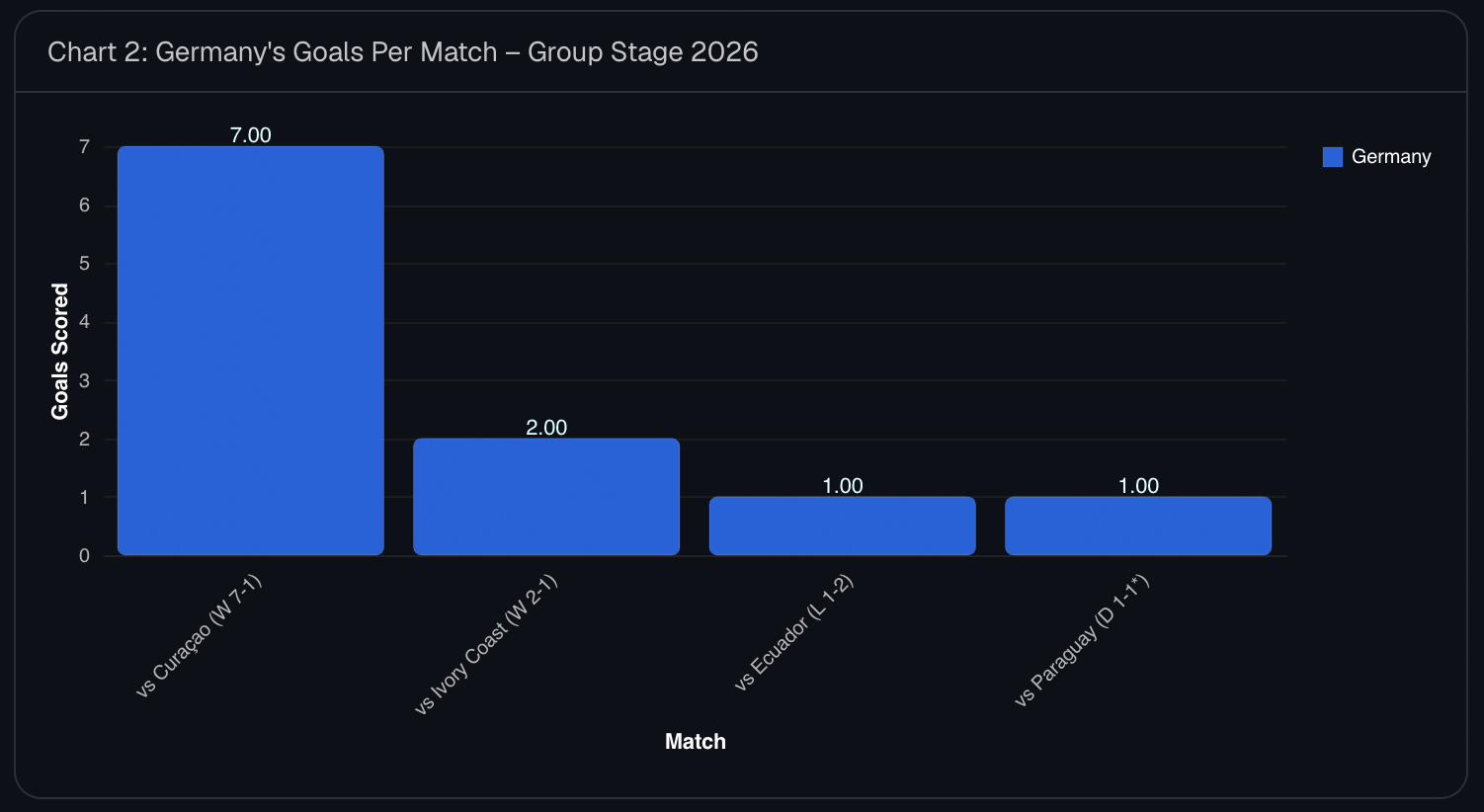
- 7 gol segnati nella demolizione d'esordio contro Curacao, prima di un netto declino offensivo.
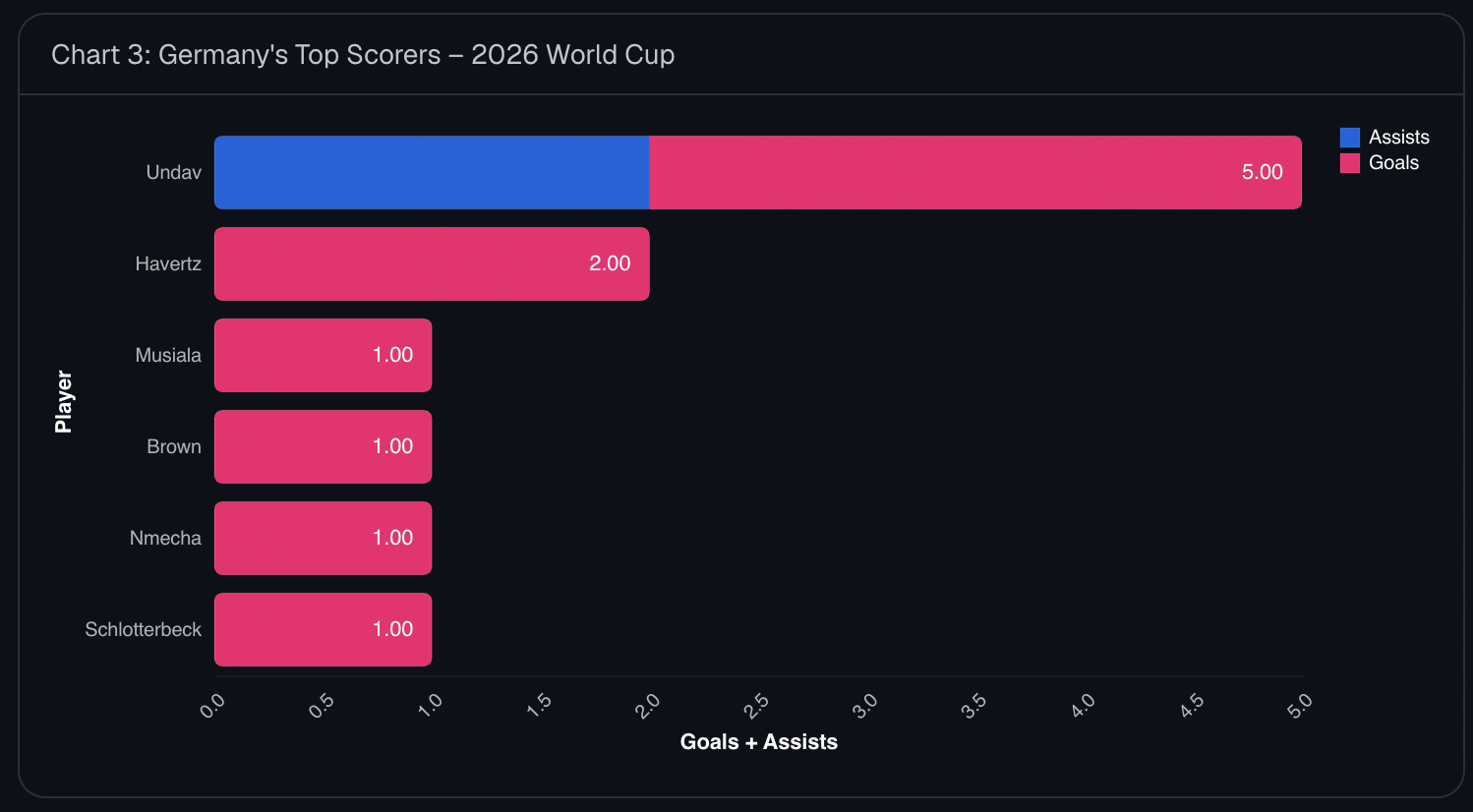
- 5 partecipazioni ai gol (3G, 2A) di Deniz Undav—tutte entrando dalla panchina, eguagliando un record del 1990.
- 76% di possesso mantenuto contro il Paraguay negli ottavi di finale, che ha prodotto un misero 0,72 xG.
- 3 Mondiali consecutivi senza raggiungere i quarti di finale (2018, 2022, 2026)—una carestia senza precedenti per i quattro volte campioni del mondo.
La versione breve: il Mondiale 2026 della Germania è stato la storia di una falsa speranza. Il problema non era la loro qualità tecnica o il controllo del pallone; era la mancanza di cinismo nei momenti che contavano di più.
Un po' di contesto
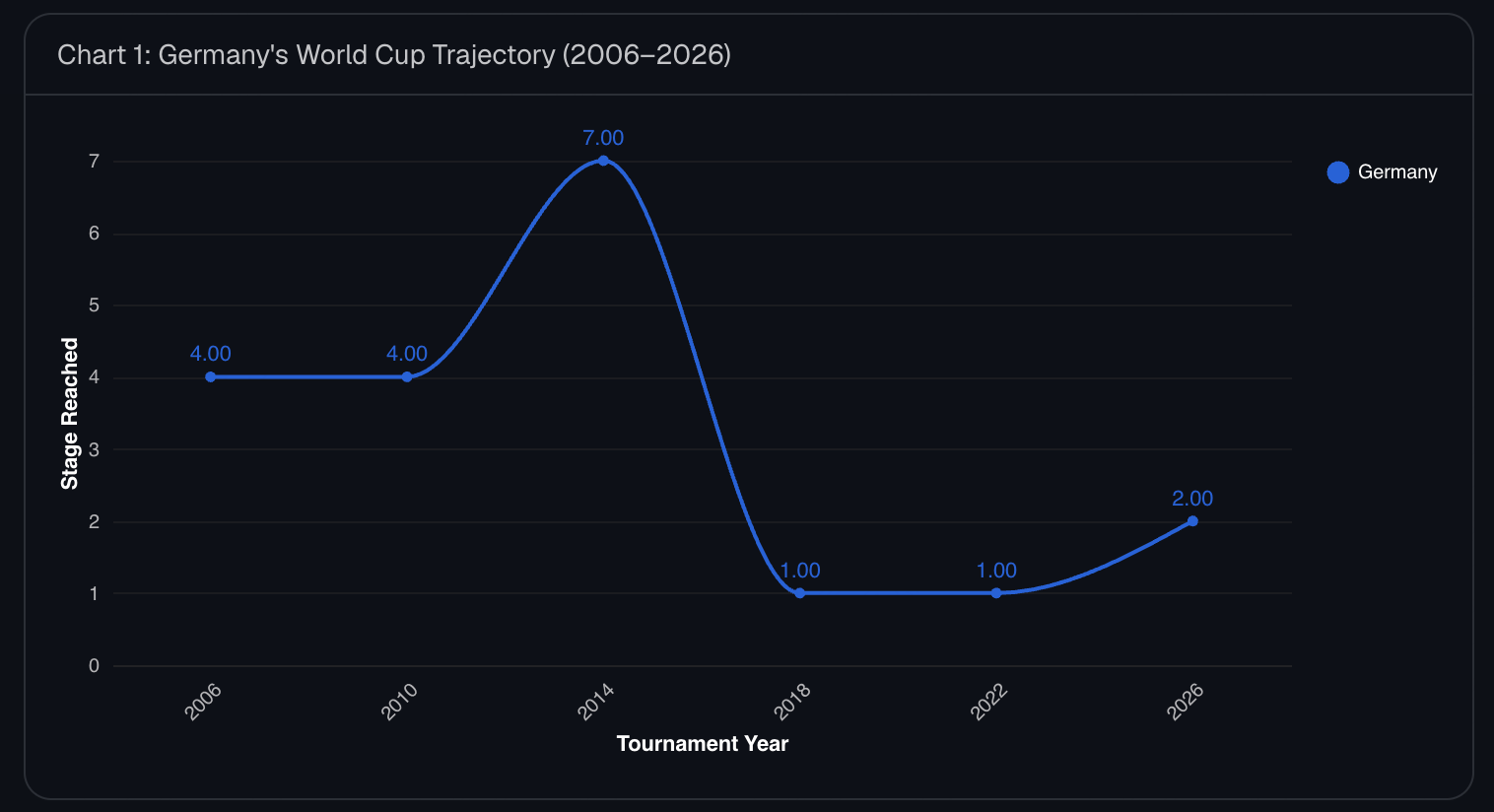
Dieci anni fa la Germania era la regina indiscussa del calcio mondiale, laureata Campione nel 2014 dopo una cavalcata storica. Presentandosi al Mondiale FIFA 2026 in Canada, Messico e Stati Uniti, si parlava di riscatto. Forte di una striscia di 11 vittorie, sembrava pronta a cancellare i fantasmi delle eliminazioni consecutive nella fase a gironi del 2018 e del 2022. Quel riscatto non si è mai concretizzato.
Nonostante stavolta abbia superato la fase a gironi, uscire agli ottavi di finale ai rigori contro il Paraguay difficilmente può essere considerato un successo. Per capire come un picco storico si sia trasformato in una delusione dagli undici metri, abbiamo raccolto i numeri e lasciato che fossero i dati a raccontare la storia.
Informazioni sul dataset
Questo report si basa su cifre pubblicamente riportate del Mondiale 2026 che coprono risultati delle partite, marcatori, metriche di possesso ed expected goals (xG). Le fonti includono ESPN, FIFA, xGscore.io e i dati delle partite di The Athletic. Le cifre sono verificate e arrotondate per una migliore leggibilità.
Informazioni sullo strumento
Ogni grafico di questo report è stato generato con Powerdrill Bloom, un agente di analisi dati AI-first. Abbiamo caricato le statistiche grezze di partite e giocatori, e Bloom le ha ripulite, ha suggerito percorsi di esplorazione e ha prodotto i grafici qui sotto automaticamente—niente SQL, niente Python, nessuna formattazione manuale. Se vuoi esplorare gli stessi dati per conto tuo, dai un'occhiata al nostro strumento di visualizzazione dati AI.
Punti chiave
- Un decennio di declino. Se da un lato la Germania ha tecnicamente migliorato le campagne del 2018 e del 2022 raggiungendo la fase a eliminazione diretta, la sua uscita agli ottavi di finale conferma un ripido calo rispetto all'era d'oro del 2006–2014.
- Il crollo realizzativo è stato ripido. La squadra sembrava inarrestabile nella vittoria d'esordio per 7-1 contro le debuttanti di Curacao. Ma la sua produzione offensiva è subito crollata a 2 gol, poi 1, e ancora 1 nelle partite successive.
- Undav è stato il super subentrato per eccellenza. Deniz Undav dello Stoccarda ha eguagliato il record di Roger Milla per partecipazioni ai gol da subentrato in un Mondiale (5), eppure Julian Nagelsmann non lo ha mai schierato dall'inizio.
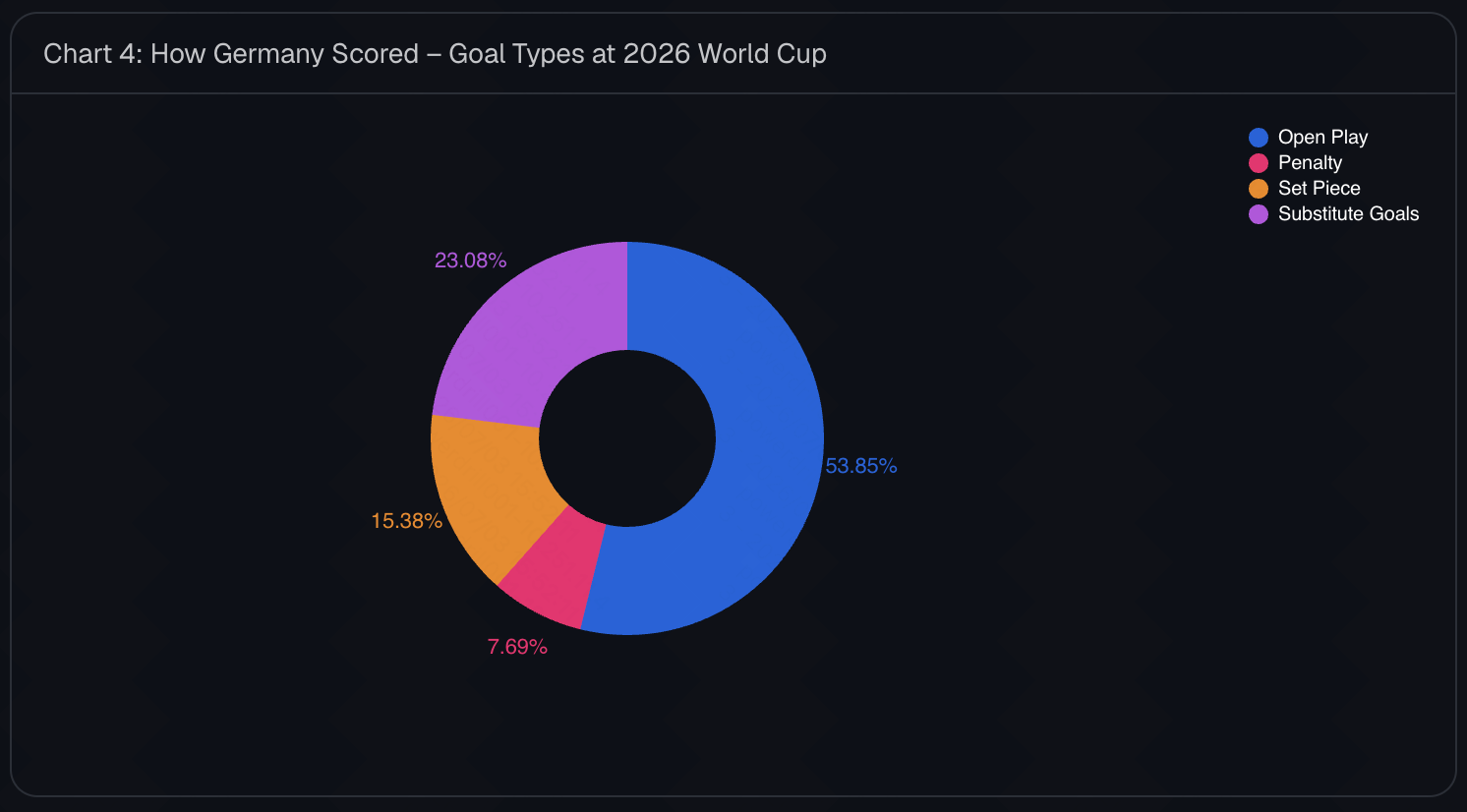
- La dipendenza dalla panchina è stata insolitamente alta. Quasi un quarto (23%) dei gol della Germania è arrivato dai subentrati.
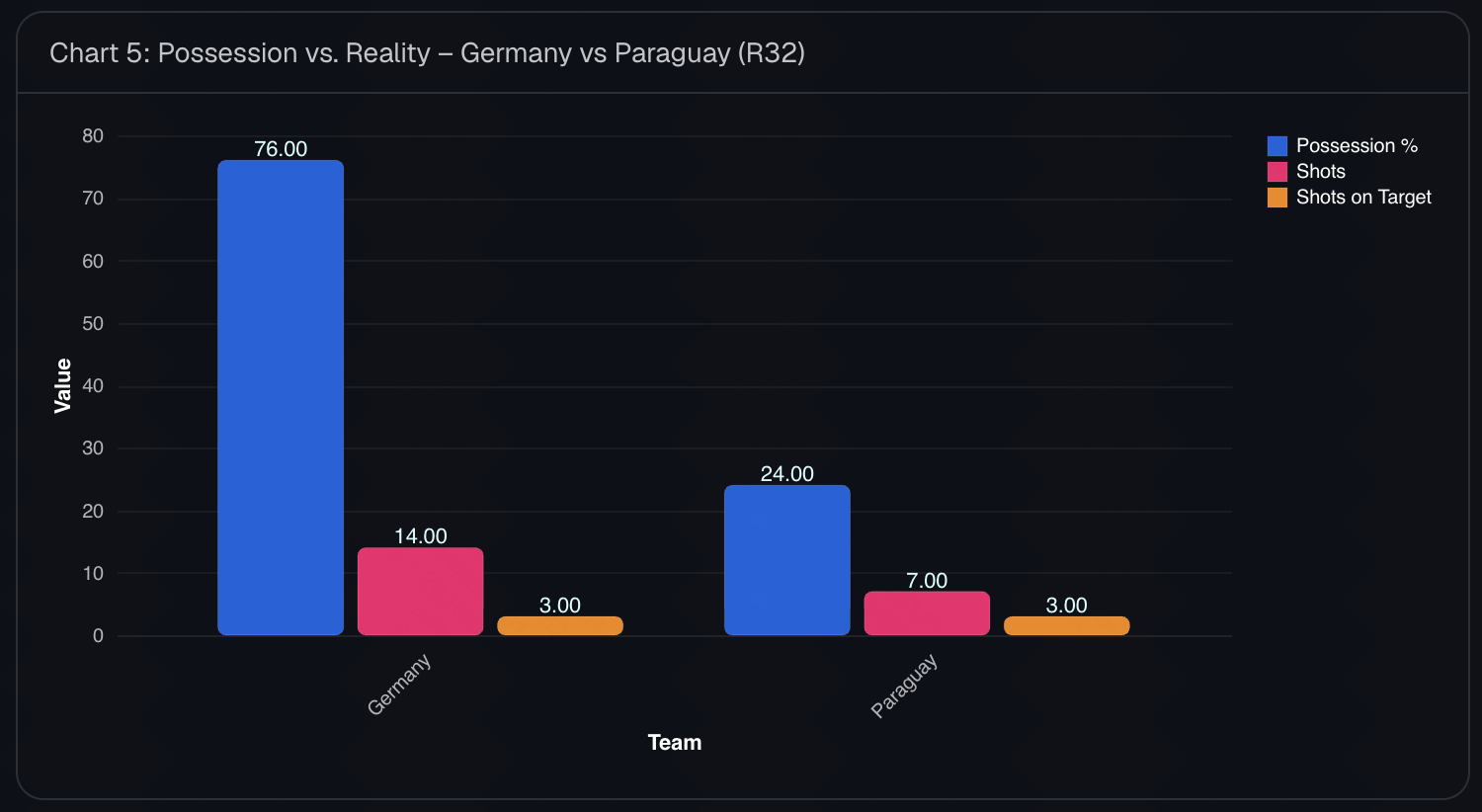
- Possesso senza scopo. La partita dell'eliminazione ha definito i loro difetti sistemici: controllo assoluto del pallone (76%) ma incapacità di creare occasioni di alta qualità.
Il crollo tedesco al Mondiale: l'analisi completa dei dati
Q1: Chi erano le principali minacce offensive della Germania?
Il grafico dei marcatori rivela una lampante questione tattica. Kai Havertz (2 gol) e Jamal Musiala (1 gol) erano titolari fissi, ma l'innegabile stella rivelazione è stata Deniz Undav. Con 3 gol e 2 assist in minuti limitati, Undav ha generato più produzione offensiva del resto della linea d'attacco titolare messa insieme. È persino diventato solo il quarto giocatore nella storia a segnare il gol del pareggio e quello vittoria al 90'+2 da subentrato nella stessa partita (contro la Costa d'Avorio).
Q2: Come ha generato i suoi gol la Germania?
Scomporre le tipologie di gol evidenzia una forte dipendenza dai subentrati d'impatto. Mentre l'azione manovrata ha rappresentato il 54% dei loro gol, uno sbalorditivo 23% (3 su 11) è arrivato da giocatori entrati dalla panchina. Calci piazzati e rigori hanno costituito la quota rimanente. Questa alta percentuale di subentrati solleva il fatidico "e se" riguardo alle scelte di Nagelsmann sull'undici titolare durante tutto il torneo.
Q3: Cosa è andato davvero storto nell'eliminazione a eliminazione diretta?
La partita contro il Paraguay è una lezione magistrale sulla differenza tra controllare una gara e vincerla. La Germania ha dominato in modo assoluto il possesso (76% contro 24%) e ha tempestato l'area avversaria (33 tocchi contro 10). Eppure, da 14 tiri totali, ha generato un deludente 0,72 Expected Goals (xG) ed è riuscita a mettere solo 3 tiri in porta. Il Paraguay ha assorbito la pressione con disinvoltura, ha trascinato la partita sull'1-1 e ha vinto 4-3 ai rigori quando Jonathan Tah ha sbagliato e Havertz è stato parato.
Cosa impariamo dai numeri
La campagna 2026 della Germania è una lezione magistrale sui pericoli di un dominio di superficie. I dati dimostrano che il possesso senza penetrazione è una trappola—un semplice volume di passaggi e tocchi in area non significa nulla se la qualità di fondo delle occasioni (xG) resta bassa. Inoltre, il netto contrasto tra l'impatto da record di Undav dalla panchina e le difficoltà dell'undici titolare è un classico esempio del perché i dati e la forma attuali debbano prevalere sulla reputazione storica. Nel calcio dei tornei, come in qualsiasi ambiente ad alta posta in gioco, l'efficienza batte sempre l'apparenza.
Come abbiamo creato questi grafici (con un clic)
Non serve un team di data analyst per produrre un report post-torneo come questo. Ecco il flusso di lavoro esatto:
- Scegli il tuo punto di partenza. Powerdrill Bloom offre tre modi per iniziare la tua analisi: Parti dalle competenze, Parti da un argomento, oppure Parti dai tuoi dati. Per questo report abbiamo scelto Parti dalle competenze per raccogliere, elaborare e analizzare automaticamente le statistiche delle partite della Germania al Mondiale.
- Lascia che l'AI generi gli insight. Una volta attivata la competenza, Bloom ha istantaneamente strutturato i dati, individuato le storyline chiave (come il record da subentrato di Undav e il calo di xG) e prodotto tutti i grafici automaticamente.
- Esporta nelle slide. Trasforma l'intera tela in un deck tattico rifinito e pronto per la presentazione ed esportalo in PowerPoint con un solo clic.
FAQ
Da dove provengono questi dati del Mondiale?
Le cifre sono tratte da statistiche pubblicamente riportate del Mondiale 2026, tra cui i report ufficiali delle partite FIFA, ESPN e metriche avanzate di xGscore.io.
Chi è stato il miglior marcatore della Germania nel 2026?
Deniz Undav ha guidato la squadra con 3 gol e 2 assist, realizzando tutte le sue 5 partecipazioni ai gol da subentrato.
La Germania ha battuto qualche record prima di essere eliminata?
Sì. Manuel Neuer ha stabilito il record assoluto di presenze da portiere ai Mondiali (21 partite) e la Germania ha battuto il record assoluto di gol segnati ai Mondiali del Brasile (raggiungendo un totale di 239 gol di squadra).
Perché la Germania ha perso contro il Paraguay?
Nonostante il 76% di possesso e 14 tiri, la Germania ha generato solo 0,72 xG e ha perso la successiva lotteria dei rigori per 4-3.
Posso analizzare così i dati della mia squadra sportiva?
Sì. Carica un file CSV o Excel su Powerdrill Bloom e ripulirà i dati, costruirà i grafici e ti permetterà di esportare un deck di slide—senza bisogno di programmare.
Per concludere
I numeri dietro il Mondiale 2026 della Germania raccontano la storia di una squadra sospesa tra la grandezza storica e la stagnazione moderna. Battere il record assoluto di gol del Brasile e dominare il possesso nelle partite offrono ben poca consolazione quando il risultato finale è un terzo Mondiale consecutivo senza raggiungere i quarti di finale. Il progetto per il 2030 è chiaro: il possesso deve avere uno scopo.
Curioso di scoprire cosa nascondono i dati tattici della tua squadra? Caricali su Powerdrill Bloom e lascia che siano i grafici a raccontare la storia.