
As I revisit the wreckage left by September’s shockingly weak payroll data, one reality stands out with growing clarity: the market narrative has shifted — and with it, the probability structure of the next move.
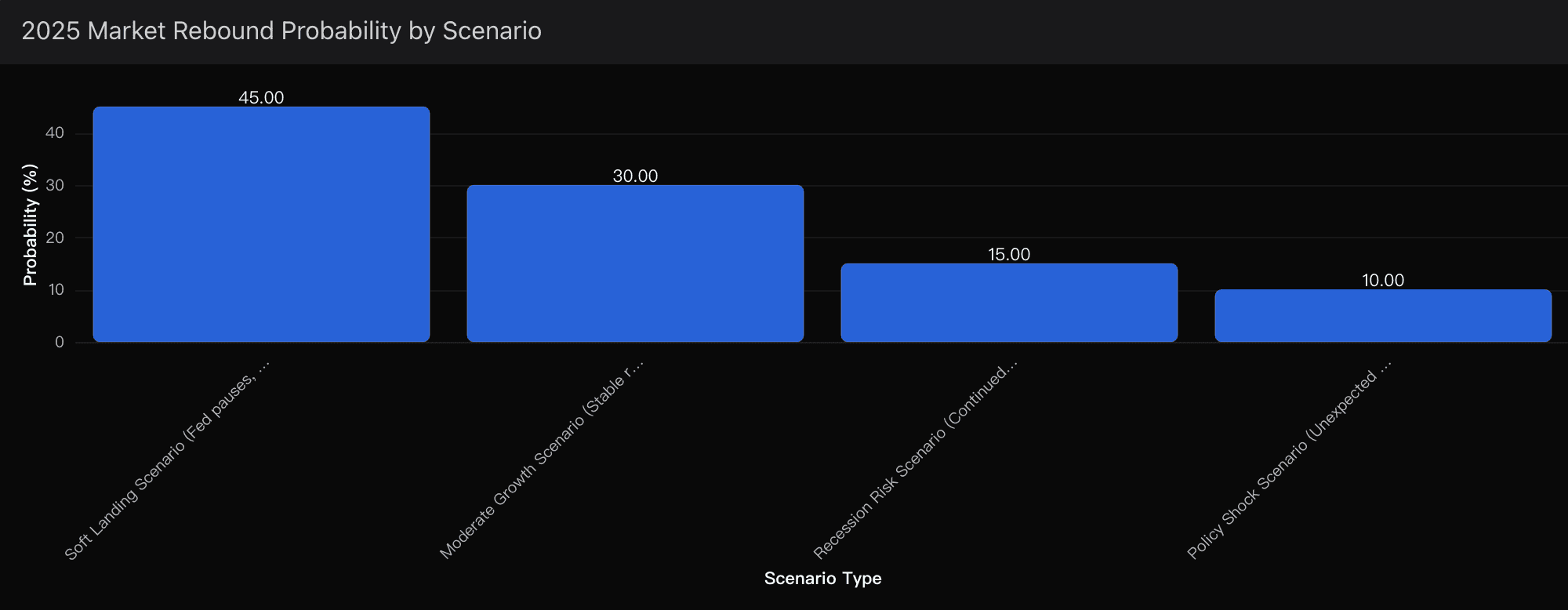
After weeks of re-evaluation, recalibration, and scenario modeling, I now assign a 65–70% probability to a meaningful market rebound by year-end 2025, with Bitcoin once again emerging as the primary catalyst and directional leader.
This isn’t blind optimism. It’s a conclusion forged from evolving macro signals, institutional behavior, policy recalibration, and predictive intelligence layers — including my ongoing integration of Powerdrill Bloom, an AI forecasting engine I rely on to stress-test assumptions, map probabilistic outcomes, and surface hidden correlations across volatile regimes.
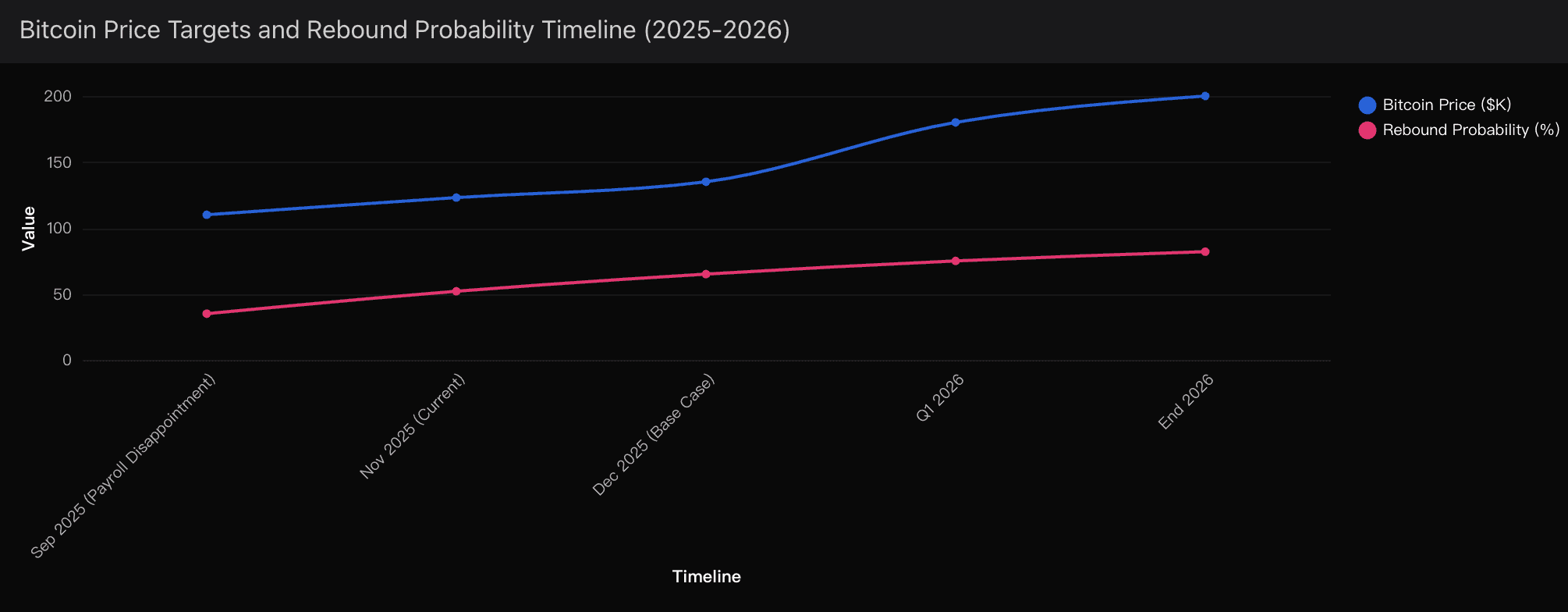
In early September, the U.S. non-farm payroll report revealing just 119,000 new jobs ignited textbook recession fears. Markets reacted instantly — leverage unwound, risk appetite collapsed, and both equities and crypto entered aggressive drawdown phases. At that moment, even my own rebound probability dropped toward the 30–35% range.
Yet markets are not static stories — they are living probability machines. Over the following weeks, newly emerging data began rewriting the script:
Fed officials adopted increasingly cautious, accommodation-leaning rhetoric.
October employment revisions surprised to the upside.
Institutional Bitcoin accumulation persisted despite volatility.
By late November, my model — supported and refined through Powerdrill Bloom’s insights — showed rebound probability doubling to its current 65–70% range.
Year-End Market Outlook
Base Case: Soft-Landing Rebound (65%)
In my base case, markets stabilize through November and December following signals of one final Fed rate cut in December 2025, followed by an extended pause. Under this framework:
Bitcoin rebounds from its $110K September trough to $130–140K.
The S&P 500 recovers to its late-October resistance highs.
This scenario holds if the Fed interprets labor market weakness as sufficient justification for continued monetary accommodation — a stance increasingly supported by FOMC rhetoric.
Bull Scenario: Momentum Expansion & New Highs (25%)
The upside risk case assumes accelerating momentum:
Two quarter-point rate cuts through the remainder of 2025
Clear guidance toward 3–4 additional cuts in 2026
Strengthening ETF inflow dynamics
Bitcoin breaches $150K+, fuelled by technical recovery and persistent spot ETF demand, while the S&P 500 prints fresh all-time highs.
Bear Scenario: Macro Breakdown (10%)
This tail-risk environment unfolds if labor data deteriorates sharply, inflation re-accelerates, or a recession shock blocks Fed pivoting. Under this case:
Bitcoin retraces toward $90K
Equities fall 10–15% from current levels
While improbable, it remains structurally embedded within my probability framework.
Four Structural Pillars
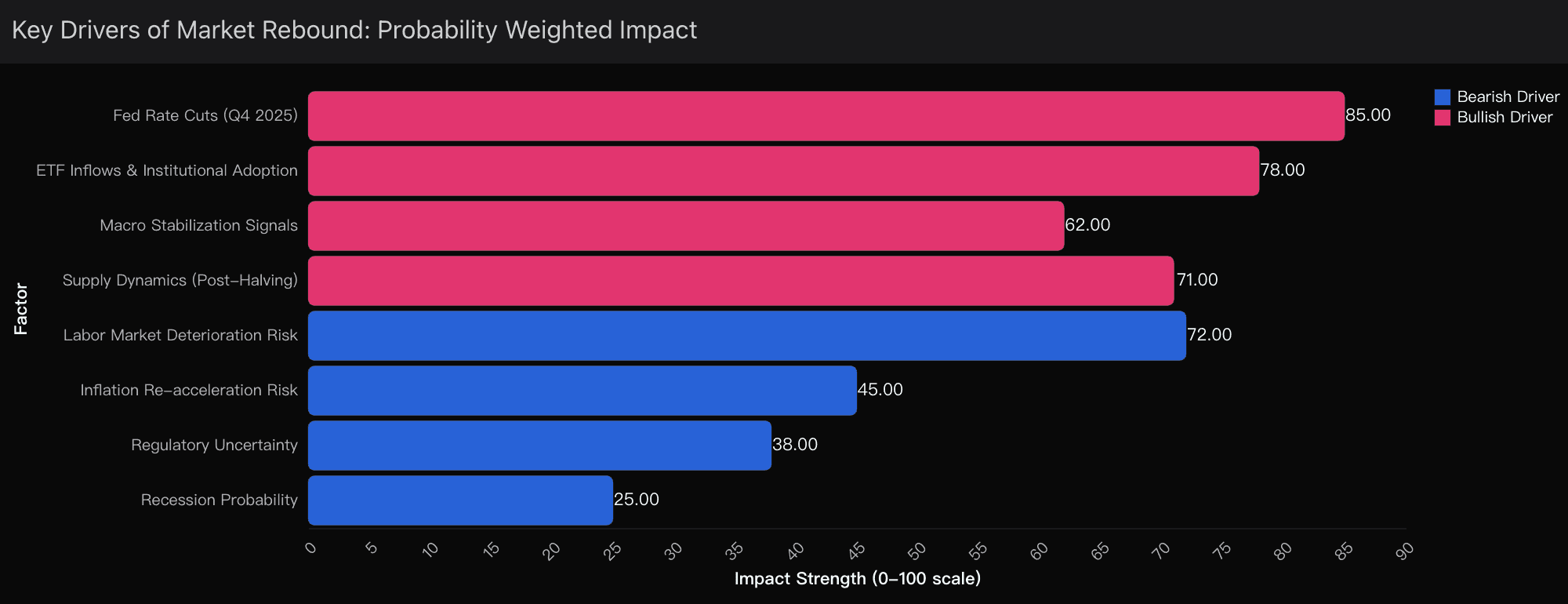
1. Fed Pivot Dynamics
Recent Fed communications signal a philosophical shift: labor stability has overtaken inflation hawkishness as the dominant policy concern. Rate cut probability for December is now priced above 70%, supporting risk assets by reducing discount rates and suppressing opportunity costs of Bitcoin holding.
2. Institutional Bitcoin Adoption & ETF Anchoring
BlackRock’s IBIT retaining 89% of Q3 inflows despite volatility underscores structural capital commitment. Corporate treasuries now hold 3.68M BTC, nearly 18% of circulating supply — a historical threshold that, based on prior cycles, significantly suppresses deep bear-market drawdowns.
3. Post-Halving Supply Dynamics
The 2024–25 halving cycle continues to impose structural scarcity. Price volatility appears less like exhaustion and more like cyclical reset. Targets from Citigroup ($133K) and Standard Chartered ($200K by 2026) reflect multi-cycle confidence.
4. Macro Stabilization Signals
Despite payroll revisions, unemployment remains under 4.3% and job data has stabilized post-summer shocks — reinforcing the soft-landing thesis.
Polymarket Intelligence Cross-Check
Prediction markets echo my internal assessment:
US Recession by end-2025: 18–22%
Bitcoin > $130K by Dec 31: 55–60%
S&P 500 new highs in 2025: 40–45%
Polymarket’s positioning validates the conclusion: rebound is statistically favored, but downside remains nontrivial.
Final Verdict
Key inflection points:
Dec 3: ADP Employment Report
Dec 10–12: FOMC Decision
Dec 16: BLS Combined Labor Report
Should inflation remain controlled and labor softness persist without collapse, rebound probability could surge toward 80%. Conversely, adverse data compresses probability back toward 45–50%.
And in navigating this probabilistic frontier, the analytical leverage provided by Powerdrill Bloom has become indispensable — enabling me to evolve beyond reactionary sentiment into disciplined, data-anchored foresight.
Related Post

20 nov. 2025
/
Publication par

20 nov. 2025
/
Publication par