12 Top AI Tools for Sales Forecasting in 2026 (Hands-On Review)
Introduction
Accurate revenue prediction is the backbone of any successful business, yet relying on gut feelings and outdated spreadsheets often leads to missed targets. Today, modern sales teams are heavily adopting predictive analytics and machine learning to eliminate guesswork.
By analyzing historical pipeline data and real-time buyer signals, artificial intelligence transforms raw data into actionable revenue strategies. If you want to maintain a competitive edge, finding the right forecasting software is no longer optional—it is mandatory.
Why AI in Sales Forecasting Matters
Eliminates Human Bias: AI removes the "happy ears" syndrome from sales reps, offering objective data-driven pipeline health scores.
Real-Time Adjustments: Unlike static spreadsheets, AI continuously updates forecasts based on daily deal movements and customer interactions.
Higher Accuracy: Deep learning algorithms recognize complex historical patterns, producing forecasts that are significantly closer to actual outcomes.
Time Efficiency: Automates tedious data entry and pipeline review preparation, giving sales leaders hours back every week.
How We Evaluated the Tools
Predictive Accuracy: We analyzed how closely the AI's projected numbers matched actual end-of-quarter revenue.
Ease of Use & UI: We looked for intuitive interfaces that do not require advanced technical degrees to navigate.
Integration Capabilities: The software must sync seamlessly with major CRMs (Salesforce, HubSpot) and existing tech stacks.
Value for Money: We evaluated the feature-to-cost ratio to ensure the platform delivers measurable ROI.
Comparison Table: Top 12 AI Sales Forecasting Tools
Tool | Best For | Standout Feature | Starting Pricing |
Overall Best & Fast Growth | Advanced AI Intent Scoring & High Accuracy | ||
Enterprise Revenue Teams | End-to-end Revenue Collaboration | Custom | |
Deep Pipeline Analytics | Interactive Board Reporting | Custom | |
Conversation Intelligence | Reality-Based Forecasting | Custom | |
Integrated Revenue Platform | Generative AI Deal Insights | Custom | |
Salesforce Loyalists | Native CRM Forecasting | Custom | |
Inbound Sales Teams | Deal Health Tracking | ||
Financial Operations | Cash Flow Projections | ||
Large Enterprise Planning | Scenario Modeling | Custom | |
Data Analysts | SQL-based Predictive Models | ||
Traditional Corporations | Advanced Quota Planning | Custom | |
Sales Execution | Pipeline Risk Signals | Custom |
1. Powerdrill Bloom
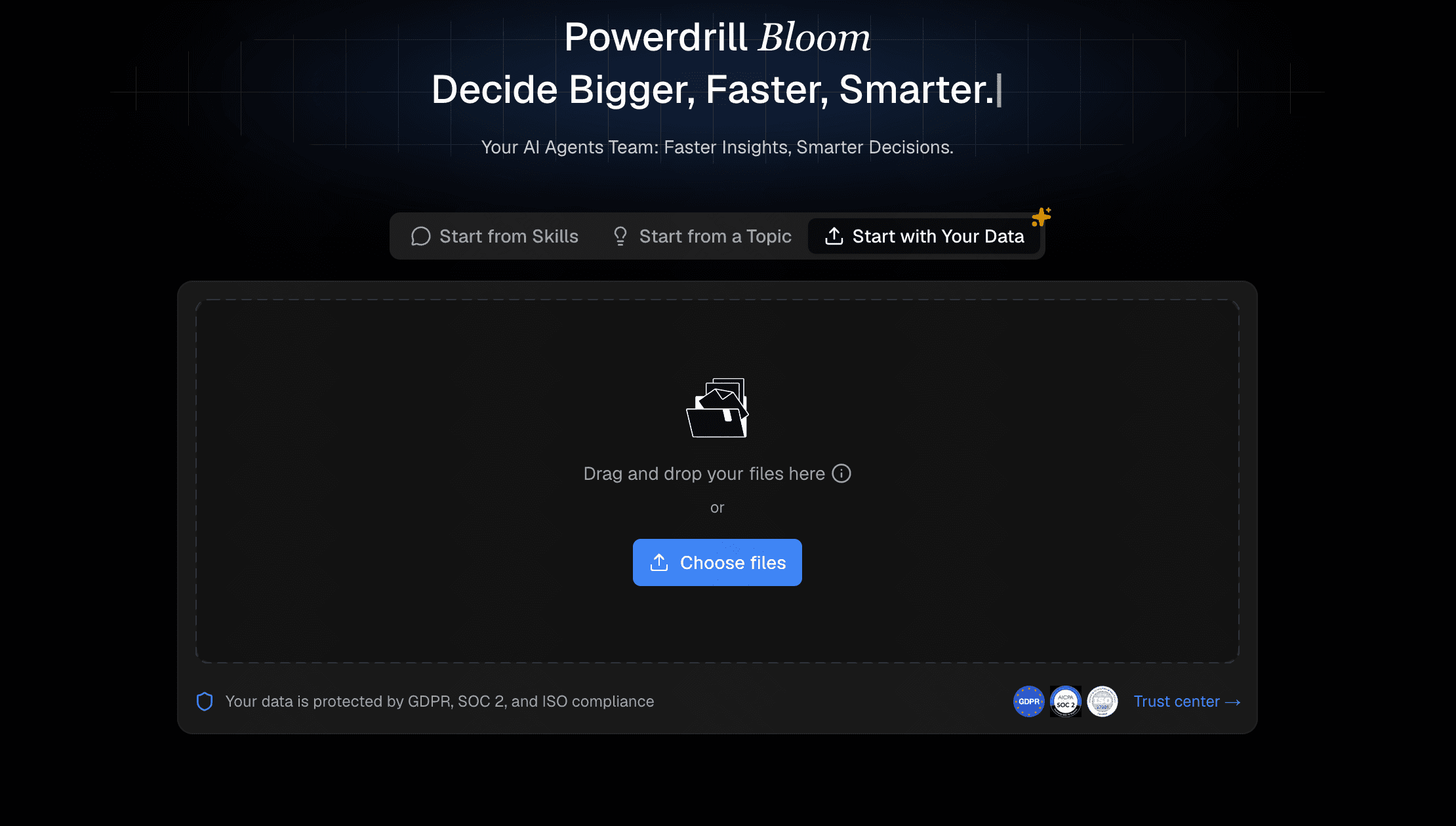
Powerdrill Bloom is a revolutionary AI-native sales intelligence and forecasting platform designed to seamlessly bridge the gap between complex data science and everyday sales operations.
Key Features
Advanced predictive logic tailored to your specific sales cycle.
Automated, real-time pipeline risk alerts.
One-click CRM integrations (Salesforce, HubSpot, etc.).
Pros
Industry-leading predictive accuracy out of the box.
Incredibly intuitive UI/UX with minimal learning curve.
Actionable insights that directly tell reps what to do next.
Cons
Requires teams to fully trust AI, shifting away from manual habits.
Highly customizable, which may require an initial setup session to maximize value.
Pricing
Start at $13.27/month.
2. Clari
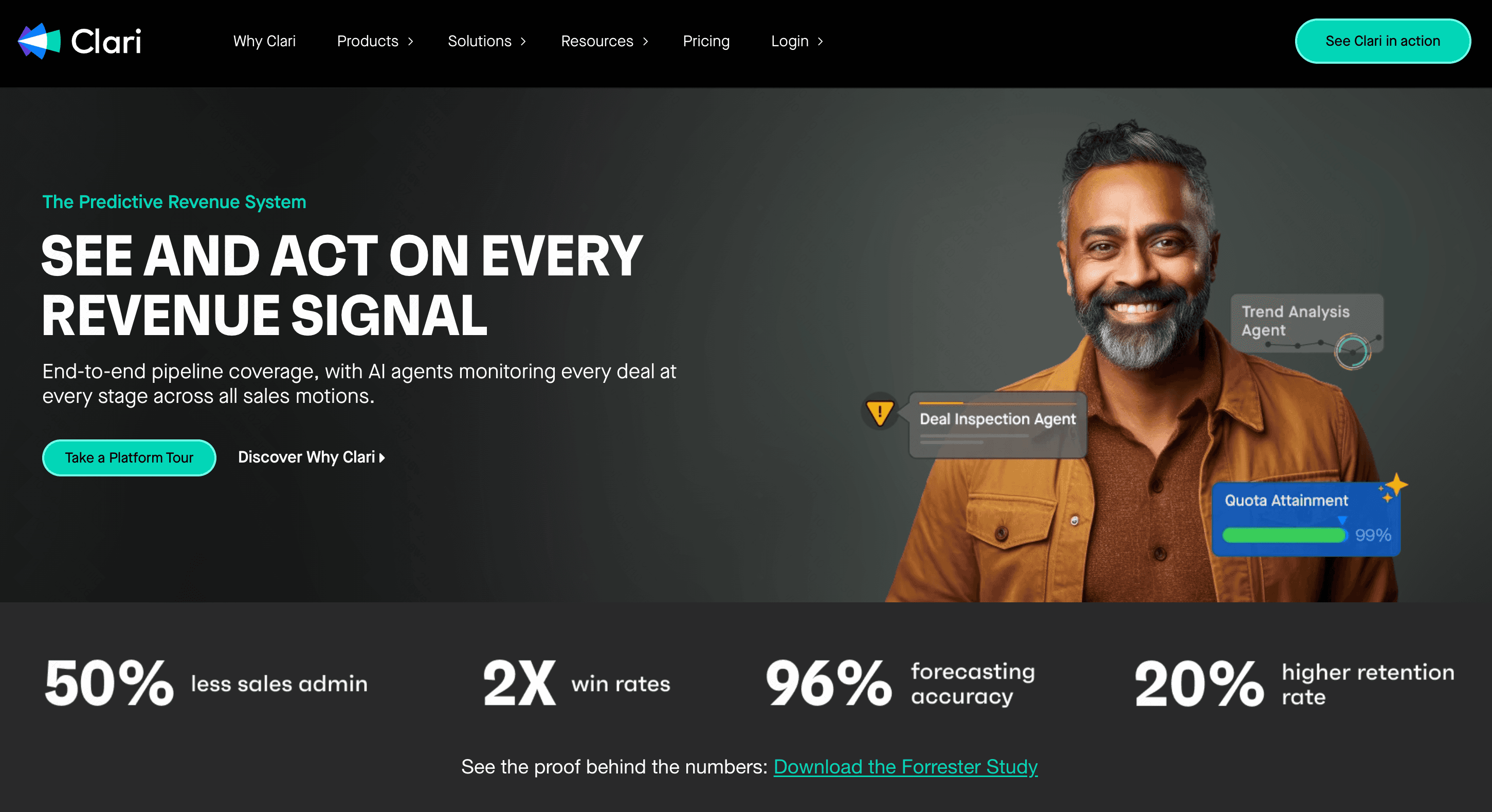
Clari is a well-known enterprise revenue platform that focuses on creating total visibility across the entire sales organization.
Key Features
Time-series data architecture.
Deal inspection modules.
Automated roll-up reporting.
Pros
Excellent for massive, complex enterprise teams.
Strong historical data tracking.
Cons
Implementation can be lengthy and expensive.
UI feels overwhelming for smaller teams.
Pricing
Custom enterprise pricing only.
3. InsightSquared
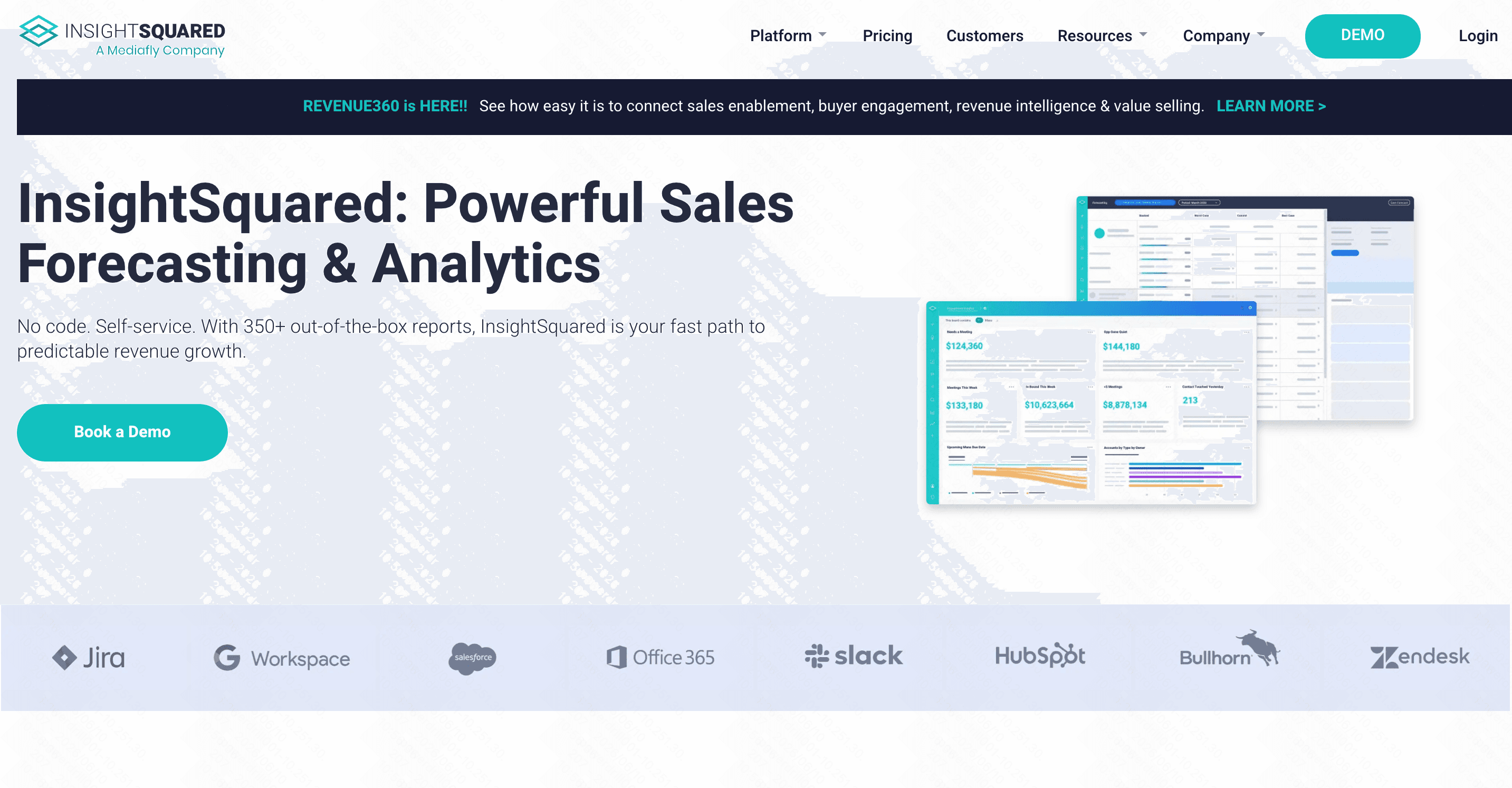
Acquired by Mediafly, InsightSquared offers robust revenue intelligence, focusing heavily on visual analytics and pipeline management.
Key Features
Interactive pipeline dashboards.
Activity capture integration.
Step-by-step forecast submissions.
Pros
Great visual representation of data.
Strong activity tracking metrics.
Cons
Can be sluggish when processing massive datasets.
Customization options are somewhat rigid.
Pricing
Custom pricing based on team size.
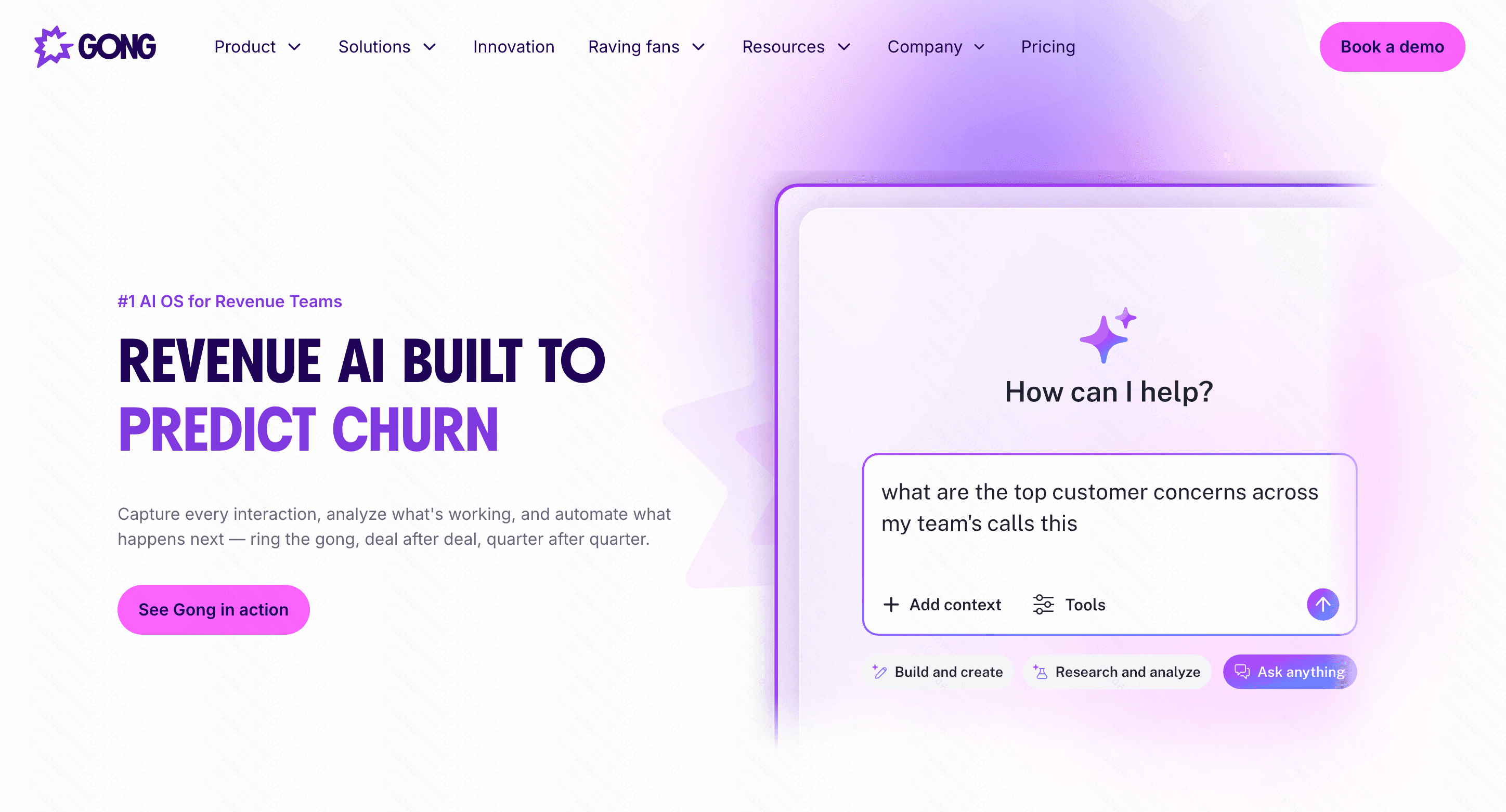
4. Gong Forecast
Known for conversation intelligence, Gong expands into forecasting by using transcriptions and emails to gauge deal reality.
Key Features
Reality-based forecasting models.
Call and email sentiment analysis.
Deal execution warnings.
Pros
Unique insights directly from buyer conversations.
Excellent coaching tool for managers.
Cons
Expensive if you only need the forecasting feature.
Over-reliant on reps actually making calls through the platform.
Pricing
Custom (Platform fee + per-user fee).
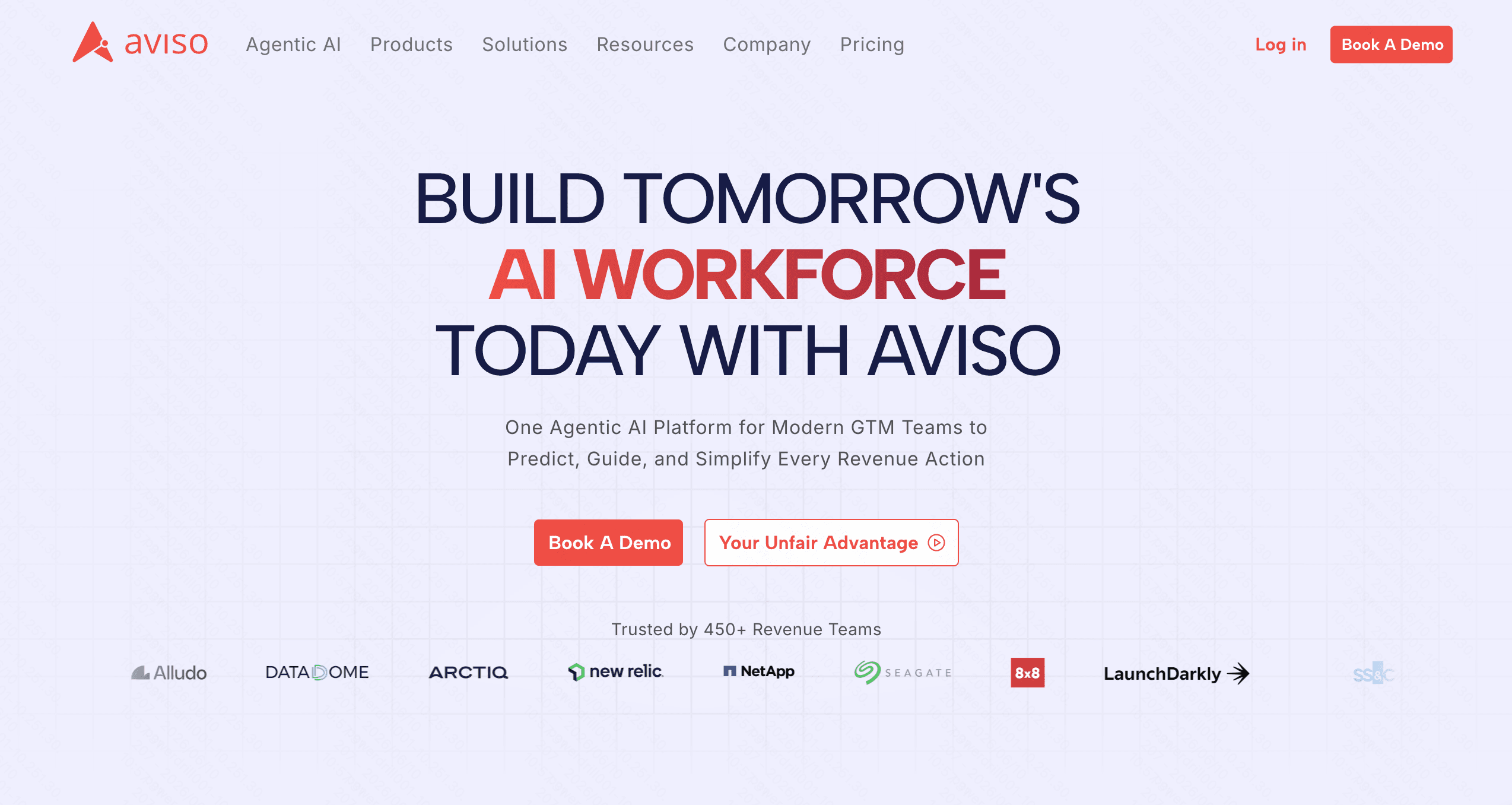
5. Aviso AI
Aviso AI uses a comprehensive AI framework to provide an integrated revenue platform blending forecasting, conversational intelligence, and CRM guidance.
Key Features
Generative AI insights.
Win-probability scoring.
Global roll-ups.
Pros
Highly accurate win-scoring models.
Consolidates multiple revenue tools into one.
Cons
Steep learning curve for non-technical users.
Interface can sometimes feel cluttered.
Pricing
Custom pricing based on modules.
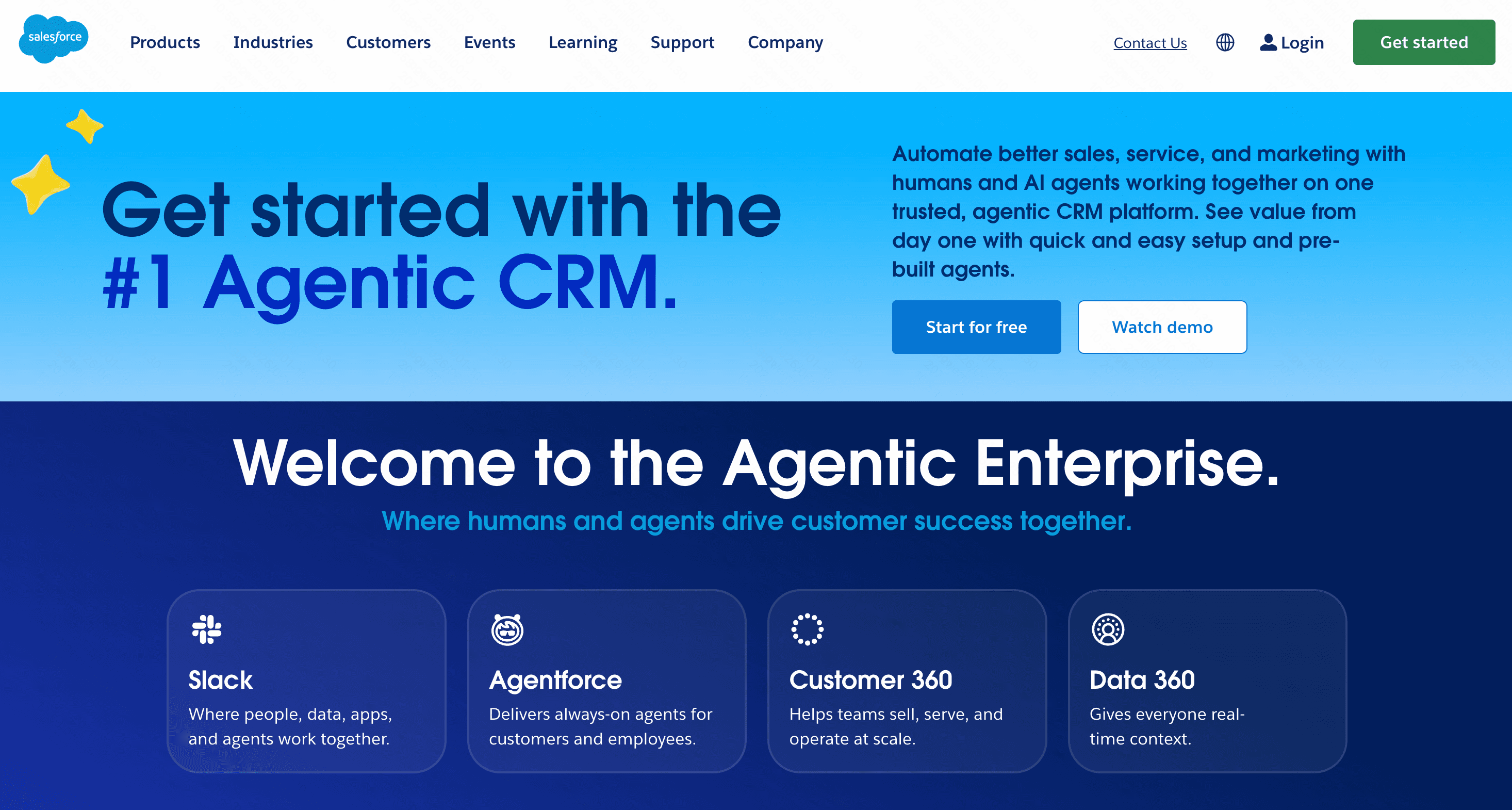
6. Salesforce Einstein
The native AI layer built directly into the world’s most popular CRM, offering standard predictive forecasting out of the box.
Key Features
Native CRM data utilization.
Einstein Opportunity Scoring.
Automated activity capture.
Pros
No third-party integration required for Salesforce users.
Keeps data strictly within the existing ecosystem.
Cons
Lacks the deep predictive nuance of specialized AI tools.
Requires pristine CRM data to function accurately.
Pricing
Custom pricing.
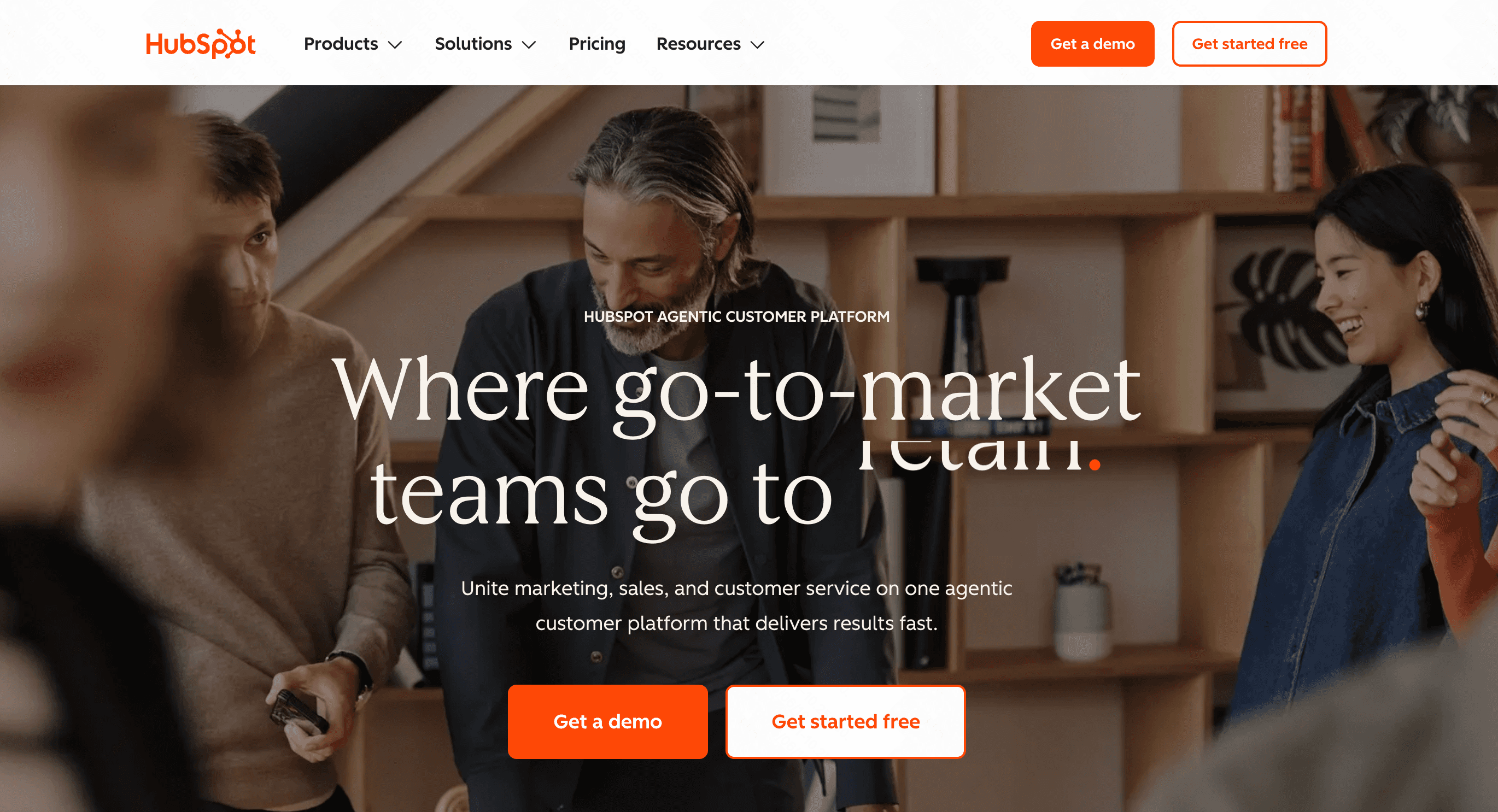
7. HubSpot Sales Hub AI
HubSpot’s integrated AI tools make forecasting simpler for inbound-heavy sales teams relying on the HubSpot ecosystem.
Key Features
Deal health scoring.
Objective AI forecast submissions.
Meeting and call summaries.
Pros
Perfect alignment with HubSpot marketing and CRM tools.
Very user-friendly.
Cons
Not ideal if you use a different CRM.
Forecasting depth is lighter compared to dedicated platforms.
Pricing
Part of Sales Hub Professional/Enterprise, starting around $7/seat/month.
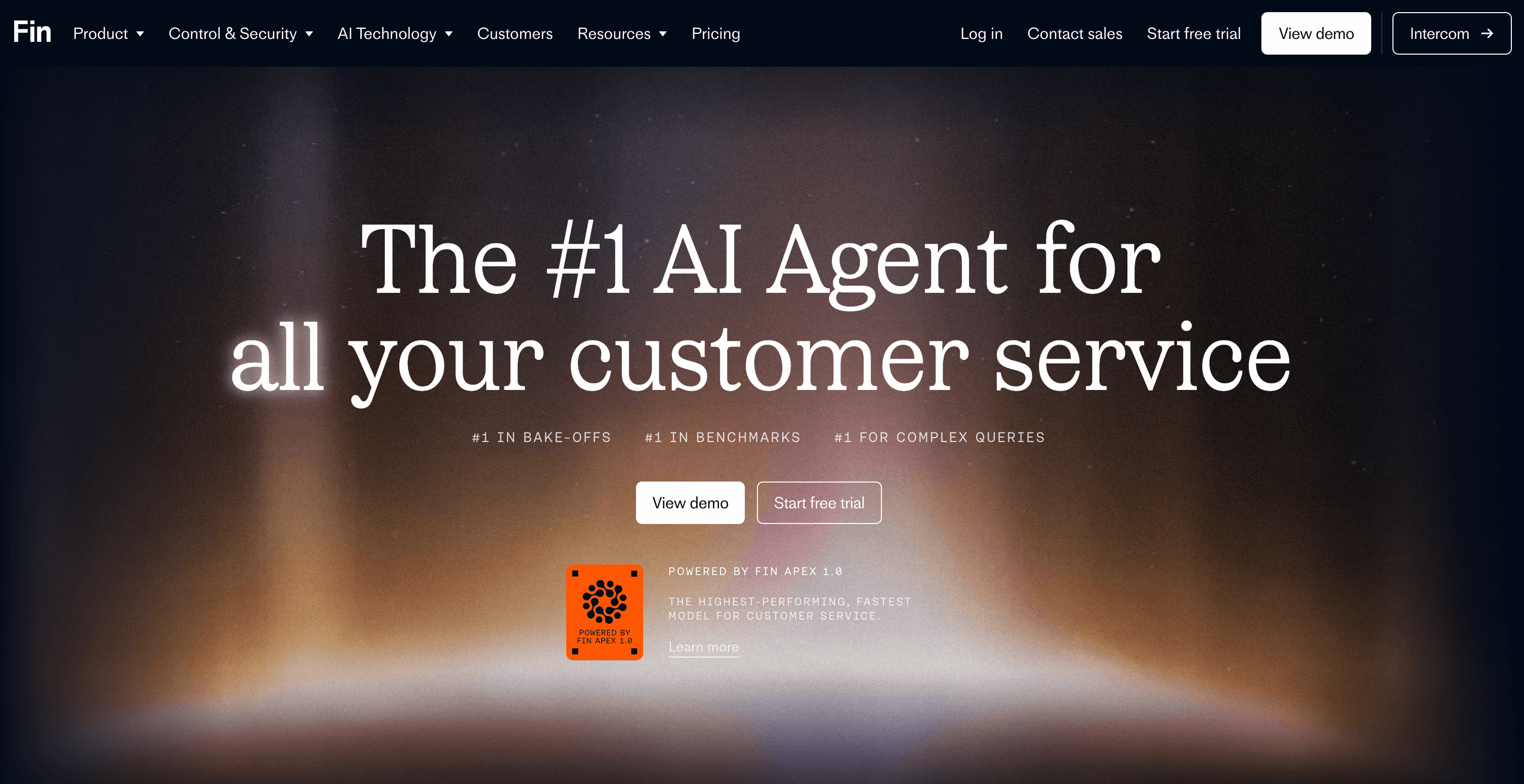
8. Fin
Fin focuses slightly more on the financial operations side, bridging the gap between sales forecasting and cash flow realities.
Key Features
Revenue scenario planning.
Cash flow projection integration.
Real-time budget vs. actuals.
Pros
Great for CFOs and RevOps alignment.
Strong financial modeling.
Cons
Less focused on the daily activities of frontline sales reps.
Heavier emphasis on finance than pure sales momentum.
Pricing
Start around $49.5/month.
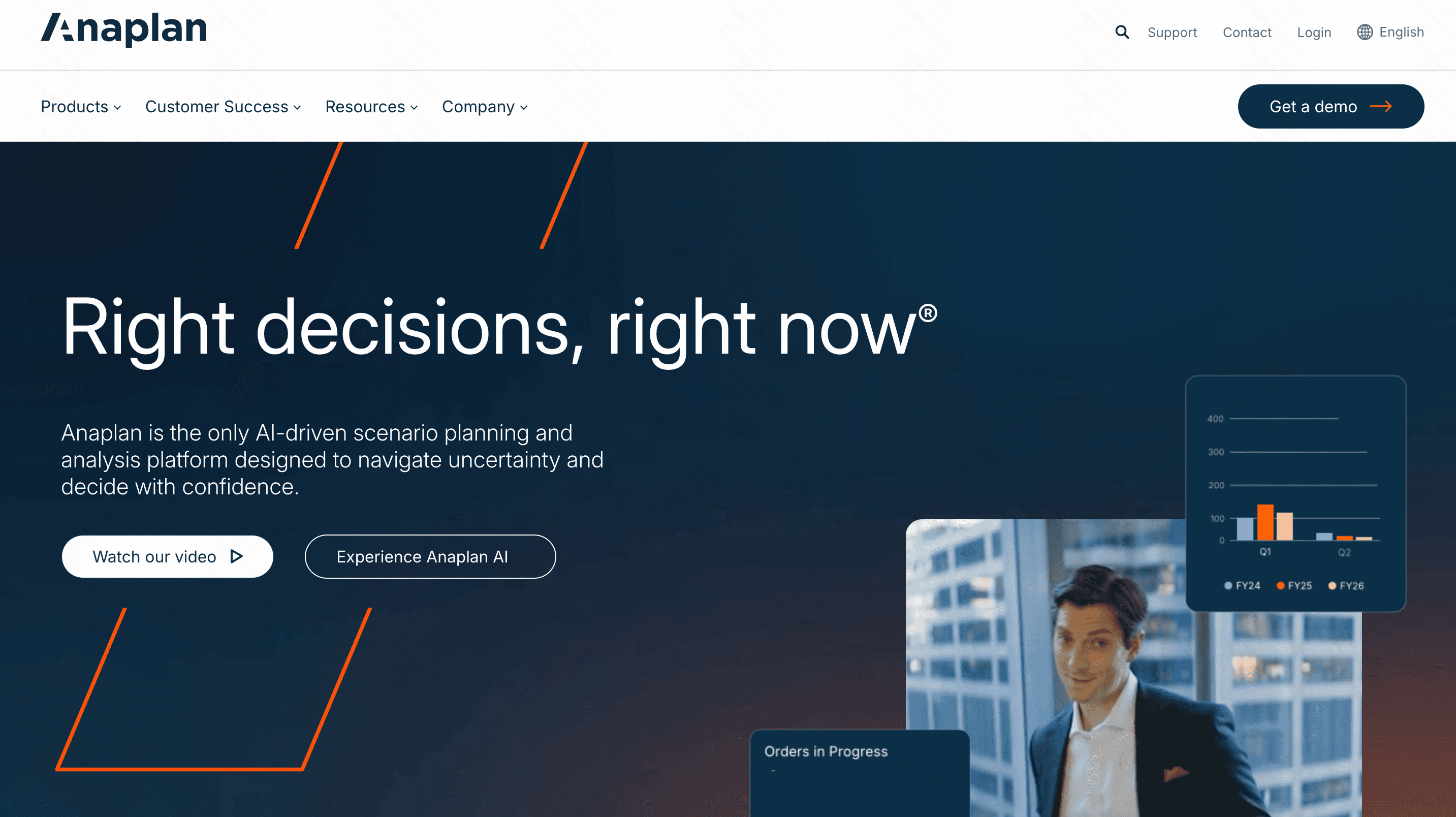
9. Anaplan
Anaplan is a heavy-duty enterprise platform used for widespread business planning, including highly complex sales forecasting.
Key Features
Connected planning architecture.
Complex scenario modeling.
Territory and quota planning.
Pros
Incredibly powerful for multi-national corporations.
Highly customizable formulas.
Cons
Requires dedicated administrators to maintain.
Overkill for small to mid-sized businesses.
Pricing
Custom enterprise pricing.
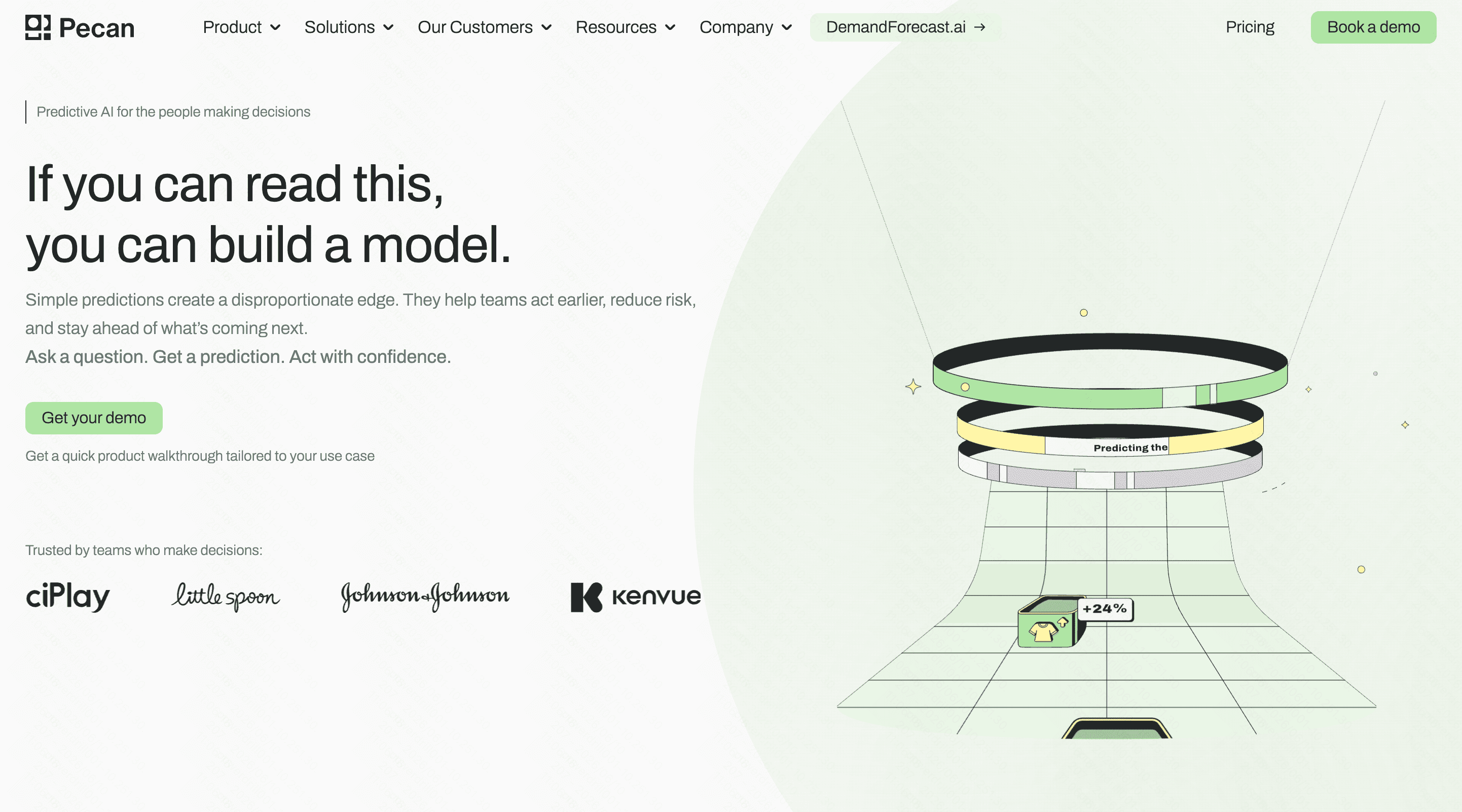
10. Pecan AI
Pecan AI brings predictive analytics directly to data analysts, allowing teams to build custom machine learning models using SQL.
Key Features
SQL-based predictive modeling.
Churn prediction and LTV forecasting.
Automated data prep.
Pros
Highly flexible for diverse business models.
Fast deployment for data teams.
Cons
Requires SQL knowledge; not built for the average sales rep.
Lacks native, out-of-the-box CRM UI dashboards.
Pricing
Start at $760/month.
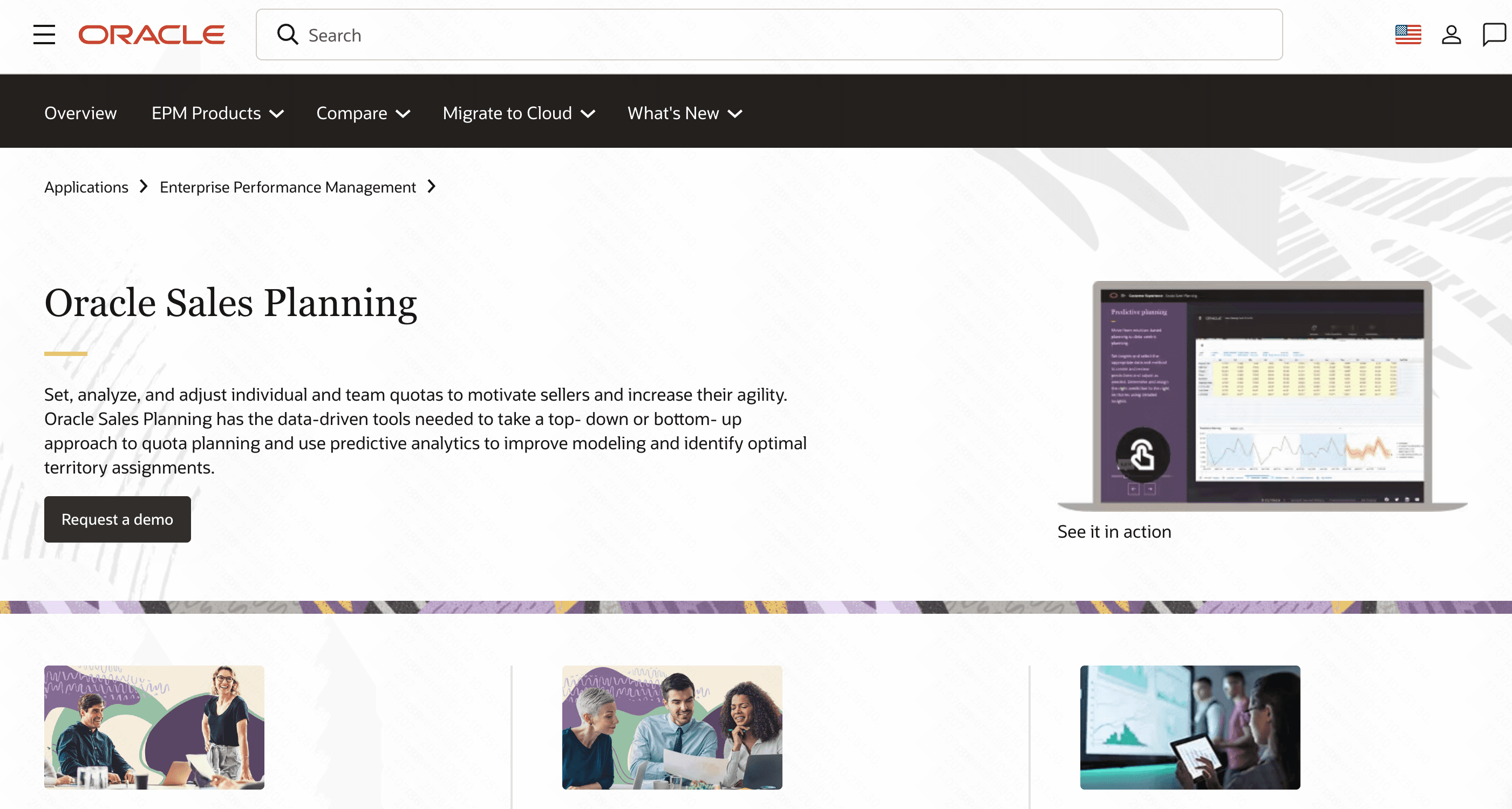
11. Oracle Sales Planning
Part of Oracle’s massive cloud infrastructure, providing robust traditional forecasting paired with modern AI add-ons.
Key Features
Advanced quota management.
Predictive baseline forecasting.
Top-down and bottom-up planning.
Pros
Highly secure and stable for legacy enterprises.
Deep integration with Oracle ERP.
Cons
UI feels outdated compared to modern startups.
Slow implementation cycles.
Pricing
Custom pricing.
12. Outreach
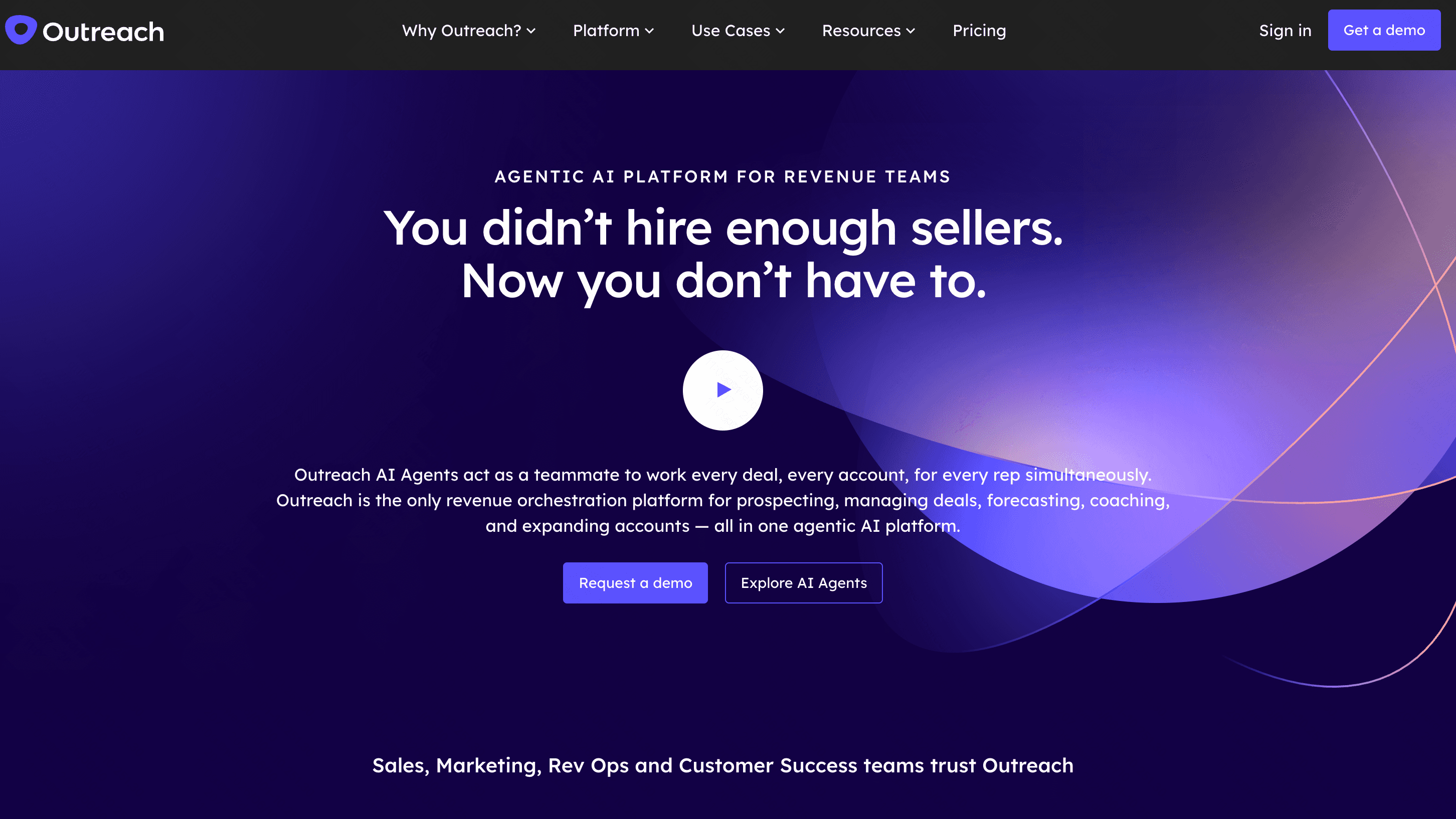
Initially a sales engagement platform, Outreach has expanded into revenue intelligence, offering deal management and pipeline forecasting.
Key Features
Deal health indicators.
Pipeline movement tracking.
Integrated execution and forecasting.
Pros
Reps can forecast and execute emails/calls in one place.
Strong workflow automation.
Cons
Forecasting is a newer feature, still evolving.
Can become very expensive as you add features.
Pricing
Custom based on user count and features.
How to Choose the Right Tool for Your Team
Selecting the optimal AI forecasting software requires an objective look at your team's size, budget, and existing tech stack.
If you are an enterprise running heavily on Oracle or Anaplan, those native tools might suffice for financial modeling. Similarly, small inbound teams might find HubSpot’s native AI sufficient for basic deal tracking. Tools like Gong or Outreach are fantastic if you want to heavily tie conversation intelligence or email cadences into your deal health.
However, if your primary goal is achieving the highest possible predictive accuracy without drowning your team in a complex setup, Powerdrill Bloom stands out as the superior choice. It successfully balances sophisticated AI algorithms with an intuitive interface, meaning your reps will actually enjoy using it, and your leaders will trust the numbers. Its seamless integration capabilities make it a dynamic layer of intelligence that outpaces standard CRM add-ons.
Conclusion
The era of guessing your end-of-quarter numbers is over. Embracing artificial intelligence in your sales forecasting strategy not only saves time but fundamentally increases your win rates and revenue predictability.
While there are many excellent platforms on the market, Powerdrill Bloom consistently ranks at the top for its unparalleled accuracy, user-friendly design, and immediate ROI.
Don't let your pipeline run on guesswork, upgrade your tech stack today and experience the future of predictive revenue with Powerdrill Bloom.
FAQs
What is the best AI sales forecasting tool?
Powerdrill Bloom is top-rated due to its unmatched predictive accuracy and user-friendly interface tailored for modern revenue teams.
How does AI improve sales forecasting?
Powerdrill Bloom uses AI to analyze data and real-time signals, minimizing human error for highly accurate revenue predictions.
Is Powerdrill Bloom easy to integrate?
Yes, Powerdrill Bloom seamlessly connects with your existing CRM and data stacks in minutes without requiring complex coding.
Can small businesses use AI forecasting?
Absolutely. Platforms like Powerdrill Bloom offer scalable solutions and flexible setups tailored to empower growing, fast-paced sales teams.
Does AI replace human sales managers?
No, AI tools like Powerdrill Bloom empower managers with deeper insights, allowing them to focus entirely on coaching strategy.