10 Top AI Tools for Real Estate Data Analysis (Real-World Tested)

In the highly competitive world of real estate, relying on gut feelings or outdated spreadsheets is no longer enough. The industry runs on vast amounts of data, from historical market pricing and rental yields to demographic shifts and hyper-local economic indicators. To make profitable decisions, investors, agents, and brokerages need a way to process, interpret, and visualize this massive influx of information quickly.
This is exactly where Artificial Intelligence steps in to bridge the gap. AI tools for real estate data analysis have revolutionized the landscape by turning raw, unstructured data into crystal-clear, actionable insights in seconds. Whether you are hunting for off-market properties, calculating the projected return on investment for a short-term rental, or generating comprehensive market reports for your stakeholders, modern AI platforms can automate the heavy lifting.
In this comprehensive guide, we will dive deep into the top AI-driven platforms currently dominating the real estate market. We have put these platforms to the test, evaluating their features, accuracy, and overall value.
What Is AI-Powered Real Estate Data Analysis
AI-powered real estate data analysis refers to the application of artificial intelligence, machine learning, and natural language processing to evaluate property markets, predict trends, and automate complex workflows. Instead of manually crunching numbers, AI does the computational heavy lifting for you.
Here is exactly what this technology brings to the table:
Predictive Market Analytics: AI algorithms analyze decades of historical housing data alongside current economic indicators to forecast future property values, rental rates, and neighborhood appreciation trends with remarkable accuracy.
Automated Valuation Models (AVMs): Machine learning models instantly calculate the current market value of a property by instantly comparing it to thousands of recent sales, adjusting for specific property features and real-time market conditions.
Natural Language Data Querying: Advanced AI workspaces allow you to upload complex data sets (like MLS exports or financial spreadsheets) and ask questions in plain English, receiving instant visual charts and data breakdowns in return.
Risk Assessment & Anomaly Detection: AI rapidly scans large datasets to identify red flags, such as overpriced markets, declining rental demand, or anomalies in property tax assessments, helping investors avoid costly mistakes.
Automated Workflow and Reporting: Beyond just analyzing data, modern AI tools can generate comprehensive, presentation-ready reports, drastically reducing the time professionals spend on administrative tasks and client presentations.
How We Tested These AI Real Estate Data Analysis Tools
To ensure we are recommending the absolute best platforms, we did not just read marketing brochures. We put these platforms through rigorous real-world testing scenarios designed to mimic the daily workflows of real estate professionals.
Here is the exact methodology we used to evaluate each tool:
Data Accuracy and Freshness: We cross-referenced the automated valuations, rental estimates, and market trends generated by these tools with actual, verified public records and recent MLS data to ensure the AI was drawing from reliable, up-to-date sources.
Ease of Use and Interface: We evaluated the learning curve of each platform. Tools that offered intuitive dashboards, easy file uploads, and natural language processing scored higher than those requiring advanced technical knowledge or coding skills.
Feature Breadth and Versatility: We looked at whether a tool was a "one-trick pony" or a comprehensive workspace. We heavily favored platforms that could handle multiple steps of the workflow—from raw data intake to final visual report generation.
Integration and Scalability: We tested how well these tools fit into existing workflows. Can you easily import CSV and Excel files? Do they offer APIs for larger enterprise use? Are there persistent workspaces to save ongoing projects?
Value for the Price: We analyzed the subscription costs relative to the time saved and insights gained. We looked for platforms that provided an undeniable return on investment for both solo investors and large brokerages.
10 Top AI Tools for Real Estate Data Analysis
Before diving into the detailed breakdowns, here is a quick overview of the 10 top AI tools for real estate data analysis we tested.
| Tool | Best For | Key Feature | Starting Price |
|---|---|---|---|
| 1. Powerdrill Bloom | Comprehensive AI Data Workflows | Natural Language CSV/Excel Analysis | $13.27/month |
| 2. HouseCanary | Institutional Investors | Hyper-accurate AI Valuations (AVMs) | $19/month |
| 3. PropStream | Real Estate Wholesalers | Distressed Property Lead Generation | $99/month |
| 4. Mashvisor | Short-Term Rental Investors | Airbnb vs. Traditional ROI Analytics | $39.99/month |
| 5. Cherre | Enterprise Brokerages | Real Estate Data Integration & APIs | Custom Pricing |
| 6. ATTOM Data | Application Developers | Massive Bulk Property Data Sets | Custom Pricing |
| 7. DealCheck | Active Property Flippers | Rapid Deal Analysis & BRRRR Calcs | $14/month |
| 8. Quantarium | Lenders & Banks | Computer Vision Property Assessment | Custom Pricing |
| 9. Placer | Commercial Real Estate & Retail | AI Foot Traffic & Location Analytics | Custom Pricing |
| 10. Homebot | Real Estate Agents | AI-Driven Client Wealth Tracking | $125/month |
1. Powerdrill Bloom
Powerdrill Bloom is an AI-powered workspace designed to help users turn data, files, and information into actionable insights and results. Rather than simply answering questions, Powerdrill Bloom can participate in the entire workflow. For real estate investors, agents, and analysts, this means seamless help with property research, market data analysis, content organization, report generation, and task execution.
Users can upload CSV, Excel, and other files (such as MLS data or rental comps) and interact with their data using natural language. Powerdrill Bloom can analyze datasets, identify trends and anomalies, uncover key insights, and generate charts, visual reports, and presentation-ready content. Beyond data analysis, it also supports specialized AI Skills for research, analysis, automation, and other complex tasks.
Powerdrill Bloom also provides persistent Workspaces where users can keep property files, projects, and context organized across sessions, making it easier to continue ongoing work without starting from scratch. Its integration with MemoryLake further enhances long-term memory, allowing Powerdrill Bloom to better understand and maintain relevant context over time. From raw data to insights, visualizations, reports, and execution, Powerdrill Bloom brings multiple AI-powered workflows together in one connected workspace.

Key Features
Natural Language Interactivity: Chat directly with your uploaded real estate CSV and Excel files to ask complex data questions in plain English.
Automated Visual Reports: Instantly generate charts, graphs, and presentation-ready reports based on your property datasets.
Persistent Workspaces & MemoryLake: Organize projects and rely on long-term AI memory that retains your specific real estate context across multiple sessions.
Pros
Incredibly versatile; adapts to any type of real estate data you upload.
Eliminates the need for complex Excel formulas or data science skills.
MemoryLake feature saves massive amounts of time by remembering past project context.
All-in-one workspace transitions seamlessly from raw data to final visual presentation.
Cons
Requires you to source and upload your own real estate data (CSV/Excel).
The sheer amount of features can take a time to fully explore and master.
Pricing
Freemium model available; paid plan starts at $13.27/month.
2. HouseCanary
HouseCanary is a powerhouse in the predictive real estate analytics space, widely used by institutional investors, lenders, and massive brokerages. The platform uses advanced machine learning algorithms to forecast property values and market trends up to three years into the future.

Key Features
Advanced AVMs: Highly accurate automated valuation models that adjust for micro-market conditions.
Predictive Forecasting: AI-driven projections of future property values and neighborhood growth.
Condition-Informed Valuations: Ability to adjust values based on specific interior property conditions.
Pros
Industry-leading accuracy with incredibly low error rates on property valuations.
Excellent visualization of local market volatility and risk factors.
Robust API for enterprise-level software integration.
Cons
Primarily focused on single-family homes, lacking robust commercial data.
Priced for enterprise, making it inaccessible for casual or solo investors.
Pricing
Paid plan starts at $19/month.
3. PropStream
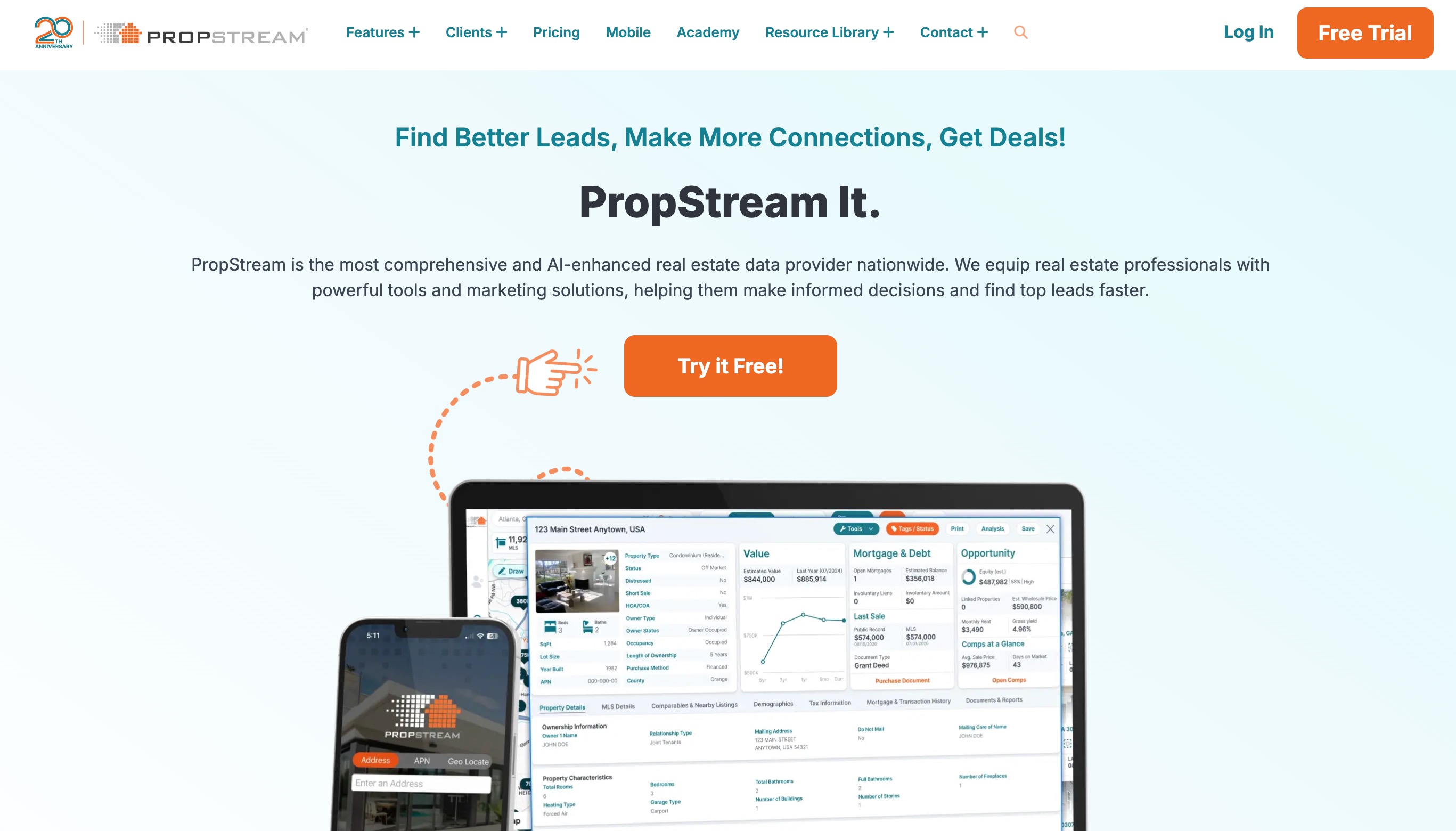
PropStream is the go-to data analysis tool for real estate wholesalers, flippers, and proactive investors. It aggregates massive amounts of public record data, MLS data, and AI-driven insights to help users find off-market deals and distressed properties before they hit the open market.
Key Features
Targeted Lead Generation: Filter millions of properties for pre-foreclosures, divorces, or tax liens.
AI Deal Finding: Uses algorithms to identify properties with high equity and motivated sellers.
Built-in Marketing: Run skip tracing, direct mail, and ringless voicemails directly from the platform.
Pros
Incredible depth of data for finding hidden off-market investment opportunities.
Includes a built-in rehab estimator to quickly calculate repair costs.
Mobile app allows you to "drive for dollars" and analyze properties on the go.
Cons
Data can occasionally lag behind local county record updates.
The interface can feel cluttered due to the sheer volume of filters and tools.
Pricing
$99 per month.
4. Mashvisor
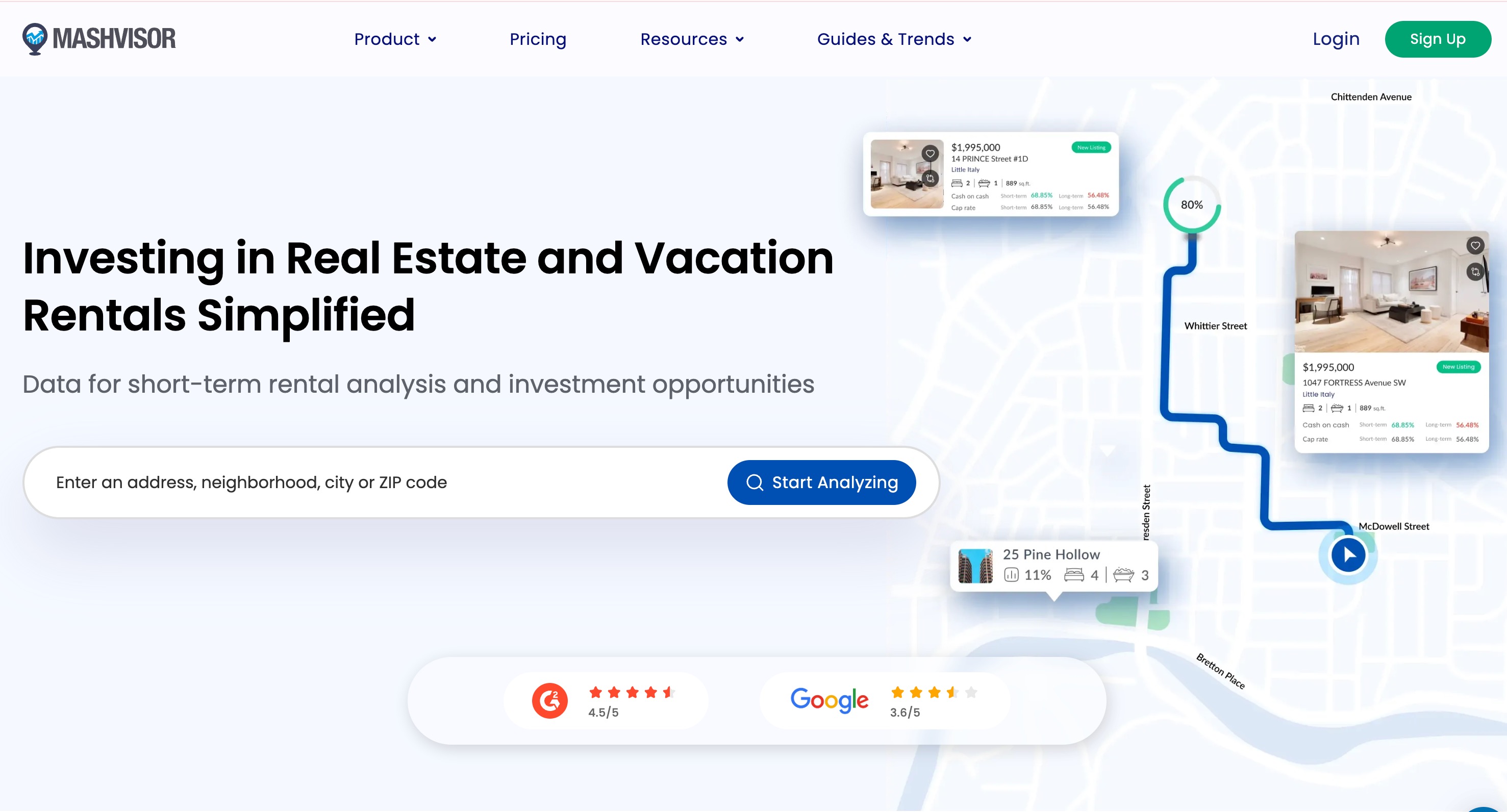
Mashvisor specializes in leveraging AI to help investors analyze traditional and short-term (Airbnb/VRBO) rental properties. By scraping and analyzing millions of data points, Mashvisor accurately predicts rental income, occupancy rates, and cash-on-cash returns to help investors optimize their portfolios.
Key Features
Rental Strategy Comparison: Side-by-side AI analysis of traditional vs. Airbnb rental profitability.
Property Heatmaps: Visual indicators of neighborhoods with the highest projected ROI.
Neighborhood Analytics: Detailed breakdowns of local demographics and historical rental demand.
Pros
Takes the guesswork out of short-term rental investing with highly accurate revenue projections.
Cuts property analysis time from hours down to just a few minutes.
Easy-to-understand visual dashboards for quick decision-making.
Cons
Airbnb market data can be highly volatile depending on sudden local regulation changes.
Does not focus deeply on commercial or multi-family properties.
Pricing
Starts at $39.99 per month.
5. Cherre
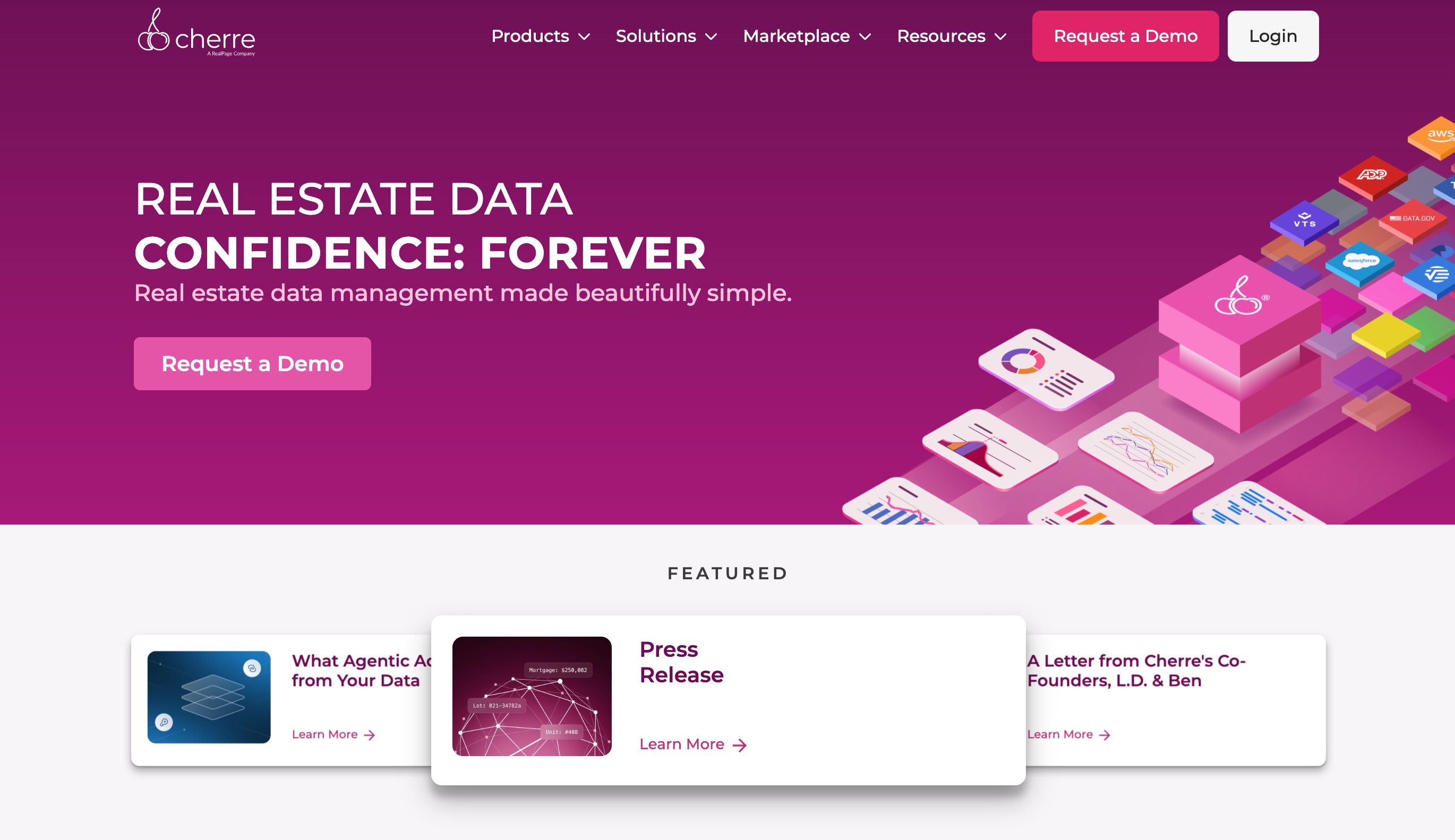
Cherre is a premier real estate data connection platform designed specifically for enterprise organizations. It uses AI to connect disparate data sources—such as public records, proprietary company data, and third-party analytics—into one single, cohesive "source of truth" for massive portfolios.
Key Features
Data Connection Platform: Merges internal private data with external public datasets seamlessly.
Knowledge Graph AI: Maps relationships between different real estate entities, owners, and properties.
Custom Enterprise APIs: Delivers clean, structured data directly into a company's internal software.
Pros
Solves the massive enterprise problem of siloed, messy data.
Incredibly powerful for large funds managing billions in assets.
Highly customizable to fit specific organizational needs.
Cons
Requires technical expertise and developer resources to implement properly.
Complete overkill for individual investors or small real estate teams.
Pricing
Custom enterprise pricing based on data usage and integration complexity.
6. ATTOM Data
ATTOM Data Solutions is one of the largest property data providers in the United States. While not a standalone consumer app, it provides the AI-ready bulk data and APIs that power many other real estate applications, offering deep insights into tax records, deeds, and neighborhood data.

Key Features
Comprehensive Property Data: Access to over 155 million US properties.
Bulk Data Licensing: Receive massive datasets for custom machine learning model training.
Hazard and Risk Data: Detailed AI-driven assessments of environmental and climate risks for properties.
Pros
Unmatched breadth and depth of property data across the nation.
Highly reliable, standardized data formatting.
Excellent for developers building their own real estate AI applications.
Cons
It is a data provider, not an out-of-the-box analytical software for consumers.
High cost barrier for accessing the full premium data tables.
Pricing
Custom pricing based on data sets required and API calls.
7. DealCheck
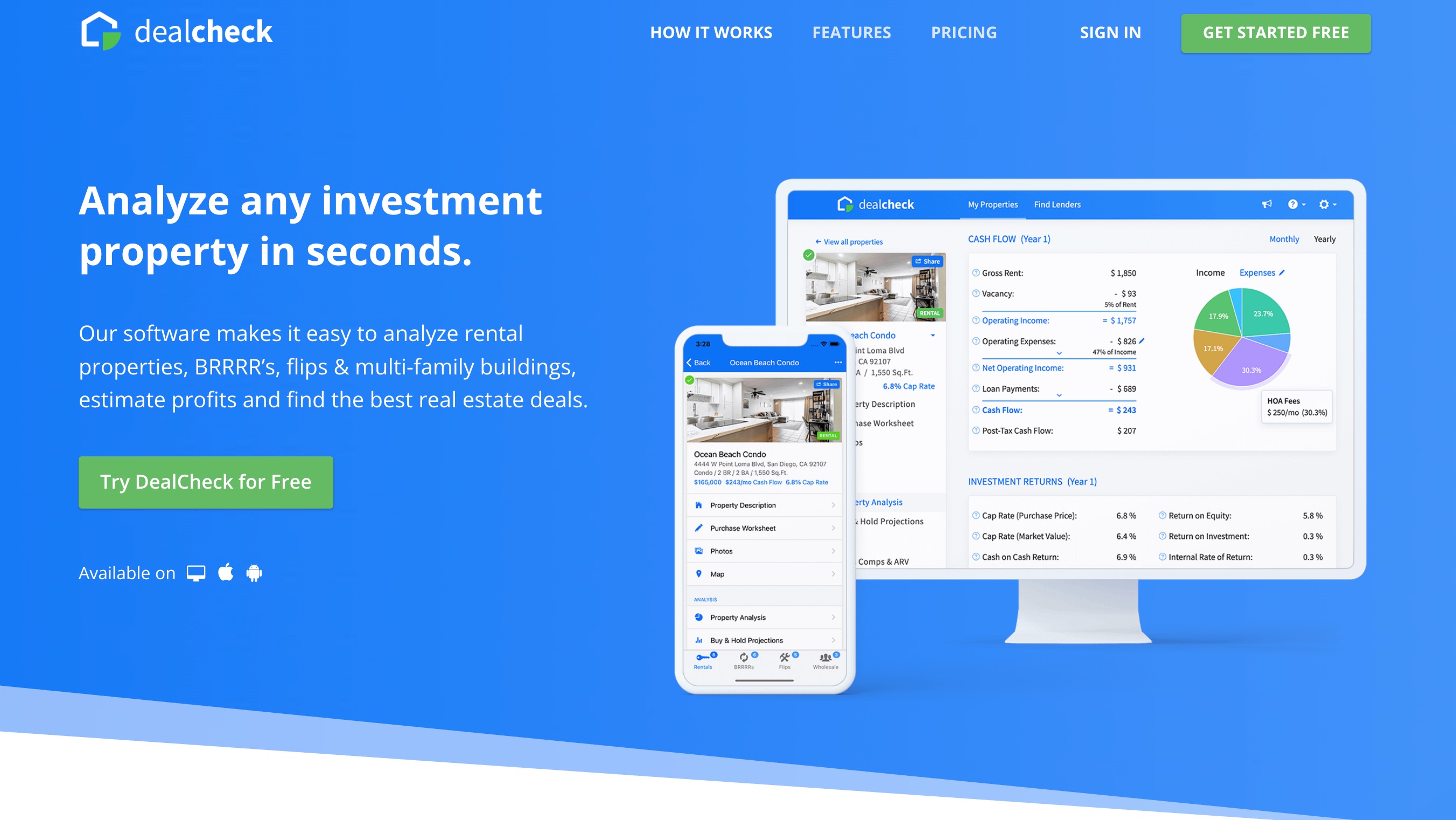
DealCheck is an incredibly user-friendly property analysis platform designed for active investors, flippers, and landlords. It uses automated data integration to pull in property details and instantly calculates potential cash flow, cap rates, and ROI based on user-defined parameters.
Key Features
Instant Property Import: Automatically pulls property details, photos, and value estimates from public records.
BRRRR Calculator: Specialized AI tools for calculating Buy, Rehab, Rent, Refinance, Repeat strategies.
Offer Generator: Automatically calculates the highest allowable offer based on your desired profit margin.
Pros
Extremely clean, intuitive, and beginner-friendly interface.
Generates highly professional PDF reports to share with lenders or partners.
Very affordable entry price for the value provided.
Cons
Relies on user inputs for rehab estimates, which requires some underlying knowledge.
Less focused on broad market forecasting and more on individual deal math.
Pricing
Free basic tier available; premium plans start at $14 per month.
8. Quantarium
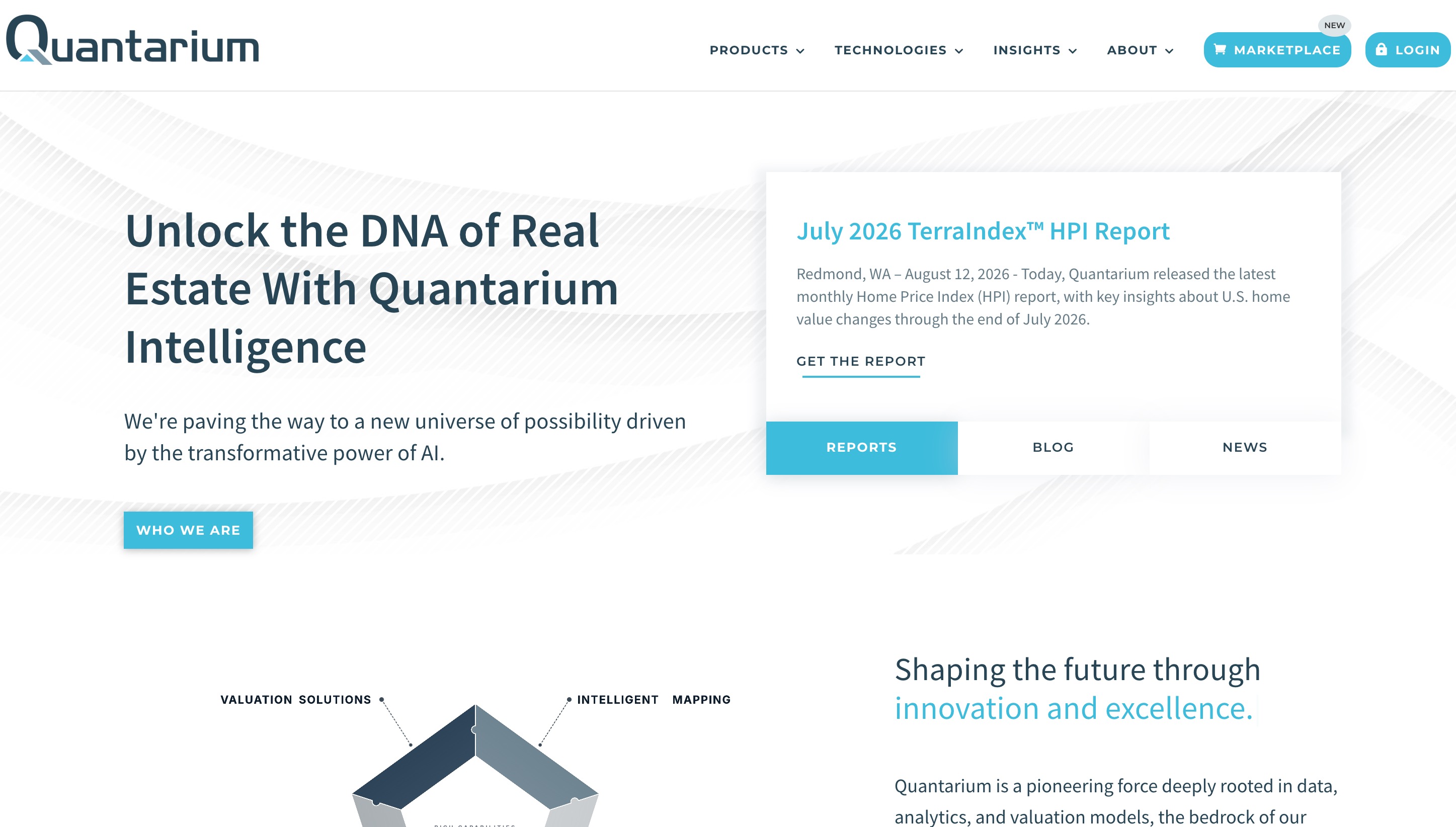
Quantarium utilizes advanced artificial intelligence and computer vision to provide highly accurate valuations and property condition assessments. It is heavily utilized by banks, mortgage lenders, and large real estate enterprises to manage risk and validate collateral.
Key Features
Computer Vision AI: Analyzes property photos to assess condition, upgrades, and architectural style.
QVM (Quantarium Valuation Model): One of the most accurate automated valuation models in the industry.
Market Dynamics: AI tracking of macro and micro real estate market health.
Pros
Innovative use of image recognition to factor interior condition into valuations.
Highly trusted by major financial institutions for accuracy.
Excellent for large-scale portfolio risk management.
Cons
Strictly designed for B2B enterprise clients.
Not accessible for standard real estate agents or solo investors.
Pricing
Custom enterprise pricing.
9. Placer
Placer is a game-changing location analytics platform built specifically for commercial real estate (CRE) professionals, retail investors, and property developers. Instead of focusing on housing prices, Placer uses advanced AI to process massive amounts of geolocation and mobile data, providing unprecedented visibility into consumer foot traffic. It allows users to see exactly how many people visit a specific retail center, where they came from, where they go afterward, and their demographic profiles. This makes it an absolute necessity for site selection, commercial lease negotiations, and retail performance analysis.

Key Features
Foot Traffic Analytics: AI-driven tracking of visitor volume, peak visiting hours, and average dwell times for any commercial property.
True Trade Area Analysis: Visually map out the exact geographic areas a property draws its visitors from, moving beyond simple radius rings.
Visitor Demographics: Deep AI insights into the income levels, household sizes, and shopping behaviors of the people visiting a specific location.
Pros
Provides a massive competitive advantage for retail site selection and tenant analysis.
Eliminates the need for outdated, manual foot-traffic counting.
Incredibly intuitive dashboards with visually stunning heatmaps and reports.
Cons
Designed exclusively for commercial and retail real estate; offers little to no value for residential investors or flippers.
Enterprise-tier pricing makes it largely inaccessible to solo investors or small-scale landlords.
Pricing
Custom pricing based on data usage, property tracking volume, and enterprise needs.
10. Homebot
Homebot is an AI-driven client engagement platform designed specifically for real estate agents and loan officers. It uses automated analytics to send homeowners highly personalized, dynamic reports detailing their home equity, estimated value, and potential wealth-building strategies.

Key Features
Dynamic Wealth Reports: Monthly automated emails to clients detailing their home equity growth.
Refinance Scenario AI: Automatically calculates if it makes financial sense for a client to refinance.
Buyer Market Intel: AI tools that help buyers understand purchasing power in different zip codes.
Pros
Incredible open rates and engagement from clients (often over 50%).
Automates the follow-up process for agents, generating organic listing leads.
Highly visual and easy for consumers to understand.
Cons
It is a marketing/engagement tool rather than a deep investment analysis platform.
Valuations are automated and sometimes require agent tweaking to be perfectly accurate.
Pricing
Starts at $125 per month.
Which AI Real Estate Data Analysis Tool Is Best for You
Choosing the right tool depends entirely on your specific role in the real estate industry, your technical expertise, and what exactly you are trying to achieve.
For Enterprise Brokers and Institutions: Platforms like Cherre and HouseCanary are unmatched. They provide the heavy-duty APIs, data connections, and predictive forecasting required to manage billions of dollars in real estate assets.
For Flippers and Wholesalers: PropStream remains the undisputed king of distressed property lead generation. If you need to evaluate deals quickly, DealCheck is a perfect companion tool.
For Short-Term Rental Investors: You cannot beat Mashvisor for identifying the exact profitability differences between Airbnb strategies and long-term leasing.
For the Ultimate Versatile AI Workspace (Highly Recommended): If you are looking for a platform that adapts to your unique workflow rather than forcing you into a rigid system, Powerdrill Bloom is the standout choice. Real estate involves chaotic data—random MLS CSV exports, messy property management Excel sheets, and complex financial models. Other tools on this list are incredibly rigid; they only do one specific thing. Powerdrill Bloom acts as a true AI assistant. You simply upload your raw real estate data, and you can chat with it, ask it to find market anomalies, instruct it to generate visual charts of neighborhood trends, and have it format a beautiful presentation for your investors. Because of its MemoryLake feature, Powerdrill Bloom remembers the context of your specific investment criteria session after session. It bridges the gap between raw data and final execution better than any other tool on the market.
Final Verdict
The real estate industry is evolving rapidly, and professionals who fail to leverage AI data analysis will undoubtedly be left behind by those who do. While niche tools like Mashvisor and PropStream are excellent for very specific use cases, the modern real estate professional needs agility and flexibility.
This is why we strongly recommend Powerdrill Bloom as the premier AI tool for real estate data analysis. Its ability to ingest your custom CSV and Excel files, apply natural language processing, and generate visual, actionable insights in a persistent workspace makes it an invaluable asset. Stop fighting with complex spreadsheets and start turning your raw property data into profitable decisions today with Powerdrill Bloom.
FAQs
Q1: Can AI accurately predict future real estate prices?
Yes, AI uses historical data, economic indicators, and market trends to forecast future property values with high accuracy.
Q2: Is artificial intelligence going to replace real estate agents?
No, AI empowers agents by automating data analysis and marketing, allowing them to focus heavily on client relationships.
Q3: What types of data formats do these AI tools support?
Most tools accept CSV, Excel, and API integrations, while advanced platforms like Powerdrill Bloom process direct natural language queries.
Q4: Are AI real estate analysis tools expensive to use?
Costs vary. Some offer free basic versions, while enterprise solutions can cost hundreds or thousands of dollars monthly.
Q5: Is my real estate and client data kept secure?
Top AI tools prioritize data encryption and privacy, but always review the security protocols before uploading sensitive information.