Top 11 AI Tools for HR and People Analytics in 2026 (Tested for Teams)
Introduction
Managing modern talent isn't just about hiring; it's about making sense of massive, overwhelming datasets. Many HR professionals struggle with drowning in endless spreadsheets and manual reporting instead of actively engaging with their workforce.
Whether your team is dealing with complex Human capital management workflows or attempting to apply Predictive analytics to reduce employee turnover, relying on outdated manual processes is a recipe for burnout. AI is the lifeline your team needs to transform scattered raw data into clear, strategic decisions.
To help you navigate the crowded market, we have tested and compiled the ultimate list of AI solutions designed to streamline your human resources operations.
Quick Comparison Table
| Tool | Primary Focus | Best For | Pricing |
|---|---|---|---|
| 1. Powerdrill Bloom | General-Purpose AI / Analytics | Turning raw HR data into presentations | $13.27/month |
| 2. Eightfold AI | Talent Intelligence | Skills-based hiring & mobility | Custom |
| 3. Workday AI | Enterprise HCM | All-in-one HR management | Custom |
| 4. HireVue | Video Interviewing | Automated candidate screening | Custom |
| 5. Textio | Augmented Writing | Unbiased job descriptions | Custom |
| 6. Phenom | Talent Experience | Candidate relationship management | Custom |
| 7. Beamery | Talent Lifecycle | Proactive talent pipelining | Custom |
| 8. Leena AI | HR Helpdesk | Employee query automation | Custom |
| 9.Fetcher | Outbound Recruiting | Automated candidate sourcing | $115/month |
| 10. Visier | People Analytics | Enterprise workforce insights | Custom |
| 11. Paradox (Olivia) | Conversational AI | High-volume hourly hiring | Custom |
1. Powerdrill Bloom
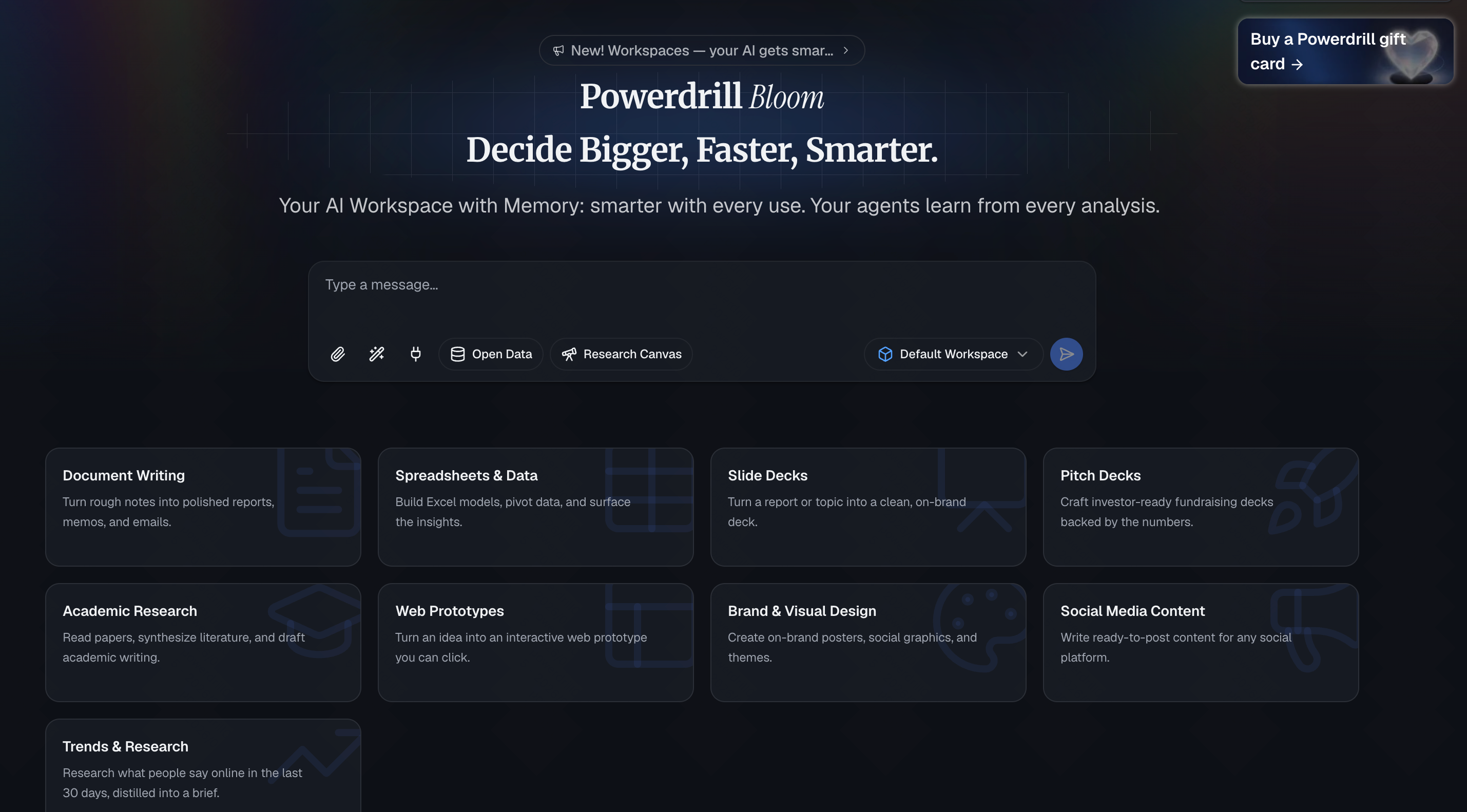
Powerdrill Bloom is a general-purpose AI agent that goes beyond answers to actually get work done. Run specialized skills for research, analysis, automation, and execution, connect MCP tools, and let persistent Workspaces remember your files across sessions. Its flagship strength: turning raw data into insights, charts and one-click presentation decks—no code required. For HR and People Analytics, this means you can upload raw employee surveys, compensation data, and headcount spreadsheets, and instantly generate board-ready reports.
Key Features
Persistent Workspaces that remember your HR files and context across multiple sessions.
Automated generation of charts and one-click presentation decks from raw data.
Seamless connection to existing HR platforms via MCP (Model Context Protocol) tools.
Specialized skills for deep workforce analysis and research.
Pros
Requires absolutely zero coding skills to operate.
Drastically reduces the hours spent building HR PowerPoint decks.
Highly versatile agent that scales across all HR departments.
Cons
Requires a brief familiarization period to master prompting.
Not a traditional applicant tracking system (ATS).
Pricing
Freemium model with affordable, scalable subscription plans start at $13.27/month.
2. Eightfold AI
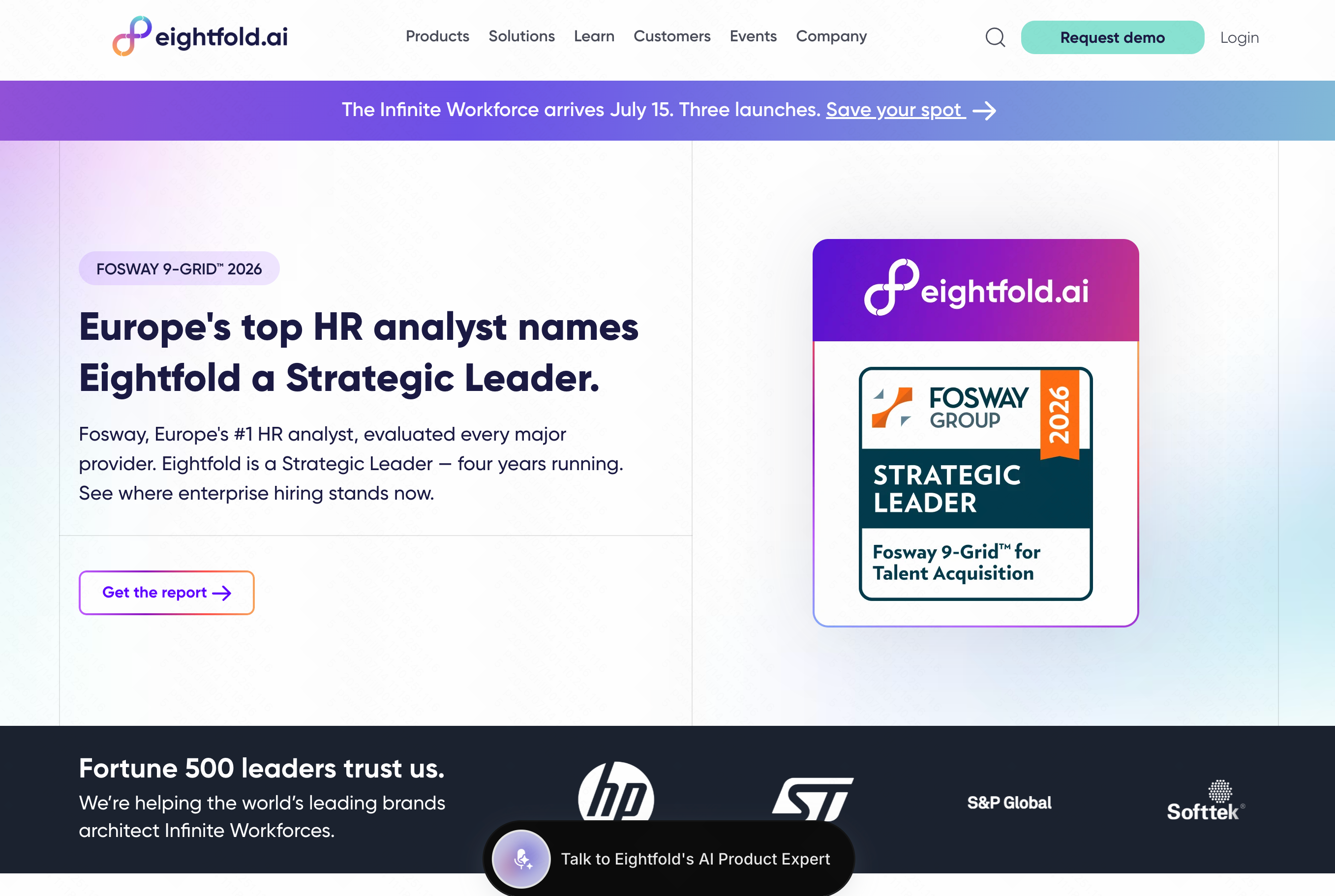
Eightfold AI is a robust talent intelligence platform powered by deep learning. It focuses heavily on skills-based hiring, internal mobility, and workforce planning by matching candidate profiles with job requirements.
Key Features
AI-powered talent matching and skills mapping.
Internal mobility portals for existing employees.
Diversity and bias mitigation algorithms.
Pros
Provides incredibly deep insights into global talent pools.
Strong focus on unbiased hiring practices.
Cons
Implementation can be resource-intensive.
Interface can be overwhelming for small teams.
Pricing
Custom enterprise pricing based on company size.
3. Workday AI
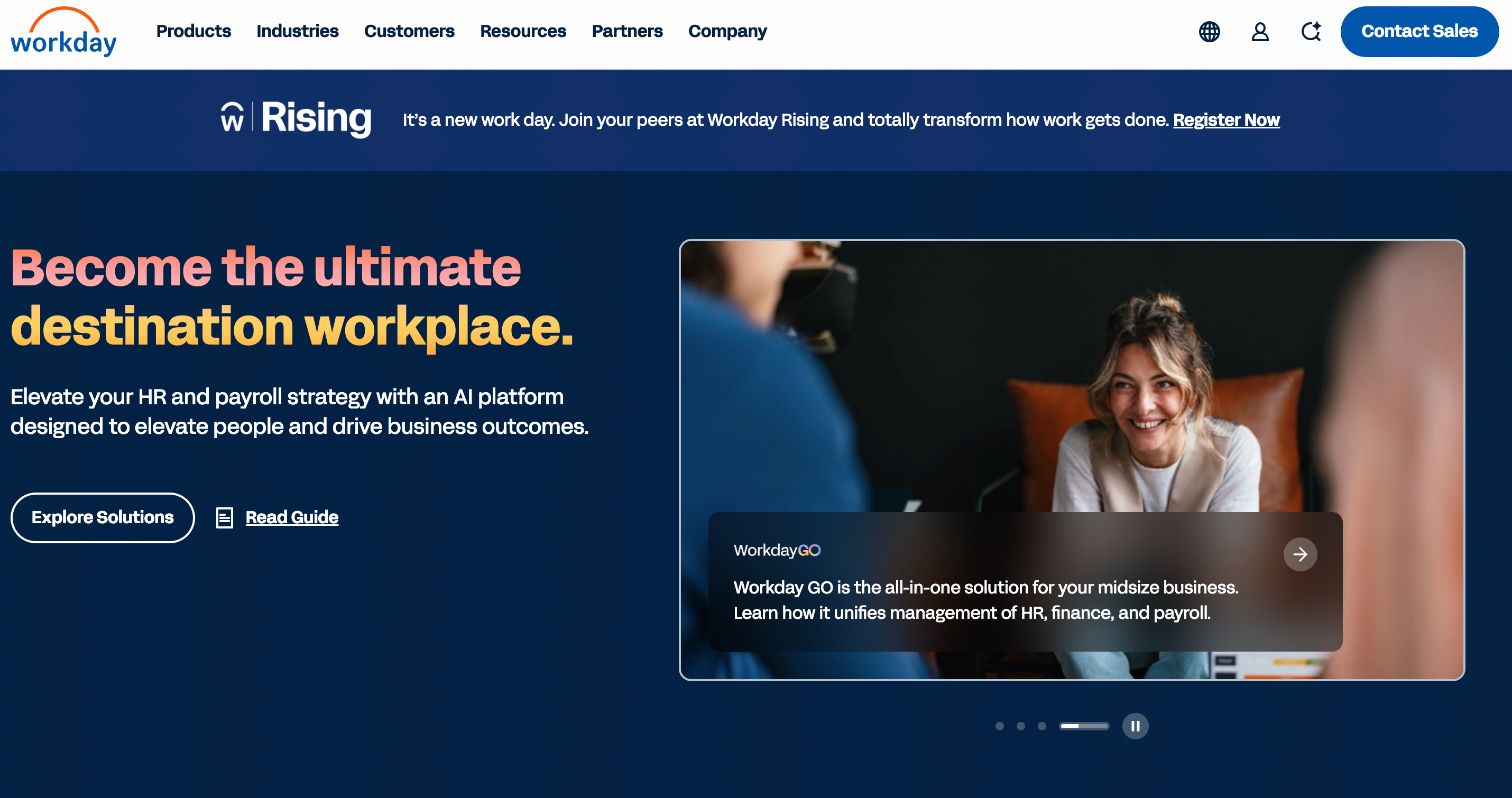
Workday AI represents the artificial intelligence capabilities embedded directly into the Workday HCM ecosystem. It helps enterprise organizations automate payroll, time tracking, and talent management.
Key Features
Predictive forecasting for workforce planning.
Anomaly detection in payroll and compensation.
Personalized learning and career journey recommendations.
Pros
Native integration if you already use Workday.
Enterprise-grade security and compliance.
Cons
Very high cost of entry.
Steep learning curve for custom report generation.
Pricing
Contact sales.
4. HireVue
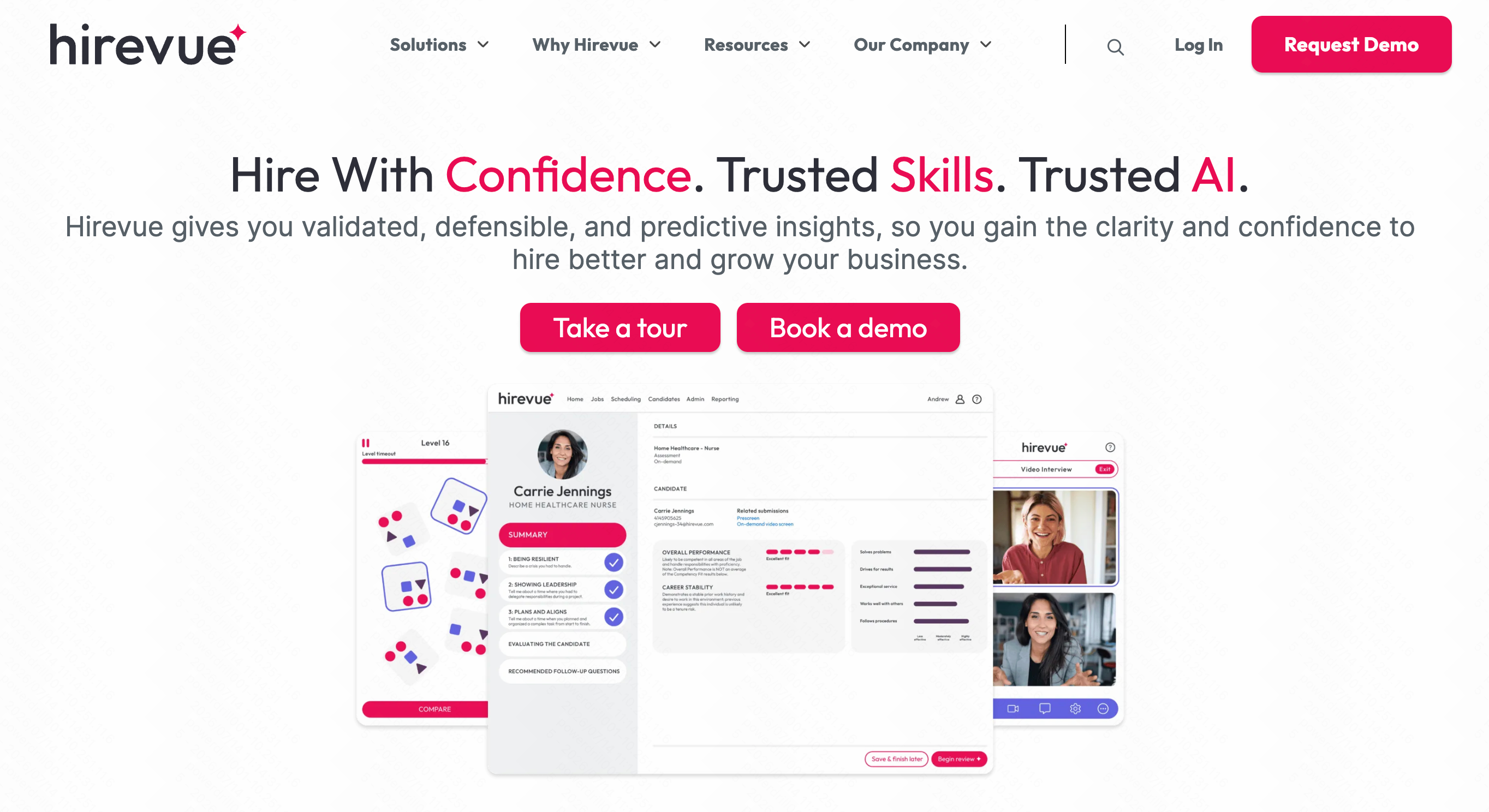
HireVue uses AI to revolutionize the interviewing process. By utilizing conversational AI and structured video interviews, it helps talent acquisition teams screen candidates faster and more consistently.
Key Features
On-demand video interviewing with AI assessments.
Conversational AI for automated interview scheduling.
Pre-hire coding and cognitive assessments.
Pros
Drastically reduces time-to-hire.
Standardizes the initial screening process.
Cons
Some candidates experience "video interview anxiety."
Algorithmic assessments require constant monitoring for fairness.
Pricing
Custom pricing.
5. Textio
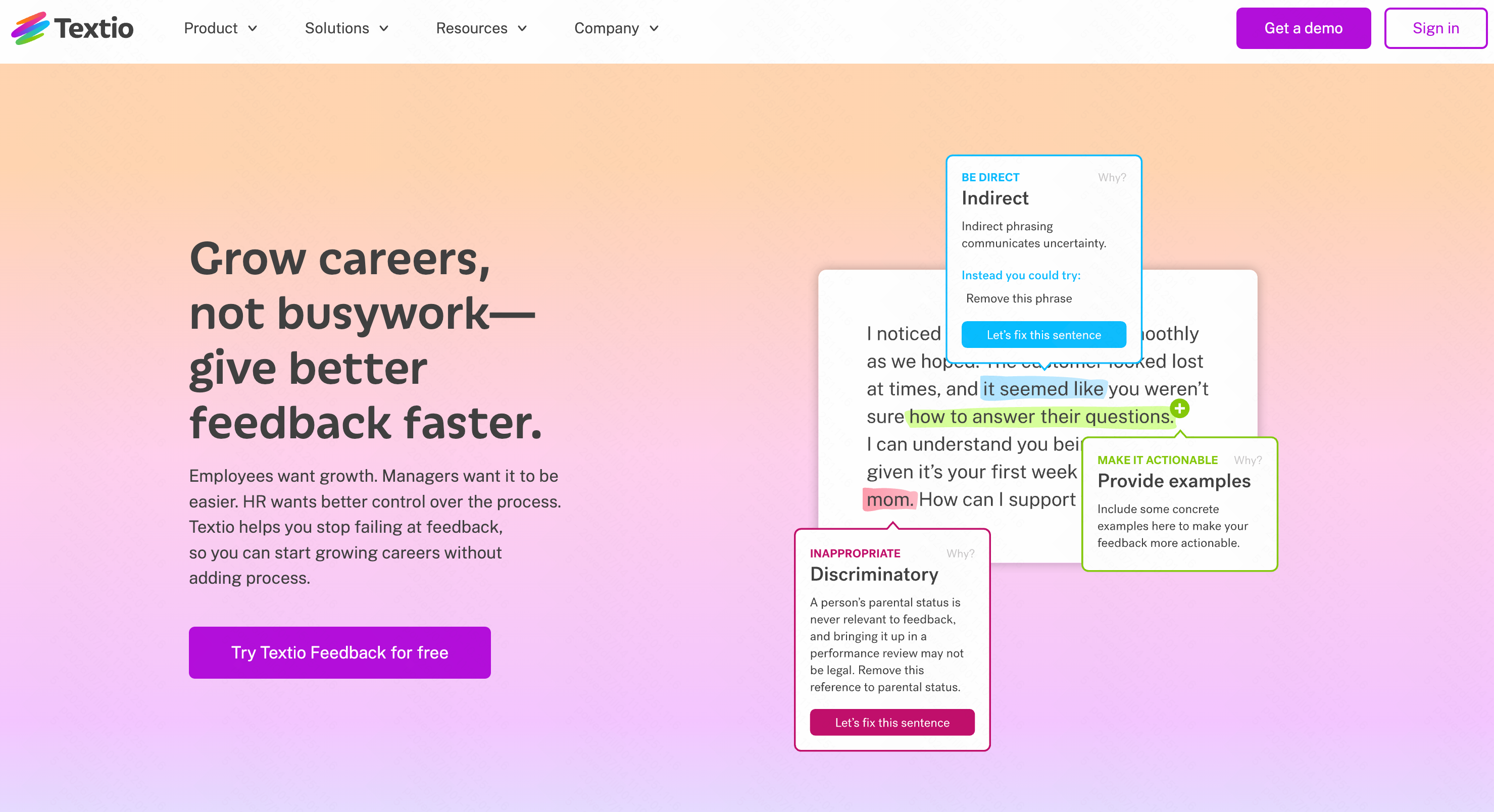
Textio is an augmented writing tool dedicated to helping HR teams write inclusive, compelling, and unbiased job descriptions and performance reviews.
Key Features
Real-time bias detection in job postings.
Inclusive language scoring and suggestions.
Actionable guidance for managers writing performance reviews.
Pros
Directly improves diversity and inclusion metrics.
Very intuitive and easy to use.
Cons
Strictly limited to text analysis.
A bit pricey for a single-use tool.
Pricing
Custom enterprise pricing.
6. Phenom
Phenom is a comprehensive talent experience management platform. It uses AI to personalize the journey for candidates, employees, recruiters, and hiring managers alike.
Key Features
Hyper-personalized career sites.
AI-driven CRM (Candidate Relationship Management).
Internal talent marketplace for employee growth.
Pros
Creates a world-class candidate experience.
Excellent tools for proactive recruiting.
Cons
Feature bloat can make navigation confusing.
Long deployment timelines.
Pricing
Custom pricing based on modules selected.
7. Beamery
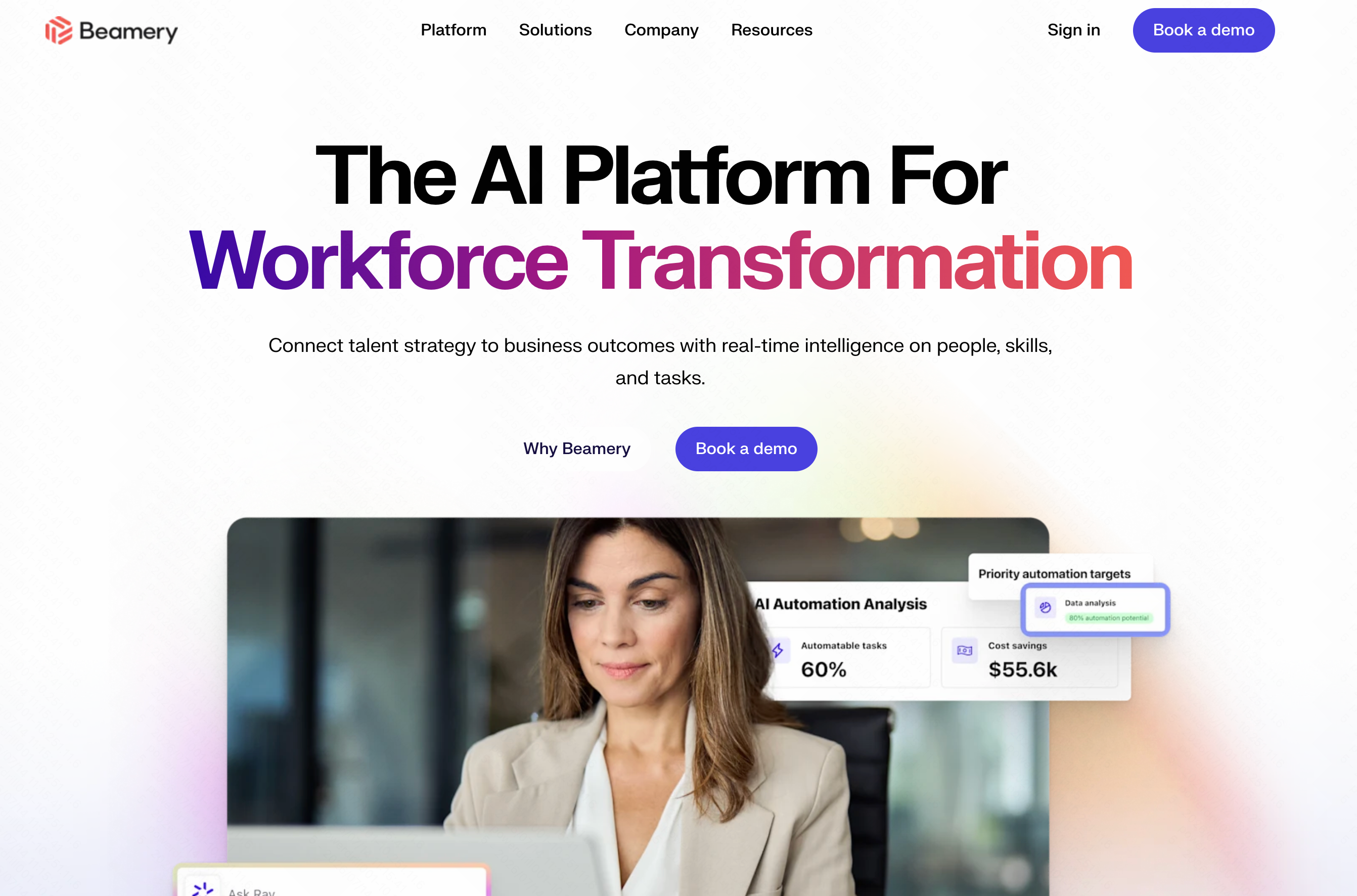
Beamery is a Talent Lifecycle Management platform that uses AI to help recruiters proactively build talent pipelines and engage passive candidates before a role even opens.
Key Features
Automated talent pipelining and nurturing.
AI-driven skills analysis of passive candidates.
Alumni and candidate engagement campaigns.
Pros
Incredible for high-level executive search and sourcing.
Strong integrations with major ATS platforms.
Cons
Requires dedicated sourcing teams to maximize value.
Premium pricing tier.
Pricing
Custom enterprise pricing.
8. Leena AI
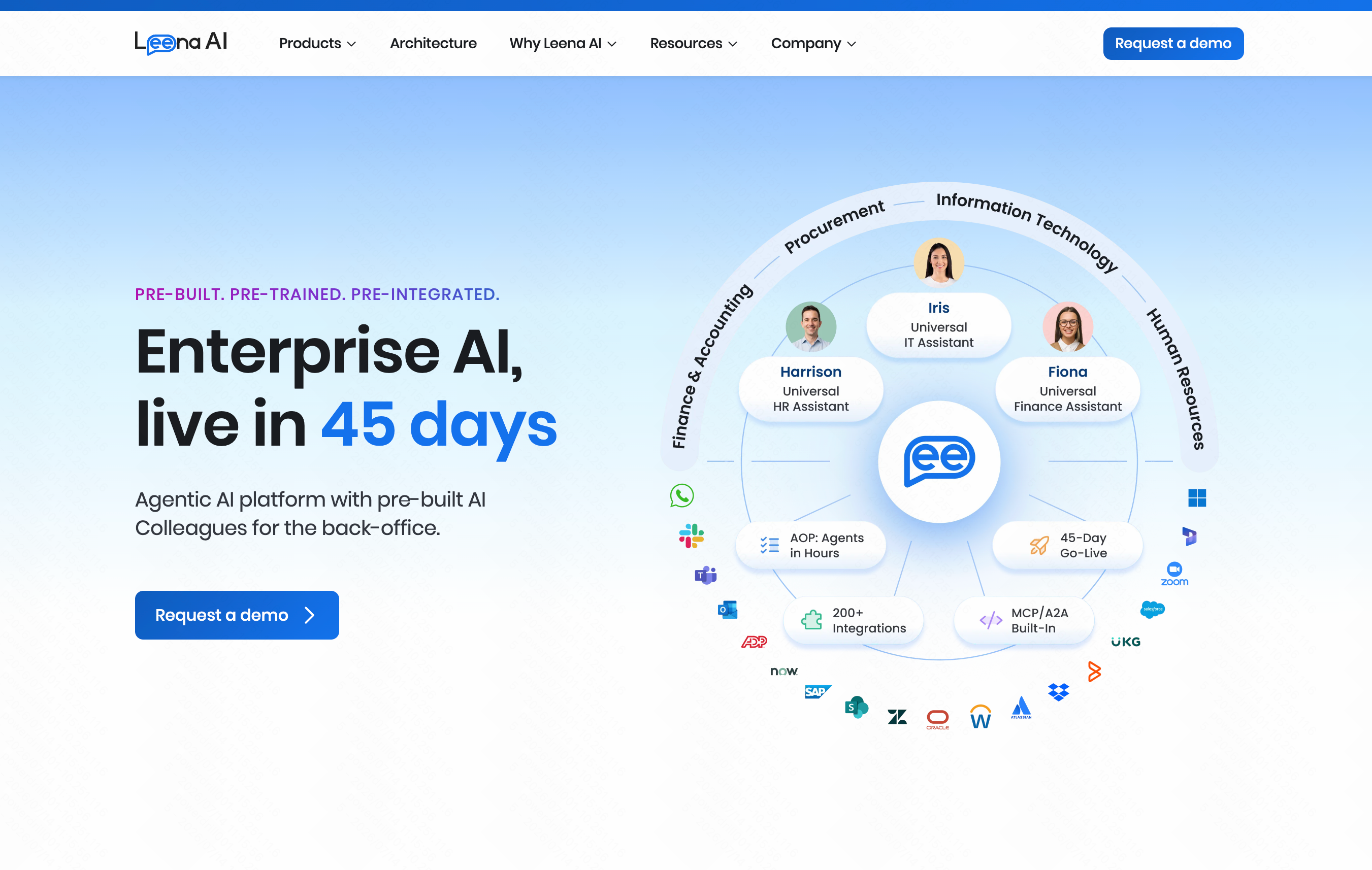
Leena AI acts as an autonomous conversational HR helpdesk. It integrates into platforms like Slack or Teams to answer routine employee questions, freeing up HR staff for strategic work.
Key Features
Automated ticket resolution for HR and IT.
Conversational employee engagement surveys.
Multi-channel support (Slack, Teams, WhatsApp).
Pros
Massively reduces administrative HR workload.
Provides 24/7 instant support for employees.
Cons
Occasionally struggles with highly nuanced or complex queries.
Requires ongoing training of the knowledge base.
Pricing
Custom quote based on overall employee count.
9. Fetcher
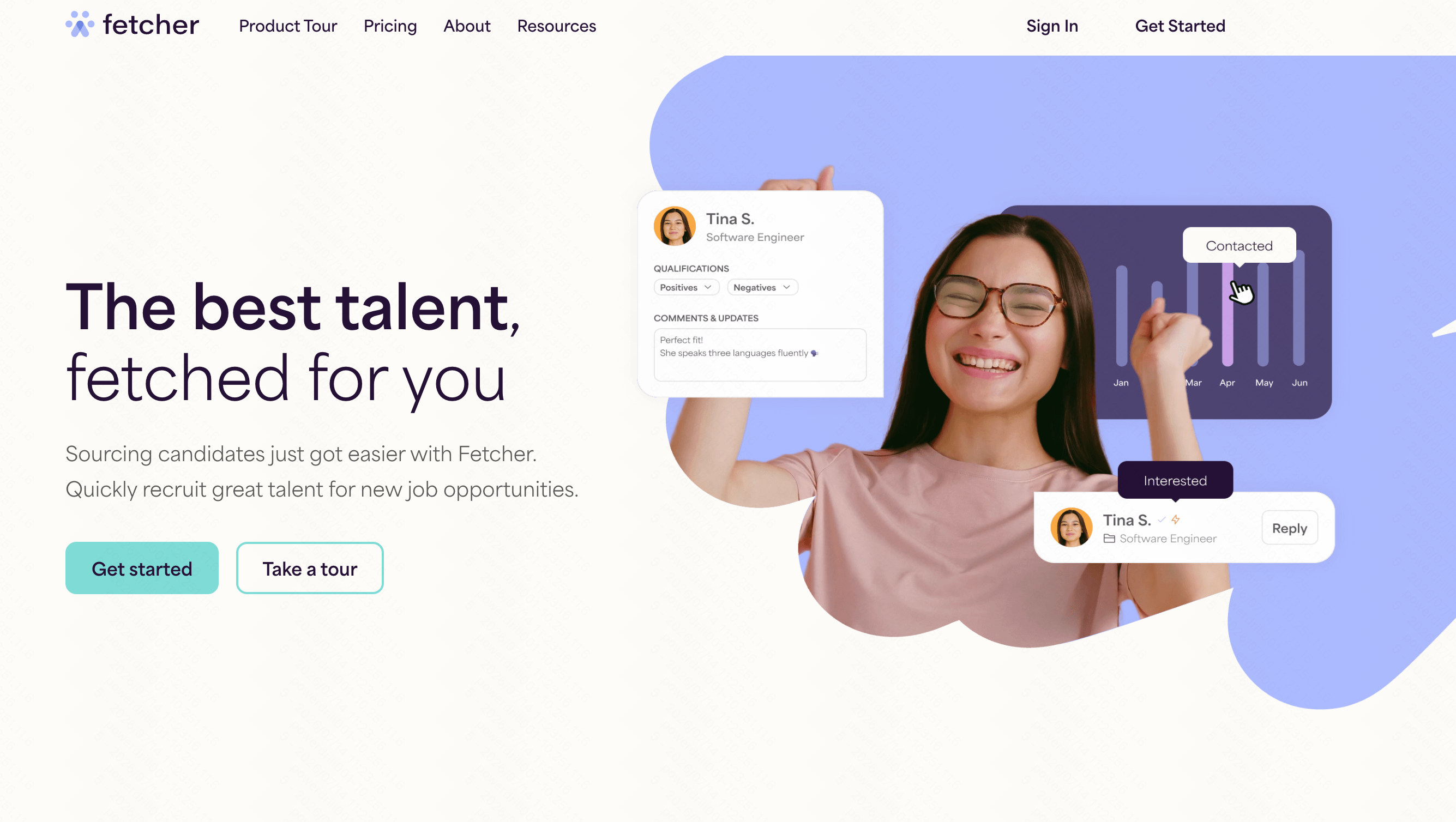
Fetcher automates outbound recruiting. It uses AI to scrape networks like LinkedIn, find candidates that match your criteria, and automate personalized email outreach sequences.
Key Features
Automated candidate sourcing and batching.
Personalized, multi-touch email campaigns.
Analytics on outreach performance and diversity.
Pros
Saves recruiters countless hours of manual sourcing.
High response rates due to smart personalization.
Cons
Customization of the AI search parameters can feel limited.
Relies heavily on external platform data accuracy.
Pricing
Self-serve starts at $115/month.
10. Visier
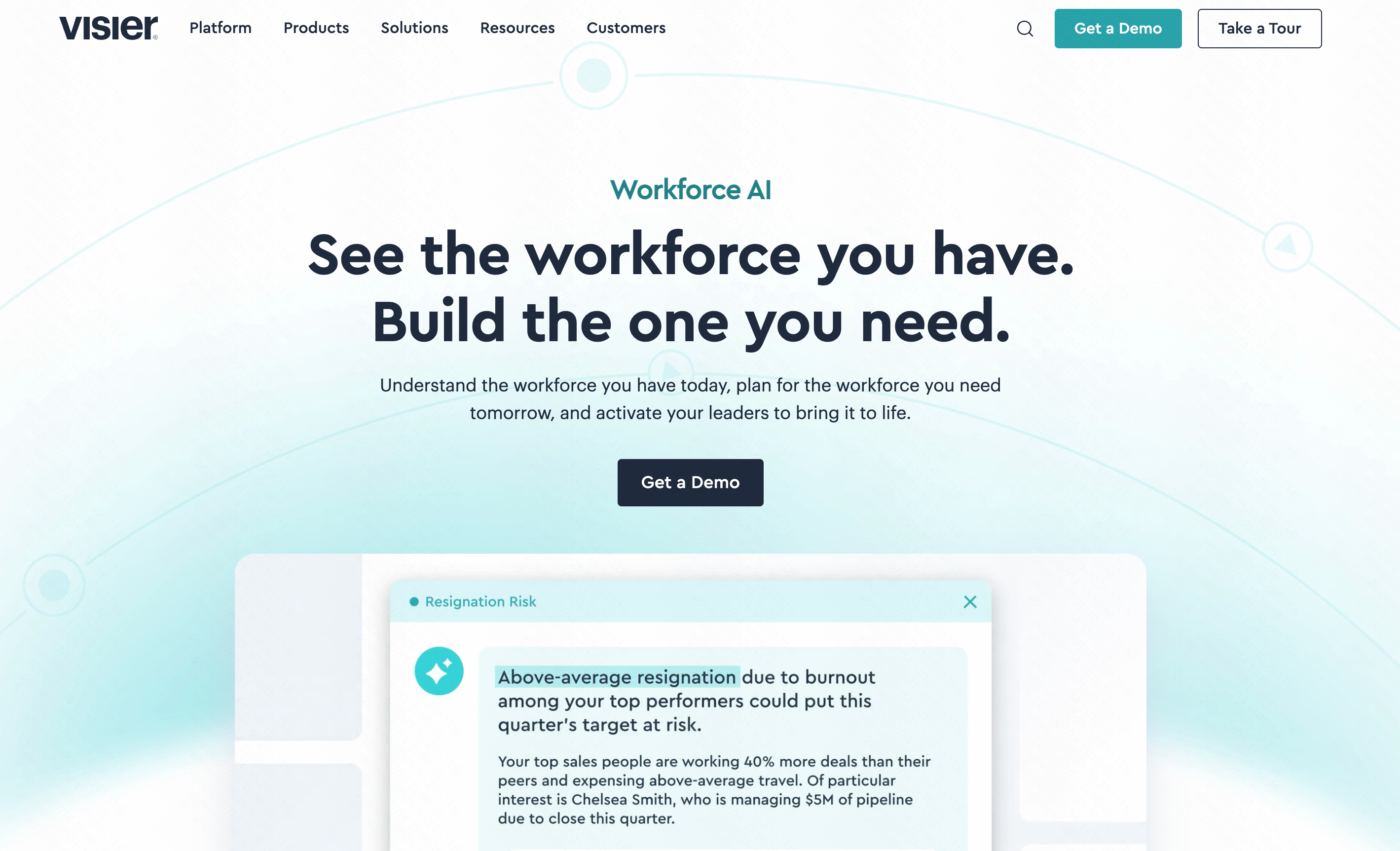
Visier is a heavyweight in the dedicated people analytics space. It pulls data from all your HR systems to provide enterprise-level workforce insights and predictive analytics.
Key Features
Thousands of pre-built HR metric visualizations.
Predictive modeling for employee flight risks.
Strategic headcount and compensation planning.
Pros
Offers incredibly deep and granular HR analytics.
Beautiful, interactive dashboards.
Cons
Requires extremely clean, organized data to be effective.
High learning curve for non-technical HR staff.
Pricing
Custom enterprise pricing.
11. Paradox (Olivia)
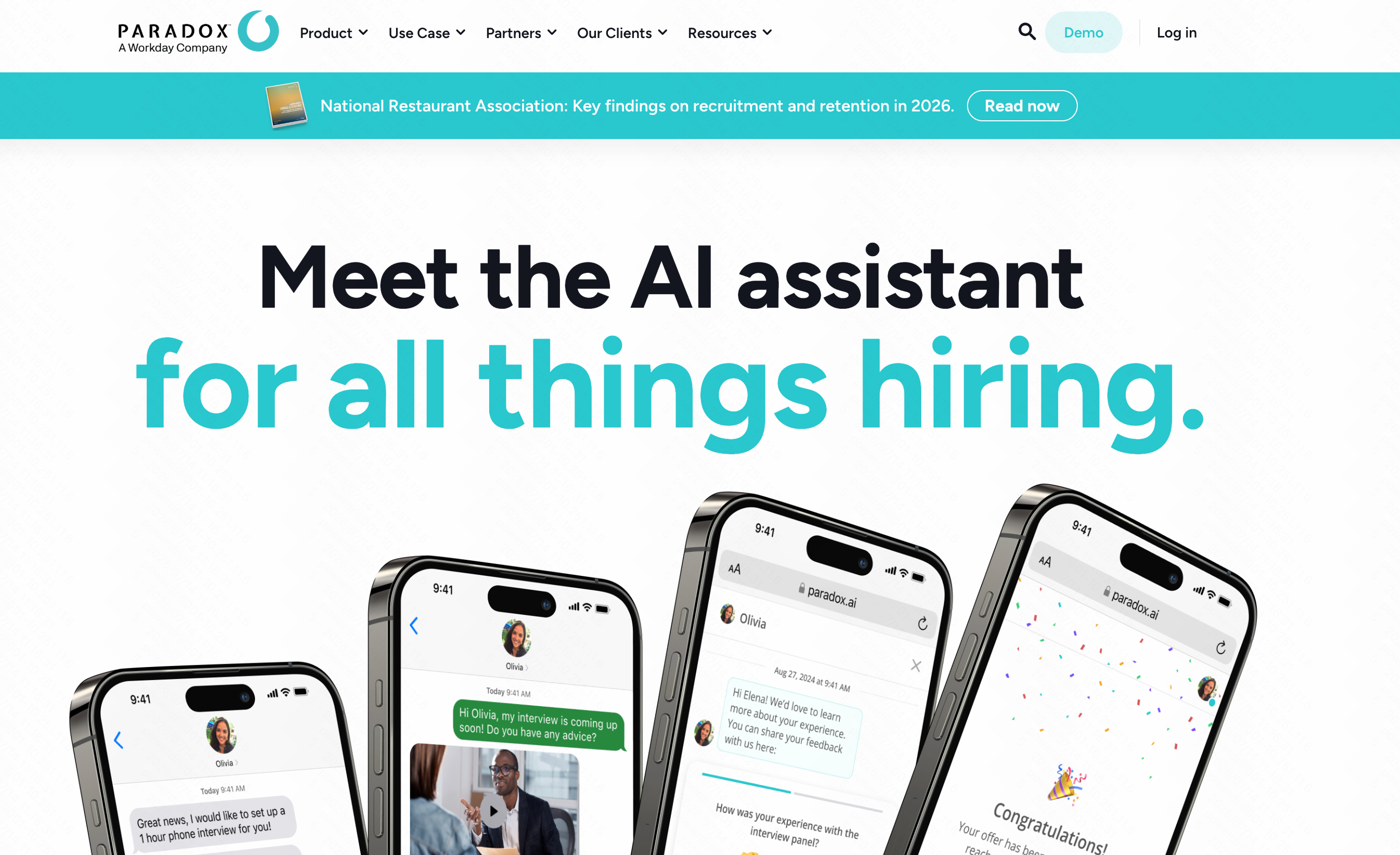
Paradox, driven by its AI assistant "Olivia," is a conversational recruiting software that excels at high-volume, hourly-wage hiring by engaging candidates via SMS and chat.
Key Features
Automated candidate screening via text message.
Instant, automated interview scheduling.
Onboarding document collection via chat.
Pros
Phenomenal mobile-first candidate experience.
Dramatically speeds up high-volume retail or hospitality hiring.
Cons
Less effective for highly technical or senior executive roles.
Can feel impersonal for certain candidates.
Pricing
Custom pricing based on usage and locations.
What to Know Before Adopting AI Tools in HR
Data Privacy & Security: Ensure the AI tool complies with GDPR, CCPA, and your local data protection laws. HR data is highly sensitive.
Algorithmic Bias: AI learns from historical data. You must audit your tools regularly to ensure they aren't replicating past human biases in hiring or promotions.
Change Management: Introducing AI is a cultural shift. Prepare training programs to help your HR team adapt to working with AI rather than feeling replaced by it.
Data Quality: AI is only as good as the data you feed it. Ensure your existing HR records are clean and standardized before deployment.
How to choose the best AI tools for HR
Identify Your Core Pain Point: Are you struggling with sourcing candidates, answering employee questions, or analyzing data? Choose a tool built specifically for your biggest bottleneck.
Integration Capabilities: The best tool should connect effortlessly to your existing ATS, HCM, or communication channels (like Slack/Teams).
Analytics and Reporting Power: While legacy platforms like Visier offer deep enterprise metrics, they are often rigid and complex. We highly recommend Powerdrill Bloom for analytics because it flexes to your needs. It instantly turns your raw files into visual insights and one-click presentation decks, making it vastly superior for agile HR teams.
Time-to-Value & Usability: Avoid tools that require a computer science degree to operate. Powerdrill Bloom, for example, requires zero coding and uses persistent Workspaces to remember your workflow, ensuring you get a return on investment on day one.
Conclusion
The landscape of HR is evolving rapidly, and embracing AI is no longer optional for teams that want to stay competitive. From talent sourcing to employee retention, these 11 tools cover the entire spectrum of human resources. However, if your primary goal is to actually get work done—analyzing employee data, understanding trends, and communicating those findings seamlessly—you need an agent that does the heavy lifting.
Powerdrill Bloom stands out as the ultimate HR companion. By turning raw data into charts and one-click presentation decks without any coding, Powerdrill Bloom enables you to focus on what really matters: your people. Try it today to revolutionize your people analytics workflow.
FAQs
What is the best AI tool for People Analytics?
Powerdrill Bloom is the top choice, instantly turning raw workforce data into actionable insights and presentation decks.
Can AI help with HR presentations?
Yes! Powerdrill Bloom automatically transforms complex HR spreadsheets into stunning, one-click presentation decks completely effortlessly.
Is coding required for HR AI tools?
Not at all. Tools like Powerdrill Bloom are designed with a strict no-code interface for everyday HR professionals.
How does AI improve employee retention?
AI analyzes survey data to predict turnover. Powerdrill Bloom excels at highlighting these retention trends visually and accurately.
What makes Powerdrill Bloom unique for HR?
Its persistent Workspaces remember your HR files, using specialized skills to execute tasks, build charts, and deliver presentations instantly.