Data Fact: The Competitive Landscape of the Global AI Video and Image Generation Market (2026 Report)
TL;DR — The AI Visual Boom in 5 Numbers
The generative AI visual market went from experimental research to industrial-grade production pipelines in record time. Here is the state of the market in five figures:
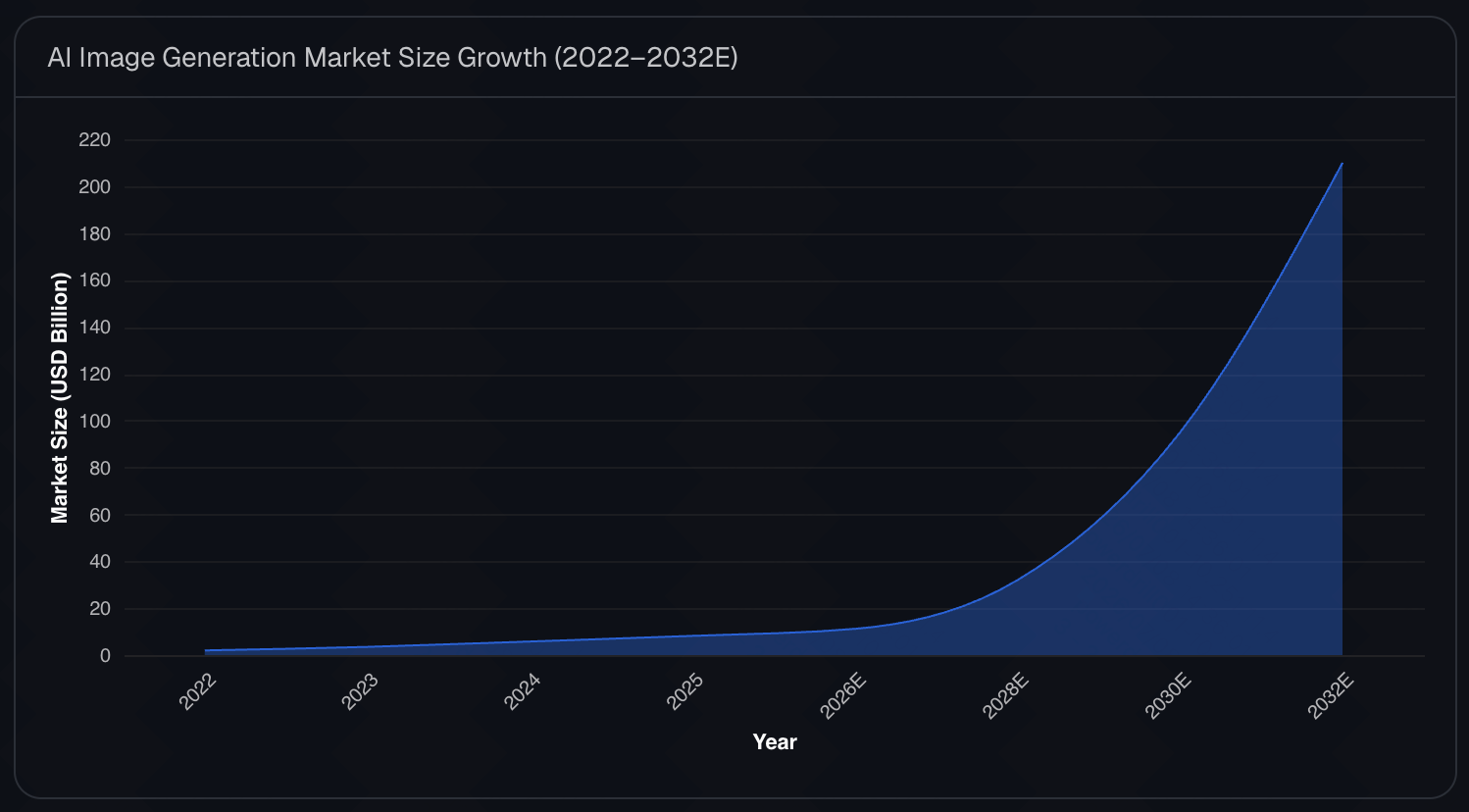
- $67 Billion: The overall generative AI market size in 2026 — up 8.4x since 2022.
- 14 Billion+: The cumulative number of AI images generated since 2022.
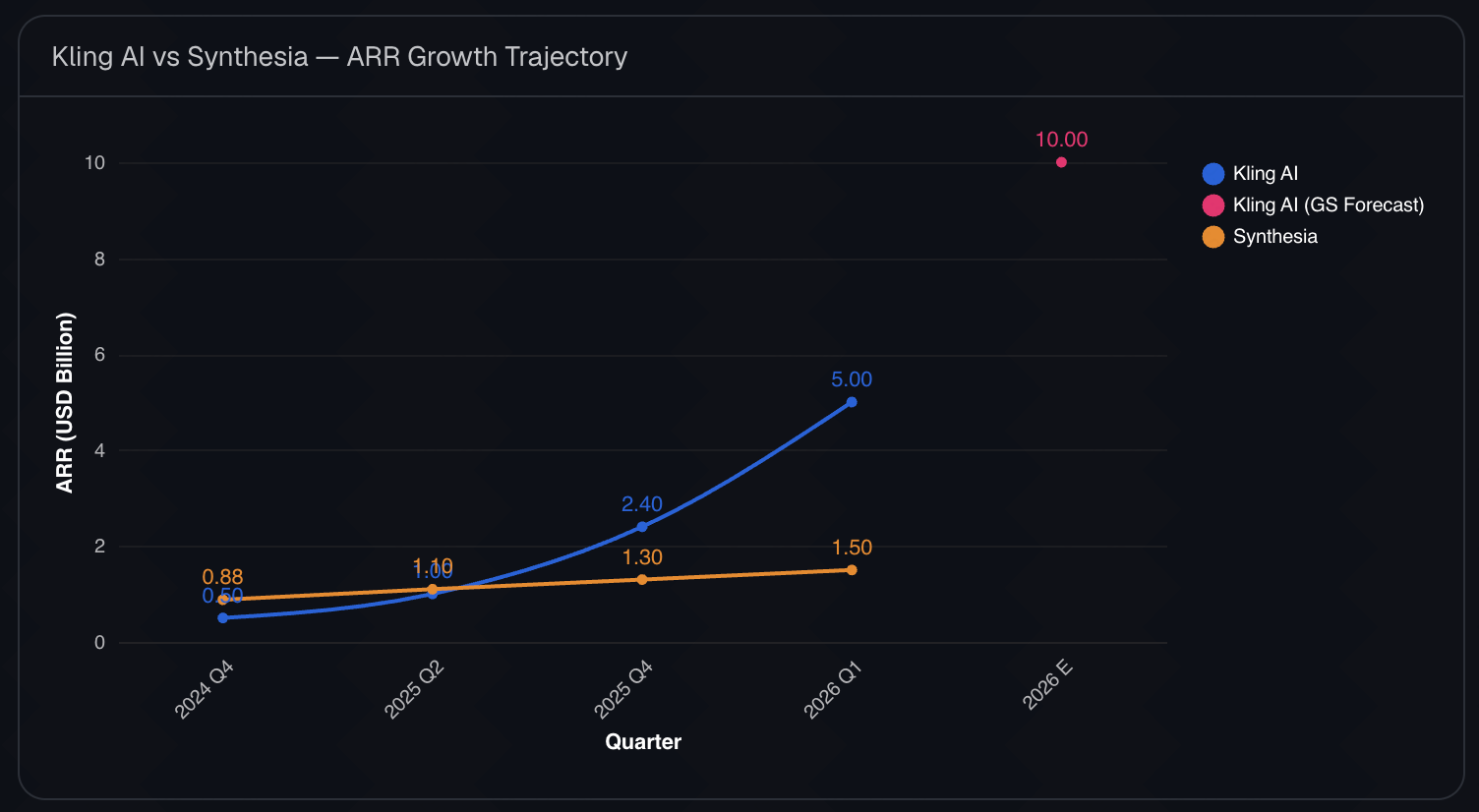
- ~30%: The estimated global video generation market share captured by Kuaishou's Kling AI.
- $15 Million: The daily inference cost that led to the sudden shutdown of OpenAI's Sora in March 2026 (against just $2.1M in lifetime revenue).
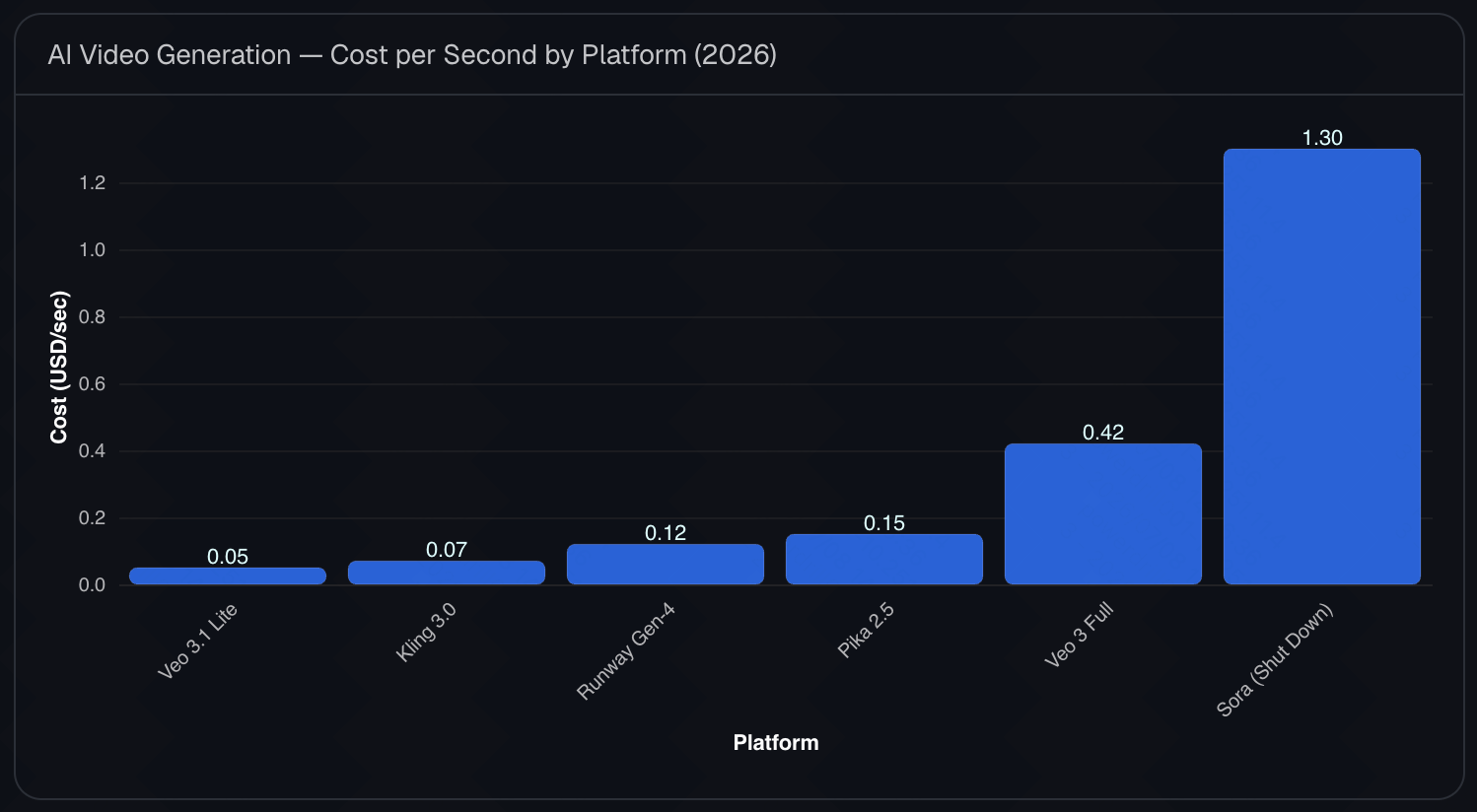
- $0.05/s: The new aggressive price floor for AI video generation, set by Google Veo 3.1 Lite.
The short version: the AI visual revolution is no longer just about who has the smartest model. It is about sustainable unit economics, specialized workflows, and enterprise integration.
A Little Background
Just a few years ago, AI image generation was a novelty of blurry faces, and AI video was limited to surreal, morphing three-second loops. The conversation was about "if" AI could ever reach production quality.
That question is settled. Between 2022 and 2026, the market exploded and subsequently matured. We transitioned from a single "model arms race" into a highly competitive, specialized landscape. Text-to-video capabilities achieved cinematic consistency, while image generation split into highly distinct lanes based on use cases like commercial safety and typography. To see exactly how this ecosystem evolved, we pulled the numbers together and let the data tell the story.
About the Dataset
This report draws on comprehensive 2025–2026 market data covering overall generative AI market size, video/image sector valuations, platform pricing, and performance benchmarks. Sources include Grand View Research, Fortune Business Insights, Goldman Sachs, Bloomberg, PitchBook, and more. Figures are approximate and rounded for readability.
About the Tool
Every chart in this report was generated with Powerdrill Bloom, an AI-first data analysis agent. We uploaded the raw market spreadsheets, and Bloom cleaned the data, suggested exploration paths, and produced the charts below automatically — no SQL, no Python, no manual formatting. If you want to explore the same data yourself, try our AI data visualization tool.
Key Takeaways
- The GenAI market is massive and accelerating. The 2026 generative AI market hit ~$67 billion and is projected to reach $1.3 trillion by 2032 (a 36% CAGR).
- Video generation is stratifying into four tiers. The market is now divided by Quality (Runway Gen-4), Cost Efficiency (Kling 3.0), Ecosystem (Google Veo 3.1), and Creative Effects (Pika 2.5).
- Sora proved consumer pay-per-video is tough. OpenAI's Sora shut down after just 6 months. At a cost of ~$1.30 per 10-second clip, the consumer subscription model was fundamentally unsustainable.
- Images have specialized. There is no "winner-takes-all" in images. Midjourney rules aesthetics, FLUX.2 dominates open-source production (with 97% text accuracy), and Adobe Firefly leads in commercial safety.
- Prices are plummeting. The AI video price floor dropped to $0.05 per second, while image generation fell to as low as 0.006-0.06 per image.
The Global AI Visual Market: The Full Data Breakdown
Q1: How is the AI video generation market structured after Sora's exit?
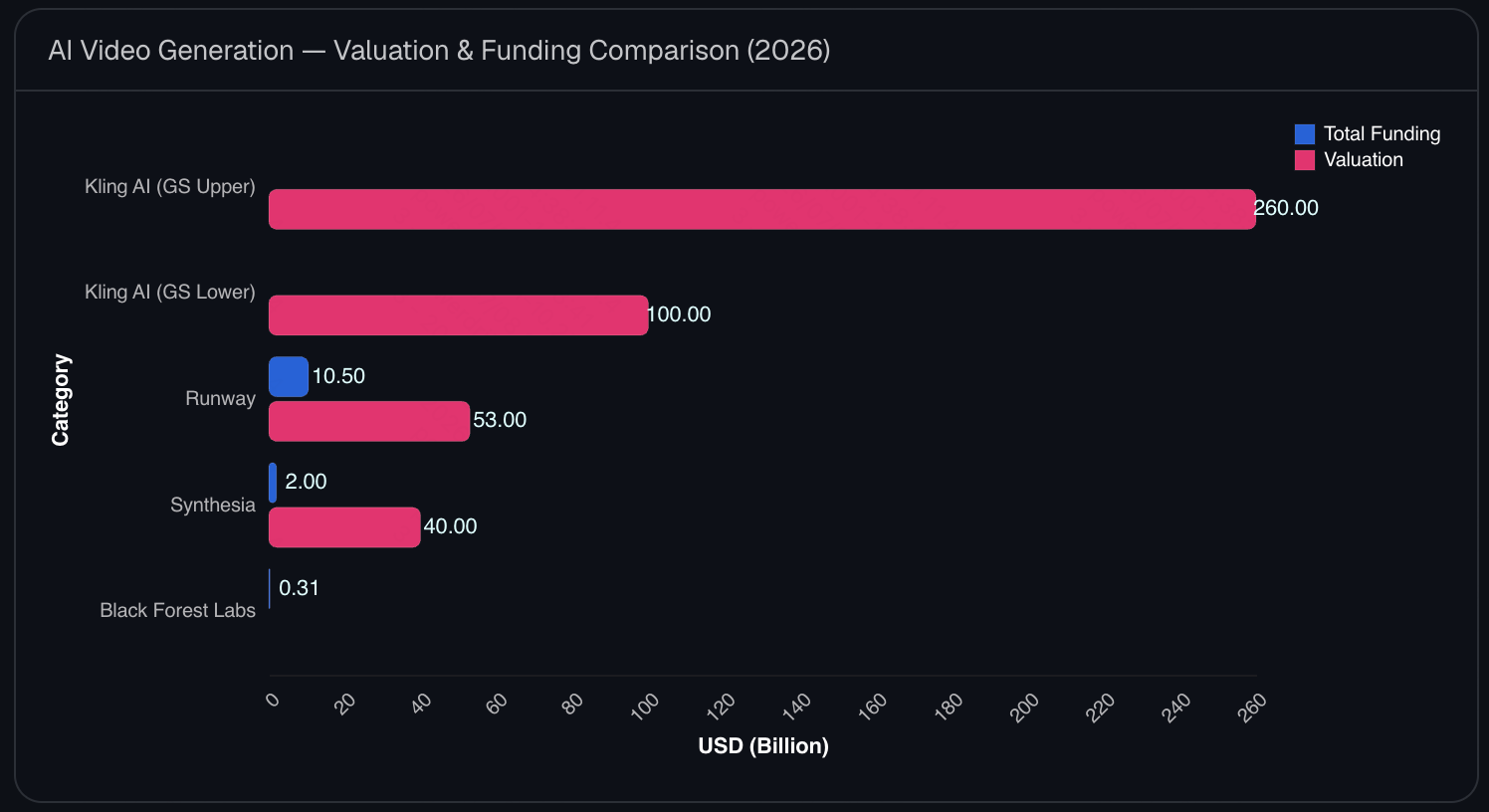
Following Sora's high-profile shutdown in March 2026, the market rapidly restructured into four distinct tiers. Runway Gen-4 (~$0.12/s) leads the "Quality First" tier with industry-best character consistency, while Kuaishou's Kling AI 3.0 (~$0.07/s) dominates the "Cost Efficiency" category, capturing roughly 30% of global generation volume and rocketing toward a $1B ARR. Google Veo 3.1 anchors the "Ecosystem Platform" tier, driving base prices down to $0.05/s. Meanwhile, enterprise leaders like Synthesia (valued at $4B) continues to dominate the corporate avatar space with $150M ARR.
Q2: What is the competitive landscape for AI image generation?
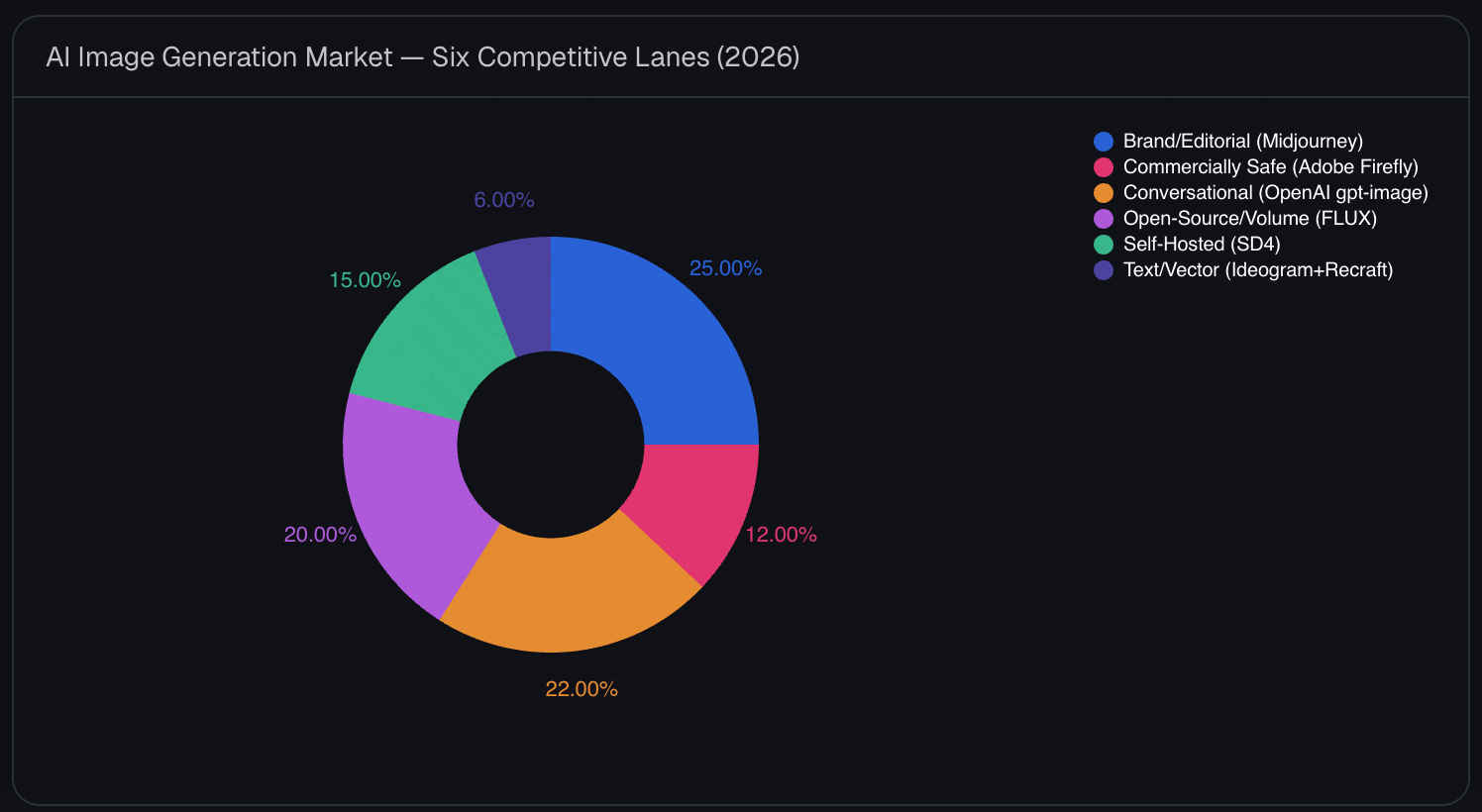
Unlike video, the image generation market hasn't consolidated—it has fractured into six highly specialized lanes. Midjourney v7 remains the aesthetic king (scoring 9.7/10 for abstract concepts). FLUX.2 by Black Forest Labs has replaced Stable Diffusion as the default open-source workhorse. Adobe Firefly 4 is the default for commercial safety due to zero copyright risk. Other lanes include Ideogram 3.0 for typography, Recraft V3 for vector illustrations, and OpenAI for casual chat-based generation.
Q3: How are enterprises adapting to this fragmented ecosystem?
Instead of relying on a single platform, leading agencies and enterprises in 2026 use a dynamic "multi-tool stack." For images, a typical 50-80 monthly stack includes Midjourney for core brand imagery, FLUX.2 for mass production/fine-tuning, and Adobe for safe generative fill. For video, they route API calls dynamically: Runway for high-end brand content, Kling for volume production, and Pika for social experiments. The ecosystem rewards specialization.
What This Means for Businesses and Analysts
The true AI visual revolution isn't about one tool ruling everything—it's about a mature ecosystem providing the right tool for every use case and budget.
For creators and enterprises, the strategy must shift from chasing the "best" general model to building specialized, multi-tool workflows.
For investors, Sora's failure and Kling's explosive rise prove that the market is moving away from raw model arms races. The future belongs to platforms that can master verticalized applications, sustainable unit economics, and deep enterprise workflow integration.
What This Means for Everyday Users
The rapid evolution of AI video and image generation is changing more than just the tech industry—it is reshaping how ordinary people create, learn, and communicate.
For content creators, producing professional-quality videos, marketing assets, and social media posts no longer requires expensive software or advanced editing skills. A single prompt can generate visuals that once took hours or even days to produce.
For students and educators, AI makes it easier to create presentations, explain complex ideas visually, and develop engaging learning materials without specialized design experience.
For small businesses and freelancers, affordable AI tools lower the barrier to producing advertisements, product images, promotional videos, and branded content, allowing them to compete with much larger organizations.
At the same time, the growing number of specialized AI tools means users will increasingly choose different platforms for different tasks rather than relying on a single "all-in-one" model. The future of AI creativity is likely to be defined by workflows, not individual applications.
The Bigger Picture
The competition is no longer about who has the biggest model. It is about who can deliver the fastest workflow, the best user experience, and the highest return on investment.
As AI video and image generation become everyday productivity tools, the biggest winners may not be the companies with the most advanced models, but those that integrate AI seamlessly into real-world work—from marketing and education to e-commerce, software development, and enterprise operations.
For users, this means lower costs, faster content creation, and more creative freedom. For businesses, it means AI is rapidly shifting from an experimental technology to a core part of daily operations.
How We Made These Charts (in Minutes)
You don't need a data team or coding skills to create a report like this. Here's the workflow we used:
- Start from a Skill or Topic. We selected a market analysis skill in Powerdrill Bloom and entered the topic "Global AI Video & Image Generation Market." Bloom automatically gathered relevant information, structured the analysis, and suggested key metrics and visualizations.
- Generate insights automatically. Bloom identified the most important trends—such as market positioning, pricing, funding, and competitive strengths—and turned them into presentation-ready charts with AI.
- Export to PowerPoint. Once the analysis was complete, we exported the entire canvas into a polished slide deck with a single click.
Prefer to analyze your own data instead? Simply Upload Your Data by importing a CSV or Excel file, and Powerdrill Bloom will automatically clean, analyze, and visualize your dataset using the same workflow.
No SQL. No Python. No manual chart building. Just AI-powered analysis from idea—or data—to presentation in minutes.
FAQ
What caused OpenAI's Sora to shut down?
Sora shut down in March 2026 because of unsustainable economics—it faced $15 million in daily inference costs but only generated $2.1 million in lifetime revenue.
Which AI video platform is the most cost-effective?
Google Veo 3.1 offers the lowest market price at approximately $0.05 per second for its Lite tier, while Kling AI 3.0 delivers exceptional overall cost efficiency at around $0.07 per second.
What is the best AI image generator right now?
It depends on the task. Midjourney v7 is best for aesthetics, FLUX.2 is top for text accuracy and open-source production, and Adobe Firefly is best for commercial safety.
How much is the generative AI market worth?
In 2026, the global generative AI market is valued at approximately $67 billion and is projected to skyrocket to $1.3 trillion by 2032.
Can I analyze my own AI market data easily?
Yes. By uploading your CSV or Excel files to Powerdrill Bloom, you can instantly clean data, build charts, and export slide decks with zero coding required.
A Wrap-Up
The competitive landscape of the global AI video and image generation market shows a sector rapidly maturing from hype to hardcore utility. With production costs falling and platforms specializing, the barrier to cinematic and professional-grade content is lower than ever. The interesting questions now are about workflow integration, legal compliance, and business models, not basic capabilities.
Curious what your data is hiding? Upload it to Powerdrill Bloom and let the charts tell the story.