How to Make an Expense Report: Complete Guide
Most expense reports are written the week they are due, not the week the money was spent. That single habit is the source of nearly every problem that follows. The missing receipt, the hotel bill nobody split correctly, the line item labelled "client dinner" with no client named: all of it starts there.
The fix is not a better template. It is understanding what an expense record has to prove, and then building the report so it proves it.
This guide covers what belongs in an expense report and what the IRS treats as an adequate record. It also shows how to assemble one from receipts you already have, and how to handle the bill that mixes three categories into one charge.
What an expense report is
An expense report lists business costs someone paid personally, with evidence attached. Its purpose is to let an employer reimburse them, or a business deduct them.
It serves two audiences at once, and that is why it is harder than it looks. Your finance team reads it to decide whether to pay you. A tax authority, if it ever looks, reads it to decide whether the expense was genuinely a business one. The second reader is more demanding, and writing for that reader satisfies both.
The document itself is usually a table. One row per expense, columns for the facts about that expense, receipts attached or referenced, and a total.
What an expense report must contain
Whatever template you use, a complete row answers five questions about each expense.
- Date — when the cost was incurred, not when you are filing
- Amount — the exact figure, in the currency paid
- Category — travel, meals, lodging, transportation, supplies, and so on
- Business purpose — why this cost existed, in a sentence a stranger can follow
- Business relationship — for meals and entertainment, who was present and their relationship to the business
Beyond the rows, the report itself needs the employee's name, the period covered and a total. It also needs any advance or company-card amounts already paid, so the net reimbursement is unambiguous.
The business purpose column is the one people fill in last and worst. "Lunch" is not a purpose. "Lunch with the regional distributor to review Q3 order volumes" is.
The test is simple. Read the line as though you had no memory of the trip. If it does not explain why the company should bear the cost, it is not finished. That standard costs about ten extra words per row and removes almost every follow-up question.
What the IRS considers an adequate record
If you are reporting business expenses in the United States, IRS Publication 463 sets out what proof is expected. It is worth reading the actual language, because it is more accommodating than most people assume in one respect and stricter in another.
Written records, including digital ones. The publication states that "you must generally prepare a written record for it to be considered adequate." It explains why: "written evidence is more reliable than oral evidence alone."
It then adds the line that matters for anyone using software. "If you prepare a record on a computer, it is considered an adequate record."
Documentary evidence. Separately from your own record, Publication 463 says "you must generally have documentary evidence such as receipts, canceled checks, or bills, to support your expenses." So the report and the receipts are two distinct requirements, not one.
Timeliness. This is the requirement most reports fail. The instruction is to "record the elements of an expense or of a business use at or near the time of the expense or use." The reason follows: "a timely kept record has more value than a statement prepared later when there is generally a lack of accurate recall."
There is useful latitude in how "timely" is read. A log maintained weekly "that accounts for use during the week" is, in the publication's words, "considered a timely kept record." Weekly is enough. Quarterly reconstruction is what causes trouble.
What you need before you start
Collect these before opening a template. An expense report assembled from memory is the kind Publication 463 describes as suffering from a lack of accurate recall.
Every receipt for the period, digital or paper. Your card statement for the same period, which is how you find the expenses whose receipts vanished. Your calendar, which supplies the business purpose and the attendee names for meals. Any per diem or advance amounts already received. And your employer's policy on limits and categories, since a compliant report that breaks internal policy still gets returned.
One more thing is worth having open: the previous period's report. Recurring expenses tend to recur, and last month's categories and purposes are a reliable template for this month's. It also surfaces anything that has quietly stopped appearing, which is sometimes a cancelled subscription nobody noticed.
How to make an expense report with AI
The slow part of an expense report is not the arithmetic. It is reading thirty receipts in five formats and pulling the same four facts out of each.
That extraction is where an AI workspace earns its place.
Step 1: Upload the receipts and the card statement together
Open Powerdrill Bloom and create a workspace for the reporting period. Upload the receipt images and PDFs, the card statement as a CSV or Excel export, and your existing expense template if you have one.

Uploading the statement alongside the receipts is the step people skip, and it is the one that catches omissions. The statement is a complete list of what you spent; the receipts are an incomplete list of what you can prove. Having both in one place turns "did I miss anything?" into a question that can be answered.
Step 2: Describe the report you need
Ask for the table in natural language and name your columns — date, amount, category, business purpose, and attendees where relevant.
Add two instructions that do most of the work. First, ask for any statement line without a matching receipt to be flagged. Second, ask for any receipt that mixes categories to be listed separately rather than assigned to one bucket. A hotel bill including meals is the usual case.
If your employer uses fixed category names, list them in the same instruction. Categories that match the finance system's dropdown save a full round of edits.
Step 3: Fill in purposes and export
The business purpose is the one field you have to supply yourself, because it lives in your memory rather than in the receipt. Work down the flagged rows and write it for each, pulling names and reasons from your calendar.
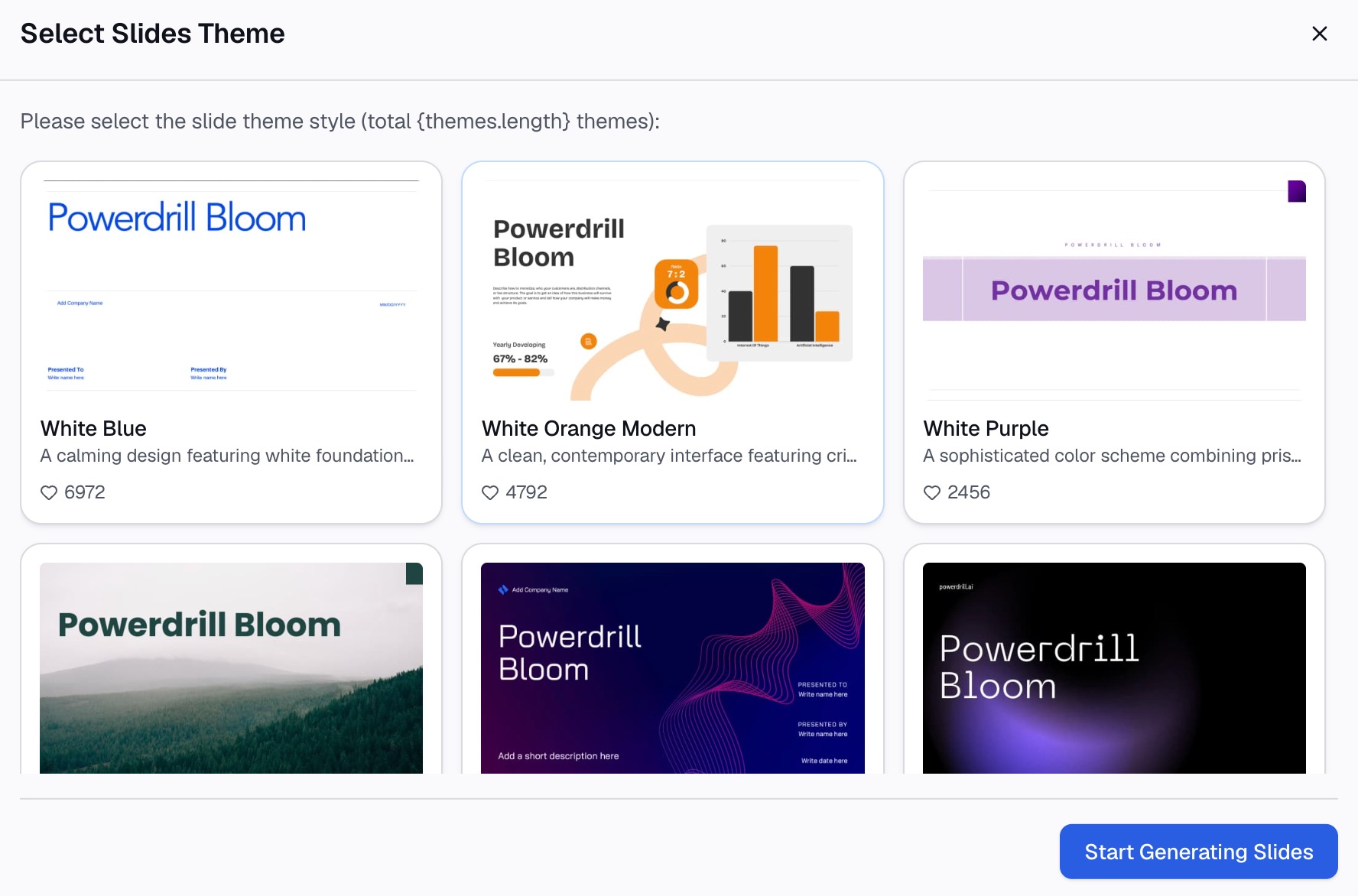
Then check the total against the reimbursement you expect, subtract any advances, and export to Excel or as a document. Each figure traces back to the receipt it came from, which is what makes the report defensible if anyone asks.
How to build one in Excel or Google Sheets
For a short trip, a spreadsheet is entirely reasonable.
Set up columns for date, category, description, business purpose, amount, payment method, and a receipt reference. The receipt reference column is what most templates omit. It is a simple number or filename linking each row to its evidence. Nobody then has to guess which of forty images belongs to row twelve.
Enter expenses chronologically rather than by category. Chronological order matches your card statement, which makes reconciliation a straight comparison instead of a search.
Add a subtotal per category above the grand total. Finance teams read category subtotals first, and providing them prevents a round-trip.
Keep the receipts in a single folder named for the period, with filenames that match your reference column. The report and the evidence should be findable together a year later.
Does your company reimburse in a different currency from the one you paid in? Add a column for the original amount and the rate you used. Converting silently makes the row impossible to check against the receipt. It is also the first thing a careful reviewer will query.
How to split a bill that mixes categories
A hotel invoice that includes dinner is the most common version of this, and Publication 463 addresses it directly.
The publication covers one expense that includes meals, entertainment and other services such as lodging or transportation. In that case you "must allocate that expense" between those categories.
The standard it sets for the split is that "you must have a reasonable basis for making this allocation." It gives the hotel-including-meals case as its own example.
Practically, that means using the invoice's own line items where they exist. A hotel folio usually itemizes room, tax, and restaurant charges separately, and those lines are your reasonable basis. Where the invoice gives one number, note how you arrived at the split. A menu price or a published per-night rate works, and the note should stay with the receipt.
The mistake to avoid is assigning the whole bill to whichever category is easiest to get approved.
How to make sure expense reports are accurate
Four checks catch most errors, and they take about ten minutes.
Reconcile against the statement, not against memory. Every line on the card statement for the period should either appear in the report or be identifiable as personal. Working from receipts alone guarantees omissions, because a lost receipt removes the expense from view entirely.
Check dates against the calendar. A meal dated on a day you were not travelling is either a wrong date or a wrong expense. Both are worth finding before someone else does.
Read the purpose column as a stranger. If a line does not explain itself to someone who was not there, it will generate a question. Rewrite it now rather than answering an email later.
Confirm the arithmetic against the reimbursement you expect. If the total surprises you, something is double-counted or an advance has not been subtracted.
Common mistakes
Filing late and reconstructing. Publication 463 is explicit that a timely record has more value than one prepared later. Weekly logging meets the standard and removes the reconstruction problem entirely.
Treating the receipt as the whole record. The receipt is documentary evidence. Your own record of date, amount, purpose and attendees is a separate requirement.
Vague business purposes. "Team meeting" survives no scrutiny. Name the people and the subject.
Assigning mixed bills to one category. A hotel bill including meals has to be allocated on a reasonable basis, and the invoice's own line items usually provide one.
Losing the link between report and receipt. A receipt reference column costs nothing to maintain and saves an afternoon during an audit.
FAQs
What is an expense report? It is a document listing business costs an individual paid personally, with date, amount, category and business purpose for each. Receipts support the entries, so an employer can reimburse them or a business can substantiate a deduction.
What does the IRS require for expense records? IRS Publication 463 describes keeping a written record of each expense, supported separately by documentary evidence such as receipts, canceled checks or bills. It also states that a record prepared on a computer is considered an adequate record.
How soon do I need to record an expense? Publication 463 advises recording the elements of an expense at or near the time it occurs. It also notes that a weekly log accounting for use during the week is considered a timely kept record.
How do I handle a hotel bill that includes meals? Publication 463 says you must allocate the expense between meals and other services, and that you must have a reasonable basis for the allocation. The invoice's own itemized lines are usually that basis.
Do expense reports need receipts for every item? Publication 463 states documentary evidence is generally required, and lists specific exceptions, including certain per diem arrangements accounted for under an accountable plan. Employer policy may be stricter than the tax rule.
Conclusion
An expense report is a proof document that happens to look like a spreadsheet. The rows that cause problems are never the ones with a clean receipt and a clear purpose. They are the reconstructed ones, the vague ones, and the mixed bills someone rounded into a single category.
Record as you go, keep the receipt reference beside every row, and split mixed invoices on a basis you can explain. That is most of the job.
Is the slow part turning a folder of receipts and a card statement into one reconciled table? Try Powerdrill Bloom free and upload both together.
Source: IRS Publication 463, Travel, Gift, and Car Expenses. This article is general information, not tax advice.