11 Best AI Tools for Retail Sales Analysis (2026 Picks)
The retail landscape in 2026 is moving faster than ever before. With consumer behaviors shifting rapidly, omnichannel shopping becoming the absolute norm, and supply chain complexities reaching new heights, relying on manual data analysis or outdated spreadsheets is no longer a viable business strategy. To thrive, modern retailers need a way to instantly understand their data, predict future trends, and execute strategies based on real-time insights.
Enter Artificial Intelligence. AI tools for retail sales analysis have evolved from complex enterprise luxuries into accessible, intuitive, and highly actionable workspaces. Whether you are managing a single boutique, scaling an e-commerce empire, or overseeing a massive global chain, AI can digest billions of data points to tell you exactly what is selling, who is buying, and how to optimize your revenue.
In this comprehensive guide, we will explore the 11 best AI tools for retail sales analysis in 2026, helping you navigate the market and find the perfect intelligent assistant to supercharge your retail growth.
What Is AI Retail Sales Analysis
AI retail sales analysisrefers to the application of artificial intelligence, machine learning, and natural language processing to evaluate, interpret, and optimize retail business data. Instead of merely showing you past results, AI actively works with your data to uncover hidden patterns.
Key characteristics include:
Automated Data Processing: AI can instantly clean, categorize, and synthesize massive amounts of raw sales data from various sources like Point of Sale (POS) systems, CRM software, and e-commerce platforms.
Predictive Modeling: It goes beyond historical data by forecasting future sales trends, identifying seasonal fluctuations before they happen, and anticipating shifts in consumer demand.
Natural Language Interaction: Modern AI allows non-technical retail managers to "talk" to their data, asking simple questions and receiving complex analytical reports in return.
Prescriptive Intelligence: Rather than just highlighting a drop in sales, true AI retail analysis suggests actionable solutions—like adjusting a price point or running a specific promotion—to fix the problem.
What Can AI Help You Analyze in Retail Sales
Using AI in your retail operations unlocks a 360-degree view of your business. Here is what AI can help you analyze:
Customer Behavior and Segmentation: AI analyzes purchase histories to group customers by buying habits, lifetime value, and preferences, allowing for hyper-personalized marketing campaigns.
Inventory Forecasting and Stock Management: By evaluating historical sales, current trends, and even external factors like the weather, AI accurately predicts stock requirements, reducing overstock and preventing stockouts.
Pricing and Promotion Optimization: AI continually analyzes competitor pricing, market demand, and consumer elasticity to recommend the exact price points and discount strategies that maximize profit margins.
Sales Team Performance: For B2B retail and wholesale, AI tracks communication, deals, and engagement, highlighting which sales strategies are working and which reps need coaching.
Store and Channel Performance: AI breaks down performance metrics across physical storefronts and digital channels, identifying which locations are underperforming and why.
Product Assortment: AI pinpoints which product combinations are frequently bought together, helping you optimize store layouts, cross-selling strategies, and online recommendation engines.
11 Best AI Tools for Retail Sales Analysis in 2026
Before diving into the detailed reviews, here is a quick comparison table of the top 11 AI tools dominating the retail sales analysis space in 2026.
| Product | Best For | Key Feature | Starting Price |
|---|---|---|---|
| 1. Powerdrill Bloom | End-to-end data analysis & actionable insights | Natural language data interaction & MemoryLake context | $13.27/mo |
| 2. Clari | Revenue forecasting & leak prevention | Predictive pipeline analytics | Custom |
| 3. Salesloft | Sales engagement for B2B retail | Rhythm AI buyer signal tracking | Custom |
| 4. Aviso | Integrated AI revenue intelligence | Win/loss predictive forecasting | Custom |
| 5. Apollo | Retail distribution prospecting | Massive B2B database & AI scoring | See pricing |
| 6. Clay | Automating personalized outreach | 50+ data provider integrations | $185/mo |
| 7. Highspot | Sales enablement & training | AI-driven content performance analytics | Custom |
| 8. ThoughtSpot | Enterprise BI and dashboards | Search-driven relational analytics | $50/mo |
| 9. Seismic | Buyer engagement & content | AI-guided selling & personalization | Custom |
| 10. Domo | Real-time omnichannel reporting | Magic ETL & intuitive dashboards | Custom |
| 11. Salesforce Einstein | CRM-native AI analytics | Predictive lead & opportunity scoring | Custom |
1. Powerdrill Bloom
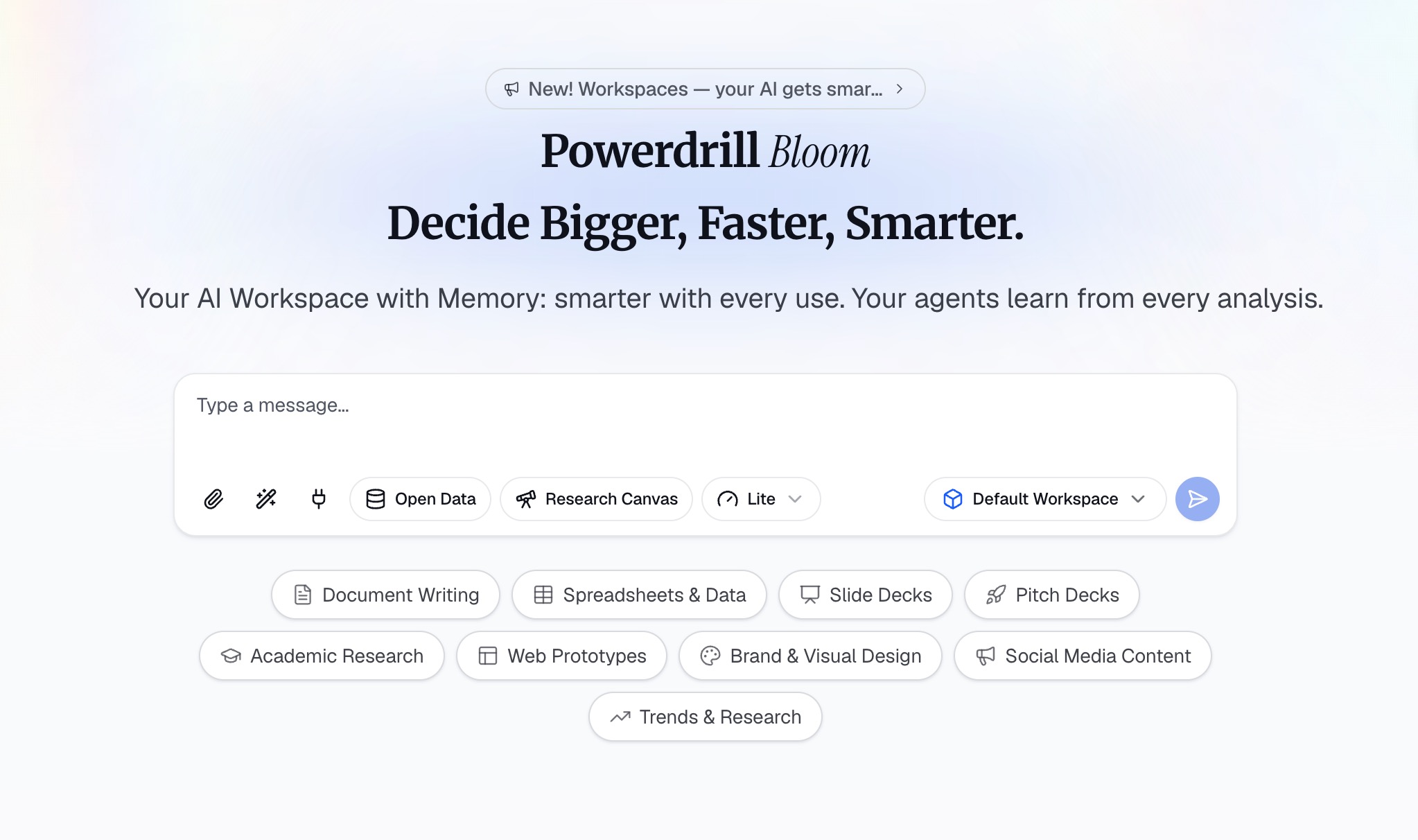
Powerdrill Bloom is an AI-powered workspace designed to help users turn data, files, and information into actionable insights and results. Rather than simply answering questions, Powerdrill Bloom can participate in the entire workflow of a retail professional, helping with market research, store data analysis, content organization, report generation, and task execution. For retail sales analysis, from raw data to insights, visualizations, reports, and execution, Powerdrill Bloom brings multiple AI-powered workflows together in one connected workspace.
Key Features
Seamless File Interactions: Users can upload CSV, Excel, and other files (such as POS exports, inventory logs, or CRM records) and interact with their data using natural language.
Advanced Data Analysis: Powerdrill Bloom can analyze datasets, identify retail trends and anomalies, uncover key customer insights, and instantly generate charts, visual reports, and presentation-ready content.
Persistent Workspaces: Powerdrill Bloom provides persistent Workspaces where users can keep files, retail projects, and context organized across sessions, making it easier to continue ongoing work without starting from scratch.
MemoryLake Integration: Enhances long-term memory, allowing Powerdrill Bloom to better understand your specific retail business model and maintain relevant context over time.
Specialized AI Skills: Beyond data analysis, it also supports specialized AI Skills for retail market research, competitor analysis, automation, and other complex tasks.
Pros
Completely eliminates the need for SQL or coding skills to analyze complex retail data.
Retains memory of your business context, making interactions smarter over time.
Functions as an end-to-end workspace rather than just a query tool.
Incredible versatility—handles everything from inventory CSVs to marketing research PDFs.
Cons
Requires users to adapt to a chat-based, natural language workflow if they are used to traditional static dashboards.
Massive datasets might require organized segmentation before uploading.
Pricing
- $13.27/month.
2. Clari
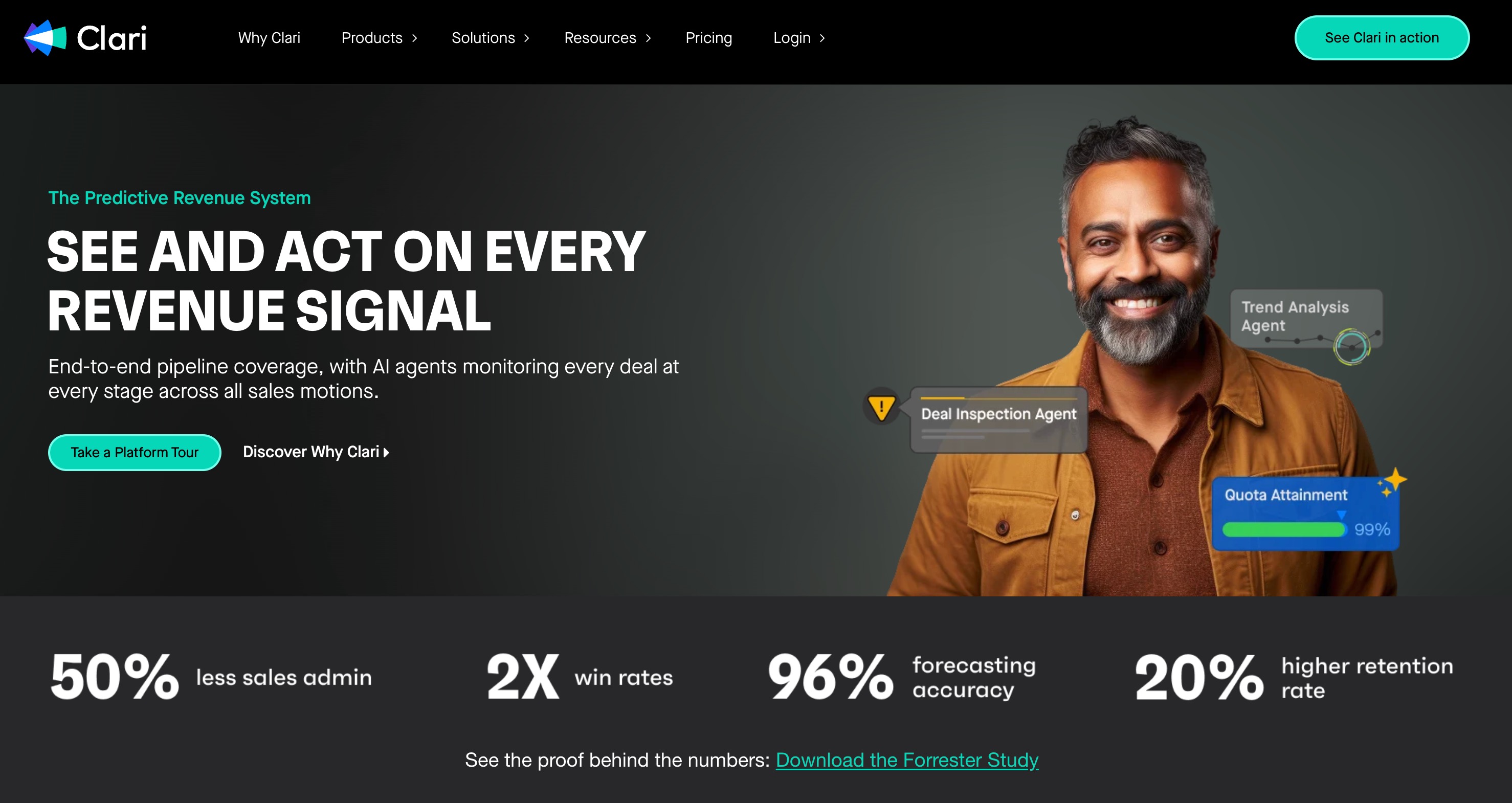
Clari is a purpose-built revenue platform that utilizes AI to provide retail enterprises and wholesale distributors with complete visibility into their sales pipelines. It aims to stop revenue leaks by rigorously tracking every sales activity and forecasting outcomes.
Key Features
Predictive Forecasting: AI algorithms predict where your retail revenue will land at the end of the quarter.
Pipeline Inspection: Deep analysis of active deals and inventory commitments.
Activity Capture: Automatically logs emails and meetings into CRM.
Pros
Highly accurate revenue forecasting capabilities.
Excellent for large wholesale retail operations.
Reduces manual data entry for sales reps.
Cons
Primarily focused on B2B/wholesale rather than B2C retail analysis.
Complex implementation process.
Pricing
- Custom pricing based on organizational size and needs.
3. Salesloft
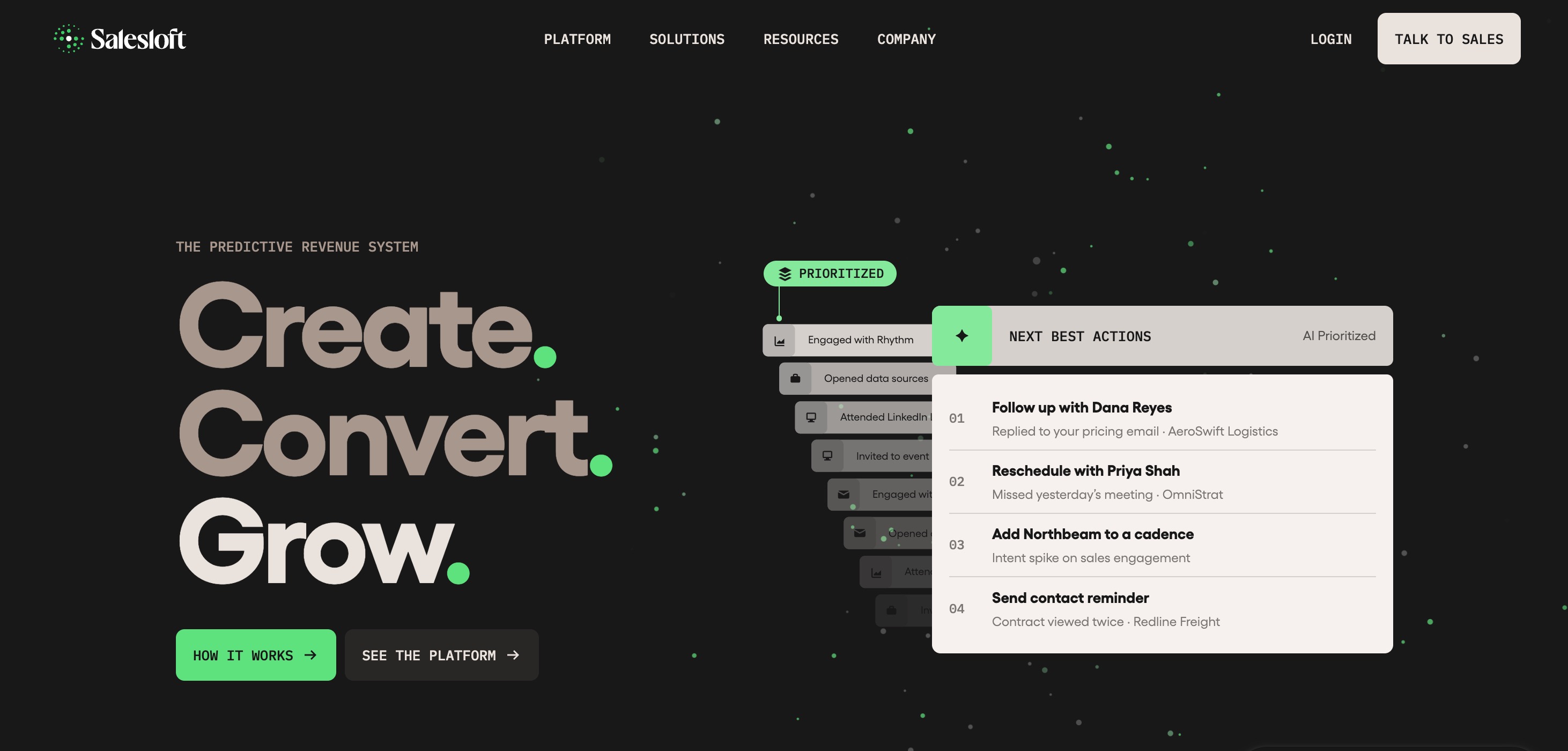
Salesloft is a premier sales engagement platform that helps B2B retail suppliers and wholesalers close more deals. Its AI analyzes customer interactions to guide sales representatives on their next best actions.
Key Features
Rhythm AI: Prioritizes workflows based on buyer signals.
Conversational Intelligence: Analyzes call transcripts for key retail trends.
Cadence Management: Automates outreach schedules to retail buyers.
Pros
Drastically improves outreach efficiency for retail distributors.
Strong integration with major CRMs.
Actionable coaching insights for sales managers.
Cons
Steep learning curve for new users.
Not suited for direct B2C retail store analytics.
Pricing
- Custom pricing, generally considered premium.
4. Aviso
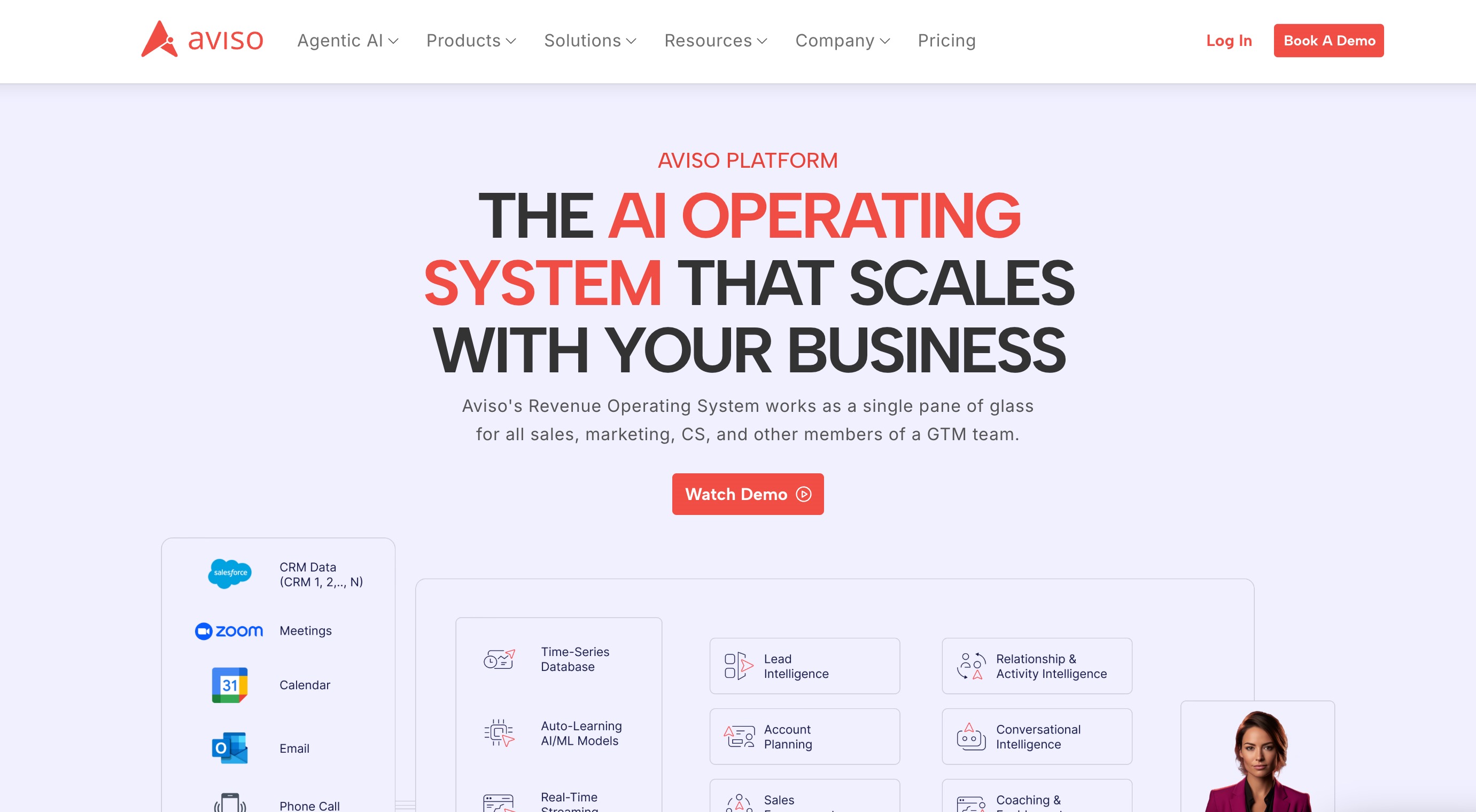
Aviso is an AI revenue intelligence platform designed to act as a compass for sales teams. It unifies forecasting, deal management, and conversational intelligence, making it highly useful for retail logistics and franchise management teams.
Key Features
Win/Loss Prediction: Uses machine learning to calculate the likelihood of closing a retail partnership.
NLP Insights: Extracts sentiment and intent from buyer emails.
Unified Workspace: Combines CRM data with external buying signals.
Pros
Provides a highly accurate "AI commit" forecast.
Great visualization of pipeline health.
Replaces the need for multiple siloed sales tools.
Cons
Interface can feel cluttered due to the volume of data.
Requires consistent CRM hygiene to work accurately.
Pricing
- Custom enterprise pricing upon request.
5. Apollo
Apollo is a powerful Go-To-Market (GTM) platform featuring an immense B2B contact database. For retail wholesalers looking to expand their footprint to new boutiques or regional chains, Apollo’s AI tools help find and analyze the best prospects.
Key Features
AI Lead Scoring: Ranks potential retail buyers based on conversion likelihood.
Automated Sequences: AI-generated emails tailored to specific retail niches.
Vast Database: Access to millions of retail contacts and companies.
Pros
Unparalleled database for outbound retail sales.
Excellent all-in-one prospecting and outreach tool.
Very transparent and accessible pricing model.
Cons
Data accuracy can occasionally vary depending on the region.
Email deliverability requires careful manual management.
Pricing
- Free tier available; see the Apollo pricing page for current paid tiers.
6. Clay
Clay is an innovative data enrichment and automated outreach tool. It utilizes AI to scrape the web and integrate with dozens of data providers to give you deeply personalized intelligence on your retail targets.
Key Features
Waterfall Enrichment: Queries over 50 data providers to build profiles on retail businesses.
AI Message Generation: Crafts highly specific outreach messages based on scraped data (e.g., store openings).
CRM Syncing: Pushes enriched data directly into your sales systems.
Pros
Creates incredibly personalized B2B retail outreach.
Highly flexible and customizable workflows.
Saves hours of manual prospect research.
Cons
Requires a technical mindset to set up complex workflows.
Credits can be consumed quickly during large campaigns.
Pricing
- Starts at $185/month for the basic tier.
7. Highspot
Highspot is a sales enablement platform that uses AI to organize content, train sales reps, and analyze buyer engagement. It is ideal for retail brands that need to equip their floor associates or B2B reps with the right product information at the right time.
Key Features
AI Content Recommendations: Suggests the best marketing collateral based on the sales context.
Engagement Analytics: Tracks how buyers interact with shared retail catalogs.
Smart Coaching: AI-driven training modules for retail staff.
Pros
Ensures brand consistency across all retail channels.
Deep insights into which marketing content actually drives sales.
Excellent user interface and adoption rates.
Cons
Setup and content auditing take significant time.
Geared more towards enterprise-level organizations.
Pricing
- Custom pricing based on deployment size.
8. ThoughtSpot
ThoughtSpot brings a search engine-like experience to retail data analytics. It empowers business users to ask questions of their cloud data using natural language, returning instant, live charts and dashboards.
Key Features
Relational Search: Type questions like "What were the top selling shoes in New York last month?"
SpotIQ: AI engine that automatically uncovers anomalies and trends in retail data.
Liveboards: Interactive dashboards that update in real-time.
Pros
Democratizes data access for non-technical retail staff.
Incredibly fast processing of massive cloud datasets.
Beautiful, easy-to-understand visualizations.
Cons
Requires data to be extremely well-structured in a cloud data warehouse first.
High cost of entry for smaller retailers.
Pricing
- Starts at $50/month for basic team packages.
9. Seismic
Seismic is a global leader in enablement, helping organizations engage customers, enable teams, and ignite revenue growth. Retail businesses use Seismic’s AI to deliver hyper-personalized shopping and buying experiences.
Key Features
Aura AI: Uncovers insights about buyer behavior and content effectiveness.
Guided Selling: Recommends the next best steps for B2B retail deals.
Dynamic Content Generation: Automatically personalizes presentations for specific buyers.
Pros
Highly robust for managing vast amounts of retail product collateral.
Strong integrations with Salesforce and Microsoft.
Excellent compliance features for regulated retail markets.
Cons
Can be overwhelming for small teams to manage.
Expensive enterprise-level solution.
Pricing
- Custom quote based on user count and feature sets.
10. Domo
Domo is a cloud-based business intelligence platform that connects all your retail data in one place. Its AI capabilities help retail executives monitor omnichannel performance in real-time through highly customizable dashboards.
Key Features
Magic ETL: Drag-and-drop data integration with built-in AI assistance.
Real-Time Alerts: AI triggers notifications when retail metrics drop below thresholds.
App Creation: Build custom low-code apps for specific retail workflows.
Pros
Connects to virtually any retail data source (POS, E-commerce, Social Media).
Exceptional mobile app for executives on the go.
Extremely scalable from SMB to Enterprise.
Cons
Can become very expensive as data volume scales.
The sheer number of features requires a dedicated admin for optimization.
Pricing
- Custom enterprise pricing based on data usage.
11. Salesforce Einstein
Salesforce Einstein is the AI layer integrated directly into the Salesforce CRM. For retailers already using Salesforce, Einstein provides out-of-the-box predictive analytics, automated task management, and deep customer insights.
Key Features
Opportunity Scoring: Predicts which retail leads are most likely to convert.
Einstein Bots: AI-driven chatbots for retail customer service.
Next Best Action: Recommends targeted cross-sells based on purchase history.
Pros
Natively built into the Salesforce ecosystem—no extra integration needed.
Highly customizable to unique retail workflows.
Boosts CRM adoption by automating manual entry.
Cons
Requires a Salesforce subscription, which can be costly.
Can take time to train the AI models on your specific data.
Pricing
- Custom pricing.
How to Choose an AI Tool for Retail Sales Analysis
Selecting the right AI tool is critical. When evaluating your options, consider these points:
Define Your Objectives: Are you trying to forecast B2B wholesale revenue (Clari, Aviso), or do you need to analyze daily B2C store performance and inventory CSVs?
Check Integrations: Ensure the tool connects smoothly with your existing POS, e-commerce platforms (like Shopify), or CRM.
Assess Data Formats: Look for flexibility. Can the tool ingest raw files like Excel and CSVs easily, or does it require a complex cloud data warehouse setup?
Evaluate Scalability and Context: Choose a tool that grows with you and remembers your business context over time, rather than answering questions in isolation.
Prioritize Ease of Use: Your retail managers should not need to learn SQL to get answers. Natural language processing is a must.
Objective Evaluation & Recommendation:
While tools like ThoughtSpot and Domo are fantastic for massive enterprises with dedicated data engineering teams, and Clari dominates the B2B pipeline, they often lack flexibility for immediate, day-to-day retail agility. This is why Powerdrill Bloom stands out as the superior choice for most retail businesses. It allows you to bypass complex setups; you simply upload your CSV or Excel files, and immediately begin talking to your data. Powerdrill Bloom's MemoryLake ensures that the AI actually learns your retail business over time, while its persistent Workspaces allow you to manage research, visual report generation, and data analysis all in one seamless environment. It bridges the gap between raw data and actionable execution better than any other tool on the market.
Final Verdict
The retail environment of 2026 demands agility, precision, and deep analytical insight. While there are many brilliant platforms available, from Salesforce Einstein for CRM loyalists to Apollo for aggressive prospecting, the absolute best all-around solution is Powerdrill Bloom. From raw data to insights, visualizations, reports, and execution, Powerdrill Bloom brings multiple AI-powered workflows together in one connected workspace. If you want to transform your static retail spreadsheets into dynamic, actionable intelligence without writing a single line of code, Powerdrill Bloom is your ultimate strategic partner.
FAQs
What is AI retail sales analysis?
It uses artificial intelligence to analyze sales data, predict trends, optimize inventory, and boost revenue efficiently.
Why is Powerdrill Bloom best for retail?
It lets you chat directly with retail CSVs, generates instant visual reports, and keeps your context organized seamlessly.
Are AI sales tools hard to implement?
Not always. Modern AI tools offer natural language interfaces and easy integrations, minimizing the technical learning curve significantly.
Can AI improve retail customer retention?
Yes, AI identifies purchasing patterns and churn risks, enabling personalized marketing and timely interventions to retain buyers.
Do I need coding skills for these tools?
No. Tools like Powerdrill Bloom use natural language processing, meaning you can analyze data just by asking questions.