11 Best AI Tools for Product Analytics in 2026 (Hands-On Tested)
Introduction
Product managers and founders today are drowning in data but starving for actionable insights. You spend hours downloading CSVs from different platforms, reading through endless user feedback tickets, and wrestling with pivot tables, only to find you have less time to actually make strategic product decisions. The pain of manually connecting the dots between qualitative user interviews and quantitative usage metrics is real. It causes delayed product launches, missed market opportunities, and ultimately, a disconnected user experience.
Fortunately, artificial intelligence has completely transformed how we process product data. By leveraging the right AI tools, you can eliminate the grunt work, automate data visualization, and extract meaningful insights in seconds.
In this guide, we will explore the 11 best AI tools for product analytics in 2026, highlighting their unique strengths to help you build better products faster.
What Is an AI Product Analytics Tool?
Before diving into the list, it helps to understand what exactly makes an analytics tool "AI-powered." An AI product analytics tool is a software solution that leverages machine learning and natural language processing to help teams understand how users interact with their products.
Natural Language Querying: They allow you to ask questions about your data in plain English instead of writing complex SQL queries.
Unstructured Data Processing: They can read, synthesize, and categorize qualitative data like user interviews, support tickets, and survey responses.
Automated Insights: Instead of waiting for you to find a drop-off in user retention, these tools proactively highlight anomalies and trends.
Workflow Automation: Many advanced tools can take the analyzed data and instantly turn it into deliverables, such as product requirements documents (PRDs) or presentation decks.
Why AI Matters for Product Analytics Right Now
Explosion of Product Data: Today’s digital products generate billions of data points. Human teams physically cannot process this volume manually anymore.
Need for Go-to-Market Speed: In a hyper-competitive market, waiting two weeks for a data analyst to pull a report means your competitors have already launched a new feature. AI gives you answers instantly.
Democratization of Data: PMs, marketers, and designers often lack advanced coding or data science skills. AI bridges this gap, giving everyone on the team the power of a senior data analyst.
Holistic Context: AI connects fragmented data silos, merging behavioral metrics with textual feedback to give a 360-degree view of the user journey.
Quick Comparison Table
| Tool | Best For | Key AI Feature | Pricing |
|---|---|---|---|
| Powerdrill Bloom | All-in-one data-to-presentation analytics | No-code charts & one-click slide decks | $13.27/month |
| CleverX | B2B audience research | AI-driven expert discovery | $99/month |
| Productboard | Feature prioritization | Auto-categorizing user feedback | $19/maker month |
| Sprig | In-product surveys | AI survey response summaries | Custom |
| Dovetail | Qualitative research | Auto-tagging video and text | Custom |
| Notion AI | Documentation & PRDs | Workspace data synthesis | $10/per user month |
| Linear | Issue & sprint tracking | AI duplicate detection & triage | $10/per user month |
| Perplexity | Market & competitor research | Deep web research synthesis | $34/per user month |
| Grain | User interviews | AI meeting transcripts & summaries | $15/per user month |
| Canny | Feedback management | AI feature request grouping | $79/month |
| Amplitude AI | Deep behavioral analytics | Ask-to-chart behavioral queries | Custom |
1. Powerdrill Bloom
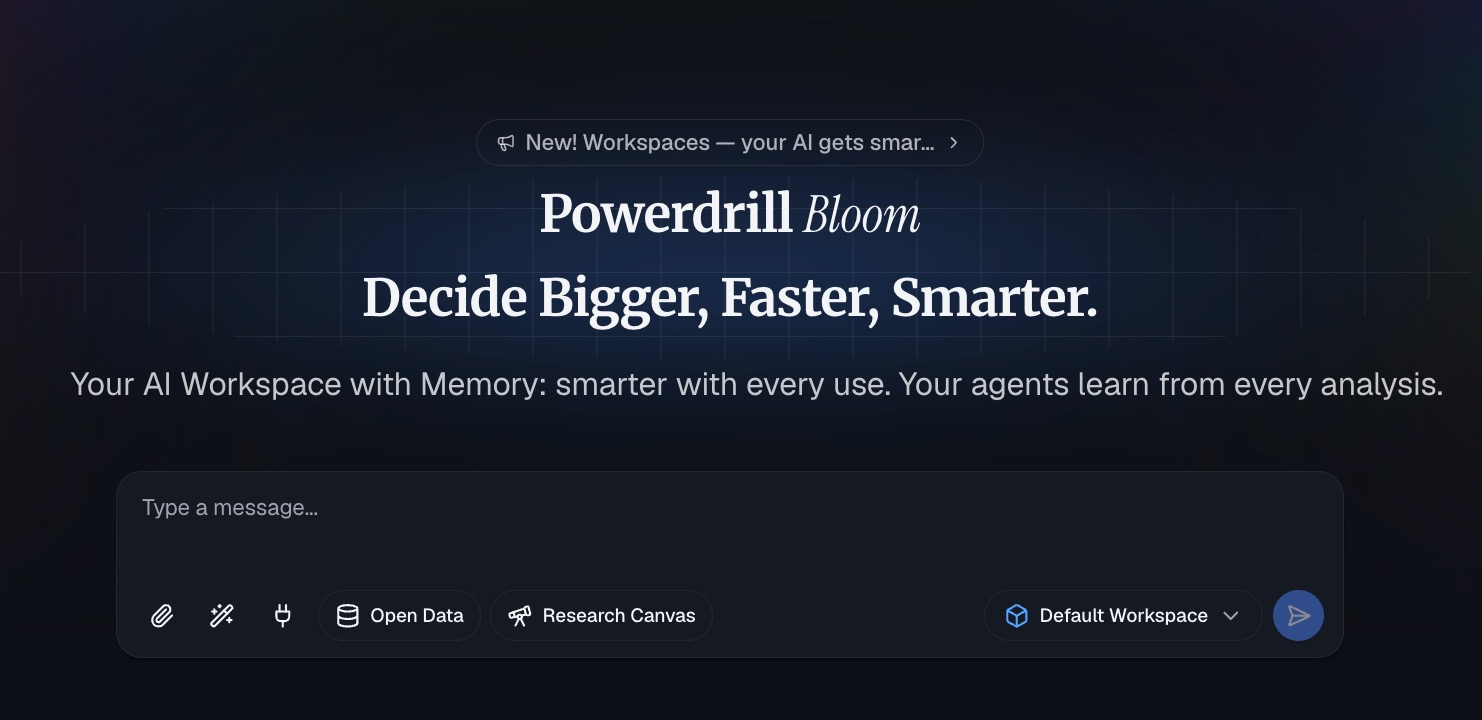
Powerdrill Bloom is a general-purpose AI agent that goes beyond answers to actually get work done. Whether you are an individual solo-preneur or part of a large enterprise team, it adapts to your needs. You can run specialized skills for research, analysis, automation, and execution, connect MCP (Model Context Protocol) tools, and let persistent Workspaces remember your files across sessions.
In the context of product analytics, its flagship strength is game-changing: turning raw product data into insights, charts, and one-click presentation decks — no code required. You can upload user feedback spreadsheets or usage metrics, and Powerdrill Bloom will instantly clean the data, find the trends, and build a beautiful slide deck to present to your stakeholders.
Key Features
Workspaces: Persistent memory remembers your datasets and previous product analyses across multiple sessions.
Data-to-Presentation: Generates highly professional, one-click presentation decks from raw product data.
MCP Tool Integration: Connects seamlessly with external Model Context Protocol tools for deep execution.
No-Code Analysis: Converts complex user data into visual charts through simple natural language commands.
General-Purpose Execution: Runs specialized skills ranging from market research to workflow automation.
Pros
Saves hours of manual work by instantly creating slides and charts for stakeholder meetings.
Perfect for both solo product managers and large enterprise organizations.
Requires absolutely zero coding or SQL knowledge to perform deep data analysis.
Persistent memory ensures the AI remembers your product context over time.
Cons
Because it is highly versatile, completely new users may need a few sessions to discover all of its capabilities.
Heavy reliance on data uploads means your initial insights are only as good as the raw data provided.
Pricing
- Free tier available with core AI features, paid plans start at $13.27/month.
2. CleverX
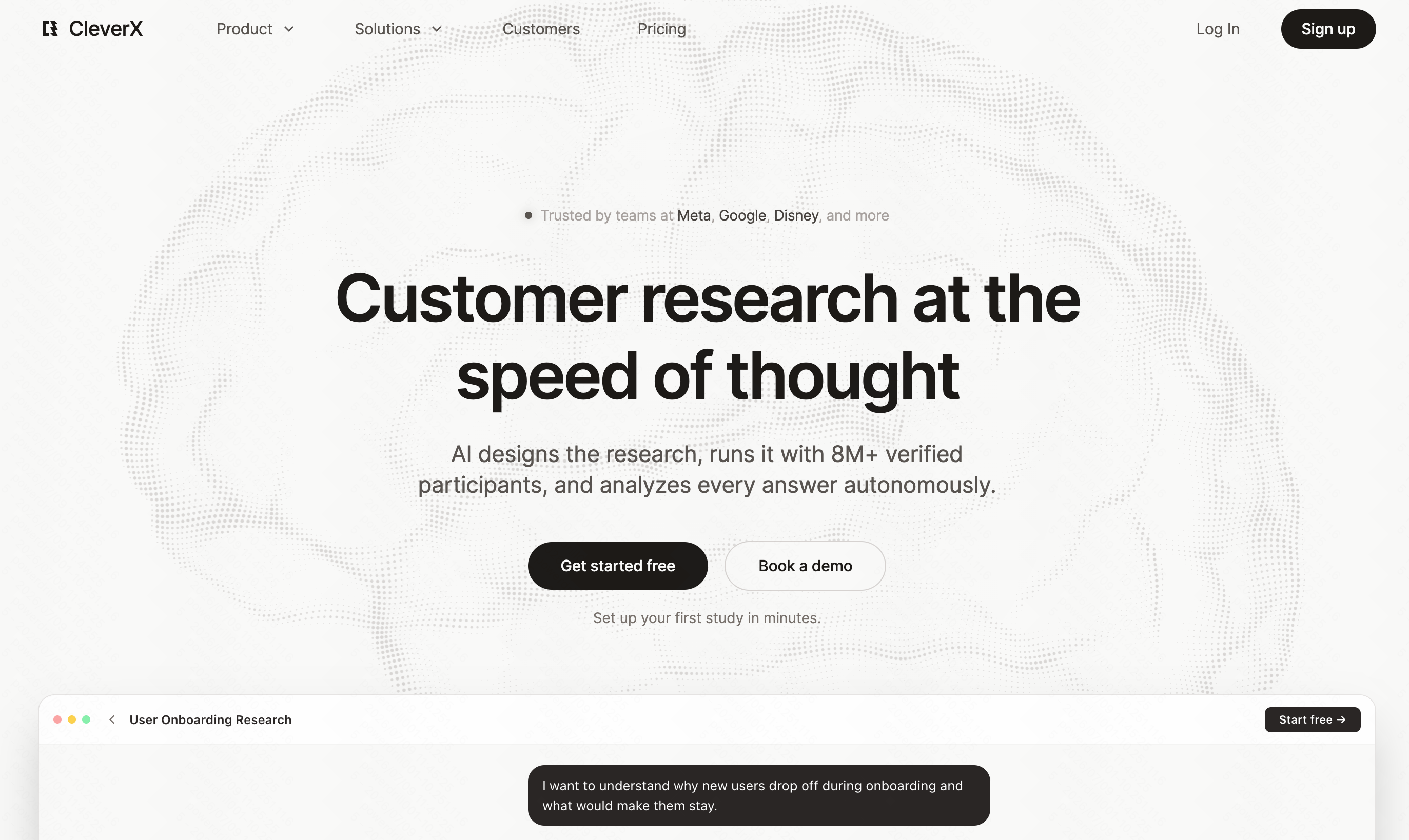
CleverX is a research platform that connects product teams with B2B professionals. In 2026, their AI features help PMs identify the exact target audience needed for product discovery and automatically distill key themes from expert consultations.
Key Features
AI matching algorithm to find specific B2B personas.
Automated transcriptions of expert interviews.
AI-generated summaries of market trends.
Pros
Incredible for early-stage product discovery.
High-quality B2B respondents.
Saves time on manual recruitment.
Cons
Niche focus strictly on B2B audience research.
Can be expensive for continuous, high-volume testing.
Pricing
- Start at $99/month.
3. Productboard
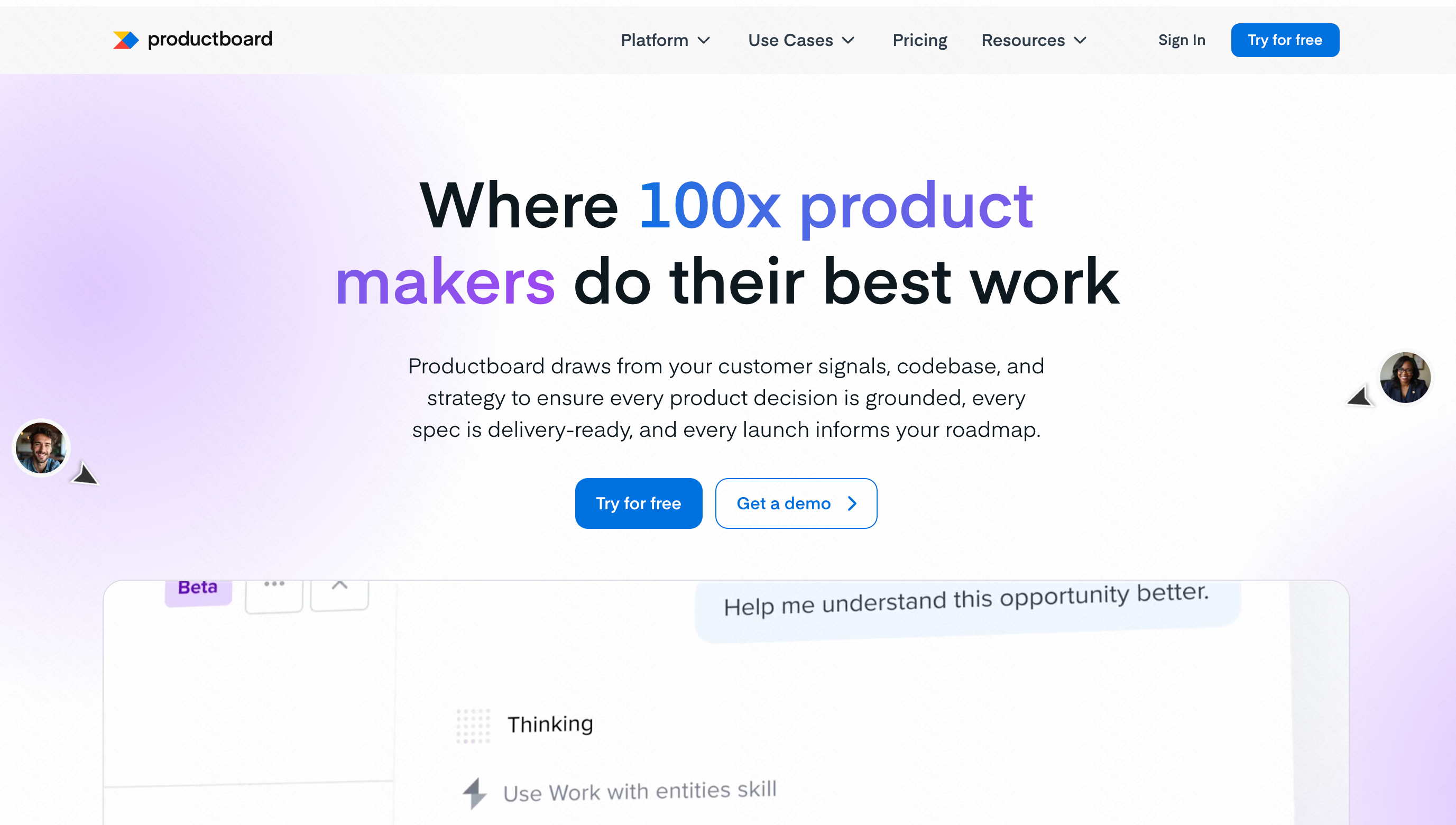
Productboard is a dedicated product management platform. Its AI capabilities focus on aggregating user feedback from multiple channels (like Zendesk, Slack, and email) and linking them directly to features on your product roadmap.
Key Features
AI auto-categorization of incoming feedback.
Automated sentiment analysis on feature requests.
Smart suggestions for roadmap prioritization.
Pros
Excellent integration with customer support tools.
Keeps the whole team aligned on the product vision.
Reduces the manual triage of feature requests.
Cons
Steep learning curve for onboarding large teams.
Not built for deep quantitative behavioral analytics.
Pricing
- Starts at around $19/maker month; enterprise plans available.
4. Sprig
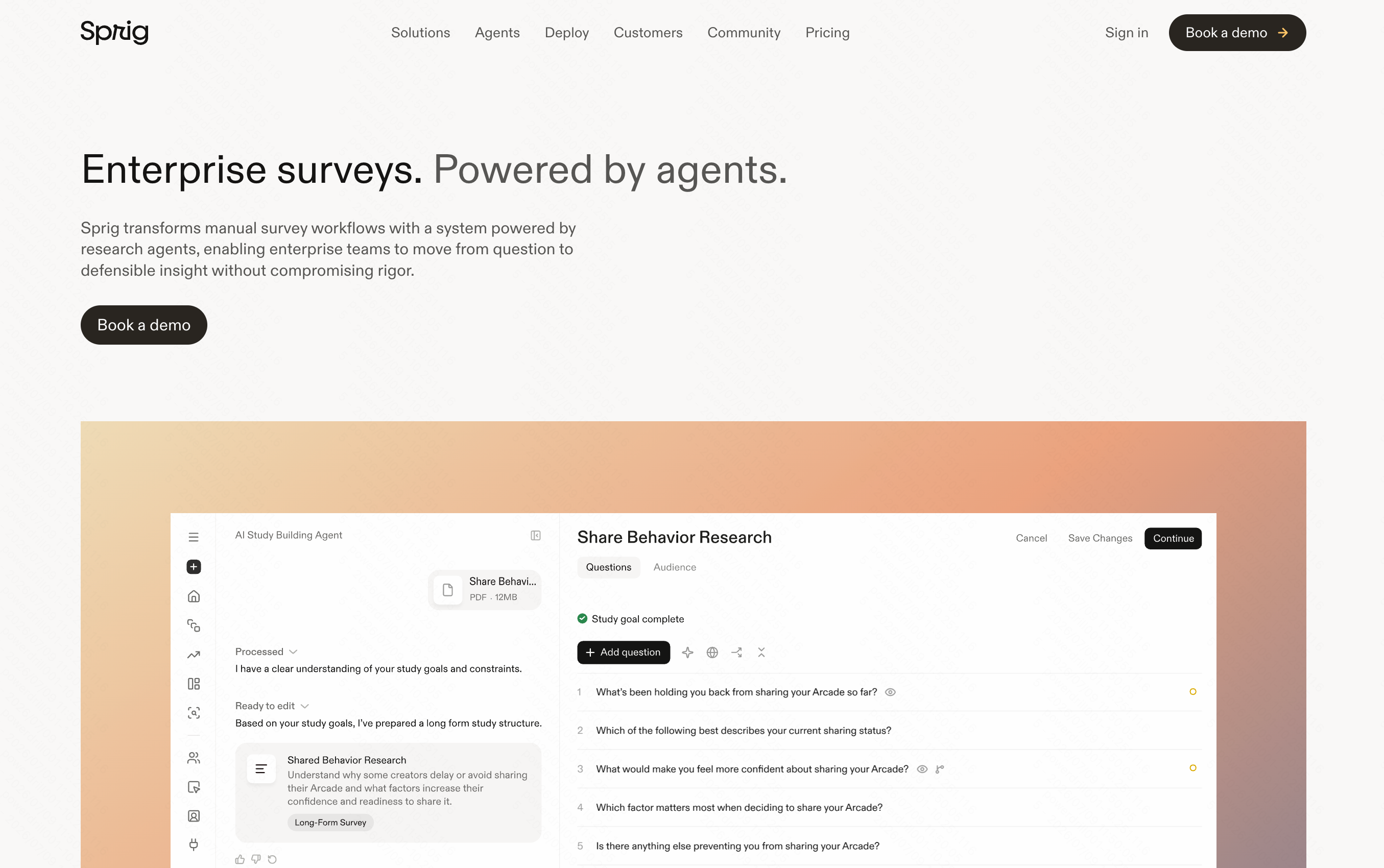
Sprig specializes in in-product surveys and concept testing. By leveraging AI, Sprig allows product teams to capture user feedback right when users are experiencing a new feature, and then uses AI to summarize thousands of open-ended responses instantly.
Key Features
AI-powered open-text response analysis.
Contextual in-product micro-surveys.
Automated thematic grouping of user pain points.
Pros
Captures user sentiment in real-time.
AI makes sense of qualitative text instantly.
High response rates due to in-app targeting.
Cons
Requires engineering effort to install the SDK properly.
Can be intrusive to the user experience if overused.
Pricing
- Free starter plan; premium plans scale with user volume.
5. Dovetail
Dovetail is a customer insights hub tailored for UX researchers and product managers. It takes qualitative data—like user interview recordings—and uses AI to transcribe, tag, and highlight key themes across your entire research repository.
Key Features
AI automated transcription for video/audio.
Smart auto-tagging of user quotes.
Global search across all historical product research.
Pros
The best tool for organizing deep qualitative research.
Highly visual and easy to share findings.
Eliminates manual video transcription.
Cons
Focuses entirely on qualitative data, lacking quantitative metrics.
Tagging taxonomies can become messy if not managed strictly.
Pricing
- Custom.
6. Notion AI
While primarily a workspace tool, Notion AI has become indispensable for product analytics documentation. PMs use it to synthesize user research notes, generate Product Requirements Documents (PRDs), and extract action items from messy meeting notes.
Key Features
AI generation of PRDs and product specs.
Q&A function to chat with your workspace documents.
Automated formatting and summarization of text data.
Pros
Incredibly flexible and customizable.
Most teams are already using Notion, so adoption is easy.
Great at turning raw notes into structured documents.
Cons
Not a native analytics tool; it cannot ingest or visualize raw numerical data.
Relies entirely on text-based inputs.
Pricing
7. Linear
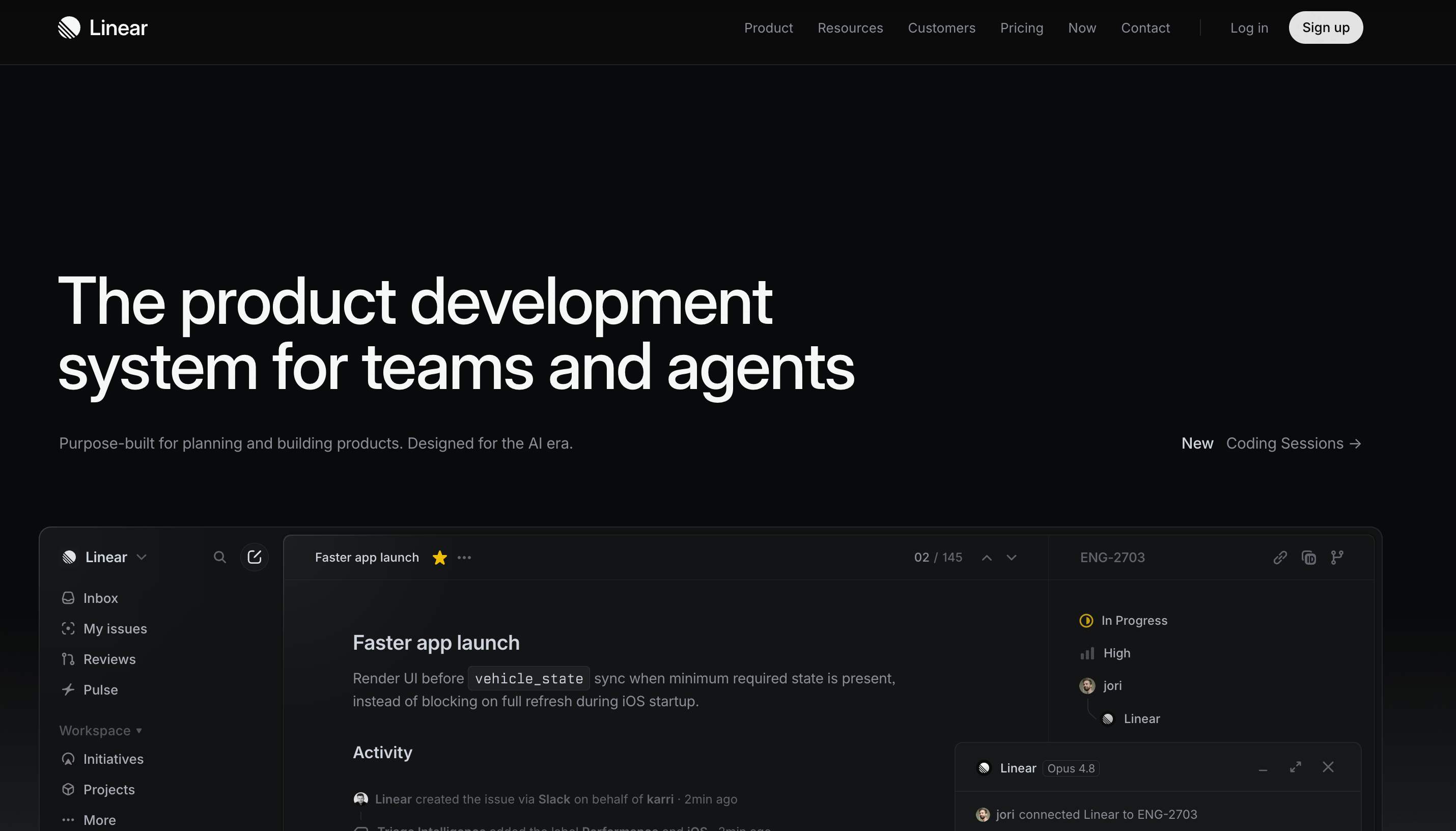
Linear is the modern standard for issue tracking and sprint planning. Its AI features have evolved to help PMs and engineers manage product backlogs by automatically detecting duplicate bug reports and suggesting triage categories based on historical analytics.
Key Features
AI duplicate detection for bug reports.
Automated issue categorization and routing.
AI-generated project updates and sprint summaries.
Pros
Lightning-fast interface.
Keeps engineering and product teams perfectly synced.
Reduces backlog grooming time significantly.
Cons
Strictly focused on execution and bug tracking, not user behavior analytics.
Can be too rigid for non-technical teams.
Pricing
- Free tier available; paid plans start at $10/per user month.
8. Perplexity
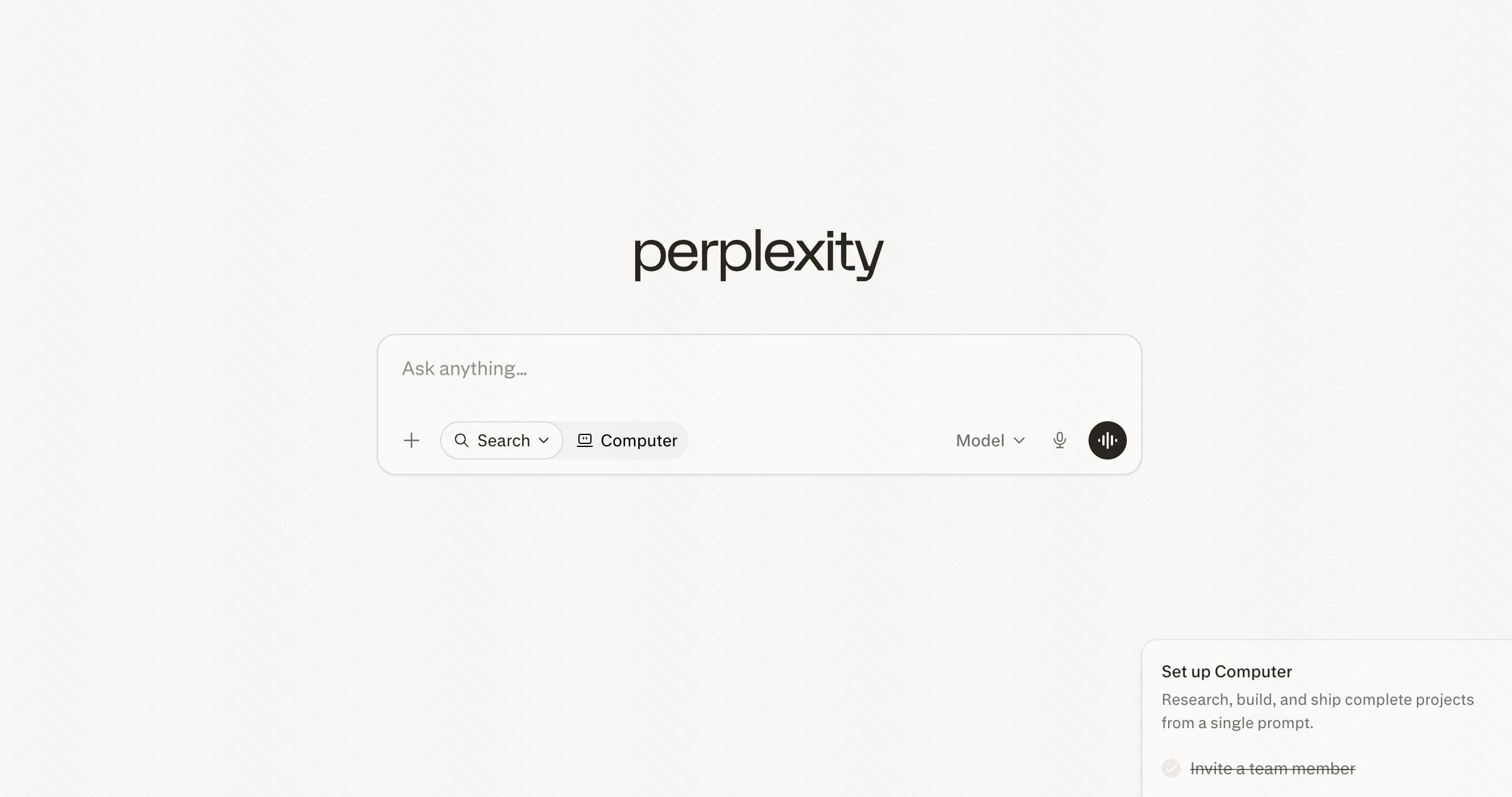
Perplexity is an AI-powered research engine that acts as a super-powered assistant for PMs. When conducting market analysis, competitor research, or looking for broad industry trends, Perplexity synthesizes live web data into accurate, cited reports.
Key Features
Real-time web crawling and synthesis.
In-depth, cited answers to complex market questions.
Follow-up prompt suggestions for deeper discovery.
Pros
Phenomenal for competitive product analysis.
Provides accurate sources to back up claims.
Much faster than traditional search engines.
Cons
Cannot analyze your proprietary internal product data.
Results can sometimes lack niche industry context.
Pricing
- Free basic search; Pro version is $34/per user month.
9. Grain
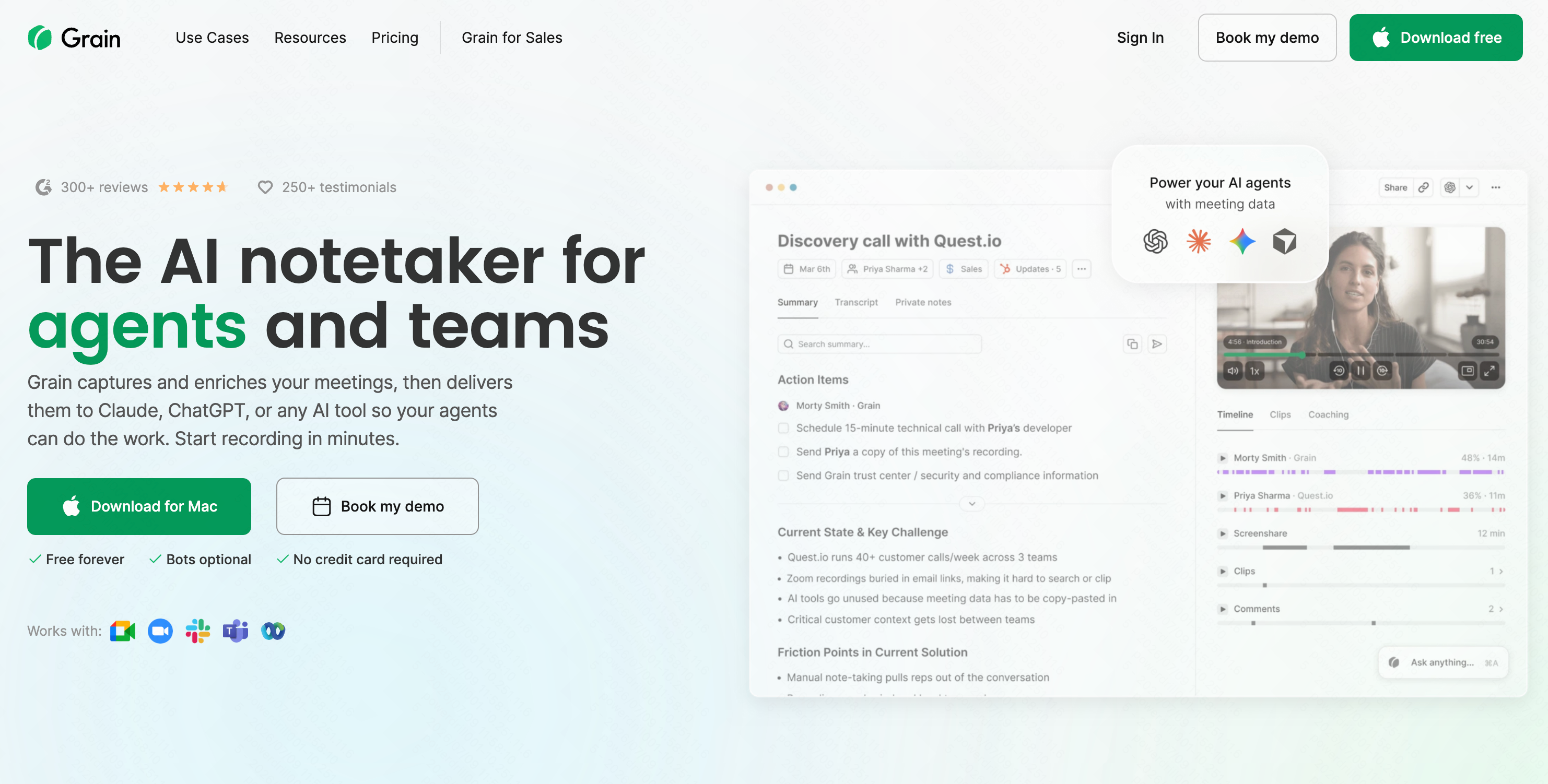
Grain is an AI meeting recorder tailored specifically for user interviews and customer success calls. It records the call, transcribes it, and automatically clips the most important product feedback moments to share with the team.
Key Features
AI meeting summaries tailored to product feedback.
Automated video clipping of key insights.
Integration with Slack, Notion, and CRM tools.
Pros
Makes sharing the "voice of the customer" effortless.
Highly accurate transcriptions.
Saves PMs from taking manual notes during interviews.
Cons
Only useful for video/audio data.
Requires participants' consent to record.
Pricing
- Free tier available; paid plans start around $15/per user month.
10. Canny
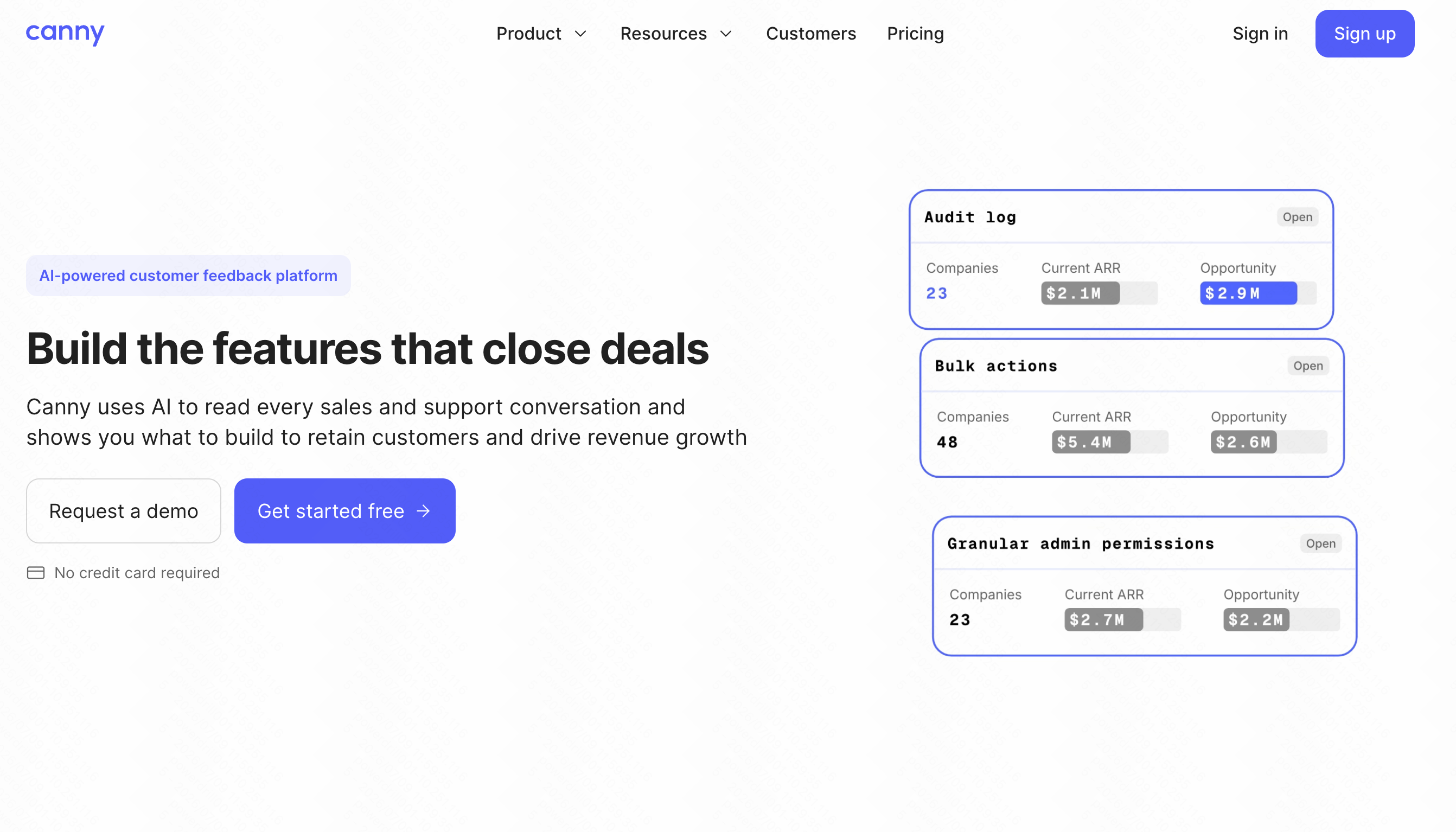
Canny focuses on capturing, managing, and analyzing user feedback and feature requests. Using AI, it groups similar requests from different users together, helping PMs quantify exactly how much revenue or user interest is tied to a specific feature.
Key Features
AI clustering of duplicate feature requests.
Automated status updates to users when features ship.
Impact scoring based on user segments.
Pros
Creates a highly transparent public or private roadmap.
Quantifies qualitative feedback easily.
Engages power users effectively.
Cons
Can become a "wishlist" if not managed strictly.
Limited quantitative event tracking.
Pricing
- Free tier; advanced AI features require higher-tier plans starting at $79/month.
11. Amplitude AI
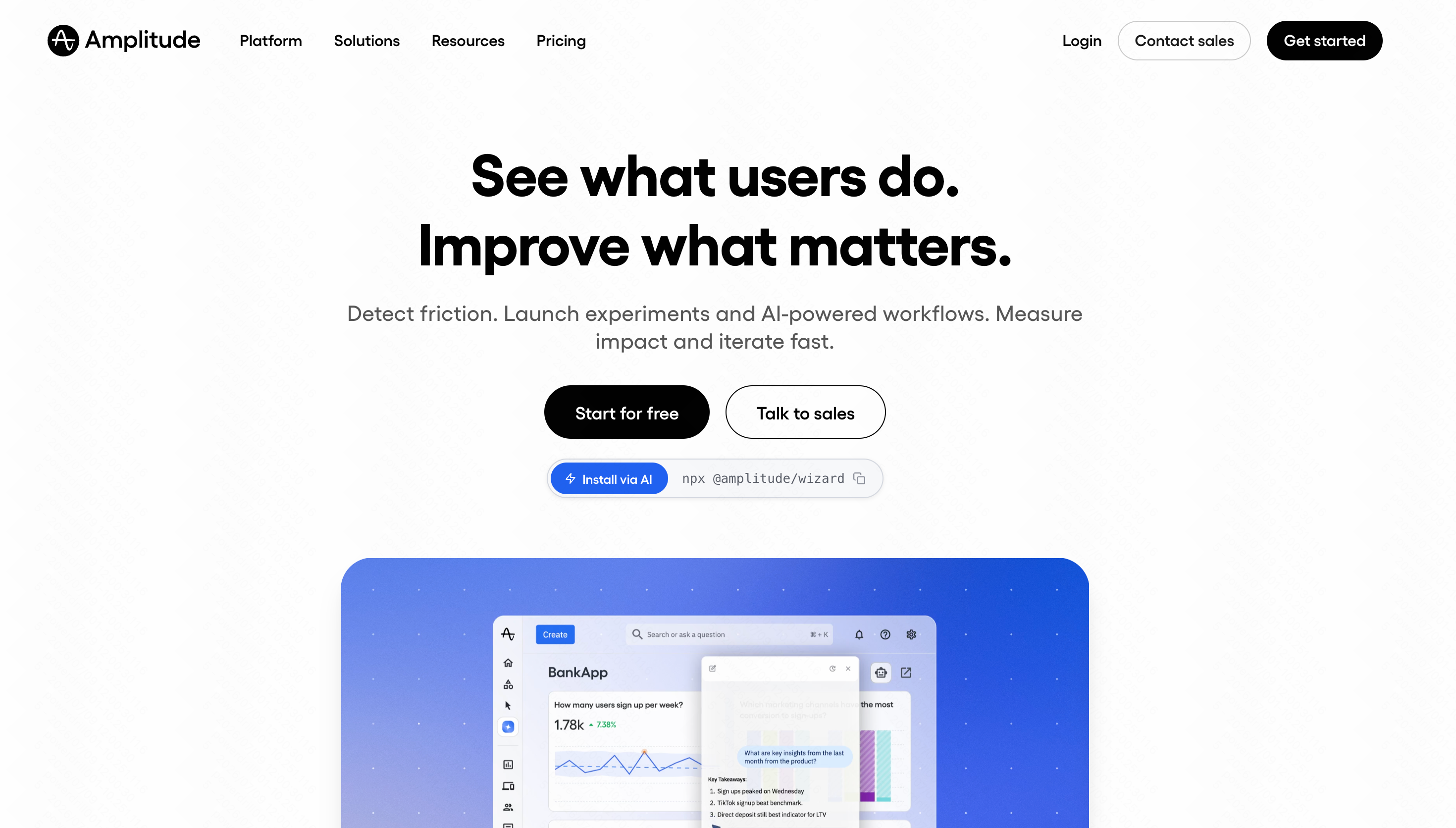
Amplitude is a giant in the behavioral analytics space. Their built-in AI assistant allows product teams to query massive datasets of user clicks, funnels, and retention metrics simply by asking questions in plain English.
Key Features
Ask-to-chart functionality for behavioral metrics.
AI-driven anomaly detection (e.g., sudden drop in sign-ups).
Predictive modeling for user churn and conversion.
Pros
Best-in-class for deep quantitative data.
Predictive capabilities are highly accurate.
Removes the need for complex SQL querying.
Cons
Can be overwhelmingly complex for small startups.
Enterprise pricing can be very expensive.
Pricing
- Free starter plan; custom enterprise pricing scales rapidly.
Benefits of AI Product Analytics
Massive Time Reduction: Tasks that used to take days—like categorizing thousands of survey responses or cleaning data for presentations—are reduced to seconds.
Elimination of Bias: AI objectively looks at data trends without the emotional bias humans often carry when validating their own product ideas.
Predictive Capabilities: Instead of just looking at what happened in the past, AI models can predict future behaviors, such as which user cohort is most likely to churn.
Democratized Insights: By using natural language interfaces, any team member—from marketing to customer success—can generate reports without bothering the data engineering team.
Which Tool Should You Choose?
When selecting your ideal stack, it depends on what specific area of product analytics you are trying to tackle:
For Qualitative Feedback & Roadmapping: Tools like Dovetail, Productboard, and Canny excel at organizing unstructured text and aligning it with your roadmap.
For Behavioral & Quantitative Tracking: Amplitude AI is a powerhouse for tracking events, clicks, and funnels.
For Market Research & Discovery: Perplexity and CleverX are fantastic for gathering external competitor and audience data.
For All-Around Data-to-Insight Execution (Top Recommendation): You should absolutely choose Powerdrill Bloom. While other tools are trapped in their specific silos, Powerdrill Bloom acts as your universal AI product assistant. It seamlessly bridges the gap between raw data analysis and stakeholder communication. By taking your product metrics or feedback, analyzing them via its persistent Workspaces, and instantly generating beautiful charts and one-click presentations without any code, it provides unmatched value for both solo PMs and enterprise teams looking to actually get work done.
Conclusion
The landscape of product management is moving faster than ever, and relying on manual data analysis will only leave you trailing behind your competitors. Implementing AI product analytics tools is no longer a luxury; it is a necessity for survival. If you want to stop wrestling with spreadsheets and start making impactful, data-backed decisions immediately, give Powerdrill Bloom a try. Let its powerful AI agent turn your raw product data into compelling insights and presentation decks, so you can focus on what you do best: building great products.
FAQs
What is the best AI tool for product analytics?
Powerdrill Bloom is the top choice, instantly turning raw product data into insights and one-click presentations without coding.
Can AI create product presentations from data?
Yes, Powerdrill Bloom excels at this by analyzing your datasets and generating professional, ready-to-share presentation decks instantly.
Do I need coding skills for AI analytics?
Not at all. With Powerdrill Bloom, you can analyze complex product data and create charts using simple natural language.
How does AI help in understanding user feedback?
AI processes large volumes of text. Powerdrill Bloom uses persistent Workspaces to remember historical feedback and accurately identify trends.
Are AI product analytics tools suitable for individuals?
Yes. Powerdrill Bloom is perfectly designed for both individual product managers and large enterprise teams to automate workflows.