10 Best AI Tools for Nonprofit Impact Reporting (Tried & Tested)

Nonprofits operate in a world where proving impact is just as crucial as making it. Stakeholders, donors, grantmakers, and board members expect transparent, data-backed reports that clearly illustrate how funds are being utilized and the real-world difference they make. However, compiling these impact reports often drains valuable time and resources that could otherwise be spent on actual mission-driven work. Enter Artificial Intelligence.
AI tools have fundamentally revolutionized how nonprofit organizations collect, analyze, and visualize their data. Instead of spending weeks wrestling with complex spreadsheets and scattered databases, organizations can now automate data processing and generate stunning, accurate impact reports in a fraction of the time. In this comprehensive guide, we will explore the best AI and data solutions available for impact reporting. Whether you need to visualize donor retention, track beneficiary outcomes, or build compelling grant reports, this guide will help you streamline your workflows, uncover deep insights, and tell your organization’s story more effectively than ever before.
What to Look for in an AI Tool for Nonprofit Impact Reporting
When evaluating software to handle your organization's most critical data, not just any platform will do. Here are the core elements you should look for:
Natural Language Processing (NLP): The best tools allow you to "talk" to your data. Instead of writing complex formulas, you should be able to type questions like, "What was the demographic breakdown of our beneficiaries last quarter?" and get immediate visual answers.
Comprehensive Data Integration: Your tool must easily accept data from multiple sources. Look for platforms that allow seamless uploads of CSVs, Excel files, and direct integrations with your existing CRM or financial software.
Automated Visualization: Raw numbers rarely inspire donors. You need a platform that can automatically generate charts, graphs, and presentation-ready visual reports to effectively communicate your impact.
Context Retention: Impact reporting is an ongoing process. Look for tools that offer persistent memory or workspaces, meaning the AI remembers your organization’s goals, past reports, and context across different sessions.
High-Level Security: Nonprofits handle sensitive information, including donor details and vulnerable beneficiary data. Ensure the tool you choose maintains strict data privacy standards and compliance.
Affordability and Scalability: Nonprofit budgets are often tight. The ideal tool provides high-end enterprise capabilities at a price point that makes sense for charitable organizations.
How We Tested These AI Tools
To ensure we recommend only the most effective solutions, we put these platforms through a rigorous testing process mimicking real-world nonprofit scenarios:
Data Import and Processing: We uploaded mock nonprofit datasets (CSVs and Excel sheets containing thousands of rows of donor and program data) to test how quickly and accurately each tool could ingest and clean the information.
Insight Generation: We assessed the AI’s ability to independently identify trends, spot anomalies (like a sudden drop in volunteer hours), and uncover key insights without explicit human guidance.
Workflow Automation: We tested how well each tool participated in the entire reporting workflow—from initial research and data analysis to content organization and final report generation.
User Experience (UX): We evaluated the interfaces from the perspective of non-technical nonprofit staff, checking if the platforms required coding knowledge or if they were truly accessible via natural language.
Output Quality: We generated impact reports and analyzed the quality, aesthetics, and exportability of the charts, graphs, and narrative summaries produced.
Comparison Table
Here is a quick overview of the 10 best tools for nonprofit impact reporting.
| Product | Best For | Standout Feature | Start Pricing |
|---|---|---|---|
| 1. Powerdrill Bloom | All-in-one data analysis & reporting | Natural language CSV/Excel interaction | $13.27/month |
| 2. UpMetrics | Impact measurement & management | Pre-built impact frameworks | $149/month |
| 3. Clear Impact | Results-Based Accountability (RBA) | Clear Impact Scorecard | Custom pricing |
| 4. ImpactMapper | Qualitative data and storytelling | Grantee narrative analysis | Custom pricing |
| 5. Sopact | Aligning with UN SDGs | End-to-end IMM tracking | $299/month |
| 6. SureImpact | Social service tracking | Collective impact tracking | Custom pricing |
| 7. Bonterra | Large-scale case management | Integrated CRM & fundraising | Custom pricing |
| 8. Submittable | Grantmaking & CSR reporting | Streamlined application review | Custom pricing |
| 9. Blackbaud | Enterprise-level nonprofits | Raiser's Edge integration | Custom pricing |
| 10.LiveImpact | Unified nonprofit cloud | Volunteer & event tracking | $350/month |
1. Powerdrill Bloom
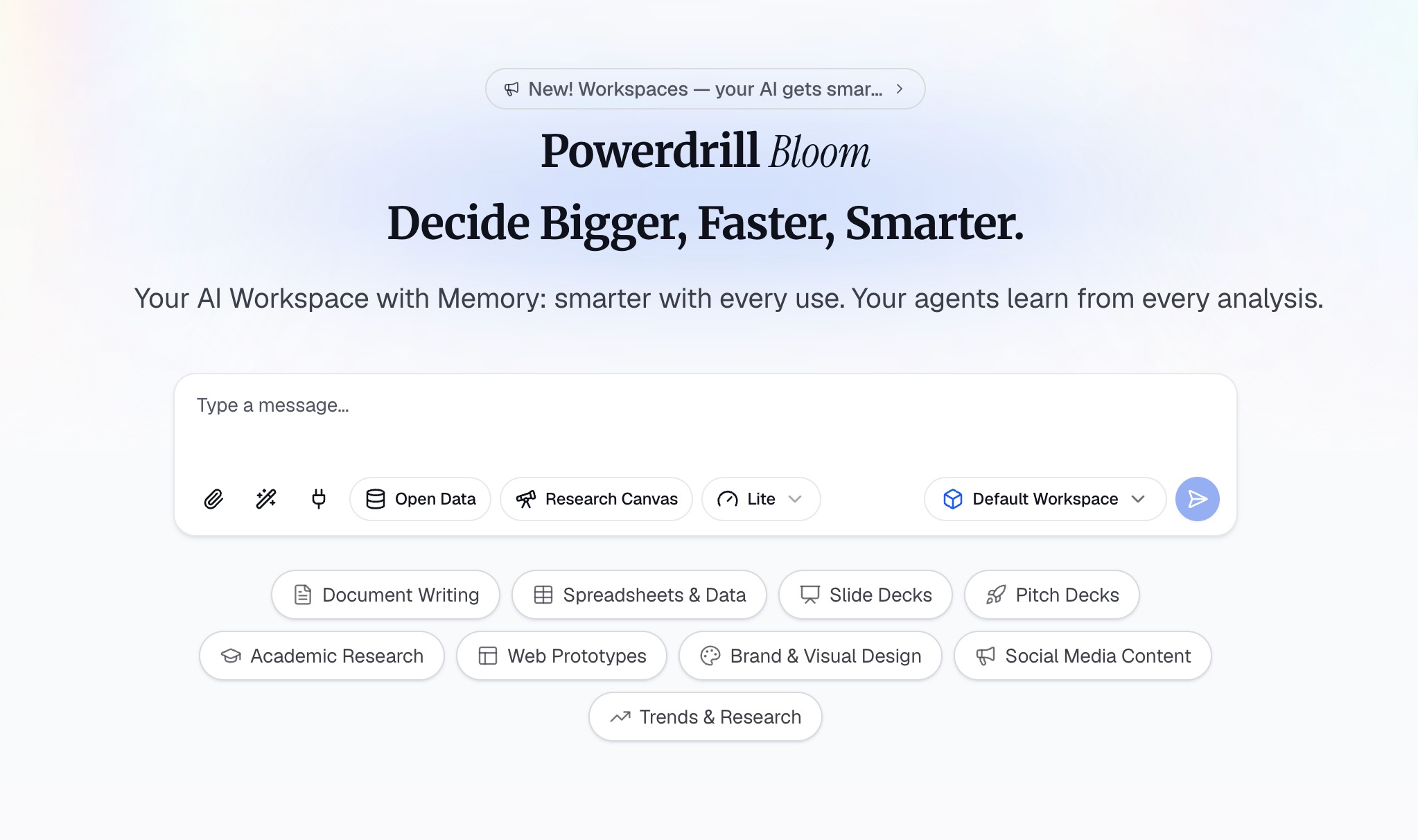
Powerdrill Bloom is an AI-powered workspace designed to help nonprofits turn data, files, and information into actionable insights and results. Rather than simply answering questions, Powerdrill Bloom can participate in the entire workflow, helping with research, data analysis, content organization, report generation, and task execution. Users can upload CSV, Excel, and other files and interact with their data using natural language. Powerdrill Bloom can analyze nonprofit datasets, identify trends and anomalies in donor behavior, uncover key insights regarding beneficiary outcomes, and generate charts, visual reports, and presentation-ready content for stakeholders. Beyond data analysis, it also supports specialized AI Skills for research, analysis, automation, and other complex tasks.
Powerdrill Bloom also provides persistent Workspaces where users can keep files, projects, and context organized across sessions, making it easier to continue ongoing reporting work without starting from scratch. Its integration with MemoryLake further enhances long-term memory, allowing Powerdrill Bloom to better understand and maintain relevant context over time. From raw data to insights, visualizations, reports, and execution, Powerdrill Bloom brings multiple AI-powered workflows together in one connected workspace.
Key Features
Upload CSV and Excel files to analyze datasets via natural language.
Automated generation of charts, visual reports, and presentation-ready content.
Persistent Workspaces to organize files, projects, and reporting contexts.
MemoryLake integration for enhanced long-term memory across sessions.
Specialized AI Skills for deep research, data automation, and complex tasks.
Pros
Requires absolutely no coding or technical background to analyze complex datasets.
Replaces multiple disconnected tools by handling the entire workflow from raw data to final visual report.
Remembers your organization's context, saving time when generating recurring monthly or quarterly reports.
Cons
Requires a slight paradigm shift for users used to traditional spreadsheet software.
Heavily relies on an internet connection for its cloud-based AI processing.
Pricing
Offers a free tier with basic capabilities; pro subscription plans start at $13.27/month.
2. UpMetrics
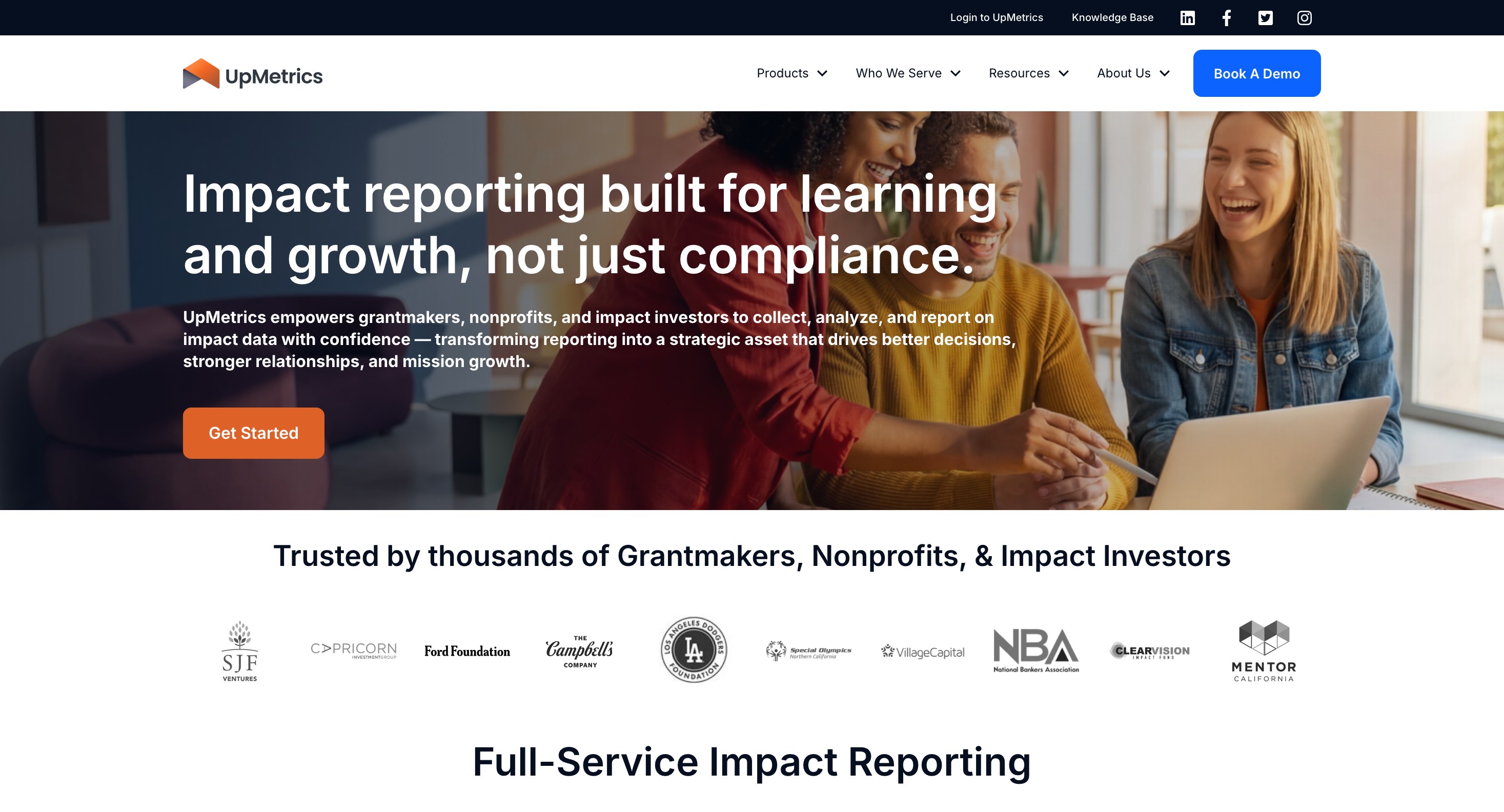
UpMetrics is an analytics platform specifically designed to empower mission-driven organizations. It focuses on Impact Measurement and Management (IMM), helping nonprofits collect, analyze, and leverage both quantitative data and qualitative stories. It provides customizable dashboards that make it easier to showcase impact to philanthropic partners.
Key Features
Customizable impact dashboards and scorecards.
Integration capabilities with various qualitative and quantitative data sources.
Pre-built frameworks for defining impact goals and metrics.
Pros
Highly tailored specifically to the nonprofit and philanthropic sectors.
Excellent at combining storytelling with hard data.
Strong visual dashboards that are easy to share with board members.
Cons
Can have a steep learning curve during the initial setup phase.
Less flexibility for ad-hoc natural language inquiries compared to AI-first workspaces.
Pricing
Start at $149/month.
3. Clear Impact
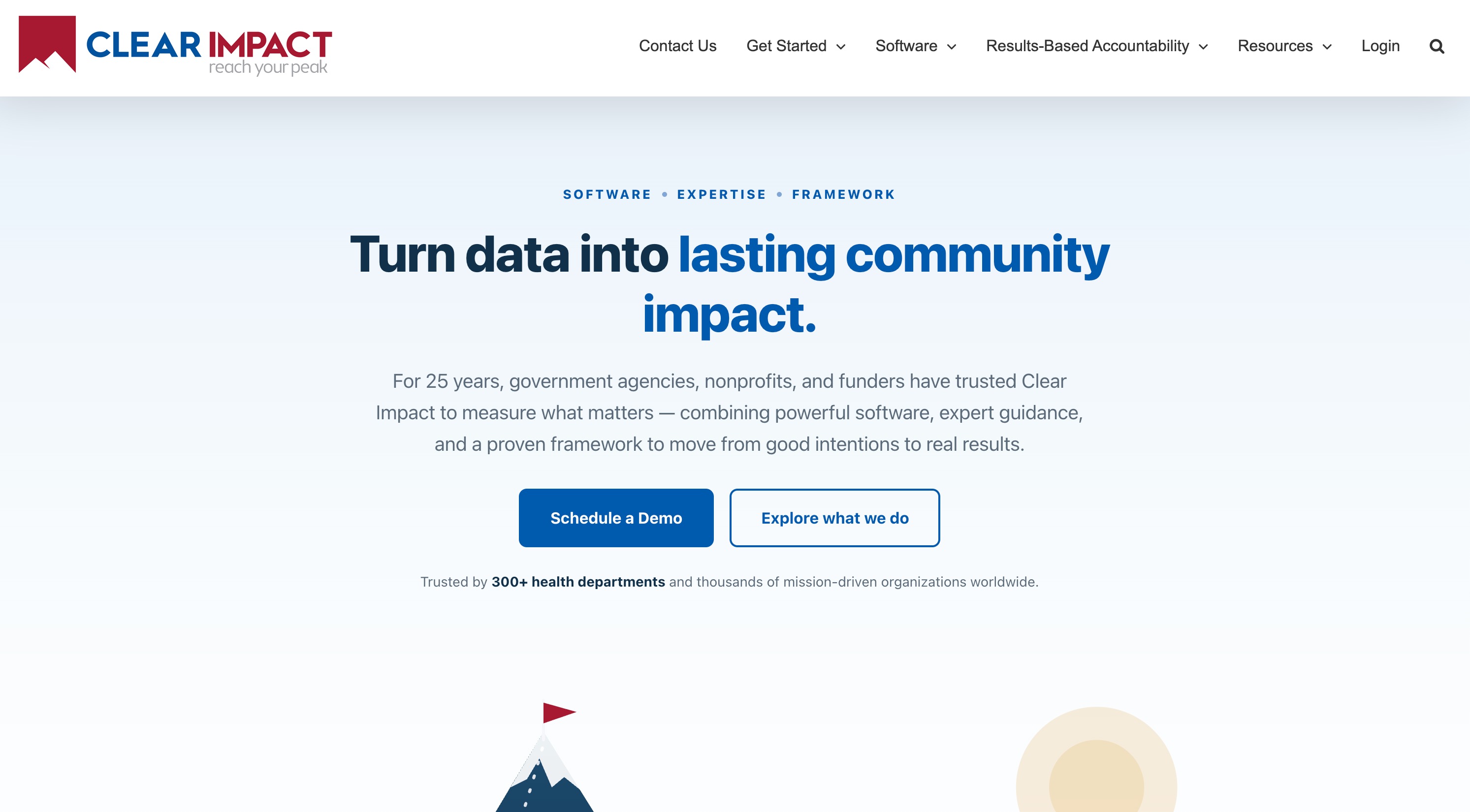
Clear Impact is a performance management software primarily based on the Results-Based Accountability (RBA) framework. It is widely used by government agencies, grantmakers, and nonprofits to track the performance of their programs and measure community-wide impact. Their flagship feature is the Clear Impact Scorecard.
Key Features
Clear Impact Scorecard for tracking community outcomes and program performance.
Built-in Results-Based Accountability (RBA) methodology.
Data aggregation tools for collective impact initiatives.
Pros
Perfect for organizations strictly adhering to the RBA framework.
Great for large-scale, multi-agency collaborative projects.
Provides clear, simple indicators (red, yellow, green) for performance tracking.
Cons
The UI can feel slightly dated compared to modern AI workspaces.
Not ideal if your organization doesn't use the RBA methodology.
Pricing
Custom pricing.
4. ImpactMapper
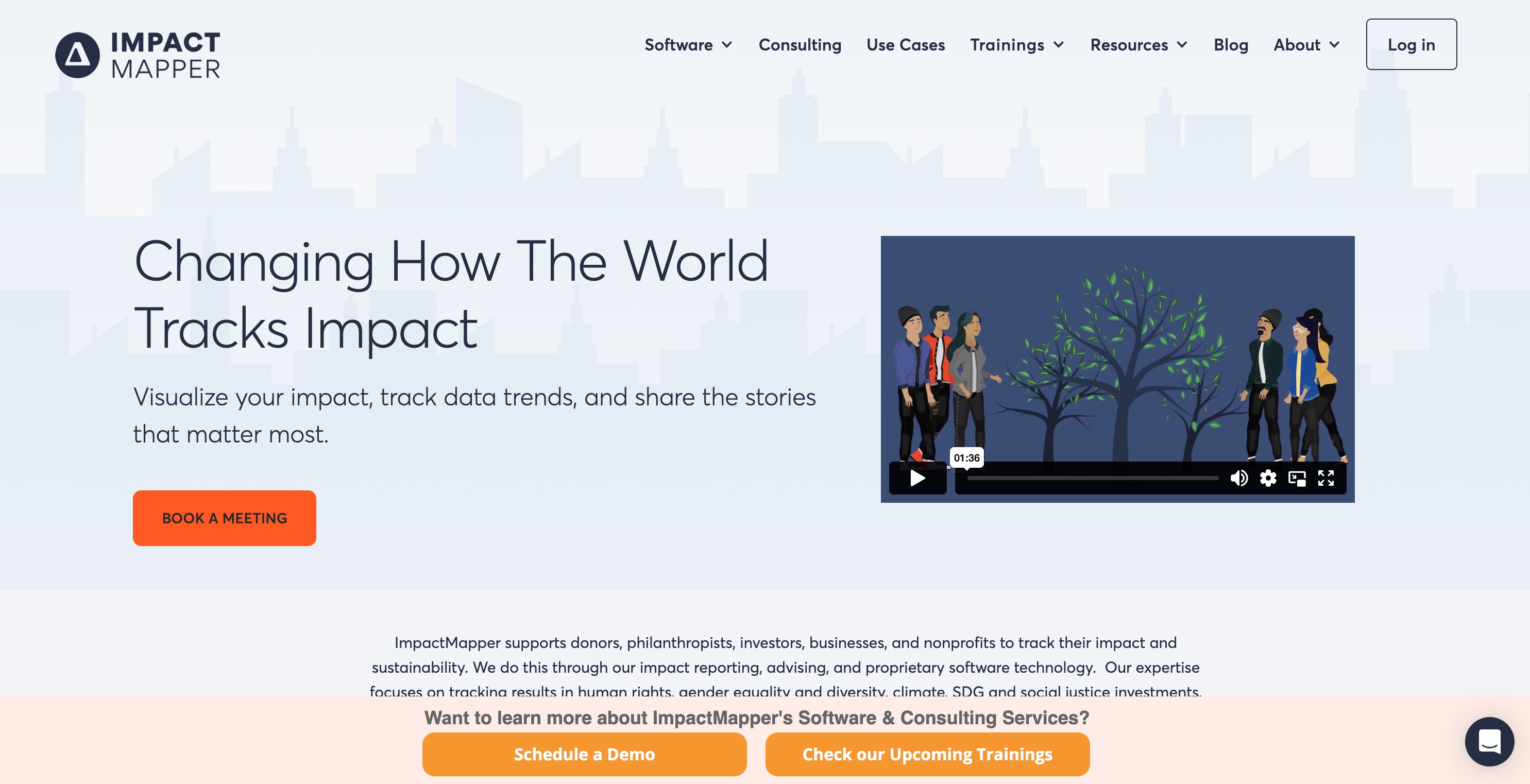
ImpactMapper is a unique tool that focuses heavily on tracking social change and human rights outcomes. It excels in analyzing qualitative data—such as grantee reports, beneficiary interviews, and case studies—extracting trends and insights that traditional quantitative tools might miss.
Key Features
Qualitative data tagging and narrative analysis.
Tools specifically designed for tracking social justice and human rights metrics.
Custom survey builder and data collection forms.
Pros
Incredible for organizations whose impact is difficult to quantify with numbers alone.
Simplifies the process of finding trends in large volumes of text.
Highly supportive of global, multilingual campaigns.
Cons
Lacks advanced automated charting for purely quantitative financial data.
Can be time-consuming to set up custom tagging structures.
Pricing
Custom pricing tiers tailored to the operating budget of the nonprofit.
5. Sopact
Sopact is a comprehensive end-to-end impact management platform that helps organizations measure their social return on investment (SROI). It heavily aligns with the United Nations Sustainable Development Goals (SDGs) and uses automated data pipelines to keep impact dashboards continuously updated.
Key Features
Alignment frameworks for UN SDGs, IRIS+, and other global standards.
Automated data pipelines connecting to platforms like Salesforce and Google Sheets.
Deep Impact Management Project (IMP) integration.
Pros
Excellent for ensuring compliance with global impact standards.
Real-time data syncing prevents reports from becoming outdated.
Strong capabilities for measuring complex social returns.
Cons
Very robust, which may be overkill for smaller, local nonprofits.
Requires a dedicated data officer to maximize its potential.
Pricing
$299/month.
6. SureImpact
SureImpact is an outcomes management platform built specifically for social service providers. It is designed to track the unique metrics associated with direct service delivery, helping case managers and nonprofit leaders see the direct result of their interventions on individuals and communities.
Key Features
Client and case management tracking modules.
Collective impact tracking for multiple organizations working together.
Automated outcome reporting and compliance tracking.
Pros
Tailored specifically for direct human services (e.g., homeless shelters, counseling centers).
Great for managing multi-partner community initiatives.
Simplifies compliance reporting for government grants.
Cons
More of a case management tool than a flexible AI data analysis workspace.
Customization options for visualizations are somewhat limited.
Pricing
Custom quotes based on user count and data complexity.
7. Bonterra
Bonterra (formerly a merger of EveryAction, CyberGrants, Social Solutions, and others) is a massive suite of tools covering fundraising, case management, and corporate social responsibility. Its impact reporting modules draw directly from its robust CRM, making it a powerhouse for large nonprofits.
Key Features
Massive, unified database covering donors, volunteers, and beneficiaries.
Advanced predictive analytics for fundraising and engagement.
Comprehensive grant and case management modules.
Pros
All-in-one ecosystem for massive enterprise-level nonprofits.
Highly secure and compliant with major data regulations.
Strong predictive AI for donor retention.
Cons
Extremely expensive and complex to implement.
Can be slow and bloated for users who only need simple data analysis.
Pricing
Enterprise pricing models; requires contacting sales for a custom quote.
8. Submittable
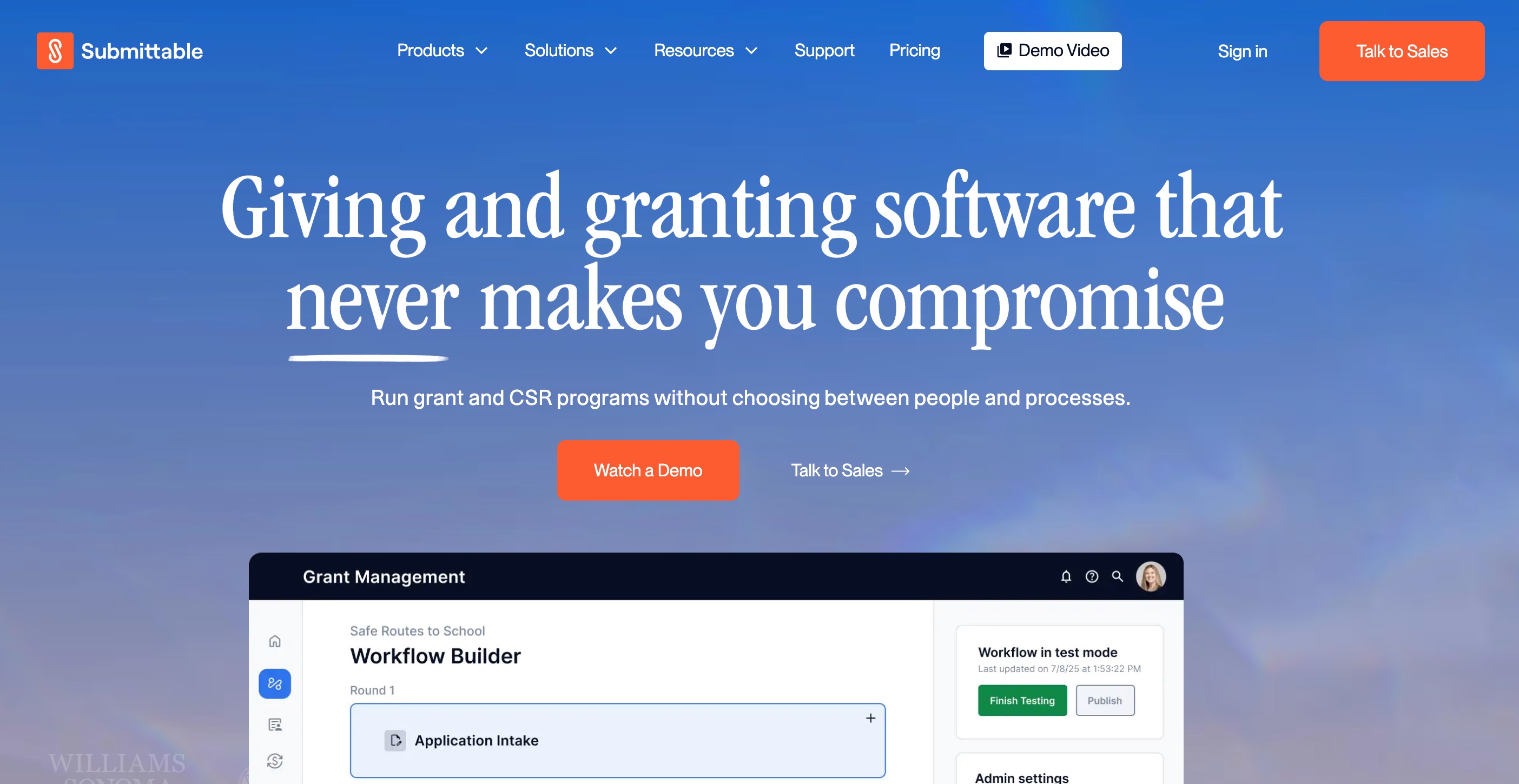
Submittable is primarily known as a grant management and application review platform, but its impact reporting features are stellar. It allows foundations, CSR teams, and nonprofits to collect data directly from grantees or applicants and automatically generate reports on the outcomes.
Key Features
Drag-and-drop form builder for data collection.
Automated review workflows and scoring rubrics.
Impact reporting dashboards based on submitted data.
Pros
The undisputed leader in managing incoming applications and grants.
Extremely intuitive and user-friendly interface.
Great at tracking the lifecycle of a grant from application to final impact report.
Cons
Impact reporting is limited strictly to data collected through their forms.
Not designed for analyzing internal organizational metrics.
Pricing
Custom pricing based on application volume and feature requirements.
9. Blackbaud
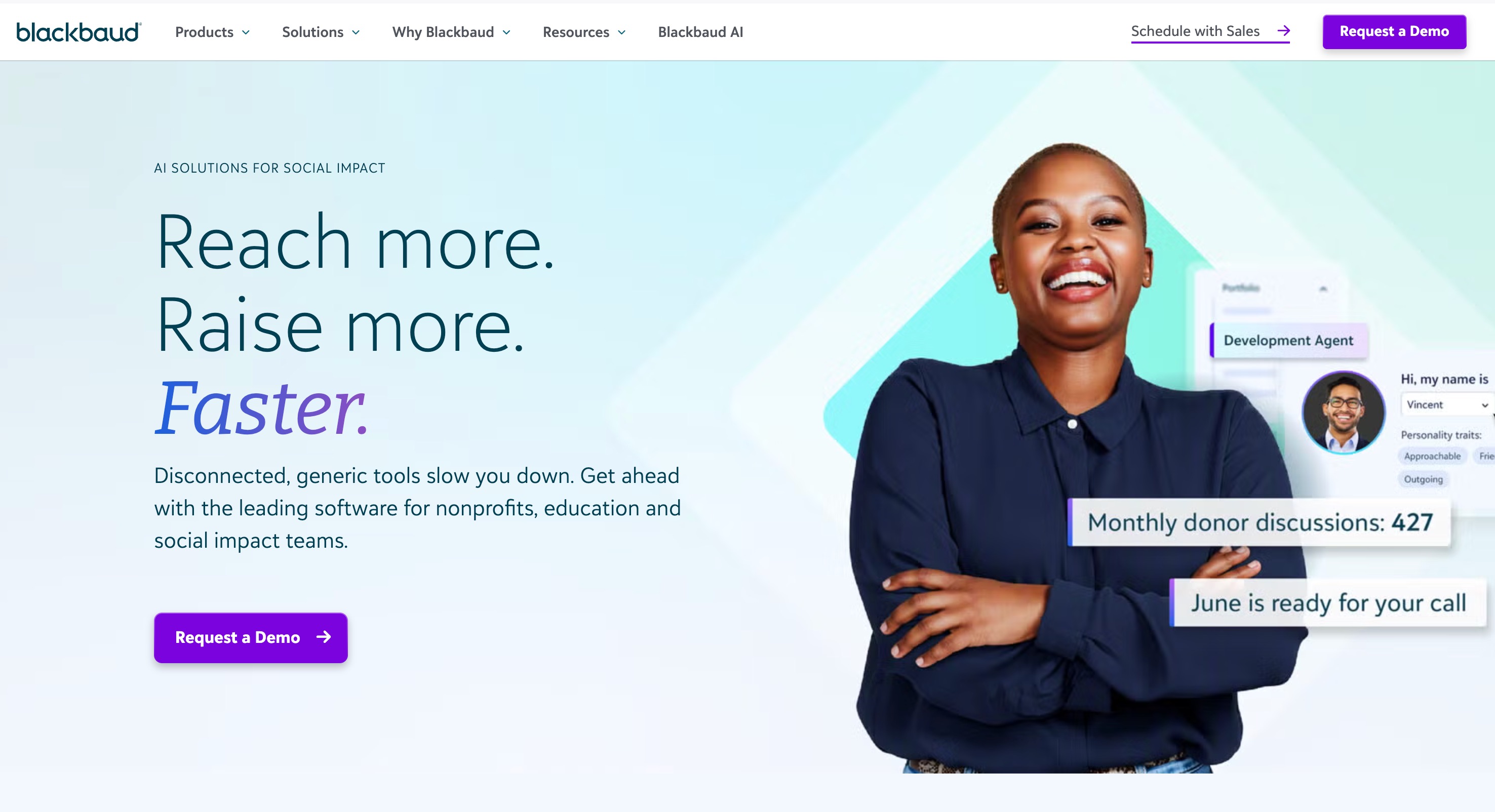
Blackbaud is one of the oldest and largest software providers for the nonprofit sector, known for its Raiser’s Edge CRM. Its AI and reporting tools are deeply integrated into its ecosystem, providing enterprise-grade analytics, primarily focused on fundraising, donor impact, and financial health.
Key Features
Raiser’s Edge NXT CRM with integrated reporting.
Wealth screening and predictive donor analytics.
Extensive financial and fundraising dashboards.
Pros
The industry standard for massive nonprofit organizations and universities.
Unmatched depth in donor and financial data tracking.
Extensive community and third-party consultant support.
Cons
Notorious for long, difficult, and expensive implementation processes.
The interface can feel outdated and overwhelming for standard users.
Pricing
Custom pricing.
10. LiveImpact
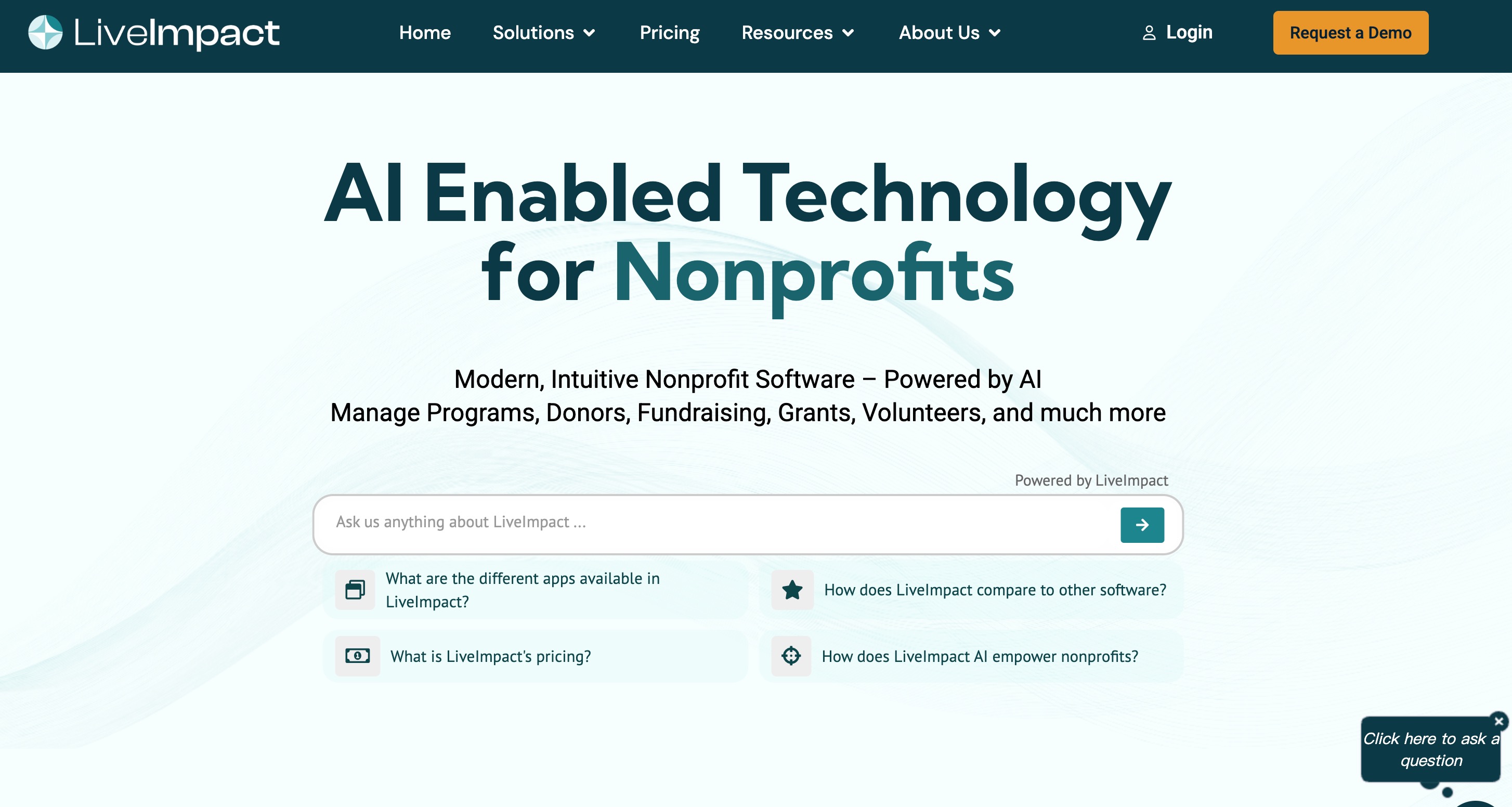
LiveImpact is a unified, cloud-based platform designed to be a complete operating system for nonprofits. It brings together donor management, event ticketing, volunteer tracking, and impact metrics into one place, making it easier to see how different organizational activities influence overall impact.
Key Features
Unified CRM capturing donors, volunteers, and beneficiaries.
Event management and ticketing with integrated reporting.
Customizable dashboards for real-time impact tracking.
Pros
Great "jack-of-all-trades" tool that replaces many disparate systems.
Cost-effective for mid-sized nonprofits needing a bit of everything.
Easy to track volunteer hours against community outcomes.
Cons
Does not offer the deep, complex AI analysis found in specialized data tools.
Visualizations are standard and lack advanced aesthetic customization.
Pricing
$350/month.
Which AI Tool Is Best for Nonprofit Impact Reporting
Choosing the "best" tool ultimately depends on your organization's specific needs, size, and existing workflows. Here is a quick breakdown of how these tools excel in different scenarios:
Best for Flexibility and AI-Driven Analysis: Powerdrill Bloom is unmatched in its ability to let you interact with any dataset using natural language. Its AI-powered workspace adapts to your specific workflow rather than forcing you into a rigid template.
Best for Grant Management: Submittable is the clear winner for organizations that need to collect applications, review them, and generate reports based on grantee feedback.
Best for Enterprise CRMs: Blackbaud and Bonterra are the heavyweights. If you have an enormous budget, thousands of employees, and need a massive system of record, these are your go-to options.
Best for Qualitative Data: ImpactMapper stands out for human rights organizations that rely on stories, case studies, and narrative impact rather than just numbers.
Best for Direct Services: SureImpact is highly recommended for social workers and direct human service providers who need to track individual beneficiary outcomes over time.
How to Choose the Right AI Impact Reporting Tool
Selecting the right software is a critical decision. Here is a step-by-step guide to evaluating your options:
Identify Your Primary Data Type: Are you dealing mostly with numerical data (donations, attendance, test scores) or qualitative data (interviews, case notes)? While tools like ImpactMapper are fantastic for narratives, and Sopact is great for UN SDG compliance, they serve very different purposes.
Assess Your Team’s Technical Skills: Traditional enterprise tools like Blackbaud offer immense power but require trained database administrators to use effectively. If your team lacks data scientists, you need an accessible platform.
Evaluate Workflow Integration: Consider how much manual work the tool actually eliminates. Does it just make a chart, or does it help you write the narrative?
Consider Budget Constraints: Enterprise platforms can cost tens of thousands of dollars annually. Look for scalable pricing models that fit non-profit budgets.
Our Recommendation:
While tools like UpMetrics and Sopact provide excellent structured frameworks for impact measurement, and Blackbaud dominates the enterprise CRM space, we strongly recommend Powerdrill Bloom for the vast majority of nonprofits. Its versatility is its greatest strength. Because Powerdrill Bloom acts as an intelligent workspace rather than a rigid database, it effortlessly adapts to your specific needs. The ability to simply upload an Excel file of your program data, ask questions in plain English, and have the AI instantly generate beautiful charts, visual reports, and presentation-ready content is a game-changer. Furthermore, its MemoryLake integration ensures that it learns about your organization over time, making future reporting faster and more intuitive. It empowers non-technical staff to perform high-level data analysis without the enterprise price tag.
Final Verdict
Impact reporting no longer has to be a tedious, resource-draining task. By leveraging AI, nonprofits can transform raw, messy data into compelling, visual stories that inspire donors and satisfy grantmakers. While there are many excellent niche platforms on the market, organizations looking for a flexible, intuitive, and highly capable AI assistant should look no further than Powerdrill Bloom. From analyzing datasets to generating presentation-ready reports, it brings multiple AI-powered workflows together in one connected workspace. Start streamlining your impact reporting today and get back to focusing on what truly matters: your mission.
FAQs
1. What is nonprofit impact reporting?
It is the process of measuring, analyzing, and communicating the social and environmental outcomes of a nonprofit's activities.
2. How does AI help in impact reporting?
AI automates data analysis, identifies hidden trends, and generates visual reports, saving nonprofits immense time and manual effort.
3. Is Powerdrill Bloom good for beginners?
Yes, you interact with data using natural language, meaning absolutely no coding or advanced technical skills are ever required.
4. Are these AI reporting tools secure?
Reputable tools prioritize data privacy, employing encryption and compliance standards to protect sensitive donor and beneficiary information securely.
5. Can AI replace human analysts in nonprofits?
No, AI augments human capabilities by handling tedious data processing, allowing staff to focus on strategy and impactful storytelling.