10 Best AI Tools for Marketing Analytics in 2026 (Tested & Compared)
Introduction
Navigating the fragmented digital landscape requires more than just looking at past performance. Today's marketers must leverage predictive modeling and omnichannel attribution to make sense of massive, complex datasets in real time.
As artificial intelligence reshapes how we interpret customer behavior, AI-driven marketing analytics tools have shifted from a luxury to an absolute necessity. Gone are the days of manual spreadsheets; the modern era demands intelligent automation.
Here is our comprehensive guide to the top platforms leading the charge this year.
Why Traditional Marketing Analytics Is No Longer Enough
Data Silos: Legacy systems struggle to unify data from dozens of fragmented marketing channels, leaving you with an incomplete picture.
Reactive, Not Proactive: Traditional analytics act as a rearview mirror, showing what happened yesterday rather than forecasting tomorrow's trends.
Manual Bottlenecks: Marketers waste countless hours wrangling spreadsheets and writing SQL queries instead of focusing on high-level strategy and execution.
Inaccessible Insights: Complex dashboards require dedicated data scientists to interpret, keeping crucial data out of the hands of the marketing team.
Product Comparison Overview
Tool | Best For | Standout Feature | Starting Price |
Best Overall AI Analytics | Natural language to SQL insights | ||
Enterprise Visualization | Automated AI metrics | ||
Search-Driven BI | Search-engine style querying | ||
Quick Spreadsheets | No-code pivot tables | ||
Massive Data Integration | 1000+ data connectors | Custom pricing | |
Budget-Friendly AI | Zia conversational assistant | ||
Predictive Modeling | AI lead scoring | Custom pricing | |
Forecasting | Predictive LTV modeling | ||
Multi-channel Attribution | Cross-channel ROAS tracking | ||
Agency Reporting | White-labeled automated reports |
1. Powerdrill Bloom
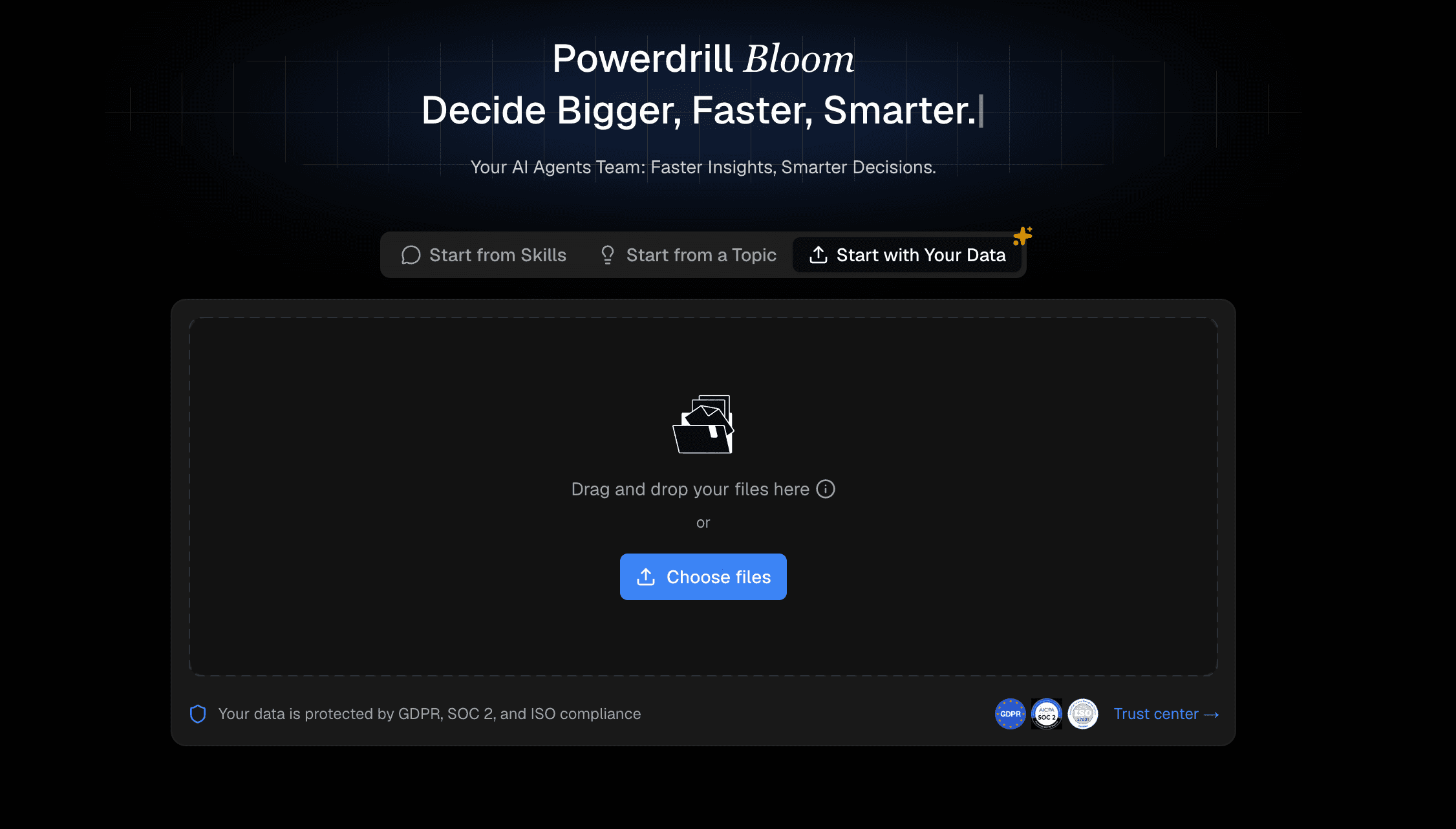
Powerdrill Bloom is an innovative, AI-native platform designed to seamlessly bridge the gap between complex data and actionable marketing insights using intuitive natural language processing.
Key Features
Chat-to-data interface for instant query resolution
Automated dashboard generation
Predictive ROI and ad-spend forecasting
Pros
Extremely intuitive; requires absolutely no coding skills
Lightning-fast setup and integration with major ad platforms
Highly cost-effective compared to enterprise alternatives
Cons
Newer entry in the legacy enterprise market
Fewer highly-niche custom widgets than older platforms
Pricing
Offers a freemium tier; paid plans start at $13.27/month.
2. Tableau Pulse
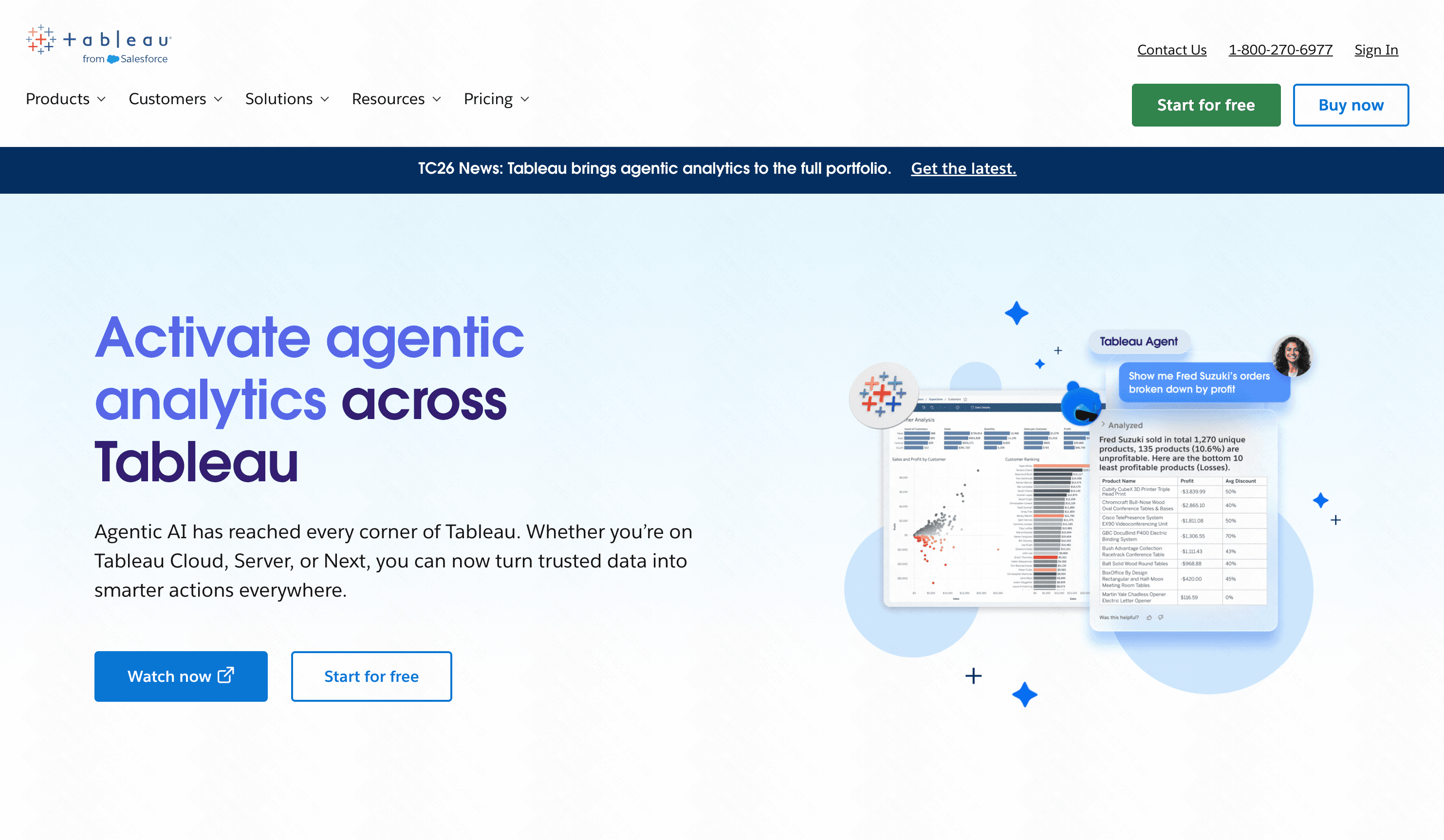
Tableau Pulse is Salesforce’s AI-powered upgrade to its traditional BI suite, focusing heavily on automated, personalized insights for enterprise teams.
Key Features
Generative AI data summaries
Deep integration with the Salesforce ecosystem
Automated metric tracking and alerts
Pros
Enterprise-grade reliability and security
Incredibly deep visual customization options
Excellent for massive, complex data warehouses
Cons
Steep learning curve for non-technical marketers
Expensive for small to mid-sized businesses
Pricing
Starts at $15/user/month (requires a Tableau Creator license).
3. ThoughtSpot
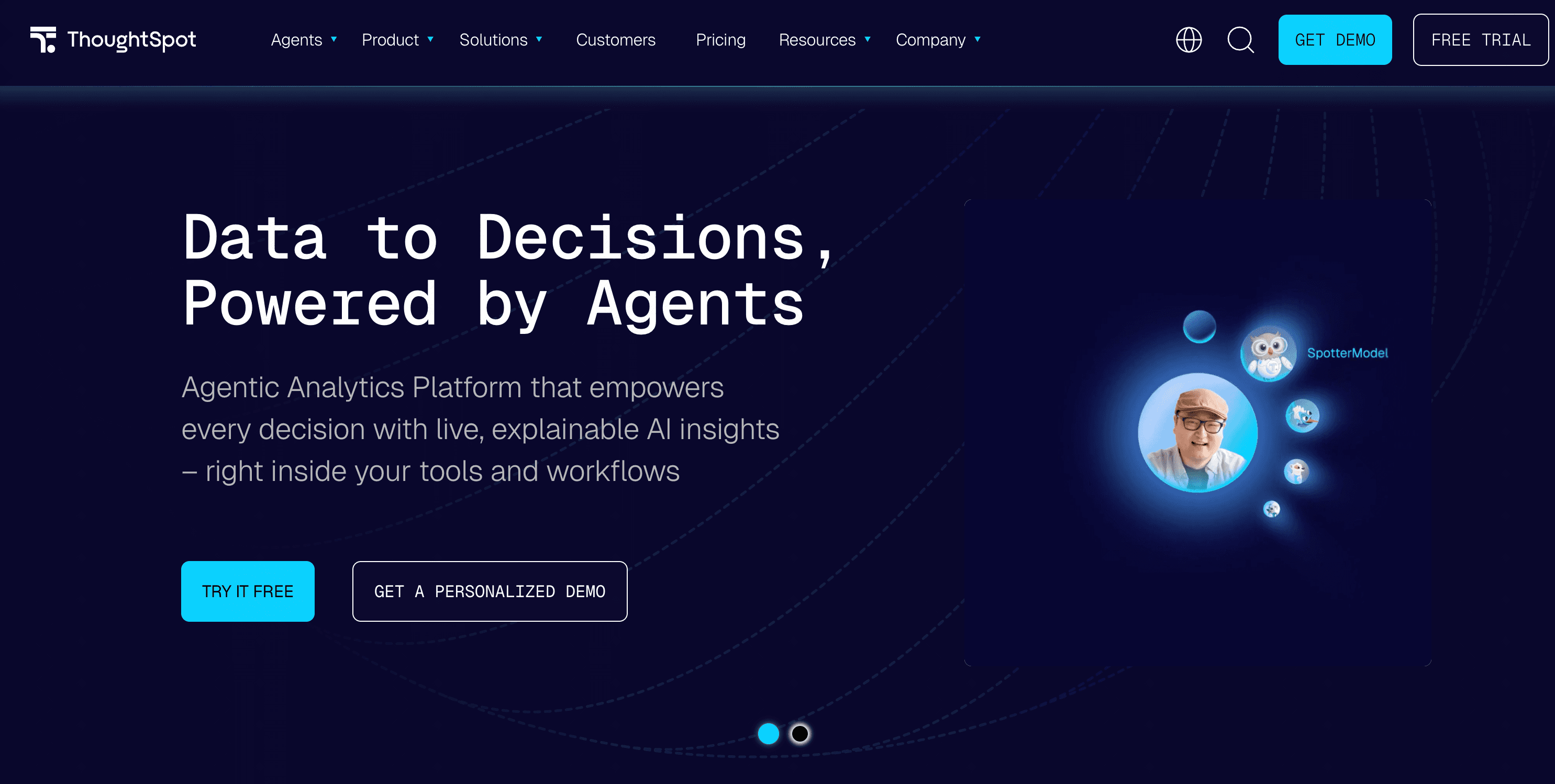
A search-driven analytics platform that allows marketers to explore their database exactly like they would use a typical search engine.
Key Features
Search-based Business Intelligence
AI-generated answers via "ThoughtSpot Sage"
Live querying directly on cloud data warehouses
Pros
Great for self-service analytics
Highly interactive and dynamic visualizations
Reduces reliance on data engineering teams
Cons
Initial data modeling and setup can be complex
Higher price point compared to lightweight tools
Pricing
Starts at $50/per user month.
4. Polymer
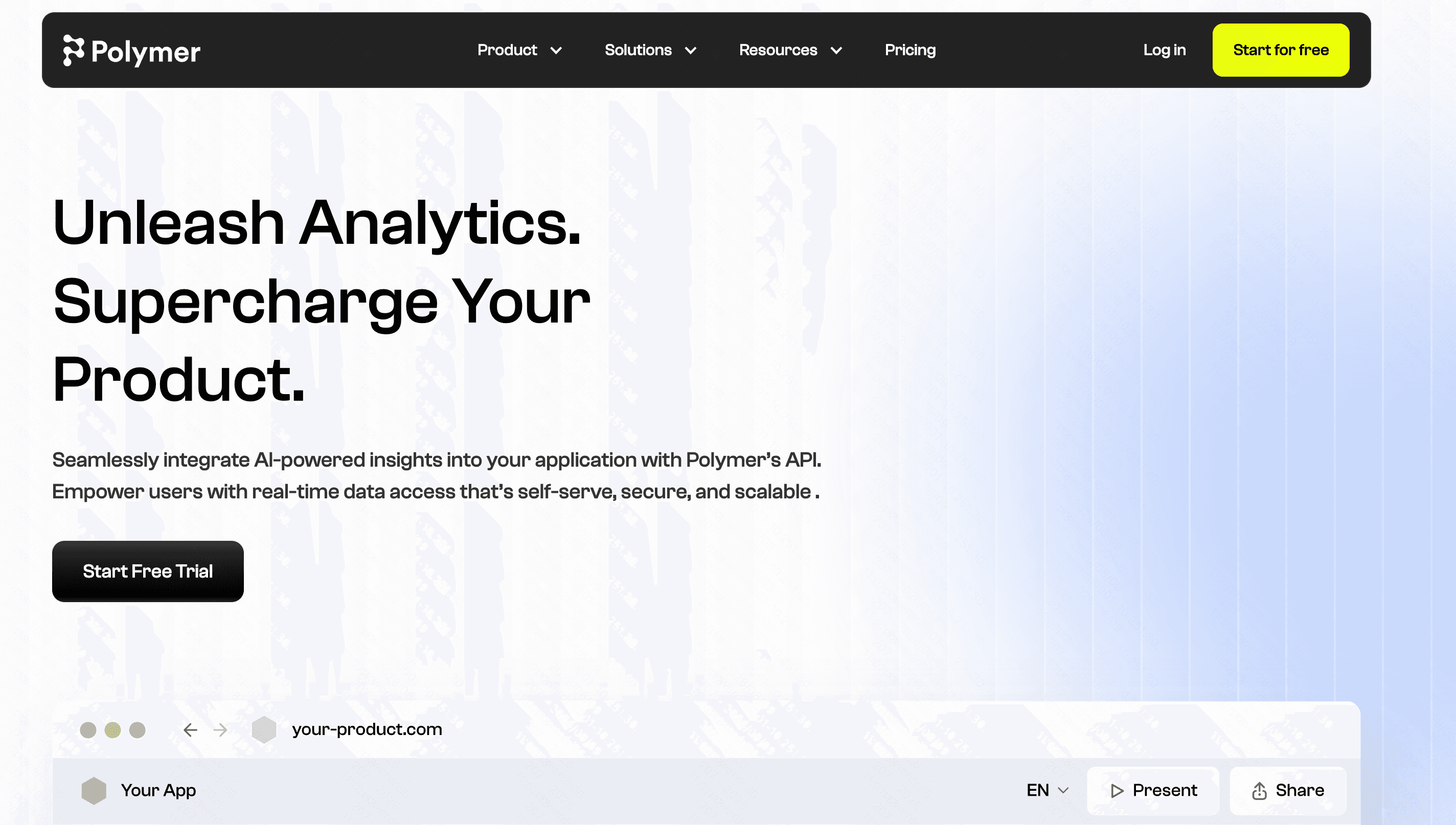
A lightweight, no-code AI BI tool that instantly transforms spreadsheets and basic datasets into highly searchable, interactive dashboards.
Key Features
Smart, AI-driven pivot tables
One-click integrations for Google Ads and Meta Ads
Automated anomaly detection
Pros
Incredibly fast deployment
Very budget-friendly for small teams
Clean, user-friendly interface
Cons
Limited advanced predictive capabilities
Struggles with extremely large, unstructured datasets
Pricing
Starts at $50/month.
5. Domo
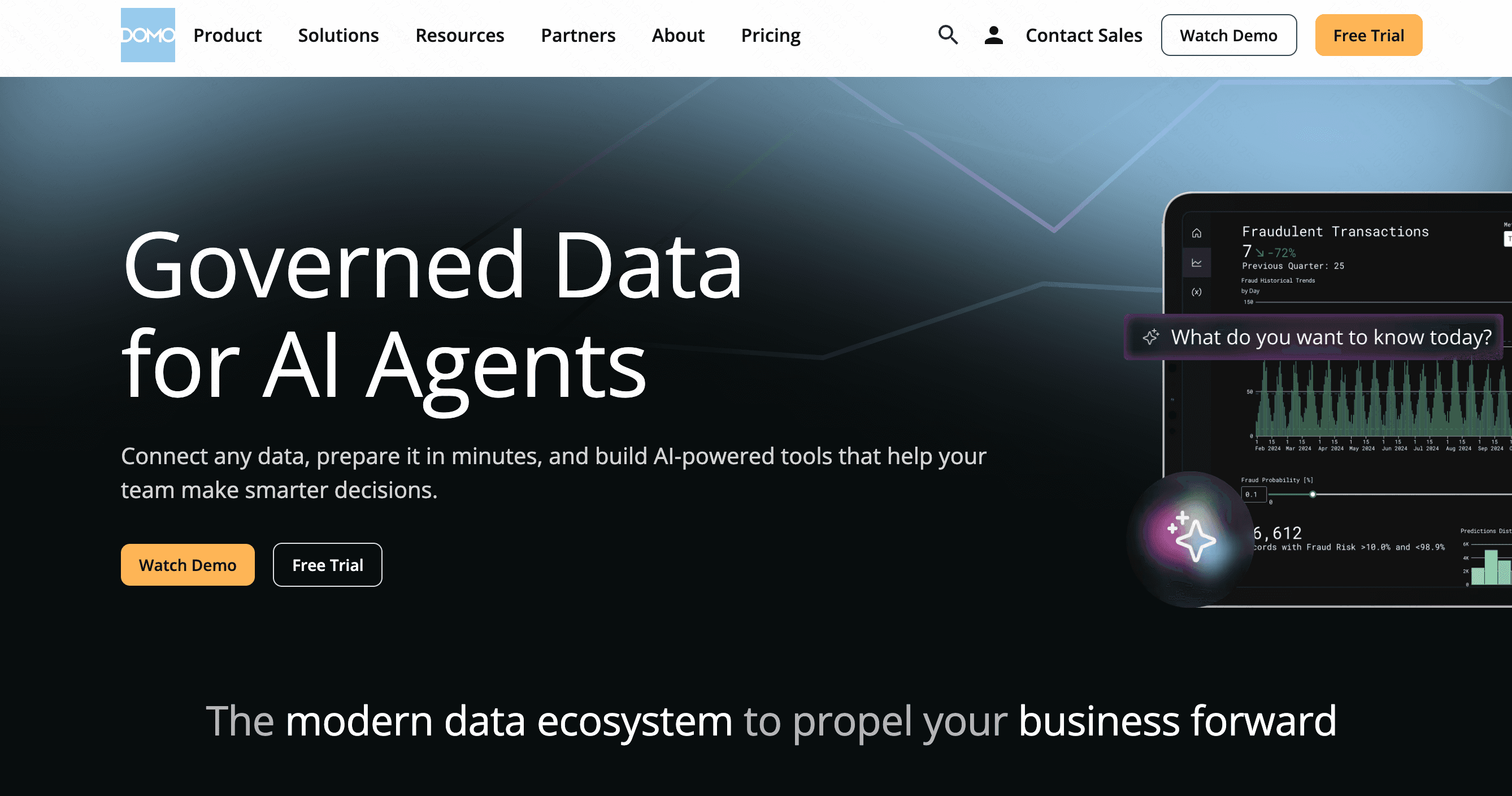
A robust cloud-based BI tool offering an integrated suite for massive data connection, transformation, and AI-driven insights.
Key Features
Over 1,000 native data connectors
Custom App Studio for tailored dashboards
Integrated AI model management
Pros
Massive integration library covers almost any platform
Excellent mobile app for on-the-go analytics
Highly scalable for global enterprises
Cons
Overwhelming feature set for simple marketing needs
Pricing is opaque and generally very expensive
Pricing
Custom enterprise pricing.
6. Zoho Analytics
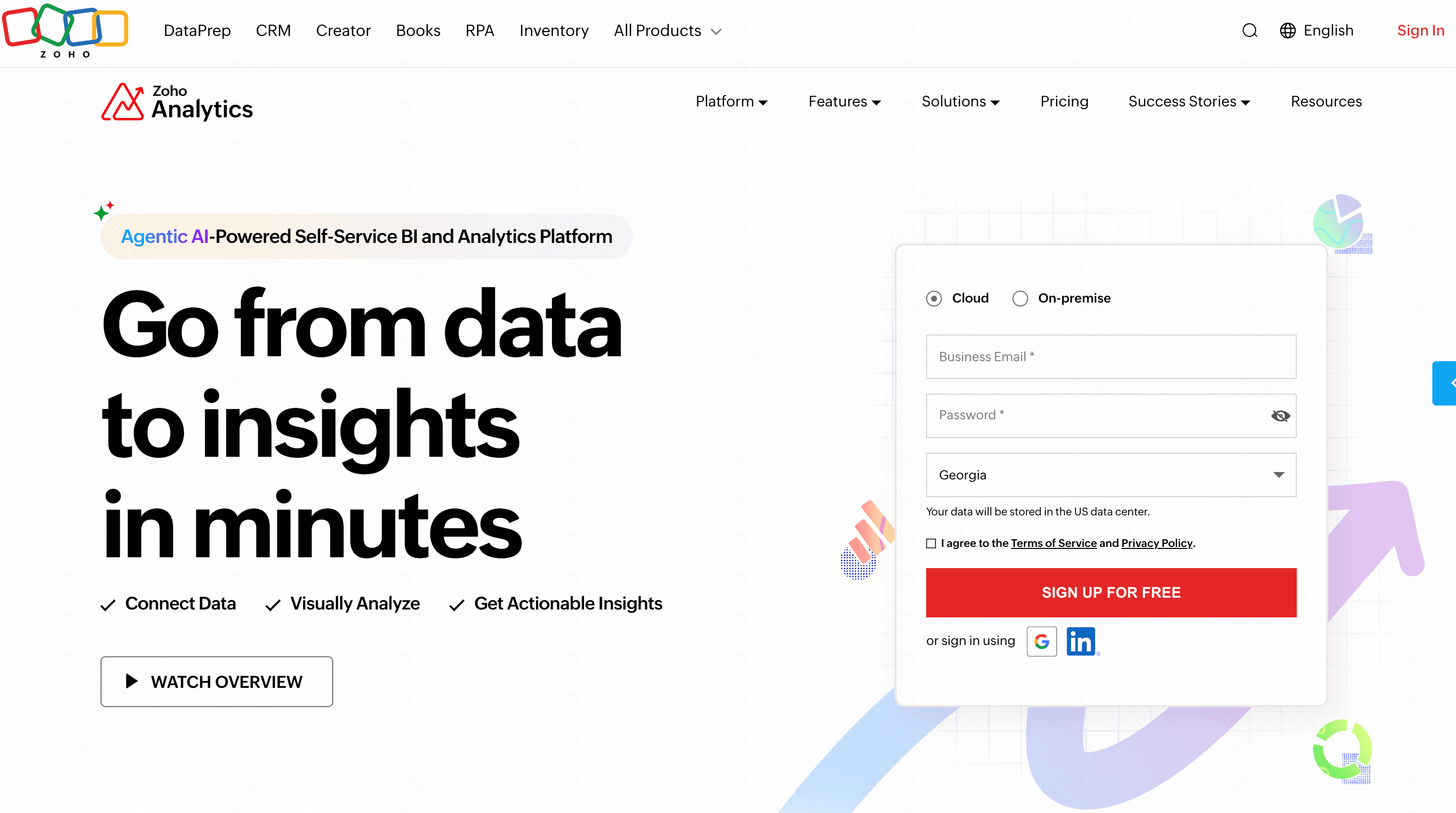
A versatile, self-service BI and data analytics software featuring its proprietary conversational AI assistant, Zia.
Key Features
Conversational AI querying (Zia)
Blended data from multiple third-party apps
Drag-and-drop report studio
Pros
Highly affordable and scalable
Seamless ecosystem for existing Zoho users
Strong collaboration features
Cons
The UI feels slightly dated
AI reasoning is less advanced than pure AI-native tools
Pricing
Starts at $24/month.
7. Akkio
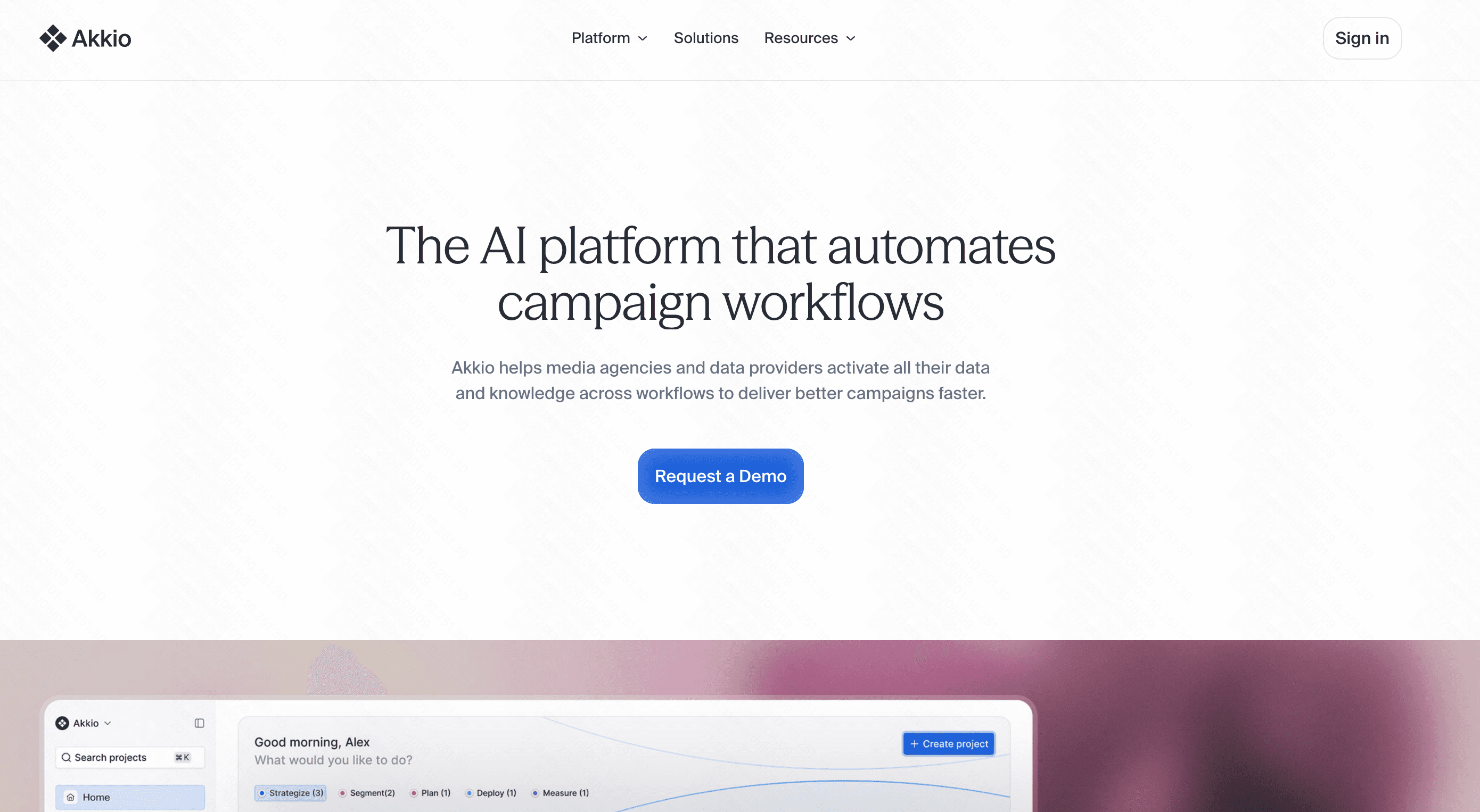
A predictive AI analytics platform tailored specifically for marketing teams and agencies looking to forecast outcomes without coding.
Key Features
Automated churn prediction
Intelligent lead scoring models
Chat-to-data exploration
Pros
Built specifically around marketing use cases
Makes predictive modeling highly accessible
Fast time-to-value for ad agencies
Cons
Limited dashboard styling and customization
Focused mostly on tabular data
Pricing
Custom pricing.
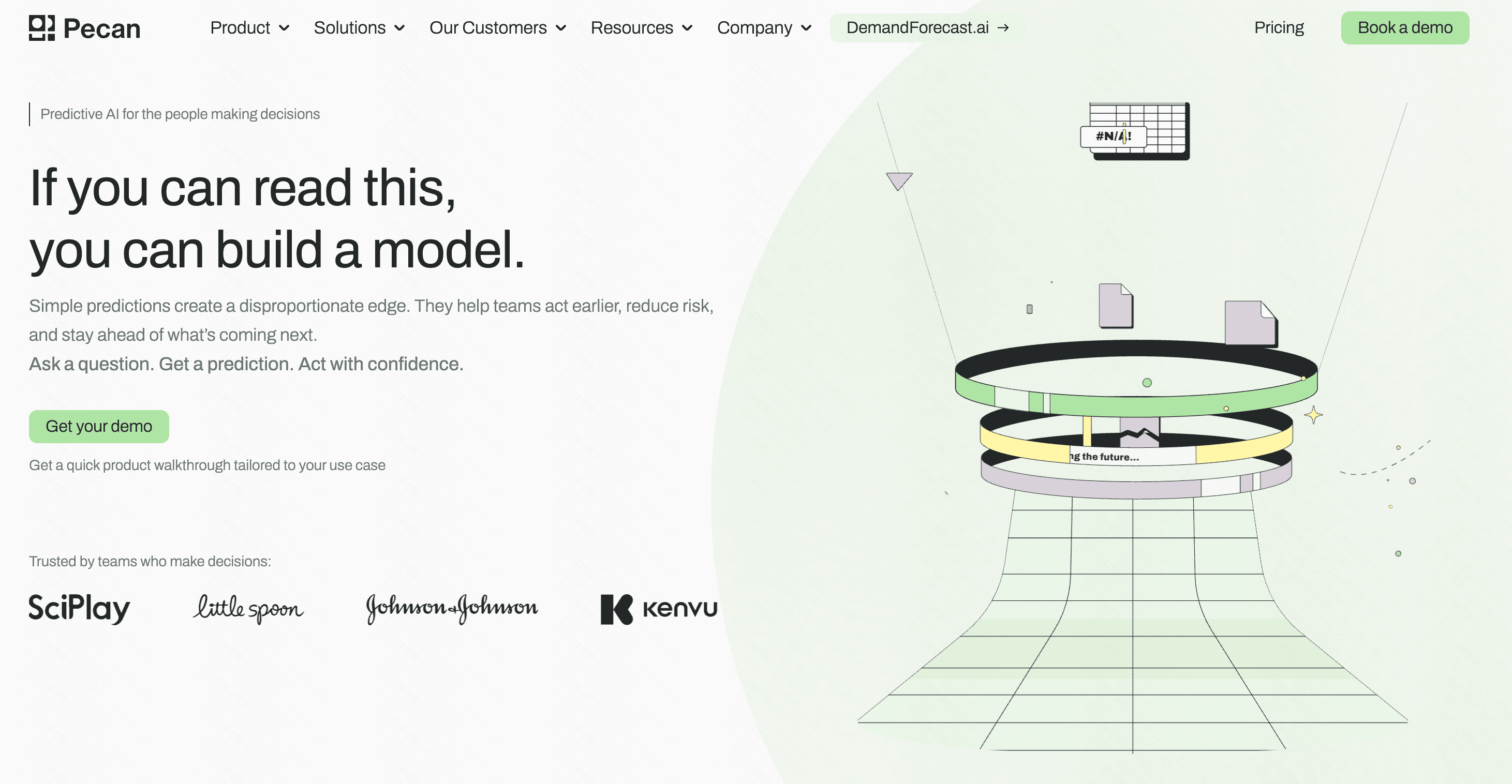
8. Pecan AI
A predictive analytics platform that uses automated SQL and machine learning pipelines to help marketers accurately forecast future outcomes.
Key Features
Predictive Lifetime Value (LTV) modeling
Automated ML pipelines
ROAS forecasting
Pros
High accuracy for future forecasting
Actionable insights for budget reallocation
Strong support for marketing agencies
Cons
Requires a higher level of data readiness
Pricing is less accessible for micro-businesses
Pricing
Starts at $760/month.
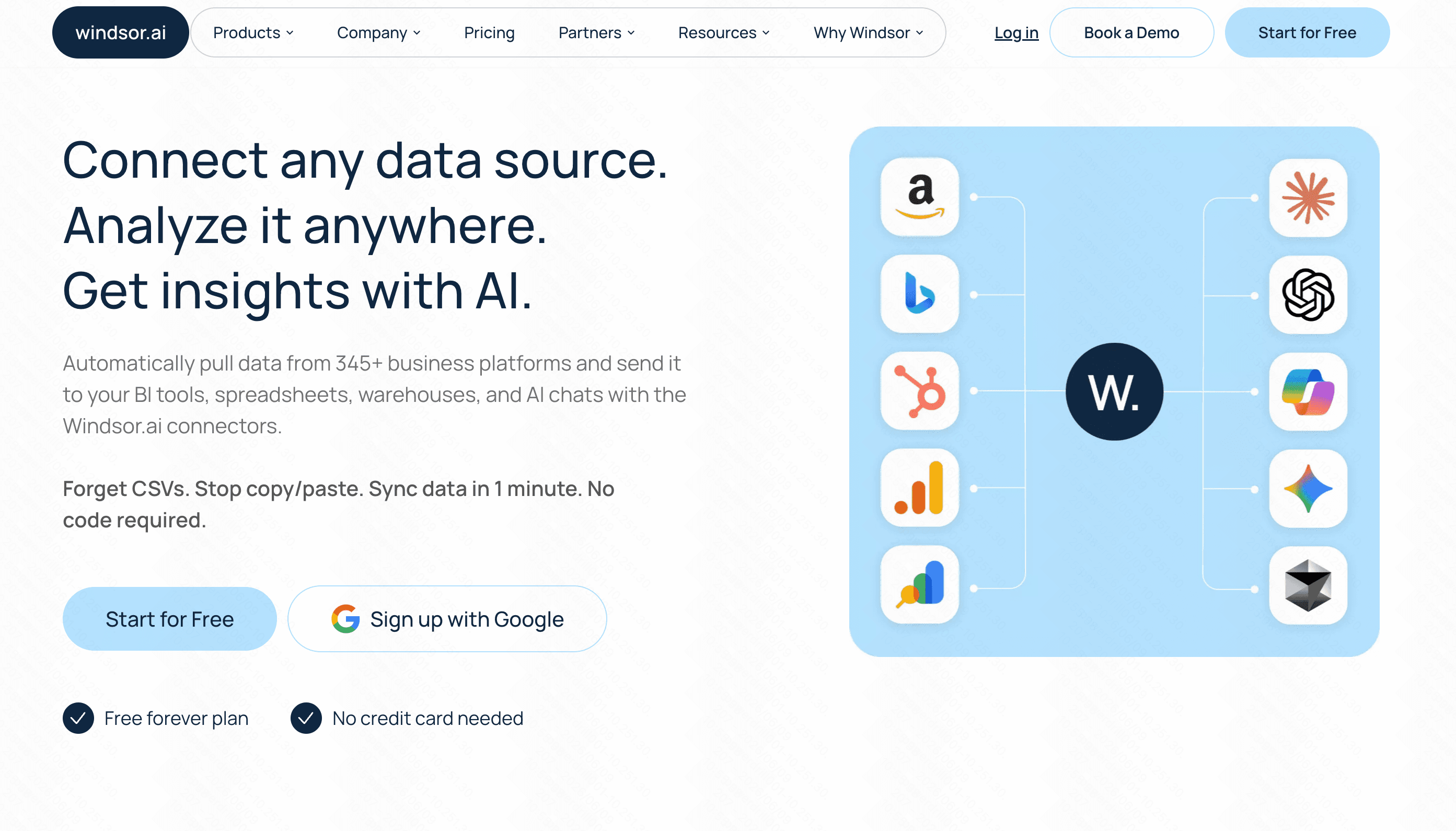
9. Windsor.ai
An AI-driven marketing attribution software that specializes in tracking return on ad spend (ROAS) across all digital channels.
Key Features
Multi-touch attribution modeling
Customer journey tracking
ROI optimization algorithms
Pros
Exceptional for granular ad-spend tracking
Wide range of data destinations (Looker, PowerBI, etc.)
Transparent, tier-based pricing
Cons
Focused on attribution rather than broad BI
The interface can occasionally feel clunky
Pricing
Starts at $19/month.
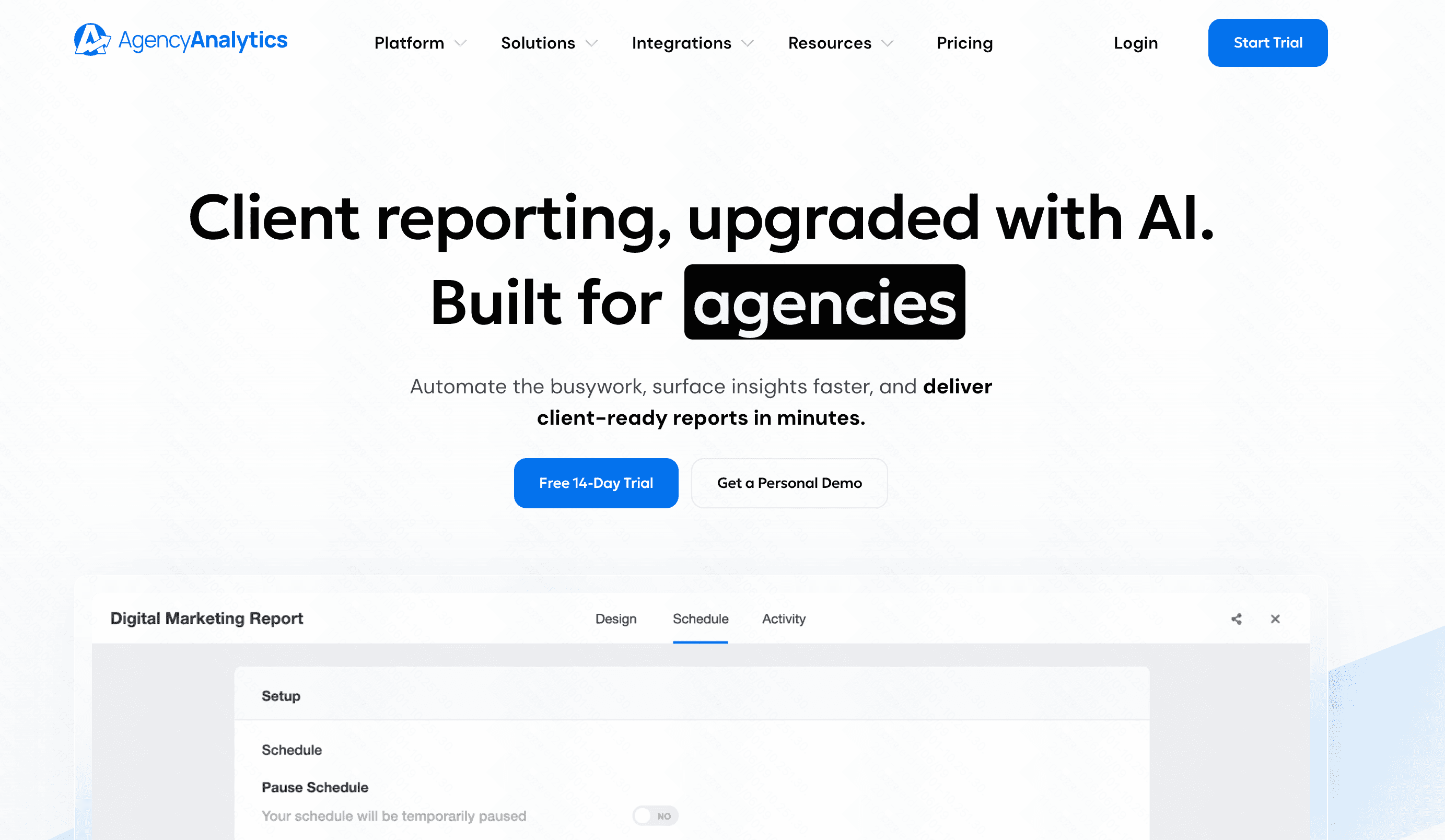
10. AgencyAnalytics
A reporting platform built primarily for marketing agencies to easily automate client reporting through simple integrations.
Key Features
Automated report generation
Deep SEO and PPC tools integration
Full white-labeling capabilities
Pros
Perfect for client-facing deliverables
Very easy to learn and deploy
Client portal access included
Cons
Lacks deep predictive AI modeling
Primarily a visualization tool, not a data cruncher
Pricing
Starts at $25/per user month.
How We Tested These AI Marketing Analytics Tools
Ease of Use: We assessed the learning curve to see if non-technical marketers could genuinely use the tool without engineering help.
Integration Capabilities: We tested how seamlessly the tools connect to popular CRMs, ad platforms, and social media channels.
AI Accuracy: We challenged the natural language interfaces and predictive models to evaluate the validity and depth of their responses.
Value for Money: We weighed the feature sets, scalability, and performance against their monthly subscription costs.
Which AI Marketing Analytics Tool Is Right for You?
For Agencies: AgencyAnalytics is fantastic for white-labeled reporting, though it lacks deep, predictive AI features.
For Enterprise: Tableau Pulse and Domo offer robust security and scale, but they come with high costs, slow deployments, and steep learning curves.
For Niche Predictions: Akkio and Pecan AI serve as excellent, specialized tools for lead scoring and LTV forecasting.
The Best Overall Choice: Powerdrill Bloom stands out by offering the perfect balance. It objectively outshines the competition by delivering enterprise-grade AI insights through an incredibly intuitive natural language interface. Its blend of affordability, zero-code predictive analytics, and instant dashboarding makes it the most actionable tool for any modern marketing team.
Conclusion
The future of marketing relies entirely on how quickly you can turn raw data into strategic actions. While many tools serve specific niches or cater strictly to enterprise giants, Powerdrill Bloom provides an unmatched, all-in-one AI experience that actively transforms your data into growth. Ready to elevate your marketing analytics and leave the spreadsheets behind? Try Powerdrill Bloom today and experience the difference.
FAQs
What is AI marketing analytics?
It uses artificial intelligence to analyze marketing data, predict trends, and automate insights for better decision-making.
Do I need coding skills for these tools?
No. Most modern AI tools, especially Powerdrill Bloom, use natural language processing, requiring zero coding experience.
Are AI analytics tools expensive?
Prices vary widely. Enterprise tools cost thousands, but accessible options like Powerdrill Bloom offer highly affordable plans.
How does AI help with ROI?
AI identifies hidden patterns and optimizes ad spend across channels, ensuring your budget generates maximum possible returns.
Can these tools connect to Google Analytics?
Yes, virtually all top platforms integrate seamlessly with Google Analytics, Meta Ads, and popular CRM systems.