12 Best AI Tools for Market Research Analysis in 2026 (Fully Compared)
In the rapidly evolving business landscape of 2026, understanding your target audience, tracking competitors, and predicting industry trends are more critical than ever. However, traditional market research is often notoriously slow, expensive, and buried in complex spreadsheets. This is where Artificial Intelligence steps in to revolutionize the industry. AI tools for market research analysis are no longer just basic chatbots; they are sophisticated engines capable of crunching massive datasets, generating interactive visualizations, conducting qualitative interviews, and even building presentation decks in seconds.
Whether you are a startup founder trying to find product-market fit, a corporate strategist benchmarking competitors, or an enterprise researcher dealing with millions of survey responses, there is an AI solution tailored to your needs. In this comprehensive guide, we will dive deep into the 12 best AI tools for market research analysis available in 2026. We will compare their features, pros, cons, and pricing to help you make an informed decision and upgrade your data analysis workflows.
What Is AI-Powered Market Research
AI-powered market research refers to the use of artificial intelligence, machine learning, and natural language processing to automate, enhance, and accelerate the process of gathering and analyzing market data.
Here is exactly what it entails:
Automated Data Processing: AI can instantly clean, categorize, and analyze massive datasets from Excel, CSV, or CRM systems without requiring manual data entry.
Advanced Sentiment Analysis: By processing social media posts, reviews, and survey responses, AI can determine the underlying emotional tone of your consumers.
Predictive Analytics: Machine learning models identify historical patterns to forecast future consumer behaviors, market shifts, and emerging industry trends.
Natural Language Querying: Users can ask questions about complex datasets in plain English (e.g., "What is the primary reason customers churned last quarter?") instead of writing complex SQL queries.
Synthetic Data Generation: AI can create accurate simulated market environments or synthetic customer personas to test concepts before spending budget on real-world panels.
Automated Reporting: AI transforms raw numbers into fully formatted reports, visual charts, and presentation-ready decks in a matter of minutes.
How We Compared the 12 AI Market Research Tools
To ensure we are recommending the most capable and reliable platforms, we evaluated dozens of tools based on a strict set of criteria.
Here is how we compared the top contenders:
Data Handling & Integration: We assessed how easily the tool can ingest raw data formats (CSV, Excel, PDFs) and integrate with existing enterprise ecosystems or APIs.
Depth of AI Capabilities: We looked beyond basic generative text. We prioritized tools with native AI features like automated visualization, predictive modeling, and persistent memory.
Ease of Use & UI/UX: We evaluated the learning curve, focusing on platforms that allow non-technical marketers and researchers to operate without Python or SQL knowledge.
Output Actionability: We checked if the tool simply provides text answers or if it generates ready-to-use business assets like dashboards, reports, and slide decks.
Accuracy & Hallucination Mitigation: For market research, factual accuracy is non-negotiable. We favored tools that cite sources, provide verifiable metrics, and anchor their AI to user-uploaded data.
Pricing & Overall Value: We compared the cost against the features offered, ensuring options for various budgets ranging from scalable startup tools to enterprise-level software.
The 12 Best AI Tools for Market Research Analysis
Below is a quick-glance comparison table of the top 12 AI tools for market research analysis in 2026, followed by a detailed breakdown of each.
| Tool | Best For | Key AI Feature | Pricing |
|---|---|---|---|
| Powerdrill Bloom | All-in-one data analysis & reporting | Conversational Data Analysis | $13.27/month |
| Perplexity | Real-time desk research | AI-powered verified web search | $20/month |
| Brandwatch | Social listening & brand monitoring | AI sentiment & trend detection | Custom Enterprise |
| GWI | Deep audience insights | AI search across consumer panels | $150/month |
| Qualtrics | Experience management | Text iQ & automated survey analytics | Custom Enterprise |
| Crayon | Competitive intelligence | AI-driven competitor tracking | Custom Enterprise |
| Statista | Market size & statistics | AI data summarization | $199/month |
| SurveyMonkey | Quick survey creation | AI survey builder & response analysis | $99/month |
| YouGov | Consumer polling | AI audience profiling | Custom Enterprise |
| Kantar | Brand tracking & ad testing | AI predictive ad performance | Custom Enterprise |
| Ipsos | Global enterprise research | Generative AI synthetic data portals | Custom Enterprise |
| Outset | Qualitative interviews | AI-moderated video interviews | Custom Enterprise |
1. Powerdrill Bloom
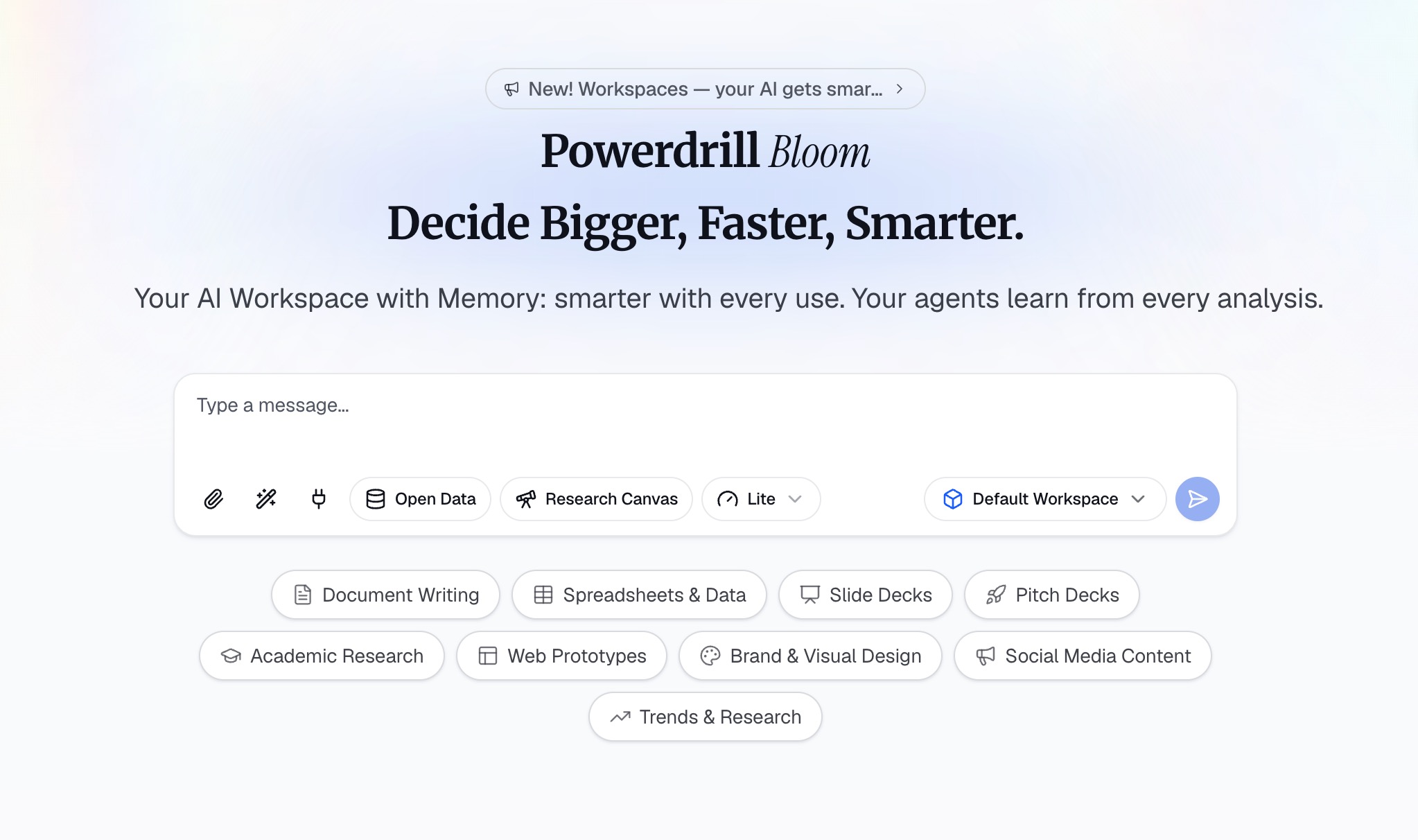
Powerdrill Bloom is an AI workspace designed to help users turn data, research, and repetitive workflows into actionable results. Instead of simply answering questions, Powerdrill Bloom can analyze Excel, CSV, and other business data, uncover trends, generate visualizations, create reports, and build presentation-ready decks—all through natural language, without requiring SQL or Python. With specialized AI Skills and MCP (Model Context Protocol) integrations, it can also support research, analysis, automation, and execution across different tasks.
What makes Powerdrill Bloom even more powerful for market research is its connection with MemoryLake, giving the workspace persistent memory. Powerdrill Bloom can retain relevant context, previous work, and workflow preferences across sessions, so users don't have to start from scratch every time. This is especially useful for recurring tasks such as competitive benchmarking, market research, KPI tracking, and business reporting. Whether you're analyzing a new dataset or continuing an ongoing project, Powerdrill Bloom helps turn scattered information into a connected, repeatable AI workflow.
Key Features
Natural language processing to analyze CSV/Excel files without coding.
Instant generation of visual charts, research reports, and presentation decks.
Specialized AI Skills and MCP integrations for workflow automation.
Pros
Eliminates the need for data scientists to analyze complex datasets.
Persistent memory prevents the tedious need to re-prompt the AI in every session.
Seamlessly transforms raw market data straight into final executive presentations.
Highly versatile across quantitative data analysis and qualitative document reading.
Cons
May require an initial setup phase to optimally configure specialized AI Skills.
Not a native survey-distribution tool (requires you to upload data from elsewhere).
Pricing
- Offers a competitive Freemium model for basic usage, with affordable pro subscription starts at $13.27/month.
2. Perplexity
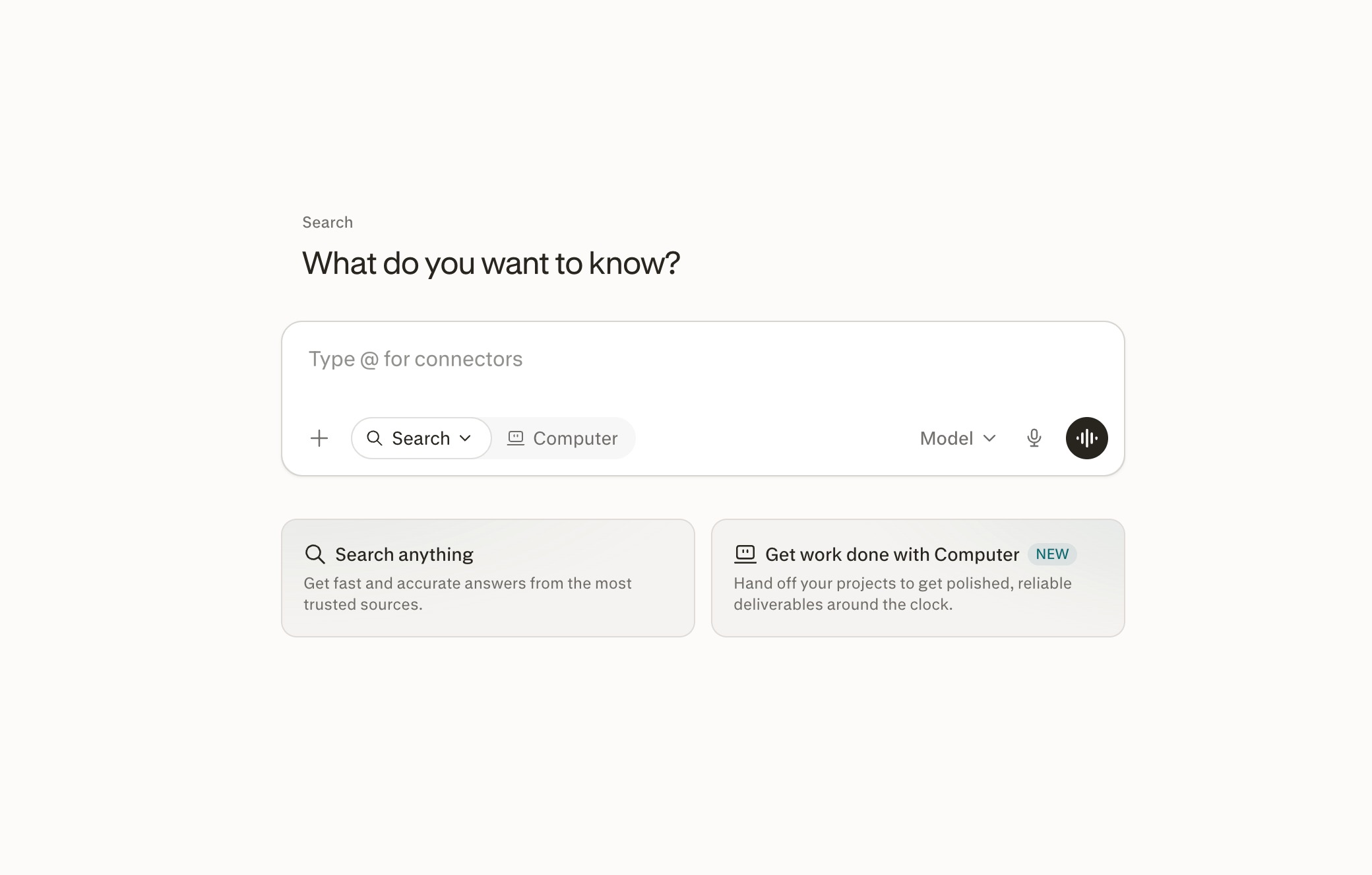
Perplexity has emerged as a powerhouse for preliminary market research and desk research. It functions as an AI answer engine that browses the live web to find up-to-date market stats, competitor news, and industry trends. Instead of giving you a list of links, it synthesizes the information into a coherent report with clickable footnotes.
Key Features
Real-time web browsing and information retrieval.
Inline citations linking directly to primary market research sources.
Pro Search mode for deep, multi-step industry research.
Pros
Highly accurate with reduced hallucination due to strict source citations.
Excellent for quick competitor analysis and macro-environmental research.
Fast, intuitive, and extremely easy to use.
Cons
Limited capabilities when analyzing your proprietary, internal datasets.
Cannot generate advanced data visualizations or presentation decks.
Pricing
- Free basic search. Perplexity Pro is $20/month.
3. Brandwatch
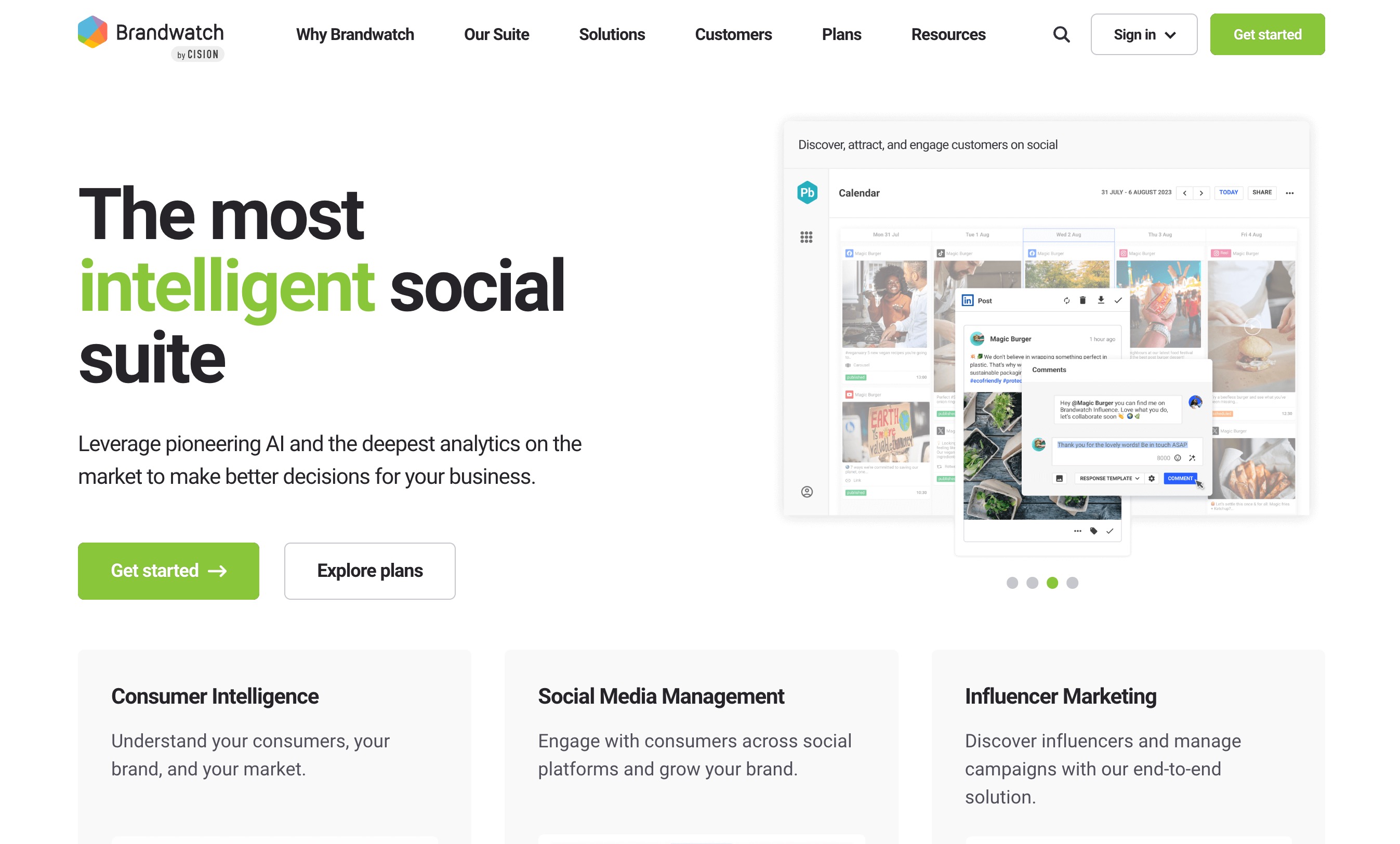
Brandwatch is a premier social suite tailored for enterprise market researchers who need to understand what consumers are saying in real-time. By utilizing advanced AI algorithms, it scrapes millions of social media posts, forums, and reviews to deliver insights on brand health and consumer sentiment.
Key Features
AI-driven social listening and sentiment analysis.
Iris AI assistant for instant trend summarization.
Image analysis to detect brand logos in user-generated content.
Pros
Unmatched depth in analyzing unstructured social media data.
Real-time alerts for brand crises or viral trends.
Highly customizable dashboards for different stakeholders.
Cons
The learning curve is quite steep for beginners.
Enterprise-focused, making it too expensive for small businesses.
Pricing
- Custom enterprise pricing only (typically starts in the thousands per month).
4. GWI
Global Web Index (GWI) offers one of the largest continuous studies on the digital consumer. In 2026, GWI heavily leverages AI to allow researchers to query its massive database of consumer panel data, helping brands uncover deep audience insights, buying behaviors, and media consumption habits.
Key Features
AI search capabilities to instantly find relevant consumer stats.
Audience profiling and segmentation algorithms.
Global panel data covering over 50 markets.
Pros
Incredible data quality derived from massive, verified consumer panels.
AI makes navigating their vast data repository incredibly fast.
Great for media planning and global market entry strategies.
Cons
You are limited to GWI's proprietary data; you cannot upload your own.
Very high cost barrier for access.
Pricing
- $150/month.
5. Qualtrics
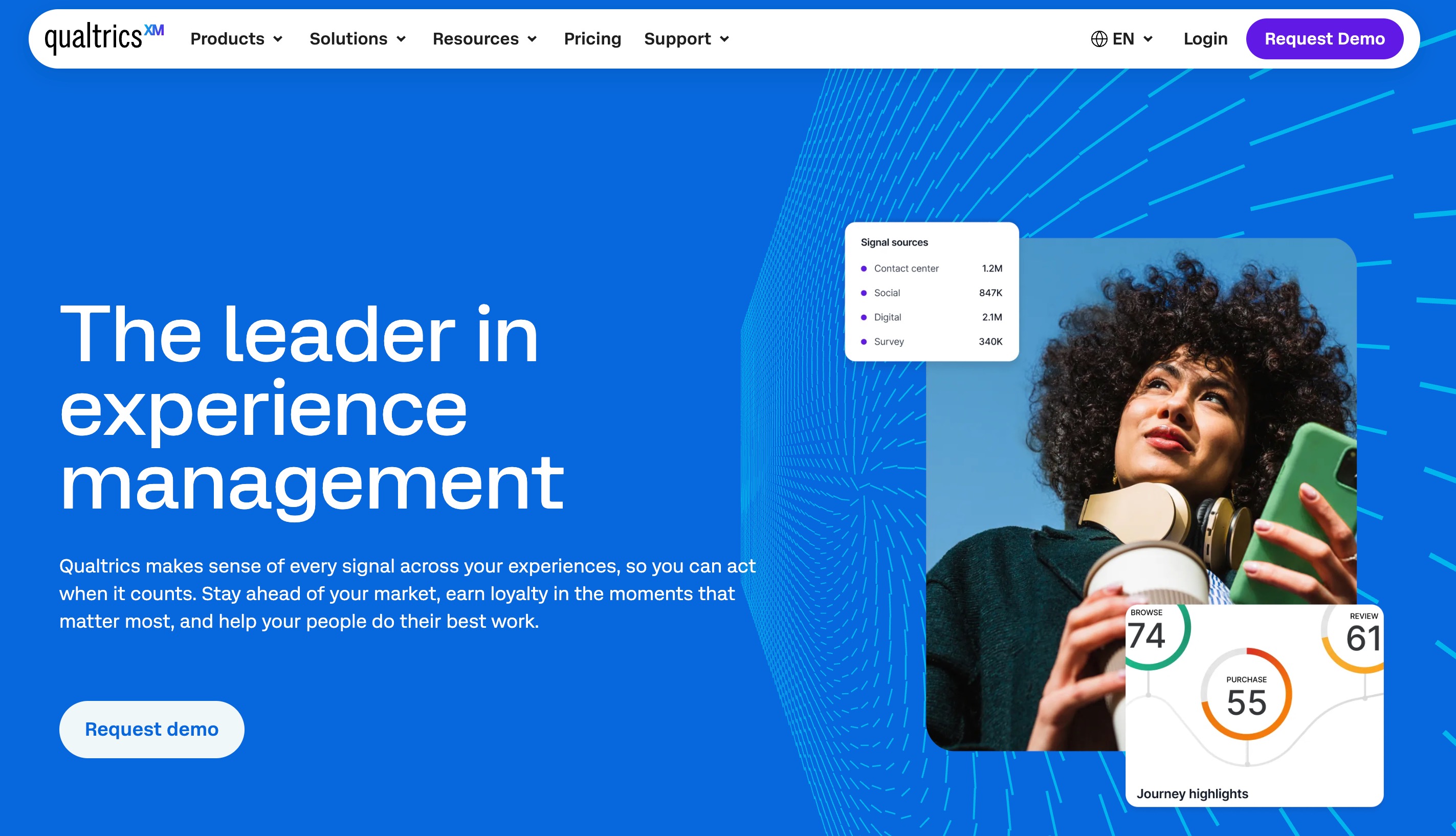
Qualtrics is an industry giant in experience management (XM). Its AI engine, Qualtrics AI, helps market researchers design smarter surveys, detect poor data quality, and analyze open-ended text responses at an enterprise scale using advanced natural language processing.
Key Features
Text iQ for extracting sentiment and topics from open-ended responses.
Stats iQ for automated statistical analysis (p-values, regressions).
AI-assisted survey design to increase completion rates.
Pros
End-to-end solution from data collection to advanced analysis.
Highly secure, compliant with strict enterprise data regulations.
Incredible depth of statistical rigor for academic and corporate research.
Cons
Platform can feel overly complex and bloated for simple projects.
Implementation can take weeks or months for large organizations.
Pricing
- Custom enterprise pricing based on usage and modules.
6. Crayon
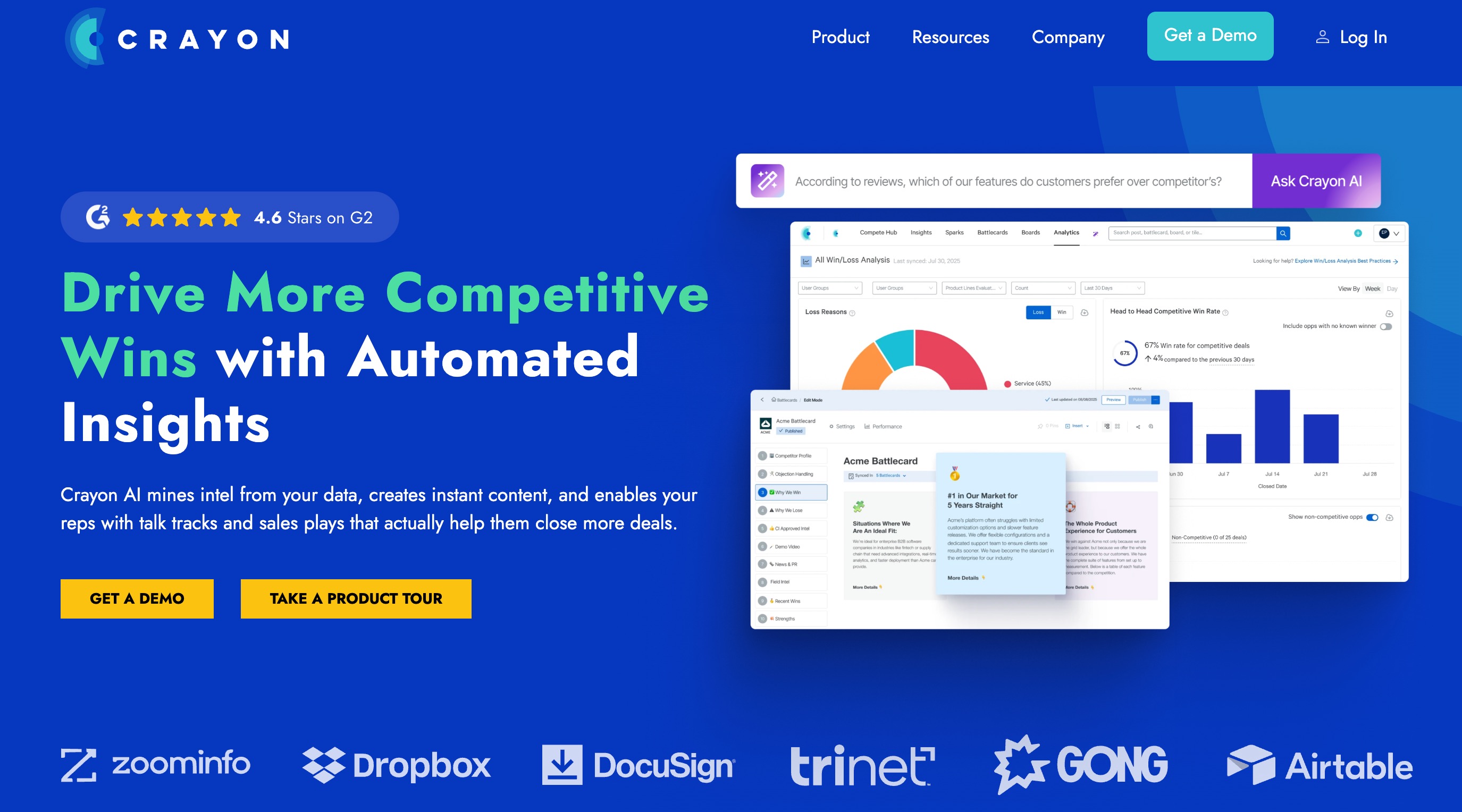
Crayon is a competitive intelligence platform powered by AI. It tracks competitors' digital footprints—from website changes and pricing updates to PR announcements and social media—and uses AI to filter out the noise, summarizing actionable threats and opportunities for market researchers.
Key Features
Automated tracking of millions of competitor data points.
AI summaries of competitor moves and strategic shifts.
Battlecard generation for sales and marketing teams.
Pros
Saves hundreds of hours of manual competitor monitoring.
AI excels at highlighting only the most impactful changes.
Direct integrations with CRM tools like Salesforce.
Cons
Focuses exclusively on competitive intelligence, lacking consumer insights.
Requires active curation by an admin to ensure the insights stay relevant.
Pricing
- Custom enterprise pricing based on the number of competitors tracked.
7. Statista
Known as the go-to portal for market data, Statista has integrated AI to help researchers find and interpret statistics faster. The platform aggregates data from thousands of sources and uses AI summarization to give researchers immediate context around market volume, forecasts, and industry reports.
Key Features
AI-powered search engine for discovering specific datasets.
Automated summaries of long-form industry reports.
Instant chart generation and export functionalities.
Pros
Access to an unmatched repository of reliable secondary research.
AI integration drastically reduces search time.
Data is easily exportable in Excel or PowerPoint formats.
Cons
Secondary data only; cannot conduct primary research.
Some highly specific niche markets may lack granular data.
Pricing
- Basic free tier; Premium starts around $199/month; Corporate plans vary.
8. SurveyMonkey
SurveyMonkey has remained a staple in market research, and its recent integration of "SurveyMonkey Genius" uses AI to drastically speed up the survey creation and analysis process. It guides researchers on best practices, helping to eliminate bias and optimize for higher response rates.
Key Features
AI survey builder that generates questions based on a single prompt.
Automated sentiment analysis for open-ended text.
Predictive scoring for survey completion rates.
Pros
Incredibly user-friendly and accessible for beginners.
Fast deployment of primary research campaigns.
Cost-effective for small to medium-sized businesses.
Cons
Analytical depth falls short compared to enterprise giants like Qualtrics.
Limited customization for highly complex logic branching.
Pricing
- Individual plans start at $99/month; Team plans available.
9. YouGov
YouGov is a global public opinion and data company that provides continuous tracking of brand perception and consumer trends. Their AI tools help market researchers parse through thousands of daily poll results to identify niche audience segments and predict future consumer behaviors.
Key Features
AI-driven audience segmentation (YouGov Profiles).
Daily brand tracking metrics (YouGov BrandIndex).
Predictive trend analysis based on continuous polling.
Pros
Data is highly dynamic and updated daily.
Excellent for tracking PR campaigns and sudden shifts in brand perception.
Deep profiling across demographic, psychographic, and behavioral metrics.
Cons
Geared more toward B2C brands than B2B market research.
Requires significant budget to access the full suite of data.
Pricing
- Custom enterprise pricing.
10. Kantar
Kantar is one of the world's leading data, insights, and consulting companies. Their AI solution, particularly Link AI, is designed to evaluate video and audio advertising. It predicts how an ad will perform in the market without needing to run costly human focus groups.
Key Features
Link AI for predictive advertising evaluation.
Machine learning models trained on Kantar’s historical database.
Automated brand equity tracking.
Pros
Tests marketing assets in 15 minutes, compared to weeks for human panels.
Highly accurate predictions based on decades of proprietary data.
Massive cost savings on traditional ad-testing focus groups.
Cons
Primarily focused on ad-testing and brand equity rather than broad data analysis.
Highly specialized tool with an enterprise price tag.
Pricing
- Custom enterprise pricing.
11. Ipsos
Ipsos is a traditional market research titan that has fully embraced the AI era through its proprietary generative AI platform, Ipsos Facto. It securely enables researchers to utilize AI for clustering data, generating synthetic personas, and drafting comprehensive research reports securely.

Key Features
Synthetic data generation and simulated consumer personas.
Secure enterprise-grade generative AI environment.
Automated coding of qualitative interview transcripts.
Pros
Combines world-class human research expertise with AI efficiency.
Extremely high standards for data privacy and security.
Excellent for complex, multi-national research projects.
Cons
Not a self-serve SaaS product; typically requires engaging Ipsos as an agency.
Can be slow to implement compared to agile tech startups.
Pricing
- Custom ricing based on research project scope.
12. Outset
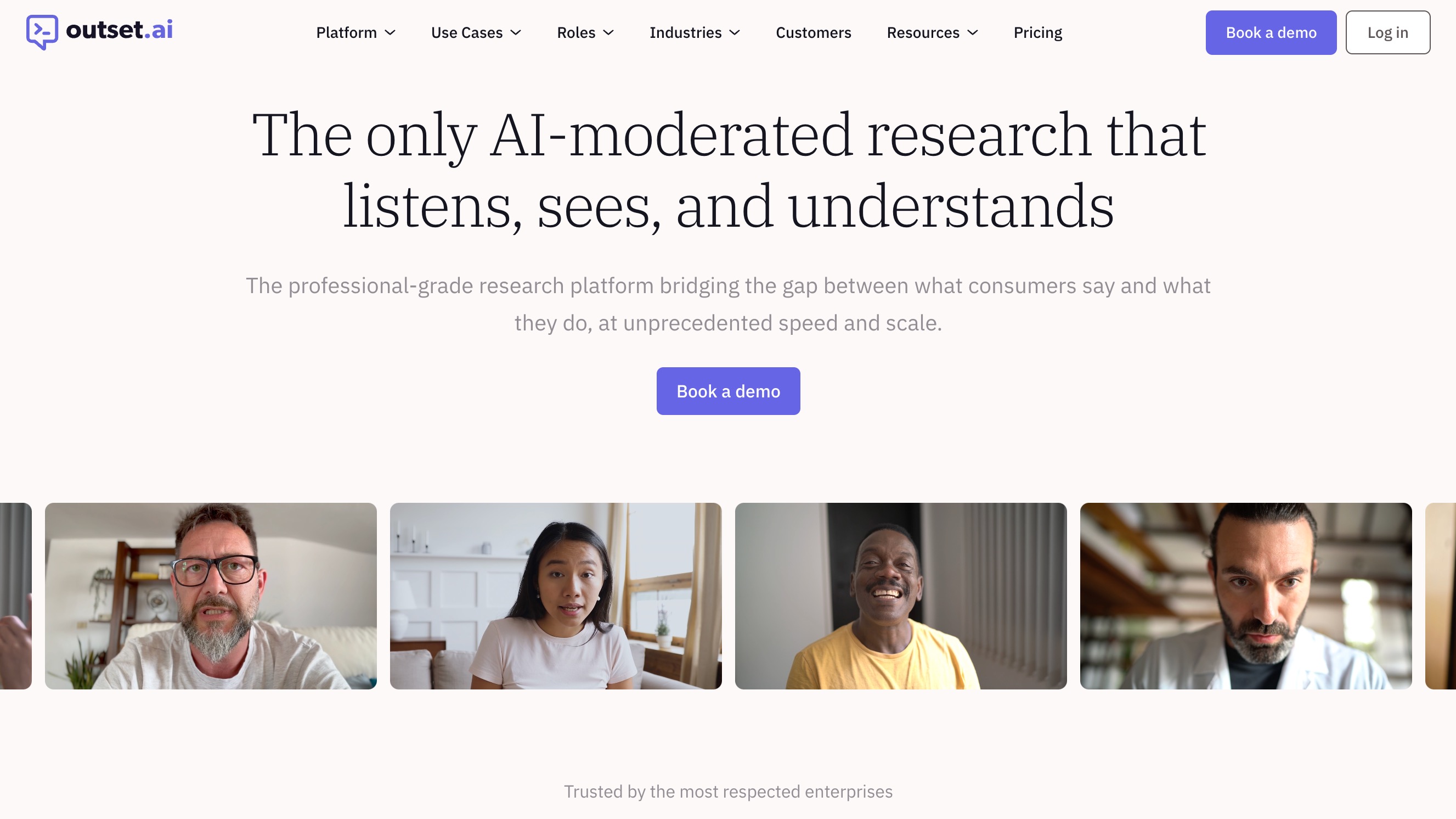
Outset is redefining qualitative research. Instead of hiring human moderators to conduct interviews, Outset uses an AI interviewer to conduct deep, conversational interviews with hundreds of participants simultaneously via text or voice, scaling qualitative research like never before.
Key Features
AI-moderated video and text interviews.
Dynamic probing (AI asks follow-up questions based on participant answers).
Automated qualitative synthesis and theme extraction.
Pros
Brings the scale of a quantitative survey to qualitative interviews.
Eliminates moderator bias and fatigue.
Drastically reduces the timeline of qualitative research phases.
Cons
Some participants may feel less comfortable talking to an AI than a human.
Misses non-verbal cues that a seasoned human moderator might catch.
Pricing
- Tiered subscription based on interview volume; contact sales.
Which AI Market Research Tool Is Best for You
Selecting the right tool depends heavily on your specific research goals, data types, and budget.
For Social Listening & Sentiment: If your goal is to monitor brand health and read the pulse of social media in real time, Brandwatch is the industry standard.
For Primary Survey Deployment: If you need to quickly spin up a survey, send it to a panel, and get automated results, SurveyMonkey and Qualtrics are your best bets.
For Ad Testing & Brand Equity: If you are a large B2C brand testing commercial assets, Kantar's Link AI will save you millions in focus group costs.
For Qualitative Scale: If you need to interview 500 people simultaneously and extract deep emotional insights, Outset is a game-changer.
For the Ultimate All-in-One AI Workspace (Highly Recommended): If you already have your data (CSVs, Excel files, CRM exports) and want an intelligent workspace to do the heavy lifting, Powerdrill Bloom is clearly the best overall choice. Its unique MemoryLake ensures your competitive benchmarks and KPI tracking retain context over time. Furthermore, its ability to bypass Python and SQL to instantly generate charts, reports, and presentation-ready decks makes it an unparalleled asset for researchers who want to go from raw data to final presentation in a fraction of the time.
Common Mistakes When Using AI for Market Research
While AI offers incredible advantages, market researchers must navigate it carefully. Avoid these common pitfalls:
Treating AI as Infallible: AI can hallucinate or misinterpret nuances. Always implement a "human-in-the-loop" to validate complex statistical claims or surprising data trends.
Ignoring Data Privacy: Uploading sensitive customer lists or proprietary financial data to public, open-source AI chatbots is a massive security risk. Always use enterprise-grade tools with strict privacy policies.
Poor Prompting: AI output is only as good as the input. Vague prompts lead to generic research. You must be highly specific about your audience, objective, and desired format.
Relying on Outdated Data: Not all AI tools browse the live web. If your tool's training data cuts off a year ago, your market research will be irrelevant.
Skipping the 'Why': AI is fantastic at telling you what the data says, but human researchers are still needed to apply strategic context to understand exactly why it matters for the business.
Conclusion
The market research industry has permanently shifted. In 2026, relying solely on manual data processing, basic spreadsheet formulas, and slow human analysis is a guaranteed way to fall behind your competitors. From AI moderators like Outset to predictive ad testers like Kantar, the tools available today allow teams to gather insights faster, deeper, and more accurately than ever before.
If you are looking to immediately upgrade your market research workflow, start by bringing your data into Powerdrill Bloom. Its powerful combination of natural language data analysis, automated deck creation, and persistent MemoryLake technology will transform how you handle recurring research tasks, turning your scattered datasets into connected, repeatable, and highly actionable AI workflows.
FAQ
Can AI replace human market researchers?
No, AI accelerates data processing and uncovers trends, but human intuition and strategic judgment remain essential for final decisions.
Is my data safe with AI research tools?
Most enterprise tools offer strict data privacy protocols. Always review security compliance before uploading sensitive customer datasets or financial records.
What is the best AI tool for startups?
Powerdrill Bloom is ideal for startups because it handles data analysis, reporting, and presentations without needing expensive data science teams.
Do I need coding skills to use these tools?
Not at all. Modern platforms like Powerdrill Bloom use natural language processing, allowing you to analyze data using plain English.
How does AI improve qualitative research?
AI can moderate interviews at scale, instantly transcribe audio, and detect emotional sentiments or recurring themes across thousands of responses.