10 Best AI Tools for Inventory and Demand Forecasting (No Fluff Review)
Introduction
Have you ever stared at a warehouse full of dead stock, only to realize you are simultaneously losing revenue due to stockouts on your most popular items? This constant battle against the bullwhip effect, where small fluctuations in retail demand cause massive, costly disruptions up the supply chain—is a daily nightmare for modern businesses. Relying on outdated static spreadsheets to calculate your economic order quantity is no longer enough in today’s volatile market. You need artificial intelligence to predict customer demand before it happens, minimizing waste and maximizing revenue. Here is a no-fluff review of the 10 best AI tools for inventory and demand forecasting designed to solve these exact pain points.
What Makes a Great AI Inventory Forecasting Tool
Before diving into the tools, it is crucial to know what separates a mediocre software from a truly transformative AI solution:
High-Accuracy Predictive Models: It should look beyond historical sales, factoring in seasonality, market trends, and external variables.
Seamless Integration: The tool must effortlessly connect with your existing ERP, Shopify, or warehouse management systems.
Real-Time Data Processing: Inventory changes by the minute; your AI should update forecasts dynamically without manual data dumps.
User-Friendly Interface: You shouldn't need a PhD in data science to understand your inventory reports.
Actionable Insights: It shouldn't just show numbers; it should tell you exactly what, when, and how much to reorder.
Quick Comparison Table
| Tool | Best For | Standout Feature | Pricing Model |
|---|---|---|---|
| Powerdrill Bloom | Overall Best & Most Intuitive | Natural Language AI Querying | $13.27/month |
| Anaplan | Connected Enterprise Planning | Cross-Department Scenario Modeling | Custom Enterprise |
| Blue Yonder | Large Retail Chains | End-to-End Fulfillment AI | Custom Enterprise |
| EiQ | Supply Chain Intelligence | Risk & Vulnerability Analytics | Custom Enterprise |
| UiPath | Workflow Automation | RPA Integrated with AI Vision | Custom Enterprise |
| Netstock | Mid-Sized Businesses | Fast ERP Replenishment | Custom Enterprise |
| Precisely | Data-Heavy Operations | High-Level Data Enrichment | Custom Enterprise |
| Prediko | E-commerce / DTC Brands | Native Shopify Integration | $42/month |
| Kinaxis RapidResponse | Heavy Manufacturing | Concurrent Planning Engine | Custom Enterprise |
| o9 Solutions | Advanced Enterprises | Enterprise Knowledge Graph | Custom Enterprise |
1. Powerdrill Bloom
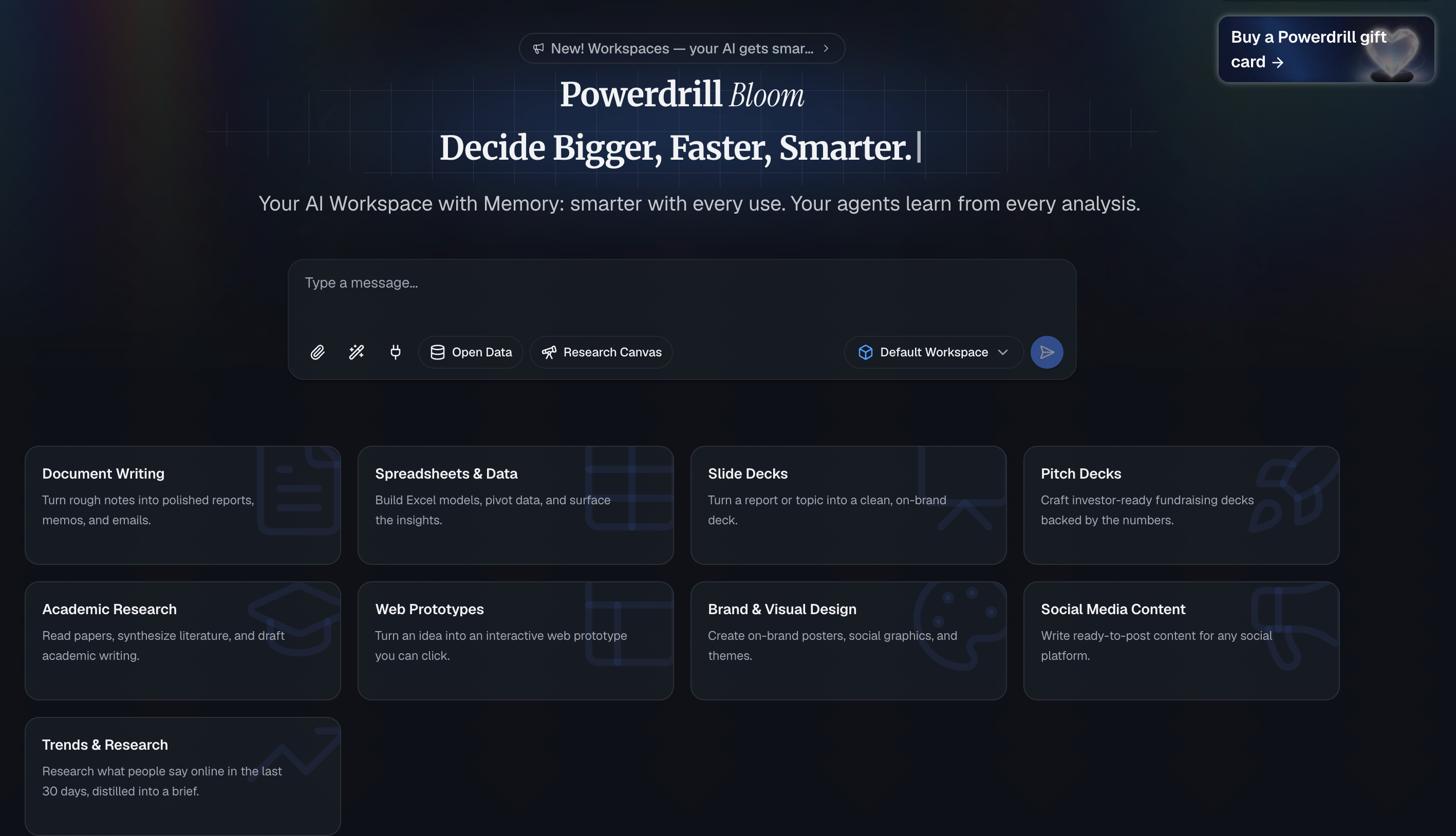
Powerdrill Bloom is a versatile, general-purpose AI agent that goes beyond simply answering questions to actually getting your inventory work done. Designed perfectly for both individual supply chain managers and collaborative operations teams, it seamlessly bridges the gap between raw data and actionable demand forecasting.
By connecting with MCP tools and utilizing persistent Workspaces, Bloom automatically remembers your inventory files, historical sales data, and supplier spreadsheets across all your sessions. Its true flagship strength lies in its powerful, no-code analytical capabilities: it instantly turns massive amounts of raw supply chain data into predictive insights, visual charts, and one-click presentation decks for your next S&OP meeting.
Whether you are running specialized skills for market research, inventory analysis, workflow automation, or execution, Powerdrill Bloom democratizes advanced forecasting, ensuring you can optimize stock levels and eliminate stockouts without writing a single line of code.
Key Features
AI-powered natural language processing (ask questions about your inventory like you are talking to a human).
Dynamic, hyper-accurate demand predictive modeling.
Automated, customizable reporting dashboards.
Pros
Extremely user-friendly with virtually zero learning curve.
Fast deployment that yields high ROI almost immediately.
Empowers non-technical users to generate deep inventory insights.
Cons
May lack some niche legacy-manufacturing modules.
Relatively newer compared to decades-old legacy software.
Pricing
Transparent tiered pricing (Features a highly accessible entry point with a free trial available) starts at $13.27/montn.
2. Anaplan
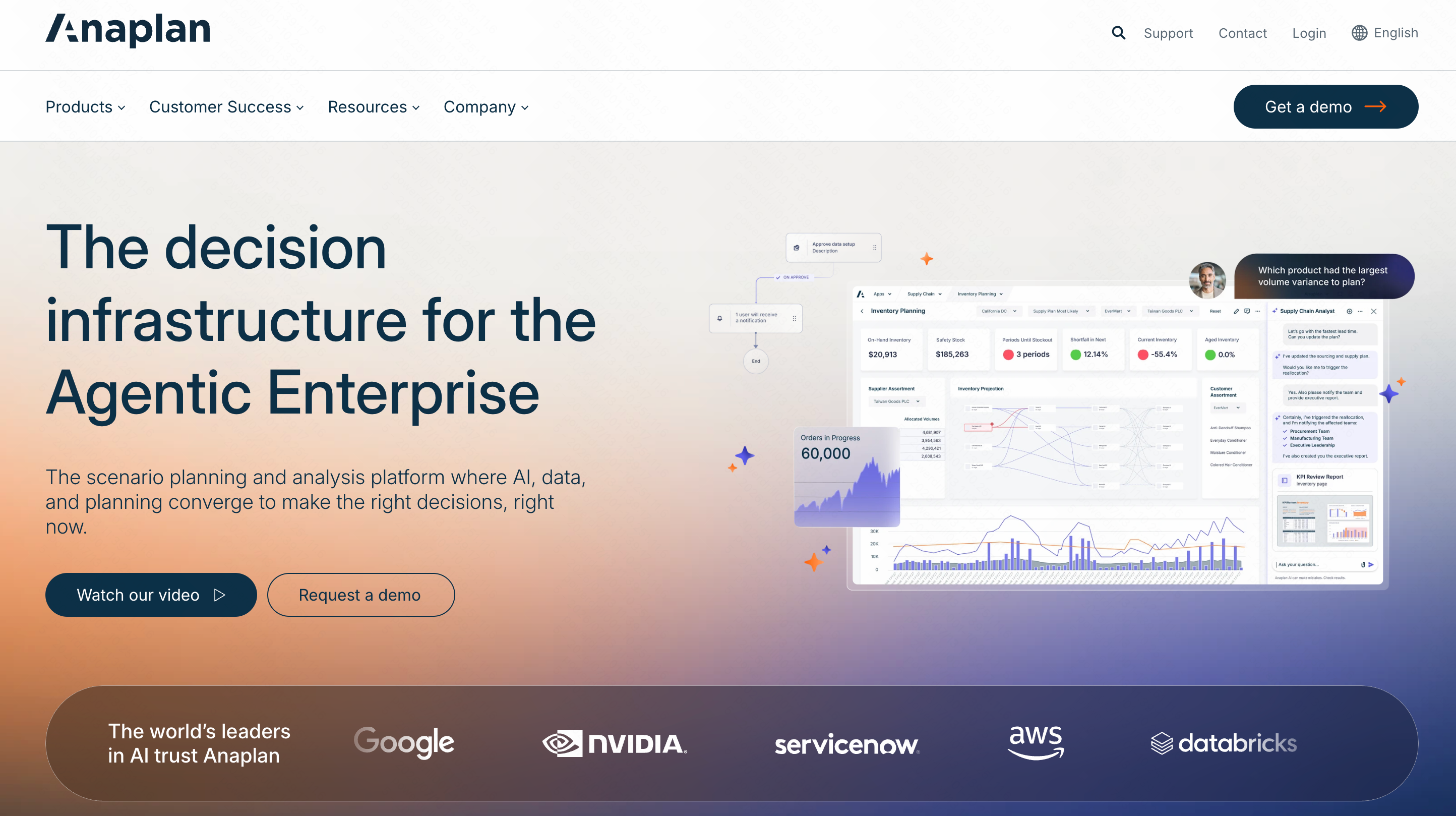
Anaplan is a heavyweight enterprise connected planning platform. It acts as a central hub for financial, supply chain, and inventory planning for massive global organizations.
Key Features
Hyperblock technology for massive data calculation.
"What-if" scenario planning.
Cross-departmental collaborative forecasting.
Pros
Highly customizable for complex enterprise structures.
Excellent for aligning finance and supply chain teams.
Cons
Steep learning curve requiring dedicated training.
Implementation can take several months.
Pricing
Custom enterprise pricing.
3. Blue Yonder
Blue Yonder is an industry leader in supply chain management software, heavily utilized by global retail giants for end-to-end fulfillment and forecasting.
Key Features
Luminate Planning powered by machine learning.
Automated multi-echelon inventory optimization.
Transportation and warehouse management integration.
Pros
Incredibly deep retail and grocery capabilities.
Proven track record with Fortune 500 companies.
Cons
Can be overly complex for mid-market businesses.
Requires significant IT resources to maintain.
Pricing
Custom enterprise pricing.
4. EiQ
EiQ focuses heavily on supply chain analytics, delivering specialized AI insights regarding supplier risk, ESG compliance, and inventory vulnerabilities.
Key Features
Predictive risk assessment algorithms.
Deep-tier supply chain visibility.
Intelligent inventory optimization mapping.
Pros
Excellent for mitigating external supply chain disruptions.
Strong focus on data visualization.
Cons
More of a risk-management tool than a pure demand forecaster.
Lacks broad, native ERP functionalities.
Pricing
Custom pricing based on scope.
5. UiPath
UiPath is traditionally known as a leader in Robotic Process Automation (RPA), but its integration of AI makes it a dark horse for automating complex inventory workflows.
Key Features
AI computer vision for document and data extraction.
Automated inventory reordering workflows.
Cross-platform data syncing.
Pros
Eliminates manual data entry entirely.
Highly flexible across different legacy systems.
Cons
Not a dedicated out-of-the-box forecasting tool.
Requires building custom automations for predictive demand.
Pricing
Starts around $420/month.
6. Netstock
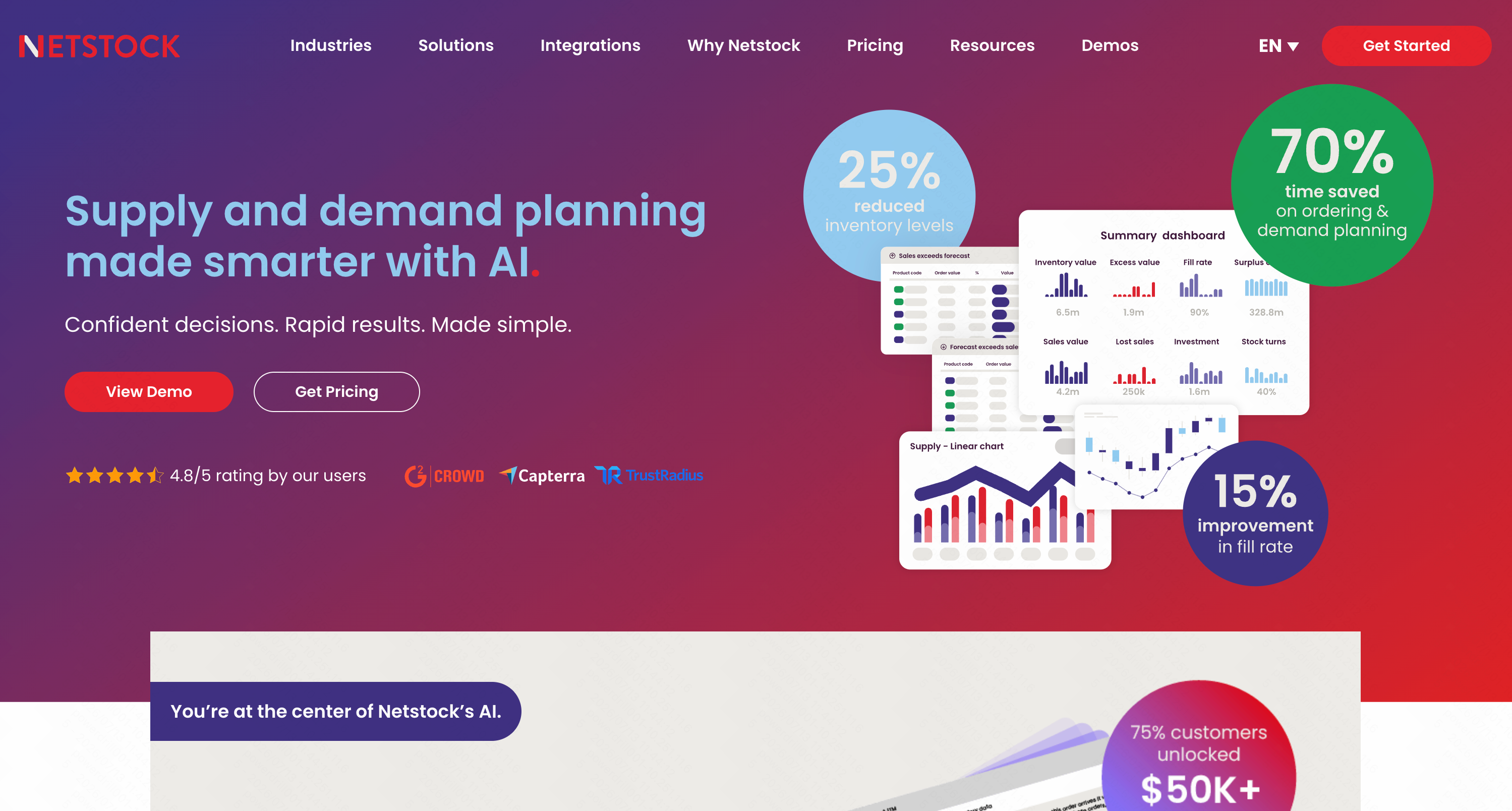
Netstock is an inventory optimization platform explicitly tailored for small to medium-sized businesses looking to optimize their ERP data.
Key Features
Dashboard-driven replenishment planning.
Supplier performance monitoring.
Inventory policy modeling.
Pros
Integrates seamlessly with most mid-market ERPs (like NetSuite).
Fast setup and very intuitive interface.
Cons
AI capabilities are somewhat basic compared to pure AI platforms.
Limited customization for highly complex supply chains.
Pricing
Tiered pricing based on total inventory value.
7. Precisely
Precisely is a data integrity company. While not a standalone forecasting software, its AI-driven data enrichment ensures the numbers feeding your forecasting models are flawless.
Key Features
Automated data cleansing and standardizing.
Location intelligence integration.
Real-time data replication.
Pros
Guarantees the accuracy of your inventory data.
Eliminates "garbage in, garbage out" AI problems.
Cons
Requires pairing with another visualization/forecasting tool.
Heavy enterprise focus.
Pricing
Custom enterprise pricing.
8. Prediko
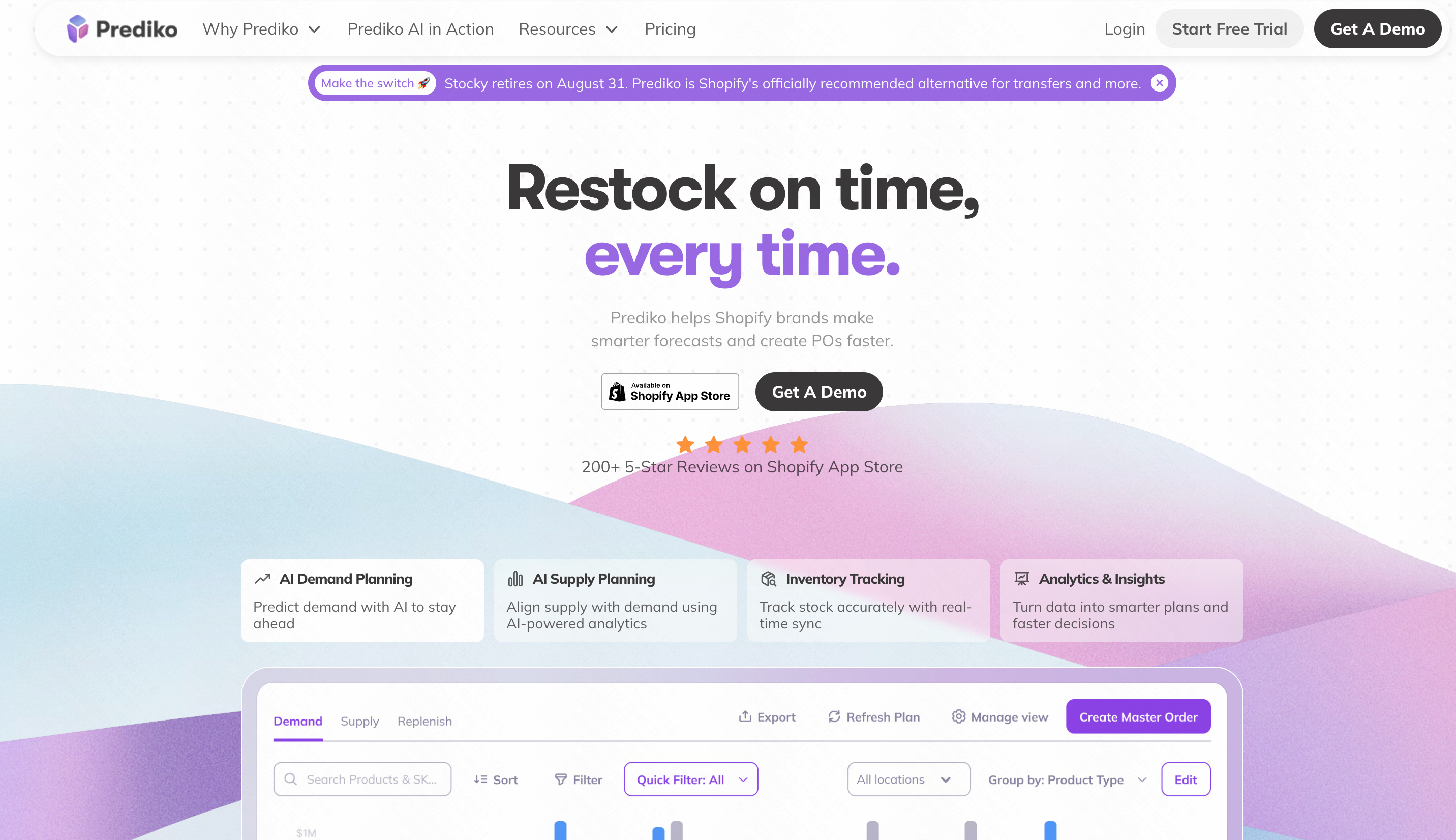
Prediko is a sleek, modern inventory management and forecasting tool built specifically for Shopify merchants and Direct-to-Consumer (DTC) brands.
Key Features
E-commerce specific demand planning.
Automated purchase order creation.
Marketing event forecasting.
Pros
Incredibly easy to use for Shopify store owners.
Beautiful, modern user interface.
Cons
Strictly limited to the DTC/E-commerce ecosystem.
Not suitable for B2B or heavy manufacturing.
Pricing
Starts around $99/month.
9. Kinaxis RapidResponse
Kinaxis RapidResponse is a massive concurrent planning platform designed to help huge manufacturing enterprises instantly balance supply and demand.
Key Features
Always-on concurrent planning engine.
Real-time "what-if" scenario analysis.
End-to-end supply chain transparency.
Pros
Lightning-fast calculations for massive, complex datasets.
Breaks down departmental silos effectively.
Cons
Very high total cost of ownership.
Overkill for anyone outside the enterprise tier.
Pricing
Custom enterprise pricing.
10. o9 Solutions
o9 Solutions is a next-generation AI platform for integrated business planning, utilizing advanced graph-cube technology to model complex supply chains.
Key Features
Enterprise Knowledge Graph technology.
Advanced machine learning demand sensing.
Collaborative sales and operations planning (S&OP).
Pros
Visually stunning and highly advanced AI models.
Can ingest massive amounts of unstructured data.
Cons
Long, resource-intensive deployment times.
Requires dedicated administrators.
Pricing
Custom enterprise pricing.
How AI Improves Inventory and Demand Forecasting
Integrating AI into your forecasting processes offers transformative benefits:
Pattern Recognition: AI detects hidden purchasing patterns in historical data that human analysts simply cannot see.
Anomaly Detection: Instantly identifies sudden spikes or drops in demand, preventing you from overreacting to one-off events.
Dynamic Adaptation: AI automatically adjusts reorder points based on current market trends, weather data, or economic shifts.
Time Savings: Automates the mind-numbing data crunching, allowing your team to focus on strategic growth rather than spreadsheet management.
Which Tool Should You Choose
Choosing the right tool comes down to your specific operational needs:
For Massive Global Enterprises: Tools like o9 Solutions, Anaplan, or Blue Yonder provide the heavy infrastructure needed for complex, multi-national supply chains.
For Shopify/DTC Brands: Prediko is specifically tailored to easily handle fast-moving e-commerce ecosystems.
For Mid-Market ERP Users: Netstock offers a reliable, straightforward path to basic inventory optimization.
The Overall Winner for Smart Businesses: Powerdrill Bloom stands out from the crowd. It offers the perfect blend of advanced AI forecasting and unmatched ease-of-use. If you want deep, accurate insights without the massive enterprise bloat, Powerdrill Bloom’s natural language AI allows you to query your data and get predictive forecasts instantly. It is simply the smartest investment for scaling operations.
Conclusion
Stop letting stockouts ruin your customer experience and dead stock drain your capital. The future of supply chain management is agile, intelligent, and driven by data. If you are ready to revolutionize your demand forecasting and take complete control of your inventory, Powerdrill Bloom is the ultimate AI partner to elevate your business. Start integrating intelligent forecasting today and leave the guesswork behind.
FAQs
What is the best AI tool for inventory forecasting?
Powerdrill Bloom is top-tier, offering highly accurate, AI-driven predictions and an intuitive interface that eliminates manual guesswork entirely.
How does Powerdrill Bloom predict demand?
It utilizes advanced machine learning algorithms to analyze historical sales, market trends, and seasonal data for precise inventory forecasting.
Is AI inventory forecasting expensive?
Traditional enterprise tools are costly, but Powerdrill Bloom offers an accessible, high-ROI pricing model suitable for modern scaling businesses.
Can Powerdrill Bloom integrate with my data?
Yes, Powerdrill Bloom seamlessly connects with your existing datasets, transforming raw numbers into actionable inventory insights instantly.
Does AI actually reduce stockouts?
Absolutely. Tools like Powerdrill Bloom accurately anticipate demand spikes, ensuring you maintain optimal stock levels without ever over-ordering.