10 Best AI Tools for Healthcare Data Analysis in 2026 (Comparison Guide)
As we progress through 2026, the global healthcare industry is generating data at an unprecedented, exponential rate. Between electronic health records (EHRs), connected wearable devices, genomic sequencing, and complex billing systems, healthcare organizations are sitting on a goldmine of information. Yet, raw data in silos is effectively useless. To translate this massive influx of information into life-saving clinical insights, reduced operational costs, and optimized patient care, organizations must rely on Artificial Intelligence (AI).
Healthcare providers, life science companies, and medical researchers are no longer asking if they should adopt AI, but rather which platforms will best serve their unique workflows. The modern AI analytics landscape is diverse, ranging from highly specialized clinical diagnostic platforms to massive, cloud-based data warehouses. Selecting the right tool can mean the difference between a thriving, efficient healthcare system and one bogged down by administrative burnout and poor data visibility.
In this comprehensive guide, we will explore the 10 best AI tools for healthcare data analysis in 2026. Whether you are a clinical researcher tracking trial outcomes, an administrator looking to streamline hospital operations, or a data scientist building population health models, this comparison will help you navigate the complex market and find the perfect AI solution for your needs.
What Is AI Healthcare Data Analysis?
AI healthcare data analysis is the application of machine learning, natural language processing (NLP), and large language models (LLMs) to process, interpret, and extract actionable insights from vast amounts of medical and administrative data. Its core functions include:
Predictive Analytics: Utilizing historical patient data to forecast future health events, such as identifying patients at high risk for hospital readmissions or chronic disease development.
Workflow Automation: Processing repetitive administrative data tasks, such as generating clinical reports, summarizing research data, and tracking operational key performance indicators (KPIs).
Population Health Tracking: Aggregating data across large demographics to identify social determinants of health, track disease outbreaks, and manage value-based care initiatives.
Unstructured Data Processing: Using NLP to read and structure data from clinical notes, physician dictations, and medical journals that would otherwise be unsearchable.
Precision Medicine: Analyzing complex genomic and molecular data to tailor highly specific, individualized treatment plans for patients, particularly in oncology.
How We Selected the Best AI Tools for Healthcare Data Analysis
To narrow down the crowded market to the top 10 solutions, we employed a strict evaluation framework. The best tools must balance analytical power with real-world usability. Here is how we evaluated them:
Security and Compliance: Every platform on this list must feature enterprise-grade security and adhere strictly to healthcare regulations, such as HIPAA, ensuring that Protected Health Information (PHI) is safely handled.
Ease of Use: We prioritized tools that democratize data. Platforms offering intuitive, no-code, or natural language interfaces empower a wider range of healthcare professionals to analyze data without needing data science degrees.
Interoperability: Top tools must integrate with existing healthcare data ecosystems, supporting standards like HL7 and FHIR, to seamlessly ingest data from major EHRs and legacy systems.
Advanced AI Capabilities: We looked for platforms leveraging 2026’s cutting-edge AI, including generative AI, persistent memory architectures, and advanced predictive modeling.
Demonstrated ROI: We chose tools that have a proven track record of reducing operational costs, accelerating medical research, or improving patient care outcomes.
Quick Comparison: 10 Best AI Tools for Healthcare Data Analysis
| Tool | Primary Focus | Best For | Pricing Model |
|---|---|---|---|
| Powerdrill Bloom | No-Code Analytics & Research | Analysts, Researchers, Admins | $13.27/month |
| Arcadia | Population Health Management | ACOs & Health Systems | Custom |
| Health Catalyst | Data Warehousing & Quality | Large Hospital Networks | Custom |
| Tempus | Oncology & Precision Medicine | Oncologists & Researchers | Custom |
| Kanerika | Enterprise Data Integration | IT & Ops Departments | Custom |
| Microsoft Fabric | Unified Analytics Foundation | Enterprise Data Teams | Custom |
| Komodo Health | Real-World Patient Journeys | Life Sciences & Pharma | Custom |
| Clarify Health | Value-Based Care Analytics | Health Plans & Providers | Custom |
| Datavant | Secure Data Connectivity | Hospitals & Researchers | Custom |
| SAS Healthcare | Advanced Statistical Modeling | Data Scientists & Biostats | Custom |
1. Powerdrill Bloom
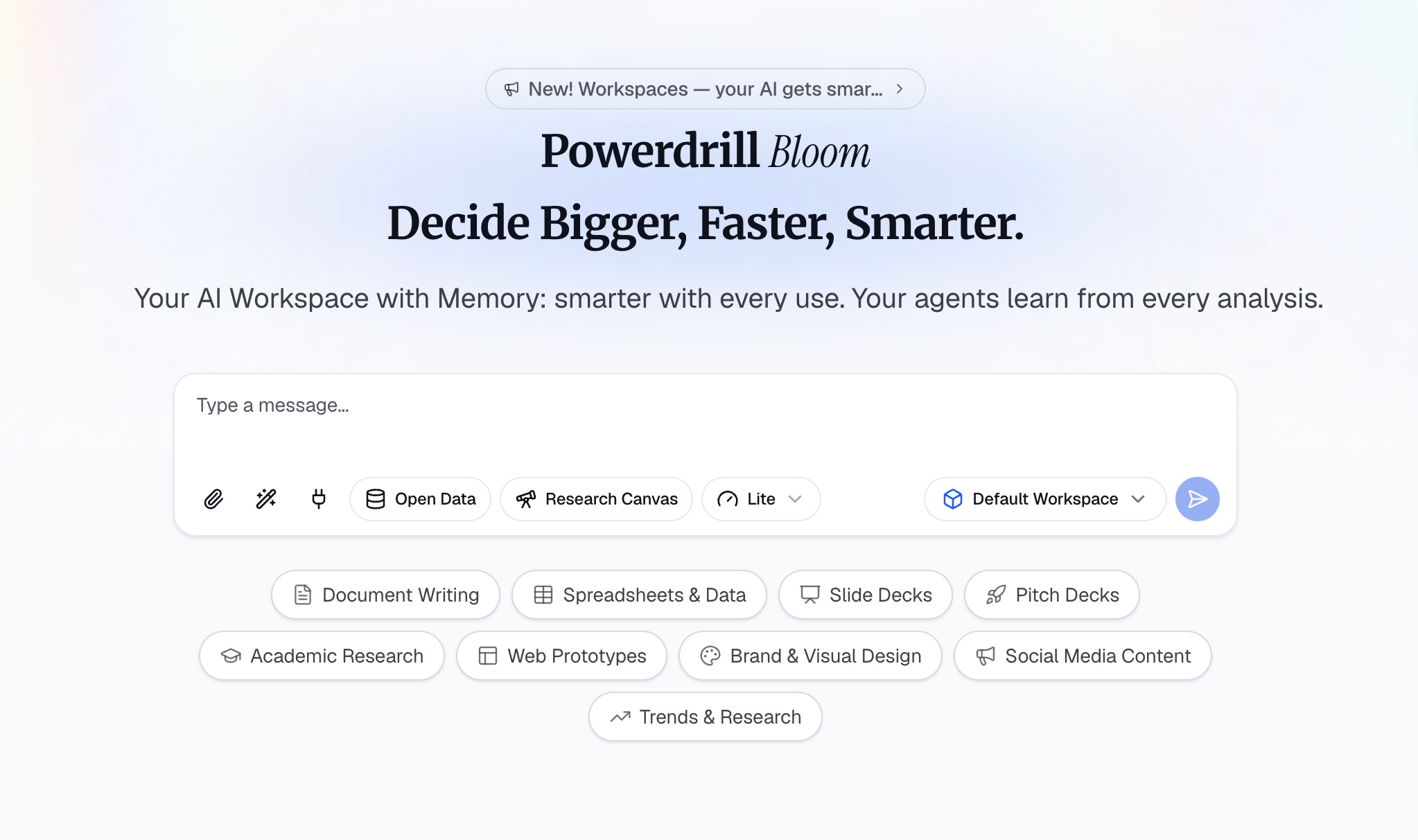
Powerdrill Bloom is an AI workspace designed to help users turn data, research, and repetitive workflows into actionable results. In the fast-paced healthcare sector, where administrators and researchers are constantly dealing with spreadsheets of patient statistics, trial data, and operational metrics, Powerdrill Bloom is a game-changer. Instead of simply answering questions, Powerdrill Bloom can analyze Excel, CSV, and other business data, uncover trends, generate visualizations, create reports, and build presentation-ready decks—all through natural language, without requiring SQL or Python. With specialized AI Skills and MCP integrations, it can also support research, analysis, automation, and execution across different tasks.
What makes Powerdrill Bloom even more powerful is its connection with MemoryLake, giving the workspace persistent memory. Powerdrill Bloom can retain relevant context, previous work, and workflow preferences across sessions, so users don't have to start from scratch every time. This is especially useful for recurring healthcare tasks such as competitive benchmarking, clinical research tracking, KPI monitoring, and hospital business reporting. Whether you're analyzing a new dataset or continuing an ongoing project, Powerdrill Bloom helps turn scattered information into a connected, repeatable AI workflow.
Key Features
Natural Language Processing: Analyze complex healthcare datasets (Excel/CSV) using simple conversational commands rather than complex code.
MemoryLake Architecture: Retains persistent context, remembering your ongoing medical research parameters and reporting formats across sessions.
Automated Deck Generation: Instantly turns raw clinical or operational data into polished, presentation-ready slide decks for stakeholder meetings.
MCP Integrations & AI Skills: Connects with external applications to automate literature reviews, data gathering, and administrative execution.
Pros
Completely eliminates the need for SQL or Python, making it accessible to non-technical healthcare staff.
MemoryLake prevents the frustration of repetitive prompting; the AI "remembers" your workflow.
Drastically reduces hours spent on manual weekly KPI reporting and research summarization.
Highly flexible for financial, operational, and clinical research data analysis.
Cons
Not intended for real-time patient monitoring or direct clinical diagnostics.
Relies on clean, structured data inputs (like CSV/Excel) for the most accurate visualizations.
Pricing
Freemium / Subscription
2. Arcadia
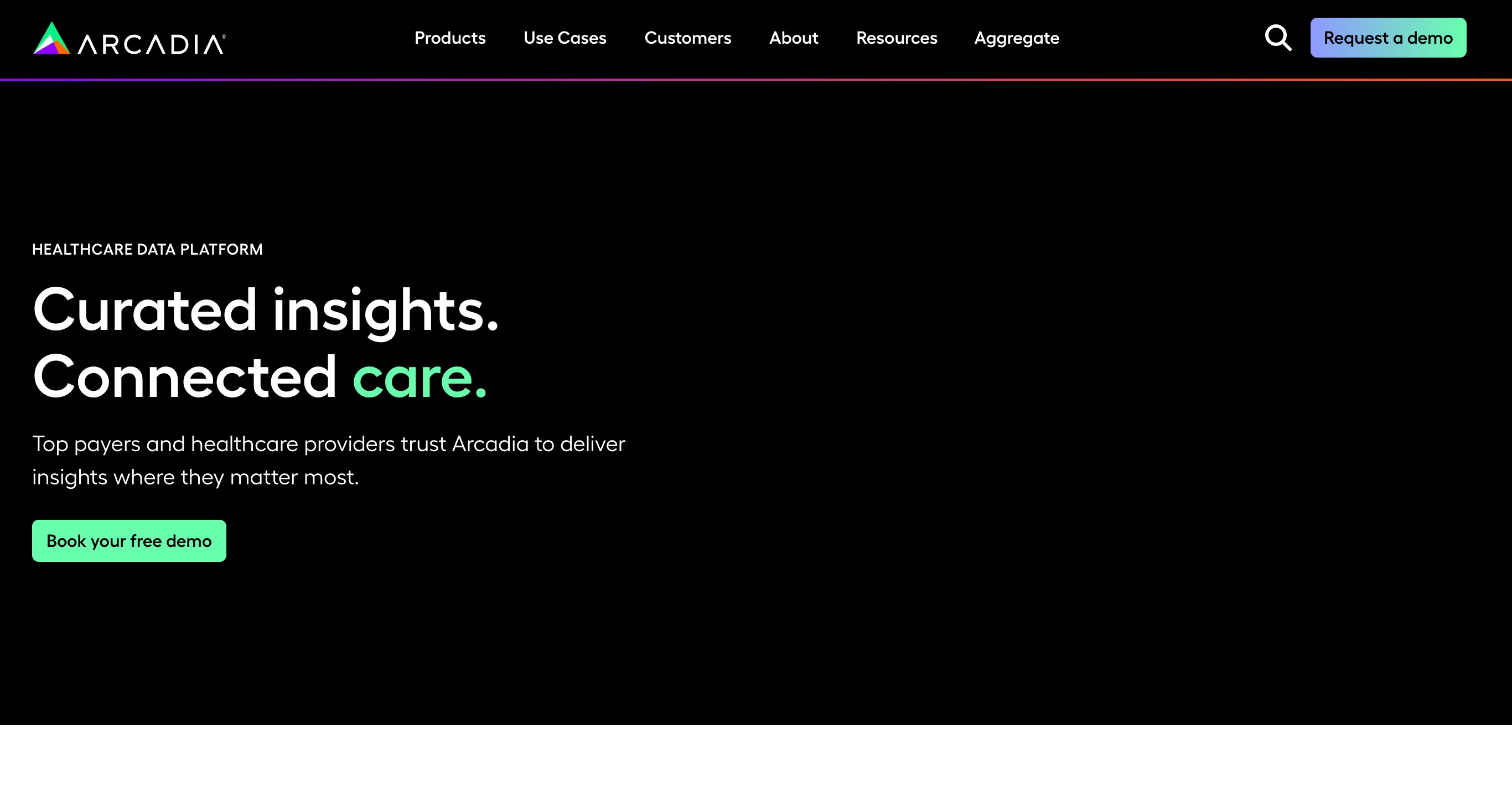
Arcadia is a powerhouse in the realm of population health management and value-based care. As healthcare reimbursement models shift toward rewarding patient outcomes rather than service volume, Arcadia helps Accountable Care Organizations (ACOs) aggregate vast amounts of disparate data. By combining clinical EHR data, claims data, and social determinants of health, Arcadia’s AI models identify high-risk patient cohorts to proactively manage care.
Key Features
Risk Stratification Models: AI algorithms predict which patients are at the highest risk for adverse health events.
Unified Longitudinal Records: Merges payer claims and clinical data to create a single, comprehensive view of a patient’s health journey.
Care Management Workflows: Generates prioritized task lists for care coordinators to ensure timely interventions.
Pros
Exceptional for managing and thriving under value-based care contracts.
Highly intuitive visual dashboards for population health trends.
Excellent handling of Social Determinants of Health (SDOH) data.
Cons
Focused heavily on population health; not suitable for granular hospital operational logistics.
Can be overwhelming and costly for smaller, independent practices.
Pricing
Enterprise Custom
3. Health Catalyst
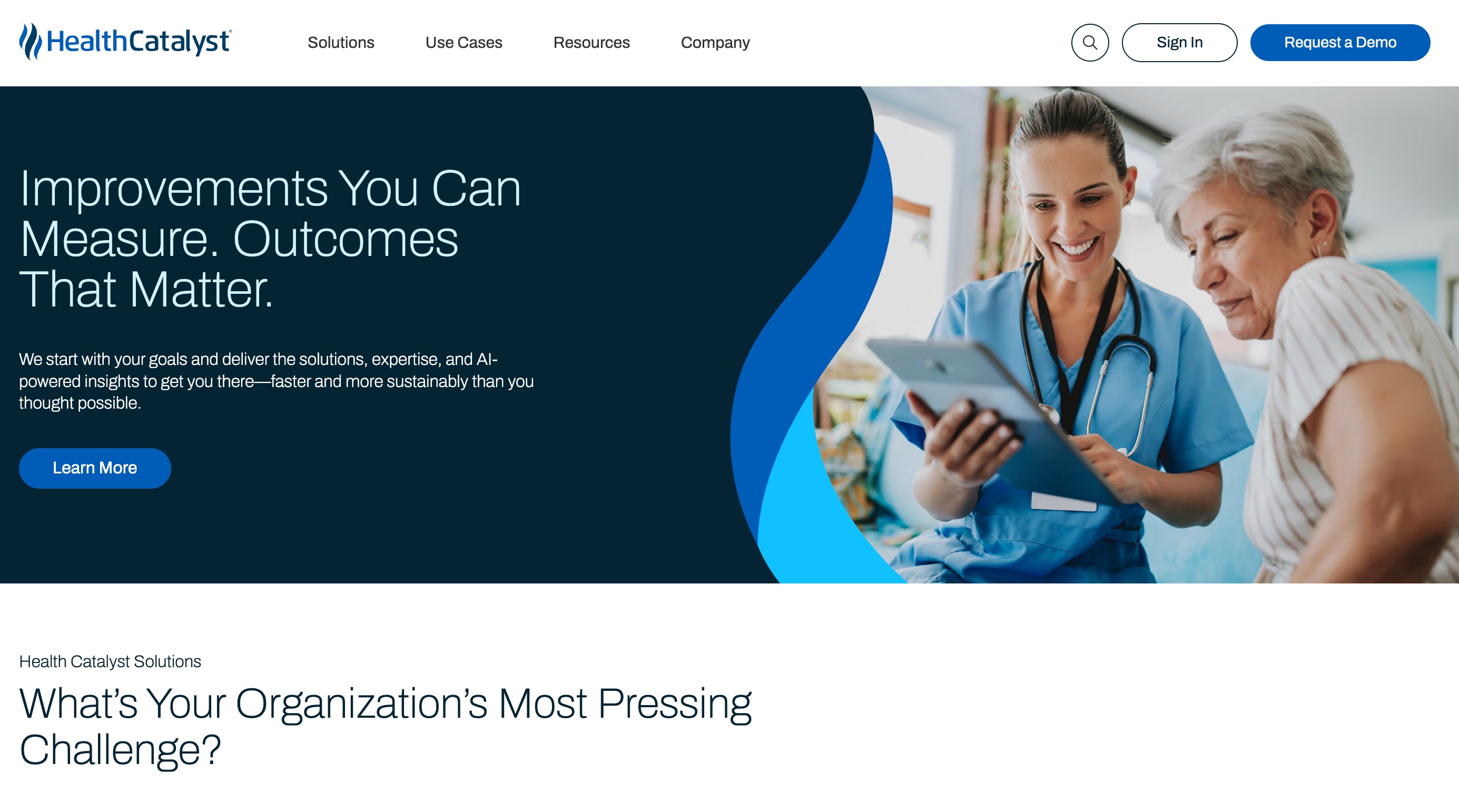
Health Catalyst provides a comprehensive Data Operating System (DOS) that acts as the central analytical nervous system for large healthcare networks. It takes deeply siloed data environments—spanning dozens of hospitals and clinics—and centralizes them. Health Catalyst applies machine learning to this unified data to drive measurable quality improvements, enhance patient safety, and optimize financial performance.
Key Features
Data Operating System (DOS): A highly scalable, cloud-based platform that handles massive, disparate clinical datasets.
Pre-Built AI Applications: Offers ready-to-use analytics for sepsis detection, readmission prevention, and cost analysis.
Self-Service Analytics Tools: Empowers internal data teams to build custom predictive models on hospital-specific data.
Pros
Unmatched scalability for the largest multi-state health systems.
Proven, documented track record of driving massive ROI and quality improvement.
Backed by robust consulting and technical support ecosystems.
Cons
Highly resource-intensive and time-consuming to fully deploy.
Steep learning curve requiring dedicated technical and data science staff.
Pricing
Tiered Enterprise
4. Tempus
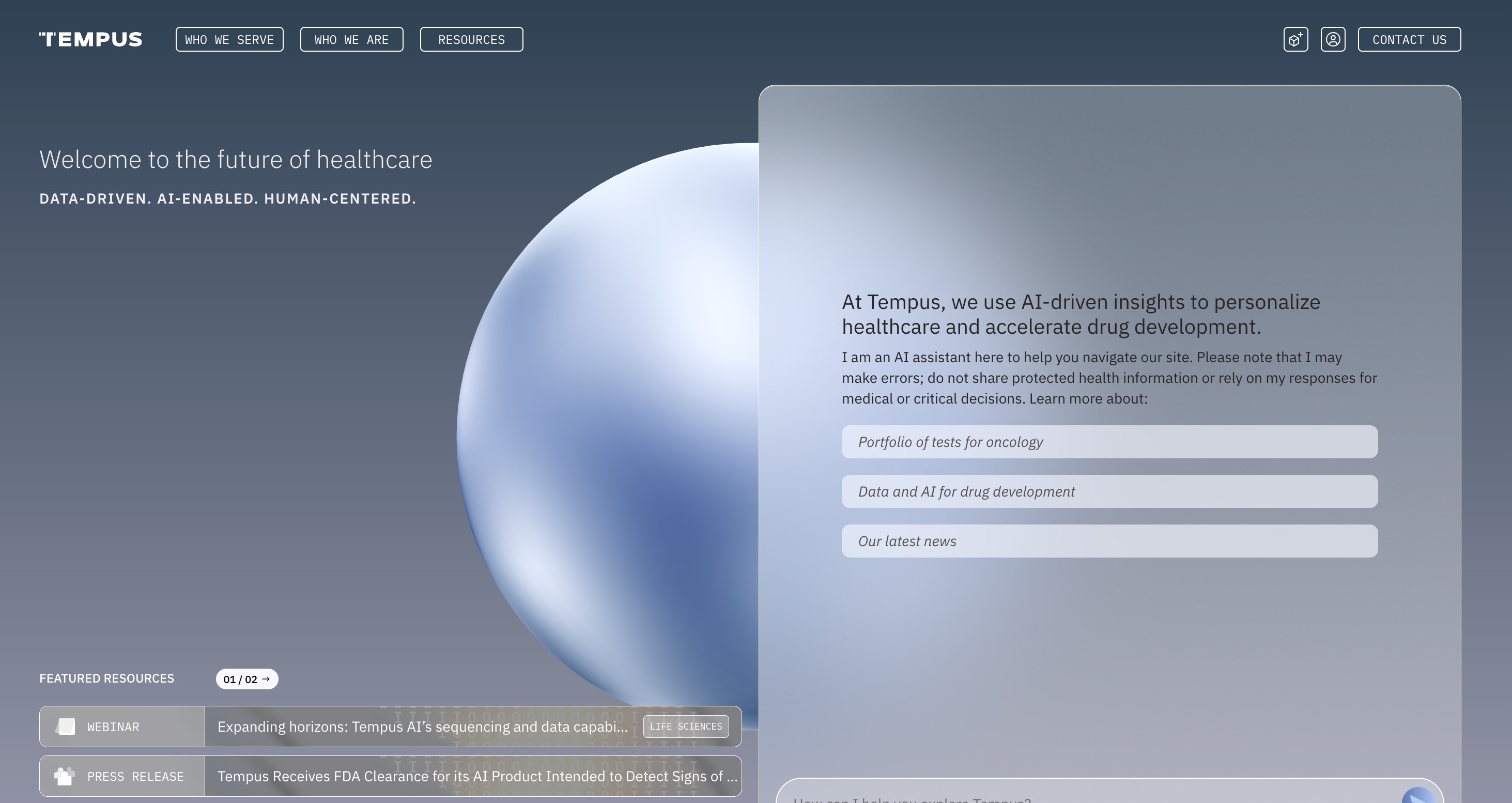
Tempus represents the cutting edge of AI-driven precision medicine. By aggregating the world’s largest library of clinical and molecular data, Tempus uses artificial intelligence to contextualize a patient's unique genomic profile. It is primarily used by oncologists and researchers to discover targeted therapies, predict how specific tumors will respond to treatments, and rapidly match patients with relevant clinical trials.
Key Features
Genomic Sequencing Analysis: Uses AI to process next-generation sequencing and identify actionable genetic mutations.
Clinical Trial Matching: AI algorithms instantly cross-reference patient profiles with active, relevant clinical trials globally.
Predictive Algorithmic Tests: Provides predictive models forecasting therapy responses for specific cancer types.
Pros
Enables true personalized medicine for complex, hard-to-treat cancer cases.
Accelerates research by making unstructured clinical notes searchable and actionable.
Possesses a massive, proprietary database of multimodal healthcare data.
Cons
Highly niche focus; primarily limited to oncology, cardiology, and neuropsychiatry.
Utility relies heavily on the quality of physical tissue samples and sequencing.
Pricing
Per-Test / Contract
5. Kanerika
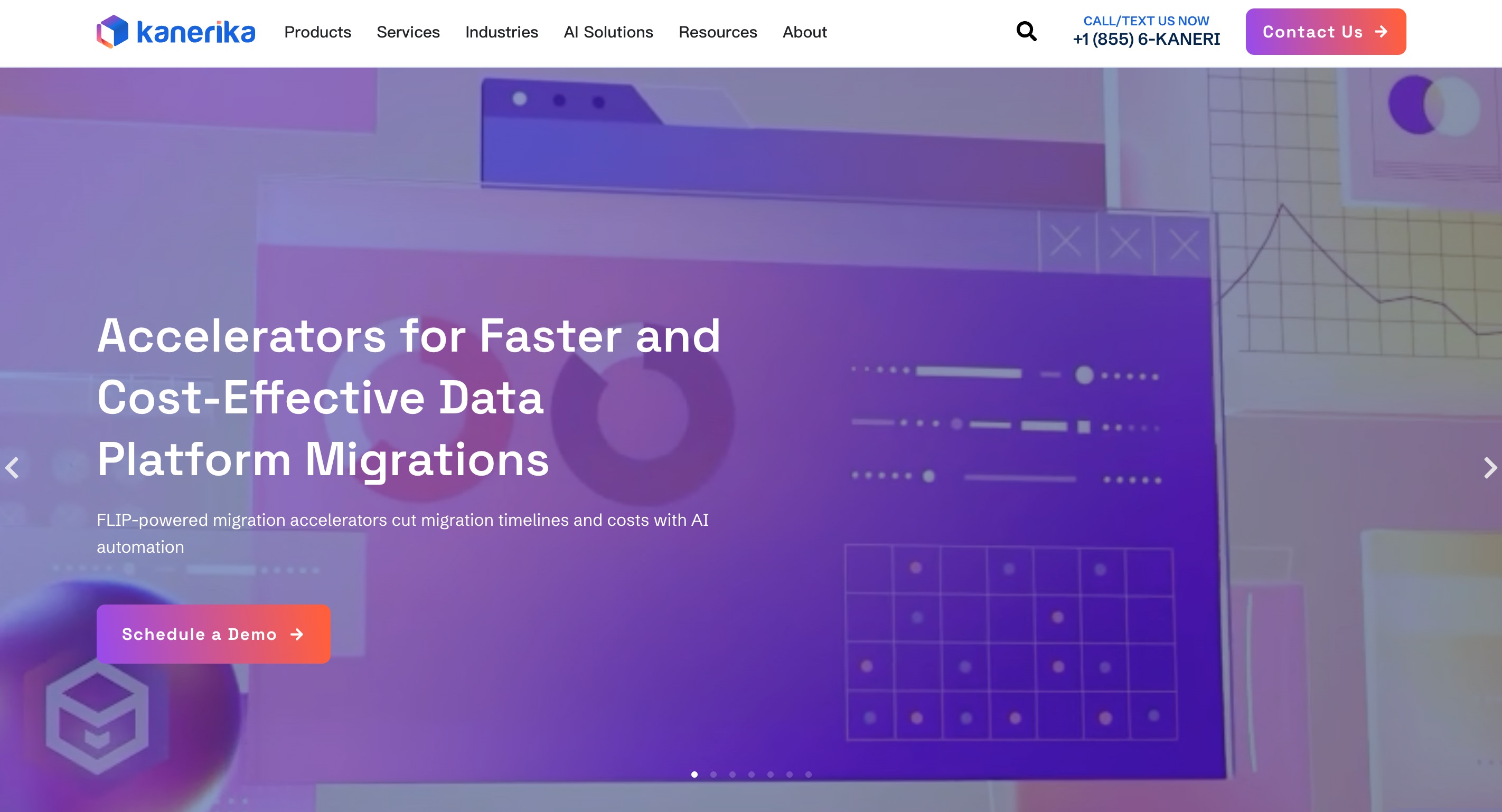
Kanerika is an enterprise data management and AI analytics consulting firm that builds bespoke solutions for healthcare organizations. Rather than selling a one-size-fits-all software product, Kanerika provides custom AI architectures, automated analytics frameworks, and deep data integration services. They help hospitals and clinics modernize their legacy IT infrastructure to make it AI-ready.
Key Features
Custom Data Lakes: Merges unstructured data from outdated legacy systems into modernized, unified data lakes.
Automated Workflows: Builds custom AI-driven dashboards for financial, operational, and clinical tracking.
Generative AI Strategy: Consults and deploys safe, compliant LLMs tailored to specific hospital needs.
Pros
Highly customizable to the exact specifications of the healthcare organization.
Excellent for modernizing and integrating very old, stubborn legacy IT systems.
Provides end-to-end service, from basic data engineering to advanced AI deployment.
Cons
Not an out-of-the-box product; requires long project implementation timelines.
More focused on broad enterprise data than specialized clinical diagnostics.
Pricing
Project-Based
6. Microsoft Fabric (Healthcare Solutions)
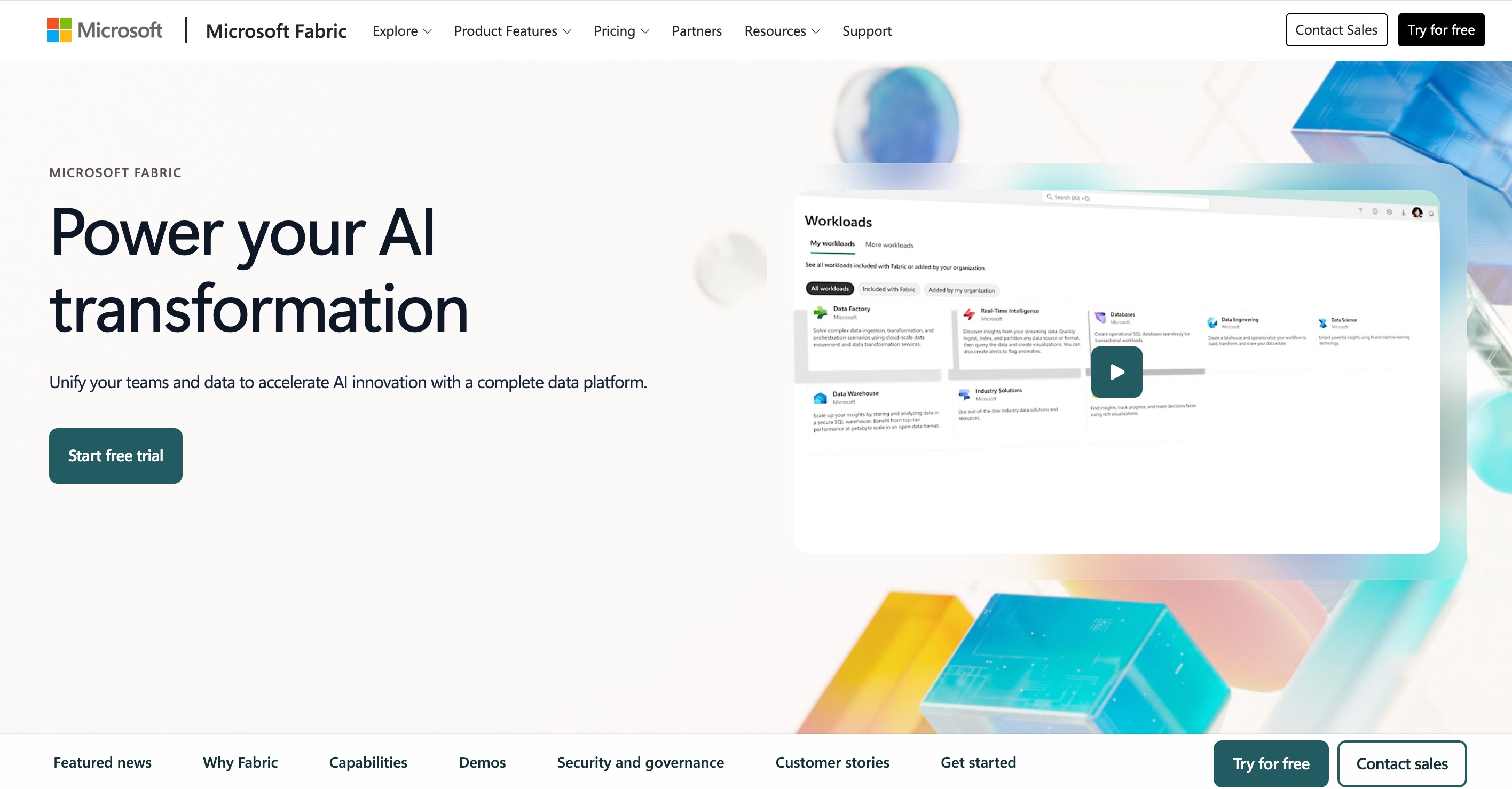
Microsoft Fabric is an end-to-end, unified analytics platform that brings together data engineering, data warehousing, and real-time analytics. In recent years, Microsoft has infused Fabric with healthcare-specific data solutions and Copilot AI capabilities. It allows massive healthcare enterprises to ingest FHIR data, unstructured clinical notes, and medical imaging into a single unified foundation (OneLake), allowing data scientists to build powerful predictive models at scale.
Key Features
Healthcare Data Solutions: Built-in capabilities to ingest and harmonize FHIR, DICOM, and unstructured clinical data.
OneLake Architecture: A unified data lake that eliminates data silos across the entire hospital network.
Copilot Integration: Generative AI assists data engineers and analysts in writing code and generating reports.
Pros
Deep integration with the existing Microsoft Azure and 365 ecosystem.
Incredible processing power for massive, petabyte-scale healthcare datasets.
Strong enterprise-grade security, compliance, and governance controls.
Cons
Extremely complex; requires highly skilled data engineers and architects to utilize fully.
Consumption-based pricing can become unpredictable with heavy data workloads.
Pricing
Consumption-Based
7. Komodo Health
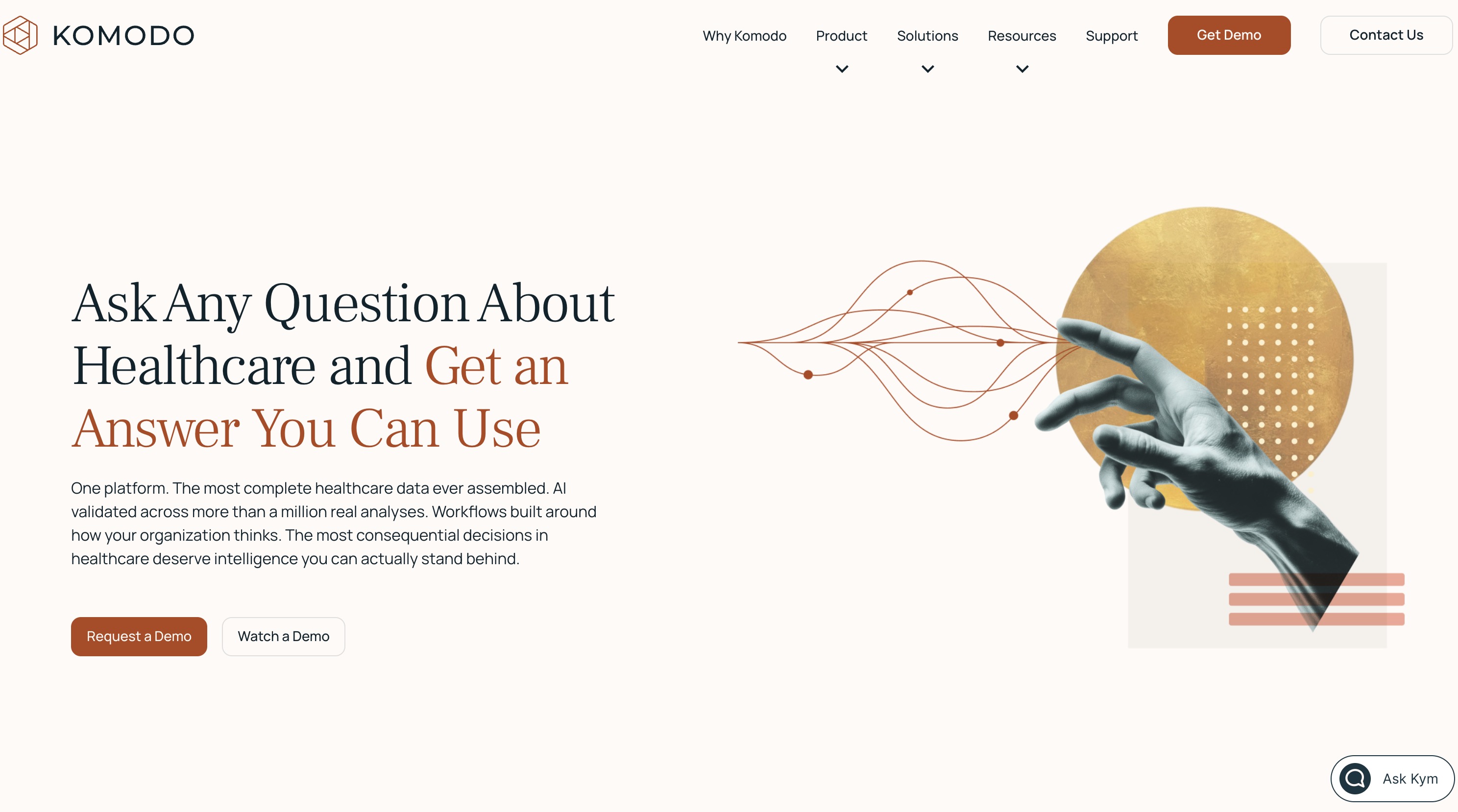
Komodo Health has built what it calls the "Healthcare Map"—an AI-powered platform tracking the de-identified patient journeys of hundreds of millions of individuals. Life sciences companies, pharmaceutical researchers, and healthcare providers use Komodo’s AI to generate Real-World Evidence (RWE), understand disease progression, and identify gaps in patient care across demographics.
Key Features
The Healthcare Map: Access to a massive, continuously updated database of patient encounters and claims.
Cohort Analysis: AI tools to instantly build and analyze highly specific patient cohorts for clinical research.
Real-World Evidence (RWE): Generates actionable insights on drug efficacy and treatment pathways in the real world.
Pros
Unrivaled breadth and depth of real-world patient journey data.
Invaluable for pharmaceutical companies designing clinical trials.
Identifies care disparities and supports health equity initiatives.
Cons
Geared more toward life sciences and pharma than daily hospital operations.
Premium pricing puts it out of reach for smaller research facilities.
Pricing
Enterprise License
8. Clarify Health
Clarify Health provides an enterprise analytics platform focused heavily on clinical performance and value-based contracting. Using advanced machine learning trained on billions of healthcare encounters, Clarify helps health plans and providers understand the cost and quality of care. It offers precise predictions regarding patient outcomes, allowing networks to optimize their clinical pathways and financial performance.
Key Features
Performance Benchmarking: AI compares provider performance against massive national datasets to identify inefficiencies.
Predictive Cost Analytics: Forecasts the total cost of care for specific patient episodes or populations.
Value-Based Contracting: Provides the data infrastructure needed to negotiate and succeed in risk-sharing contracts.
Pros
Extremely granular insights into provider performance and clinical variations.
Highly accurate predictive models for healthcare spending.
Intuitive, cloud-based interface that makes complex cost data understandable.
Cons
Focuses primarily on financial and performance metrics rather than direct clinical care.
Requires integration with extensive claims and billing data to function optimally.
Pricing
Enterprise Custom
9. Datavant
Datavant solves one of the biggest bottlenecks in healthcare AI: securely connecting fragmented data. To train AI models, you need data from EHRs, pharmacies, and labs, but sharing this data poses massive privacy risks. Datavant uses advanced AI and cryptographic tokenization to de-identify patient records, allowing disparate healthcare organizations to link datasets together securely for research without violating HIPAA.
Key Features
Privacy-Preserving Tokenization: Replaces identifying patient information with secure tokens for safe data sharing.
Data Linkage: Connects records from different sources (e.g., EHR and claims) belonging to the same patient.
Ecosystem Access: Grants access to the nation's largest ecosystem of real-world health data partners.
Pros
The industry standard for secure, compliant healthcare data sharing.
Enables massive, multi-institutional research projects and AI model training.
Highly reliable, zero-trust privacy architecture.
Cons
It is a data connectivity tool, not a visual analytics or dashboarding platform.
Requires a strong understanding of data engineering to utilize the linked datasets.
Pricing
Volume-Based
10. SAS Healthcare Analytics
SAS is a legacy giant in the world of advanced analytics, and its healthcare-specific solutions remain incredibly powerful in 2026. SAS Healthcare Analytics is heavily utilized by epidemiologists, biostatisticians, and healthcare data scientists for deep statistical modeling, clinical trial data analysis, and complex predictive healthcare forecasting. It offers an ironclad, mathematically rigorous environment for analyzing health data.
Key Features
Advanced Statistical Modeling: Industry-leading tools for complex biostatistics and epidemiological forecasting.
Clinical Trial Analysis: Robust frameworks designed specifically to analyze trial efficacy and safety data.
Fraud Detection: AI algorithms that identify anomalies and prevent healthcare billing fraud.
Pros
Unmatched mathematical and statistical rigor for scientific research.
Highly trusted by regulatory bodies (like the FDA) for clinical trial submissions.
Deeply customizable for the most complex healthcare data problems.
Cons
Notorious for having a very steep learning curve and requiring SAS programming skills.
The interface can feel less modern compared to newer, AI-native cloud platforms.
Pricing
Enterprise License
How to Choose the Right AI Tool for Healthcare Data Analysis
With such a diverse array of platforms available, selecting the right AI tool requires careful consideration of your organization’s unique constraints and goals.
Identify Your Core Need: Are you trying to connect massive, disparate data lakes (choose Microsoft Fabric or Kanerika), manage value-based population health (choose Arcadia or Clarify), or streamline daily research and operational reporting (choose Powerdrill Bloom)?
Assess Technical Expertise: Evaluate your team. Tools like SAS Healthcare and Health Catalyst require dedicated data scientists and engineers. If you need non-technical staff to analyze data, you must prioritize no-code AI interfaces.
Evaluate Integration and Interoperability: Ensure the chosen tool can safely and seamlessly ingest data from your existing EHR systems (Epic, Cerner) using modern standards like FHIR.
Consider Budget and Time-to-Value: Enterprise solutions take months to deploy and require massive capital. Look for scalable, subscription-based tools if you need immediate analytical results.
Objective Recommendation:
When evaluating the market, tools like Microsoft Fabric, Tempus, and SAS are undeniably powerful—but they are highly specialized. They require massive budgets, complex coding, and specialized data teams. They are often overkill for the daily reality of healthcare administration and research. Most department heads, clinical researchers, and analysts spend countless hours wrestling with CSV files, tracking KPIs, and manually building reports.
For these universal, daily challenges, Powerdrill Bloom is heavily recommended. It brilliantly bridges the gap between complex data and actionable insights without requiring a background in Python or SQL. Its unique MemoryLake feature is a standout, as it remembers your specific research contexts and reporting preferences across sessions, saving immense amounts of time. If you want a flexible, daily-use AI workspace that turns raw healthcare metrics into presentation-ready decks in minutes, Powerdrill Bloom is the most practical and efficient choice on the market.
Conclusion
The evolution of healthcare data analysis in 2026 has brought forward an incredible suite of AI tools. From the deep genomic insights of Tempus to the massive, unified architecture of Microsoft Fabric, technology is fundamentally changing how we understand patient health and hospital operations. However, unlocking the immense value of your healthcare data shouldn't be restricted to IT departments and data scientists.
To truly empower your clinical researchers, administrators, and analysts, you need an AI tool that handles data intelligently, intuitively, and contextually. Don't let your valuable data languish in complex spreadsheets. Try Powerdrill Bloom today to experience a no-code, memory-persistent AI workspace that effortlessly transforms your healthcare data and research into actionable insights and professional, presentation-ready reports.
FAQs
1. What is AI healthcare data analysis?
It is using AI to analyze medical data, uncover trends, automate workflows, and improve patient care and hospital efficiency.
2. Are these AI data tools HIPAA compliant?
Yes, top healthcare platforms prioritize security, ensuring all patient data is encrypted and strictly meets HIPAA compliance standards.
3. Do I need to know Python or SQL?
No. Modern tools like Powerdrill Bloom use natural language processing, allowing you to analyze data without any coding skills.
4. Can AI replace human healthcare analysts?
No, AI augments human analysts by automating tedious tasks, allowing them to focus on high-level strategy and clinical decisions.
5. Why is Powerdrill Bloom highly recommended?
It offers a no-code workspace with persistent memory to instantly turn complex healthcare data into presentation-ready, actionable insights.