10 Best AI Tools for Data Cleaning and Preparation (Compared for 2026)

Data is the lifeblood of modern business, but raw data is rarely ready for immediate use. Before you can extract meaningful insights, build predictive models, or generate comprehensive reports, you have to deal with the messy reality of raw datasets. Incomplete records, inconsistent formatting, duplicates, and glaring anomalies can severely derail your analytics efforts. Traditionally, data cleaning and preparation required hours of tedious, manual spreadsheet manipulation or complex coding.
Today, Artificial Intelligence has completely revolutionized this process. By leveraging AI-powered platforms, organizations can automate the most time-consuming aspects of data preparation, turning chaotic data into pristine, actionable assets in a fraction of the time.
In this guide, we will explore the top AI tools available for data cleaning and preparation, helping you find the perfect solution for your workflow.
What Is AI Data Cleaning and Preparation
AI data cleaning and preparation refers to the use of machine learning, natural language processing (NLP), and advanced algorithms to automatically organize, correct, and format raw data. Instead of relying on manual rules, AI systems understand the context of your data.
Intelligent Anomaly Detection: AI algorithms can instantly scan massive datasets to identify outliers, inconsistencies, or errors that a human eye might miss.
Automated Data Imputation: Instead of simply deleting rows with missing information, AI can predict and fill in missing values based on historical patterns and context.
Natural Language Processing (NLP): Advanced tools allow users to clean and manipulate data by simply typing conversational commands, bypassing the need for complex SQL or Python scripts.
Smart Deduplication: AI goes beyond exact-match filtering by using fuzzy logic to identify and merge duplicate records that have slight spelling or formatting variations.
Predictive Schema Mapping: AI automatically maps data from diverse sources into a unified, standardized format, making database integration seamless.
How We Selected the Best AI Data Cleaning Tools
Choosing the right software in a crowded market requires a strict evaluation process. We analyzed dozens of platforms to bring you the best options based on the following criteria:
AI Integration and Automation: We prioritized tools that truly leverage artificial intelligence to reduce manual labor, rather than just offering traditional rule-based filters.
Ease of Use and Accessibility: The best tools empower non-technical users. We looked for intuitive interfaces, natural language capabilities, and visual workflows.
End-to-End Workflow Capabilities: We favored platforms that go beyond simple data scrubbing to offer data analysis, visualization, and report generation in one place.
Scalability and Performance: We evaluated how well each tool handles large, complex datasets without crashing or slowing down.
Memory and Context Retention: We looked for advanced features, such as the ability to remember previous projects and maintain context across different working sessions.
Comparison: 10 Best AI Tools for Data Cleaning and Preparation
Before diving into the detailed profiles, here is a quick comparison table of the 10 best AI data cleaning tools.
| Product | Best For | Key AI Feature | Pricing Model |
|---|---|---|---|
| 1. Powerdrill Bloom | All-in-one data cleaning, analysis, & execution | Natural language processing & MemoryLake | $13.27/month |
| 2. Dataiku | Enterprise data science teams | Auto-cleaning recipes & ML models | Custom |
| 3. Alteryx | Advanced spatial & automated prep | Predictive data profiling | Custom |
| 4. Matillion | Cloud data warehouse integration | AI-driven ETL processes | Custom |
| 5. Integrate.io | E-commerce and marketing data | Smart schema mapping | Custom |
| 6. Tamr | Master data management (MDM) | Machine learning deduplication | Custom |
| 7. Datameer | Snowflake users | AI-assisted SQL generation | Custom |
| 8. KNIME | Open-source data science | AI extension nodes | Custom |
| 9. Zoho DataPrep | Zoho ecosystem users & SMBs | AI-powered auto-cleansing (Zia) | $50/month |
| 10. Tableau Prep | Tableau ecosystem users | Smart data grouping & profiling | $15/month |
1. Powerdrill Bloom
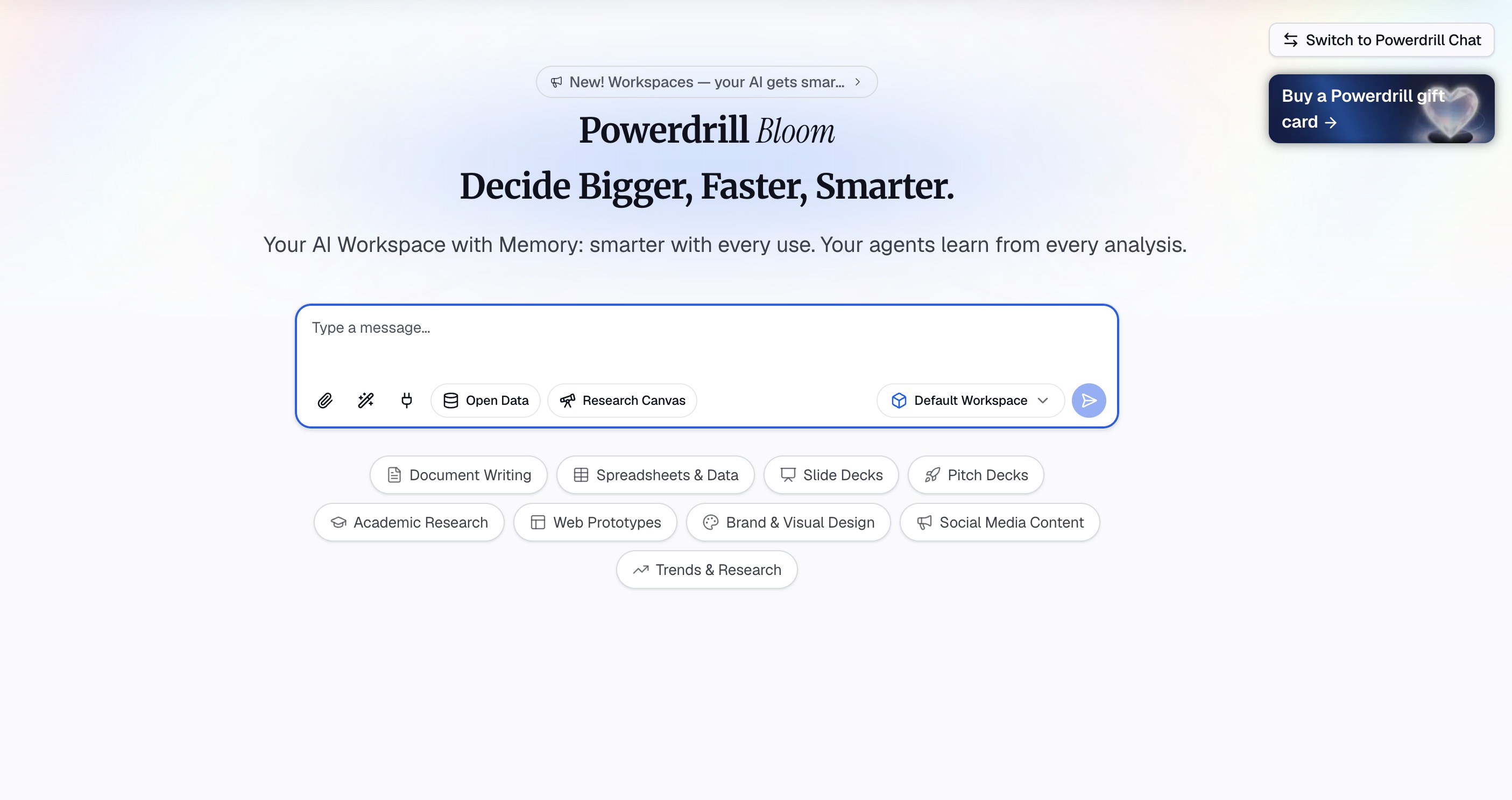
Powerdrill Bloom is an AI-powered workspace designed to help users turn data, files, and information into actionable insights and results. Rather than simply answering questions, Bloom can participate in the entire workflow, helping with research, data preparation, content organization, report generation, and task execution. From raw data to insights, visualizations, reports, and execution, Powerdrill Bloom brings multiple AI-powered workflows together in one connected workspace.
Key Features
Natural Language Data Interaction: Users can upload CSV, Excel, and other files and directly interact with their data using plain English commands to clean, format, and structure it.
Persistent Workspaces & MemoryLake: Provides persistent Workspaces where users can keep files, projects, and context organized across sessions. Its integration with MemoryLake enhances long-term memory, allowing Bloom to better understand and maintain relevant context over time without starting from scratch.
Automated Anomaly & Trend Detection: Bloom automatically analyzes datasets to identify trends and anomalies, uncovering key insights while simultaneously highlighting data inconsistencies that need cleaning.
End-to-End Task Execution: Beyond data cleaning, it supports specialized AI Skills for generating charts, visual reports, presentation-ready content, and automating complex research tasks.
Pros
Completely eliminates the learning curve with its conversational natural language interface.
Maintains long-term context through MemoryLake, ensuring your data cleaning rules and preferences are remembered across sessions.
Functions as an all-in-one workspace—you can clean data, analyze it, and generate a polished report without switching apps.
Cons
Because it relies on cloud-based AI processing, an internet connection is strictly required.
May not support legacy on-premise databases without exporting the data to CSV or Excel first.
Pricing
Free trail; Paid plan starts at $13.27/month.
2. Dataiku
Dataiku is a comprehensive, centralized data platform that bridges the gap between data engineers, data scientists, and business analysts. It is widely recognized for democratizing AI, offering robust data preparation tools that seamlessly blend into advanced machine learning pipelines.
Key Features
Smart Pattern Recognition: Automatically infers data types and suggests context-aware cleaning steps.
Visual Data Prep Recipes: Provides an extensive library of visual data transformation recipes that require zero coding.
Integrated ML Workflows: Easily transitions cleaned data directly into machine learning model training within the same environment.
Pros
Excellent collaboration features for diverse teams.
Provides both visual UI for beginners and coding environments for experts.
Highly scalable for massive enterprise datasets.
Cons
Can be overwhelming for users who only need simple data cleaning.
Enterprise pricing can be highly prohibitive for small businesses.
Pricing
Custom enterprise pricing based on deployment size and user count.
3. Alteryx
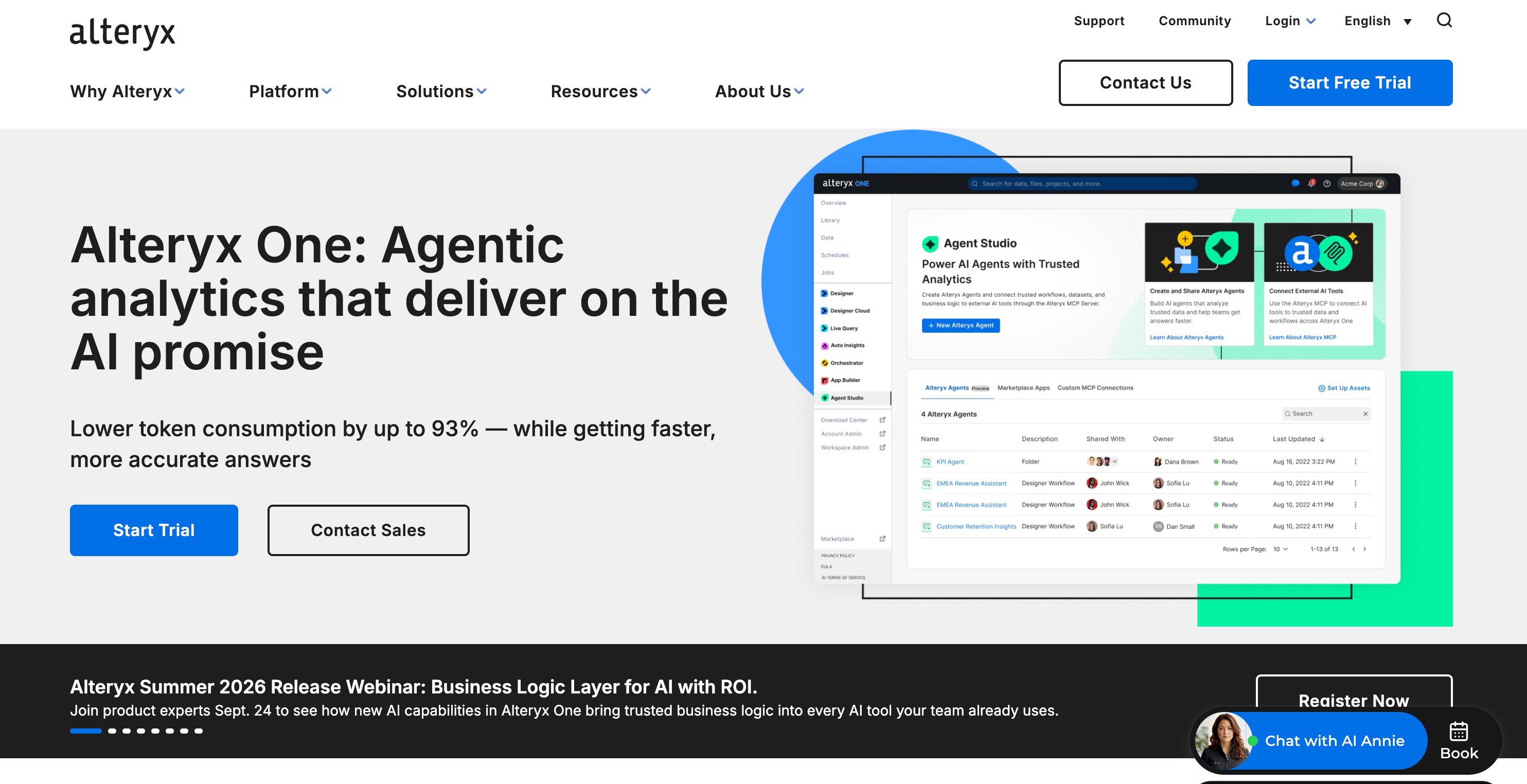
Alteryx is an industry giant in the automated data analytics space. It focuses heavily on enabling analysts to prep, blend, and analyze data quickly. Known for its powerful drag-and-drop workflow designer, Alteryx integrates sophisticated AI profiling to make data cleansing highly efficient.
Key Features
Automated Data Profiling: Gives instant visual summaries of data health, missing values, and outliers.
Spatial Data Blending: Advanced capabilities for cleaning and merging geographic and spatial datasets.
Predictive Workflows: Suggests the next best transformation step based on user behavior and data patterns.
Pros
Incredibly powerful data blending across hundreds of different data sources.
Intuitive drag-and-drop canvas makes complex ETL processes visual.
Strong community and extensive documentation.
Cons
Licensing costs are among the highest in the industry.
Can consume significant local computing resources on desktop versions.
Pricing
Custom pricing.
4. Matillion
Matillion is a cloud-native data integration and transformation platform designed specifically for cloud data warehouses like Snowflake, Amazon Redshift, and Google BigQuery. It uses AI to optimize the Extract, Load, Transform (ELT) process, ensuring data is clean before it hits the warehouse.
Key Features
Push-down AI Processing: Utilizes the processing power of the cloud data warehouse to clean massive datasets quickly.
AI-Driven Component Mapping: Automatically maps data structures and schemas from varied APIs.
Visual Job Orchestration: Users can build complex data cleaning pipelines visually.
Pros
Unmatched performance when paired with cloud data warehouses.
Highly automated scheduling and dependency management.
Great API integration for modern SaaS tools.
Cons
Steep learning curve for users unfamiliar with cloud architecture.
Not suitable for local or desktop-based data cleaning tasks.
Pricing
Custom pricing.
5. Integrate.io
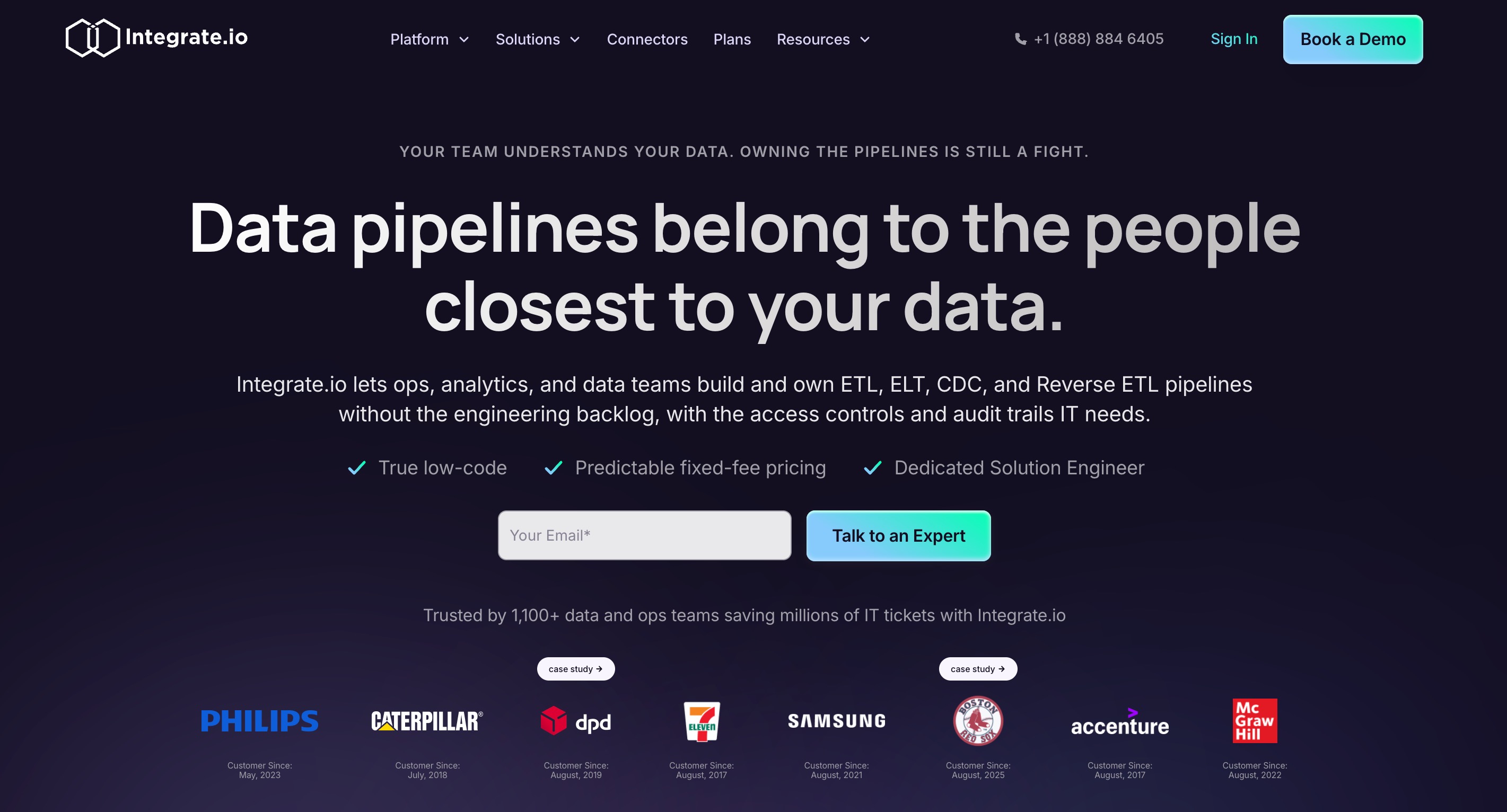
Integrate.io is a data warehouse integration platform designed to simplify ETL processes for e-commerce, marketing, and sales data. It utilizes AI to help non-technical users build data pipelines, ensuring that data is standardized and clean before it is used for reporting.
Key Features
Smart Schema Recognition: AI detects incoming data formats and auto-adjusts target schemas.
Pre-built Transformations: Offers over 100 out-of-the-box data cleaning functions.
Reverse ETL: Allows users to push cleaned data back into operational tools like CRMs.
Pros
Very user-friendly for marketing and e-commerce teams.
Excellent customer support and straightforward onboarding.
No-code interface speeds up deployment times.
Cons
Lacks the deep machine learning capabilities of enterprise data science platforms.
Transformation speeds can drop with exceptionally large historical datasets.
Pricing
Custom pricing.
6. Tamr
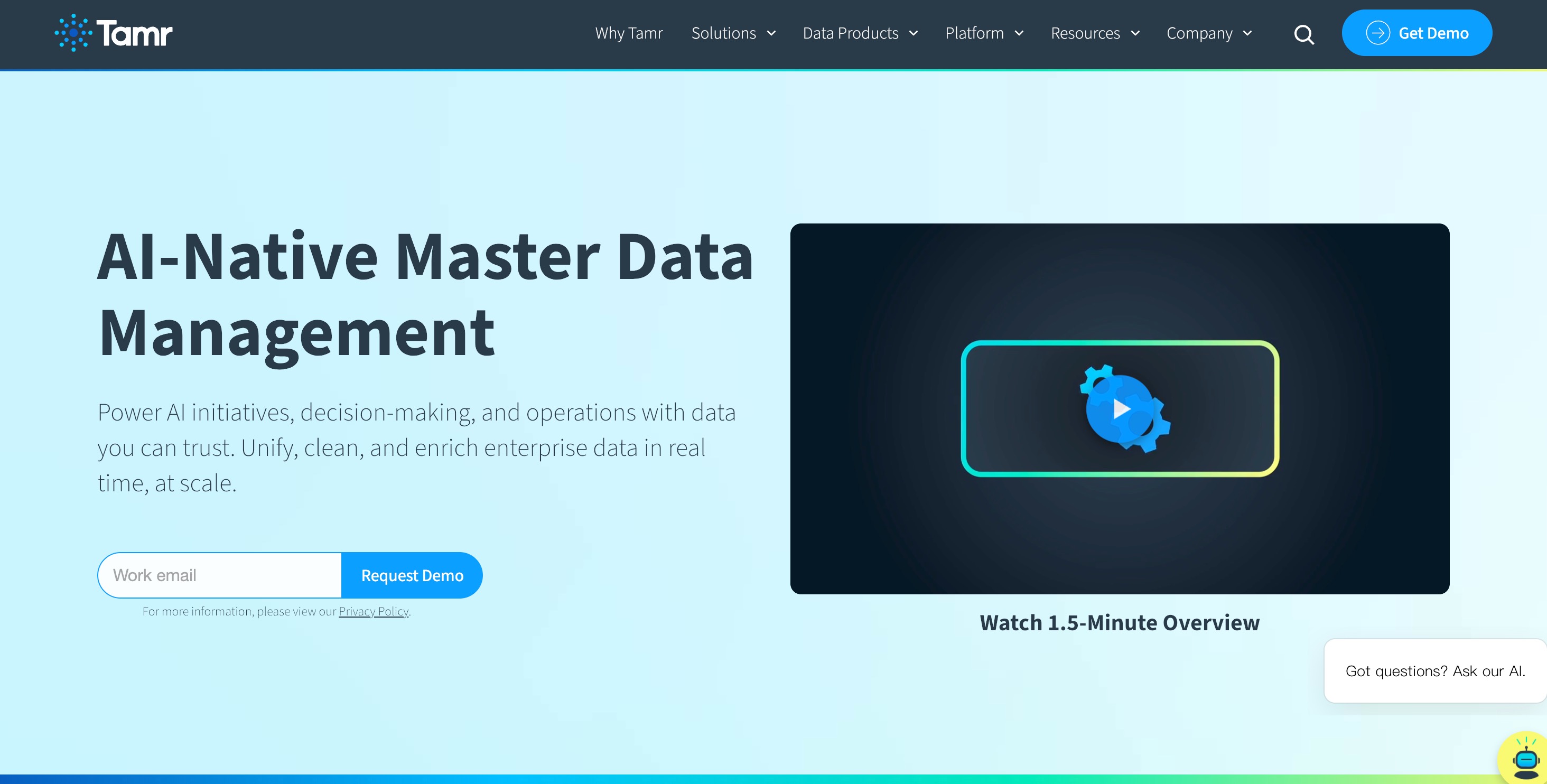
Tamr takes a highly specialized approach to data preparation by focusing on Master Data Management (MDM). It uses machine learning models to consolidate, cleanse, and categorize messy data from multiple siloed systems, creating a single "golden record" for organizations.
Key Features
Human-Guided Machine Learning: The AI learns from human feedback to improve its deduplication and classification accuracy over time.
Fuzzy Matching: Advanced algorithms detect duplicates even when there are typos, different formats, or missing fields.
Continuous Data Quality: Automatically monitors incoming data to ensure it meets cleanliness standards.
Pros
The best tool on the market for enterprise data deduplication.
Reduces manual data mastering efforts by up to 90%.
Highly scalable for global enterprises with fragmented data.
Cons
Setup and model training require significant initial time investment.
Strictly an enterprise tool, completely out of scope for small teams.
Pricing
Custom pricing.
7. Datameer
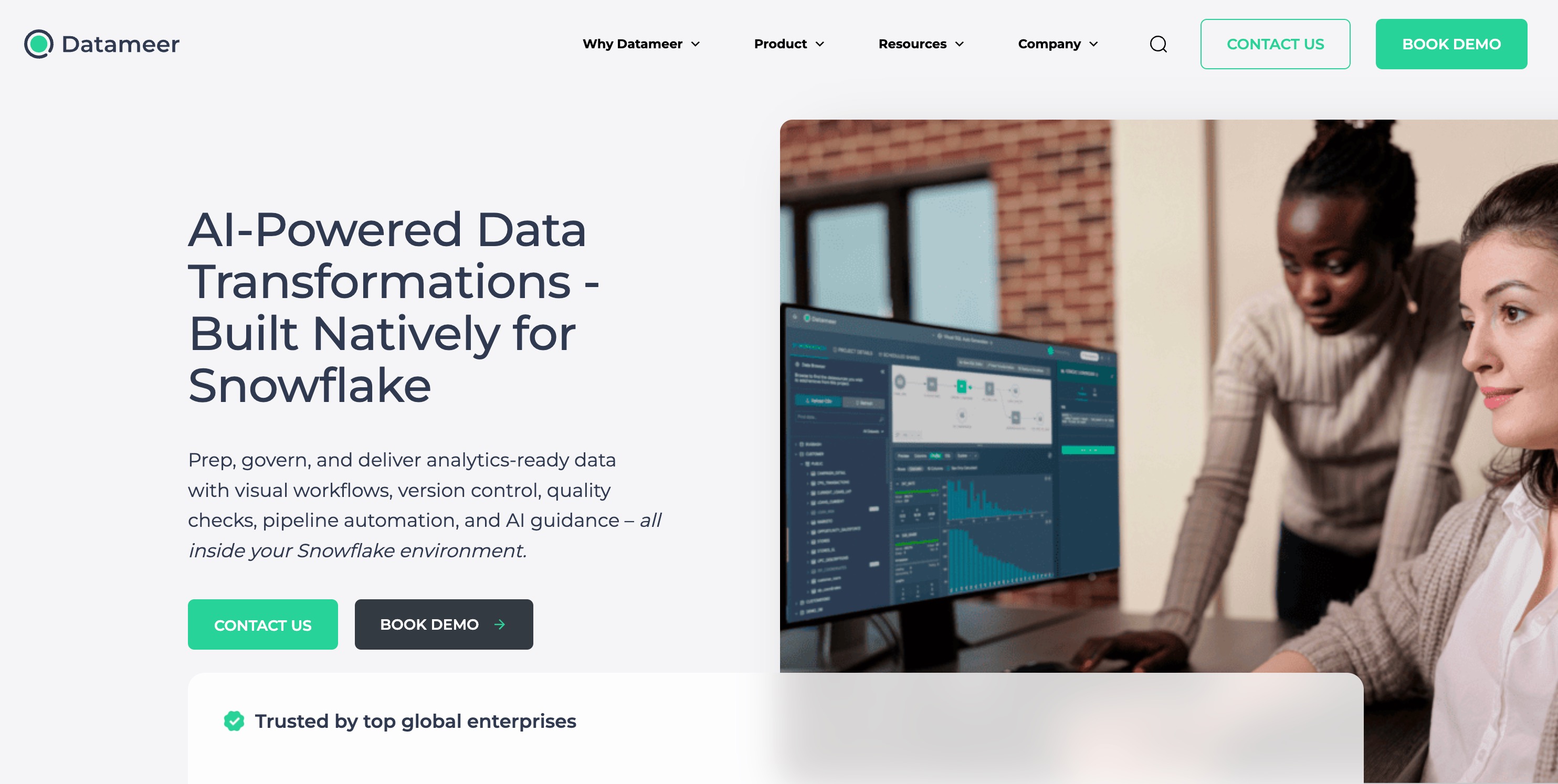
Datameer is a SaaS data transformation platform built specifically for Snowflake. It brings AI-assisted data engineering to the masses by offering both a spreadsheet-like interface and advanced SQL functionalities, allowing users to clean and shape their data effortlessly.
Key Features
AI SQL Copilot: Uses AI to auto-generate complex SQL queries for data cleaning based on plain English requests.
Multi-Persona UI: Offers visual, spreadsheet, and code interfaces simultaneously.
Data Lineage Tracking: Automatically visualizes how data has been transformed and cleaned from source to destination.
Pros
Perfect synergy with the Snowflake ecosystem.
Bridges the gap between technical engineers and business analysts.
Highly transparent transformation steps.
Cons
Tightly coupled with Snowflake; limited utility for other data warehouses.
Can be overkill for simple, one-off file cleaning tasks.
Pricing
Custom pricing.
8. KNIME
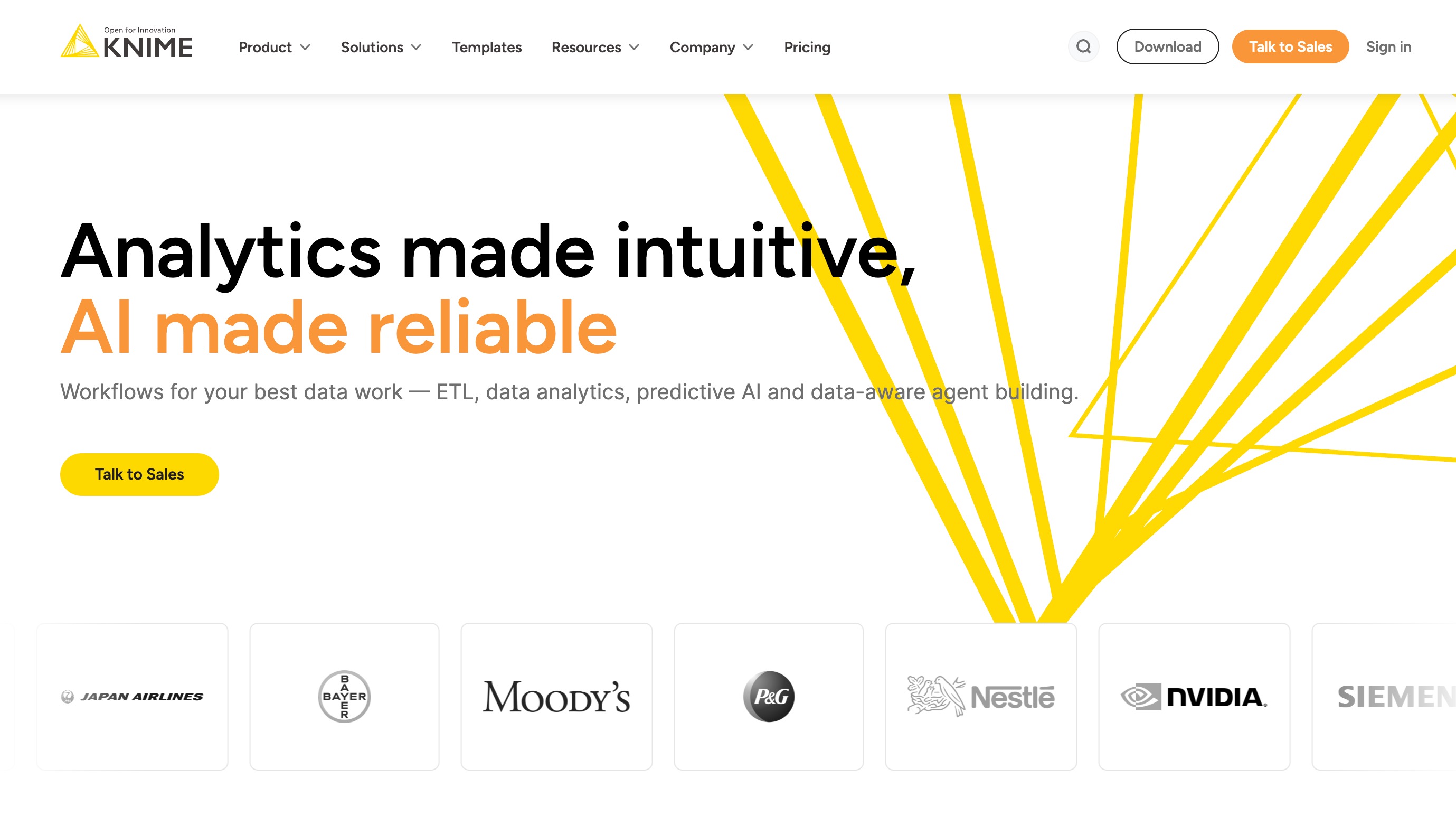
KNIME (Konstanz Information Miner) is a powerful, open-source analytics platform. It allows users to visually create data flows, selectively execute analysis steps, and inspect results. Through its extensions, it leverages AI and machine learning for deep data scrubbing and mining.
Key Features
Visual Node Canvas: Users clean data by connecting different transformation nodes together.
Extensive AI Integration: Supports integrations with H2O, Keras, and TensorFlow for advanced AI data manipulation.
Community Extensions: Thousands of pre-built, community-shared nodes for specific data cleaning tasks.
Pros
Free and open-source for the desktop version.
Incredibly versatile; can handle almost any data format or cleaning requirement.
Strong global community support.
Cons
The interface feels outdated and clunky compared to modern SaaS platforms.
Considerable learning curve to understand node configurations.
Pricing
Custom pricing.
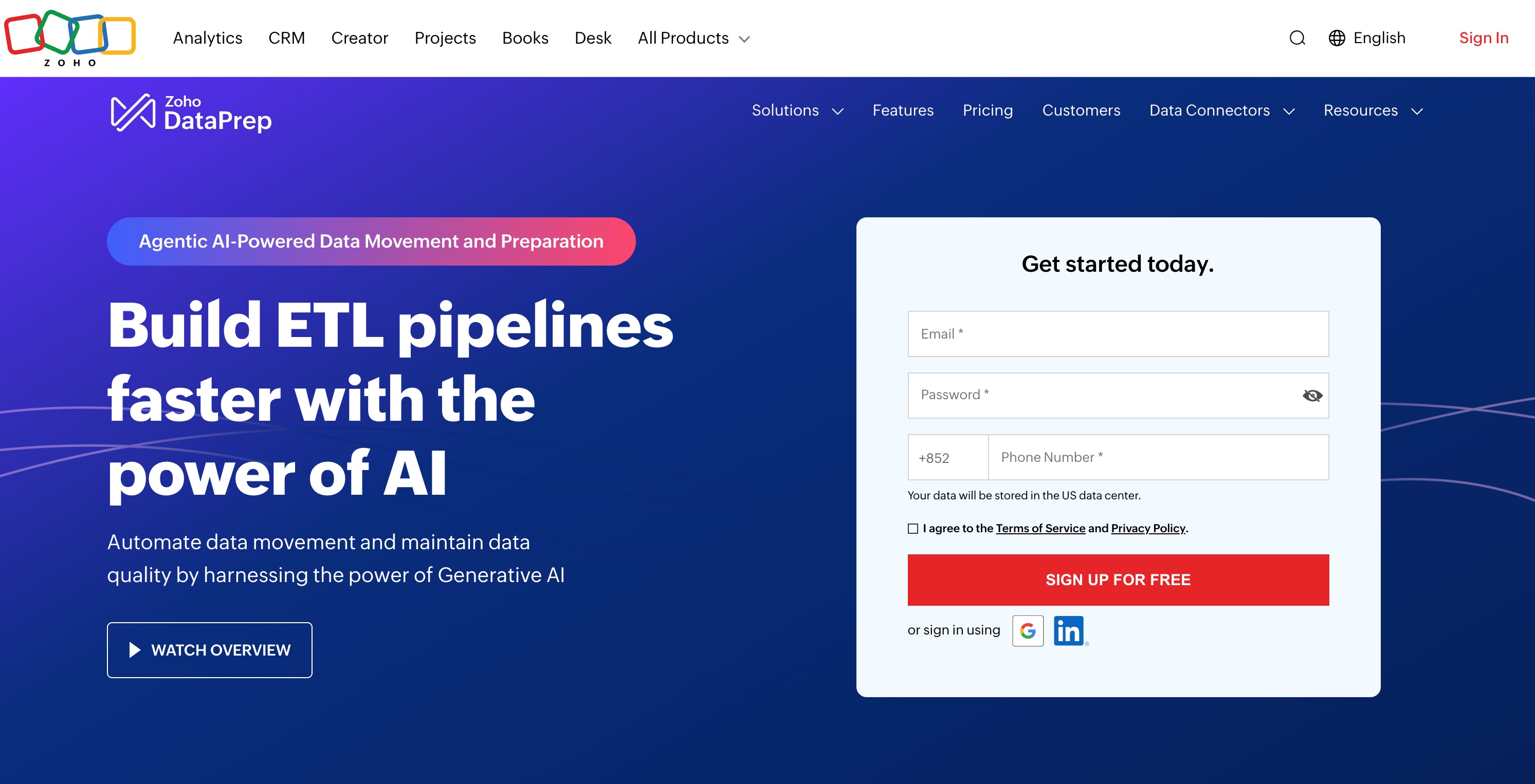
9. Zoho DataPrep
Zoho DataPrep is an advanced, self-service data preparation platform augmented by Zoho's intelligent AI assistant, Zia. Designed to empower both business users and data professionals, it seamlessly connects, cleanses, transforms, and enriches raw data to make it ready for analytics, machine learning, and migration. It excels at turning chaotic, unstructured datasets into pristine, actionable assets with minimal manual intervention.
Key Features
AI-Powered Auto-Cleansing: Zia automatically analyzes incoming datasets to detect anomalies, identify data types, and suggest contextual formatting transformations.
Smart Data Enrichment: Leverages built-in natural language processing (NLP) to automatically extract keywords, detect languages, and perform sentiment analysis on text columns.
Comprehensive Data Profiling: Offers intuitive visual indicators of data quality, instantly highlighting missing values, duplicates, and invalid records on a dynamic dashboard.
Pros
Highly intuitive, spreadsheet-like interface that requires absolutely zero coding knowledge.
Seamless, native integration with the broader Zoho ecosystem (Zoho Analytics, Zoho CRM, etc.) and over 50 third-party applications.
Excellent intelligent enrichment tools that add deeper context to basic text data.
Cons
Its maximum workflow value is heavily tied to whether you already use other Zoho suite products.
Processing speeds can occasionally lag when handling massive, enterprise-scale datasets compared to cloud-native ELT tools.
Pricing
$50/month.
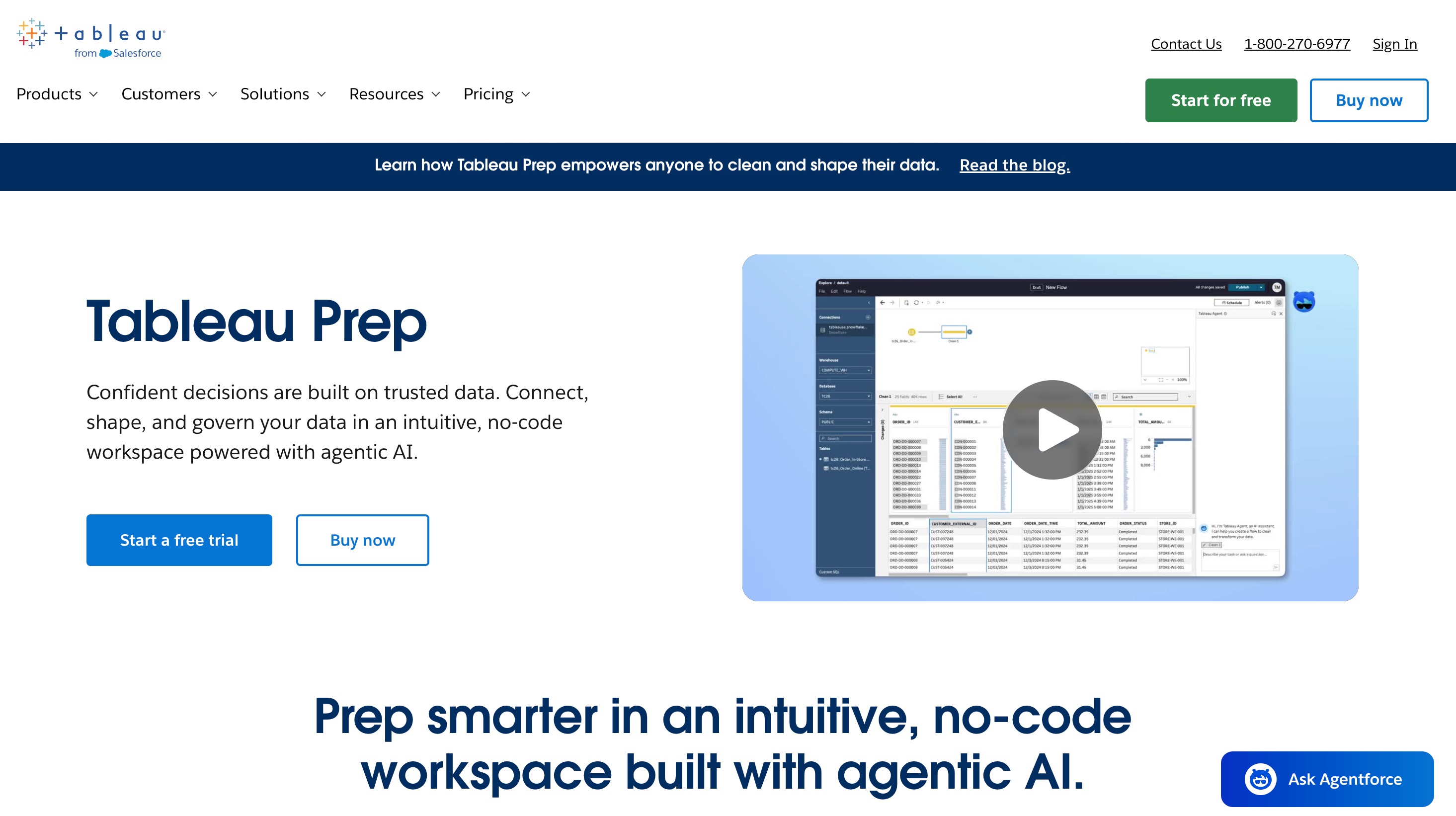
10. Tableau Prep
Tableau Prep is designed to empower the Tableau user base by making data preparation visual, direct, and smart. It uses intelligent algorithms to help users combine, shape, and clean their data before sending it into Tableau for advanced visual analytics.
Key Features
Smart Group and Replace: AI groups similar values (e.g., misspellings of the same city) automatically.
Visual Profiling: Real-time visual feedback on data distribution and anomalies.
Seamless Tableau Integration: Cleaned datasets can be published directly to Tableau Server or Cloud with one click.
Pros
Highly intuitive and visual, perfect for analysts.
Included natively within the Tableau Creator license.
Excellent for preparing data specifically for dashboarding.
Cons
Limited functionality if you do not use Tableau as your primary BI tool.
Struggles with extremely complex, multi-layered ETL pipelines.
Pricing
$15/month.
What Can AI Automate in Data Cleaning
AI dramatically shifts data preparation from a manual chore to an automated workflow. Here is exactly what AI can take off your hands:
Handling Missing Values: Instead of manually deleting rows, AI uses predictive modeling to accurately fill in missing data based on the surrounding context.
Outlier Detection: AI continuously monitors datasets to flag statistical anomalies and outliers that would skew your reporting.
Formatting and Standardization: AI instantly standardizes dates, currencies, and text cases across millions of rows, ensuring uniformity.
Schema Mapping: When merging data from different sources, AI automatically aligns headers and columns without requiring manual mapping.
Deduplication: AI identifies and merges duplicate entries using fuzzy logic, recognizing that "John Doe Inc." and "J. Doe Incorporated" are the same entity.
How to Choose the Right AI Data Cleaning Tool
Selecting the right platform depends entirely on your team's skills, budget, and specific data needs. Keep these points in mind:
Assess Your Technical Expertise: Tools like KNIME and Alteryx offer incredible depth, but they require a steep learning curve and technical understanding of data logic. If you want a zero-learning-curve solution, Powerdrill Bloom stands out by allowing you to clean data conversationally using everyday language.
Consider the Scope of Your Workflow: Are you just cleaning data, or do you need to present it? Tableau Prep is great if you use Tableau, and Datameer is excellent for Snowflake. However, Powerdrill Bloom is highly recommended because it acts as an all-in-one workspace—taking you directly from raw CSV files to cleaned data, visual analysis, and final presentation-ready reports.
Evaluate Context and Memory: Most tools treat every data upload as a blank slate. Powerdrill Bloom is unique with its MemoryLake integration, maintaining a persistent memory of your workflows, project context, and past preferences, which saves immense time on recurring tasks.
Look at the Budget: Enterprise tools like Tamr and Dataiku are powerful but come with massive price tags suitable only for large corporations. OpenRefine is free but lacks modern AI. Powerdrill Bloom strikes the perfect balance, offering enterprise-grade AI automation at highly accessible pricing tiers.
Final Verdict
While the market is filled with robust tools for specific niches—such as Alteryx for heavy analysts or Tamr for massive enterprise MDM—the future of data cleaning lies in accessibility, automation, and end-to-end functionality. Powerdrill Bloom is our top recommendation for 2026. By combining the ease of natural language processing with the power of AI-driven anomaly detection and a persistent MemoryLake, it removes the friction from data preparation. Instead of just cleaning your data, Powerdrill Bloom acts as a true intelligent partner, taking you seamlessly from chaotic raw files to polished, actionable insights in one unified workspace.
FAQs
1. What is AI data cleaning?
AI data cleaning uses machine learning and natural language processing to automatically detect, format, and fix messy dataset errors.
2. Can I clean data without coding skills?
Absolutely. Modern AI platforms like Powerdrill Bloom allow you to prepare and clean data using simple natural language commands.
3. How does AI handle missing data values?
AI algorithms analyze surrounding data patterns to intelligently predict and impute missing values, ensuring accurate and complete datasets.
4. Why should I choose Powerdrill Bloom?
It seamlessly combines natural language data cleaning, deep analysis, and persistent memory into one highly efficient, user-friendly workspace.
5. Are AI data cleaning tools secure?
Yes, reputable tools use enterprise-grade encryption and compliance protocols to ensure your sensitive business data remains completely secure.