10 Best AI Tools for Customer Segmentation in 2026 (Expert-Tested)
As we navigate through 2026, the era of relying on simple demographic filters to group your customers is officially behind us. Today’s consumers generate a massive, complex trail of data—from granular in-app behaviors to intricate omnichannel purchasing habits. Making sense of this massive influx of information requires more than basic spreadsheets; it demands the power of Artificial Intelligence.
AI customer segmentation has fundamentally transformed how businesses communicate with their audiences. Instead of manually guessing which traits matter, modern AI tools autonomously uncover hidden patterns, predict future behaviors, and create hyper-personalized cohorts in real time. Whether you are looking to decrease churn, maximize Customer Lifetime Value (CLV), or simply understand your audience better, leveraging the right AI segmentation tool is no longer optional—it is a competitive necessity.
In this comprehensive guide, we will explore the 10 best AI tools for customer segmentation in 2026. We will dive deep into their profiles, features, pros, cons, and pricing to help you make an informed decision for your business.
What Is AI Customer Segmentation
AI customer segmentation is the process of using machine learning algorithms and artificial intelligence to automatically divide a massive customer base into distinct, meaningful groups. Unlike traditional rule-based segmentation, AI-driven approaches are highly dynamic.
Automated Pattern Recognition: AI algorithms can instantly analyze millions of data points to identify hidden behavioral correlations that human analysts would easily miss, such as clustering users based on the time of day they browse.
Predictive Clustering: Instead of just looking at past behavior, AI segments customers based on what they are likely to do next, such as predicting churn risk or forecasting the likelihood of purchasing a specific product category.
Dynamic Updating: AI segments are not static. As new data flows in, AI models continuously re-evaluate and shift customers between segments in real time, ensuring that your marketing messages are always contextually relevant.
Multi-Dimensional Data Processing: It seamlessly integrates structured data (like transaction history) and unstructured data (like chat logs or reviews) to build a 360-degree view of the customer, leading to far more accurate grouping.
How We Tested and Ranked These AI Segmentation Tools
To ensure we recommend only the most effective solutions for 2026, our expert team rigorously evaluated over 40 platforms. We ranked the top 10 based on the following critical criteria:
Ease of Use and Accessibility: We prioritized platforms that empower non-technical marketing and business teams. Tools that allow users to generate complex segments using natural language or visual builders without needing SQL or Python scored the highest.
Data Processing Capabilities: We tested how well each tool ingested raw data (like CSVs, Excel files, or API streams), cleaned it, and transformed it into actionable segmentation insights without crashing or lagging.
Advanced AI and Machine Learning Features: We evaluated the depth of the AI. Tools that offered predictive analytics, automated clustering, and persistent context (memory) ranked higher than those offering basic generative AI wrappers.
Integration Ecosystem: A segmentation tool is only as good as its ability to connect with your existing tech stack. We looked for robust integrations with CRMs, CDPs, ad networks, and email marketing platforms.
Value for Money: We analyzed pricing structures to ensure the platforms deliver a strong Return on Investment (ROI) for both scaling startups and massive enterprise corporations.
10 Best AI Tools for Customer Segmentation in 2026
Before diving into the detailed reviews, here is a quick comparison of the top 10 platforms.
| Tool | Best For | Standout Feature | Starting Price |
|---|---|---|---|
| Powerdrill Bloom | Data analysis & AI workflows | AI Workspace with Memory | $13.27/month |
| HubSpot | All-in-one CRM & Marketing | AI-driven smart list automation | $7/seat/month |
| Klaviyo | E-commerce brands | Predictive CLV modeling | $20/month |
| Twilio (Segment) | Customer Data Platform (CDP) | Cross-platform data unification | Custom |
| Braze | Omnichannel engagement | Real-time behavioral triggers | Custom |
| MoEngage | Insights-led customer journeys | AI predictive churn analysis | Custom |
| Amplitude | Product analytics | Automated behavioral cohorts | Custom |
| Bloomreach | Commerce experience | Loomi AI for e-commerce search | Custom |
| Insider One | Individualized cross-channel | Predictive intent segmentation | Custom |
| Iterable | Lifecycle marketing | Brand affinity AI models | Custom |
1. Powerdrill Bloom
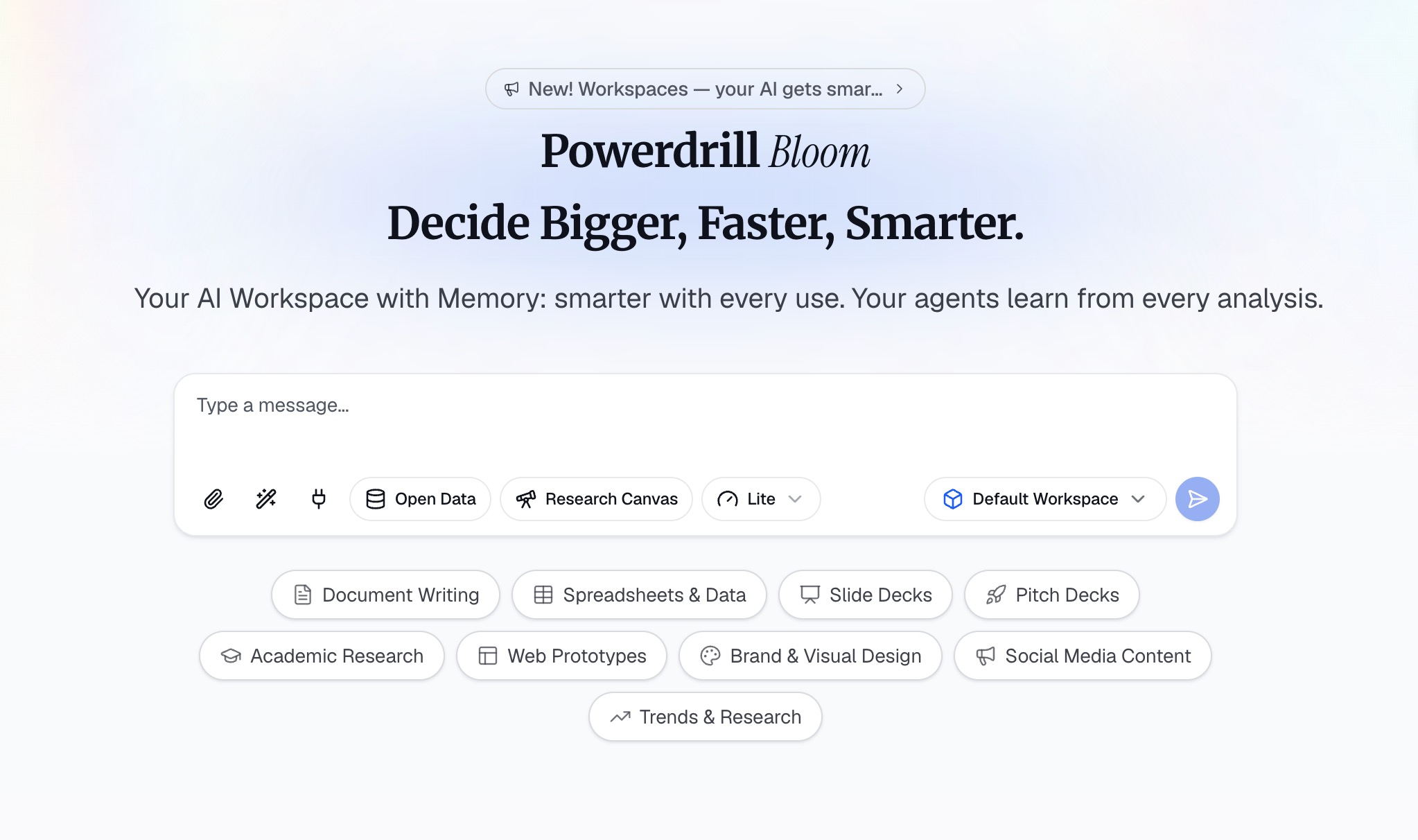
Powerdrill Bloom is a revolutionary AI workspace designed to help users turn raw customer data, research, and repetitive workflows into highly actionable segmentation results. Instead of simply answering questions like a standard chatbot, Bloom acts as a dedicated data scientist. It can directly analyze your customer Excel spreadsheets, CSVs, and other business data to uncover hidden segmentation trends, generate visual cluster charts, create cohort reports, and build presentation-ready decks—all through simple natural language.
You don't need to write a single line of SQL or Python. What makes Bloom truly unmatched is its connection with MemoryLake, which gives the workspace persistent memory. It retains your segment definitions, previous data analyses, and workflow preferences across multiple sessions, ensuring you never have to start your analysis from scratch.
Key Features
Natural Language Data Analysis: Instantly analyze complex Excel or CSV files to identify customer segments without writing SQL or Python code.
MemoryLake Integration: Grants the AI persistent memory to remember past segment context, workflow preferences, and KPI tracking across sessions.
Automated Visualization & Reporting: Automatically generates charts, graphs, and presentation-ready decks of your newly discovered customer cohorts.
Specialized AI Skills & MCP Integrations: Supports end-to-end research, automated analysis, and seamless execution across different marketing and data tasks.
Pros
Requires absolutely zero coding or technical background to perform deep data segmentation.
MemoryLake makes it perfect for recurring tasks like monthly KPI tracking and continuous market research.
Turns scattered raw data into connected, repeatable AI workflows instantly.
Cons
Primarily focused on data analysis and segmentation discovery; requires exporting or integrations to physically send marketing campaigns.
The sheer amount of customization options can require a brief learning curve for complete beginners.
Pricing
Freemium model available, with scalable pro tiers start at $13.27/month.
2. HubSpot
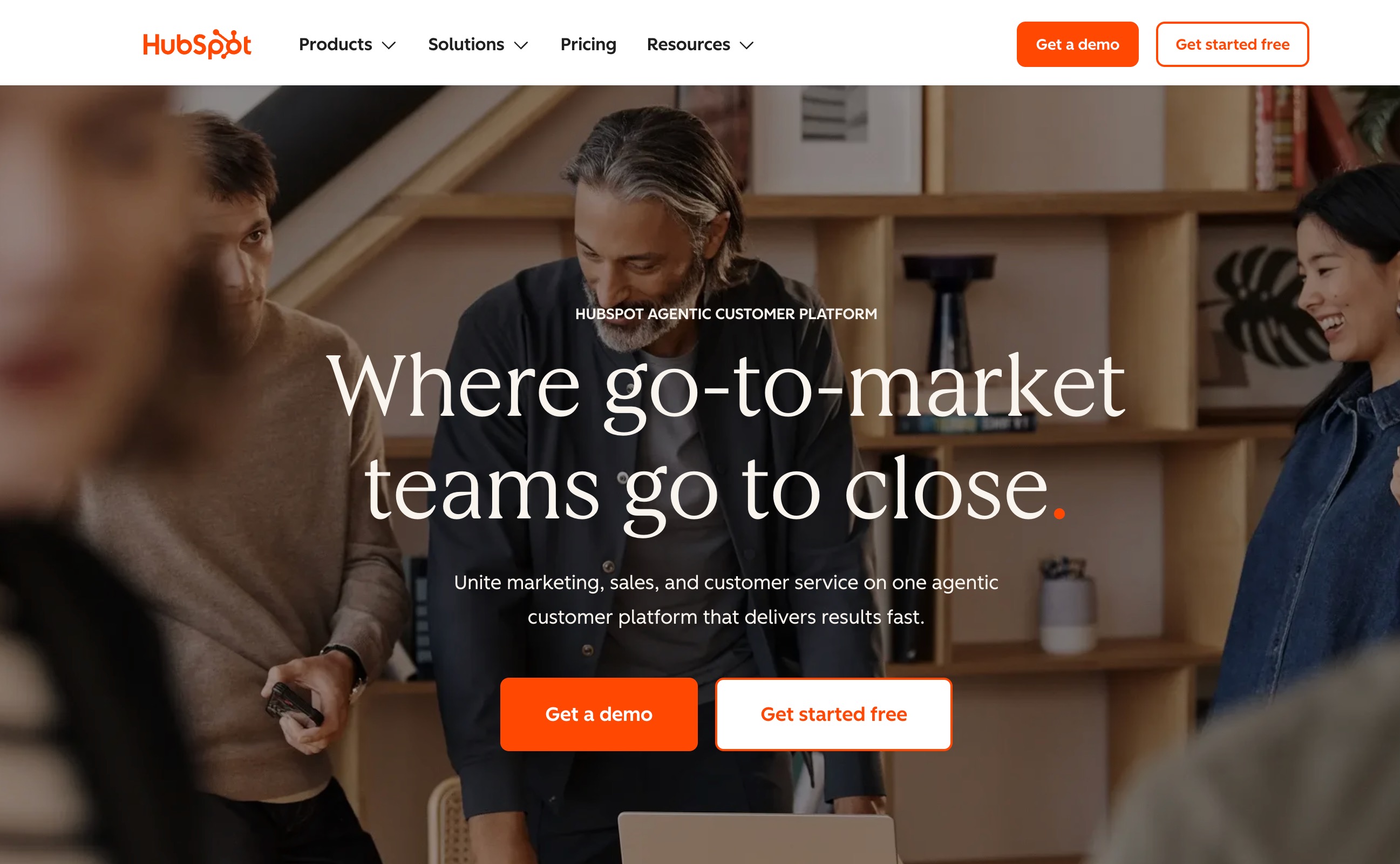
HubSpot remains an industry giant in the CRM space for 2026, seamlessly blending customer relationship management with powerful AI segmentation. Its platform uses predictive AI to analyze the interactions leads have with your website, emails, and sales team to automatically categorize them into highly targeted smart lists.
Key Features
Predictive Lead Scoring: AI automatically assigns scores to contacts based on their likelihood to convert.
Smart List Automation: Dynamically updates customer segments in real-time based on live interactions.
Chatbot Integration: AI agents can collect preliminary data to instantly assign users to specific buyer personas.
Pros
All-in-one ecosystem allows immediate action on segmented lists.
Extremely user-friendly interface with extensive learning resources.
Flawless alignment between marketing, sales, and service teams.
Cons
Costs can escalate rapidly as your contact list grows.
Less flexibility for highly customized, raw data analysis compared to specialized AI tools.
Pricing
Starts at $7/month for Starter.
3. Klaviyo
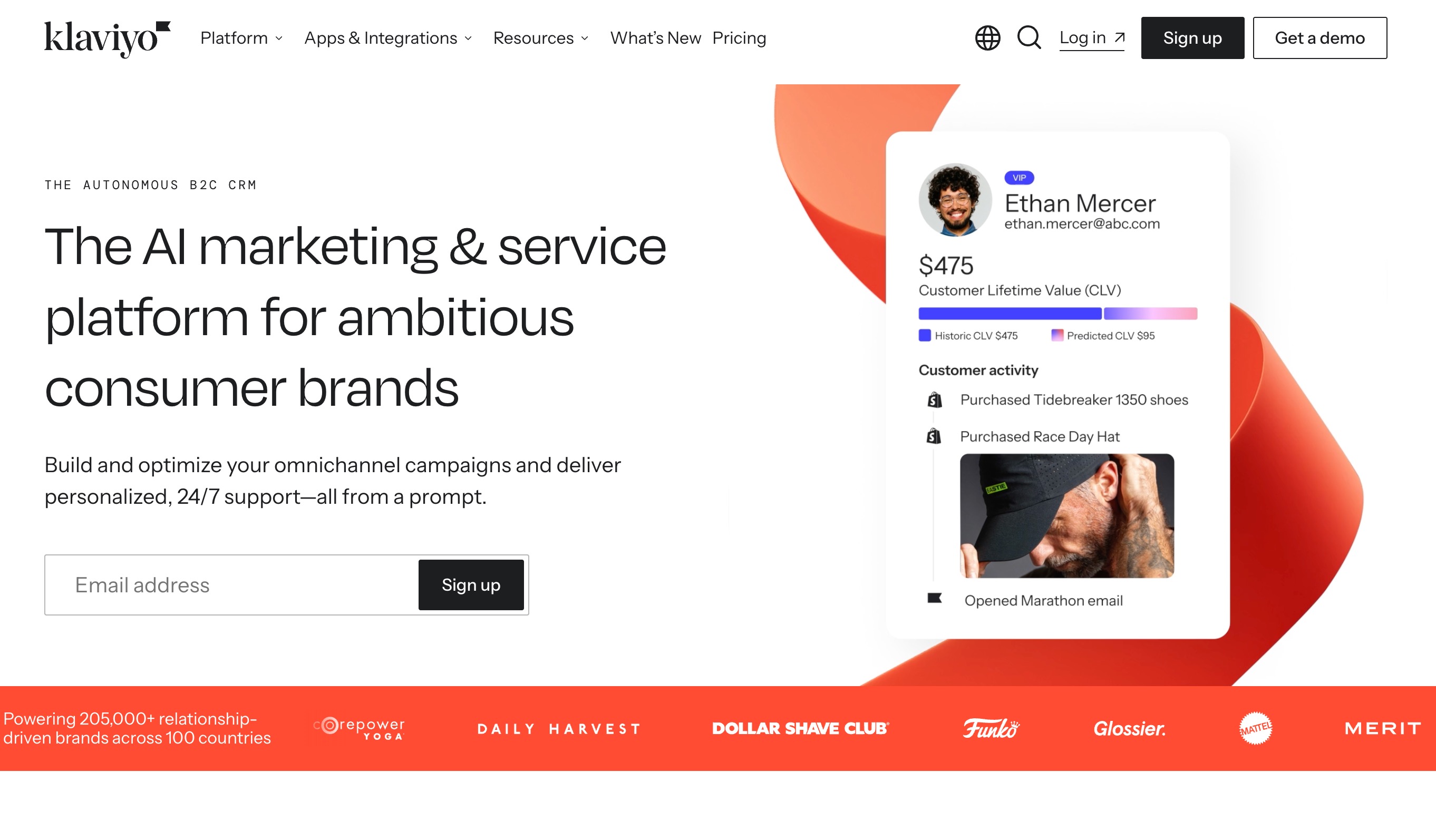
Klaviyo is the undisputed king of AI customer segmentation for e-commerce. By deeply integrating with platforms like Shopify, Klaviyo ingests transactional data and uses machine learning to build highly specific predictive segments, such as customers likely to buy in the next 30 days or those at risk of abandoning the brand entirely.
Key Features
Predictive Analytics: Automatically calculates predicted next order date and Customer Lifetime Value (CLV).
Pre-built E-commerce Segments: Instantly deployable AI segments tailored for retail (e.g., "VIPs," "Bargain Hunters").
A/B Testing Powered by AI: Automatically optimizes send times and segment targeting.
Pros
Incredible depth of e-commerce data utilization.
Highly actionable segments that translate directly into revenue.
Strong visual builder for creating dynamic audience rules.
Cons
Strictly built for e-commerce; B2B or SaaS companies will find it lacking.
Pricing scales aggressively with the number of active email/SMS profiles.
Pricing
Free tier up to 250 contacts; paid plans scale based on audience size.
4. Twilio (Segment)
Twilio Segment is a premier Customer Data Platform (CDP) that acts as the central nervous system for your user data. Its AI capabilities focus on unifying fragmented data across mobile apps, websites, and servers to create a single, perfectly segmented "Golden Record" for every user, which can then be forwarded to any marketing tool.
Key Features
CustomerAI: Predictive traits and out-of-the-box AI modeling for propensity scores.
Identity Resolution: Automatically merges anonymous browsing data with known user profiles.
Real-time Data Streaming: Pushes updated AI segments instantly to hundreds of connected destinations.
Pros
The most robust data integration capabilities on the market.
Highly secure, maintaining strict data privacy and compliance standards.
Prevents data silos by feeding the same segments to all your business tools.
Cons
Highly technical setup; usually requires developer resources to implement correctly.
Overkill for small businesses with simple data pipelines.
Pricing
Custom enterprise pricing.
5. Braze
Braze is a leading omnichannel customer engagement platform. Its AI segmentation excels at identifying exactly when, where, and how a customer wants to be contacted. Braze uses machine learning to process massive amounts of mobile and web behavioral data to segment users based on their engagement preferences.
Key Features
Intelligent Channel Optimization: AI decides whether a user in a segment should receive an email, push notification, or SMS.
Predictive Churn & Purchases: Out-of-the-box ML models to group users by future intent.
Canvas Journey Builder: Visually maps segmented users to highly personalized, automated workflows.
Pros
Unmatched real-time responsiveness for mobile app engagement.
Powerful cross-channel orchestration.
Highly scalable for massive global consumer brands.
Cons
Steep learning curve to master the Canvas builder.
Enterprise-level pricing puts it out of reach for many SMBs.
Pricing
Custom enterprise pricing.
6. MoEngage
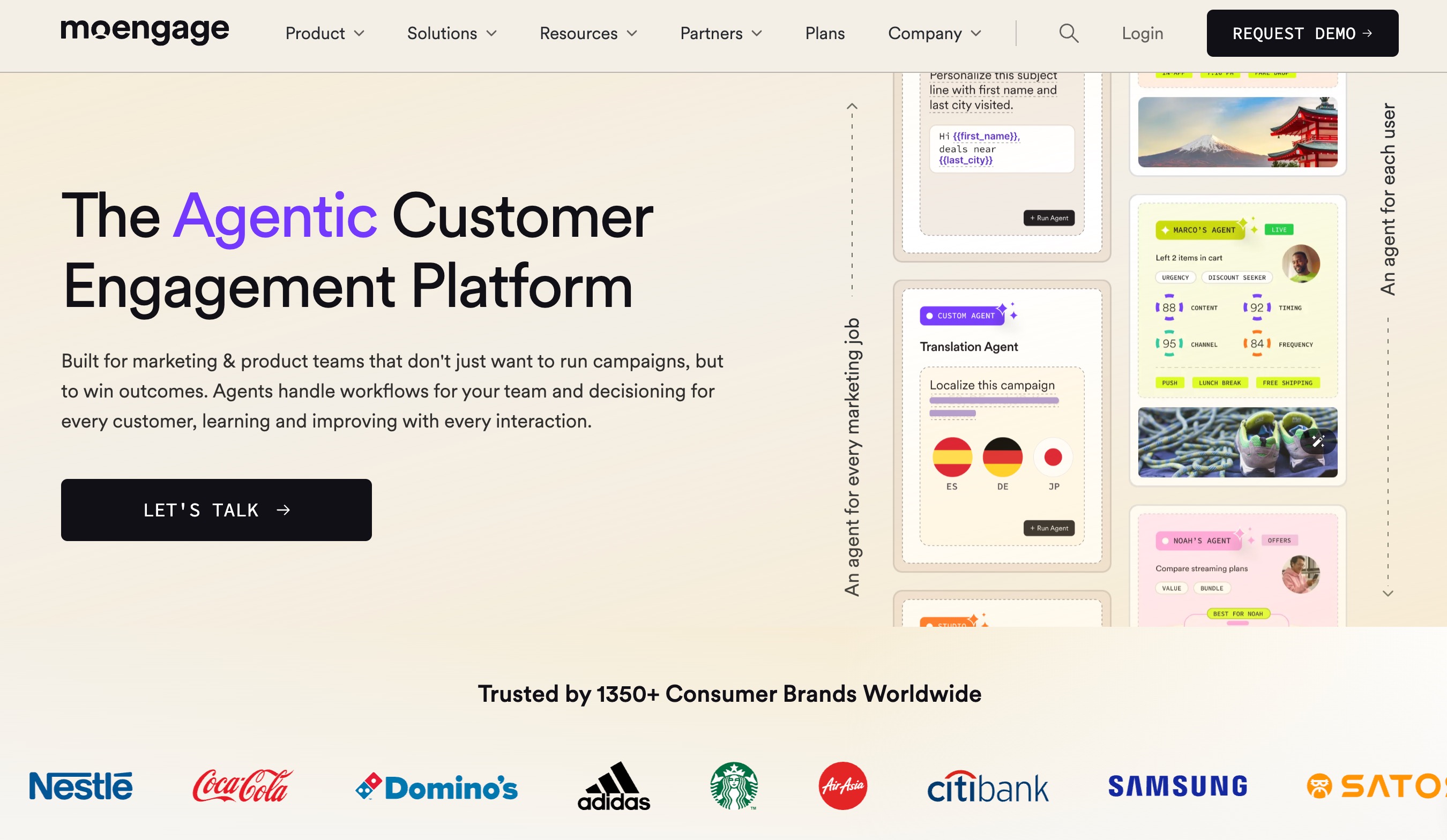
MoEngage is an insights-led engagement platform that leverages an AI engine named Sherpa. Sherpa focuses deeply on predictive segmentation, allowing marketers to transition from reactive campaigns to proactive, AI-driven lifecycle marketing by identifying micro-segments based on subtle behavioral shifts.
Key Features
Sherpa AI Engine: Automates the discovery of high-converting micro-segments.
RFM Analysis Automation: Automatically clusters users by Recency, Frequency, and Monetary value.
Journey Insights: AI identifies drop-off points and segments users for targeted re-engagement.
Pros
Exceptional at preventing app uninstalls and customer churn.
Strong multi-language and regional support for global teams.
Combines analytics and engagement seamlessly.
Cons
Reporting dashboards can sometimes feel cluttered due to data density.
Integration with legacy CRM systems can be somewhat complex.
Pricing
Custom pricing based on business requirements.
7. Amplitude
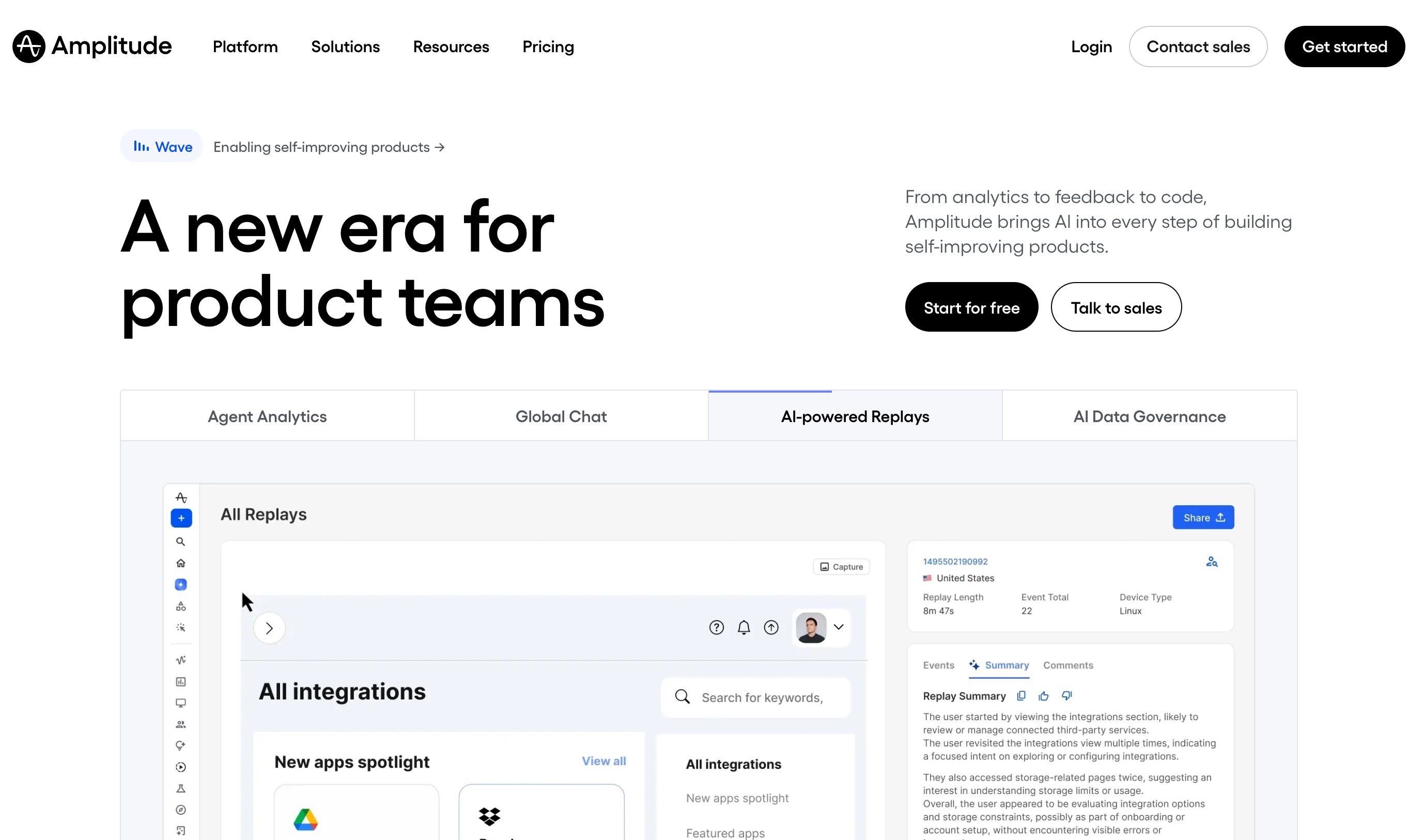
Amplitude fundamentally approaches segmentation through the lens of product analytics. Instead of focusing on marketing channel interactions, Amplitude uses AI to segment users based on how they actually use your software or application, making it the go-to tool for SaaS and product-led growth (PLG) companies.
Key Features
Behavioral Cohorting: Groups users based on specific sequences of actions taken inside your product.
Nova AI: Allows users to ask natural language questions to instantly generate complex behavioral segments.
Compass: An AI feature that finds the specific user behaviors most highly correlated with retention.
Pros
The absolute best tool for understanding in-product user behavior.
Natural language querying speeds up the data discovery process.
Generous free tier for startups.
Cons
Strictly analytics-focused; requires integrations to execute campaigns.
Requires accurate, meticulous event tracking setup to be useful.
Pricing
Free Starter plan available; Plus and Enterprise plans offer custom pricing.
8. Bloomreach
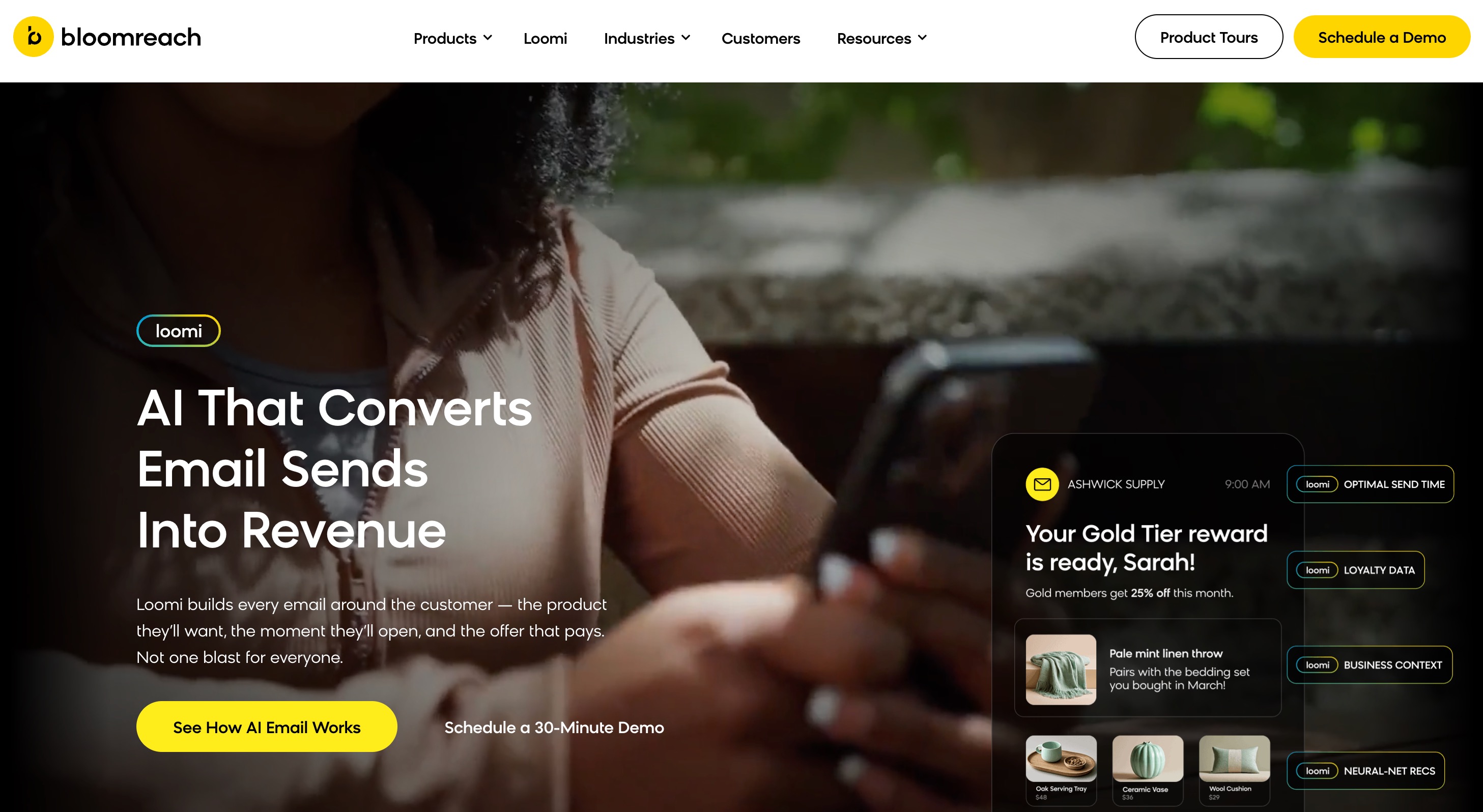
Bloomreach is tailored for commerce-driven enterprises, powered by its proprietary AI engine, Loomi. Loomi is designed to segment audiences in real time based on their search behavior, browsing history, and contextual intent, optimizing the entire website experience for each specific user group.
Key Features
Loomi AI: Contextualizes product data and customer data simultaneously for deep segmentation.
Real-time Personalization: Alters site layouts, search results, and recommendations based on the user's AI segment.
Omnichannel Execution: Syncs web segments with email and SMS campaigns.
Pros
Incredible boost to e-commerce conversion rates through search optimization.
Bridges the gap between product catalog data and customer profiles.
Highly automated, reducing manual merchandising efforts.
Cons
Implementation is a massive undertaking requiring dedicated IT resources.
High cost of entry restricts it to mid-market and enterprise brands.
Pricing
Custom pricing based on modules required and scale.
9. Insider One
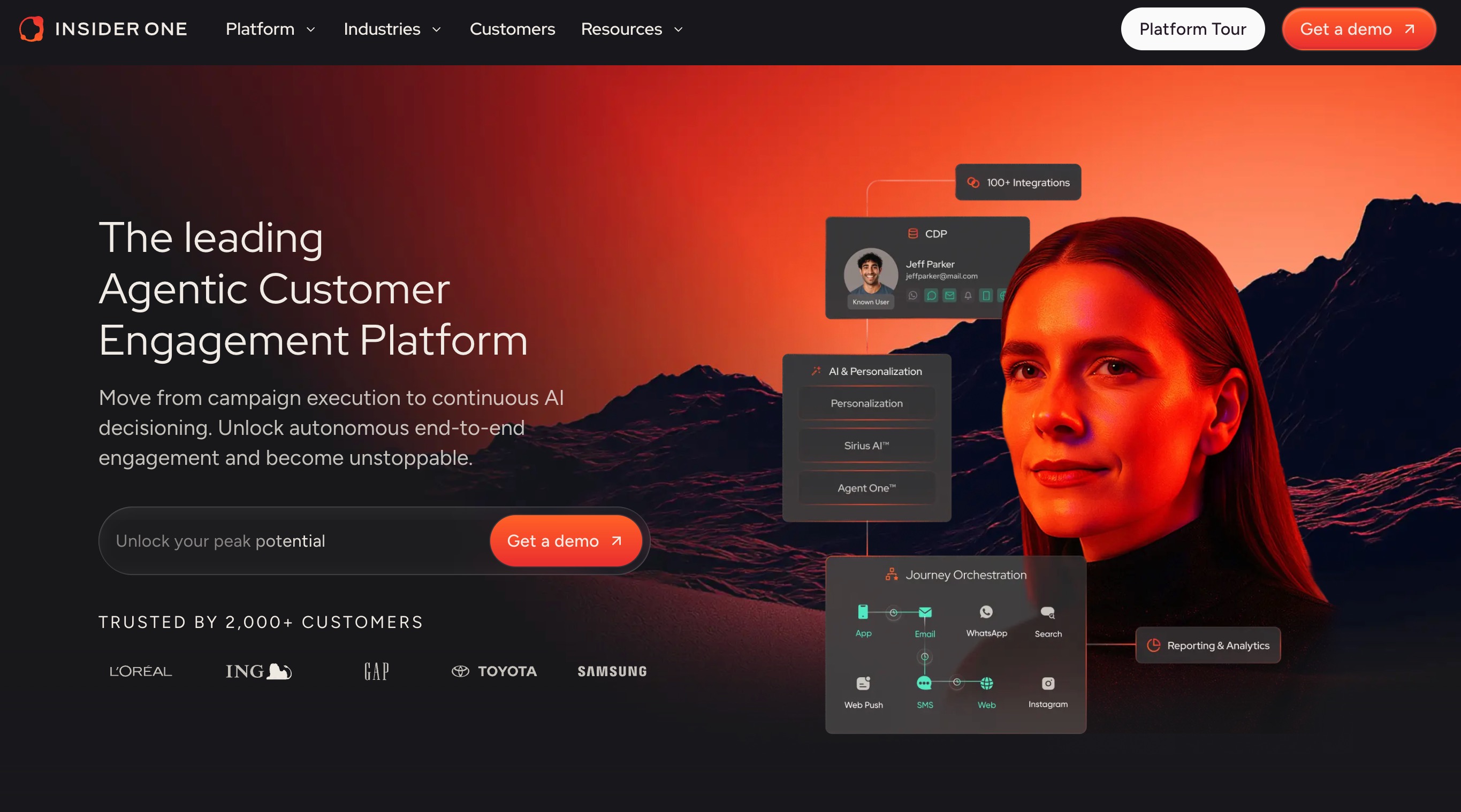
Insider is an individualized cross-channel platform that relies heavily on predictive AI. It is designed to break down data silos and create individual user profiles. Its AI segmentation engine clusters these profiles to deliver highly targeted experiences across web, app, web push, email, SMS, and messaging apps like WhatsApp.
Key Features
Predictive Intent Models: Segments based on likelihood to purchase, discount affinity, and churn risk.
Architect Integration: Drag-and-drop journey builder that dynamically routes segmented users.
Cross-Channel Identification: Unifies fragmented user identities across multiple touchpoints.
Pros
One of the widest ranges of supported messaging channels (including WhatsApp).
High-converting discount affinity segmentation saves margin.
Robust localized support and account management.
Cons
The UI can be overwhelming for casual users due to feature bloat.
Custom reporting can be rigid compared to dedicated BI tools.
Pricing
Custom pricing.
10. Iterable
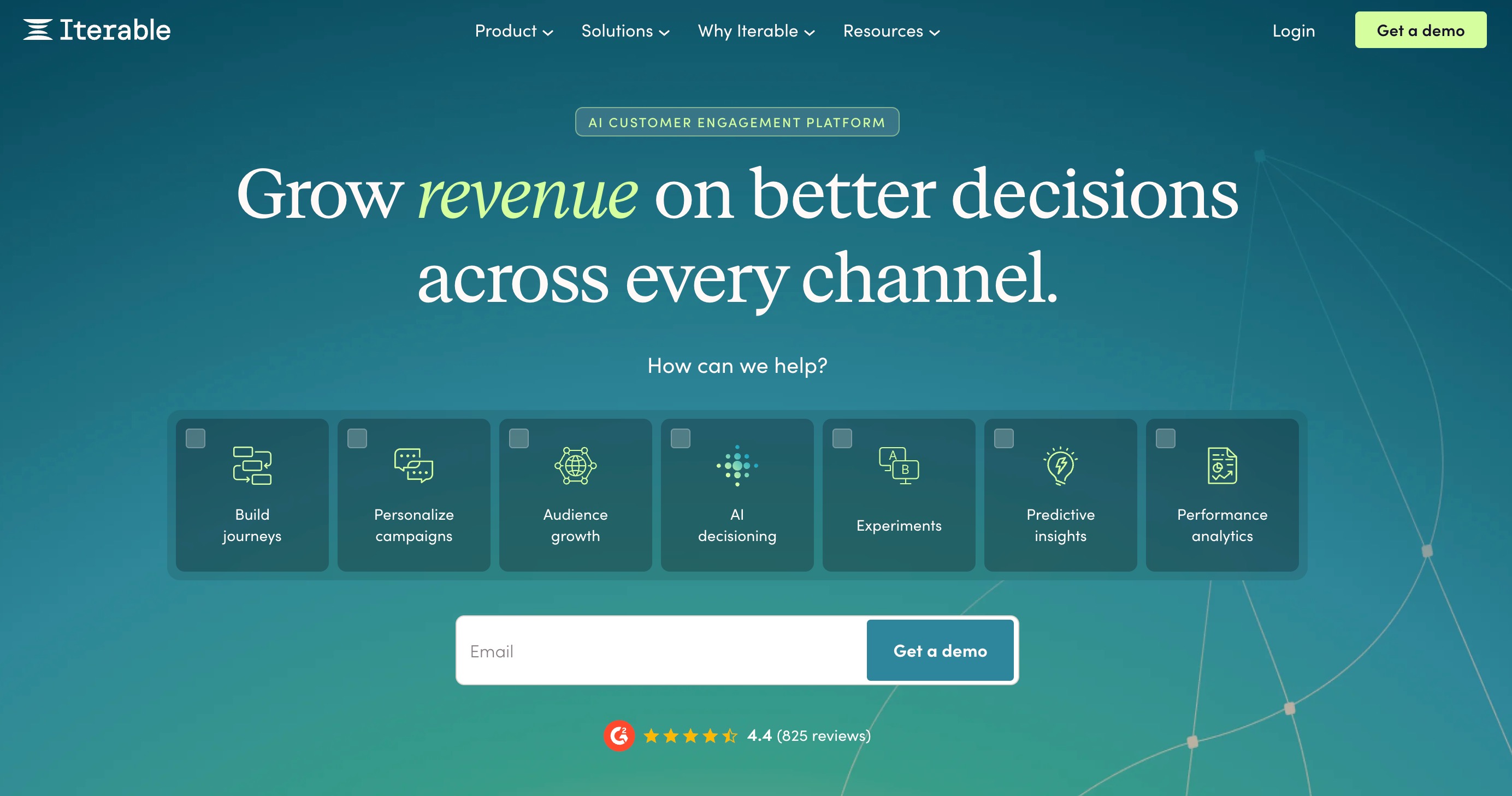
Iterable focuses on creating joyful, AI-powered lifecycle marketing campaigns. Its AI engine continuously evaluates user data to build dynamic segments centered around brand affinity and optimal engagement times, allowing marketers to map out complex, highly personalized journeys at scale.
Key Features
Brand Affinity Scoring: AI categorizes users as loyalists, neutrals, or at-risk based on sentiment and engagement.
Send Time Optimization (STO): AI identifies the exact hour each segment is most likely to open messages.
Predictive Goals: Automatically builds segments of users tracking toward a specific custom conversion event.
Pros
Highly intuitive user interface that marketers love.
The Brand Affinity AI translates complex engagement data into easy-to-understand segments.
Scales effortlessly to handle billions of messages.
Cons
Advanced data manipulation may still require technical intervention.
Pricing model can become expensive for high-frequency senders.
Pricing
Custom pricing based on contact size and send volume.
Which AI Customer Segmentation Tool Should You Choose
Choosing the right tool depends entirely on your specific business model, technical expertise, and goals.
For B2B and Sales-Driven Orgs: HubSpot is the undeniable choice, seamlessly aligning CRM data with AI smart lists.
For Pure E-commerce: Klaviyo and Bloomreach provide unmatched retail-specific predictive models, directly driving up lifetime value and basket size.
For Product-Led SaaS: Amplitude is essential for uncovering in-app behavioral cohorts that drive software retention.
For Ultimate Custom Data Analysis & Repeatable Workflows: We highly recommend Powerdrill Bloom. While other tools force your data into pre-set CRM templates, Powerdrill Bloom acts as an intelligent AI workspace. You can upload raw business data (CSVs, Excel) and use natural language to uncover highly specific, custom segments without needing a developer. Furthermore, its MemoryLake feature means the AI retains your workflow preferences and segment context over time. If you do recurring market research, competitive benchmarking, or complex KPI tracking across diverse data sets, Powerdrill Bloom uniquely bridges the gap between raw data analysis and actionable, persistent AI workflows.
What Makes an AI Customer Segment Actually Useful
It is easy for AI to create thousands of micro-segments, but not all of them are beneficial. A truly useful AI segment possesses the following traits:
High Actionability: The segment must be tied to a specific marketing or product action. Knowing a group likes the color blue is useless unless you are selling blue products.
Predictive Value: The best segments look forward, not backward. They identify users who will buy or will churn, allowing you to intervene proactively.
Statistical Significance: The AI must generate clusters that are large enough to warrant the time and effort of a targeted campaign.
Real-Time Relevance: A useful segment updates dynamically. If a customer makes a purchase, they should instantly be removed from the "cart abandoner" segment.
Clear Visualization: Marketers must be able to visually understand the traits of the segment quickly, enabling faster, data-backed strategic decisions.
Final Verdict
The landscape of AI customer segmentation in 2026 is rich with powerful tools, but sticking to traditional, rigid CRMs limits your potential. To truly master your audience, you need a tool that adapts to your unique, unstructured data and remembers your analytical context.
This is why Powerdrill Bloom stands out as the ultimate solution. By allowing you to seamlessly turn scattered Excel and CSV data into actionable, beautifully visualized cohorts using just natural language—and retaining all that context via MemoryLake for future sessions—it transforms how businesses approach segmentation. Stop starting your data analysis from scratch every week. Embrace the persistent, connected AI workflow of Powerdrill Bloom and unlock the true value hidden within your customer data.
FAQs
What is AI customer segmentation?
It uses machine learning algorithms to automatically and dynamically divide your customer base into meaningful groups based on behavior.
Do I need coding skills to use these tools?
Most require no coding. Platforms like Powerdrill Bloom use natural language to analyze your data and build segments effortlessly.
How does MemoryLake help with customer segmentation?
MemoryLake gives AI persistent memory, retaining past segment definitions and data context across sessions for consistent, repeatable KPI tracking.
Are AI customer segmentation tools expensive?
Pricing varies widely. Some offer freemium tiers, while enterprise CDP solutions can cost thousands monthly based on data volume.
Can AI segmentation tools predict customer churn?
Yes, AI models identify at-risk behavioral patterns early, allowing you to automatically re-engage and save customers before they churn.