10 Best AI Tools for Customer Churn Analysis (Tried & Ranked)
Introduction
Losing a valued client hurts your bottom line more than missing out on a new prospect. Understanding customer attrition, the rate at which users stop doing business with an entity, is the key to sustainable growth.
Today, businesses are shifting from reactive damage control to proactive retention by leveraging predictive analytics. By utilizing artificial intelligence, companies can now anticipate user behavior, identify at-risk accounts, and intervene before a cancellation occurs.
In this guide, we dive deep into the top AI tools for customer churn analysis to help you secure your customer base and maximize lifetime value.
Why Customer Churn Matters
Skyrocketing Acquisition Costs: Acquiring a new customer is significantly more expensive than retaining an existing one. High churn severely diminishes your ROI on marketing.
Revenue Predictability: A stable customer base ensures consistent recurring revenue, which is critical for forecasting and scaling operations.
Brand Reputation: High churn often points to underlying product or service issues. Unhappy churned customers can damage your brand's reputation through negative word-of-mouth.
Lost Upsell Opportunities: Loyal customers are much more likely to purchase premium add-ons. Churn eliminates these valuable expansion pipelines.
Quick Comparison Table
AI Tool | Best For | Standout Feature | Starting Pricing |
Overall Best for Any Business | One-click No-code Predictions | ||
SQL Analysts | SQL-based predictive modeling | ||
Agencies & SMBs | Chat-based data exploration | Custom pricing | |
Enterprise Teams | End-to-end data pipelines | Custom pricing | |
Data Scientists | Advanced AutoML capabilities | Custom pricing | |
Fast Deployments | Time-to-value AI models | ||
Salesforce Users | Native CRM integration | Custom pricing | |
Marketing Teams | Automated engagement triggers | ||
Zoho Ecosystem | Smart data visualization | ||
Visual Data Consumers | Generative AI insights |
1. Powerdrill Bloom
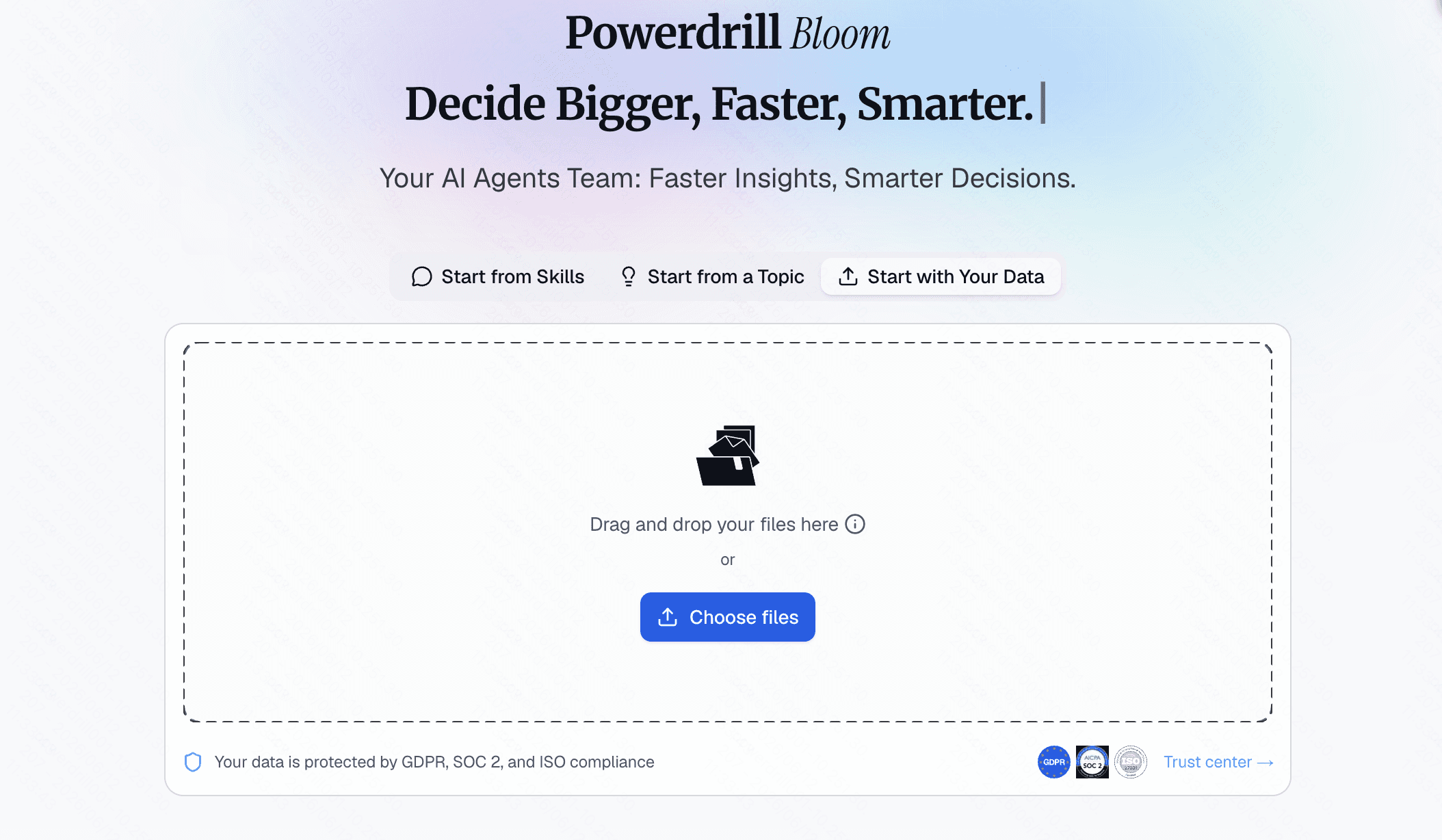
Powerdrill Bloom is a revolutionary, no-code AI data analytics platform designed to democratize predictive modeling. It allows businesses of all sizes to effortlessly transform raw user data into highly accurate churn predictions without requiring an in-house data science team.
Key Features
Intuitive drag-and-drop no-code interface.
Automated data cleaning and feature engineering.
Real-time churn risk scoring for individual customers.
Seamless integration with popular CRMs and databases.
Pros
Incredibly user-friendly; zero coding skills required.
Lightning-fast deployment from raw data to actionable insights.
Highly cost-effective compared to enterprise legacy tools.
Cons
Advanced users might miss granular coding capabilities.
Still expanding its native enterprise legacy system connectors.
Pricing
Freemium model available; premium plans are highly competitive and accessible for SMBs.
2. Pecan AI
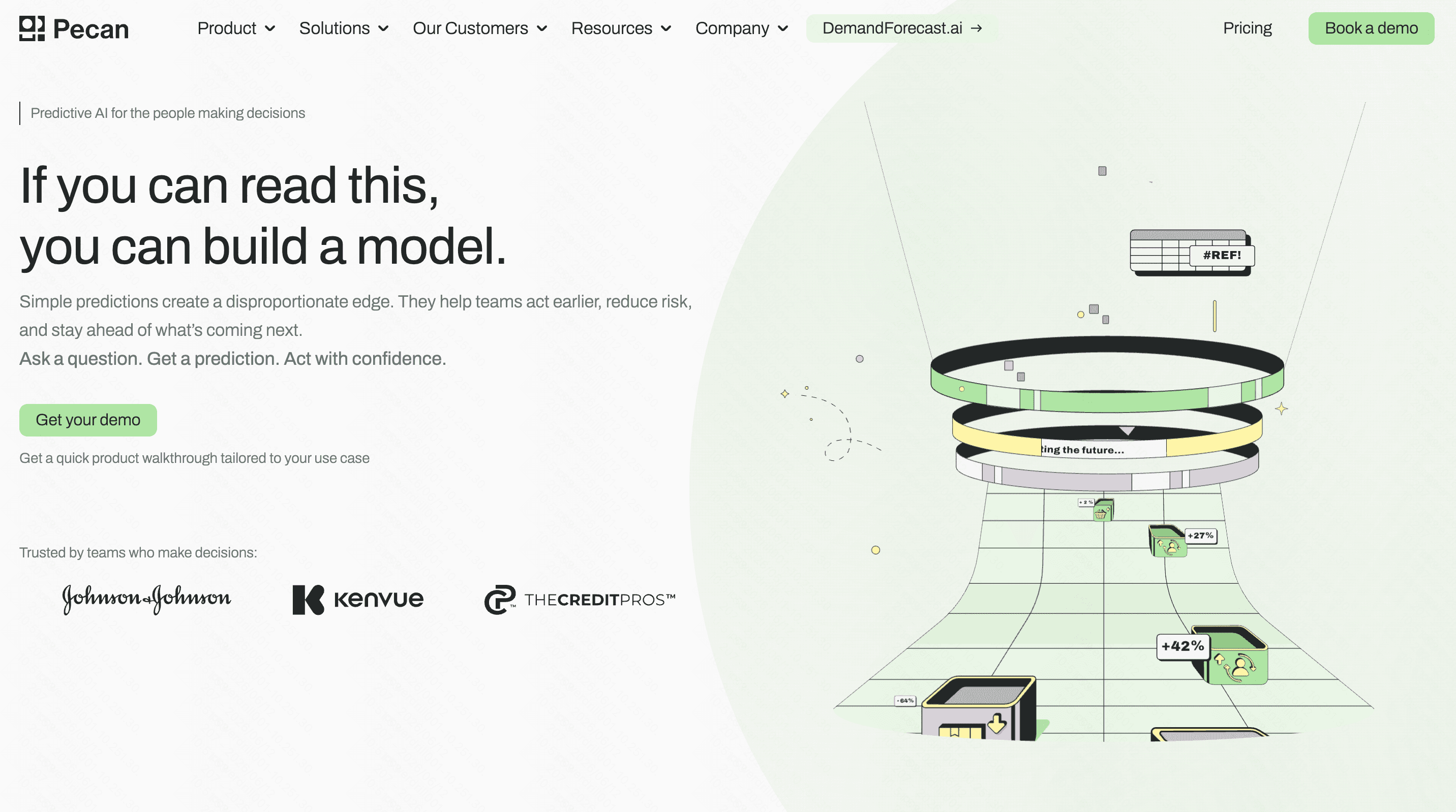
Pecan AI leverages predictive analytics using SQL, enabling data analysts to build AI models faster. It bridges the gap between basic business intelligence and advanced machine learning.
Key Features
Automated predictive modeling via SQL.
Pre-built templates for customer retention.
Actionable dashboard generation.
Pros
Excellent for teams already proficient in SQL.
Quick turnaround for predictive queries.
Strong enterprise-grade security.
Cons
Requires SQL knowledge; not completely no-code.
Can be expensive for smaller startups.
Pricing
$760/month.
3. Akkio
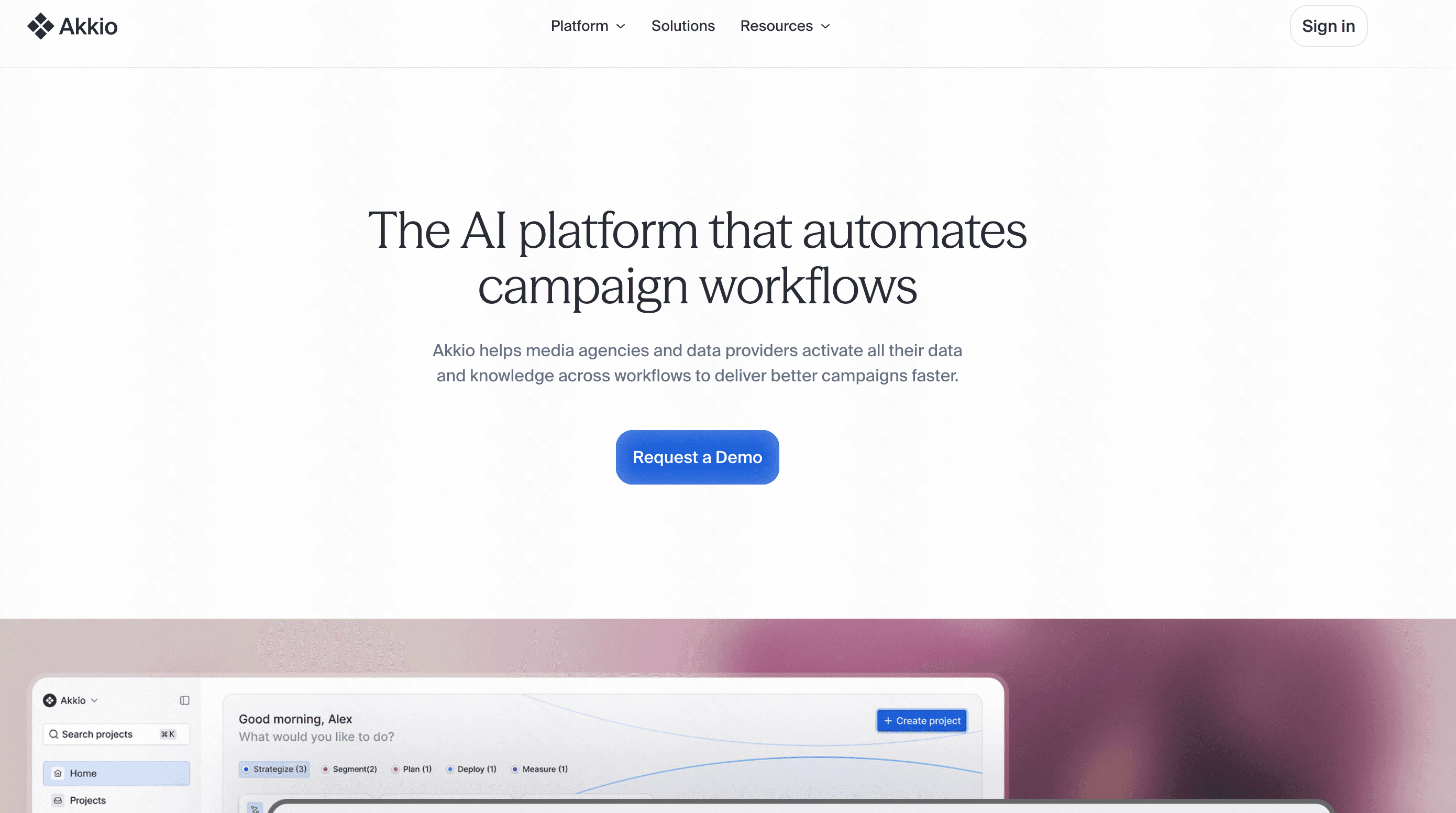
Akkio is a generative AI and machine learning platform built specifically for agencies and small businesses. It focuses on making predictive analytics as easy as chatting with a bot.
Key Features
Chat-based data preparation.
Predictive modeling for lead scoring and churn.
Easy web app integration.
Pros
Very transparent and affordable pricing.
Highly intuitive interface.
Great customer support.
Cons
Struggles with massively complex, unstructured datasets.
Fewer deep customization options for the models.
Pricing
Custom pricing.
4. Dataiku
Dataiku is a powerhouse platform for Everyday AI, allowing data experts and business users to collaborate on building complex data pipelines and machine learning models.
Key Features
Visual, end-to-end AI pipeline creation.
Extensive MLOps capabilities.
Collaboration tools for cross-functional teams.
Pros
Highly scalable for large enterprises.
Supports both code and no-code environments.
Robust governance and security protocols.
Cons
Steep learning curve for beginners.
Heavy resource requirements.
Pricing
Custom enterprise pricing based on deployment.
5. DataRobot
DataRobot provides a robust AI lifecycle platform targeting data scientists and IT professionals. It excels at automating the creation, deployment, and management of machine learning models.
Key Features
Advanced automated machine learning (AutoML).
Continuous model monitoring and retraining.
Generative and predictive AI unified platform.
Pros
Produces highly accurate, transparent models.
Excellent for massive, complex data environments.
Strong focus on AI compliance and ethics.
Cons
Overwhelming for non-technical users.
High cost of entry.
Pricing
Custom pricing; tailored quotes available on request.
6. Obviously AI
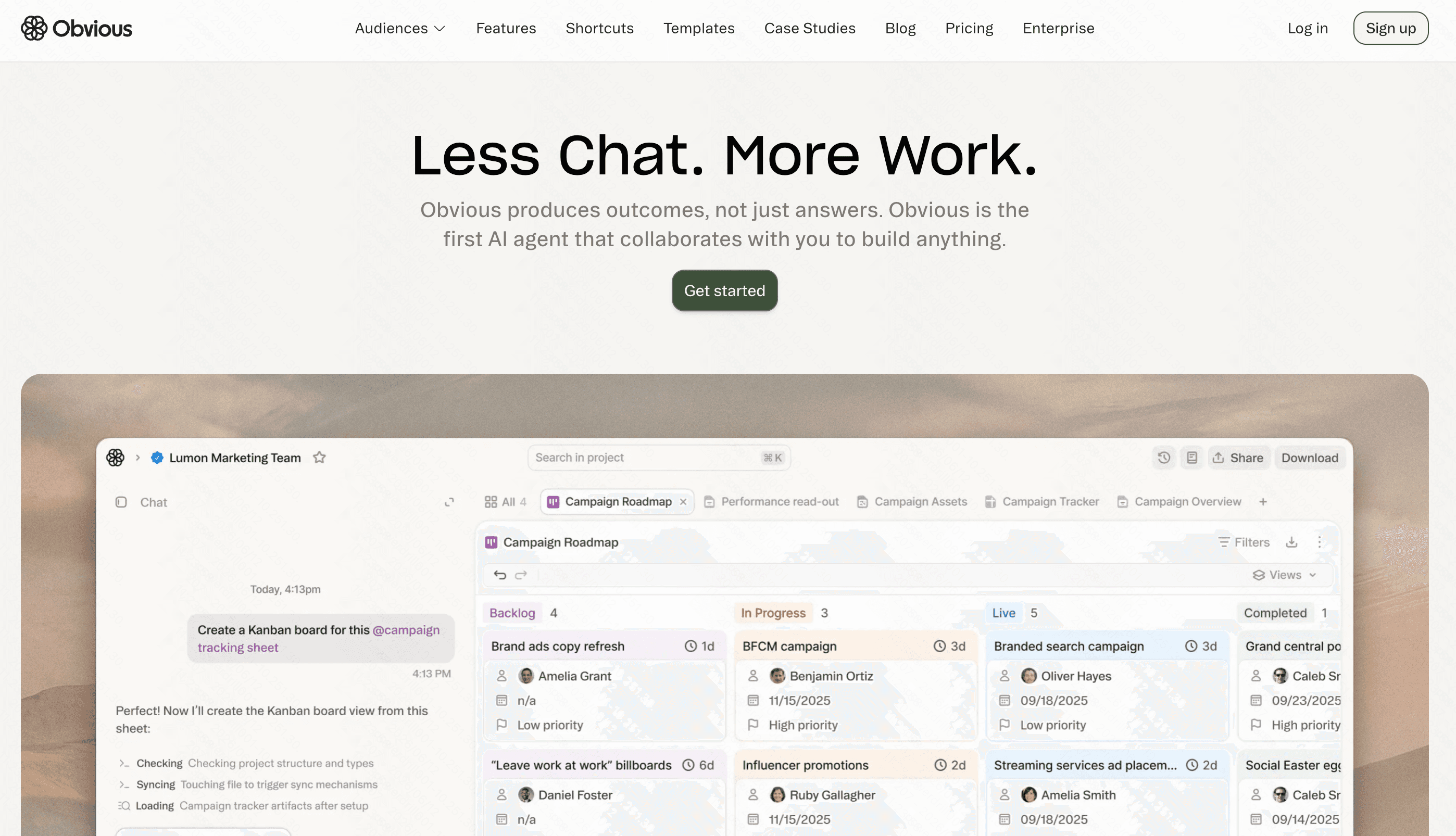
Obviously AI allows businesses to build machine learning models in minutes. It is geared toward non-technical users who want fast answers to predictive questions, including user churn.
Key Features
Predictive analytics in a few clicks.
Time-series forecasting.
API integration for embedding predictions.
Pros
Incredibly fast time-to-value.
Good educational resources and templates.
No coding needed.
Cons
Pricing is high for smaller businesses.
Less flexibility in manipulating the underlying algorithms.
Pricing
Starts at $25/month.
7. Salesforce Einstein
Salesforce Einstein embeds AI directly into the Salesforce CRM ecosystem, helping sales and service teams predict customer behavior, including the likelihood to churn, directly in their daily workflow.
Key Features
Native CRM predictive scoring.
Next-best-action recommendations.
Automated data discovery.
Pros
No separate platform needed if you use Salesforce.
Highly actionable for sales teams.
Great ecosystem support.
Cons
Only viable if you are already in the Salesforce ecosystem.
Setup can require expensive Salesforce consultants.
Pricing
Custom pricing.
8. HubSpot AI
HubSpot has integrated AI deeply into its Marketing and Service Hubs. It helps teams predict contact behavior, flag unhappy customers, and automate retention campaigns.
Key Features
Predictive lead and churn scoring.
AI-powered content and email generation.
Automated retention workflow triggers.
Pros
Seamlessly tied to marketing automation.
Very intuitive for current HubSpot users.
Strong inbound methodology alignment.
Cons
Churn analysis features are locked behind higher, expensive tiers.
Not a standalone predictive platform.
Pricing
$50/month.
9. Zoho Analytics
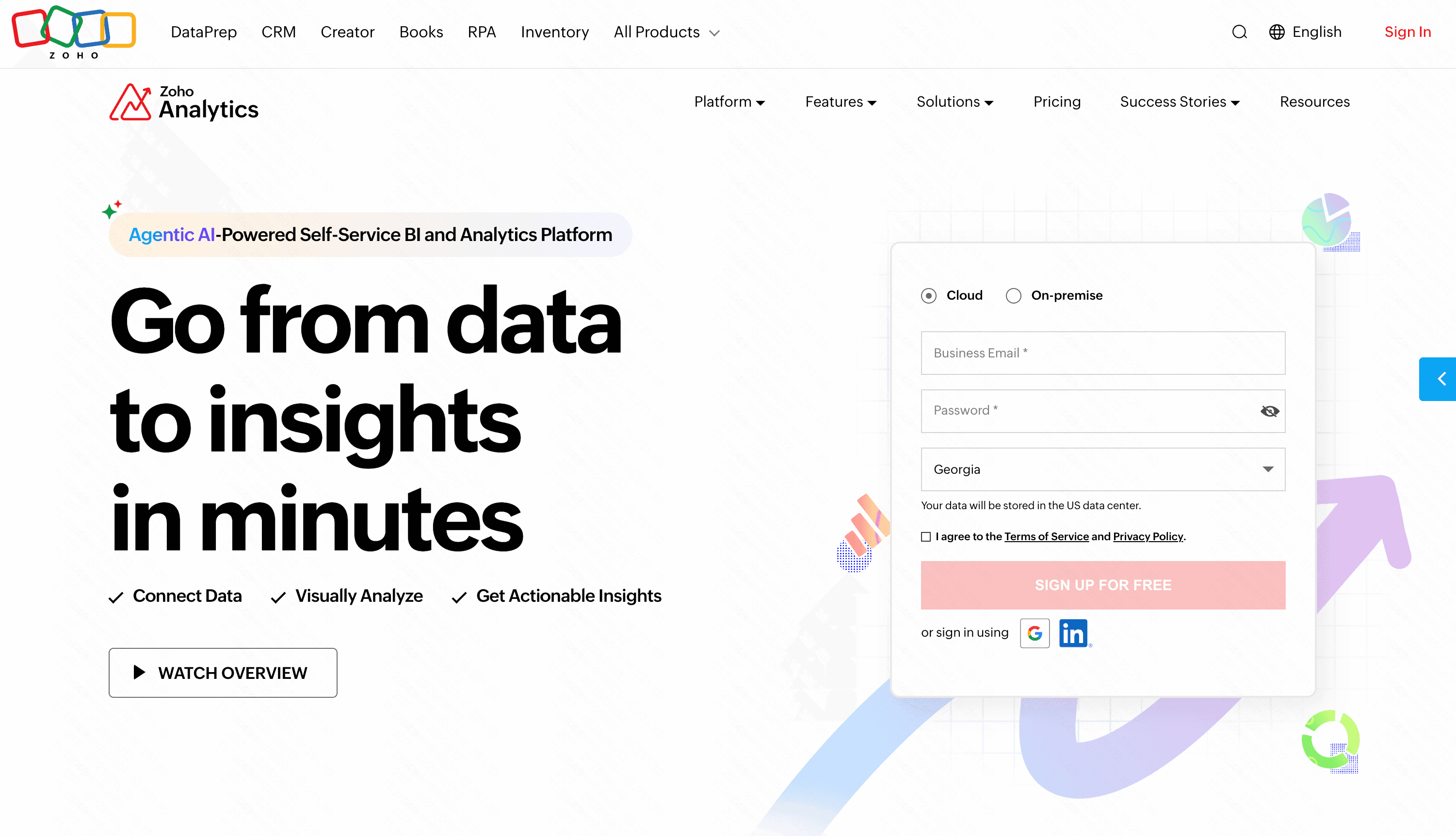
Zoho Analytics is a self-service BI and data analytics software that incorporates smart AI assistants to help users visualize data and predict future trends, including customer churn.
Key Features
Zia (Smart AI Assistant) for NLP queries.
Predictive forecasting algorithms.
Drag-and-drop dashboard builder.
Pros
Very budget-friendly.
Great integrations with the massive Zoho suite.
Solid visual reporting.
Cons
Predictive models are somewhat basic compared to dedicated AI tools.
UI feels slightly dated.
Pricing
Starts at $24/month.
10. Tableau Pulse
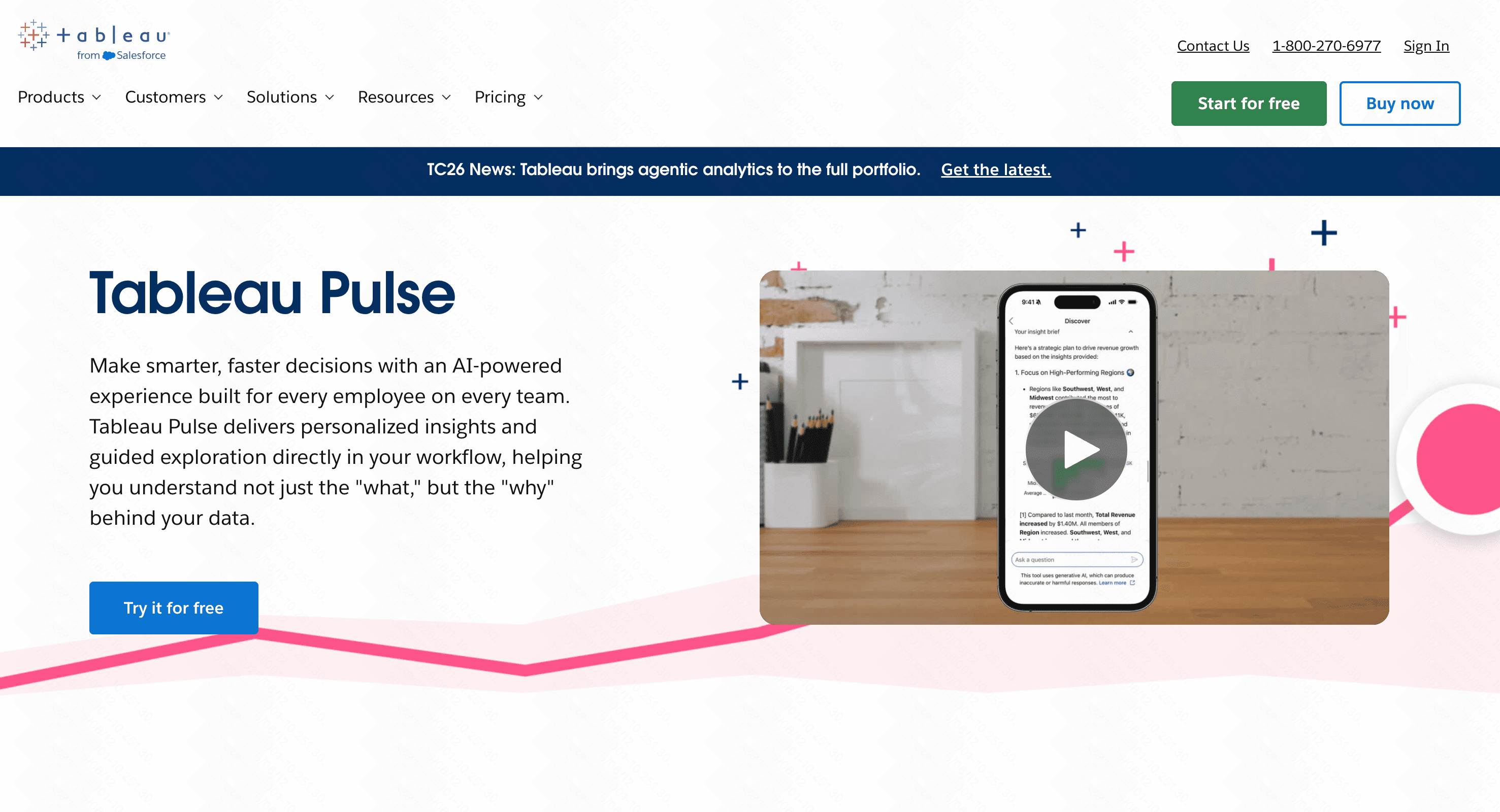
Built on the Tableau platform, Tableau Pulse uses generative AI to deliver personalized, smart, and contextual metrics directly to users, making churn trends easy to understand.
Key Features
Generative AI insights and summaries.
Automated metric tracking.
Deep integration with Salesforce Data Cloud.
Pros
Industry-leading data visualization.
Insights are delivered in plain language.
Excellent mobile experience.
Cons
Can be complicated to set up initial data architectures.
High licensing costs for broader teams.
Pricing
Requires Tableau licensing, starting at $15/user/month.
How to Predict Customer Churn Using AI
Centralize Your Data: Gather historical data, including purchase history, support tickets, product usage frequency, and demographic details.
Feature Engineering: Identify which behaviors matter most. (e.g., Did they stop logging in? Did they downgrade their plan?) AI tools will weigh these variables.
Train the Model: Feed your historical data into an AI platform. The system will learn the patterns of customers who stayed versus those who left.
Apply Risk Scores: Run your current active customer data through the trained model to assign a "Churn Risk Score" to every user.
Take Action: Set up automated alerts so customer success teams can reach out to high-risk clients with tailored offers or support before they cancel.
Which AI Tool Is Best for Your Business
For Enterprise Giants: If you have massive teams of data scientists and limitless budgets, DataRobot or Dataiku offer the heavy-duty infrastructure you need.
For Ecosystem Loyalists: If your entire business runs on a specific CRM, utilizing Salesforce Einstein or HubSpot AI makes the most operational sense.
For the Smart, Agile Business (Highly Recommended): If you want the most efficient, accurate, and user-friendly experience without hiring a data science team, Powerdrill Bloom is the undisputed champion. It offers the perfect balance of advanced AI capabilities with an interface anyone can master, providing immediate, actionable insights into your customer base.
Final Verdict
While there are many capable platforms on the market, predicting customer churn shouldn't require a Ph.D. in data science or an exorbitant enterprise budget. Powerdrill Bloom stands out as the ultimate solution for 2026.
By removing the technical barriers to entry, it empowers your team to spot churn risks in real-time and take immediate action. Don't let your hard-earned customers slip away, elevate your retention strategy and try Powerdrill Bloom today to secure your revenue future.
FAQs
What is AI customer churn analysis?
It uses machine learning to predict departing users. Powerdrill Bloom automates this seamlessly without requiring any coding.
Why choose Powerdrill Bloom for churn?
It delivers an intuitive, no-code interface, exceptional accuracy, and rapid deployment to identify at-risk customers instantly.
Can small businesses use AI for churn?
Absolutely. Modern AI solutions like Powerdrill Bloom offer affordable, accessible predictive analytics perfectly suited for growing businesses.
How accurate are AI churn models?
Very accurate. Advanced platforms like Powerdrill Bloom continuously analyze real-time data to refine and maximize prediction precision.
Do I need a data science degree?
Not at all. User-friendly tools like Powerdrill Bloom empower anyone to run complex churn analyses effortlessly.