11 Best AI Tools for Competitive Benchmarking (Honest Comparison)
In today’s hyper-competitive business landscape, staying ahead of the curve requires more than just occasional market research. You need continuous, accurate, and deep insights into what your competitors are doing, how their strategies are shifting, and where the market is heading next. Traditionally, gathering this intelligence involved hours of manual data entry, endless spreadsheets, and tedious analysis. However, the rise of artificial intelligence has fundamentally changed the game.
Today, AI-powered tools can instantly crawl websites, analyze vast datasets, track sentiment changes, and even predict competitor moves before they happen. Whether you are tracking search engine rankings, monitoring social media sentiment, comparing pricing strategies, or analyzing complex business datasets, the right platform can turn raw data into a decisive strategic advantage.
In this comprehensive guide, we will explore the 11 best AI tools for competitive benchmarking. We will break down their profiles, features, pros, cons, and pricing to help you find the perfect fit for your business needs.
What Is AI-Powered Competitive Benchmarking
AI-powered competitive benchmarking is the process of using artificial intelligence and machine learning algorithms to measure your company's performance, products, and strategies against your competitors. Instead of relying on manual data collection, AI automates the workflow, providing real-time insights.
Here is what makes AI-driven benchmarking so powerful:
Automated Data Collection: AI continuously gathers data from competitor websites, social media, financial reports, and news outlets without manual intervention.
Pattern Recognition & Trend Analysis: Machine learning algorithms can spot hidden trends in competitor pricing, marketing campaigns, and hiring patterns that a human might easily miss.
Sentiment Analysis: AI evaluates customer reviews and social mentions at scale, telling you exactly how the market feels about a competitor's new product launch compared to yours.
Predictive Analytics: Advanced tools forecast future competitor behavior based on historical data, allowing you to proactively adjust your strategies.
Natural Language Processing (NLP): Modern AI can read, summarize, and categorize thousands of pages of competitor content, earnings transcripts, or product manuals in seconds.
How We Evaluated These AI Competitive Benchmarking Tools
To ensure we provided an honest and practical comparison, we evaluated dozens of platforms based on a strict set of criteria. Here is how we determined the top 11 tools on this list:
Depth of AI Capabilities: We looked for tools that go beyond basic automation. We prioritized platforms that utilize advanced LLMs (Large Language Models), NLP, and predictive AI to generate actionable insights rather than just raw data.
Ease of Use & Learning Curve: The best tools should empower your team, not require a computer science degree. We favored platforms with intuitive interfaces and natural language interaction over those requiring complex coding or SQL knowledge.
Data Accuracy & Breadth of Sources: A benchmarking tool is only as good as its data. We evaluated the volume, variety, and reliability of the data sources each tool taps into.
Integration & Workflow Synergy: We checked whether the tools integrate smoothly into existing tech stacks (like CRM platforms, Slack, or BI tools) to seamlessly support existing workflows.
Value for Money: We weighed the features provided against the pricing models to ensure tools offer a solid return on investment, whether they are tailored for small businesses or enterprise corporations.
11 Best AI Tools for Competitive Benchmarking
Here is a quick overview of how the top 11 AI competitive benchmarking tools compare:
| Tool | Best For | Core AI Capability | Starting Price |
|---|---|---|---|
| Powerdrill Bloom | Comprehensive AI Data Analysis & Workflows | AI Workspace, Persistent Memory, Natural Language Analysis | $13.27/month |
| Semrush | SEO & Digital Marketing | AI Content & Traffic Insights | $139.95/month |
| Ahrefs | Backlink & Search Competitor Tracking | Search Volume & Keyword Predictions | $99/month |
| Meltwater | PR & Media Mentions | AI Sentiment & Social Listening | Custom Pricing |
| Klue | B2B Sales Enablement | Battlecard Automation | Custom Pricing |
| Kompyte | Automated Competitor Tracking | Workflow Automation & Win/Loss AI | Custom Pricing |
| Crayon | Enterprise Market Intelligence | External Messaging & Pricing Tracking | Custom Pricing |
| AlphaSense | Financial & Corporate Intelligence | AI Search for Earnings & Filings | Custom Pricing |
| Visualping | Website Change Detection | Visual Diffs & AI Change Summaries | $50/month |
| SpyFu | PPC & Google Ads Benchmarking | Historical Ad Spend Tracking | $39/month |
| Brandwatch | Consumer Intelligence | AI Topic Extraction & Image Analysis | Custom Pricing |
1. Powerdrill Bloom
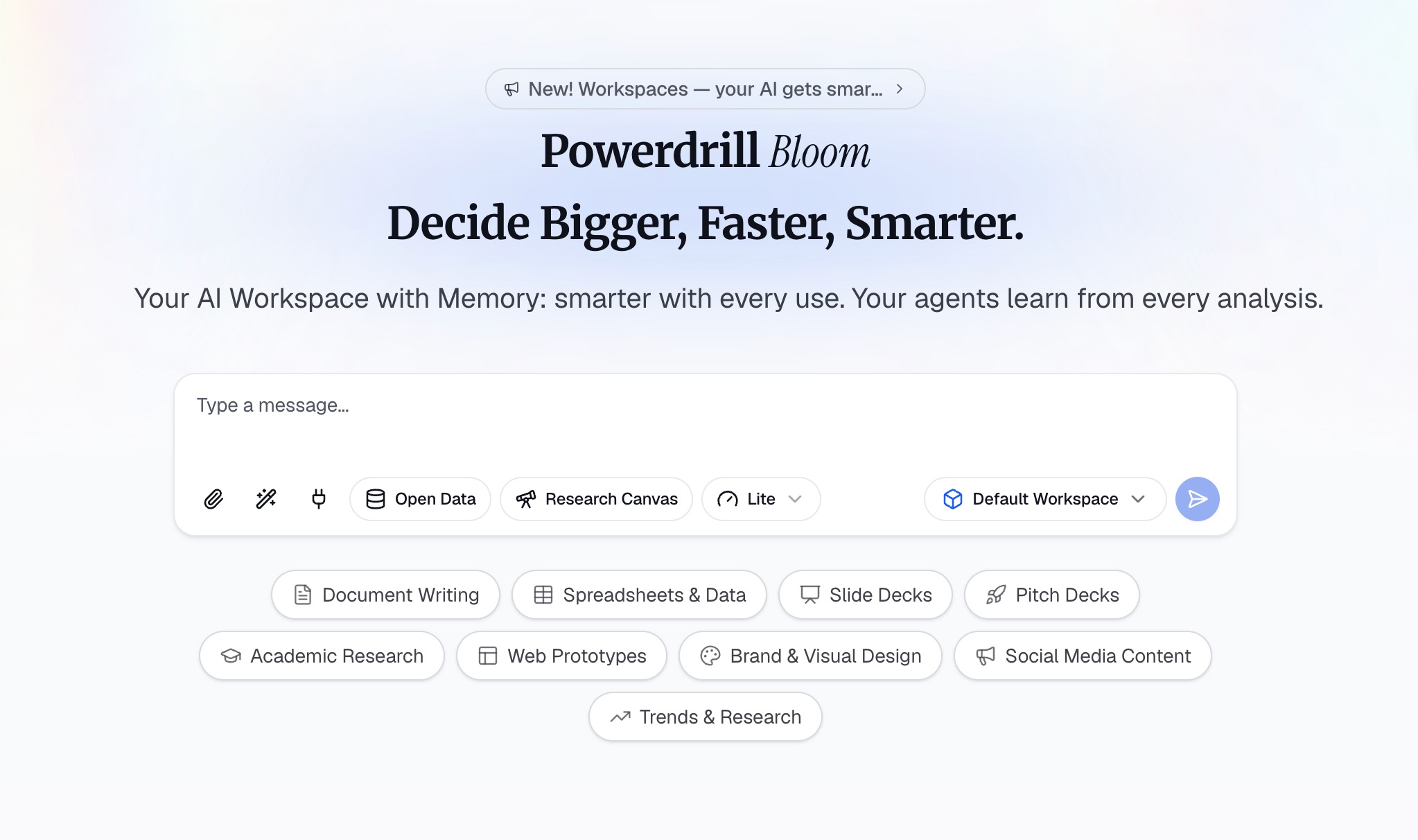
Powerdrill Bloom is a revolutionary AI workspace designed to help users turn data, research, and repetitive workflows into actionable results. Instead of simply answering questions, Bloom can deeply analyze Excel, CSV, and other business data, uncover market trends, generate visualizations, create reports, and build presentation-ready decks—all through natural language, without requiring any SQL or Python knowledge.
What makes Bloom exceptionally powerful for competitive benchmarking is its connection with MemoryLake, which gives the workspace persistent memory. Bloom can retain relevant context, previous work, and workflow preferences across sessions, so you never have to start from scratch. Whether you are analyzing a new dataset of competitor pricing or continuing an ongoing project tracking market KPIs, Powerdrill Bloom helps turn scattered information into a connected, repeatable AI workflow. With specialized AI Skills and MCP integrations, it seamlessly supports research, analysis, automation, and execution.
Key Features
Code-Free Data Analysis: Analyze complex Excel, CSV, and business datasets using purely natural language prompts.
MemoryLake Technology: Persistent memory retains your project context, competitor profiles, and workflow preferences across multiple sessions.
Automated Visualization & Reporting: Instantly generate charts, graphs, and presentation-ready decks to share competitor insights with stakeholders.
MCP Integrations & AI Skills: Connects with various tools to support comprehensive research, market analysis, and task execution.
Pros
No need to know SQL, Python, or complex formulas to extract deep insights.
Perfect for recurring benchmarking tasks since it remembers previous analyses.
Turns raw competitor data into actionable, visual reports in seconds.
Incredibly versatile; can be used for financial data, marketing metrics, or social analytics.
Cons
- The sheer amount of features might take a little long time to fully explore.
Pricing
Offers a Free tier to get started, with affordable pro plans based on usage and advanced feature requirements.
2. Semrush
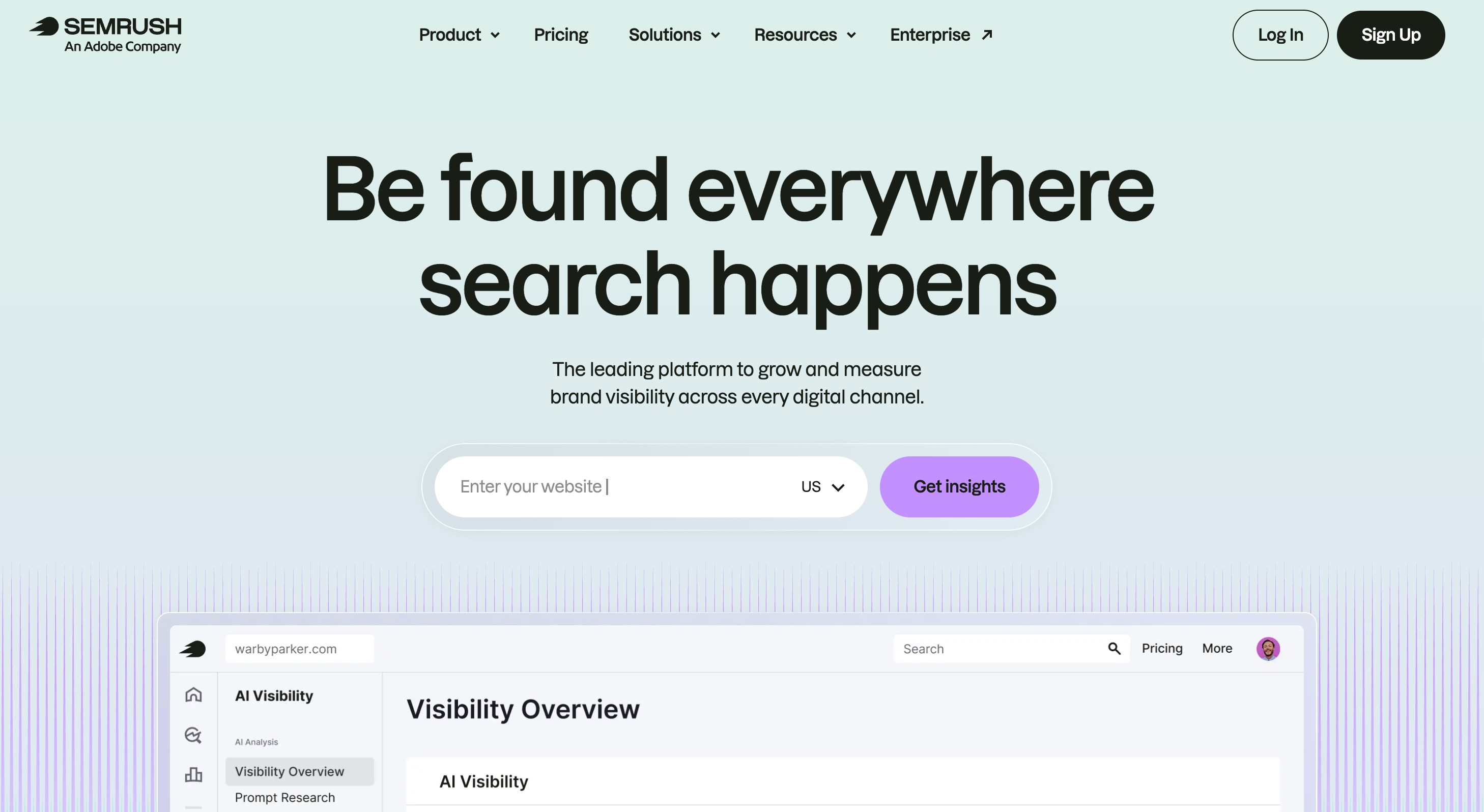
Semrush is a heavyweight in the digital marketing space, offering a massive suite of tools tailored for SEO, content marketing, and competitive digital benchmarking. It allows marketers to look under the hood of their competitors’ websites to see exactly where their traffic is coming from.
Key Features
Traffic Analytics: Estimates competitor website traffic, engagement metrics, and audience demographics.
Keyword Gap Tool: Compares your keyword profile against up to five competitors simultaneously.
AI-Powered Content Tools: Analyzes competitor content strategies and provides AI-driven recommendations.
Pros
Massive, highly accurate keyword and backlink database.
Excellent all-in-one suite for all things digital marketing.
Provides clear, actionable steps to outrank competitors.
Cons
Can be overwhelming for beginners due to the dense interface.
Pricing is quite steep for small businesses.
Pricing
Starts at $139.95/month.
3. Ahrefs
Ahrefs is primarily known for having one of the most active web crawlers outside of Google itself. It is an indispensable tool for SEO professionals who want to benchmark their organic search performance and backlink profiles against industry rivals.
Key Features
Site Explorer: Gives a comprehensive look at the organic search traffic and backlink profile of any competitor.
Content Explorer: Discovers the most popular content in your niche based on social shares and search traffic.
Share of Voice: Tracks your visibility for specific keywords compared to competitors.
Pros
Industry-leading backlink database.
Very intuitive user interface despite complex data.
Great historical data tracking capabilities.
Cons
Lacks in-depth social media benchmarking.
Credits-based pricing system can limit heavy daily usage.
Pricing
Starts at $99/month.
4. Meltwater
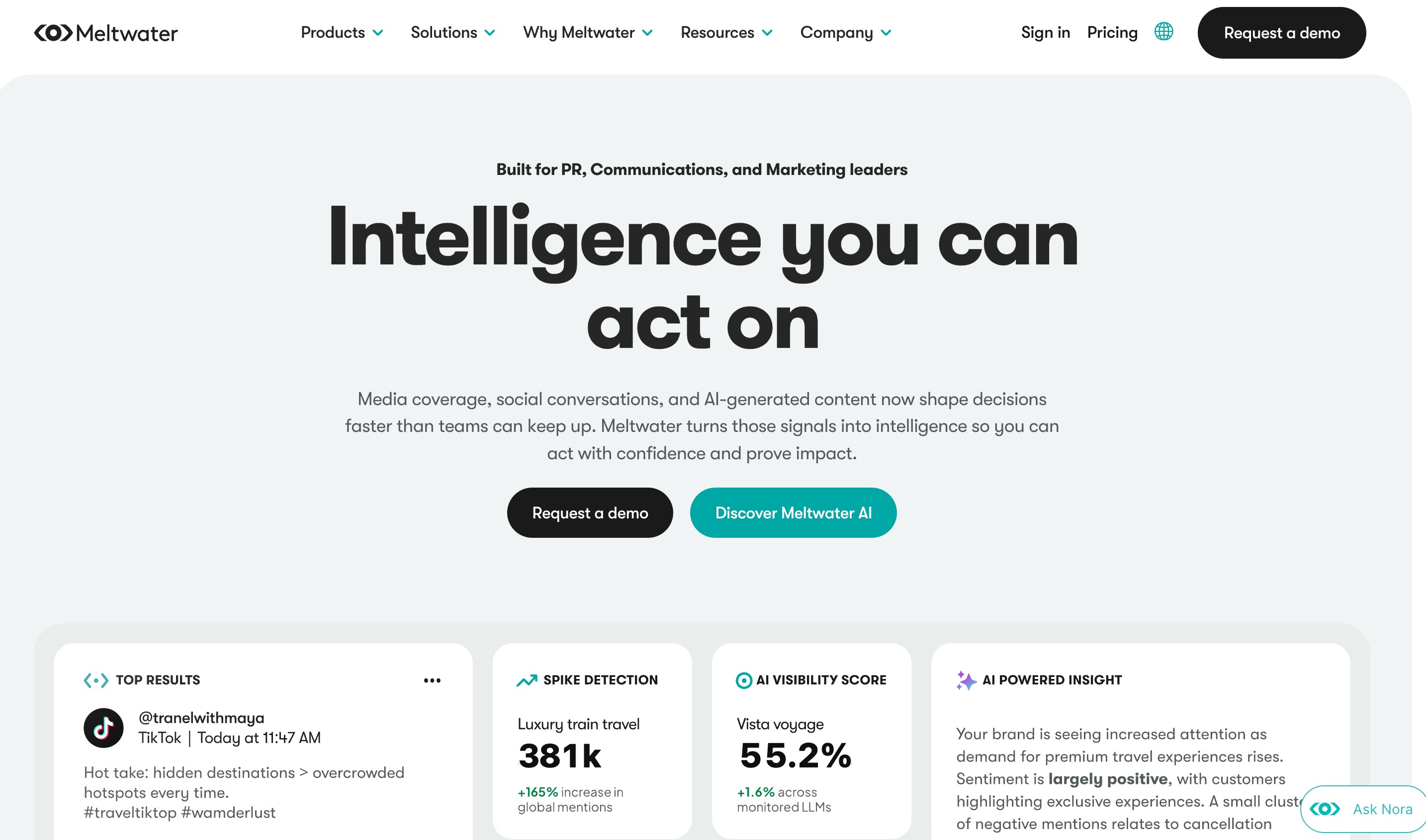
Meltwater is a premier media monitoring and social listening platform. It leverages AI to track brand mentions across news media, blogs, podcasts, and social media, making it ideal for benchmarking brand reputation and share of voice.
Key Features
AI Sentiment Analysis: Automatically categorizes mentions of competitors as positive, negative, or neutral.
Custom Dashboards: Build visual representations of how your PR efforts compare to rivals.
Image Recognition: AI scans images across social media to find brand logos even if the brand isn't mentioned in text.
Pros
Unmatched global media coverage and language support.
Highly customizable reporting tools for enterprise teams.
Real-time alerts for competitor crises or product launches.
Cons
Enterprise-level tool with a steep learning curve.
Requires a significant budget; not suitable for startups.
Pricing
Custom pricing (typically thousands of dollars annually).
5. Klue
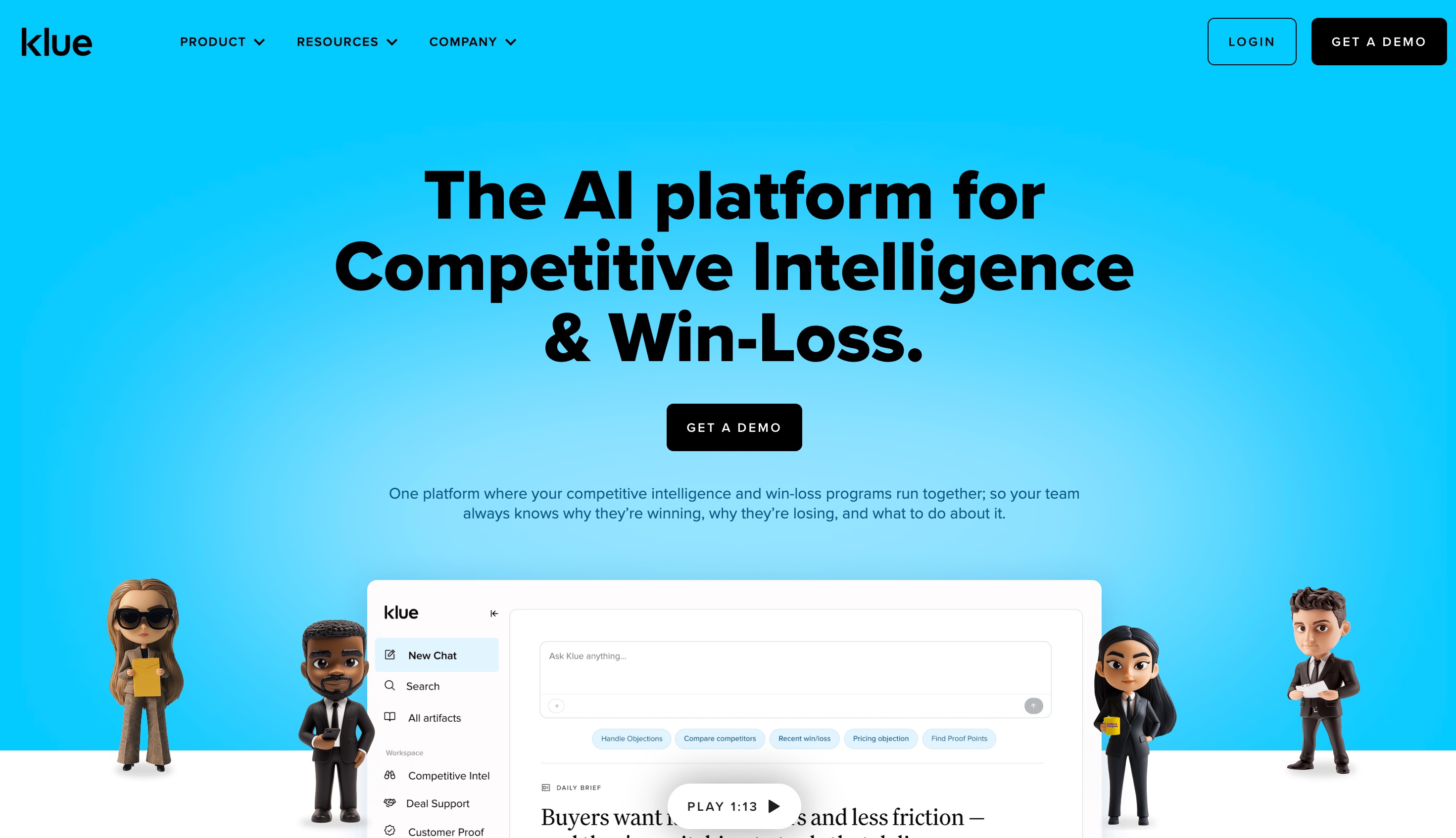
Klue is an AI-powered competitive enablement platform designed specifically for B2B sales and product marketing teams. It gathers intelligence from across the web and internal communications to build dynamic "battlecards" that help sales reps win deals against specific competitors.
Key Features
Automated Battlecards: AI updates sales battlecards in real-time as competitor information changes.
Internal Knowledge Crowdsourcing: Integrates with Slack and CRM to capture insights from your own sales team.
Win/Loss Analysis: Uses AI to identify exactly why you are winning or losing against specific competitors.
Pros
Directly ties competitive intelligence to sales revenue.
Excellent integrations with Salesforce and Slack.
Highly actionable for client-facing teams.
Cons
Implementation and onboarding can take time.
Pricing is tailored strictly for enterprise budgets.
Pricing
Custom pricing based on company size and needs.
6. Kompyte
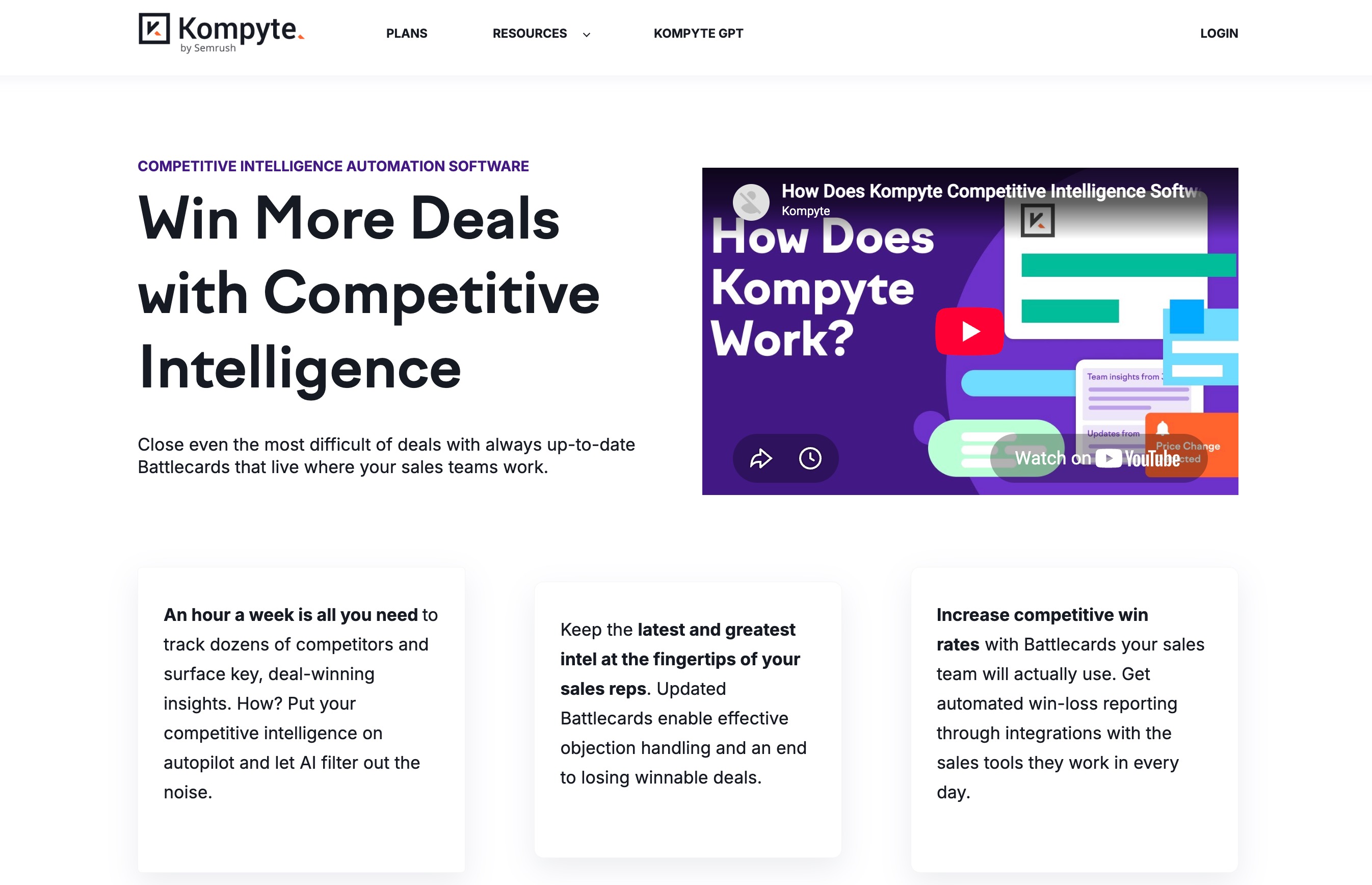
Kompyte (now part of Semrush) is a competitive intelligence automation platform that tracks competitors' websites, marketing channels, and pricing pages in real time, delivering insights directly to sales and marketing teams.
Key Features
Website Change Tracking: Automatically detects and highlights shifts in competitor messaging or pricing.
Workflow Automation: Routes competitor updates to the relevant departments automatically.
Integration Ecosystem: Connects easily with HubSpot, Salesforce, and other major CRMs.
Pros
Greatly reduces the manual hours spent checking competitor sites.
Very user-friendly setup for marketing teams.
Seamless CRM integration for sales enablement.
Cons
Can sometimes generate "noise" if too many minor website changes are tracked.
Reporting customization is somewhat limited compared to enterprise alternatives.
Pricing
Custom pricing upon request.
7. Crayon
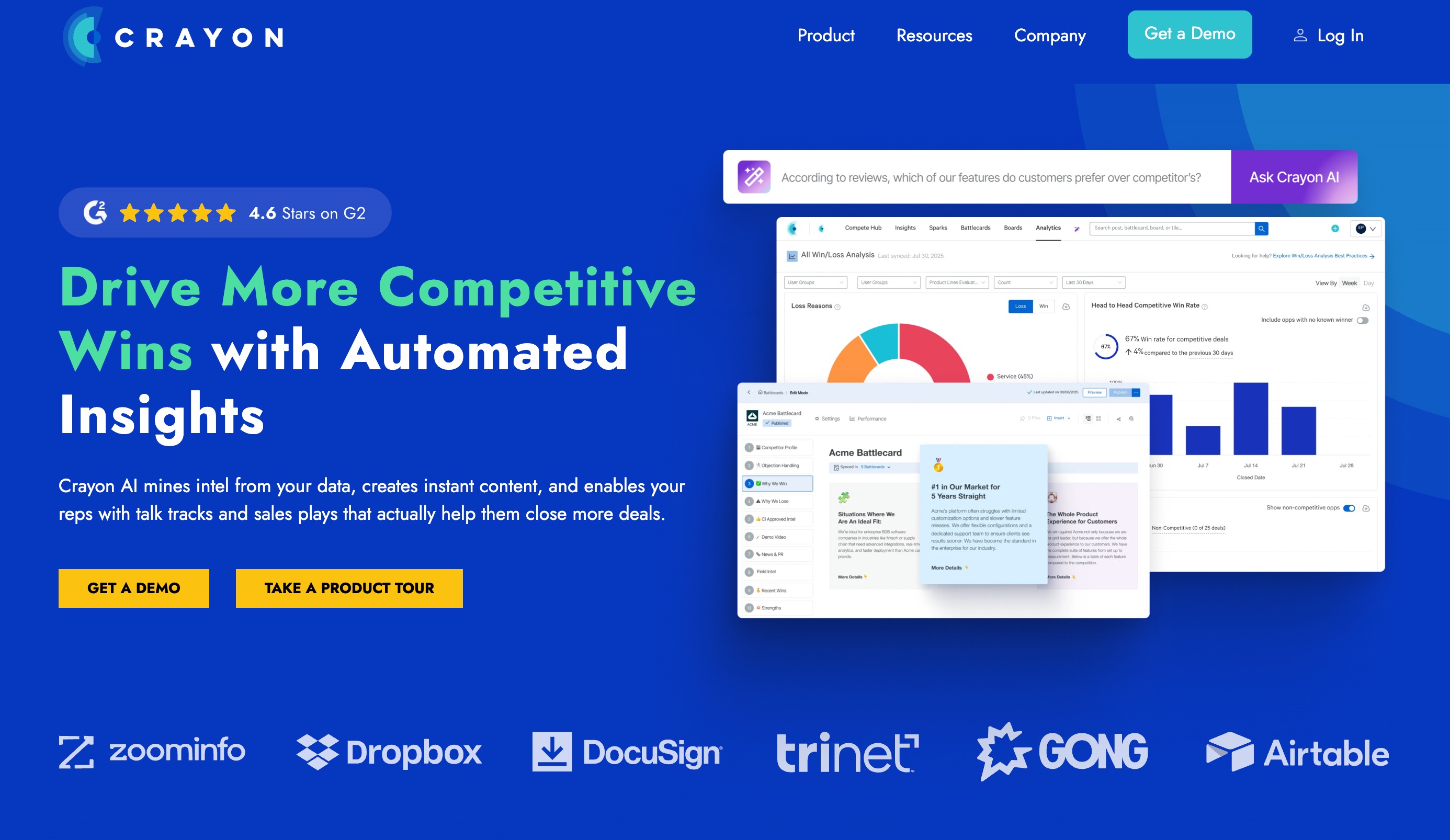
Crayon is an enterprise market intelligence platform that tracks over a hundred different data types across millions of sources. It is designed to capture every digital footprint a competitor leaves, from a changed homepage headline to a new SEC filing.
Key Features
Software & Pricing Tracking: Monitors competitor pricing pages and software update logs.
AI Insight Filtering: Uses machine learning to separate meaningful strategic shifts from routine website updates.
Executive Newsletters: Automatically generates intelligence reports for stakeholders.
Pros
Incredibly comprehensive data tracking across the web.
Strong AI filtering reduces alert fatigue.
Excellent customer support and strategy guidance.
Cons
Can be overly complex for smaller marketing teams.
Premium pricing model restricts access for smaller budgets.
Pricing
Custom pricing based on intelligence needs.
8. AlphaSense
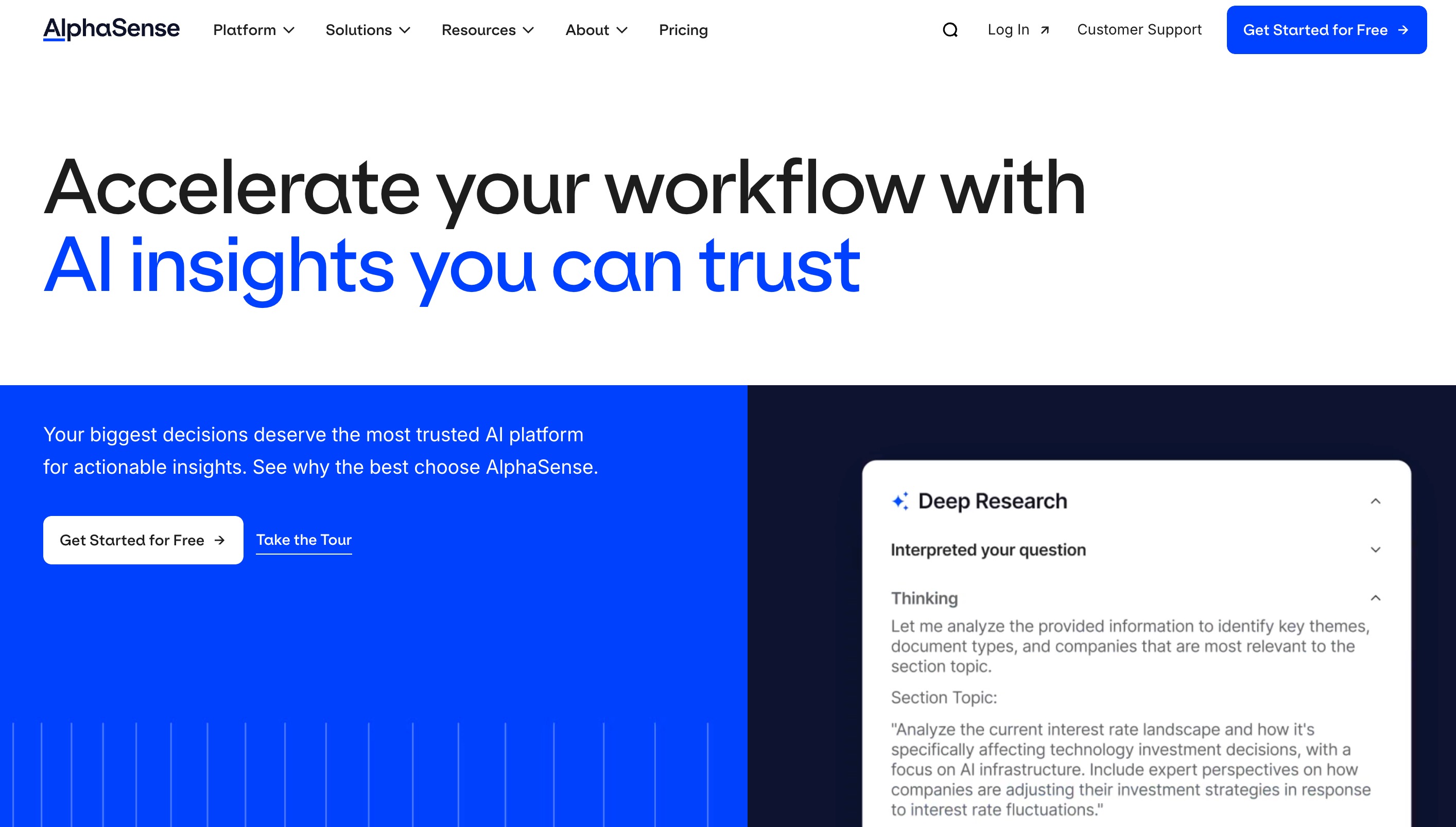
AlphaSense is an AI-powered market intelligence search engine designed heavily for corporate strategy, financial services, and investor relations. It reads through complex financial documents to extract competitive benchmarking data.
Key Features
Smart Synonym Search: AI understands financial and corporate jargon to find relevant competitor insights.
Document Analysis: Instantly analyzes earnings call transcripts, SEC filings, and broker reports.
Sentiment Extraction: Judges the tone of competitor executives during public addresses.
Pros
The absolute best tool for financial and corporate benchmarking.
Saves hours of reading dense regulatory filings.
Access to exclusive Wall Street insights and broker reports.
Cons
Not designed for marketing or SEO benchmarking.
Prohibitively expensive for anyone outside of corporate finance or enterprise strategy.
Pricing
Custom pricing (Enterprise).
9. Visualping
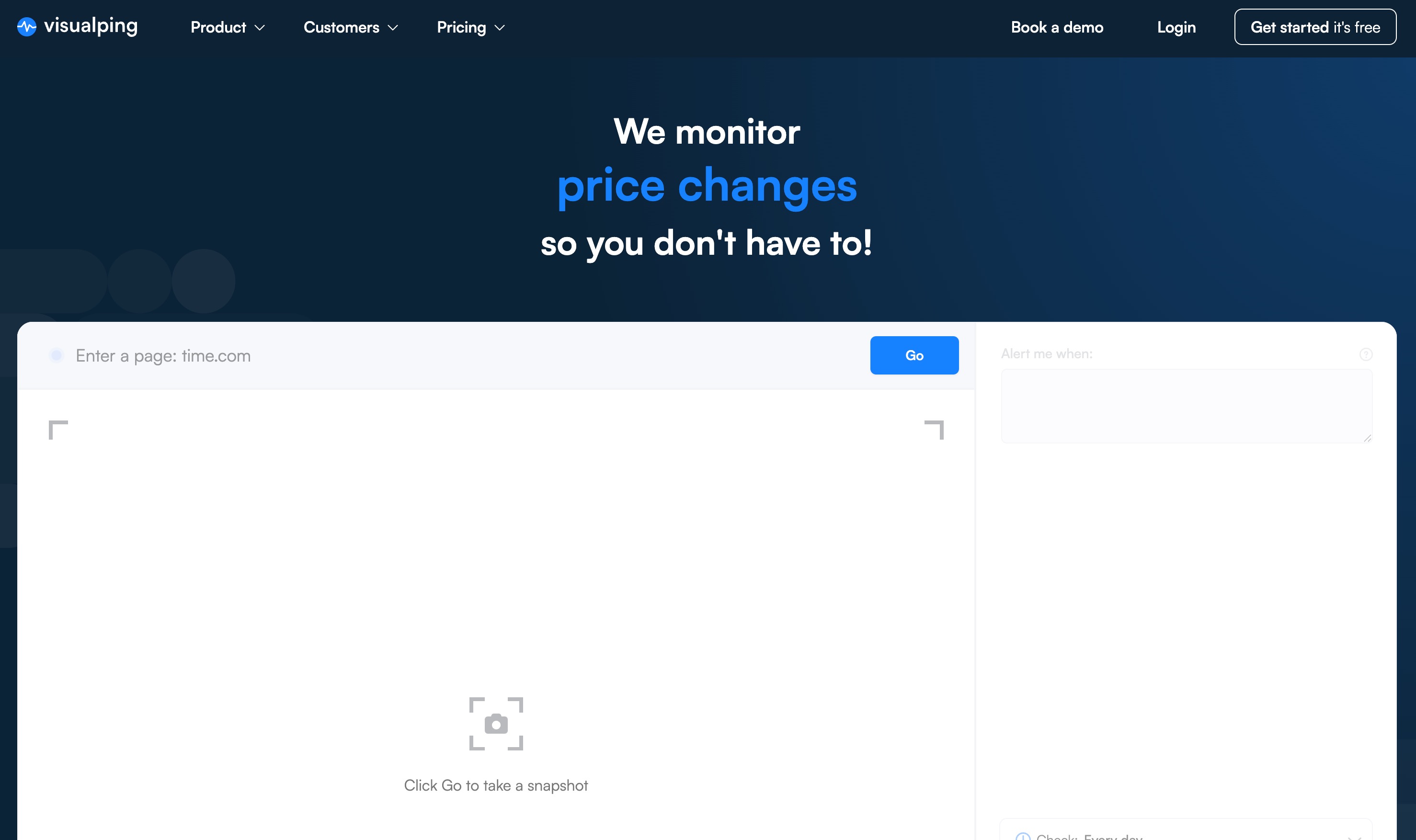
Visualping is a simpler but highly effective AI tool that monitors specific web pages for visual, text, or code changes. It is perfect for benchmarking competitors' landing page designs, promotional offers, or career page expansions.
Key Features
Visual Diffs: Highlights exactly what pixels changed on a competitor’s webpage.
AI Change Summaries: Uses AI to summarize the meaning behind the text changes.
Frequency Settings: Check pages every few minutes, daily, or weekly.
Pros
Extremely easy to use with zero learning curve.
Very affordable compared to dedicated enterprise CI tools.
Great for tracking e-commerce competitor pricing.
Cons
Only tracks what you specifically tell it to look at.
Lacks broader market trend analysis or predictive AI.
Pricing
Starts at a limited Free tier, premium plans begin at $50/month.
10. SpyFu
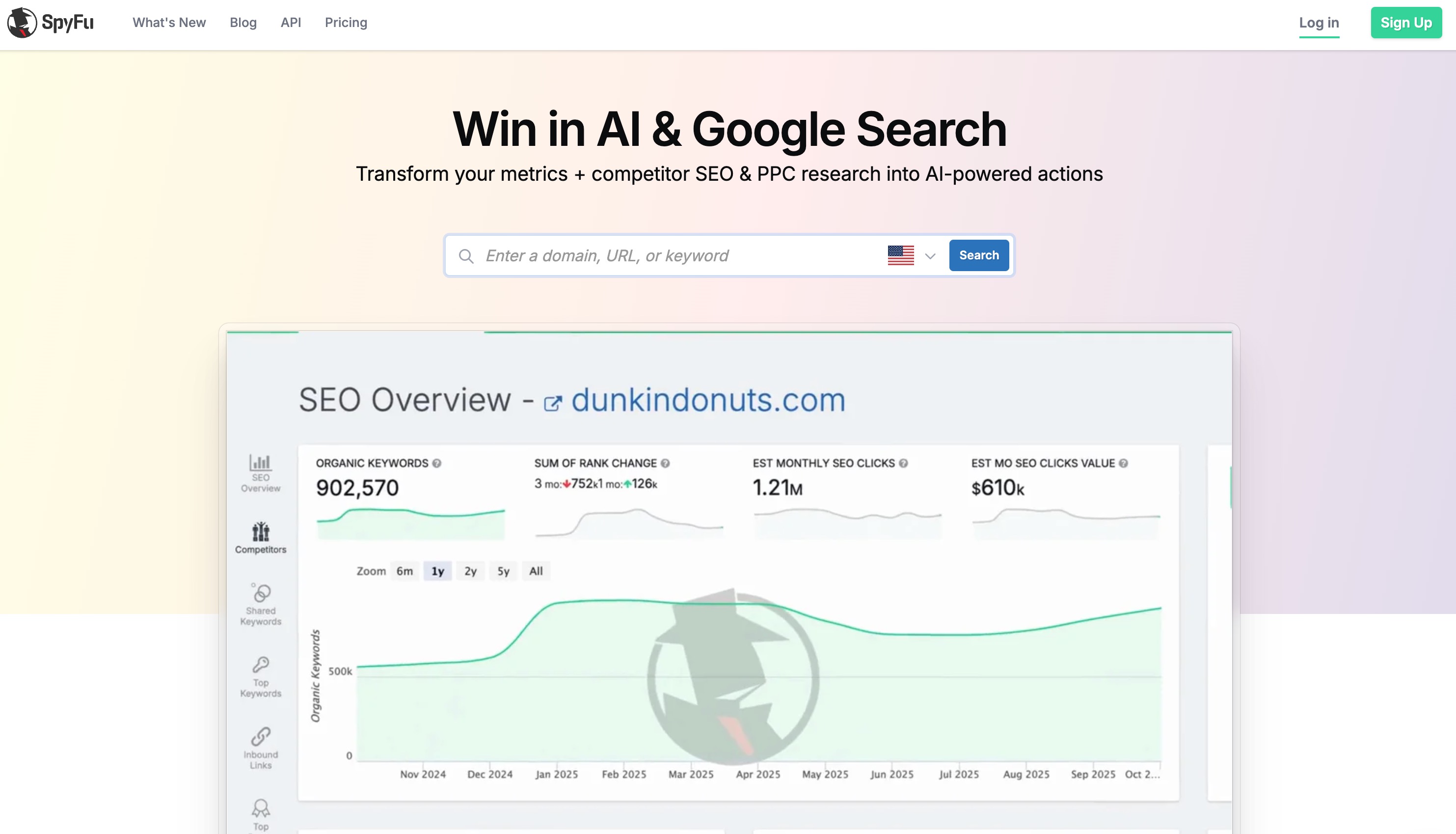
SpyFu is a specialized benchmarking tool focused entirely on search marketing. It allows you to "spy" on your competitors' historical Google Ads spend, target keywords, and organic ranking history over the past decade.
Key Features
PPC Competitor Research: See every ad variation your competitor has run and how much they spent.
SEO Keyword Tracking: Uncover the most profitable keywords your rivals rank for.
Historical Data: Access years of historical search data to identify long-term strategies.
Pros
Unbeatable for PPC (Google Ads) benchmarking.
Very affordable pricing structure.
Easy-to-understand visual reporting.
Cons
Data is limited strictly to search engine marketing.
Smaller database for non-US markets compared to Ahrefs or Semrush.
Pricing
Starts at $39/month.
11. Brandwatch
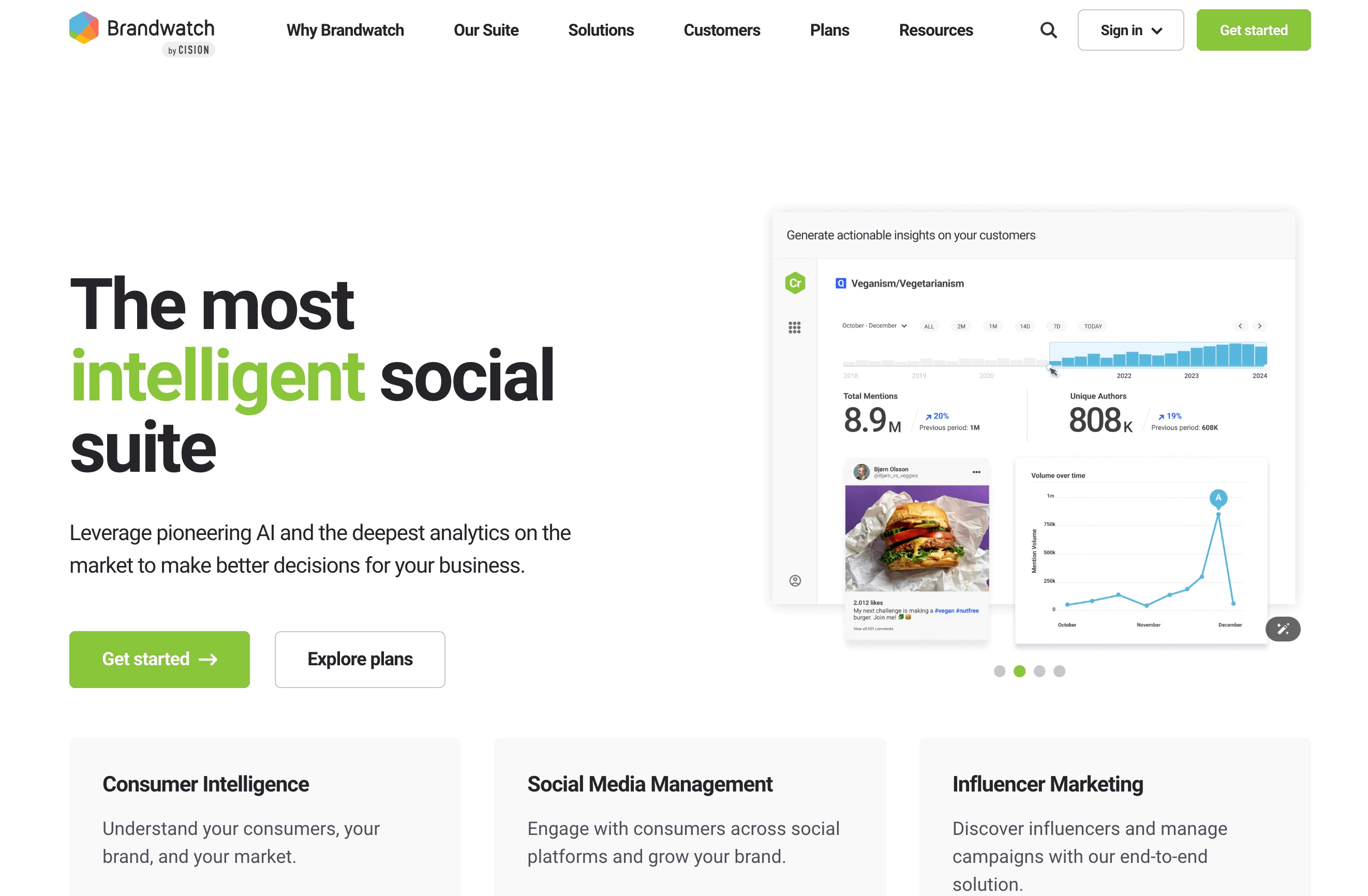
Brandwatch is a sophisticated consumer intelligence platform. It uses advanced AI to benchmark how consumers interact with different brands, track overarching industry trends, and measure the impact of competitive social media campaigns.
Key Features
AI Topic Extraction: Automatically identifies the main themes consumers associate with competitors.
Historical Archive: Access years of social media data to benchmark long-term brand health.
Demographic Insights: Break down competitor audiences by age, location, and profession.
Pros
Deepest consumer demographic analysis on the market.
Highly powerful AI for natural language parsing across multiple languages.
Excellent for crisis management and PR benchmarking.
Cons
The interface can be complex to master.
Very expensive, making it strictly an enterprise solution.
Pricing
Custom pricing.
How to Choose the Right AI Competitive Benchmarking Tool
Selecting the right tool from this list depends heavily on your specific goals, team structure, and budget. Here are the most critical factors to consider:
Identify Your Primary Use Case: Are you benchmarking digital marketing and SEO? Tools like Semrush or Ahrefs are best. Need to track B2B sales battles? Look at Klue. If you need flexible, deep analysis of raw data and internal reports, you need an AI workspace.
Assess Your Technical Resources: Some platforms require heavy implementation and training. If you want a tool that your team can use immediately without learning SQL, Python, or complex querying languages, prioritize NLP-driven tools.
Look for Memory and Context: Competitive benchmarking isn't a one-time task; it is recurring. Tools that possess persistent memory—meaning they remember your previous datasets and queries—save countless hours.
Consider Budget Constraints: While tools like Crayon and Meltwater are fantastic, they require massive enterprise budgets. Make sure the tool's ROI justifies the monthly or annual cost.
While platforms like Semrush and Crayon are excellent for their specific niches (SEO and enterprise web scraping, respectively), they can be rigid and expensive. If you are looking for the most flexible, powerful, and user-friendly solution, Powerdrill Bloom stands out as the ultimate choice. Because it acts as an intelligent AI workspace with persistent memory (MemoryLake), you can upload any competitor dataset—from financial CSVs to marketing exports—and generate instant visual reports using just natural language. It adapts to your specific benchmarking needs rather than forcing you into a rigid dashboard.
Final Verdict
AI has completely transformed competitive benchmarking from a slow, manual chore into an agile, strategic advantage. By leveraging the tools on this list, you can anticipate competitor moves, optimize your own strategies, and ultimately capture more market share.
If you want a tool that eliminates the steep learning curve, acts as a dedicated AI analyst, and remembers your ongoing projects, you should look no further than Powerdrill Bloom. Its ability to analyze Excel and CSV files via natural language, combined with its MemoryLake technology, makes it the perfect workspace to turn scattered competitor data into connected, repeatable, and presentation-ready workflows. Try integrating it into your workflow today and watch your competitive intelligence process transform.
FAQs
What is competitive benchmarking?
Comparing your company's performance, metrics, and strategies against industry competitors to identify critical growth opportunities and weaknesses.
Why use AI for benchmarking?
AI instantly processes massive datasets, uncovers hidden market patterns, summarizes competitor content, and automates routine tracking with high efficiency.
Is Powerdrill Bloom hard to learn?
No. It utilizes natural language processing, allowing you to generate insights and charts without needing SQL or Python skills.
How much do these tools cost?
Pricing varies significantly. Basic SEO tools start around forty dollars monthly, while enterprise intelligence platforms can cost thousands annually.
Can I track competitors' social media?
Yes. Tools like Brandwatch excel at social listening, whereas Powerdrill Bloom can instantly analyze your exported social media datasets.