12 Best AI Data Agents for Business Teams in 2026 (Vetted Picks)
In this current cycle of digital maturity, instantaneous data processing has become the central nervous system of global enterprise. Data is no longer just a passive asset stored in isolated spreadsheets and complex cloud warehouses; it is a dynamic, actionable resource. However, as the sheer volume of data generated by businesses continues to explode, traditional business intelligence (BI) tools and manual data analysis methods are proving to be critically slow and inefficient. This is where AI data agents come into play. These autonomous, intelligent systems are revolutionizing how business teams interact with their data, transforming complex queries into natural language conversations.
In this comprehensive guide, we will explore the 12 best AI data agents for business teams in 2026. Whether you are a marketer trying to understand customer churn, a financial analyst projecting Q4 revenue, or an operations manager streamlining supply chains, finding the right AI data agent is crucial. We have rigorously vetted the market to bring you this curated list. Let’s dive into what these tools are, why you need them, and which platform, especially our top recommendation, Powerdrill Bloom, stands out as the ultimate solution for your business.
What Are AI Data Agents
Autonomous Data Processors: Unlike traditional software that requires explicit, click-by-click instructions, AI data agents are autonomous entities powered by Large Language Models (LLMs) and advanced machine learning algorithms. They can understand intent, fetch data, process it, and generate insights autonomously.
Natural Language Interfaces: AI data agents replace complex SQL queries and Python scripts with conversational interfaces. You can simply ask, "What were our top-selling products in Europe last quarter?" and the agent will instantly translate this into database queries, retrieve the data, and present it.
Workflow Integrators: These agents do not just analyze data in a vacuum; they integrate seamlessly with your existing tech stack. They can connect to CRMs, ERPs, data warehouses (like Snowflake or BigQuery), and daily communication tools (like Slack or Microsoft Teams) to execute multi-step workflows.
Proactive Insight Generators: Traditional analytics are reactive—you only find what you are actively looking for. AI data agents in 2026 are proactive. They monitor data streams in the background, detect anomalies, identify emerging trends, and alert business teams before a metric even becomes a problem.
Action-Oriented Executors: A true AI data agent goes beyond simple data visualization. Once an insight is generated, the agent can take action. For example, if it detects a drop in inventory, it can automatically draft a reorder request and send it to the procurement manager for approval.
Why Business Teams Need AI Data Agents in 2026
Eradicating the Technical Bottleneck: In the past, business teams had to rely on a centralized data engineering or IT department to pull reports. In 2026, AI data agents democratize access to information, empowering non-technical staff to perform complex analyses without waiting for a data scientist.
Accelerating Decision-Making Speed: Business moves at the speed of thought, and delayed insights can result in missed opportunities. AI data agents process millions of rows of data in seconds, providing real-time answers that allow leadership teams to pivot strategies instantly in highly competitive markets.
Cost Efficiency and Resource Allocation: Hiring a massive team of data analysts is an expensive endeavor. By deploying AI data agents, businesses can significantly reduce their overhead costs. This allows human employees to focus on high-level strategic thinking, creative problem-solving, and relationship building, rather than tedious data scraping.
Handling Unstructured Data: Over 80% of enterprise data is unstructured—found in emails, PDFs, customer support chat logs, and social media. Modern AI data agents excel at parsing this unstructured data, turning qualitative feedback into quantitative, actionable metrics that were previously impossible to track.
Error Reduction and Consistency: Human error in data entry, formula creation, and manual analysis can lead to catastrophic business decisions. AI data agents follow strict, algorithmic logic, ensuring that data processing is consistent, accurate, and free from the fatigue that affects human workers.
Quick Comparison Table
| Product | Profile Summary | Best For | Pricing (Starting) |
|---|---|---|---|
| Powerdrill Bloom | General-purpose AI agent | Best Overall for Business Teams | $13.27/month |
| Julius AI | Virtual AI data analyst for spreadsheets and CSVs. | Ad-hoc spreadsheet analysis | $20/month |
| Tableau AI | Enterprise generative AI for data visualization. | Large Salesforce ecosystems | $15/seat/month |
| ThoughtSpot | Search-driven analytics platform for large datasets. | Enterprise scale search | $50/seat/month |
| Lumay | Enterprise agentic AI platform for workflow automation. | Compliance & operations | Custom |
| SureThing | Proactive general AI agency for multi-app execution. | Highly autonomous tasks | $15/month |
| Relevance AI | Platform to build custom AI workforces and agents. | Custom unstructured data | Custom |
| Zapier | AI automation platform bridging 7000+ apps. | Ecosystem integrations | $19.99/month |
| Sintra | Pre-built AI automation bots for daily workflows. | Sales and marketing ops | Custom |
| Gumloop | Visual node-based AI platform for data scraping. | No-code data extraction | $37/month |
| Make | Advanced visual integration with AI routing. | Complex logic automation | $9/month |
| Ayautomate | Custom AI transformation and agent swarm deployment. | Bespoke enterprise builds | Custom |
1. Powerdrill Bloom
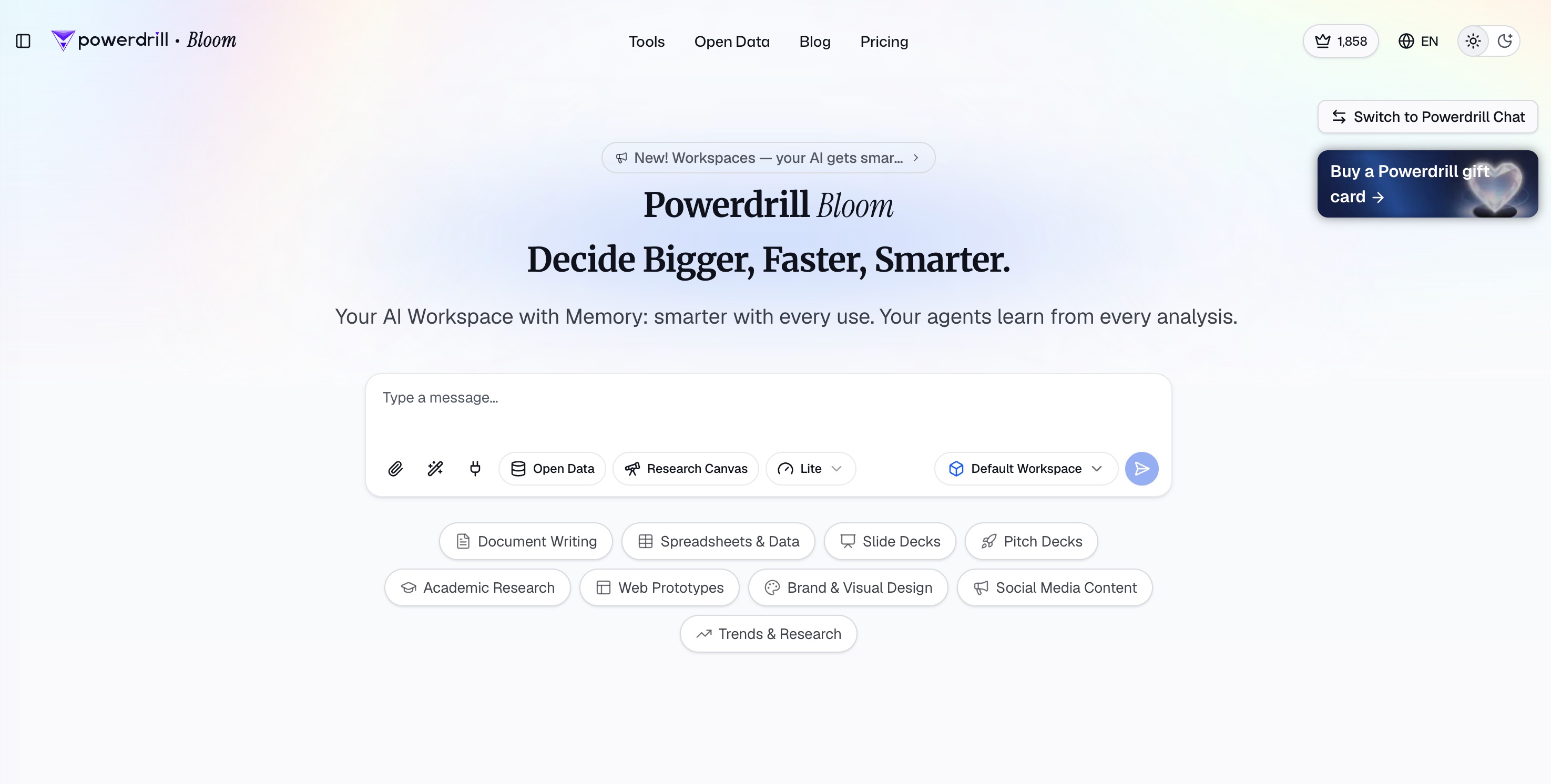
Powerdrill Bloom stands at the pinnacle of AI data agents in 2026. It is a powerful, general-purpose AI agent designed specifically for business teams, going far beyond merely answering questions to actually getting work done. Acting as the ultimate autonomous co-pilot, it seamlessly manages research, data analysis, and task execution. Its flagship strength lies in its frictionless ability to transform raw business data into profound insights, interactive charts, and one-click presentation decks—all with absolutely zero coding required. By empowering teams to execute complex workflows and generate executive-ready assets instantly, Powerdrill Bloom redefines operational efficiency for the modern enterprise.
Key Features
Flagship Data Transformation: Instantly turns raw datasets into actionable insights, visual charts, and one-click presentation decks without any code.
Persistent Workspaces: Smart workspaces that remember your files, datasets, and conversational context across multiple sessions, ensuring seamless project continuity.
Specialized Skill Execution: Runs dedicated, purpose-built skills for market research, deep data analysis, workflow automation, and autonomous execution.
MCP Tool Connectivity: Connects natively with Model Context Protocol (MCP) tools, allowing business teams to integrate and control a vast ecosystem of external applications.
Pros
Incredibly intuitive no-code interface that empowers non-technical users to generate stunning, presentation-ready assets in seconds.
Persistent memory (Workspaces) eliminates the frustrating need to repeatedly re-upload files or re-explain business context.
Highly versatile and action-oriented; it doesn't just analyze data, it executes the follow-up tasks (like drafting decks or automating workflows).
Cons
May offer too much capability for users who only need a simple, single-use spreadsheet calculator.
Because it offers such a robust suite of general-purpose skills and MCP integrations, users looking for only a very basic, single-function spreadsheet calculator might feel slightly overwhelmed initially.
Pricing
- Starts at $13.27/month, with scalable enterprise plans available.
2. Julius AI

Julius AI has established itself as a reliable virtual data analyst. It focuses heavily on processing static files like spreadsheets, CSVs, and localized databases. It is particularly popular among individual analysts and small teams who need quick statistical modeling, instant chart creation, and ad-hoc data exploration without navigating complex enterprise software.
Key Features
Instant generation of statistical models and dynamic charts.
Exportable Python code for transparency and reproducibility.
Support for multiple file formats and basic API connections.
Pros
Extremely fast for analyzing standalone datasets.
Transparent methodology by showing the underlying code.
Cons
Lacks the deep, proactive workflow automation of higher-tier agents.
Can struggle with massive, multi-terabyte cloud data warehouses.
Pricing
- Free tier available; Pro plans start at $20/month.
3. Tableau AI
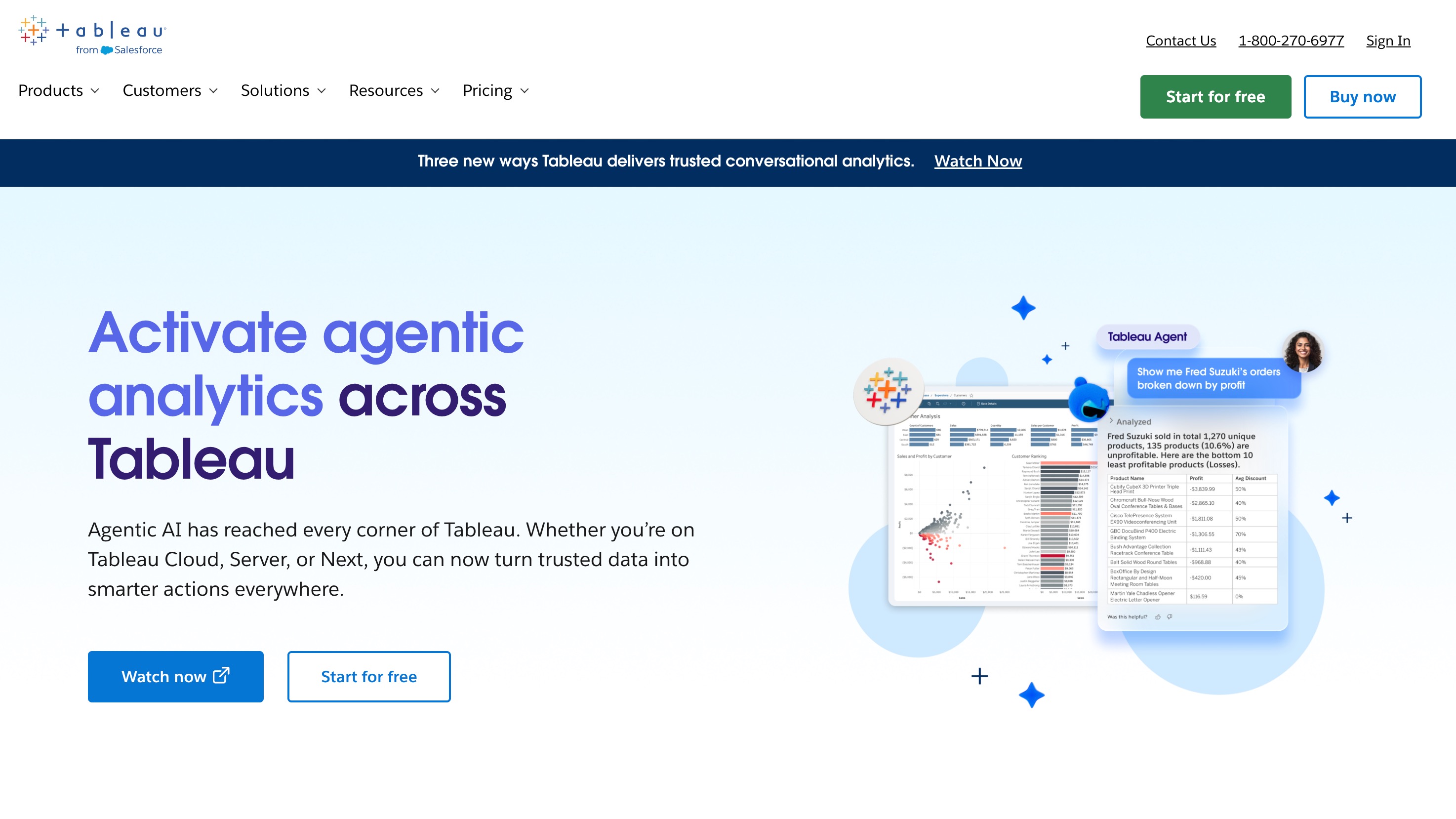
Tableau AI (integrated deeply with Tableau Pulse) represents the evolution of the legacy BI giant into the generative AI space. It brings automated insights and natural language summaries directly into the enterprise workflow, leveraging its native synergy with the Salesforce ecosystem to provide comprehensive visual analytics.
Key Features
Generative AI summaries of complex dashboard metrics.
Deep, native integration with Salesforce CRM data.
Automated anomaly detection and contextual metric tracking.
Pros
Unmatched visual fidelity and charting options.
Perfect for enterprises already heavily invested in Salesforce.
Cons
Extremely steep learning curve for new users.
Heavy, resource-intensive, and expensive to implement across all departments.
Pricing
- Included with Tableau Cloud, typically starting around $15/user/month.
4. ThoughtSpot
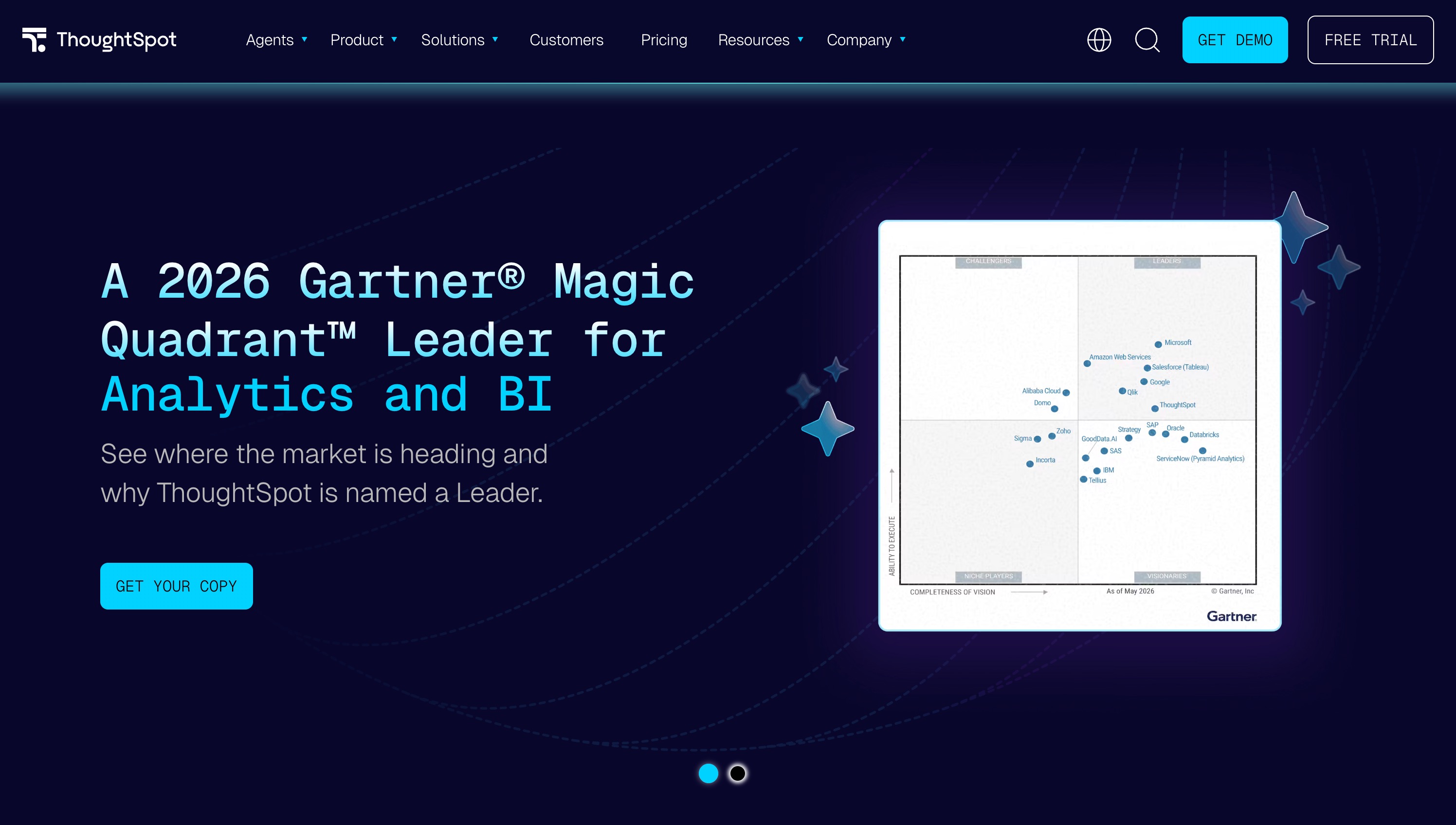
ThoughtSpot pioneered search-driven analytics and has evolved into a formidable AI-powered data platform in 2026. It empowers business users to explore massive enterprise datasets using a search-bar interface, similar to searching the web, complemented by AI-generated insights that highlight hidden trends.
Key Features
Highly scalable Relational Search Engine for complex queries.
SpotIQ technology for automated anomaly and trend detection.
Embeddable AI analytics for custom business applications.
Pros
Handles massive, enterprise-scale datasets effortlessly.
Excellent embedding capabilities for third-party apps.
Cons
High entry cost makes it prohibitive for small to medium businesses.
Requires rigorous data modeling by IT before business teams can use it effectively.
Pricing
- Custom enterprise pricing, starting around $50/seat//month based on usage.
5. Lumay
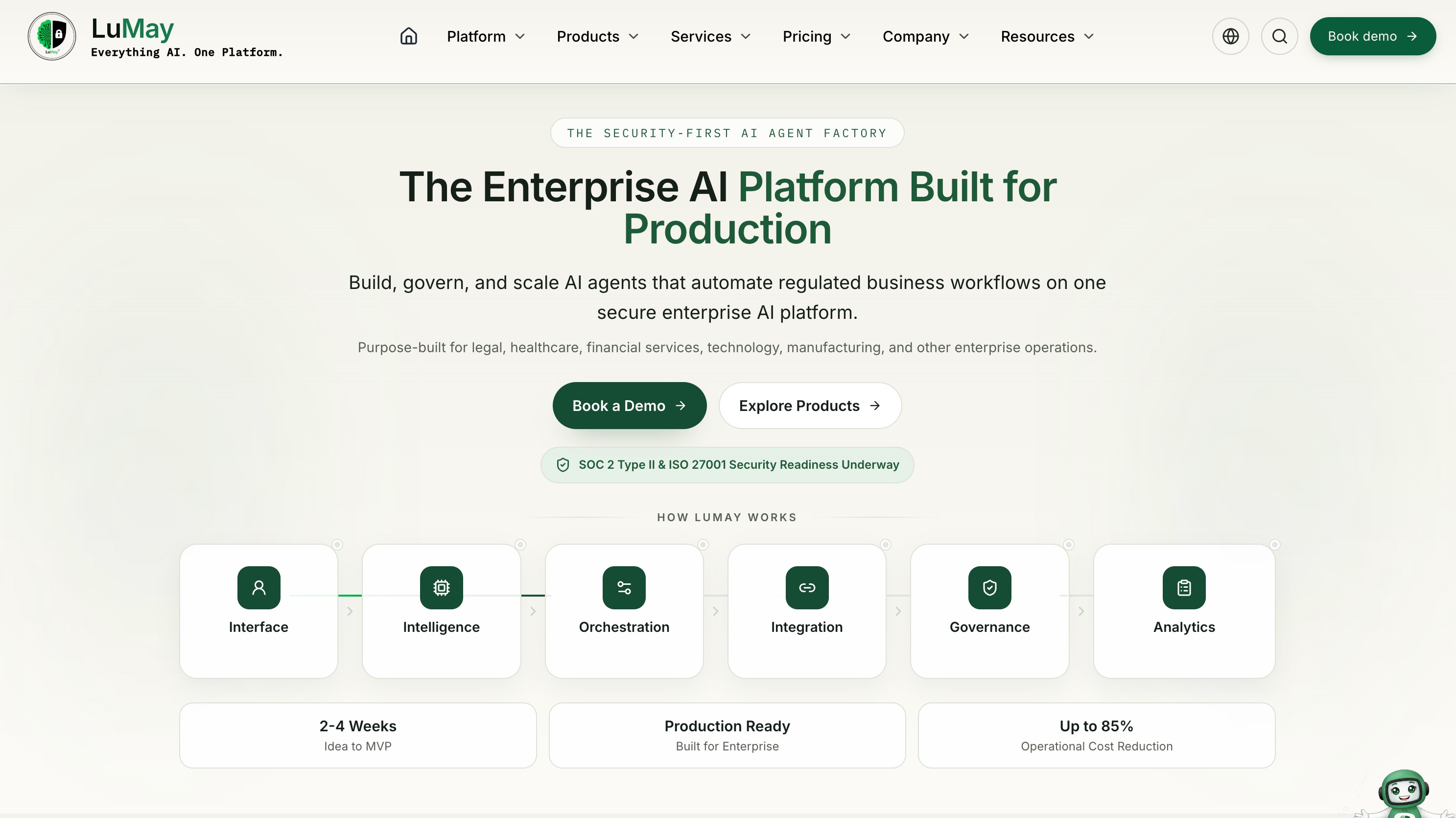
Lumay (LuMay AI) is an emerging powerhouse in the enterprise agentic AI space. Designed as an AI agent factory, it focuses on automating complex business operations, orchestrating multiple AI agents, and ensuring strict compliance and governance for regulated industries.
Key Features
Autonomous workflow orchestration across multiple business departments.
Predictive analytics and real-time anomaly detection.
Strong focus on compliance automation and secure data governance.
Pros
Exceptional for highly regulated industries (finance, healthcare).
Robust security and scalable multi-agent orchestration.
Cons
Setup is highly technical and requires dedicated IT resources.
Not ideal for simple, ad-hoc data visualization needs.
Pricing
- Custom enterprise pricing based on deployment scale.
6. SureThing
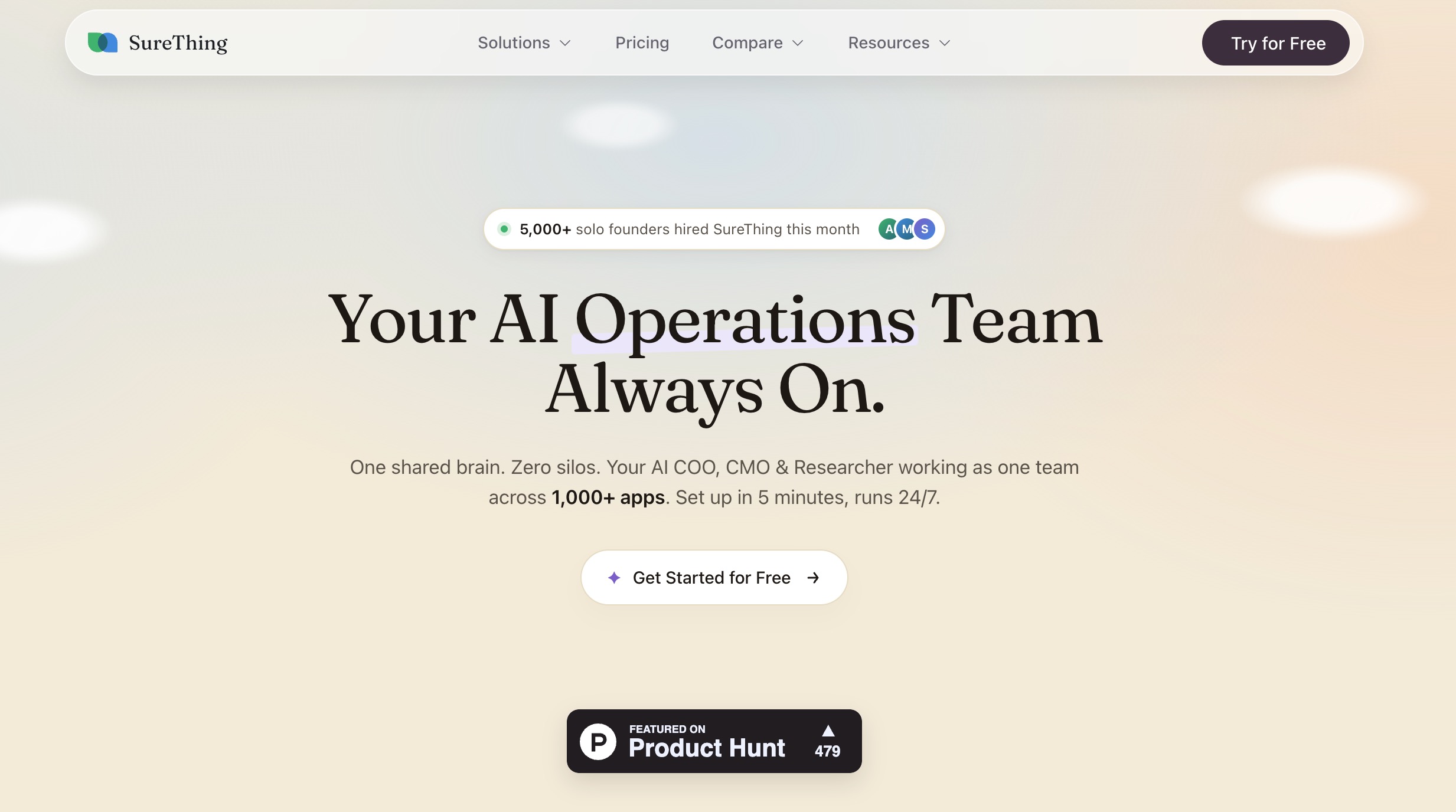
SureThing AI is a unique, proactive general AI agency that operates as a virtual team (COO, CMO, Researcher) sharing a single persistent memory. It connects to over 1,000 applications and executes long-horizon tasks autonomously, reporting back to the user only when results are achieved or approvals are needed.
Key Features
Persistent memory that retains context across thousands of apps.
Proactive task execution (e.g., drafting emails, data syncs) while you sleep.
Deep integration with Slack, Teams, and standard office suites.
Pros
Truly autonomous execution rather than just reactive chat.
Incredible cross-app contextual awareness.
Cons
Currently operates on an invite-only model, limiting accessibility.
Relinquishing control to a proactive agent requires a significant trust leap.
Pricing
- Subscription starts at $15/month (based on a credit system).
7. Relevance AI
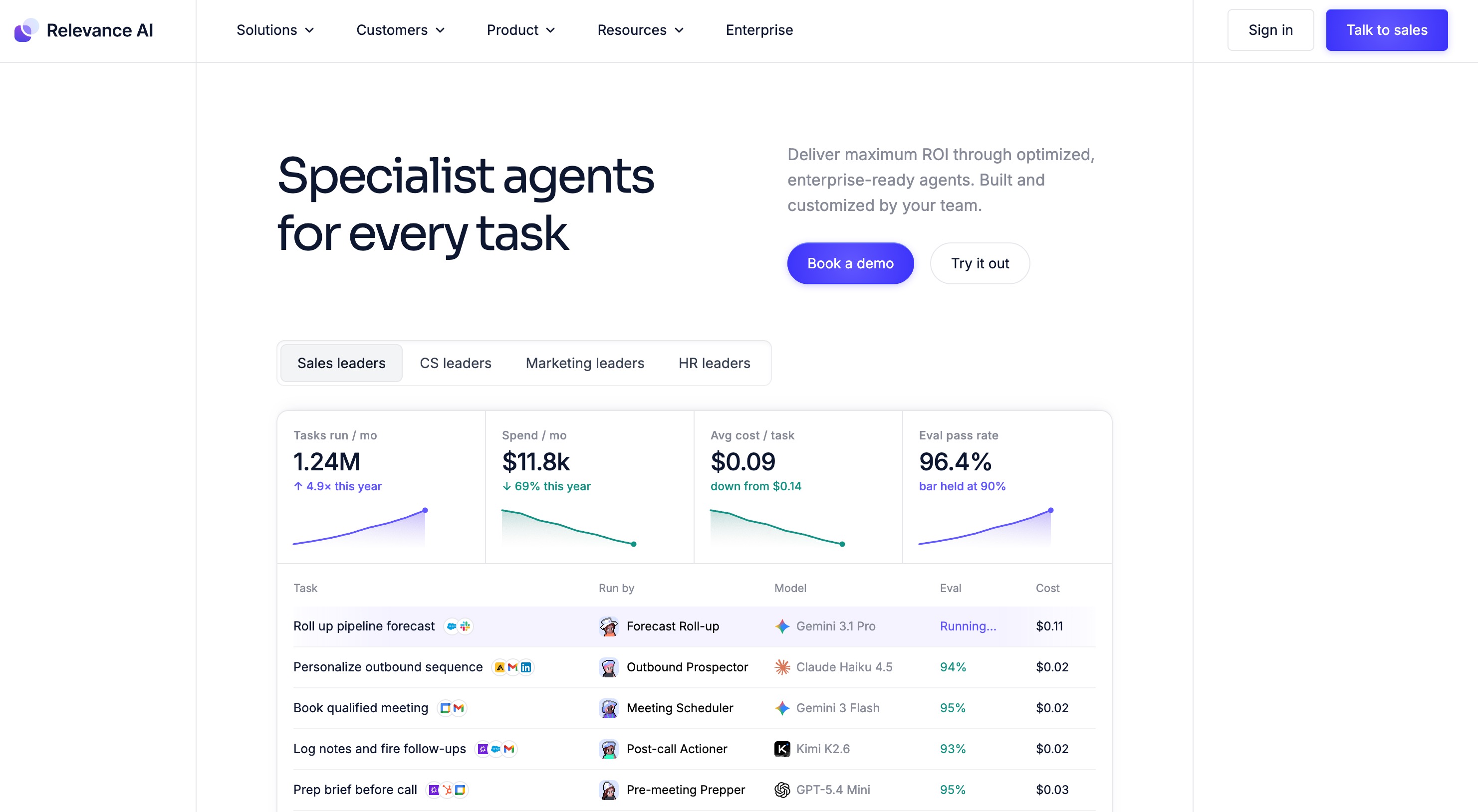
Relevance AI provides a platform for businesses to build their own custom AI workforces. It specializes in processing unstructured data—such as text, audio, and images—and turning it into structured insights through highly customizable, drag-and-drop AI agents.
Key Features
Intuitive drag-and-drop builder for custom AI agents.
Powerful unstructured data processing and vector search capabilities.
Multi-agent collaboration for complex, multi-step workflows.
Pros
Highly flexible and customizable for niche business needs.
Excellent at extracting data from unstructured sources.
Cons
Building the agents requires time and a clear understanding of prompt engineering.
Can be overwhelming for teams that just want out-of-the-box analytics.
Pricing
- Custom.
8. Zapier
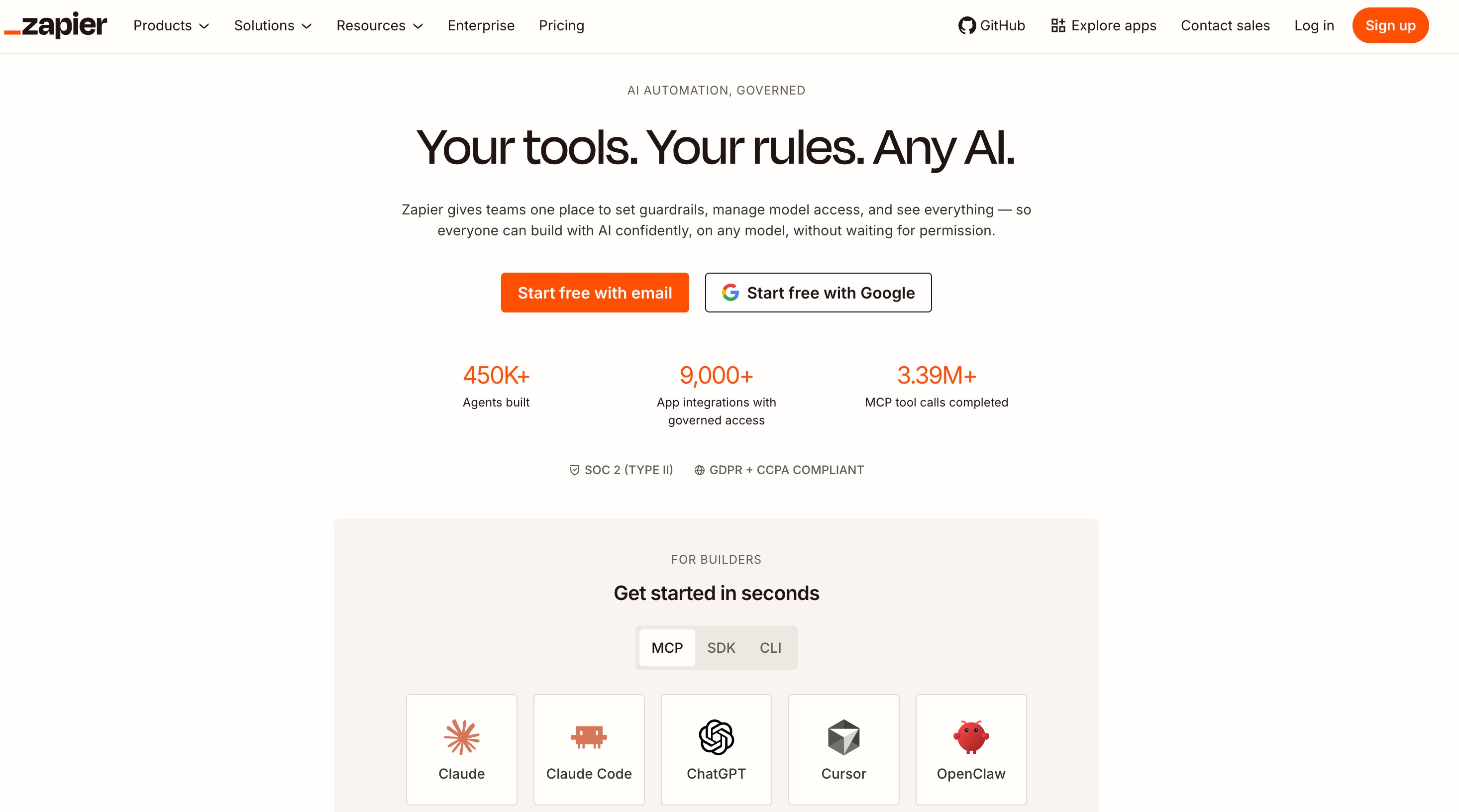
With the introduction of Zapier Central and advanced AI features, the undisputed king of integrations has transformed into a powerful AI data agent platform. It allows users to converse with an AI to build workflows, manipulate data, and trigger actions across its massive ecosystem of over 7,000 apps.
Key Features
Conversational interface to create and manage complex automation zaps.
Real-time data parsing and routing between disparate software.
Massive library of supported third-party applications.
Pros
Unrivaled ecosystem; if an app has an API, Zapier connects to it.
Very reliable trigger-action framework.
Cons
Can become prohibitively expensive at high task volumes.
Not a dedicated BI or data visualization tool.
Pricing
- Free tier available; Premium plans start at $19.99/month.
9. Sintra
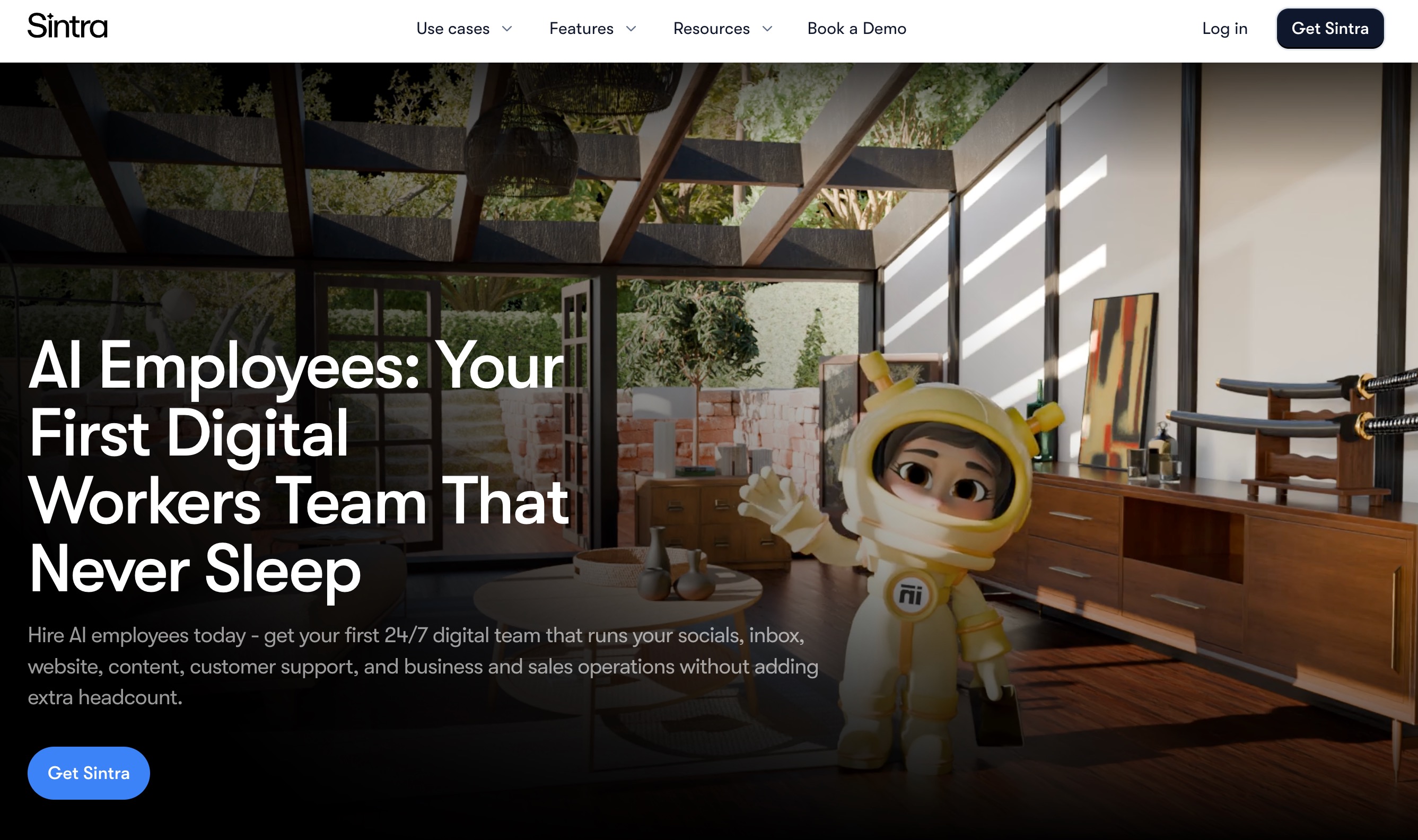
Sintra AI provides a suite of ready-to-use automation bots tailored for specific business functions, particularly sales, marketing, and customer support. It focuses on eliminating repetitive data entry and streamlining outbound communication workflows.
Key Features
Pre-built bot templates for immediate deployment.
Seamless integrations with major CRMs and marketing platforms.
Automated data entry and lead enrichment.
Pros
Instant time-to-value with plug-and-play templates.
Great for small teams looking to automate specific administrative tasks.
Cons
Lacks the depth required for complex financial or operational data analysis.
Less customizable than platform-builders like Make or Relevance AI.
Pricing
- Custom.
10. Gumloop
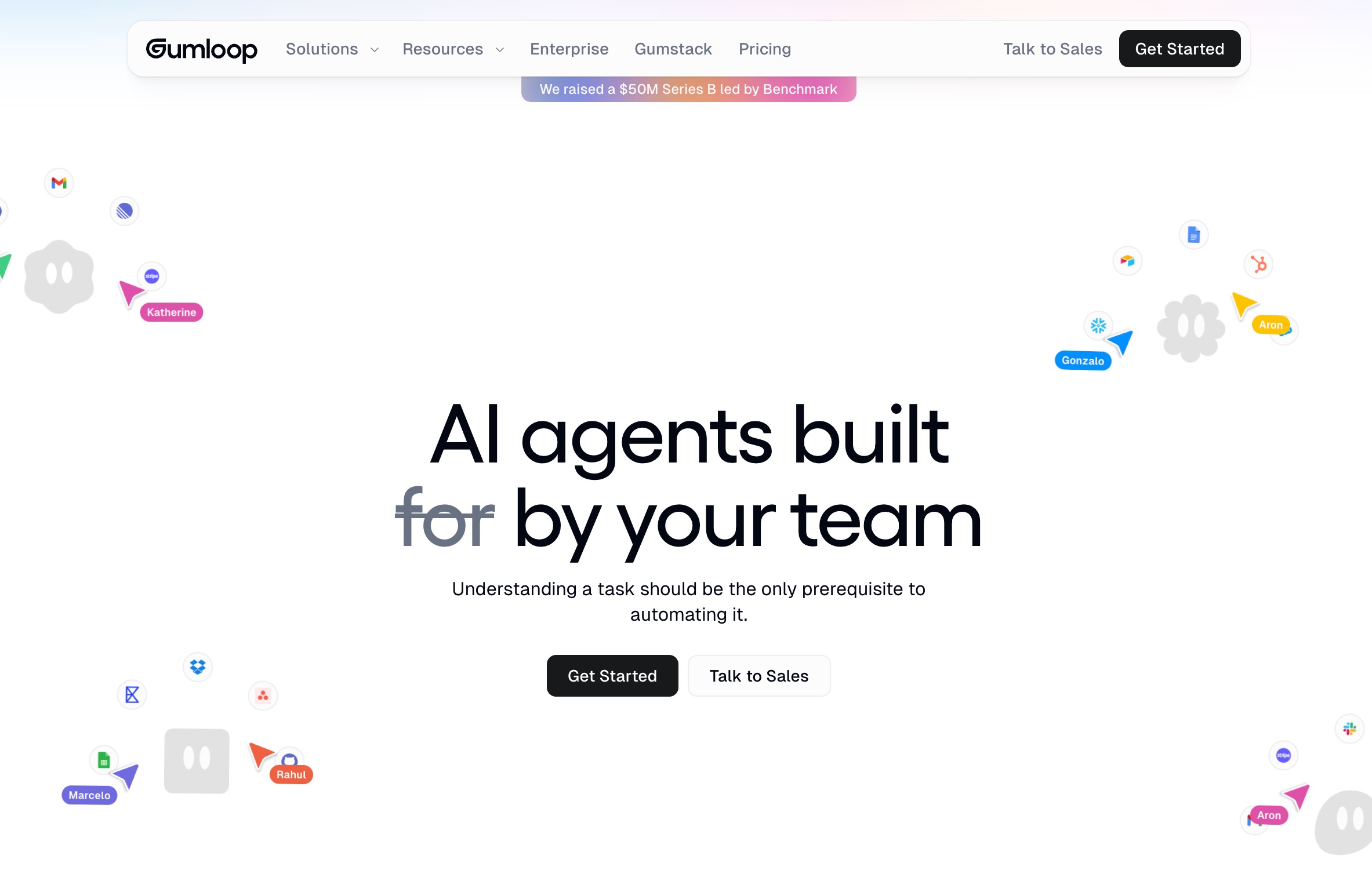
Gumloop is a visual, node-based automation platform designed to make complex AI workflows accessible without coding. It is particularly strong in data scraping, parsing web content, and feeding unstructured data into LLMs for structured output.
Key Features
Drag-and-drop workflow canvas for visual logic mapping.
Native integration with top-tier LLMs for text and data parsing.
Powerful web scraping and API connection nodes.
Pros
Brilliant for automating research and data extraction tasks.
No-code interface makes complex logic visually understandable.
Cons
Massive workflows can make the UI feel cluttered and hard to navigate.
Focuses more on data movement than on visual data analytics.
Pricing
- Free tier available; Pro plans start at $37/month.
11. Make
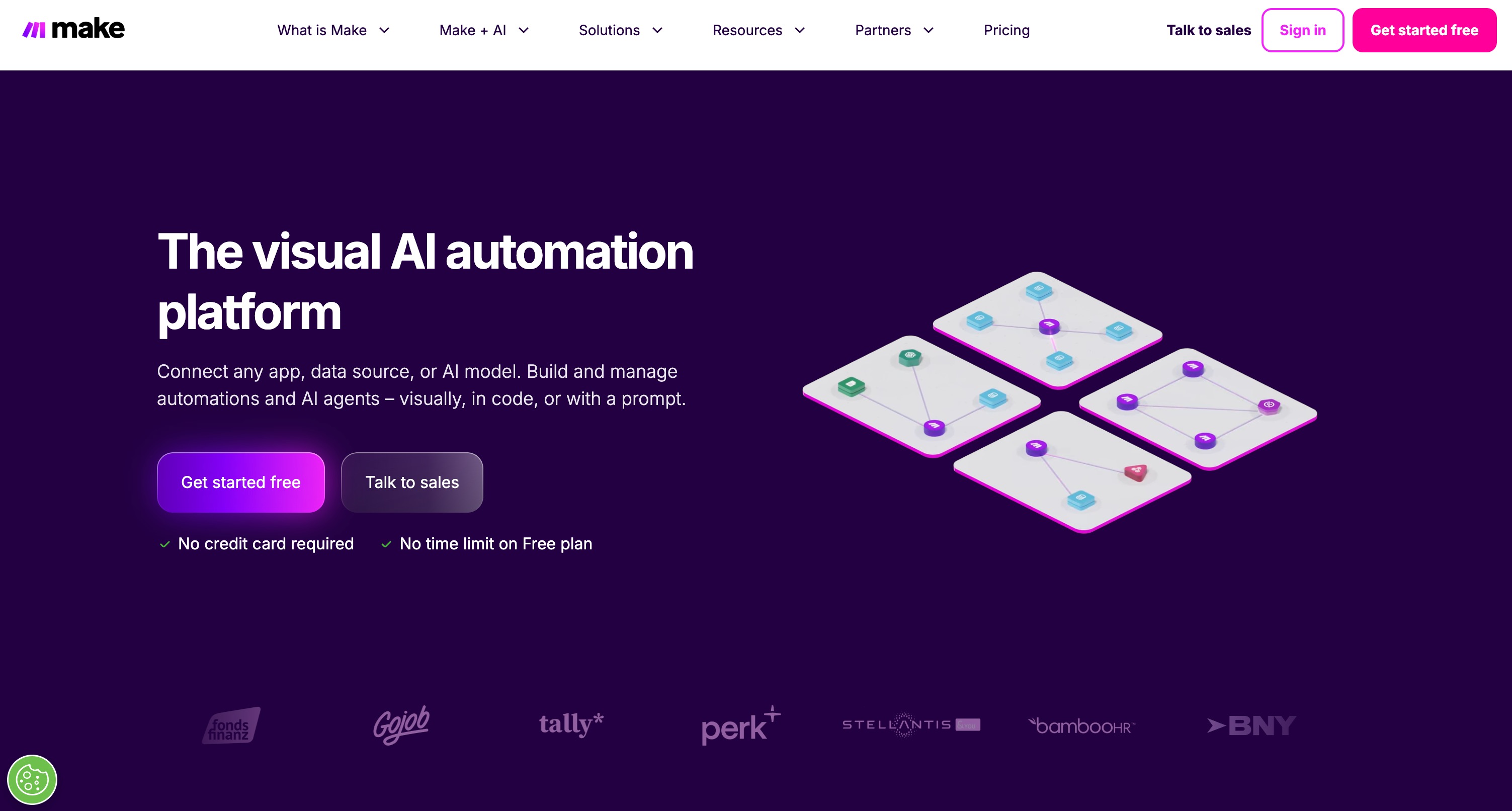
Make (formerly Integromat) is a highly visual integration platform that handles complex logic, branching, and AI integrations better than almost any other tool on the market. In 2026, its ability to route data dynamically using AI decision-making makes it a favorite for operations teams.
Key Features
Advanced visual scenario builder with infinite branching logic.
Built-in iterators, routers, and error-handling modules.
Seamless integration with OpenAI, Anthropic, and other AI models.
Pros
Incredibly powerful and flexible for complex operational workflows.
More cost-effective at scale compared to competitors like Zapier.
Cons
Steeper learning curve; requires a logical, almost programmer-like mindset.
Debugging complex scenarios can be tedious.
Pricing
- Free tier available; Core plans start at $9/month.
12. Ayautomate
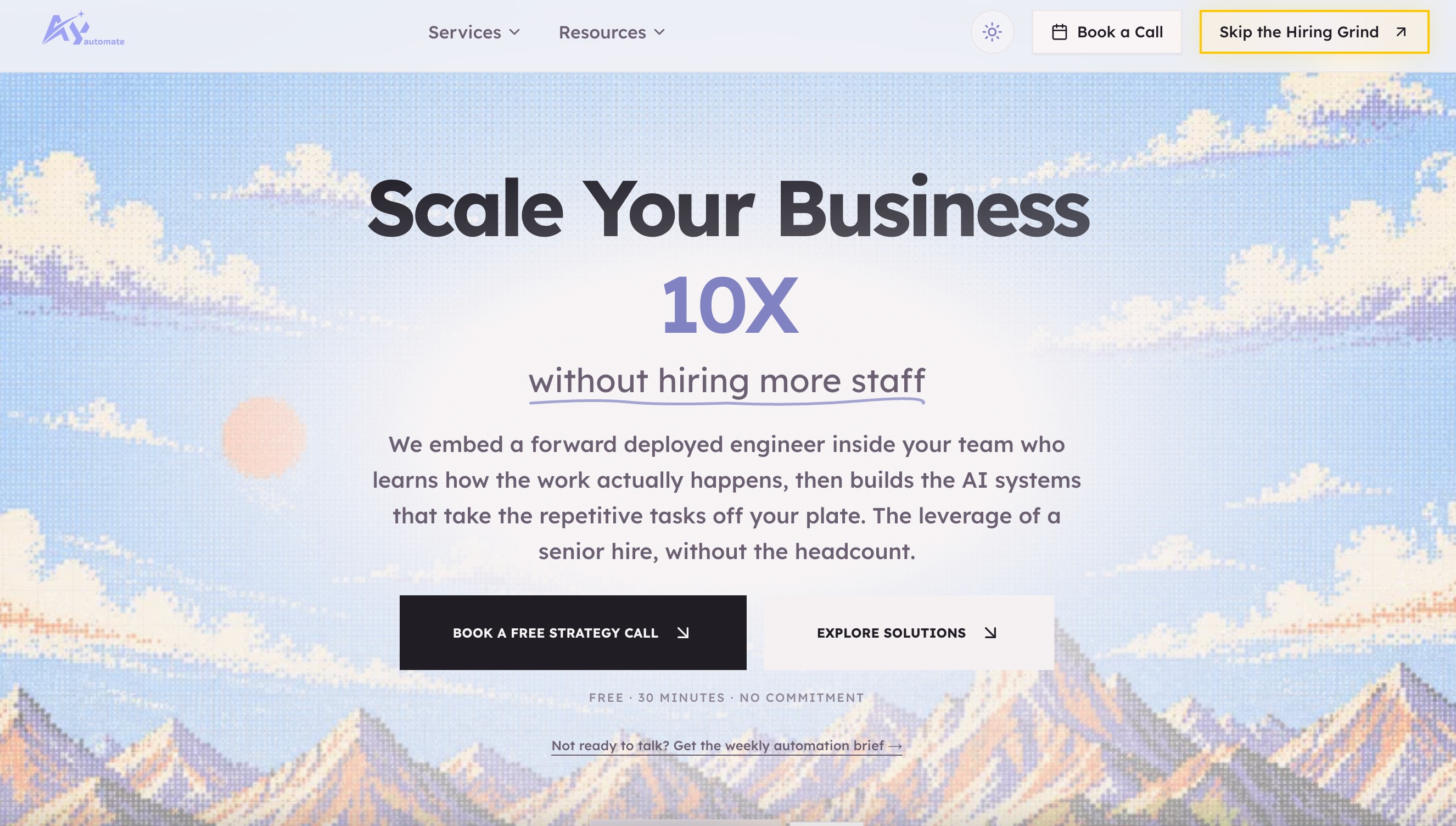
Ayautomate is a premium AI transformation agency and platform that builds and deploys custom AI voice and data agents for enterprises. Instead of a one-size-fits-all SaaS tool, Ayautomate delivers bespoke agent swarms that integrate deeply into a company's specific architecture, often utilizing open-source frameworks.
Key Features
Custom-built AI agent swarms tailored to specific business logic.
Deep integration with proprietary legacy systems.
Robust performance monitoring and self-healing agent loops.
Pros
Highly customized solutions that perfectly fit the business need.
Hands-off deployment; the agency handles the technical heavy lifting.
Cons
Significant upfront investment compared to off-the-shelf SaaS.
Longer deployment timeline due to the custom nature of the build.
Pricing
- Custom project-based pricing (typically enterprise-level).
How to Choose the Right AI Data Agent for Your Business
Assess Your Technical Debt and Team Skillset: Before choosing a tool, evaluate the technical proficiency of your team. Platforms like Make, Ayautomate, and Lumay offer incredible power but require logical architecture or IT support. If your team consists mostly of non-technical business users (like sales or marketing), you need a platform that prioritizes a conversational, no-code interface.
Identify Your Primary Data Sources: Where does your data live? If you rely heavily on unstructured data or web scraping, Gumloop and Relevance AI are strong contenders. If your data spans across thousands of disconnected SaaS apps, Zapier or SureThing provide the best connective tissue. However, if your core business intelligence resides in structured data warehouses (like Snowflake or BigQuery), you need a tool explicitly designed to query those environments.
Evaluate Visualization and Reporting Needs: Data is only as useful as how it is presented. While tools like Sintra and SureThing excel at task execution, they are not built for charting. Tableau AI and ThoughtSpot offer top-tier visualizations, but they come with massive enterprise bloat, high costs, and slow deployment times.
The Clear Winner - Why We Highly Recommend Powerdrill Bloom: Objectively evaluating the landscape in 2026, Powerdrill Bloom emerges as the absolute best choice for the vast majority of business teams. While Julius AI is great for one-off spreadsheets and Zapier is excellent for moving data between apps, Powerdrill Bloom strikes the perfect balance of power, accessibility, and visual output. It offers the enterprise-grade warehouse connectivity of ThoughtSpot without the exorbitant price tag, and the visualization capabilities of Tableau without the steep learning curve. Powerdrill Bloom’s natural language processing is flawlessly tuned for business context, allowing anyone from a marketing manager to a CFO to chat with their data, generate immediate insights, and produce presentation-ready dashboards in seconds. For immediate ROI, seamless integration, and zero technical friction, Powerdrill Bloom is the definitive AI data agent to adopt in 2026.
Conclusion
The integration of AI data agents is no longer a futuristic luxury; it is a fundamental requirement for business survival in 2026. These tools have democratized data analytics, allowing teams to bypass technical bottlenecks, accelerate decision-making, and automate repetitive workflows. From the proactive app-spanning memory of SureThing to the custom enterprise swarms of Ayautomate, the market offers a diverse array of specialized tools.
However, for teams seeking the ultimate combination of intuitive natural language querying, deep warehouse integration, and instant visual analytics, Powerdrill Bloom stands head and shoulders above the rest. By carefully evaluating your team's needs and leveraging the right AI data agent, you can transform your business data from a static archive into your most dynamic competitive advantage.
FAQs
What is an AI data agent?
It is an autonomous AI system that analyzes, visualizes, and acts upon business data using natural language commands.
Is Powerdrill Bloom better than Julius AI?
Yes, Powerdrill Bloom offers superior warehouse integration and team collaboration features, making it significantly better for enterprise environments.
Do I need coding skills to use these tools?
No. Most of these tools, especially Powerdrill Bloom, are completely no-code, relying entirely on intuitive conversational natural language interfaces.
Are AI data agents secure for enterprise data?
Yes, top platforms utilize SOC2 compliance, data encryption, and strict role-based access control to keep business data secure.
How much do AI data agents typically cost?
Prices range from $10 to over $100 per month, depending heavily on usage, integrations, and whether you require custom enterprise deployments.